The Most Threatening Menace to the Constitution and the Flag—Murders Three Thousand Wives and Two Thousand Five Hundred Children Each Year—It Should Be Banished from the Land
By C. S. LONGACRE
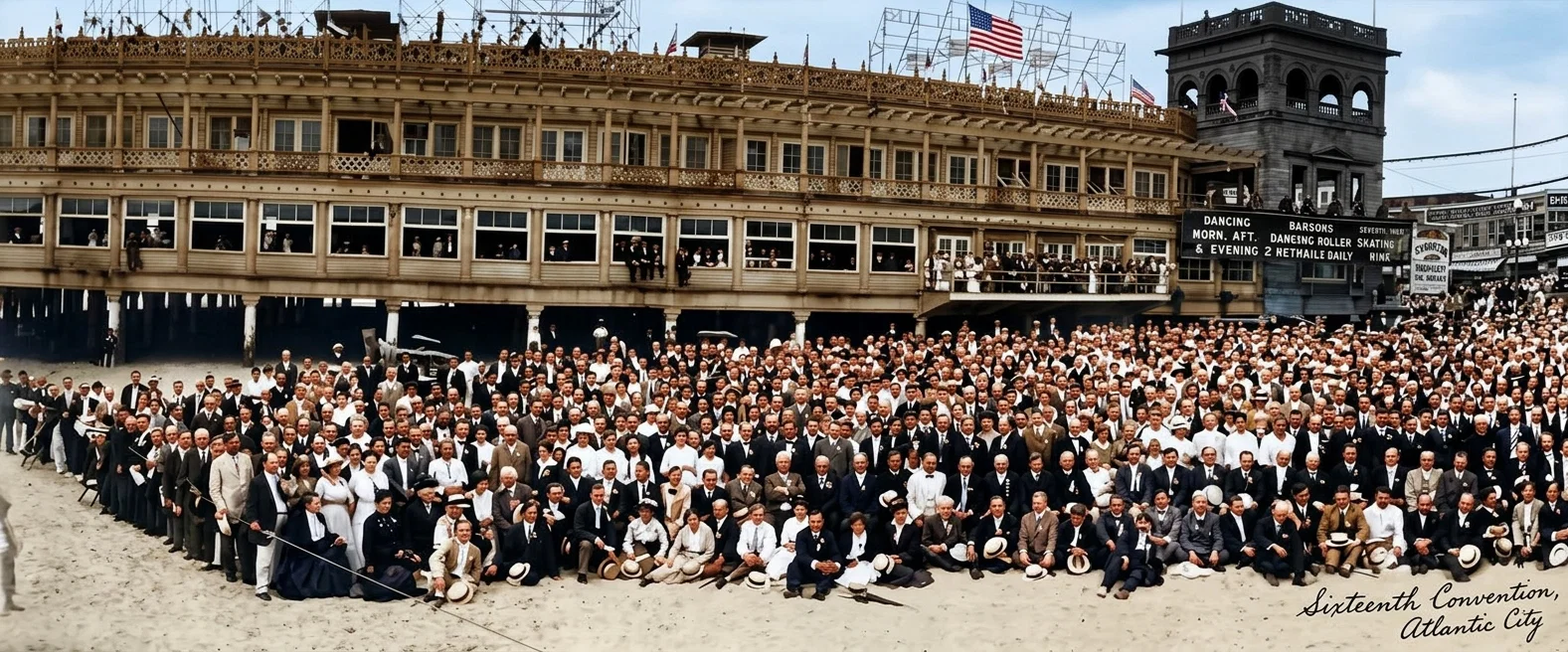
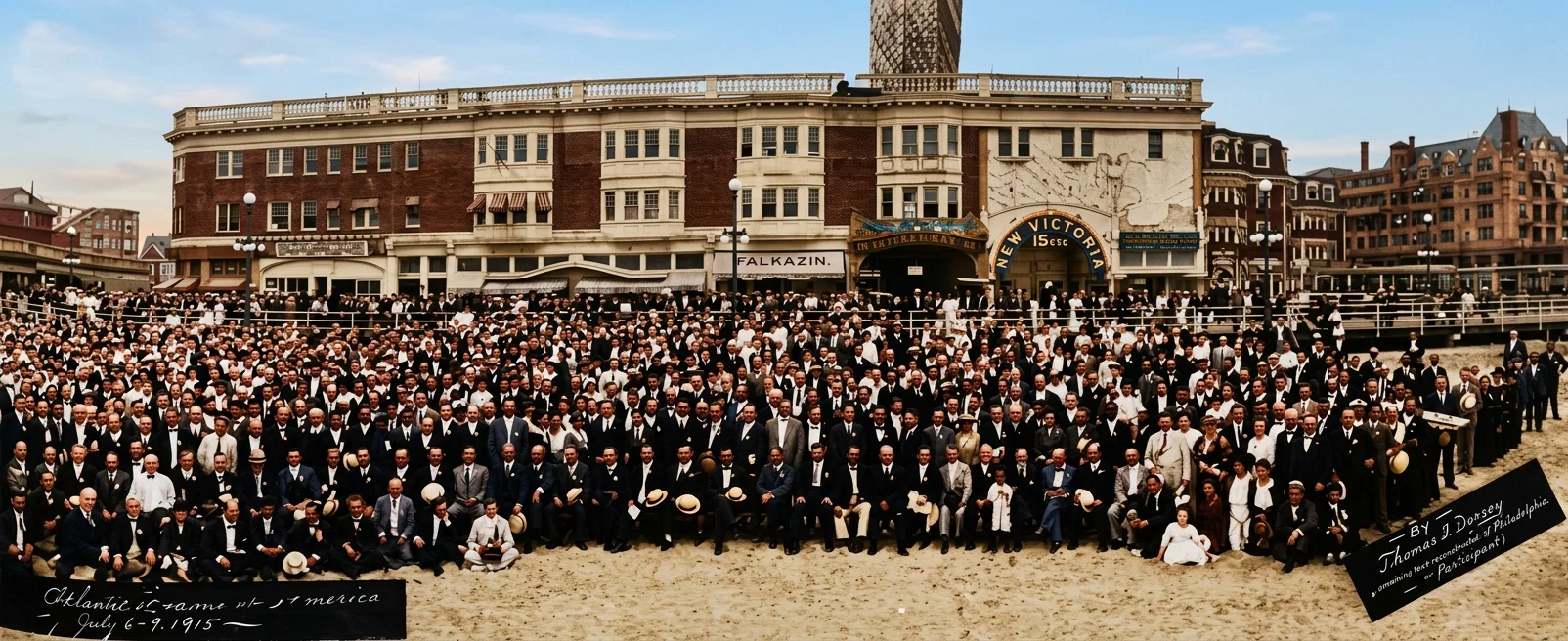
(Speech at Anti-Saloon League Convention, Atlantic City, New Jersey, July 6-9)
When our forefathers founded the American republic, and formulated the Declaration of Independence and the federal constitution to be the fundamental law of the land, they aimed to do what had never been done before in the history of any nation, and that was, to safeguard and protect the inalienable rights of the individual, and to set all men free from the bondage of men. They endeavored to set aside that system of government which ignored the inalienable rights of men and prevented them from enjoying the full measure of life, liberty, and the pursuit of happiness. The great issue which is before this nation now is whether these principles, which were crystallized into form by our fathers on July 4, 1776, and have been thrice baptized in the blood of American patriots, are to endure with the consent of the governed, or are to expire under the reign of King Alcohol.
CONSTITUTION AND FLAG HAVE NOT PROTECTED ALL
The federal constitution has been unable to guarantee its promised rights and immunities with unstinted measure to all its citizens, and the American flag has been unable to protect every man, woman, and child from the assaults of the liquor tyrants, while the federal government has legalized and protected the liquor traffic, which has violated every principle of honor, justice, and right that the constitution and the flag represent.
A WRECKER OF HOME AND NATION
One of two things is inevitable: either the guaranties of the constitution must be maintained, and the liquor traffic destroyed, or the liquor traffic will destroy the nation. Every legitimate business enterprise will strengthen and fortify the constitutional guaranties of life, liberty, and happiness, and will serve as a home builder instead of a home wrecker. Any business enterprise, irrespective of its kind, which destroys the individual, wrecks the home, and puts a blight upon posterity, is an enemy not only to the constitution and the flag, but to humanity, and deserves to be utterly banished and destroyed by due process of law.
This noble army of men and women in this convention is waging a far more effective and significant warfare than all the combined armies of Europe. We are fighting for the protection and preservation of our homes, and for the protection and conservation of American citizenship, upon whose integrity and purity depend the future stability and perpetuity of a republican form of government.
THE GREATEST ENEMY
The greatest enemy of man to-day is the liquor demon. It destroys the peace of the home, breaks down the bulwarks of the family, debauches American citizenship, threatens the very existence of the republic, and ruthlessly assails the most sacred inheritance of every man, woman, and child—the right to life, liberty, and happiness. The legalized liquor traffic tramples upon every constitutional privilege and immunity granted to man. It is not amenable to God, or man, or the equitable restraints of law. It ravages the marts of sea and land. It is the greatest thief and outlaw in the world. It not only takes the last shoes off the feet, the last coat off the back, the last morsel of food out of the cupboard, the last piece of furniture out of the house, the last pane of glass out of the window, and the last shingle off the roof, but it also takes the joy out of the heart, the song out of the mouth, the iron sinews out of the body, the nerves out of the muscles, the affections out of the soul, and the sparkling light out of the eyes, and makes them ache for the last long sleep, which knows no awakening until the resurrection of damnation.
The liquor traffic in this country alone leaves in its slimy trail more than 100,000 ruined homes annually, from whose portals are heard the stifled moans of blasted childhood and wretched widowhood. Most of these innocent victims are forever barred from the avenues which lead to noble manhood and womanhood, and consequently are unable to cope with their stronger and more fortunate competitors as they are forced to meet the great issues of life.
Imagine the unutterable grief and consternation that would come to this nation if we should receive the awful tidings to-morrow morning that the entire American army had been massacred during the night. The whole nation would mourn, and float the Stars and Stripes at half-mast. Such an awful tragedy would go down in history as a never-to-be-forgotten event. And yet every year, an army of men, women, and children, four times the number in our entire national army, go down to premature death and hopeless graves through the American saloon.
THE GREATEST CRIME-PRODUCING AGENCY
Over 3,000 wives are murdered every year in this country by drunken husbands; more than 2,500 innocent children are murdered every year in this country by drunken fathers; more than 30,000 helpless children are forsaken and thrown upon public charity every year in this country by drunken parents; more than 99½% of all murders, more than 75% of all crimes, more than 85% of all paupers, and more than 89% of all insane, in this country, are traceable either directly or indirectly to the effects of the liquor traffic; and so long as Uncle Sam protects this hellish traffic by legalizing and condoning the business, and by accepting blood money as a revenue, he is equally responsible for all these crimes and murders that are committed by the liquor traffic. Under such conditions, the federal constitution and the American flag are powerless to defend and protect its citizens.
A CIVIL AND NOT A RELIGIOUS QUESTION
The prohibition of the sale of intoxicants as a beverage is not a question of interference with the rights of individual conscience, or an invasion of the sacred precincts of religion, on the part of the state. If it were, I should be among the first to raise my voice in protest, for I am unalterably opposed to any movement designed to shackle the individual conscience, or to enforce the requirements of religion by human law in any form whatever. This question of suppressing the promiscuous sale of liquor is not a religious question, and should never be put on that basis. We have much to lose and nothing to gain over our enemies by putting this question on a religious basis. It is purely a civil, social, economic, and scientific question, relating to man's proper duty and conduct toward men.
I believe in the divine right of free choice, and in the personal liberty rights of the individual. But true liberty does not seek a license to do an injury to others. The prohibition of the promiscuous sale of poisons and dangerous weapons is not an invasion of549the natural rights of the individual, but is organized society's most effective method of protecting individuals in their right to life, liberty, and the pursuit of happiness. The prohibition of the liquor traffic rests upon identically the same basis. Every man must recognize the great universal law of humanity, that every man's personal rights end where another's personal injury begins. This is the great law that must control all human conduct.
A REVENUE CONSUMER INSTEAD OF PRODUCER
The liquor traffic claims to be a great national tax raiser and revenue producer, whereas it is only a tax collector and revenue consumer. The man who hands the money over the bar is the revenue producer, and the man behind the bar is only a revenue collector. Five times more revenue is required to take care of the criminals, paupers, insane, and orphans, for whom the saloon is responsible, than the amount of revenue paid to the government by the saloon, breweries, and distilleries.
If my house, upon which I am paying an honest tax to our town council, should cause the town council to pay out five times more revenue than I paid them, they would drive me out of the town, or raze my house to the ground. But the saloon seems to have been able to deceive the public. It thrusts its hands into the American pocket, and takes out more than $2,000,000,000 annually for which it returns no equivalent. It creates no economic values which can possibly accrue to the individual or to the nation in final results. The more it induces a man to spend for booze, the less he will have for shoes; the more he is induced to spend for the product of hops, the less he will have to spend for crops; the more he is induced to spend for wet goods, the less he will have for dry goods; and the more he is induced to hand over to the bartender, the less he will have for the coal vender.
IT IS AN ARCHDECEIVER
Let us not be deceived. “Wine is a mocker, and strong drink is raging; and whosoever is deceived thereby is not wise.” Alcohol is not only a destroyer of home and nation, but a most pernicious deceiver. The drunkard is deceived into the belief that he ought to drink all the year round, in the heat of the summer to cool him off, and in the cold of the winter to warm him up. It makes him think he is the strongest man in the country, the champion pugilist, the keenest business man, the smartest orator, the richest lord, the greatest politician, and the finest citizen, whereas it really makes him the weakest, dullest, poorest, and meanest citizen on earth. Even the saloon is ashamed of its finished product. It transforms a man's step into a stagger, his clothes into rags, his speech into twaddle, his words into curses, and his home into a brothel. His cemetery is the potter's field, and his final rendezvous is hell.
UNCLE SAM'S TAPEWORM
The American saloon is a human parasite, and produces suicides, homicides, fratricides, parricides, aching sides, and burnt-out insides. It is Uncle Sam's great tapeworm, which has fastened itself upon the vital organs of the nation. Like the tapeworm, the liquor traffic constitutes a great organism made up of many composite joints. It has the grill joint, the saloon joint, the red light joint, the gamblers' joint, the white slave joint, the thugs' joint, the dance joint, the criminal joint, and the devil's joint. The only remedy for this national disease is a national crushing of the head of this hideous monster.
AMERICAN HOMES WITHOUT A PROTECTOR
Many a time, as I have passed through the main entrance to the Senate chamber of the capitol building at Washington, I have stood and gazed with intense feeling at that magnificent group of statuary on the door panels, where the artists have endeavored to present the true spirit of American chivalry and patriotism in majestic bronze figures. One of these figures represents an American home. A bloodthirsty savage has invaded its precincts, and stands with an uplifted weapon over the mother and her child, who plead for mercy at his hands. But there is no pity or mercy in his heart, and he stands ready to dash out the precious lifeblood of mother and child. His attempt is in vain, because over him towers the majestic form of an American patriot and father, who grips the threatening arm with muscles of iron and sinews of steel, which seem to say: “Thou shalt not commit this awful tragedy. I am the protector of this home.”
Sometimes, as I have watched that scene, I have turned my head away, lest I should seize the arm of the assassin, in my anxiety to protect the mother and the child. But why should I become so eager to shield mother and child from the attacks of a bloodthirsty savage, when the scene was not real, but only set forth in cold statuary, while all around me the American saloon has made that tragedy real a thousand times over, with multiplied intensity in sorrow and in suffering!
The American saloon keeper stands to-day with an uplifted weapon over the American mother and child, who plead for mercy at his hands. But he too has no pity or mercy in his heart; and though the uplifted weapon in his hand is not an Indian's tomahawk or scalping knife, but a golden bludgeon filled with rum, made out of the coin which rightfully belongs to the stricken mother and child, he deliberately strikes down and murders over 3,000 wives and 2,500 innocent children every year in this country alone. Unless the manhood of this republic marches to the polls on election day and seizes the fiendish arm of the heartless rum assassin, and through the ballot box declares that the rum tyrant must die, and that the liquor traffic must cease, the American mother and child will stand without a human protector in thirty states of this Union.
O American patriots and citizens, let us grapple with this modern murderer and liquor Apollyon, and let us give him no quarter until he makes an unconditional surrender! In the name of country and home, in the name of honor and justice, in the name of the constitution and the flag, let us say to this seven-headed drunken monster: “I am going to protect the American home, the mother and the child; and I am going to hurl back at your own evil brow the burning and shameful symbol of your own hellish trade; and I am going to remove from you my strong arm of protection, which you enjoyed when I legalized your damnable business; and I am going to drive you out, not only from one, two, three, four, five, or six cities, counties, or states, but out of one of the grandest republics upon which the sun shines.”
THE BLACK FLAG OR THE STAR SPANGLED BANNER — WHICH?
The black flag of the legalized saloon, which stands for poverty, misery, and crime, for destruction, death, and damnation, must be transplanted by the Stars and Stripes, which can brook no rival. The red, white, and blue, which stand for protection, peace, and prosperity, for honor, justice, and loyalty, must wave triumphantly over every American home, and be true to the colors and principles they represent. There cannot be such a thing as an American flag that permits itself to stand against justice and the inalienable rights of all mankind as guaranteed by the constitution. No nation can prosper or long endure that permits any enemy of humanity to lift itself up by pulling mankind550down for the sake of greed and lucre. Let us trample underfoot the black flag of the saloon—the symbol of destruction, death, and damnation; and let us unfurl Old Glory to the breeze, and dedicate ourselves anew to the noble and eternal principles our standard represents.
In closing, let us consider the poet's ideal of our national emblem:
“When freedom, from her mountain height,
Unfurled her standard to the air,
She tore the azure robe of night,
And set the stars of glory there;
She mingled with its gorgeous dyes
The milky baldric of the skies,
And striped its pure celestial white
With streakings of the morning light.
Then from her mansion in the sun,
She called her eagle bearer down,
And gave into his mighty hand
The symbol of her chosen land.”
If we cannot win, let us remember that God can. Though the grand consummation of His plan may tarry, He will ultimately triumph over every foe. The poet caught the true conception when he wrote:
“Careless seems the great avenger.
History's pages but record
One death grapple in the darkness
'Twixt old systems and the Word.
Truth forever on the scaffold,
Wrong forever on the throne;
Yet that scaffold sways the future,
And behind the dim unknown
Standeth God within the shadow,
Keeping watch above His own.”
The Great Judgment Day
By Jean Vuilleumier
Long Prophetic Period Tells When the Time Is at Hand—Beheld Till Thrones Were Placed
By JEAN VUILLEUMIER
Mr. Vuilleumier’s article this week is an extension of his article last week, which took up the study of the twenty-three hundred prophetic days of the eighth and ninth chapters of Daniel. In his article last week, he showed that those twenty-three hundred prophetic days represented that number of literal years, and that the time began four hundred and fifty-seven years before Christ. His article last week dealt with the four hundred and ninety years that were “cut off” from the longer period of twenty-three hundred years and devoted to the Jewish nation.
The evidence is insuperably clear that the twenty-three hundred years, of which the four hundred and ninety given to the Jews were a part, began 457 B.C.; for there is one event after another, as shown by Mr. Vuilleumier last week, that must fit into the prophecy at a specified time; and since the events unquestionably came, according to the prophetic program, we are standing on safe ground in affirming the conclusions reached in the article this week. The article by Eliza H. Morton, that follows this, is a good supplement. EDITOR.
The climax of Daniel’s great vision included in chapters eight and nine, is reached in the mysterious declaration made by angels in his hearing: “How long shall be the vision concerning the continual burnt offering, and the transgression that maketh desolate, to give both the sanctuary and the host to be trodden underfoot? And he said unto me, Unto two thousand and three hundred evenings and mornings; then shall the sanctuary be cleansed.” Dan. 8:13, 14.
Three important queries grow out of this declaration: 1. When do these twenty-three hundred days terminate? 2. What is the sanctuary that is to be purified at the end of these days? 3. What is the meaning of this purification of the sanctuary? We will study these three questions in their order.
HOW FAR DO THE TWENTY-THREE HUNDRED DAYS REACH?
In the interpretation of the vision, the angel said to Daniel: “And the vision of the evenings and mornings which hath been told is true: but shut thou up the vision; for it belongeth to many days to come.” “Behold, I will make thee know what shall be in the latter time of the indignation; for it belongeth to the appointed time of the end.” Verses 26, 19.
Taken literally, the twenty-three hundred days would mean about six years and five months. Such a short period could not be said to reach to the time of the end. Sir Isaac Newton, astronomer and Bible scholar, says on this point, “The sanctuary and the host are trodden underfoot two thousand three hundred days; and in the prophecies of Daniel, days are taken for years.” An unmistakable proof of this fact has been found in the miraculous fulfillment of a part of this period, the seventy weeks, of which each day corresponds to a year.
According to this rule, the remainder of the two thousand three hundred years, deducting the seventy weeks, or four hundred ninety years, would bring us to 1844. (2300 — 490 = 1810; 34+1810=1844.) This date, as we saw last week, is based on the unimpeachable chronology of our Saviour’s baptism and death. It is the target and objective point in this important prophecy of Daniel 8 and 9 which is to reach to “the appointed time of the end.” Some exceedingly important event in the history of the plan of salvation was therefore to take place in 1844. We read that this event is “the cleansing of the sanctuary.” And now we are ready to inquire:
WHAT IS THE SANCTUARY?
The sanctuary at Jerusalem has been in ruins for eighteen hundred and forty-four years. No other earthly sanctuary has been allowed to take its place. What, then, and where is the sanctuary of the new covenant, which was to be cleansed in 1844?
The epistle to the Hebrews answers these questions fully when it says, “We have such a High Priest . . . in the heavens, a Minister of the sanctuary, and of the true tabernacle, which the Lord pitched, not man.”
Of course in this epistle, where we read that “even the first covenant had ordinances of divine service, and its sanctuary.” “The first tabernacle . . . is a figure . . . But Christ having come a High Priest of the good things to come, through the greater and more perfect tabernacle, not made with hands, . . . through His own blood, entered in once for all into the holy place, having obtained eternal redemption.” Heb. 9:1, 8, 9, 11, 12. In the temple in heaven are the seven-branched candlestick, the altar of incense, and the ark of the covenant. Rev. 11:19; 4:5; 8:3. If the earthly sanctuary and its furniture were only figures of the heavenly, these must be the originals, and the original ark must contain the original Ten Commandments, in which the sanctuary services centered.
And now we come to the third question:
WHAT IS THE PURIFICATION OF THE SANCTUARY?
The epistle to the Hebrews will again throw light on the matter: “According to the law, . . . all things are cleansed with blood, and apart from shedding of blood there is no remission. It was necessary therefore that the copies of the things in the heavens should be cleansed with these; but the heavenly things themselves with better sacrifices than these.”
This cleansing with blood therefore has reference to the putting away of sins from the sanctuary. In the earthly sanctuary, sins were removed by a literal cleansing of the blood there sprinkled; while in the heavenly sanctuary, the cleansing is done by blotting out the sins from the book of God. Acts 3:19. Each year, on the day of atonement, the earthly sanctuary was cleansed. This was a type of the Judgment, when all cases are decided forever. Thus in the heavenly sanctuary, at a certain definite time, the Judgment begins, and the cases of all are decided. On the day of atonement, all the people were to humble themselves, under pain of death. And so now, at the time of the Judgment, all are to know that probation will soon end, and that when the hour comes, every man is either forever saved or forever lost.
SUBLIME JUDGMENT SCENE
The cleansing of the sanctuary, which began in 1844, is the most important event that ever took place in the history of the plan of redemption, with the exception of the death of Christ. God wants all men to know about it, hence this wonderful prophetic period. In order to give a faint idea of what it is to appear before Him to be judged by His holy law, God has given us, through His prophet Daniel, a vivid description of that awful Judgment scene:51
“I beheld till thrones were placed, and one that was ancient of days did sit: His garment was white as snow, and the hair of His head like pure wool; His throne was fiery flames, and the wheels thereof burning fire. A fiery stream issued and came forth from before Him: thousands of thousands ministered unto Him, and ten thousand times ten thousand stood before Him: the Judgment was set, and the books were opened.”
When the dead have all passed in judgment, then the living will be examined. The character of all who have at any time claimed a part in the first resurrection, will pass under close scrutiny before the Majesty of heaven and before His holy law. How important, then, to square up with it while time lasts!
“White are the fields,” the Master said,
In Judah’s land in the long ago;
“Bent is the grain with ripening head,
Lightened by sun in its westering glow.
O slow of heart and worldly-wise,
Look not afar for the harvest time!
The harvest’s here. Lift up your eyes —
O, reap with God in faith sublime!”
White are the fields, and workers few,
In this our day; and the storm cloud grows.
God calls to me, and He calls to you.
O, work with Him ere the day shall close!
There are longing, hungry, pleading cries,
There are empty, gaunt, and outstretched hands,
There are eager, anxious, tear-brimmed eyes,
Among peoples all, in all the lands.
They wait the word and touch of love,
That God in love to us has given;
They wait the message from above,
Of truth and life and home and heaven.
Prophecies Misapprehended
By Eliza H. Morton
Disappointments That Have Resulted—Blessings That Have Followed the Disappointment
By ELIZA H. MORTON
GOD’S messages to man are not always understood in their completeness by those through whom they are given. The prophets of old did not fully comprehend their own predictions, as is shown by the fact that they searched “what, or what manner of time the Spirit of Christ which was in them did signify, when it testified beforehand the sufferings of Christ, and the glory that should follow. Unto whom it was revealed, that not unto themselves, but unto us they did minister.” 1 Peter 1: 10-12.
GREAT TIME PROPHECIES
Two great time messages are brought to view in the Scriptures,—one connected with the first coming of Christ, and one with His second appearing. Both of these messages are based on the prophecies of Daniel, and both are connected with the longest prophetic period mentioned in the Scriptures—that of the twenty-three hundred prophetic days [years] of Daniel 8 and 9. The sixty-nine weeks of Daniel 9, beginning with “the commandment to restore and to build Jerusalem” (Dan. 9: 25), extended to the baptism of Christ or His anointing as the Messiah. Ezra 7: 11-14, margin.
Christ, referring to this period, said, “The time is fulfilled.” Mark 1: 15. The sixty-nine weeks is the only definite prophetic time marking the first advent of the Messiah. The burden of the message was, “The kingdom of heaven is at hand.” The disciples preached that message, thinking, all the time, that it referred to the temporal kingdom of Christ on this earth. Christ told them plainly that His kingdom was “not of this world,” but they did not understand. The death of Christ crushed the hopes of the disciples; but later they saw their mistake, and realized that the Scriptures were fulfilled and the promises of God ratified.
THE DISAPPOINTMENT A BLESSING
The disappointment and trial that came to the early disciples were necessary to purify their hearts, test their faith, enlarge their vision, and take away their false conceptions of things to come, thus preparing them to preach with power the gospel of a risen Saviour. The prophecies were correct, and the disappointment was due to man’s limited conception of their meaning. After Christ came from the dead, He expounded to His followers the scriptures concerning Himself. Luke 24: 27. The veil, as it were, was removed, and the light shone clearly on what had seemed dim and obscure.
A COUNTERPART EXPERIENCE
The proclamation of the second coming of Christ, declaring that “the hour of His Judgment is come” (Rev. 14: 7), is parallel, in manner of fulfillment, with that of the message of His first coming. The events of both mark the termination of time periods, and both were misapprehended by those proclaiming them. The latter message of Dan. 8: 14, of which the seventy weeks form the first part, announced the termination of the twenty-three hundred days [years], at which time the sanctuary would be cleansed. Those proclaiming this message, like those proclaiming the first advent, followed the generally accepted belief, that the sanctuary was this earth, hence its cleansing must be its purification by fire, at the end of the world. Their disappointment was as deep as that of the early disciples.
THE 1844 MOVEMENT A BLESSING
The passing of the time in 1844 was a bitter disappointment to the believer, but it led the true-hearted ones to search the Scriptures and to pray for light. It aroused the world to a sense of the importance of a preparation to meet God. The trial was soon found to be not without fruit, and was really a blessing in disguise, for it established the truth that is brought forth very clearly in Revelation 10, which describes the disappointment, under the symbol of a little book—the book of Daniel—in the hand of an angel. A voice said: “Go and take the little book which is open in the hand of the angel which standeth upon the sea and upon the earth [world-wide message]. And I went unto the angel, and said unto him, Give me the little book. And he said unto me, Take it, and eat it up; and it shall make thy belly bitter, but it shall be in thy mouth sweet as honey. And I took the little book out of the angel’s hand, and ate it up; and it was in my mouth sweet as honey: and as soon as I had eaten it, my belly was bitter [disappointment]. And he said unto me, Thou must prophesy again before many peoples, and nations, and tongues, and kings.” Rev. 10: 8-11.
ANOTHER MESSAGE TO FOLLOW
This indicated another message to follow the one given, or a more complete development of the one already proclaimed. This is now sounding to all the world. It is a reform message, bringing to view the commandments of God and the faith of Jesus, and uttering a warning against the worship of an apostate power. Rev. 14: 9-14. It is not based on definite time, but marks the speedy coming of Christ by no uncertain signs.
The end of the twenty-three hundred years marked the beginning of the Investigative Judgment in heaven, which is now in session. Its close will usher in the kingdom of glory, when Christ will come as King of kings. All hail the dawning of that glad day!
Purpose of the Lord’s Day Congress
By W. Mayhew Healey
By W. MAYHEW HEALEY
The International Lord’s Day Congress held in Oakland, California, July 27 to August 1, was to the casual observer an apparent failure, and in its local plans and purposes it was decidedly such. However, the movement is making general advancement under seeming defeat.
WOULD SECURE AND ENFORCE SUNDAY LAWS
The object of the association is set forth in the following words in the second principle of its platform: “We aim to promote among all classes such a true understanding of the value of the sabbath to themselves, to their families, and to the state, as shall lead them to resist whatever tends to deprive them of it, and to secure and enforce such just laws as shall protect the people in their right to this day of religious privilege and of freedom from toil.”
The congress announces as an “important indorsement” the following from the International Sunday School Association, at Chicago, June, 1914: “We also indorse the plan to hold an International Lord’s Day Congress at San Francisco during the said exposition, and indulge the hope that it will so quicken Christian conscience as to give California a weekly rest day.”
WHAT BETTER LAW IS NEEDED?
California already has a weekly rest day protected by law. California Statutes 1893, page 54, reads under the heading of “Day of Rest,” section 1, “Every person employed in any occupation of labor shall be entitled to one day’s rest therefrom in seven; and it shall be unlawful for any employer of labor to cause his employees, or any of them, to work more than six days in seven; provided, however, that the provisions of this section shall not apply to any case of emergency.”
This law proposes to “protect” the Sunday keeper, the Sabbatarian, and those who attach no religious significance to any day, but desire one day in the week merely for pleasure and recreation. Why is not this law satisfactory to the International Lord’s Day Congress?—Because that organization does not desire a law to “protect,” but is seeking one to “compel,” to “enforce” the observance of a day, and that day to be Sunday.
FAILED IN LOCAL STRENGTH
That the congress failed in its purpose to create local strength in support of a California Sunday law is evident from the fact that the people, who were fully informed of the purpose of the congress, paid little attention to it. The attendance the first evening was less than two hundred and fifty, including delegates. This decreased until the last evening, when the adjournment was taken with only thirty-six persons present. The chairman remarked that he hoped the world would not know of the small number in attendance, as it was insignificant compared with the great name they carried.
The congress gained no influence in California, where the facts are so well known. On the contrary, it evidently lost in the estimation of the people, because of itself it fell so far below what it had been advertised to be.
IT WILL DEVELOP POWER
We believe this movement will develop power, not by sound argument, but rather by the sound of its great title, together with its claim to world-wide influence, and affiliation with many societies, kings, queens, presidents, princes, prelates, etc. By such means, the impression is created that this congress is a great world power, and some are led to think there must be good reasons for the movement if so many great men are engaged in it. Mankind in general go where they think the mass is going. Politicians are easily intimidated from going any way except the direction in which the people are supposed to be moving. Thus by claiming that which they do not have, they may build up that which they hope to have.
Sunday laws, at best, are based on a wrong conception of facts. Sunday as an institution in the church rests on the fraudulent claim that somewhere, in some way, God sanctions its observance. By these means, many persons are deceived.
There is strength in keeping the seventh-day Sabbath, the memorial of the true God. Laws of man give no added strength.