The American Sentinel, Vol. 10, No. 32.

THE ENFORCEMENT OF “LAW.”
Earlier text: THE ENFORCEMENT OF “LAW.”

ALL HONOR TO SUCH A JUDGE.

[From the Albion (Neb.) Weekly News, July 9.]
THE constitution of Maryland provides “that in all criminal prosecutions every man hath a right . . . to a speedy trial by an impartial jury.” But some years since the legislature passed an act providing that in cases of vagrancy the accused might be committed to the workhouse, by a magistrate, for one year or less, without trial by jury.
A man thus committed was brought before Judge Yellott on writ of habeas corpus, and he was promptly discharged, on the ground that the act under which he had been committed was unconstitutional. The case was appealed by the county, and the Court of Appeals (the Supreme Court of Maryland) sustained the statute on the ground that the constitution of Maryland must be interpreted in harmony with the practice under the unwritten constitution of England, in which country the guarantee of trial by jury is not held to extend to such cases.
Reinforced by this decision, the magistrates of Maryland continued to commit to the workhouse, without jury trial, such vagrants as were brought before them; and Judge Yellott as promptly discharged every man thus deprived of his liberty who was brought before him on writ of habeas corpus; and this, notwithstanding the fact that case after case was taken to the Court of Appeals, and always with the same result, namely, that the “law” was sustained. But the venerable Judge Yellott treated it as void until his retirement from the bench on account of the infirmities of old age. And we say all honor to such a judge.

A DANGEROUS PRECEDENT.

[From the Mail and Express, New York, July 30, 1895.]
THE action of Vice-Chancellor Pitney, in enjoining a reporter from publishing the details of a suit involving the right of way of the Watchung Railway Company in East Orange yesterday afternoon has created a sensation in newspaper circles. It is reported that the vice-chancellor had remarked that “some street railway companies received their franchises very cheaply,” when a reporter was seen to leave the room. “Is he a reporter?” asked the vice-chancellor of a court attendant. Being told that he was, he said, “Fetch him back.” The reporter returned. “Let me see your notes,” demanded the vice-chancellor. They were produced and handed up to the bench. After looking them over, the vice-chancellor is said to have remarked: “You can now leave the room. If one line is printed in your paper about this case I will have you arrested for contempt of court.”
It is not known how the vice-chancellor became clothed with such extraordinary power. He may have had some special reasons for his action, which have not been made public, but we know of no authority by which the court can seize the papers of a private individual who may happen to be present at the hearing of a case, and demand of him any memoranda which he may have taken in the course of his reportorial duties. Not since the abolition of the Star Chamber centuries ago has an attempt been made to establish such a censorship of the press.
Instead of previously submitting to the inspection of a tribunal created by the government for the purpose, matter which is intended to be published, and receiving a special license to print it, the custom has prevailed, both in England and in this country, of permitting the publication of anything which may be written. This, however, is done at the writer’s or publisher’s peril. If his article contains anything which is libelous, or which would subject him to punishment for contempt of court, he must take the consequences. In this country especially the greatest latitude has always been allowed and taken by the press in this respect.
It seems to us that it is an unwarrantable infringement upon the freedom of the press for a court to prohibit the publication of its proceedings, which have taken place in the face of day in a court of justice. It would be taking a long stride backward to have the proceedings of legal tribunals take place in secret. While there may have been no particular hardship caused in this case, still it is a precedent which, if followed, would be a dangerous and far-reaching one.

PROTEST AGAINST SUNDAY LEGISLATION.

[From the Cape Times, Cape Town, Cape Colony, South Africa, June 19.]
A deputation representative of the Seventh-day Adventists waited upon the Right Honorable the Prime Minister, and the Treasurer-General yesterday morning for the purpose of protesting against the proposed legislation on Sunday observance. The deputation was introduced by the Hon. J. Rose-Innes, Q.C., M. L. A., and consisted of the following gentlemen: the Rev. A. T. Robinson, the Rev. S. N. Haskell, Mr. G. D. J. Scholtz, Mr. H. P. Wessels, and Mr. H. J. Edmed.

THE CASE STATED.

The Rev. A. T. Robinson, in explaining the views of the deputation and those of whom they represented, said they were thoroughly in accord with every measure calculated to tend towards the best interests of society, but they were strongly against the legislation which was being asked for with regard to Sunday. They would strongly favor a law which would prohibit everything of an indecent and uncivil character on every day of the week, but it appeared inconsistent to them, viewing the matter as they did, to place a law on the statute book which would forbid these things on Sunday any more than on any other day of the week, thus making in the eyes of the law that which was indecent and immoral right on six days of the week. They respectfully protested against Sunday laws, because they believed that such laws were wholly unnecessary for the good of society. Legislating against what was indecent and immoral they regarded as being in the best interests of society, but with regard to the matter of Sabbath observance, that should be left for every man to do as he pleased, as that was a matter of conscience. Countries which had been most dominated by such laws were those in which the continental Sunday was observed. They further protested against Sunday laws because there was a respectable minority in Cape Colony who conscientiously believed that the divine law commanded them to keep holy the seventh day. On this point they had been met with the assurance that the State did not propose to interfere with the right of anybody to keep the seventh day, but they would respectfully point out the command of God regarding the observance of the seventh day as the Sabbath. The manner in which the seventh day was to be kept holy was here very clearly defined—it was making a distinction between the six working days and the seventh day. They further held that when the State made any demand touching religion, a man as a Christian was bound to disregard such laws, but he was bound to submit to the powers that be in regard to any consequences that might follow. Another reason for protesting against Sunday legislation was that they believed that such laws were wrong in principle, and if Parliament placed such laws upon the statute book, they, as Christians, could not but regard them as religious laws, and therefore wrong in principle. Legislation against indecency and incivility did not affect them, because, as Christian citizens, they did all in their power to discountenance such things on every day of the week, but with regard to legislation as to Sunday observance they protested most strongly. In the event of the passing of such a law the only possible course left open to them as Christian citizens would be to obey God rather than men, and in consequence to suffer as did the three Hebrew worthies under similar circumstances. They would ask the government to reconsider the answer given to the deputation which waited upon them recently with regard to Sunday observance.

“EVERY HONEST MAN SHOULD PROTEST.”

The Cincinnati Tribune, of July 20, contains a contribution, nearly a column long, from the pen of Thos. Clephane, of Cincinnati, under the sub-heading, “Very Vigorous Protest Against the Conviction of Seventh-day Adventists.” We extract the following from the last paragraph:—
The Sabbath is a religious, and not a civil institution, and belongs to the Church, not the State. Whatever is lawful on any other day of the week is lawful on Sunday. Every honest man should protest against such law. I do not doubt but these conscientious Adventists can, by looking out of their prison cells next Sunday, see very many working without restraint; loaded cars of excursionists passing by to places of amusement. Why do railroads work on Sunday? Why do all others that labor on that day do so without restraint, while this small band of people that have observed the day believed by them the proper one to observe are treated in this manner? Not being a Christian, but, I hope, a humanitarian, and believing that injustice has been done in this case, I hereby protest.
Mr. Clephane, though declaring himself a non-Christian, shows in this protest that he is more nearly in harmony with Christian principles than multitudes of professing Christians.

A HYDRA-HEADED MONSTER.

TYRANNY is a monster that never dies. It has passed into a proverb that eternal vigilance is the price of liberty; and that is because the spirit of oppression is never destroyed, and, on its part, is sleeplessly vigilant. Behold here to-day [1878], this great people, whose passion for liberty is recorded in splendid pages of history, whose resolution to build on these islands a commonwealth of justice and freedom is written on every acre of its soil in their heart’s blood, and in royal blood too; and yet after all these sacrifices and heroic martyrdoms, the scratch of one man’s pen can run through the achievements of centuries and turn the arm of England to a bulwark of barbarism. The cause of such recurrences is not far to seek. The fatality is not in the evil thing, but in some strange popular hallucination like that which Hercules had about the ninth hydra head. Instead of killing that he hid it under a stone; and, in the same way, whenever in history, the Anglo-Saxon has vanquished a wrong, he always spared one of its heads. He hides it away; he calls it obsolete; but, after lying still for a long time, up it starts again at the call of some ambitious partisan, all through this curious disinclination to eradicate a wrong utterly and leave no germ of it behind. The chief art of reform is to be radical. No unrepealed statute is ever obsolete. The head of every wrong lives still while its principle is spared, and though it seems antiquated one day, it may be a “spirited policy” the next.
—Moncure D. Conway.

MORE PRESS COMMENTS CONCERNING RELIGIOUS PERSECUTION IN TENNESSEE.

Complimentary.

[From the Republican, Wauseon, O., July 19.]
THAT able journal, the AMERICAN SENTINEL, has a complimentary editorial of the Baptists, who protest against the religious persecutions in Georgia and elsewhere, and concludes as follows:— “This action does honor to the Baptist name, and shows that the spirit of soul-liberty still lives in the Baptist Church.”

Little Christianity in the World.

[From the Northwest American, Sioux City, Ia., July 11.]
PERSECUTION of Seventh-day Adventists still continues in the South. Such work as this is almost enough to cause a thinking man to believe that there is little Christianity in this world. They are not allowed the constitutional right to “worship God according to the dictates of their own conscience.” If the Southern States hope to encourage emigration to the sunny South, they are pursuing a very poor course. Northern people are too tolerant and broad-minded—generally speaking—to sanction anything of the kind, and will be slow about emigrating to a land where religious freedom is not tolerated. A complete separation of Church and State is inevitable.

An Outrage and a Disgrace.

[From Clinton (Mass.) Daily Item, July 19.]
THIS country is called a land of religious liberty. The Pilgrims sought a new home at Plymouth Rock that they might worship God according to the dictates of their conscience, but there are to-day in the chain-gang at work on the public highways in Tennessee eight reputable men, their only offenses being that they set apart and keep Saturday as a day of sacred rest and worship, believing it to be the “Lord’s day.” Any law that causes the arrest and imprisonment of Christian men because they conscientiously set apart any particular day in the week to rest from their labors and worship God, is an outrage and a disgrace upon the civilization and intelligence of America.

Ought to Exercise Discretion.

[From the Times-Star, Cincinnati, July 16.]
THE arrest, conviction and punishment of those conscientious Seventh-day Adventists in Tennessee is a monstrous form of legalized persecution, a twin sister to that barbarous institution which the civil war abolished from that State more than thirty years ago. It is a part of their religion to literally interpret the Bible and observe the seventh rather than the first day of the week. There ought to be intelligence enough in the courts and court officers of Tennessee to exercise a little discretion, so far as the execution of the law in regard to the observance of Sunday is concerned.

A Disgrace to the State.

[From the Ligonier (Ind.) Banner, July 18.]
IT is a disgrace to the State of Tennessee that it still persecutes the Seventh-day Adventists and other religionists who obey their consciences by keeping holy the Sabbath or seventh day of the week, and pursuing their ordinary vocations on Sunday. A long list of new indictments have been returned by the grand jury of Rhea County, and the Adventists who had kept the biblical Sabbath and worked on Sunday have been tried and in some cases convicted and sentenced to fine and imprisonment. They had only obeyed what they believed to be the law of God, as revealed in the commandment of rest on the seventh day, and for this they are punished as criminals! Yet Tennessee is one of the States in the Union, and this is near the close of the nineteenth century.

It is a Disgrace.

[From the Mirror, Brocton, N. Y., July 24.]
IN Rhea County, East Tennessee, is a colony of Seventh-day Adventists. A few weeks ago eight of them were put on trial for desecrating Sunday, convicted and fined. Although abundantly able to pay their fines they refused so to do and were sent to jail on workhouse mittimuses to work out their sentences on the county roads. One day last week they were put to work with the county convicts. The leader of the band is E. R. Gillet, a native of Batavia, N. Y., and who is nearly seventy years of age. He volunteered in the civil war and served three years. These men are persecuted for opinion’s sake. They are just as sincere in their religious convictions as any other sect can be, and they observe some other day than the so-called sabbath with as much reverence as others keep that day. It is a disgrace to any State to persecute such people for their religious views, and if the old veteran Gillett is a G. A. R. man, that body should demand his immediate release, and the State of Tennessee should see to it that his co-religionists are also liberated. Will man ever be willing to accord to his neighbor every religious and political right that is as much his as the free air of heaven?

A VOICE FROM THE CHAIN-GANG.

Spring City, Tenn., August 9, 1895.
EDITOR SENTINEL: In the last issue of the AMERICAN SENTINEL, the Rev. Chas. D. Blaker, pastor of the Baptist Church at Camby, Minn., asks if you know of any Baptists who have appeared as the persecutors of the Seventh-day Adventists who are now suffering persecution for conscience’ sake. For one I wish to respond, and will give the facts in the case.
I am now working in the chain-gang at Spring City, Tenn., on the public roads with seven others of my brethren, who have offended the peace and dignity of the State and the conscience of our neighbors by peaceably and quietly going about our work on Sunday as on other days of the week. My offense was unloading a wheelbarrow from my wagon and setting it over the fence of the one from whom I had borrowed it, he being also an Adventist.
The man who witnessed the awful act lives on the opposite side of the road, and is a deacon of the Baptist Church. The next day I was indicted by the grand jury, as the court was then in session. I am now paying the penalty at hard work in the chain-gang for sixty days, because I disturbed the conscience of this deacon of the Baptist Church by unloading that wheelbarrow on Sunday.
I have no right to judge the man, but I am led to inquire why I am arrested for doing what I did, while the son of this same deacon goes fishing on Sunday? also his other children picked strawberries every Sunday through the season, and are now gathering peaches on Sunday for wages, and still his conscience is not disturbed; and that, too, since I was arrested; and this Baptist father is not disturbed, at least I hear of no arrests being made. It is not possible that the deacon could fall from grace so soon, even if he believed in the doctrine. I was a member of and preacher in the Baptist Church before I became a Seventh-day Adventist, and knowing their principles then, and what they have suffered in the past for conscience’ sake, I least expected a Baptist brother to appear as my persecutor. This action impresses on my mind the fact that my Baptist brethren have backslidden on the principles of religious liberty which were once so dear to them.
BYRD TERRY.

Religious Liberty and the Press in Tennessee

THAT the spirit of religious liberty is by no means dead in America, is proven by the attitude of the press of the country toward religious persecution in Tennessee. We have received at this office hundreds of marked copies of papers, denouncing in vigorous terms the action of the authorities in Rhea County; and we are satisfied that we have seen comparatively few of the papers that have commented upon it. Occasionally we find a paper that defends the persecution, but the overwhelming majority denounce it in fitting terms. We are publishing extracts from the opinions expressed, as rapidly as our space will permit; and are keeping a list of the papers that make mention of it which we shall publish shortly.

Political Liberty and the Rights of Man

POLITICAL liberty consists in the power of doing whatever does not injure another. The exercise of the natural rights of every man has no other limits than those which are necessary to secure to every other man the free exercise of the same rights.—Declaration of the Rights of Man by the National Assembly of France.

Rhea County Drops Added Sentence for Sabbathkeeping Prisoners

THE authorities of Rhea County, Tenn., have decided not to require the Adventists now in the chain-gang in that county to serve an additional length of time because they will not work on the Sabbath. This conclusion was reached just a few days subsequent to the publication of our last-page note of the 1st inst., in which we showed clearly that any such attempt would be a flagrant violation of the plain letter and spirit of the constitution of the State, which provides that “no person shall, in time of peace, be required to perform any service for the public on any day set apart by his religion as a day of rest.” The Rhea County authorities are to be congratulated that they have decided not to thus further outrage justice.

Question From a Bible Reader Seeking Truth

If “Bible Reader” “one watching for truth,” will send us his name and address, we will answer his question.

New York Recorder Condemns Tennessee Persecution of Adventists

THE New York Recorder, of August 12, in an illustrated article of considerable length, adds its testimony to what the press of the country have so generally spoken in condemnation of the persecution of the Adventists in Tennessee.

Adventists Held in Rhea County Chain-Gang

ONE of the eight Seventh-day Adventists in the chain-gang in Rhea County, Tenn., has been released by the county court, because on account of poor health he was unable to work. Our illustration on another page shows some of the Adventists at work on the approach to the county bridge, near Spring City.

Enforcing the Law Against Adventists Compared to Medieval Persecution

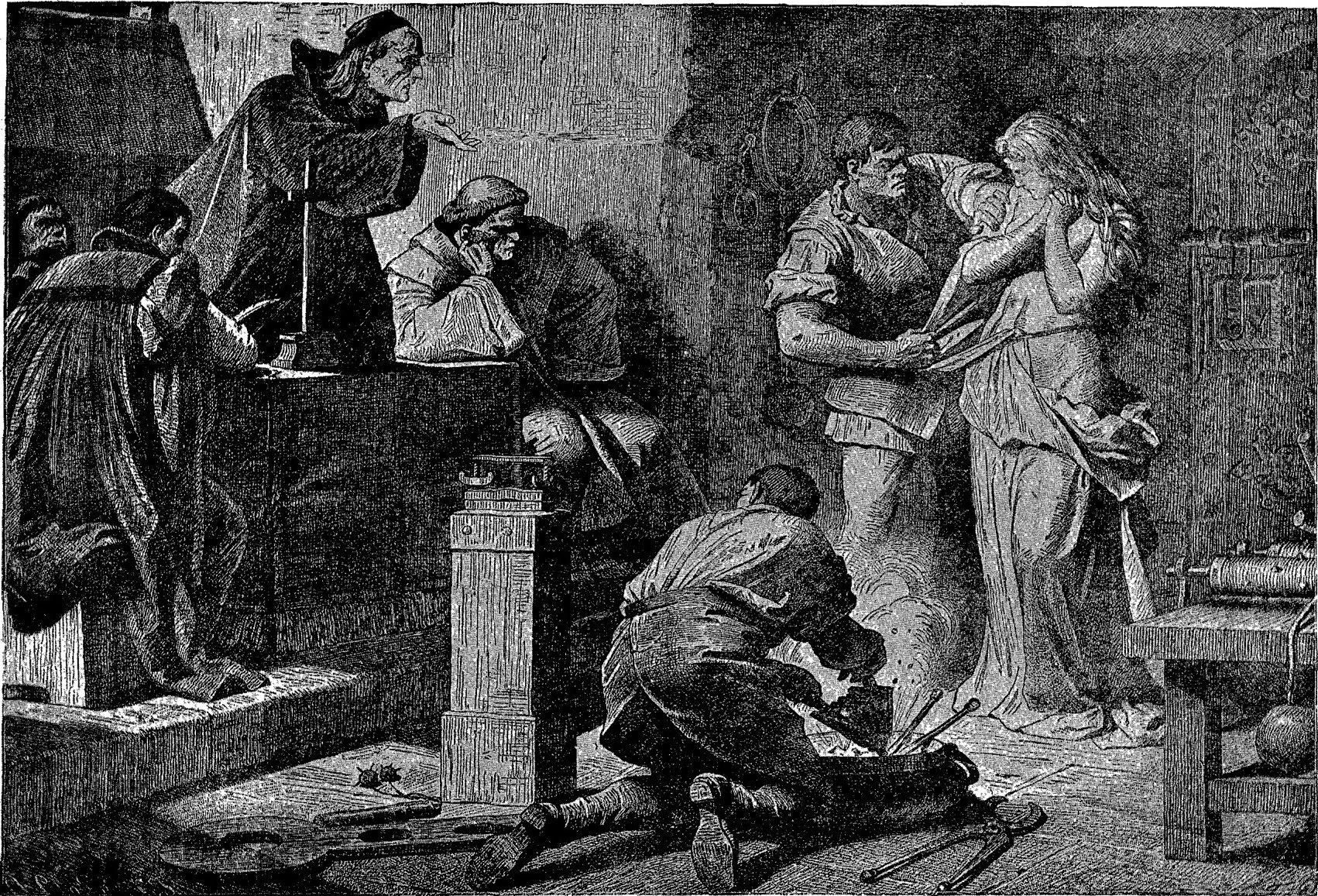
“ENFORCING the ‘law’” against Adventists by imprisoning them or driving them in the chain-gang differs from “enforcing the ‘law’” against the heretics of the Middle Ages by means of red-hot pinchers, the gallows and the fagot, only in degree. Exactly the same principle is involved in both.

Sunday Enforcement Efforts Spread Across the States

SUNDAY enforcement seems to be in the very air, and from every quarter comes intelligence concerning efforts to rigidly enforce Sunday statutes. There is scarcely a State in which the question is not being agitated, and both city ordinances and State “laws” are being invoked to compel the observance of Sunday.

Seventh-day Adventists Arrested in Chicago

SEVERAL Seventh-day Adventists have been arrested recently in Chicago under circumstances which indicate very clearly that the motive is very largely religious bigotry and intolerance. The Adventists have several churches in Chicago, and if the persecution becomes general throughout the city, we may look for interesting developments there.

Baltimore Shoemaker Arrested Again for Sunday Work

Mr. Faust, a Seventh-day Adventist shoemaker of Baltimore, whose arrest some time since, we noticed in these columns, was again arrested for working on Sunday, July 21st. The policeman who had previously arrested him, had been watching him, and going into his house the back way, found him at work. The circumstances of the case all indicate clearly that it is a case of religious persecution pure and simple. Mr. Faust’s work is not of a nature to disturb people, except as they are annoyed by knowing that he is at work. He is a poor man and badly crippled up by rheumatism, and this persecution works a great hardship upon both him and his family.

Enforcing the Law in Tennessee

Our second illustration, “Enforcing the ‘law’ in Tennessee,” shows Seventh-day Adventists working in the chain-gang for no offense against their fellowmen, but for practical dissent from a religious dogma which has been intrenched in the statutes of Tennessee. That their punishment is not death does not change the principle. The “laws” which in other ages and in other lands tortured, hanged, or burned heretics differed only in degree from the “laws” which to-day imprison Adventists. Read our illustrated article on this subject.

Oregon and Washington Conflict Over Sunday Fishing

THERE is a conflict of authority between Oregon and Washington, concerning Sunday fishing on the Columbia River. The laws of Oregon prohibit fishing on Sunday; while the laws of Washington permit fishing on that day. Under the plea of concurrent jurisdiction over the river, the Oregon authorities have undertaken to compel Washington fishermen to cease fishing on Sunday. What the result will be we are not able to say at this writing. The effort of the Oregon authorities shows, however, the disposition which seems inherent in Sunday enforcement.

Sympathy Without Justice: Rhea County Sabbath Prisoners

THE Jewish Messenger professes “much sympathy for the eight Seventh-day Baptists [Adventists] of Rhea County, Tenn., who were imprisoned for working on Sunday,” but says it is idle for their friends to talk of religious persecution; that it is the first duty of citizens of all religions to obey the laws of the State, etc. Persecuted Christians have never lacked for sympathy of this kind. Pontius Pilate felt much sympathy for Christ, but nevertheless delivered him to be crucified, as the Messenger would deliver his followers now to the penalties of the law. Pilate’s sympathy benefited neither himself nor any one else. It is as worthless in this day as it was in his.

Sunday Law Threatens London Present Truth Office

THE manager of the Present Truth publishing office, London, Eng., in a recent interview with the officials having charge of the inspection of factories, was given the alternative of complying with the demands of the Sunday law until an act of Parliament could be passed exempting the Adventists as the Jews are now exempted in that country, which exemption they must secure by their own petition, or of suffering the penalty of the law, which would henceforth be rigorously applied. Of course no Christian will seek temporal ease at the expense of sacrificing principle, hence the prospect is that the property of the office there will be seized to satisfy fines imposed for Sunday labor.

Central Methodist Approves Persecution of Tennessee Adventists

AMONG the few papers that have approved of the persecution of Seventh-day Adventists in Tennessee, is the Central Methodist, of Cattlesburg, Kentucky, which, in its issue of July 20, said: “The Tennessee Adventists, who persist in performing manual labor on the sabbath, to the annoyance of their neighbors, have again been fined and sent to jail, as they should have been.”
The animus of this note is apparent, in view of the fact that none of the work complained of was done to the annoyance of anybody, and no witness testified that he was disturbed by the work done; the only annoyance felt was of the same character as that felt by the Central Methodist, namely, the annoyance which is always begotten by bigotry and intolerance in the bosoms of those who are not willing that others should enjoy equal rights with themselves.

Principles Shaping the Times and Our Choice
To appreciate justly the nature of the times in which we live, we must look not at the men, but at the principles, which the times are bringing to the front. By these principles, the lives of other men touch our own. The fast-spreading principle of the union of Church and State brings our life in touch with that of each of the persecuted Christians now imprisoned for keeping the fourth commandment. We are not in the position of idle spectators of a play. There is something for each of us to consider and decide, and something to be done. There is a stand to be taken for or against divine truth. When Paul was brought before Felix, it was not, as it seemed, that the apostle might have a chance of regaining his liberty, but that Felix might be told of righteousness, temperance, and judgment to come. The martyrs were persecuted in order that, by their sufferings, they might sow the seeds of truth. And God's hand is shaping now the unfolding of events, to present his truth to all people, that they may choose whether they will be loyal to him or not. While a few men are suffering for their faith, the voice of truth is sounding in the ears of millions, among whom are we, calling us and them to stand now on the side of righteousness, and against the flood of evil that is rising to engulf the world. God is speaking to us, and the thing of most importance for us is to hear and heed.
ENFORCING THE “LAW” IN SPAIN.—THE INQUISITION IN SESSION.

You have reached the end of this edition.

The American Sentinel · Aug 15, 1895