Pacific Press Publishing Company · New York · Aug 15, 1895
THE ENFORCEMENT OF “LAW.”
“We have a law, and by our law he ought to die,” has been the justification of injustice and persecution in all ages.
It was civil “law” that cast the three Hebrews into the fiery furnace; that consigned Daniel to the lions’ den; that put to death the apostles; that gave to the wild beasts the early Christians; that clothed with authority the Inquisition; that burned Huss and Jerome and tortured and put to death millions of martyrs in the Dark Ages; that whipped, banished, and hanged Quakers and Baptists in New England and Virginia, and that is today imprisoning honest men in Maryland and driving Christians in the chain-gang in Tennessee.
Except in isolated cases of mob violence, no martyr ever suffered except under the color and forms of civil “law;” and yet men are slow to learn the lesson that mercy is above statute, that justice is above “law;” that any act which contravenes the laws of nature, that attempts to alienate inalienable, God-given rights, is not law and ought to be treated as void in practice as it is in fact.
“By the light of burning heretics Christ’s bleeding feet I track,
Toiling up new Calvaries ever with the cross that turns not back.”
The measure of religious liberty which we enjoy in this favored land to-day, is due, under God, to the fact that God-fearing men violated so-called civil laws, and continued to violate them, and to suffer the penalty, until by their sufferings they brought their fellow-men to the recognition of the fact that there250is a limit to civil authority; that human law is not supreme; that God has not abdicated the throne of moral dominion; that what other nations call religious toleration is in reality religious rights, of which “government cannot deprive any portion of citizens, however small;” that though “despotic power may invade those rights, Justice still confirms them.”
“They enslave their children’s children who make compromise with sin.”
“Backward look across the ages and the beacon-moments see,
That, like peaks of some sunk continent, jut through Oblivion’s sea;
Not an ear in court or market for the low foreboding cry
Of those Crises, God’s stern winnowers, from whose feet earth’s chaff must fly;
Never shows the choice momentous till the judgment hath passed by.”
The press of the country has spoken out nobly in denunciation of the persecution of Seventh-day Adventists in Tennessee and elsewhere. But there are a few ignoble exceptions. The Commercial-Appeal, of Memphis, ridicules and slanders the persecuted men, and then says:—
The laws against the violation of our day of rest are unrepealed, and no matter whether just or unjust, wise or unwise, . . . they should be enforced.
This sentiment is worthy of an Inquisitor of the “Holy Office,” and had the editor of that paper lived in the days of the Inquisition, he would, if consistent, have said: “The laws against the violation of our religion are unrepealed, and whether just or unjust, wise or unwise, they should be enforced.” Yea, he would have stood by and seen the cruel, red-hot pinchers sear and tear the flesh of the tortured victim; or, perchance, he would have himself heated the instruments of torture or brutally bared the breast of the shrinking maiden or of the devoted mother to the gaze of the rabble and to the bloody work of the scarcely more cruel iron.
The Evening Sentinel, of Knoxville, Tenn., also says, “Enforce the law,” though it does not manifest the bitterness shown by the Commercial-Appeal. In its issue of July 22, the Sentinel publishes a number of interviews with ministers at Knoxville, from which we make the following extracts:—
The [Evening] Sentinel man interviewed Rev. Dr. Moore, pastor of the Church Street Church, on the question, putting three questions to him, which, he answered, as follows:
“Are you in favor of the strict enforcement of the laws in Tennessee against sabbath desecration?”
“As every other good citizen ought to be, I am in favor of the strict enforcement of all laws till they are repealed. If they are good laws let them be enforced, if they are bad, let them be repealed.”
“What do you think of the recent imprisonment of the Seventh-day Adventists in Rhea County for working on Sunday?”
“I think Seventh-day Adventists, as well as any other people, should be punished according to law, for violations of law.”
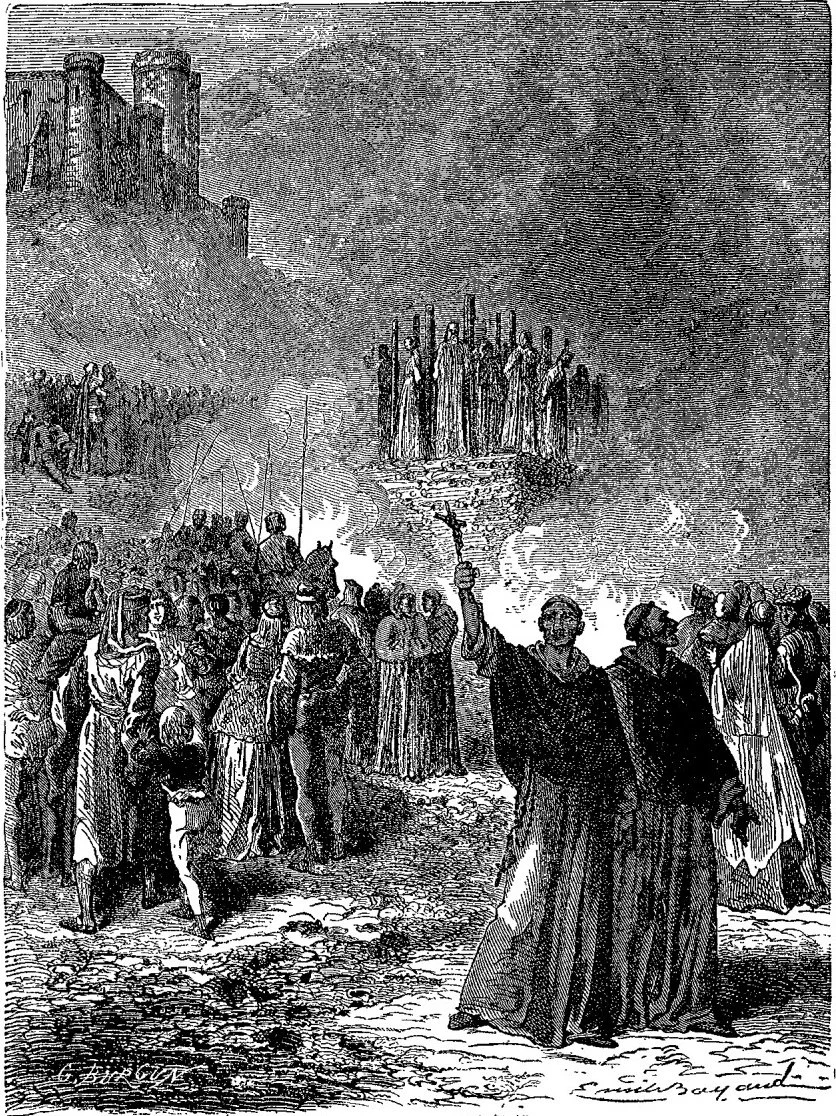
And so Dr. Moore, had he lived in the days of the Inquisition, would have gazed unmoved upon the auto-da-fé, and as the flames encircled their victims he would have said, if consistent: “As every other good citizen ought to be, I am in favor of the strict enforcement of the laws till they are repealed. I think these Protestants, as well as any other people, should be punished according to law, for violations of law.”
To the Evening Sentinel’s question Rev. Thomas C. Warner, D. D., replied:—
Laws are enacted with reference to the punishment of the evil-doer, and for the protection of society in all its rights and interests. The question of righteousness should never decide whether an existing law is to be enforced or not. Is it the law of the land? That question settled in the affirmative, then let the law be enforced. If the law is unjust, if it works hardship to innocent persons, still let it be executed so long as it remains upon the statute books. The surest way to secure the modification or repeal of an unjust law is to illustrate its prejudice by enforcing it. Whatever may be my private opinion touching the Sunday laws of Tennessee, I am in favor of their impartial execution. Whether they interfere with a man’s religious views or his business practices, so long as they are of record for the regulation of public conduct and private practice, let them be rigidly applied.
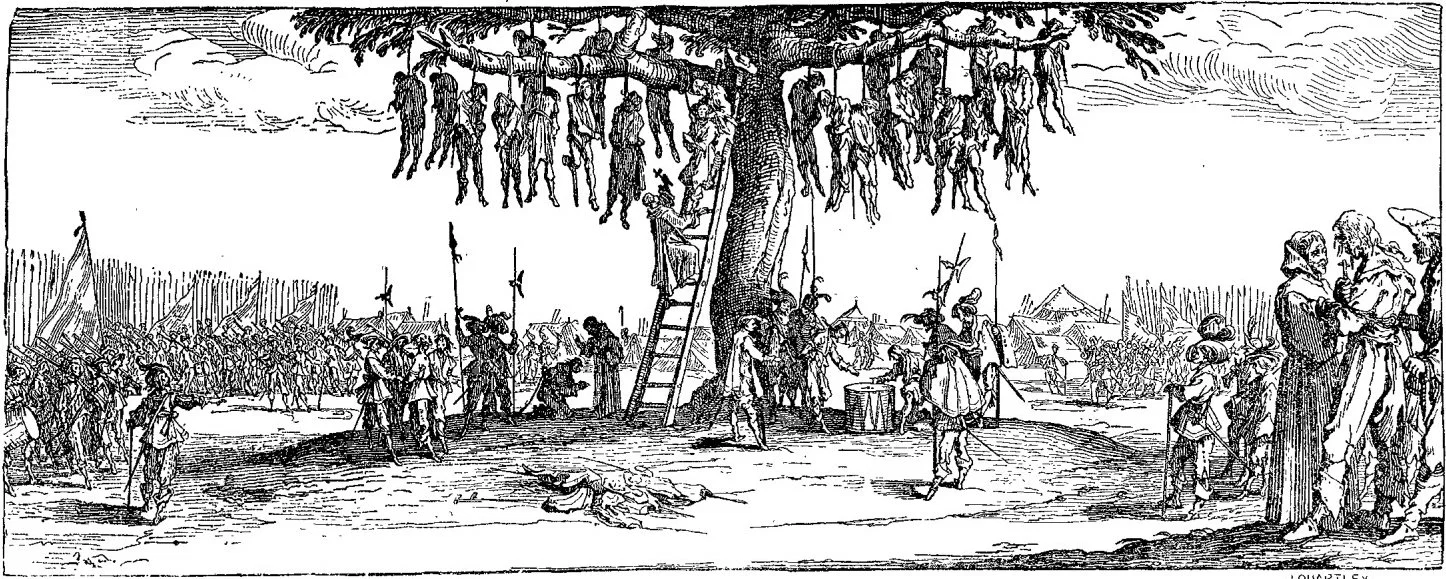
It almost passes belief that these words could fall from the lips of a professed representative of the Man of Calvary, the Prince of Peace. Had this minister lived in the days of the Inquisition, when in every country in Europe and in every civilized country in the world it was against the “law” to disbelieve the dogmas of Rome; he must, if in France or Spain, or the Netherlands, have stood by the burning pile, or by the gallows tree, and said:—
“The question of righteousness should never decide whether an existing law is to be enforced or not. Is it the law of the land? That question settled in the affirmative, then let the law be enforced. If the law is unjust, if it works hardship to innocent persons, still let it be executed so long as it remains upon the statute books.”
In view of such utterances, is it any wonder that the prophet of God, in describing the very times in which we live, said: “Judgment is turned away backward, and justice standeth afar off; for truth is fallen in the street, and equity cannot enter”?
It is true that thus far the administration of the Sunday laws of the various States has been very mild compared with the acts of the Inquisition to which reference has been made. But this does not alter the fact that these men have been taken from their homes for no offense against their fellowmen; they have been unjustly deprived of their liberty and been branded as criminals and worked as convicts for a purely religious offense, for acts done in accordance with the dictates of conscience and not trenching upon the rights of others. Thus the authorities have undertaken, by persecution, to coerce men in matters of religion; and “it is incumbent on the authors of persecution,” says Gibbon, “previously to reflect, whether they are determined to support it in the last extreme. . . . The fine which he [the persecuted] is unwilling to discharge, exposes his person to the severity of the law, and his contempt suggests the use and propriety of capital punishment.”
ENFORCING THE “LAW” IN TENNESSEE—ADVENTISTS IN THE CHAIN-GANG.
This is well illustrated in the cases of the Tennessee Adventists. Men can never fall into the hands of more merciful officers than those into whose hands the Rhea County Adventists have fallen. Four months ago Judge Parks imposed a fine of only $2.50 in each case, and remitted even that. He also recommended the pardon of the convicted men. At the recent term of court he fined those previously convicted three times as much as he had previously done; and in one instance where the defendant had been twice convicted previously, once before a justice of the peace, and once in the Circuit Court, Judge Parks imposed a fine of $12.50, five times the amount of the fine imposed four months before. Thus the State of Tennessee, as represented in this thing by its courts, has entered upon a course that must end in the infliction of the death penalty; for it is not a supposable case that these men will violate their consciences even to save their lives; and certainly the temper251of Tennessee’s law-makers must change very materially before the State will recede from the position it has taken.
Expressions of sympathy and kindly regard are no new thing in cases of persecution for conscience’ sake. The ecclesiastical courts of the Dark Ages frequently expressed abundant sympathy for their victims and bespoke mercy for them at the hands of the civil authorities to whom they committed them to be dealt with “ACCORDING TO LAW;” mercy which they well knew their victims would not receive; for the condemned men were then, as the Tennessee Adventists are now, self-confessed “law” breakers, and it was a maxim then as it is now: “The law must be enforced.” The result then was imprisonment, confiscation, torture and death by the rope, the ax, the fagot.
The ultimate end cannot be different now. True, the extreme penalty may not be so speedily reached as in the Middle Ages, but it is none the less inevitable. The death penalty is not only in the first attempt to coerce men in matters of conscience, but it is in the assumption of the right to coerce them; and the easy stages by which it is to be reached in Tennessee only make it the more certain. Had heavy penalties been imposed upon the Rhea County Adventists for the first offense, public sympathy would have been aroused in their behalf, and the so-called law might have been swept from the statute books; but the sympathy of the judge, the kindness of the sheriff and his deputies, the pardon by the governor, all serve to create a feeling that having been treated with such marked consideration, the Adventists ought to be willing to compromise, to surrender their consciences; and the fact that they will not compromise in the least, that they remain loyal to God and to conscience, is taken by many as an evidence of contumacy, and their further punishment is regarded as well-merited.
We have little hopes of influencing the State of Tennessee in this matter, or of even lightening the persecution of the Adventists there. Forewarned by the Word of God, we have long looked for such things in this country, and we expect them to increase rather than diminish. The return to the maxims and methods of the Dark Ages has begun, and the goal is certain. We expect to save from the ruinous course upon which they have entered neither the State of Tennessee nor yet the United States, which has in many ways approved the wicked principle which Tennessee has adopted; but we do expect to save honest-hearted individuals from participation in the wrong.
“Once to every man and nation comes the moment to decide,
In the strife of Truth with Falsehood, for the good or evil side;
Some great cause, God’s new Messiah, offering each the bloom or blight,
Parts the goats upon the left hand, and the sheep upon the right,
And the choice goes by forever ’twixt that darkness and that light.”
“Hast thou chosen, O my people, on whose party thou shalt stand,
[Ere the Doom from its worn sandals shakes the dust against our land?]”
God has ordained civil government, but he has “not thereby abdicated the throne of moral dominion. Every man must give account of himself to God. As Lowell has oddly but forcibly expressed it:—
If you take a sword and dror it, and go stick a feller thru,
Gov’ment aint to answer for it; God’ll send the bill to you.
WHOLESALE HANGING OF PROTESTANTS—ENFORCING THE “LAW” IN THE NETHERLANDS.
THE AUTO-DA-FE—ENFORCING THE “LAW” IN FRANCE.
It is no less a moral wrong to rob a man of his natural rights than to rob him of his money or other property; and it is no less a moral wrong to do it under the forms of law than it would be to do it without law.
Government cannot make right wrong nor wrong right, and the man who does a moral wrong in obedience to what he may understand to be law, or in obedience to that which is in fact human “law,” will in the end find that he is not thereby freed from responsibility to God. Judge Parks, Attorney-General Fletcher, the grand and petit jurors, and the sheriff and his deputies, must each answer to God for the wrongs done the Adventists, and that at a bar where the plea of supreme court decisions and official oaths will not avail. The law of God will be the rule of that Judgment. As Elder Colcord so impressively said last March: “There is a time coming when there will be a change, and God, and not man, will be the Judge—and in that court questions will be decided not by the statute books of Tennessee, but by the law of God.” And in that Judgment the authorities of Tennessee will be on trial, not as belonging to a system in which their identity is lost, merged into that moral nonentity, the252State, but as individuals, each responsible for himself to God, and each to give account for himself of the deeds done in the body.
“Careless seems the great Avenger; history’s pages but record:
One death-grapple in the darkness ’twixt old systems and the Word;
Truth forever on the scaffold, Wrong forever on the throne,—
Yet that scaffold sways the future, and, behind the dim unknown,
Standeth God within the shadow, keeping watch above his own.”
FUNDAMENTAL PRINCIPLE OF GOVERNMENT.
The fundamental principle of American jurisprudence is that stated in the Declaration of Independence: that government is instituted to secure the rights of man. These rights are simply artificial divisions of the law of nature. Now that which is to be secured—man's rights—precedes that which secures them—civil government. They are also superior to the provisions of government. Blackstone says: “This law of nature being coeval with mankind, and dictated by God himself, is of course superior in obligation to any other. It is binding over all the globe, in all countries, and at all times. No human laws are of any validity if contrary to this; and such of them as are valid derive all their force, and all their authority, mediately or immediately, from this original.”
In the universal recognition (whether acknowledged or not) of this principle—that there is a superior standard of justice—lies the force of charges that certain legislative acts are unjust. For injustice is nonconformity to the law of justice—which is the natural law. If the legislature were omnipotent, if there were no superior law, if it could make right wrong and wrong right, then any law it might make could not be said to be unjust. Its own acts would be the standard of justice. Right would then be conformity to human law, and wrong, violation of human law. The absurdity of such a position is evident—the claim would be preposterous; as long as the maxim, Humanum est errare, is true, there must be some invariable standard by which all human acts, public as well as private, are to be judged. This standard is variously termed the law of justice, the law of nature, natural rights, etc., and has reference to those abstract principles of justice and right imprinted more or less clearly on the sense of every man.
It is this law that receives formal recognition in our declarations of rights—declarations simply of certain parts of this superior law;—not that these rights are any more sacred when thus “declared” than they were before, but they are thus rendered more susceptible of enforcement. That they are simply a part of this higher law, and are so recognized, is proved by the provision so generally inserted in declarations of rights, that “the enumeration herein of certain rights shall not be construed to deny or disparage others retained by the people”—a direct acknowledgment of the most important principles of this law. Theoretically, it adds no force whatever to the rights. Such declaration is not dissimilar to the frequent instances where the State Constitutions reënact certain provisions of the National Constitution. Such reënactment does not make the provision any more binding; nor would a provision to the contrary annul the superior law. The State Constitution, in so far as it contravened the provisions of the National Constitution, would simply be void. Blackstone states this principle in his commentaries: “Those rights, then, which God and nature have established, and are therefore called natural rights, such as are life and liberty, need not the aid of human laws to be more effectually invested in every man than they are; neither do they receive any additional strength when declared by the municipal laws to be inviolable. On the contrary, no human legislature has the power to abridge or destroy them.”
It is true that when recognized in our constitutions, our rights are more easily enforced, and hence this recognition was insisted on by Jefferson and other early American statesmen. But because this recognition may not exist, one's rights cannot therefore be legitimately trampled upon. Even if the Constitution did not prohibit the taking of private property for public use without just compensation, the legislature could not therefore legitimately do it. Nor can the legislature rightfully take the property of A and give it to B. There is no court in the land that would enforce such a decree. It would violate this superior law, and therefore be absolutely void. Hence, as government is instituted to secure the natural rights of man, and as our constitutions, in their declarations of rights, recognize this law and limit the powers of government accordingly, any law which deprives an individual of his rights is unconstitutional.
In accordance with this principle, Jefferson declared: “Our legislators are not sufficiently apprised of the rightful limits of their power, that their true office is to declare and enforce only our natural rights and duties, and to take none of them from us. . . . The idea is quite unfounded that on entering into society we give up any natural right.” This doctrine is coeval with courts of justice, and was unequivocally asserted and re-asserted centuries ago by England's most eminent chief justices. Said the distinguished Lord Hobart: “Even an act of Parliament, made against natural equity, as to make a man judge in his own case, is void in itself; for jura naturæ sunt immutabilia, and they are leges legum.”
Thus this American principle is simply that which has been declared again and again by the greatest jurists which have ever adorned the English bench. In “Elements of Right and of the Law” (Section 520), Mr. Smith says: “It is a well-established principle of the American law, that an act of Congress in excess of the constitutional powers of the Federal Government is absolutely void; and so far as the direct infringement of private rights is concerned, this principle is in fact enforced by the courts; but in questions merely political, there is in general no practical means of restraining the execution of the law. Nevertheless such a law is void, and not only affords no legal justification to any one seeking to enforce it, but every subordinate officer, and indeed every private individual, has the right to disobey it, and will be vindicated in doing so by the courts.”
The individual retains his natural rights, and government is limited accordingly. And as every individual equally has the natural right to worship whom he pleases and on what day he pleases (as long as he interferes not with this same liberty in others), or to refrain from worshiping altogether, any human law interfering with this right, is, under our constitution, void; it matters not whether it be a Sunday law, a law to compel him to attend church, or a law requiring any other religious observance, if it interferes with the right of a single individual, it is unconstitutional and absolutely void.
It is true that our judiciary have not always had a clear conception of this principle, and numerous decisions are flatly contradictory. But this is because in some cases precedents have been followed, not principles. Law, by some, has been regarded as a bundle of previous decisions, rather than as a science founded, like other sciences, on the immutable law of nature. The erroneousness of such a view must be obvious to all who have given it reflection. “The law of England,” Lord Mansfield observed, “would be an absurd science were it founded upon precedent only.” And Lord Coke repeatedly declared that the law “is the perfection of reason.” “Reason,” said he, “is the life of the law; nay, the common law itself is nothing else but reason.”
In the onward march of civilization and in the advancement of science in general, progress has also been made in our system of jurisprudence;—not that principles have changed, for the law of nature is both unchangeable and immutable, but in this advancement clearer views of the principles of justice have been obtained. Progress is especially seen in connection with religious legislation and religious decisions. In America the dogma that Christianity is a part of the common law has been repudiated. Sunday laws have been declared to be unconstitutional. Religious proclamations, too, were so held by Jefferson and Madison; and the latter also states that public chaplaincies are an illegitimate departure from American principles. And as our judges and legislators incline more to justice and reason and less to the precedents dictated by bigotry, our Government will become still more liberal, and our Sunday laws, and all other religious laws, will go the way that similar laws have gone before them. In order to fulfill the objects of government, every man must be insured “the fullest liberty to exercise his faculties compatible with the exercise of like liberty by every other man.” This is the principle asserted in the Declaration of Independence, when it says, “All men are created equal;” and the repeated departures from it in our religious laws which discriminate against the sabbatarian and infidel are a standing reproach to our Government, and a constant travesty on justice.
Salvation Army Captain Jailed for Open-Air Meetings
By Editor
UNDER date of July 5th, the San Juan Times, Farmington, N. M., contains the following editorial note:—
The authorities of Colorado Springs, after thoroughly illtreating the members of the Salvation Army, have finished up by sending Captain Blanch Cole to jail for thirty days. This is religious persecution again with a vengeance. The lady is well known as a well educated woman, and was exerting herself to the utmost to aid the fallen and comfort the distressed. Her crime is the holding of open air meetings. Her sentence is looked upon as a disgrace to Colorado Springs and to Colorado.
The SENTINEL joins with the Times in condemning this treatment of Captain Blanch Cole. It is but another exhibition of that bigoted tyranny which imprisons Seventh-day Adventists in Tennessee. We are glad to see our contemporary striking the hydra-headed monster whenever he appears.
THE INTOLERANT “BLADE.”
In its issue of July 11, the Toledo Blade closes an editorial comment on the conviction of the Tennessee Adventists, for doing common labor on Sunday, with the following:—
There is no constraint upon the Adventists to devote the day to religious duties, or to hold it sacred. The law does not compel them to observe the Christian Sunday any more than it does the Jewish Sabbath. It merely declares that no one shall perform labor on Sunday; and there is no good reason why the Adventists should not obey that law. Their claim that it is a matter of conscience not to obey it, is absurd.
We are tempted to deal sharply with this utterance, but instead, will make the following brief comments:—
1. The commonwealth of Ohio recognizes that a statute compelling seventh-day observers to rest on Sunday, is tyrannical, and consequently exempts from its penalties “those who conscientiously observe the seventh day of the week as the Sabbath.” True, this is but toleration, but it is better than the oppression of Tennessee. Therefore, when the Blade asks that seventh-day “observers abstain from their usual avocations on Sunday, through respect for the Sunday laws,” it asks a sacrifice that its own State regards as an injustice.
2. The Sunday statute of Tennessee does bring constraint to bear on the Adventists to compel them to observe Sunday in the same manner enforced by the creeds of the Sunday-observing Protestant churches. All that the creeds require is cessation from labor. They do not attempt to invade the mind to ascertain whether it employs the Sunday in holy contemplation. Outward rest is all the creeds enforce, and this outward rest is just what the Sunday statute of Tennessee attempts to enforce. And just as the three Hebrew worthies refused to bow down to Nebuchadnezzar’s image and appear to worship, so Seventh-day Adventists refuse to bow down to the papal Sunday and appear to observe the statute-intrenched dogma of Sunday sacredness.
3. Seventh-day Adventists know that Sunday observance is not commanded in Scripture. They know that Sabbath observance is commanded. They know that Sunday observance is a church ordinance only, and is put forth as the sign of an opposing system,—the mark of that system which declares that “the church has power to ordain feasts and holy days and to command them under sin.” Seventh-day Adventists hold to a system of doctrine diametrically opposed to this system, and while thus believing they conscientiously refuse to wear the badge of the opposing system.
4. Sunday statutes attempt to abridge the inalienable right to teach what one believes. “Action speaks louder than words.” The Sunday observer works on Saturday, and by that work proclaims to all beholders that he does not believe that the seventh day is the Sabbath. Likewise, the seventh-day observer labors on the first day of the week, and thereby proclaims to the beholder that he does not believe that Sunday is the Sabbath. In Tennessee, the Sunday-keeper says, “No, you don’t,” and hastens to invoke the law to prohibit seventh-day observers from exercising a right which he loudly demands for himself.
If there is no conscience involved in being compelled to wear the badge of a false theological system,—if there is no conscience involved in the matter of teaching one’s faith, then it is absurd for seventh-day observers to assert that they cannot conscientiously obey the Sunday statute. But it is a matter of conscience for Seventh-day Adventists to rest on Saturday and work on Sunday. Nevertheless they do not thereby disturb either the public or private devotion of their neighbors. Only two of the hundreds of witnesses which have testified against them in the scores of cases that have been brought against them in the last few years have testified that they were disturbed. One of these was engaged at the same time in driving a cow home which he had gone to a neighbor, on Sunday, to procure. The other claimed to be disturbed, though he testified under oath, that he neither saw nor heard the Sunday work of his Sabbath-keeping neighbor, but was mentally disturbed by the mere knowledge that the work was being done. No; Seventh-day Adventists believe in practising the Golden Rule, and if their persecutors would act upon this Christian precept, all this persecution would cease.
MISSIONARIES DISREGARD CIVIL “LAW.”
By Editor
SOME weeks since, we referred in these columns to the passage of a statute in Florida, prohibiting the co-education of the races. Referring to this “law,” the Independent, of July 18, says, that “it affects not only teachers, but patrons of such schools—that is, parents may be imprisoned from three to six months in the county jail.” The Independent further says: “The American Missionary Association will receive and teach pupils, white or black, who apply for instruction at Orange Park; and there will be teachers to run the risk of imprisonment. Scholars will be fitted to teach Florida schools, white or black.”
We are glad the American Missionary Association has determined to disregard this so-called law. It is clearly violative of the constitution of Florida, because it is an infringement of religious liberty, and undertakes to interfere with missionary operations in that State. The gospel commission is,—“Go ye into all the world and preach the gospel to every creature.” Missionaries, everywhere, find it necessary, not only to preach the gospel in the common acceptation of the term, but to establish schools wherein a Christian education may be given. This the American Missionary Association has done at Orange Park, Florida; and it is this which the statute referred to proposes to prohibit.
When American missionaries go to foreign lands and there establish schools for the instruction of the natives, and these schools are interfered with by the authorities, our Government protests against such interference, as an invasion of natural right and of the law of civilized nations. Here, an American State is proposing to do precisely the same thing. By this statute, Florida tells the American Missionary Association how it shall not preach the gospel in Florida; that it shall not educate colored pupils in a school conducted by white people. This attempt is as great an outrage upon religious liberty, and the excuses made for it, are as disingenuous as the Sunday laws of the various States, and the so-called reasons for maintaining them. Both are alike in open violation of natural, God-given rights, and both should be alike disregarded; and we are glad that, as the Independent says, “there will be teachers ready to run the risk of imprisonment,” for violation of this Florida statute.
We honor the Independent for the stand which it has taken in this matter; and we honor the American Missionary Association for its determination to disregard this iniquitous measure, just as missionary associations have always disregarded similar so-called laws, designed to hinder their work in heathen lands; and just as Christians always have and always must everywhere disregard human enactments which trench upon the sacred rights of conscience.
FROM A MINNESOTA JUDGE.
EDITOR OF AMERICAN SENTINEL: I have received several copies of your paper, and must say that I am well pleased with it. Its short articles that “hew to the line” are sure to be read. At first I gave it but little attention, but it kept coming, and I thought I better see what it amounted to. Beyond a doubt the SENTINEL is just the paper needed for the times. It is a pity that every reader cannot have a copy every week; and I want to say to every one who may pick up a copy of the SENTINEL, don’t lay it down until you have read it.
Sunday is my Sabbath, and whether the teaching that Saturday is the Sabbath, makes the people any better may be doubtful; certainly they are not made worse thereby. He who believes that Saturday is the true Sabbath should be afforded the same protection as Sunday observers. It is surprising to hear of the persecution of the seventh-day people in Tennessee and other States. That they should be imprisoned for doing what they believe to be their duty to God, is a crime, notwithstanding statutes may read otherwise.
I have noticed that Judge Parks, who committed these men to prison, has been commended for his personal views upon this question, and justly so. Did he do right? Are his acts commendable? Let us see. Many of the early settlers of this country fled from a land of religious persecution, and when this Government was established care was taken that every one should have the right to worship God according to the dictates of his own conscience. Of course, such conscientious rights must not abridge the rights of others. The Sabbath was ordained by God. The observance of it is an act of worship, and is so regarded by all worshiping people. Whether Saturday or Sunday be the true Sabbath must be left to each individual according to his own conscience. It cannot be decided by legislative acts without abridging the rights of conscience.
The statutes of Tennessee do not prohibit one from keeping Saturday as the Sabbath. They in effect say you can do so, but you must forfeit one-sixth of all you could otherwise earn during the six working days; that is, you must not work Sunday. If you will keep Sunday only, you need to forfeit nothing. So if one keeps Saturday he must pay a license for the right to do so. This is so palpably in violation of the principle upon which our Government was founded, and in violation of the Constitution, that it does seem that any court, even the lowest, would be justifiable in disregarding any such legislative enactments. These persecutions, they call them persecutions, are a disgrace to the States; yes, and to the United States, which we call the land of liberty.
If we should seek to find the cause that has254lead to these conditions, no doubt we should find it in the inclination of churches to advance their interests by legislative enactment. The zeal of the Catholic Church in this direction exceeds all others. In fact, this church seems more political than religious. A few years ago a celebrated Irish Catholic divine replying to Froud, the English lecturer, upon the treatment of the Irish by the English, declared that the Catholic Church ought to stand at the head of all government, because the pope was the vice-gerent of God and could do no wrong. The leaders in this church now hold to and advocate this doctrine, and are seeking to make this a Catholic country, not by force of arms, as many think they intend, but by the ballot. Their priests control the votes of their members, and the pope controls the priests. Catholic school officers must be had, if possible, and so with legislatures, judges, and all executive officers. By the signs of the times there is no mistake in this. If any one disbelieves this, he should live in a community where the Catholics dominate, and he will be soon convinced of its truth.