“Is it such a fast that I have chosen? a day for a man to afflict his soul? is it to bow down his head as a bulrush, and to spread sackcloth and ashes under him? Wilt thou call this a fast, and an acceptable day to the Lord? Is not this the fast that I have chosen? to loose the bands of wickedness, to undo the heavy burdens; and to let the oppressed go free, and that ye break every yoke? Is it not to deal thy bread to the hungry, and that thou bring the poor that are cast out to thy house? When thou seest the naked, that thou cover him; and that thou hide not thyself from thine own flesh?” Isa. 58: 5-8.
My heart is stirred within me as I think of the vast number of people who are not being loosed from “the bands of wickedness,” who are hungry, naked, and homeless. I am thinking especially of the little children. In many cases grown people could help themselves if they would, but the little children are helpless; and what are we as a people doing for them?
This question has been ringing in my ears almost constantly for the past few weeks, and over and over again I am11compelled to answer that I do not know.
I do not mean merely the children of our own denomination; I mean the hundreds of little ones all about us in these large cities, those who are homeless and without a friend in this great wicked world, with no one to love or care for them, those who are orphans, and those who are worse than orphans—even those who are born in sin, and have not “blue blood” to boast of. What are we as Seventh-day Adventists doing for these little homeless children? I do not mean to say that nothing has been done, but O! the field is so great, and the workers are so few!
It is true that as a people we are trying to care for our own, but O! let us not in the effort to do this, forget that the Saviour has said, “Other sheep I have, which are not of this fold.” And may we not gather from this that he has other lambs besides those of our own number?
My heart goes out in loving sympathy to these uncared-for little ones, many of whom are bright, intelligent, and very teachable, just as much so as our own Seventh-day Adventist children. Why is it we do not take more interest in gathering them in and training them in the service of the Master?
I believe the children should receive first consideration, because they are the most needy and the most helpless. In just a few days the name of Jesus becomes to them the sweetest word on earth.
It is my privilege to care for some of these little ones at the present time, until the city can dispose of them, and O, how I have longed to have the privilege of getting them into homes among our people!
Just a few weeks ago I had a bright, promising boy, ten years of age, whose father was dead. The little fellow had lived with his grandparents until the grandmother died, then went to live with his mother, who had married again. The stepfather was very cruel to the boy, and in one of his drunken fits was arrested. The boy (with the consent of his mother, who was a frail little woman) was taken away with the expectation of getting him a good home in the country. After several attempts to do so, and meeting with no success, the committee in charge was compelled to send him to a Catholic school, as a last resort. Here there was no trouble at all. They welcomed him with open arms. They did not stop to ask whether he was of their faith or not, nor did they ask whether he was of “royal birth.” It was enough for them to know that they were to have the privilege of training another mind in the religion they professed to believe; and you and I know full well that when he leaves their school, he will have been so rooted and grounded in the Catholic faith that nothing else will be truth to him. I had hoped so much to see him placed in a home among our people, but now he is lost to us.
I have now two darling little girls — one about five years of age, the baby about fourteen months. Both are beautiful children, of lovable disposition, and would bring happiness and joy to any home where there was a welcome for them. Is there not some one who will open her heart and home to these friendless children? Next is a baby boy, who has a bright little face, and could not help winning his way, could he have but half a chance.
Can not we who claim to love the Saviour so much, have a part in this grand and noble work of training characters for him?
But, says one, I would dearly love to do something of this kind, if I could only know that the heredity was good, and that everything would come out right in the end. But the “blood”! the “blood”! there is so much in that! “O ye of little faith!” Can not He who has the power to save a man from the very lowest depths of sin, save a little child, who as yet has never known sin? And has not the blood of our crucified Redeemer power enough in it to cover the life of a little child, just as much as yours or mine? I believe that Christ is all powerful; I believe he can give new “blood.” Think you that he would refuse to receive one of these little ones? —No, never. Why is it we always plead for an excuse the desire to walk by sight? Do parents expect to walk by sight in training their own children? And do we not know full well that there are very few families, even among those who are supposed to have had the best of training (yes, and they even make their boasts of “good blood”) where is not found the rebellious, the “black sheep”? And I presume there was never a home so good that it did not have a “dark closet” wherein was hidden some skeleton of sorrow. But “charity covereth a multitude of sins.” And how easy it is to have charity for our own! But let us ever remember that God is not partial. He loves the poor little outcast with the same tender love that reaches out after your idolized darling. Thank God, he loves them all the same. Let us pray for that same love, and remember that he who said, “Train up a child in the way he should go: and when he is old, he will not depart from it,” meant every word of it; and not alone for yours or mine, but for every little child that can have the training.
It is truly a great work, but we have a great Helper, one who will never leave nor forsake those who put their trust in him. If only we could be willing to lay them on the altar, as did Hannah the young child Samuel, I feel confident that Christ would accept the offering.
Why, who can tell, we may find a “John the beloved,” or a “Paul,” a “Ruth,” or an “Esther.” God will bless us according to our faith. The child who is trained in God’s way, can not help being a blessing.
Those wishing to learn more about the children here mentioned, may write me, and I shall be glad to answer all questions regarding them.
143 Grant St., Dayton, Ohio.
GEO. O. STATES
By GEO. O. STATES
Lessons from Past Experiences —No. 18
GEO. O. STATES
YEARS ago there was a minister in one of the Eastern conferences who had a wonderful gift in moving the feelings of the people. For years he visited many churches, creating an excitement which, when over, left them in a worse condition than before. In visiting the churches he collected money for various departments of the work, which he did not account for.
His influence became very detrimental to the cause, and he finally left the State and began laboring in another part of the country. Our brethren in the conference where he had been laboring wondered why his course was not reproved by the spirit of prophecy.
He began visiting churches in his new field of labor, and was creating quite an excitement. It was claimed that the sick were healed, and the converting power of God was accompanying his labors.
In the midst of all this a special Testimony was sent one of these churches, in which it was said, “The angel of the Lord stood by my side and talked with me. He said the church at — would have to learn many things. He said that they had placed man where God should be. They were trusting in man to do the work for them which the Lord God of Israel alone could do. The Lord was working, signifying that he was their power and efficiency; and if they would work in harmony with him, talking to one another in faith and humility, dwelling on the lessons of Christ; if they would set things in order in the church, and let God speak to human hearts, then the Spirit of God would come into their midst, and a repentance would be seen that would not need to be repented of. But if they did not make the Lord their trust, the blessing they had received would be only their condemnation. . . . God would have his people in every conference look to him, and him alone, and not make flesh their arm.
“Elder —’s peculiar talent is to move the feelings of the people; but this, in many, many cases, seen as God sees it, results in far more harm than good. His case has been my special burden for years; and as God has laid open to me the weaknesses and errors of the man, I have laid them distinctly before him. Has he received the Testimonies? Has he acted upon them?—No, he has not taken the pains to study them point by point as a word from God to him; he has not heeded the warning.”
I have quoted thus largely from this special Testimony because so many at that time were perplexed because his course was not brought out through the servant of the Lord, but we did not know that all the time the Lord was sending the man personal Testimonies in order to save him. Finally it came to a place where the matter had to be given to the church. He continued in his downward course, however, and soon gave up every point of the message, and12to-day is controlled by his appetite, not having any interest in the message.
It is sad indeed to look over the past history of our work and see so many who have held prominent positions in this message, but having rejected the warnings and reproofs sent them through the spirit of prophecy, have eventually given up the whole truth. As I think of these things, I am reminded of the counsel given the remnant people in 1 Cor. 10: 12: “Wherefore let him that thinketh he standeth take heed lest he fall.” When we as individuals or as a church are reproved by the Spirit of God and reject the admonition, we do so at the peril of our souls.
Cedaredge, Colo.
The Most High Our Habitation
By E. M. Hawkes
E. M. HAWKES
HOME, dear place of refuge, rest, shelter, sweet understanding, where we gain fresh cheer and courage for life's work! Is there any human longing deeper seated than that for home? Fortunate is the one who has a permanent dwelling-place from which to go out to labor, possibly for some time, and then return, always sure of a welcome. It is a strong source of inspiration when at work to feel that when the rest time comes, friends and kindred are looking for the familiar return. A life without a home is like a leaf carried down stream.
We sometimes think that Christ had no home because he said, “The Son of man hath not where to lay his head;” but he had the best home of all. “In my Father’s house are many mansions,” he said; and to this home, given up for a time that he might work for us, he returned to prepare a place for us; and there he will receive us unto himself, that where he is, we may be also. The essence of home is to be with loved ones, and this desire is forever sanctified by these words of Christ.
The ninety-first Psalm is a most comforting picture of the everlasting protection and surety of those who abide in the Lord and make him their best Friend. “He that dwelleth in the secret place of the Most High shall abide under the shadow of the Almighty. . . . Because thou hast made the Lord, which is my refuge, even the Most High, thy habitation; there shall no evil befall thee, neither shall any plague come nigh thy dwelling.” These words of stately and solemn tenderness can not be equaled by any other assurance of protection and friendship. The marriage vow of cherishing for better or for worse is weak indeed before them, and the inmost soul longs for the shadow of the wings of the Almighty.
There must be a correspondence between heart and home. If the very furnishings of your dwelling do not invite you to be at ease with the familiar comfort coming from daily use, the place is not homelike; and if there are not hands awaiting the help of yours, and eyes that you can brighten by your presence, and faces to smile at sight of you, that place is not home.
If we do not work for the Master now, and learn to speak his language of comfort to the needy, and study eagerly the principles of his life, how can we prepare ourselves to enjoy life with him? “Eye hath not seen, nor ear heard, neither have entered into the heart of man, the things which God hath prepared for them that love him. But God hath revealed them unto us by his Spirit: for the Spirit searcheth all things, yea, the deep things of God.”
When Christ left, the Comforter was sent, the Spirit of truth, to dwell with us. Through all the changes and processes of growth, sad separations and breaking of precious associations, we may have the Holy Spirit, the Comforter, with us to guide us to our lasting home. We are to be no more strangers and foreigners, but fellow citizens with the saints, and of the household of God, and we are to be builded together for an habitation of God through the Spirit.
“Joys are flowing like a river,
Since the Comforter has come:
He abides with us forever,
Makes the trusting heart his home.
“What a wonderful salvation,
Where we always see his face!
What a peaceful habitation!
What a quiet resting place!”
Springfield, Mass.
An Ancient Church Letter
THE following letter is an exact copy of a church letter granted by the Congregational church of Canaan, Conn., to Rev. Benj. Green and wife to join the same church at Stillwater, N. Y. It will be noted that these early Christians held the hope sacred of the near advent of the Lord:—
“April ye 8, 1753, the Church of Christ in Canterbury to ye Church of Christ in Canaän Sendeth Greeting, Wishing Grace, Mercy and Peace may be multiplied to you through our Lord Jesus Christ we Rejoyce to heir of your order in ye Gospel fellowship, and that the Lord hath united you to make a visible Confession of ye Lord Jesus Before Man, and here gathered into a visible Church & for as much as by the Providence of God, our Beloved Brother and Sister, Benj. Green and his Wife are Removed in ye Surcomstances of habittation, from us to you & also Joyn in hart and Profession with you and Desire as he tells us, that ye outward order of Christ’s house may be kept &c., that we give him a Leater of Recommendation and Dismission from us to you, therefore we Sartify that we do hereby Recommend and Dismiss them from us to you, as Beloveds in ye Lord, Cleare of any Error Either of princaple or Practise, Submitting our Selves to ye Soverain Providence of God in removing them Praying God to Build you and them up, in the most holy Faith and Give you a pastor, after his own hart, and that you Would Watch over one the other in the Pure Discipline of Heaven, & then after a Letle While we Shall have N° Local Distance, But Shall Joyn that triumphant Song, Round ye throne crying Allilua, Amen. So come, Lord Jesus. Come quickly Amen. The Grace of our Lord Jesus be with you all. Amen.”
Are We Lowering the Standard?
By E. K. SLADE
E. K. SLADE
The third angel’s message is to call out a people that will stand as an object-lesson of simplicity and piety, serving as a rebuke to the prevailing ways of the world in the last days. The enemy will exercise all his artfulness to lead us to lower the standard of the Christian life and conform to the ways of the world in every way possible. The church, in its individual members, will be tested to the utmost on this point. Many times we are led to feel that on the part of some the standard is being lowered. Special light touching upon almost every phase of life, has been provided for these last days, that the children of God may stand out from and above the sordid things of this world as a peculiar people, to show forth the virtues of him of whose household we are permitted to be members. It is hard to conceive of a more deplorable condition of things than for our young people or others to feel that about all that is required on their part to become a Christian and unite with the church is to make a profession. Those bearing the responsibility of seeking for souls, should give most careful heed to this matter, that it may be understood by all that to go forward in baptism and unite with the church means to take a stand upon a plane far above the ways of the world. Its pleasures and pastimes, its mad rush for selfish gratification, are wholly foreign to a true child of God.
Our ministers and teachers, and especially those who are laboring for the young, should endeavor, as never before, to hold up a high standard for those who are being called out at this time. The world is going mad over races and pleasure seeking, ball games, excursions, and summer outings; in fact, life is considered extremely tame and hardly worth living unless there is mixed in much of the exciting and that which will contribute to the satisfaction of the selfish nature.
As public laborers and church officers, shall we not use greater care than ever before to hold the standard high? Should the example of any professed Christian serve to set a standard that will be lower than that which the Lord has indicated? Avoid holding out to the young or any others an opportunity of entering into church relationship at this time that will not mean coming out from the world and taking a stand upon a high plane such as this great movement calls for. It is easy to get young people to unite with the church if we will bring the standard low enough. Any plan or policy of work that will lower the standard and remove the sacrifice to make it easy for one to get into the church should be discountenanced.
Holly, Mich.
The German Union Conference
By Guy Dail
GUY DAIL
We have just closed the largest meeting our people ever held in Europe—the seventh annual session of the German Union Conference, held on the Friedensau camp-grounds, July 18-28. There were one hundred and twenty-six tents pitched, and about twelve hundred of our own people were on the grounds, to say nothing of the hundreds of strangers who visited us, especially Sundays. Germany, Russia, Austria-Hungary, German-Switzerland, Rumania, Bulgaria, Holland, and Flemish Belgium were represented by one hundred and seven delegates. God met with us. He blessed us by sending conviction of sin and his converting power into our hearts to an unusual degree in the Sabbath meetings. Over sixty were baptized.
There are signs of growth in the field, and in our institutions. At the beginning of 1906 we had a membership of 7,000; now it is 9,058, and during the first six months of 1907 there have been 1,145 accessions, while the tithe for the same time was 162,319 marks. There are 200 regular gospel workers in the field. We have now been granted full religious rights as a private church society in Bavaria. We have the same privileges accorded to us in Russia as are enjoyed by the Baptists. The military and school questions are being brought more and more prominently before the German people by carefully written articles about us in the large papers of the country, and thus the principles of the third angel’s message are being taught even by the secular press. During the first part of 1907 we have been able to enter Turkestan and organize a church there, at Taschkent; we have opened operations in Siberia, and established our first church in that field; we have secured a foothold in Brussels, where we now have an unorganized company, and a good interest; for the first time can we report that we have a believer in Servia. A native Servian, of Belgrade, was visiting friends in Hungary, learned of the truth, and was baptized before returning to his home.
We are pleased that we have been able to dedicate, free of debt, the almost finished Old People’s Home here at Friedensau. At our meeting last year it was voted to erect the building. It will accommodate seventy-five inmates.
Other encouraging features are noticeable about the work here at Friedensau. The sanitarium has sixty-five patients; seventy-two medical missionaries are now carrying forward this department of the third angel’s message, forty of whom are engaged in the field, outside of the sanitarium. Dr. A. Meyer is medical superintendent, in the place of Dr. A. J. Hoenes, who accepted a call to the Madison (Wis.) Sanitarium. Dr. A. W. Peterson is assistant physician, giving special help in the field work. The Friedensau Industrial School has just been able to send out into the conferences and missions of the union seventeen young people who have finished their school work, and fifteen nurses who will take their practical course in the sanitarium. The new applicants accepted for admission to the fall term of school will bring its enrolment up to one hundred and forty-two, in September.
The Hamburg House has finished its best year, its net sales amounting to 335,000 marks for the last twelve months, or 20,000 marks more than the previous year. In 1905 we had 183 colporteurs; now there are 248. The last year we have published in eleven languages, 43,465,170 pages issuing from our House. The Herold der Wahrheit has had an average edition of 50,000 bimonthly, against 35,000 copies the previous year.
In view of the rapid growth in the German Union, it has been recommended that, if no unforeseen circumstances hinder, there be organized, in time to become operative Jan. 1, 1908, a Russian Union, a Baltic, a South Russian, a Saxon, and a Hungarian Conference. It is proposed to open a new mission on Victoria Nyanza Lake, German East Africa, next year. Thus far our missionary operations in that colony have been conducted wholly in the Pare Mountain district,—the opposite side of the country from the lake. It was voted to enlarge our Hamburg House still more, by the erection of a commodious packing and stock room, and to purchase another, a third, large cylinder press; to open a branch of the Hamburg House in Russia, as soon as the conditions of the country admit; to begin the publication of a Rumanian paper; to enlarge the German Good Health, and increase the price somewhat, that it may be better adapted to the use of the colporteur; to continue our efforts in behalf of the material fund for “Ministry of Healing” in German, and not to slacken our efforts to circulate that book, as well as our other good literature in these various languages (about 4,500 marks were raised toward the material fund at this meeting); to seek for corporation rights, as a German Union; to pay the tithe of the tithe of the union, as well as all our Sabbath-school, annual, and weekly offerings, to the European division of the General Conference, beginning with Jan. 1, 1908, in harmony with the recommendation to that effect made by the conference at Gland, instead of having these funds remain in the German Union treasury as heretofore.
The German and the German-Swiss Conference presidents were quite well changed about, not because there was dissatisfaction in any field, but because Brother J. T. Boettcher must be freed for Russia, and a general readjustment could easily be effected. Brother G. Hetze, of Russia, was ordained to the ministry the second Sabbath afternoon—a day of special blessing.
A vote of thanks was rendered the American brethren for their financial help to the Russian field during the late famine in certain parts. All were grateful for the timely help of Brethren Prescott and Haffner. It is intended, also, to prepare a vote of thanks for the Prince Regent of Bavaria, for the freedom he has recently granted our people. It was recommended that our people, in view of the privileges granted us in Russia and Bavaria, cease not to pray for the same rights in those countries where we yet are denied them, of which there are several in our field.
The nominating committee’s report was unanimously adopted, as follows: President, L. R. Conradi; Vice-president, H. F. Schuberth; Vice-president for Russia, J. T. Boettcher; Secretary, W. Ising; Treasurer, B. Severin; Assistant Treasurer, N. Schlatterer; Treasurer for Russia, E. Creeper; Sabbath-school and Missionary Secretary, W. Ising.
All leave the camp here in the best of courage, prepared better than ever for the conflicts that are before them. Let us remember the work and the workers here.
Friedensau, Germany.
Bolivia, South America
By E. W. Thomann
E. W. THOMANN
JUST a few days before the time of our annual gathering in Chile, I felt the burden to pray for Bolivia, and to ask the Lord earnestly to send a worker soon to that neglected field. I could not see where the Lord could get the man needed, because I did not understand how any of the workers could be spared for that field. After a dream, I felt like going myself, if no one else could be sent.
Then I wrote to America, advocating the sending of a worker to Bolivia from that country, but offering myself to go, if no one could be sent from there. A few days after, before my letter reached its destination, I received a letter from the secretary of the General Conference, stating that it was impossible to send a worker from the States at that time. I felt a little disappointed. But as I had offered myself, I thought the Lord might want me to go, and if so, he would open the way. And, although this letter was not a reply to mine, yet it answered as such to me. I saw in it the providence of the Lord, and presented the matter to our brethren in South America.
At the Santiago meeting two or three days later, a young brother who had backslidden made known his determination to serve the Lord anew, and said that if we could use him in any way, he was willing to serve. I saw in this14the hand of our Heavenly Father. This young brother had been editor of a paper for some time, understood the Spanish language well, and he was just such a one as we needed in our printing plant, if I should be released from my work on our Señales de los Tiempos. He accepted the invitation to go to Valparaiso and take charge of the printing work, which opened the way for me to go to Bolivia.
Our baggage did not cost anything extra on the boat from Valparaiso to Antofagasta, and from there to Oruro the railroad company gave us free passage, also carried our baggage without charge. Our trip was as pleasant as good weather and health could make it. But, after all, we were very glad when we reached Cochabamba.
Brother Pereira has been in the country now about six months. He took a few subscriptions for our Spanish missionary paper, and sold a few books and some tracts. There are no Sabbath-keepers here as yet; but there are those who are willing to listen to the truth, and we hope that soon some will take their stand for it.
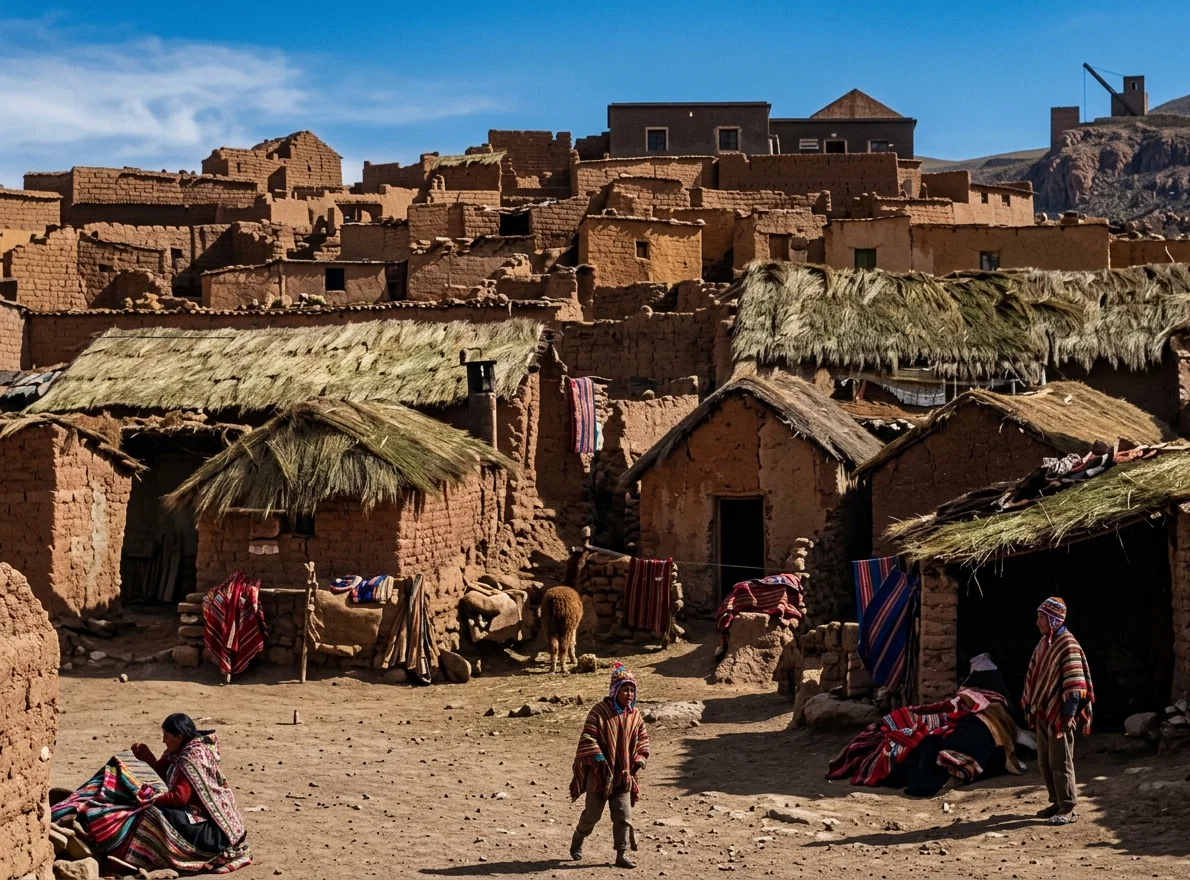
The language mostly spoken in Bolivia is Quechua, an Indian language; but the official language is Spanish. Perhaps one fourth or one fifth of the whole population understand more or less Spanish. In the northern part of the country the people speak Aimarah, another Indian language.
As we have no literature in either of these Indian tongues, I decided to go to work to prepare some. I bought a cyclostyle apparatus. First I write in Spanish, and some of the interested ones translate it into Quechua; then we duplicate as many copies as we need. In that way we get the message into a new language, and some who can read Spanish and at the same time understand Quechua can read it to the Indians, and thus they get the everlasting gospel in their own language.
One of those interested is quite an educated man, and speaks both Quechua and Aimarah. If converted, he will be able to help in preparing literature. In Chile we have also a Bolivian brother who speaks both these languages. It is probable that he will sell his bakery, and come to labor in his native land. I hope that I shall be able to learn at least the Quechua so as to be able to speak and write it.
When I consider Matt. 24:14; Rom. 9:28; and Rev. 14:6-14, I can but think that the work must go rapidly in some way in this country; because, being entered late, it must be warned quickly. I pray that the Lord may give me wisdom and understanding to begin the effort aright.
We are of good courage, and I am confident that the One who has sent us here will fulfil his promise to be with his followers everywhere, and to the end of the world.
Cochabamba, Bolivia.
H. H. DEXTER
By H. H. Dexter
France
H. H. DEXTER
THE message of Rev. 14:6-12 is making headway in our field. We are waiting to see the Lord do great things in France. For the past twenty-five years the message has been preached more or less, but with meager results. Two years ago the membership of this mission field was one hundred and fifty. Since then, one hundred honest souls have accepted the truth. Lack of workers has been the cause of the slowness of the progress in past years. At present we have a corps of strong, faithful young men and women, who are devoting all their energies to pushing the triumphs of the cross to the very gates of the enemy. We have three ordained ministers, five licentiates, five Bible workers, and seven canvassers—a small force to evangelize forty million people. But we are of good courage, having the settled conviction that God is at the head of this work, and that it will soon triumph gloriously.
AN INDIAN VILLAGE IN BOLIVIA
The words of Jesus in John 10:16 have given me much encouragement of late: “Other sheep I have, which are not of this fold: them also I must bring, and they shall hear my voice; and there shall be one fold, and one shepherd.” The Good Shepherd has wandering sheep in France, lost on the bleak mountains of sin. “Them also I must bring.” Determination is here expressed. We are all anxious to “bring” people into the truth; now, if we are truly united with the Good Shepherd, he will surely guide us to the places where he knows there are lost sheep. “They shall hear my voice.” We must hunt, we must call, and we must bring. When a lost sheep recognizes the voice of the Shepherd, it will not take him long to respond. It is the earnest desire of the workers in this field to be God’s true spokesmen, so that the call we are making may be clear and positive.
Before attending the General Conference Council at Gland, I went to Clermont Ferrand, in central France, to baptize three candidates, and to receive into the church one other upon her former baptism. Two of these are a former Baptist minister and his wife. For a few years he has been working at his trade as optician. He is well-grounded in the truth, and is a faithful witness to the message in this city where Catholicism has a strong hold. We hope that sometime this brother will be able to arrange his business affairs in such a way as to devote all his energies to the proclamation of the message. One other candidate is an intelligent young man—a former Catholic. We are glad that there is a little company of earnest believers holding up the banner on which is inscribed, “The commandments of God and the faith of Jesus.”
In two years over thirty persons have been brought to accept the truth at Paris. A few of these have apostatized, but the rest are earnest, devoted Seventh-day Adventists. The work at Paris is now on a good, firm basis, and there is an encouraging outlook for a large, flourishing church. From Clermont Ferrand I went to Paris, to administer baptism to six new converts, and to hold the quarterly meeting. Among these new members is a brother who has left his position as bookkeeper at a large salary, in order to keep the Sabbath. Recognizing in him qualities that would make a valuable laborer, I felt free to encourage him to enter the work. He is now with me at Nîmes, in southern France, devoting his strength to canvassing and studying the message. He is thirty-nine years of age. He was at one time a devoted Roman Catholic; was converted among the Baptists ten years ago, and for a short time was a lay preacher. Two other young men, brothers, members of the Paris church, have entered the work, as colporteurs. One is helping Brother Augsburger in Paris; the other is with the workers in southern France. Thus the Lord is adding to our laboring force new recruits who are Frenchmen. We are very glad for this; for it is next to impossible for workers from the home conferences to come to France to labor successfully in this language. Not that the language in itself is very difficult to master; it is the pronunciation that the foreigner, and especially the English-speaking one, has great difficulty in acquiring.
At the Gland General Conference Council, after I had given a report of the progress of the work, and of the needs in our field, the Lord put it into my heart to appeal to my dear American brethren for a large new tent for field work. To my glad surprise, immediate response was made by Brethren E. T. Russell, Wm. Covert, and W. B. White. In behalf of the two hundred and fifty Sabbath-keepers in the French field, we extend our heartfelt thanks to the union conferences represented by these three brethren. Brother Russell writes me that the tent is made and shipped. So we hope to pitch it this summer.
There are two tents in the field this season—one in eastern, the other in southern France.15The laborers with the former write me that their interest is not large, about twenty adults regularly attending the services. One person has already declared his determination to keep all the commandments of God. The other tent is pitched at Beauvoisin, a village of two thousand inhabitants, twelve miles from Nîmes. Brethren A. Jaques and Paul Steiner are presenting the message to large, attentive audiences. Owing to the rough element in the cities, we can not hold successful tent-meetings in these populous centers; but here hall meetings can be very successfully operated in the fall and winter, while the towns and villages can be easily worked with tent efforts in summer.
As the result of a hall effort in the city of Nîmes last winter, by the writer and Brother Paul Steiner, nine have accepted the message, among them being a Baptist minister’s wife, with her two sons, also a middle-aged woman, a widow, proprietor of a fine shoe store, with her lady clerk. When convinced of the binding obligation of the fourth commandment, these two women did not hesitate about closing their store. While some of their customers have left them, and many of their former friends are persecuting them because of their faith, they are firmly holding on, trusting their business in the hands of the Author of their faith. Another woman, who, in company with her husband, formerly attended meetings held by a society of free-thinkers, has become a meek follower of the lowly Saviour, and her little boy, who had heard the name of God or Jesus used only in swearing, is now, with his mother, a member of our Sabbath-school.
Sabbath, July 6, I went to Montpellier, a city of eighty thousand inhabitants, forty miles west of Nîmes, to help Elder Nussbaum organize the church. Two years ago he was asked to begin meetings at this place. He and his family were the only Sabbath-keepers. Last Sabbath we had the privilege of organizing a church of twenty-two members, eight of whom had formerly been Roman Catholics, tainted more or less with Spiritualism. The brother whom we ordained elder is a printer, hiring five or six men in his shop. His wife keeps a stationery store. Both are sound in the message, and have a burden for souls.
We are more and more convinced that the best way to build up the kingdom of God in this country is to place in the field men and women full of faith, and let them scatter the printed page freighted with the precious truth, and to let meetings be held in halls and tents. We are glad for the beautiful property at Gland, where we hope soon to see in operation a Latin Union Conference school for the training of our young men and women who ought to be placed very soon in all our large cities to sell our precious literature.
More than fifty persons have embraced the message since our last camp-meeting. We wish to double that number next year, by the Lord’s help. France is a beautiful country. The French people are polite and kind, and we feel much at home among them—all the more since the Lord has helped me in a remarkable manner in getting hold of the language. Pray for the work and workers here.