ELOQUENT AND STEADFAST IN HIS TESTIMONY — SAW THE DESTRUCTION OF JERUSALEM — CAST INTO A CALDRON OF BOILING OIL — VISIONS OF THE FUTURE
By Mrs. E. G. White
MORE than half a century had passed since the organization of the Christian church. During that time the gospel message had been constantly opposed. Its enemies had never relaxed their efforts, and had at last succeeded in enlisting the power of the Roman emperor against the Christians.
THE OLD, TRIED SERVANT REPEATS THE STORY
In the terrible persecution that followed, the apostle John did much to confirm and strengthen the faith of the believers. He bore a testimony which his adversaries could not controvert, and which helped his brethren to meet with courage and loyalty the trials that came upon them. When the faith of the Christians would seem to waver under the fierce opposition they were forced to meet, the old, tried servant of Jesus would repeat with power and eloquence the story of the crucified and risen Saviour. He steadfastly maintained his faith, and from his lips came ever the same glad message: "That which was from the beginning, which we have heard, which we have seen with our eyes, which we have looked upon, and our hands have handled, of the Word of life; . . . that which we have seen and heard declare we unto you."
SAW JERUSALEM DESTROYED
John lived to be very old. He witnessed the destruction of Jerusalem and the ruin of the stately temple. The last survivor of the disciples who had been intimately connected with the Saviour, his message had great influence in setting forth the fact that Jesus was the Messiah, the Redeemer of the world. No one could doubt his sincerity, and through his teachings many were led to turn from unbelief.
The rulers of the Jews were filled with bitter hatred against John for his unwavering fidelity to the cause of Christ. They declared that their efforts against the Christians would avail nothing so long as John's testimony kept ringing in the ears of the people. In order that the miracles and teachings of Jesus might be forgotten, the voice of the bold witness must be silenced.
John was accordingly summoned to Rome to be tried for his faith. Here before the authorities the apostle's doctrines were misstated. False witnesses accused him of teaching seditious heresies. By these accusations, his enemies hoped to bring about the disciple's death.
NO REFUTATION — COULD NOT MATCH HIS POWER
John answered for himself in a clear and convincing manner, and with such simplicity and candor that his words had a powerful effect. His hearers were astonished at his wisdom and eloquence. But the more convincing his testimony, the deeper was the hatred of his opposers. The emperor Domitian was filled with rage. He could neither dispute the reasoning of Christ's faithful advocate, nor match the power that attended his utterance of truth; yet he determined that he would silence his voice.
PATMOS IN MODERN DAYS
THROWN INTO BOILING OIL
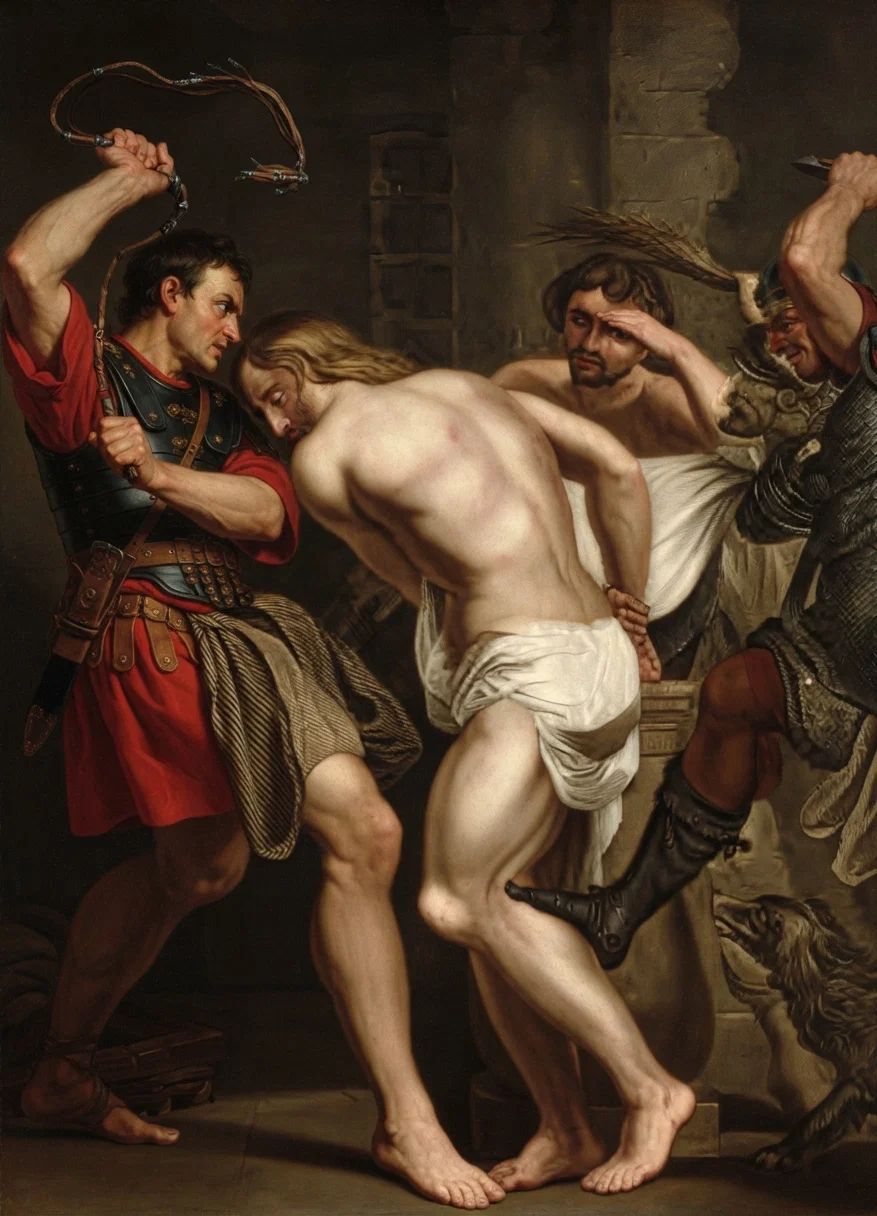
John was cast into a caldron of boiling oil; but the Lord preserved the life of His faithful servant, even as He preserved the three Hebrews in the fiery furnace. As the words were spoken, "Thus perish all who believe in that deceiver, Jesus Christ of Nazareth," John declared: "My Master patiently submitted to all that Satan and his angels could devise to humiliate and torture Him. He gave His life to save the world. I am honored in being permitted to suffer for His sake. I am a weak, sinful man. Christ was holy, harmless, undefiled. He did no sin, neither was guile found in His mouth."
These words had their influence, and John was removed from the caldron by the very men who had cast him in.
Again the hand of persecution fell heavily upon the apostle. By the emperor's decree, John was banished to the isle of Patmos, condemned "for the word of God, and for the testimony of Jesus Christ." Here, his enemies thought, his influence would no longer be felt, and he must finally die of hardship and distress.
HE SAW THE CLOSING SCENES
Patmos, a barren, rocky island in the Egean Sea, had been chosen by the Roman government as a place of banishment for criminals; but to the servant of God, this gloomy abode became the gate of heaven. Here, shut away from the busy scenes of life, and from the active labors of former years, he had the companionship of God and Christ and the heavenly angels, and from them he received instruction for the church for all future time. The events that would take place in the closing scenes of this earth's history were outlined before him; and there he wrote out the visions he received from God.
When his voice could no longer testify to the One whom he loved and served, the messages given him on that barren coast were to go forth as a lamp that burneth, declaring the sure purpose of the Lord concerning every nation on the earth.
WONDERFUL FOR STRENGTH AND COMFORT
In the experience of the apostle John under persecution, there is a lesson of wonderful strength and comfort for the Christian. God does not prevent the plottings of wicked men, but He causes their devices to work for good to those who in trial and conflict maintain their faith and loyalty. Often the gospel laborer carries on his work amid storms of persecution, bitter opposition, and unjust reproach. At such times, let him remember that the experience to be gained in the furnace of trial and affliction is worth all the pain it costs. Thus God brings His children near to Him, that He may show them their weakness and His strength. He teaches them to lean on Him. Thus He prepares them to meet emergencies, to fill positions of trust, and to accomplish the great purpose for which their powers were given them.
In all ages, God's appointed witnesses have exposed themselves to reproach and persecution for the truth's sake. Joseph was maligned and persecuted because he preserved his virtue and integrity. David, the chosen messenger of God, was hunted like a beast of prey by his enemies. Daniel was cast into a den of lions because he was true to his allegiance to Heaven. Job was deprived of his worldly possessions, and so afflicted in body that he was abhorred by his relatives and friends; yet he maintained his integrity. Jeremiah could not be deterred from speaking the words that God293had given him to speak; and his testimony so enraged the king and princes that he was cast into a loathsome pit. Stephen was stoned because he preached Christ and Him crucified. Paul was imprisoned, beaten with rods, stoned, and finally put to death because he was a faithful messenger for God to the Gentiles. And John was banished to the isle of Patmos "for the word of God, and for the testimony of Jesus Christ."
These examples of human steadfastness bear witness to the faithfulness of God's promises,—of His abiding presence and sustaining grace. They testify to the power of faith to withstand the powers of the world. It is the work of faith to rest in God in the darkest hour, to feel, however sorely tried and tempest-tossed, that our Father is at the helm. The eye of faith alone can look beyond the things of time to estimate aright the worth of the eternal riches.
AN UNPITYING CONFEDERACY
Jesus does not present to His followers the hope of attaining earthly glory and riches, of living a life free from trial. Instead, He calls upon them to follow Him in the path of self-denial and reproach. He who came to redeem the world was opposed by the united forces of evil. In an unpitying confederacy, evil men and evil angels arrayed themselves against the Prince of Peace. His every word and act revealed divine compassion, and His unlikeness to the world provoked the bitterest hostility.
So it will be with all who will live godly in Christ Jesus. Persecution and reproach await all who are imbued with the Spirit of Christ. The character of the persecution changes with the times; but the principle—the spirit that underlies it—is the same that has slain the chosen of the Lord ever since the days of Abel.
THEY CAN NOT BIND THE SPIRIT
In all ages, Satan has persecuted the people of God. He has tortured them and put them to death, but in dying they become conquerors. They bore witness to the power of One mightier than Satan. Wicked men may torture and kill the body, but they can not touch the life that is hid with Christ in God. They can incarcerate men and women in prison walls, but they can not bind the spirit.
Through trial and persecution, the glory—the character—of God is revealed in His chosen ones. The believers in Christ, hated and persecuted by the world, are educated and disciplined in the school of Christ. On earth they walk in narrow paths; they are purified in the furnace of affliction. They follow Christ through sore conflicts; they endure self-denial, and experience bitter disappointments; but thus they learn the guilt and wo of sin, and they look upon it with abhorrence. Being partakers of Christ's sufferings, they can look beyond the gloom to the glory, saying, "I reckon that the sufferings of this present time are not worthy to be compared with the glory which shall be revealed in us."
Alone with God
By Calvin P. Bollman
Alone with God under summer skies,
With beauty spread for our wondering eyes!
The early morn, with its cool, still air,
Uplifts the soul, and invites to prayer.
The sun comes up in the golden east,
Pledge of the heavenly marriage feast.
Lo, everywhere God's work is seen,
In grass, and flower, and bowers green.
C. P. Bollman.
Worship Due to God
By Hampton W. Cottrell
Three Classes of Worshipers — The State Has Not the Right to Prescribe Our Religion
By HAMPTON W. COTTRELL
CIVIL government, according to both the Constitution of the United States and the gospel of the Christ of Calvary, has no rights but civil rights, therefore no right to abridge or enforce the worship of almighty God by any person.
The first amendment to the Constitution of the United States declares, "Congress shall make no law respecting an establishment of religion or prohibiting the free exercise thereof." Jesus Christ says, "Render therefore unto Cæsar [civil government] the things which are Cæsar's; and unto God the things that are God's." Matt. 22:21. The worship of every man is due the Lord, and should be rendered to Him, without molestation or interference in the least from the state.
IT IS RELIGIOUS PERSECUTION
It has often been averred by would-be advocates of religious liberty, who are in spirit religious despots, that to prohibit common labor upon the first day of the week, even by fine and imprisonment, although the supposed offenders had rested the seventh day, both physically and spiritually, according to the example of our divine Lord, is not religious persecution or an abridgment of individual liberty.
THREE CLASSES OF WORSHIPERS
There are three classes of worshipers. The heathen are true worshipers of false gods; the hypocrite is a false worshiper of the true God; the real Christian is a true worshiper of the true God.
The Christian knows that his religion is good for seven days in each week. It is not a removable thing that can be worn one day in the week, like a Sunday dress, and laid aside the other six, but is kept in daily and hourly use.
RIGHT TO REST SPIRITUALLY AND TO LABOR PHYSICALLY
To illustrate: When the consistent Christian has worshiped upon the seventh day, according to his God-educated conscience and the divine Textbook, by resting both physically and spiritually, then there remain six days in which he is in duty bound, and has a God-given right, to worship, according to both conscience and the example of Christ Jesus. His worship thenceforth consists in continuing to rest spiritually in Christ, and laboring physically, as did the great Exemplar. Paul, the great apostle, says, "Whatsoever ye do, do all to the glory of God"; and surely to do thus is worship.
TO BE RENDERED TO GOD ONLY
The Sabbath is the Lord's day, and all men are divinely obligated to render it to God and not to men.
Now, for civil government to prohibit any one from working upon the first day of the week, after he has rested upon the seventh day, is truly religious persecution, and an invasion of inherent rights.
If Sunday were the day that men ought to observe sacredly, the above-mentioned principle would still remain,—that the day should be rendered to God, not to civil government.
"Every one of us shall give account of himself to God." Rom. 14:12.
No Place Like Home with Christ
"THERE is no place like home if Christ be the Head of the house."
"Payeth Not That It Promiseth"
By Adelaide D. Wellman
IT has ever been the policy of the evil to counterfeit the good. In fact, it is compelled so to do in order to maintain its hold upon people, for evil undisguised is too abhorrent to be tolerated.
The prince of evil always promises good, and when necessary to his purpose, he will bestow seeming benefits, even restoring health to the sick in so far as he can do so; but all his gifts are Dead Sea apples.
When seeking to fortify Pharaoh in his refusal to grant the just demands of Jehovah, the agents of evil appeared to be able to give life even, in imitation of the miracles performed through Moses; but a test proved that the seemingly living serpent that they had produced, in fact possessed no life. Ex. 7: 10-12.
Do not be dazzled by the tinsel of Satan's lure, but instead, dig deep into the mines of Scripture for the pure gold of truth and salvation from every form of evil.
ADELAIDE D. WELLMAN.
Justification and the Law
By M. A. Hollister
The Sinful Life Removed
by the Power of Christ
By M. A. HOLLISTER
"WHO WAS TREATED AS WE DESERVE, THAT WE MIGHT BE TREATED AS HE DESERVES," FOR BY "HIS STRIPES WE ARE HEALED."
WHAT is justification? — It is that governmental act of God's grace, absolving the repentant sinner from all past sins, regarding him innocent, righteous, and freed from the penalty of violated law, through the merits of Christ's atoning blood. "If the Son therefore shall make you free, ye shall be free indeed." Sin is a violation of God's law — the highest law in the universe — and a capital offense. "The wages of sin is death."
The penitent sinner believes on the Lord Jesus Christ, and God pardons his sins, remits the punishment he deserves, receives him into favor, and treats him as though he had not sinned. "Being justified by faith, we have peace with God through our Lord Jesus Christ," "who was treated as we deserve, that we might be treated as He deserves," "suffering the death which was ours, that we might receive the life that was His," for by "His stripes we are healed."
INNOCENT IN HEAVEN'S SIGHT
Thus the repentant sinner has his sinful life removed, and the sinless life of Christ imputed for all past sins, and he becomes an innocent child in Heaven's sight, "born again, born from above."
Now the question comes, How can this condition be retained? First, let us consider some of the steps by which we obtained justification. We saw ourselves sinners when measured by the law of God, and repented of the sins, and confessed them, and by these steps were "cleansed from all unrighteousness" — sin. Now see Gal. 2: 17, 18: "But if, while we seek to be justified by Christ, we ourselves are found sinners, is therefore Christ the minister of sin? God forbid. For if I build again the things which I destroyed, I make myself a transgressor."
Here we see the necessity presented of not again committing the confessed sins; for the commission of sin negatives the justified state, and any professed Christian who lives in the commission of sin is a sinner, and not a saint. "He that saith, I know Him, and keepeth not His commandments, is a liar." "We know that whosoever is born of God sinneth not." "Whosoever committeth sin transgresseth also the law." "In this [committing sin or not] the children of God are manifest, and the children of the devil." "He that committeth sin is of the devil." "My little children, these things I write unto you, that ye sin not. And if any man sin, we have an advocate with the Father, Jesus Christ the righteous." However, no state of grace admits of committing sin. All sin is forbidden, and he who commits sin is of the devil.
A state of justification implies freedom from the guilt of sin by renewing, assisting grace in the performance of all God's requirements. "Whosoever is born of God doth not commit sin; for His seed remaineth in him: and he can not sin, because he is born of God."
HOW OBTAINED AND HOW KEPT
Justification is obtained by faith; but one who retains justification will perform every known duty, by the imparted strength of Christ Jesus. The minimum of salvation is salvation from sinning; the maximum is salvation from the inclination to sin.
"If we confess our sins, He is faithful and just to forgive us our sins, and to cleanse us from all unrighteousness." No one can believe with the heart to righteousness, sinlessness, or so as to obtain justification, while living in the practise of any known sin, or in the neglect of any known duty; for the moment he does what he knows to be sin, or neglects what he knows to be duty, faith, by which he is justified, lets go its hold upon God, and he loses his justification, until he retraces his steps, and by repentance and believing faith in Christ, confesses his sin and is again pardoned.
POWER TO BECOME SONS OF GOD
Justification carries with it entire submission and implicit obedience to God; the will is right at the moment of regeneration; and it must remain right, or wilful sin will be the result. "As ye have therefore received Christ Jesus the Lord, so walk ye in Him." It is impossible to retain justification by any less consecration and faith than that by which we obtained it. "Faith without works is dead." Hence it becomes necessary for us to manifest our faith by our works. "He that saith he abideth in Him ought himself also so to walk, even as He walked;" and John 1: 12 says that "as many as received Him, to them gave He power to become the sons of God." As we receive this power, we are enabled to live and work as sons, not as mere hired servants.
There is a vital union between justifying faith and an obedient spirit. Conscious confidence and conscious guilt can not coexist in the same heart. "Beloved, if our heart condemn us not, then have we confidence toward God. And whatsoever we ask, we receive of Him, because we keep His commandments, and do those things that are pleasing in His sight." 1 John 3: 21, 22. While obedience makes faith perfect, disobedience destroys it.
Salvation comes by an appropriating faith; and such faith, or trust, can be exercised only when there is a consciousness of complete surrender to God.
PERFECT OBEDIENCE
A justified state can exist only in connection with a serious, honest intention to obey all the commands of God.
The standard of justification is placed too low by many professors of religion to-day. They seemingly forget that believers can not commit sin without forfeiting the justified state, and building again the works once destroyed, and "laying again the foundation of repentance from dead works."
If we would retain the covering of the sinless life of Christ, there must be continued obedience to all the known will of God; for that life will not cover one unconfessed, unfor-saken sin.
INCONSISTENT WITH SUPREME LOVE
The commission of sin, any sin, is inconsistent with supreme love to God. First John 5:3 says, "This is the love of God, that we keep His commandments"; and if we love God supremely, we will not knowingly displease Him for the sake of pleasing ourselves. Whom we supremely love, we desire to please; and all sin is an offense against the law of love — love to God and love to man. Matt. 22: 40.295Perhaps a distinction, to some extent, should be made between sin committed by deliberate thought, or set purpose — the willing sin — and sin committed by sudden impulse, under strong distraction and temptation. Nevertheless we must overcome every tendency to sin, both inherited and cultivated. There is no excuse permitted us of God for the commission of any sin. The plan of salvation contemplates complete freedom from the power of sin, in whatever form it may appear.
THE SPIRIT OF DISOBEDIENCE
The real spirit of disobedience is ever one and the same, for every precept, for all times, and under all circumstances. Every sin alike is a violation of the same obligations, outrages the same law, insults the same Lawgiver, evinces the same rebellious spirit, and incurs the same fearful curse pronounced against the lawbreaker. "Whosoever shall keep the whole law, and yet offend in one point, he is guilty of all" (James 2: 10), and is made subject to death.
THE SPIRIT OF OBEDIENCE
The real spirit of obedience is ever one and the same, for every precept, for all times, and under all circumstances. It has regard to God's authority as supreme, and submits the whole being to that authority. Every act of true obedience has reference to the same obligations, regard to the same law, respect for the same Lawgiver, evinces the same submissive spirit, and secures the same gracious reward in the divine favor and blessing. Hence he who has the true spirit of obedience in regard to one precept of the law, has it toward all the rest. "He that is faithful in that which is least is faithful also in much." Luke 16: 10.
To sin knowingly in one thing, and really to obey God in another at the same time, is utterly impossible. All true obedience involves supreme loyalty to divine authority; and one who obeys thus, can not knowingly disregard or reject one iota of that law. God forbids all sin, and each precept of the law has an equal obligation. Any disobedience rejects and insults that divine authority, and lays the foundation for unlimited disobedience.
BALKING AT ONE REPUDIATES ALL
One cherished sin separates from God; and a spirit of disobedience in the heart in regard to one precept of God, vitiates for the time any true obedience. Hence real obedience to God in one thing, and persistent disobedience in another thing, can not exist at the same time.
One may, under the pressure and distraction of powerful temptation, as already stated, for a moment commit sin, while really obeying God in other things; but under no circumstance will he permit that sin to stand. He will immediately put it away, and an urgent petition will ascend to God that he may never be overtaken again by a like temptation, and fall. Having submitted himself to God, the true spirit of repentance and obedience is in his heart, and he will resist the devil, who will flee from him.
LOVE DOES NOT EXCUSE SIN
The garment of Christ's righteousness will not cover one sin. Even though God is love, that love will not excuse sin. Sin caused Satan to be cast out of heaven, Adam out of the garden of Eden, Cain to be banished from the presence of God. It brought death to the antediluvians, in the Flood; and it will ultimately cause the earth to be burned with fire, and those who cling to sin will be destroyed with it.
"For not the hearers of the law are just before God, but the doers of the law shall be justified." Rom. 2: 13. "The just shall live by faith." "Whom He justified, them He also glorified." They are found "without fault before the throne of God."
The Choicest Deeds
May We Walk with God?
By J. W. Rich
Some Men Who Have Done It — Their Example Should Stimulate Us
By J. W. RICH
"AND Enoch walked with God: and he was not; for God took him." Gen. 5:24. Few men of the Bible narratives have the record of their intimate association with the Master written in the same inspirational tone as is that of Enoch. There were other noble, true-hearted men, men of sterling worth and of strong character, men who mastered well the problems of every-day life; but in some respects, at least, Enoch seems to have entered more fully into the secrets of the Master’s steps.
This is not because Enoch was more of a favorite than the others; but going beyond the outer circle of friendship, he entered more fully into the spirit of unselfishness. In the language of the prophet Amos the secret is divulged: "Can two walk together, except they be agreed?" Amos 3:3. Having fitted his life more squarely into the plan of the Master, there was but little if any friction to be overcome, hence there was nothing to mar the beauty of their walk together. Would that there were as little friction in the life of every professed Christian to-day in keeping pace with the progress of the Master, as there was with Enoch! What a change would be seen in the church of Christ on earth to-day!
Think for a moment of the three hundred years of companionship of this man Enoch. Who would not have enjoyed the privileges, the experiences, the blessings, the mountain strolls, the night communions, and the victories, of this man? Certainly an experience to be enjoyed by one who walked so nearly as the Master walked!
There was one experience in the life of Enoch that was a great help to him in walking with God, and that was the birth of his son. No doubt there were times, when the little boy was learning to walk, that the father took a deep concern in the progress of his son. See the anxious look on the father’s face as he takes hold of the little hand and they start across the room. The two little feet have not been accustomed to obstructions, and presently over some of his playthings, or a fold in the rug, the little fellow stumbles.
These are his first lessons, and he has not learned them perfectly. He stumbles, he sways; but always does the father keep hold of the chubby hand, to direct the child aright. Note the short step taken! And how awkwardly do the little footsteps imitate the strides of the father! But he is learning; and later he will step more accurately, until it becomes a pleasure for father and son to stroll together even over rough and dangerous grounds. See them now ascending the craggy mountain peak, now descending to the plain, now jostling in the crowded city thoroughfare, but always keeping step.
I wonder do we ever have any trouble in keeping step with the Master nowadays. As children, young people, or old people, have we learned to walk as Jesus walks? In the hour of temptation, do we have any trouble in stepping over the stones that would turn us aside? Do the thorns of ridicule prick until we wish to walk alone? Does the example of some member in the church hinder your step with the Master as you travel through the Slough of Despond? Think what it means to walk with God, not your way, but His. Are we all willing to follow?
It was thus that Enoch walked with God. The Father did not learn the pace of the son, but the son did learn the pace of the Father, and thus could they walk together.
As Enoch watched the progress of his son, so Jesus watches over every son and daughter born into the heavenly family. He does not expect them to step perfectly when they begin, any more than Methuselah was expected to step like his father at the first attempt. But He does expect progress. It would be hard to walk and not get ahead. So Jesus expects each one of us each day to walk more perfectly than we did the day296before, until at last we shall have reached the goal of perfection.
Other men of the Bible are credited with this record of walking with God,—Noah in Gen. 6:9; Abraham in Gen. 17:1. And the exhortation comes to us in Matt. 5:48, "Be ye therefore perfect, even as your Father which is in heaven is perfect."
Perfection is not reached outside the fountainhead of perfection—Jesus. To reach this attainment, we come to Him. We remain with Him. We walk with Him. We learn His poise, His pace, His gait. We move forward, and something is done.
Be sure, dear friend, of your walking companion; for another would imitate the Father, and thus deceive you if possible. The times demand that we be careful. Your salvation demands it. The Master Himself demands it. Having made sure, let us walk, go ahead; and with Enoch we, too, shall be led to the very mount of God, which sooner or later will mean translation, just as it did to him.
Who Changed the Sabbath?
By E. B. Hopkins
Was the Day Changed from Saturday to Sunday?
If So, by Whose Authority?—Interesting Statement by a Priest
By E. B. HOPKINS
IN my evangelistic work, the question is often asked me, "Who changed the Sabbath? and why was the change not found out before?"
In answering the first of these questions, we may learn from the prophecy in Daniel 7 that a change in God's law was predicted. This is shown very clearly in the twenty-fifth verse. It is easy to see, from this scripture, that God has not sanctioned the attempted change, but He does tell of a power that would seek to make it. When people learn that the papacy, and not the Lord, is responsible for this conflict over the Sabbath question, it is not difficult for many of them to see where to take their stand.
DEEP INTEREST AROUSED BY THE DISCUSSION
Recently in Elkhart, Texas, as I was presenting God's claims concerning the seventh-day Sabbath, I was challenged to a discussion. Quite a stir was created over the subject.
There was one man in the community, a Catholic, who became so interested that he wrote his son living near St. Louis to go to the priest about the question, and to write just what the priest would say concerning how the Sabbath was changed from the seventh day, or Saturday, to Sunday, the first day of the week.
The letter that was received in response to this request is as follows:
"Dear Father: I will now answer your letter relating to the change of the Sabbath day from Saturday to Sunday. At a meeting of the young men's sodality yesterday, I asked Father Tarrent to explain this matter clearly. This was done because the church [Catholic] has this power as promised by Jesus Christ, and in this instance she made use of the power given her.
THE INFALLIBILITY OF A CHURCH
"This is due to the infallibility of the church when teaching a doctrine of faith or morals. When Christ founded the church, He promised that He would stand by her and see that she did not err, as stated above. Then He said to His apostles, 'Whatsoever thou shalt bind on earth shall be bound in heaven, and whatsoever thou shalt loose on earth shall be loosed in heaven.' Therefore you see that He gave the church power to do as she has done, and so long as such is declared to the world as a doctrine of faith or morals, He has given the church the authority of being infallible in its teachings.
THE GREATEST MYSTERIES ON SUNDAY
"The reasons given for the change are mainly that it appears the greatest mysteries happen on Sunday, such as the rising from the grave, etc., and in commemoration of these, and probably for many other reasons, the church seemed very much justified in making this change, as it was in her power to do so anyway.
"Well, I am not sure whether you can understand this from my explanation or not. I have tried to make it as plain as I could, but my knowledge of such matters is so small compared with that of Father Tarrent, that I can not begin to make matters as plain as he can. I should have taken this matter up sooner but never had a real good opportunity until right at the meeting Sunday evening.
THE CLEAR COURSE TO PURSUE
"Father Tarrent says that denominations believing in the Bible alone, if they do not mean to believe in the Catholic Church's teachings, should keep holy the Saturday instead of Sunday. But it seems that the majority of them acknowledge, or at least practise, that part of the Catholic religion to observe the Sunday instead of the Saturday. I believe it is the Seventh-day Adventists who speak of this point strongly [observing Saturday], but whether they do it in reality, I do not know positively.
"I must close for to-night.
"Your son,
"Joe Springman."
If any one is in doubt in regard to the authenticity or truthfulness of the foregoing letter, he may write to Mr. George Springman, Salmon, Texas.
THE PROPHECY FORETOLD IT
The prophecy claims that a power would think to change God's law. There has been, without question, an attempt made to change that law. Otherwise the majority of Christendom would not be keeping Sunday instead of Saturday, the Sabbath of the Bible. Here are some things that are worthy of careful thought, whether you be a Protestant or a Catholic. God's word itself, and not what men have said about it, must be the rule in the Judgment.