“THE Sabbath in Puritan New England,” is the title of a book by Mrs. Morse Earle which has just been published in London, England, and gives a very extended description of the kind of Sunday keeping to which many prominent divines are now desirous of returning. One of the most prominent features of the Puritan Sunday was the “tithing-man,” a gentleman who paced up and down the church armed with a long pole, one end of which was furnished with a heavy knob, the other with a fox-tail or hare’s foot. The hard end was for the benefit of male sleepers, the soft for female. When we remember that the customary length of the sermon was about three hours, though some of four or five hours long were not uncommon, it can readily be seen that this duty of the tithing-man was very necessary. Any man who resented being startled from his nap by the heavy blow of this official was soundly whipped and stigmatized as “a common sleeper at the public exercise.” The tithing-man also had to keep in order the boys. Outside the meeting-house he had charge of a large number of families, usually ten, hence his name, and was responsible for the children learning their catechism. He inspected the saloons. He entered private houses to assure himself that no one stayed at home on the “Sabbath,” and hustled up any loiterers. His business was also to see that no one fared too sumptuously (except the preachers); that young men and maidens did not spend too much time together, or do any courting Saturday nights. He was empowered to stop all Sunday work. He had to keep “a special eye out” on all bachelors, and make their lives as uncomfortable as possible, that they might protect themselves by a speedy marriage. He “warned people out of ye towne,” the “warned having henceforth no claim upon relief from the poor rates.” He also had to turn the hour glass on the minister’s desk; in fact, his time was taken up in performing the sundry acts of Puritan piety.
Many illustrations are given showing the absurd excess to which the Sunday laws were carried and enforced. In 1670 two lovers were punished for “sitting together on the Lord’s day under an apple tree in Goodman Chapman’s orchard.” A Dunstable soldier was fined forty shillings for putting a piece of an old felt hat in his shoe on the “Sabbath.” Captain Kemble, a prominent man of Boston, was in 1656 condemned to two hours in the public stocks, for “lewd and unseemly behavior,” which consisted in kissing his wife on the door-step, on his return from a three years’ voyage. An English sea captain was “soundly whipped” for a like offense. A man who had fallen into the water and absented himself from church to dry his only suit of clothes, was found guilty and “publicly whipped.” Smoking on Sunday was forbidden. To stay away from church meant cumulative pecuniary mulct. A severe flogging was inflicted on a man who dared say he was not profited by a certain preacher’s discourses. To criticise a sermon or the conduct of a minister meant church discipline and a heavy fine, and so forth.
And yet the most of these preachers were a most intemperate set. Even their ordination services were scenes of unseemly rowdy. An item from the journal of one reads: “Mr. L. was alert and kept us all merry. A jolly ordination. We lost all sight of decorum.” Not only were there “ordination banquets” but “ordination balls.” And at such feasts the most astonishing feature was the amount of “punch” that was put away.
An ordination feast is thus described by one who was present:—
There were six tables that held one with another eighteen persons each; upon each table a good rich plum pudding, a dish of boiled pork and fowls, a corn’d leg of pork with sauce proper for it, a leg of bacon, a leg of a la mode beef, a leg of mutton with caper sauce, a roast loin of veal, a roast turkey, a venison pastee, besides cheese cakes and tarts, cheese and butter. Half a dozen cooks were employed upon this occasion, and upwards of twenty tenders to wait upon the tables. They had the best of cider, one barrel of Lisbon wine, punch in plenty before and after dinner, made of old Barbados spirit. The cost of this moderate dinner was upwards of fifty pounds lawful money.
And yet there are those who are sighing for a return of the Puritan just because they enforced Sunday.
Hull, Eng.FRANCIS HOPE.
It Has Spoken.
By L. A. S.
“AND I beheld another beast coming up out of the earth; and he had two horns like a lamb, and he spake as a dragon.” Rev. 13:11.
For many years Seventh-day Adventists have been keeping their eyes upon this prophecy, predicting on the strength of their view that the United States Government would oppress and persecute those who were striving to walk conscientiously before God, as did the “dragon”-spirited powers of earth in by-gone days. Recently it has become manifest that a spirit of intolerance and oppression existed and was growing in this Government, but within the last week an event has taken place which is of the utmost significance in connection with the fulfillment of the words of this text. The Senate and House of Representatives of the United States have united in saying to this country and to the world, that the World’s Columbian Exposition shall have joined to it the institution of the Sunday Sabbath. They have declared, speaking with the voice of the Nation, that here in this hitherto free land a religious institution shall be enforced by law; for legislation always means compulsion.
We are no longer waiting to hear the sound which shall herald the fulfillment of this prophecy. THE DRAGON VOICE HASSPOKEN!And how long will it be ere it will speak again?—L. A. S., in Review and Herald.
Disgraceful Sunday Laws.
[The Chicago Daily Globe publishes this letter, written from the common jail of Paris, Tenn., to the secretary of the National Religious Liberty Association, with the accompanying editorial comments. Later developments, have shown a still more incredible state of things in the construing of legal methods by which to find means of forcing these men to pay their fines. In the face of the example Tennessee is setting, in these cases, it is to be remembered that many of the southern States still have the chain gang, and flogging is the punishment for insubordination. How long before some seventh-day keeper will be flogged for refusing to work on the Sabbath?]
To those misguided enthusiasts who are clamorous for the rigid observance of the Sunday closing laws, both in connection with the World's Fair and otherwise, a letter written from Tennessee by victims of the very policy these people seek to enforce ought to come with peculiar force.
This letter, which speaks with more force than any comment upon the subject, is as follows:—
HENRY CO. JAIL, PARIS, Tenn., June 26, 1892,—A. F. Ballinger, Secretary National Religious Liberty Association, Chicago, Ill.—Dear Sir: We have now been in jail since June 3, and the prospects are that we will have to remain here for over two months longer. Our offense, as you understand, is that of working on our farms on Sunday. We did not employ a lawyer at the trial since it was no use to do so, as the cases of R. M. King and W. H. Parker were appealed and lost. We pleaded in our own behalf, urging that so long as we did not disturb the worship of any one (and every witness testified that he was not disturbed) we were entitled to the God-given right, after having observed the Sabbath which we believe to be the seventh day instead of the first, of working six days for the support of our families as do other citizens. The State's attorney, Mr. Lewis, thought differently and argued that since the laws of Tennessee set apart Sunday as the day to keep holy, and we were permitted to observe our Sabbath we ought to observe Sunday also.
The three others convicted are W. S. Lowry, J. Moon and James Stem. Mr. Stem is over sixty years old and has spent three months in this same jail for a like offense. We did not pay our fines and costs, which amounted to about $25 each, because, first, we considered them unjust, and second, if we had paid them and returned to our238work, we would have been rearrested, and thus compelled to spend all the little property we own in paying fines. We have heard that our property is to be sold to pay fines and costs, but we understood that this could not be done, at least in the case of three of us who own no more property than the law allows. There seems to be nothing for us to do but to suffer and await a change in public sentiment. Judge Swiggart, in answer to the sheriff's protest, that we were conscientious in the matter, replied, “Let them educate their consciences by the laws of Tennessee.” My wife writes me that our two little girls cry themselves to sleep at night because “Papa doesn't come home.” Yours respectfully, J. F. DORTCH.
It will be remembered that the R. M. King referred to in the letter was the gentleman who earned considerable celebrity about a year ago by his able defense when arrested on a charge of violating the Sunday laws, and who carried his case to the United States District Court and lost. Since then the demand for the repeal of these laws has become greater and greater, and nothing but the pernicious activity of certain bigoted individuals prevents them from becoming a dead letter.
It seems absolutely incredible that in this age of enlightenment, in these free United States, men should suffer and families be plunged in sorrow because they have exercised a right of conscience guaranteed to them by the Constitution of their country.
The sooner a test case is appealed to the highest tribunal in the land for adjudication the better for the honor of Tennessee and every State ridden by bad laws passed in violation of individual liberty.
All this and More.
IN an editorial on the subject of Congress and the World's Fair, the Philadelphia Record says:—
Apart from the immediate question of closing the World's Fair on Sunday, there can be no mistaking the ulterior object of this Sabbatarian crusade. Should it prove successful, the reaction against personal liberty and social progress will not cease until every street car shall have been stopped and every library, academy of arts and museum closed on Sunday. The Sabbatarians have not hesitated to avow that their purpose is to re-establish the puritanical polity of the seventeenth century. In the debate on the Quay amendment Senator Frye, of Maine, passed a eulogy on the puritanical Sabbath and fervently expressed a hope of its speedy restoration in this country. Other senators, in their Sabbatarian zeal, gave utterance to like views. This is the real meaning of bigotry's persistent attack upon the Columbian Exposition.
But very little is known of the real object of this crusade for the enforcement of Sunday sacredness. The Bible reveals its real meaning. Few, though, have given enough thought to the matter, in connection with prophecy, to comprehend their relation. This writer for the Record understands that there is an ulterior purpose and realizes the logical outcome of the movement. He is right. The day will come when all he sees in it will come to pass, and more.
NATIONAL RELIGIOUS LIBERTY ASSOCIATION.
THE Park Board has signified its intention to open the Museum of Natural History in Manhattan Square, this city, on Sundays.
THE Lake Michigan Chautauqua Assembly publishes a Sunday edition of its Chautauquan, and is meeting with the displeasure of the religious press accordingly.
THE New York Herald says: “If Congress wishes to aid the Fair and maintain its self respect it must blot out the obnoxious proviso, and make the $5,000,000 appropriation an unconditional offering.”
THE Brooklyn Citizen says the Sunday-closing provision in the World's Fair appropriation is an insult to the intelligence of the public. It might have added, as well, that congressmen have also stultified their own intelligence.
THE International Sunday Association has recently held a general gathering at Stuttgart, Germany. They have there a contest between themselves as to the liberal Lutheran idea of Sunday-keeping, and the Puritan strict observance.
THE New York Herald points out the fact that while the Sunday closing of the World's Fair will permit the attaches of the Fair to go to church it will compel the policemen to be on duty who might go to church if the Fair were open. What are the Sunday closers going to do about the policemen?
THE Brooklyn Eagle very properly thinks that, “It does not fall within the function of Congress to make Sabbatarian ordinances for the government of any State, or for any part of the community comprising the State. If the Managers of the Exposition can consistently call on Congress for the desired aid, they are entitled to have it, without submitting to conditions which involve the religious or conscientious scruples of anybody.”
THE Rochester Advertiser speaks, although not the whole truth, yet nothing but the truth, when it declares that, “The laws of the State of Illinois are the supreme authority in Chicago with regard to Sunday observance, inside as well as outside the Fair grounds, and the Managers of the Fair, under those laws, are the persons who alone have, as they should have, power of discretionary action.” The whole truth is that neither the United States, nor the State of Illinois, nor the World's Fair Managers, nor any other human authority, can rightfully have any control over the religious observance of Sunday, or any other day.
THE political bearing of this Sunday question in Congress, is very clearly shown in the correspondence of the Chicago Tribune, when it said: “It is further urged on the leaders of the House that in the present political conditions, with the German vote drifting away from the Republicans in Illinois and the Northwest, it will be the best party policy for the Democrats to defeat Sunday closing. The reply is the profane one that Congress isn't run for the benefit of Illinois Democrats, and that members from other sections are not going to sacrifice their chances of re-election for the sake of somebody in the West.”
That is it, the religio-political boycott has got in its work.
THE speeches of senators and congressmen in favor of legislation for Sunday closing of the Fair, all go to show that the American Sabbath Union may now drop its theory of a civil Sabbath as a veil for which they have no longer any use. Senator Hawley gave them all their cue when he said of Sunday observance and the laws of the different States for its enforcement, “Everybody knows the foundation. It is founded in religious belief.”
Has Senator Hawley, and those who supported the Sunday-closing proviso in the Senate and House, ever heard of the First Amendment to the Constitution?
AN editorial item in the Age, of Boulder, Mont., expresses, in words which can not be misunderstood, a clear understanding of the import of the action of Congress in reference to Sunday at the World's Fair. The Age says:—
The Senate of the United States has passed a World's Fair appropriation bill, but attached to it a proviso that the Fair must be closed on Sundays. This is a practical recognition of a State Church, and shows how insidiously but how surely the enemies of the liberties of man are gaining control of a Government whose founders declared that there should be no union of Church and State, their experience as well as their study of history having taught them that where Church and State were combined, the Church became the practical ruler, and a most cruel and despotic one at that. The aphorism that “Eternal vigilance is the price of liberty” should be kept constantly in mind by the American people if they would preserve their liberties.
This action of Congress, together with late judicial decisions, make it already too late for anything more than protest. The legal authority of religious dogma in civil affairs is now fully recognized. All who do not uphold this evil thing should protest, as does the Age.
THE New York Commercial Advertiser said of the action of the Senate in passing the Sunday-closing proviso:—
There was something decidedly cheap and small in the action taken by the Senate yesterday. Receivers of presents have the benefit of an old and wise saw for their guidance. One must not look a gift horse in the mouth. But if it be bad form to scrutinize and weigh a gift under the very eye of the giver, it is not less so to fix limitations upon the uses to which a gift may be put. Even a tramp would question the delicacy of a hint not to expend for drink a piece of silver given to pay for a night's lodging, but the people of the great city of Chicago have been treated in just this shabby fashion by the Senate of the United States. Millions are voted to them. But this munificence is handicapped with the condition that the people of Chicago are not to be trusted to make a seemly use of it. We are willing to help you with your Fair, the Senate says in substance, but we have no intention of giving you a chance to be wicked. You Chicago people and the stranger within your gates should go to church Sunday, and go nowhere else. If you are unwilling to do so, at any rate, you shall not spend the time that good people should spend in listening to sermons in wandering through exhibition halls surveying the triumphs of man in art, science, manufactures. You are not very good, we fear, but the Senate of the United States will not loan your Fair a cent unless you shut it up Sunday.
We do not think it is going too far to say that this attitude of the Senate is in contravention of the spirit, at least, of the Constitution. It can not be denied that it constitutes an intermeddling on the part of the State with matters religious. Under the ægis of that instrument the Jew, for instance, has every right of conscience possessed by the Christian. Had the Chicago management decided of its own volition to close the doors of the Exposition Sunday and shut out the people, their course would have been regrettable because of its narrowness, its intolerance, and especially because of its discourtesy to the foreign visitors, who during their sojourn amongst us will be, in some sort, the guests of the Nation.
But it is a far more serious matter when the Senate of the United States says to Jews, Seventh-day Baptists, Adventists, and all that innumerable host of people of other denominations or no denomination who have their own views on the Sabbatarian question, that they shall, whether they will or no, bow their wills to those of an arrogant minority of their fellow citizens and be compelled to observe Sunday as a Puritan Sabbath. Such a decree, even if made by a majority, would be tyranny. But as the ukase of a minority, it is simply intolerable.
But let the Senate be comforted. Their inopportune piety will extort a hymn of praise from a large and influential body of the Chicago people. Not all of them will grumble. Our Upper House has won the unanimous applause and heartfelt gratitude of every liquor dealer in the city. It is239no secret that every rum seller in Chicago has been holding his breath while this question remained undecided and pulling all available wires to bring about so desirable a consummation. They at any rate are happy, for they now know that all day long throughout every Sunday during the holding of the Fair, their palaces will be crowded by citizens and strangers alike, pouring into their coffers an unbroken stream of silver, of gold, and of greenbacks—money that was designed to swell the receipts of the Fair, but which senatorial piety diverted into a very different channel.
But what a queer chorus of praise will salute the ears of our Solons—a chorus in which the grateful voices of Sabbatarians will mingle with the swelling paeans of triumphant dispensers of Bourbon and of rye—with a grim chuckle, obligato, of Mephistopheles, to give color to the score!
These are truthful words, and especially applicable now that the House has followed in the footsteps of the Senate, and Congress has made for the Nation this hypocritical profession of religion.
A Fulfillment of Prophetic Word.
COMMENTING on the action of the Senate in passing the proviso for the Sunday closing of the World's Fair, the Signs of the Times, Oakland, Cal., pertinently says:—
That the amendment of Senator Quay was unconstitutional did not seem to affect these grave senators in the least. Religious sentiment and rank hypocrisy triumphed. It was fitting that such an amendment should be introduced by a man the malodor of whose reputation has scented the whole country, and smelled even to the world beyond the sea—a man who has been charged by reputable papers with almost every crime which circles around “Thou shalt not steal,” yet who has never dared to compel these papers to prove their allegations by libel suit against them. No wonder that when he read the fourth commandment, in advocating his amendment, Senators Morgan and Harris called for the reading of the entire Decalogue. It is by just such unscriptural, unconstitutional, sentimental, and religio-hypocritical methods that Sunday laws and their consequent persecution will be brought about in this country. We do not hope to stem the progress of the work which is thus soon to culminate; God has declared in his word that it will come, and soon come. The Signs does not care whether the World's Fair gates are open Sunday or not; but we do wish faithfully to point out the certain indications of that spirit now controlling politics, which will crystallize itself in a repetition of the persecutions of the Dark Ages, around the Sunday observance question. It is simply a fulfillment of the prophetic Word.
This is an accurate view of the matter. As so forcibly said here, the vital question is not, Shall the Fair be open or shall it be shut? but, Shall the Congress of the United States go beyond the sanction of its Constitution and outside the legitimate limits of civil legislation to establish a union of religion and the State? It is against that that THE SENTINEL has made its earnest protest. The advocates of Sunday closing by congressional act have lacked either the intelligence or the candor to understand and acknowledge this. Indeed the acknowledgment of even the existence of such a position would be fatal to their views. They dare not permit its consideration.
THE San Francisco Examiner gives a column and a half to short interviews with clergymen of the city on the subject of the Sunday closing of the Fair. One declared that “of course the clergy is a unit on this proposition;” and so they would have been but for the sensible utterances of Rev. C. I. Miel, editor of the Pacific Churchman, who said:—
“The question, after all, is one of Sunday observance. It is well to remember that Sunday in the United States has a civil as well as a religious character. A large class of our citizens observe the day solely from a religious standpoint. Holding rigidly to the letter of the fourth commandment, they apply every jot and tittle of it to the Christian Sunday. Their observance of Sunday is strictly and solely ecclesiastical. They have a perfect right to hold their opinions, and to practice them. They have, however, no moral right to compel others who do not share those opinions to act as if they did. Another and a larger class of citizens do not mark their Sundays by any religious observance; they regard and observe Sunday simply as a civil holiday. They, like the former class, have perfect right to do so, provided their observance is within the law. They have, however, no moral right to compel the former to close their churches and spend their Sunday as a civil holiday. But there is a third, and by far, the largest class of citizens, who observe Sunday in both characters, religious and civil, as a holy day and a holiday. They believe that the day is one of recreation of soul and body. They re-create the soul by public observance of prescribed religious duties. They re-create the body in whatever decent, healthful, agreeable way they may choose. They, like the others, have a perfect right to do so. They, like the others, have no moral right to enforce their practices upon those who differ with them. This is a free country, and in nothing more free than this liberty of religious opinion and practice. To open the World’s Fair on Sunday is not to compel those who do not believe in Sunday opening to enter its gates and perambulate its grounds. But to close the World’s Fair on Sunday is, in no slight sense, to compel an observance of the day which a majority of our citizens do not believe in. As no one is under compulsion to go to the Fair on Sunday, so, also, no one should be under compulsion not to go. The question of attendance or non-attendance is purely a question of individual conscience. As to the question of opening or closing, I do not believe in denying to two large classes of people the privilege of attending the Fair on Sunday, because a minority, however respectable and well intentioned, desires the gates closed on that day. Beyond this there remains the fact that to many Sunday is the only day when they can attend the Fair without a loss in wages, which they can ill afford, or not afford at all. I am now, as I have been from the first, in favor of opening the Fair on Sundays.”
The authorities of San Jose, Cal., are enforcing their new Sunday closing law.
HEALTH FOODS.
PURE CRACKERS AND BISCUITS,
and Cereal Coffee
MANUFACTURED BY THE BATTLE CREEK BAKERY COMPANY
ESTABLISHED IN 1881.
We manufacture a choice line of these goods, entirely free from lard and all adulterations, at the following prices:—
“A” Fruit Biscuits, white flour, sweetened, per lb. 15c
“B” " " whole wheat flour, " " " 15c
Fruit Crackers, not sweetened, " " " 15c
Lemon Cream Biscuits, " " " " " 12c
Graham " " " " " 12c
Oat Meal " " " " " 12c
“A” Graham Crackers, slightly sweetened " " 10c
“B” " " not sweetened " " 10c
“A” Oat Meal " " slightly sweetened " " 10c
“B” " " not sweetened " " 10c
Whole Wheat Crackers, 10c
White " very palatable, " " 10c
Carbon " " " 15c
Gluten " " " 30c
Cereola, a prepared grain food, in bulk, 10c
Pure Gluten, " " " " " 40c
Wheat " " " " 20c
Cereal Coffee, prepared from grains only, a very choice and healthful drink, in one and a half lb. packages (Once used, never again refused), 25c
These goods are put up in boxes, at the following prices:—
Fruit Biscuits, A and B, 31 lbs. per box. $4.00
Lemon Cream Biscuits, 26 " " " " 2.60
Graham " 26 " " " " 2.60
Oat Meal " 30 " " " " 3.00
Any of the above Crackers, quoted at 10 cents per lb., 38 lbs. per box. 3.00
Cereola, in cases of 50 packages, one and a quarter lbs. each, 6.00
Cereal Coffee, 25 packages, 5.00
Cereola and Gluten are prepared foods, thoroughly cooked and ready for use by the addition of some fluid, as milk and cream, fruit juice or water, as best agrees with the individual.
Cereola is a universal Health Food, and is calculated for use both in sickness and health. It is the same as formerly advertised under the name Granola.
Goods, to the value of eight dollars, will be sent on the receipt of six dollars, being 25 per cent. discount.
In ordering, please remember that the rate of freight on 25 lbs. will be the same as on 100 lbs.
Remit by Bank Draft, Money Order, Express Order, or Postal Note. No private checks accepted.
Write us for special rates on large lots.
REFERENCES.
To whom it may concern:
We the undersigned, residents of Battle Creek, Mich., take pleasure in stating that Mr. Joseph Smith, manager of the Health Food Department of the Battle Creek Bakery Co., has resided in Battle Creek for nearly 20 years, and is a competent and responsible man, and of long experience in his line of business, and one whose goods we can heartily recommend to the public.
URIAH SMITH, Editor Review and Herald.
HON. W. C. GAGE, Ex-Mayor.
J. B. KRUG, of Krug's Business College.
THOMAS H. BRIGGS, M. D.
HON. GEORGE WILLARD, Pub. Journal.
S. S. FRENCH, M. D.
R. T. KINGMAN, Vice-President City Bank.
M. R. RORABACHER, M. D.
HON. W. H. MASON, postmaster.
HON. J. W. BAILEY, Ex-Mayor.
T. E. SANDS, M. D.
Address, BATTLE CREEK BAKERY CO., Battle Creek, Mich.
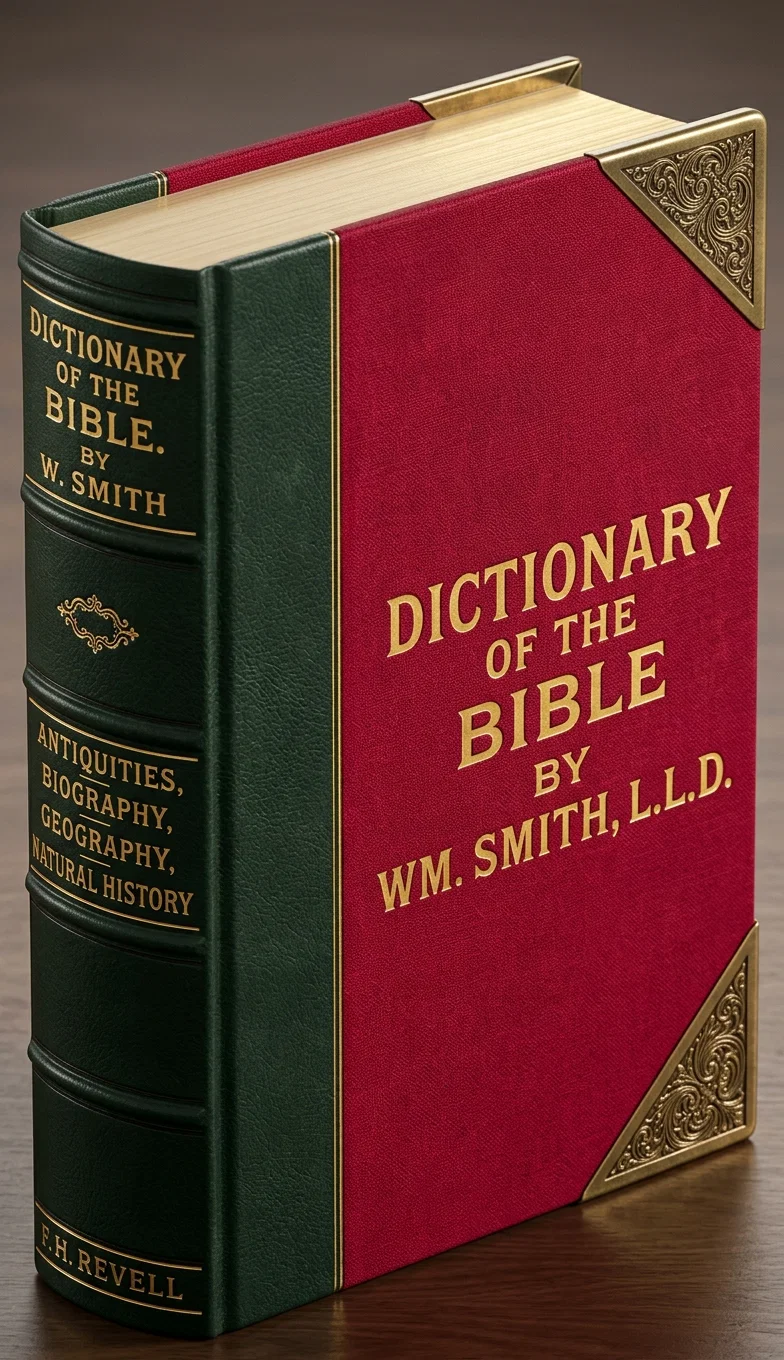
SMITH'S DICTIONARY of the BIBLE.
“Worker's Edition.”
EDITED BY WM. SMITH, L.L.D.
COMPRISING ITS ANTIQUITIES, BIOGRAPHY, GEOGRAPHY, AND NATURAL HISTORY.
Price, $2.00.
This work contains every name in the Bible respecting which anything can be said; over 500 engravings, and is a complete guide to the pronunciation and signification of scriptural names; the solution of difficulties of interpretation, authority and harmony; also a history and description of Biblical customs, manners, events, places, persons, animals, plants, minerals, etc., and comprises a most complete encyclopædia of Biblical information.
FOUND AT LAST!
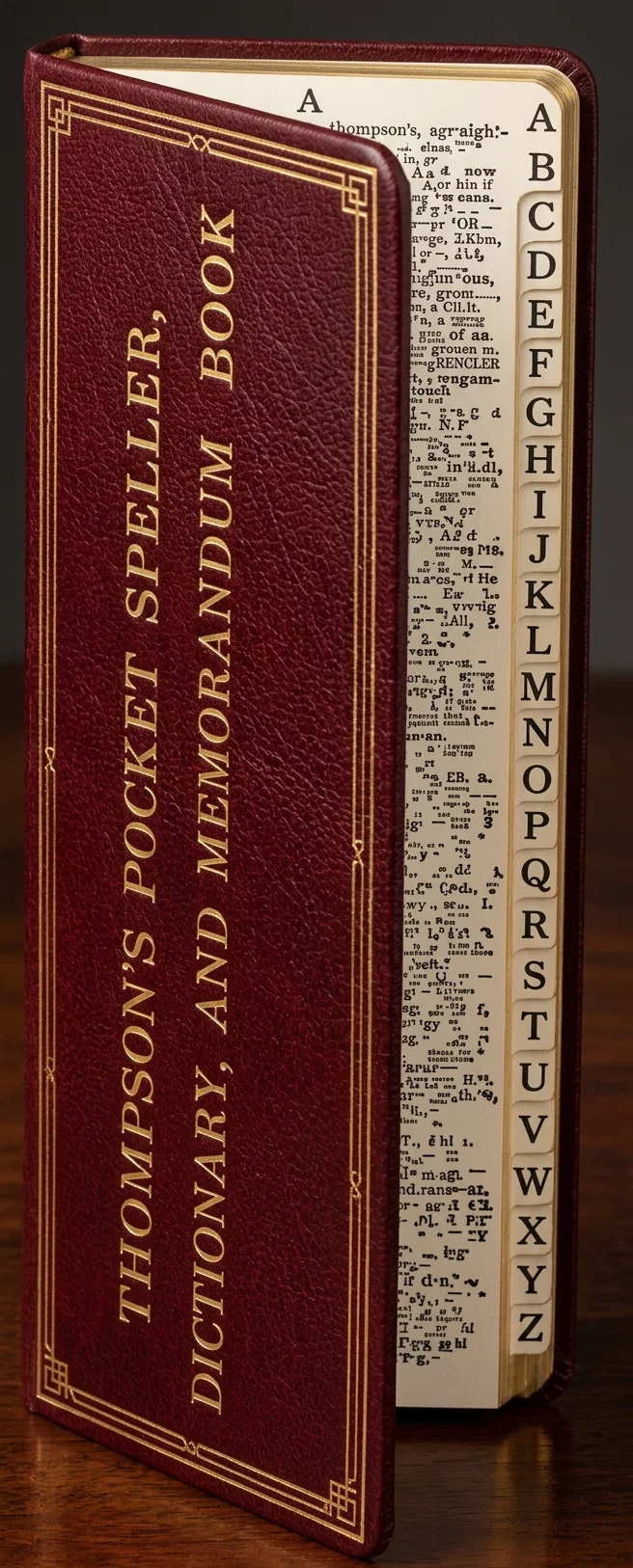
A POCKET SPELLER, DICTIONARY, AND MEMORANDUM BOOK COMBINED.
It gives the right orthography of all words (over 22,800) in common use, and in nearly every instance their definition. It also gives rules for the use of capitals and punctuation marks, abbreviations of names of States and Territories, letters of introduction and recommendation, definitions of commercial terms, forms of notes, due bills, receipts, letters of credit, orders for money, merchandise and goods stored, principal holidays, marriage anniversaries, combination of shades, and carefully selected laws of etiquette in social and business life, also a silicate slate for memorandums.
This Speller gives the most complete list of words in common use; it is a Speller, Dictionary, Handy Companion, and Memorandum Book combined; it is indexed; it prints all words pronounced alike but spelled differently, so they can be distinguished at a glance; it shows where the letter e at the end of a word is to be dropped when adding ed or ing; it gives a complete list of the most practical business forms; it gives the laws of etiquette in social and business life; these rules alone are worth the price of the Speller.
This Speller is bound in leather, is of convenient size to be carried in vest pocket, and its price brings it within the reach of all. American Russia leather; gilt edge, 50 cents. Sent post-paid to any address on receipt of price.
Address all orders to PACIFIC PRESS,
43 BOND ST., New York.
THE CHRISTIAN'S SECRET OF A HAPPY LIFE.
BY HANNAH WHITALL SMITH.
—O—
Standard edition, 12mo, 240 pages, 75 cents.
Handy classic edition, 18mo, 292 pages, cloth, gilt edge, 85 cents.
Address, PACIFIC PRESS PUB. CO.,
43 Bond street, New York.
SMITH'S
COMPREHENSIVE DICTIONARY
OF THE BIBLE
WITH MANY IMPORTANT ADDITIONS AND IMPROVEMENTS.
Designed to be a complete guide in regard to the pronunciation and signification of Scriptural names;
THE SOLUTION OF DIFFICULTIES
respecting the interpretation, authority, and harmony of the Old and New Testaments; the history and description of Biblical customs, events, places, persons, animals, plants, minerals, and other things concerning which information is needed by an intelligent and thorough student of the Holy Scriptures, and of the books of the Apocrypha. Over 1,200 royal 8vo. pages. Cloth, $5.00; library, $6.00
The above named books will be sent post-paid on receipt of price.
PACIFIC PRESS PUBLISHING COMPANY
12th & Castro Streets, OAKLAND, CAL. 43 Bond Street, NEW YORK.
The difference then between the idolaters of India and of Tennessee is that the one worship the works of their hands and the other the creations of their minds. It is as true of the one as it is of the other that they neither know nor understand the true God and the all-reaching justice of his eternal law. Their eyes are shut that they can not see the difference between sin and righteousness, legalized injustice and divine equity. Their hearts are hardened against their fellow-citizens who do not bow down and worship the god which they have made, the image which they have set up. The image which the King of Babylon made, on the plain of Dura, was no more an idol than is this self-made fiction of pseudo-sacredness which the State of Tennessee puts in its statute books, and to which it requires that men shall bow. The bowing to the image of brass was idolatry; the bowing to the fiction of law would be no less idolatry.
IN the two leading speeches in the United States Senate (those by Hawley and Hiscock), in favor of Sunday closing of the World's Fair, the chief of all the arguments used was that the churches demanded it and it should be granted, because it was “not wise statesmanship” to disregard the demands of so large a number of religious people. This is precisely the doctrine enunciated by United States District Judge Hammond. It may, therefore, now be considered as the established doctrine of the Government of the United States. Consequently, all that now remains, is for the churches to demand a thing, and they will surely get it; for they are officially notified that it is “not wise statesmanship” to disregard their demands. Thus, in this Sunday legislation, there is fully established the doctrine of Church domination of the civil power, and using it for whatever purpose she chooses.
This is but the establishment of a religious despotism. This is precisely what THE AMERICAN SENTINEL has always been saying was in this question of Sunday legislation. And nothing but the most tyrannical and unmitigated despotism will or can ever come out of it.
COMMENTING upon the imprisonment of Adventists in Tennessee, a correspondent of the Elmira Spectator, a Missouri paper, says: “How long will it be before the State of Tennessee will be ready to burn men at the stake? She imprisons them now from forty-five to ninety days simply because they happen to differ with a set of intolerant religious bigots in regard to which day of the week should be observed as the Sabbath. She has exalted herself above the God of heaven and demands that men educate their consciences by the laws of the State in preference to the law of the God that created them. Rome made the same demand under similar pressure—religious intolerance; but some men went to the stake as these men went to prison rather than violate their consciences in regard to the law of God. And so went the three Hebrew children into the fiery furnace, and Daniel into the lion’s den. When men posing as ministers of the gospel of Christ ask for the civil power to enforce any religious institution, we may know that they have not the spirit of Christ, the gentle Shepherd, but are actuated by the same evil spirit that led the Jews to persecute the prophets, crucify the Saviour, and put to death his disciples.”
Now that Congress has committed itself and the Government to the fallacy and the falsehood of Sunday sacredness, the next thing in order will be for it to commit itself to that other widespread fallacy and falsehood—the immortality of the soul. Nor need we expect it to stop there. And, indeed, why should we? Having entered the field of religious controversy, and taken sides in one point of dogma, why not go the whole course? Nor is it sufficient to ask, Why shall it not do it? the real question is now, How can it possibly keep from doing it?