THOSE who become new creatures in Christ Jesus will bring forth the fruits of the Spirit, “love, joy, peace, long-suffering, gentleness, goodness, faith, meekness, temperance.” They will no longer fashion themselves according to the former lusts, but by the faith of the Son of God they will follow in His steps, reflect His character, and purify themselves, even as He is pure.
The things they once hated, they now love; and the things they once loved, they hate. The proud and self-assertive become meek and lowly in heart. The vain and supercilious become serious and unobtrusive. The drunken become sober, and the profligate pure. The vain customs and fashions of the world are laid aside. Christians will seek not the “outward adorning,” but “the hidden man of the heart, in that which is not corruptible, even the ornament of a meek and quiet spirit.”
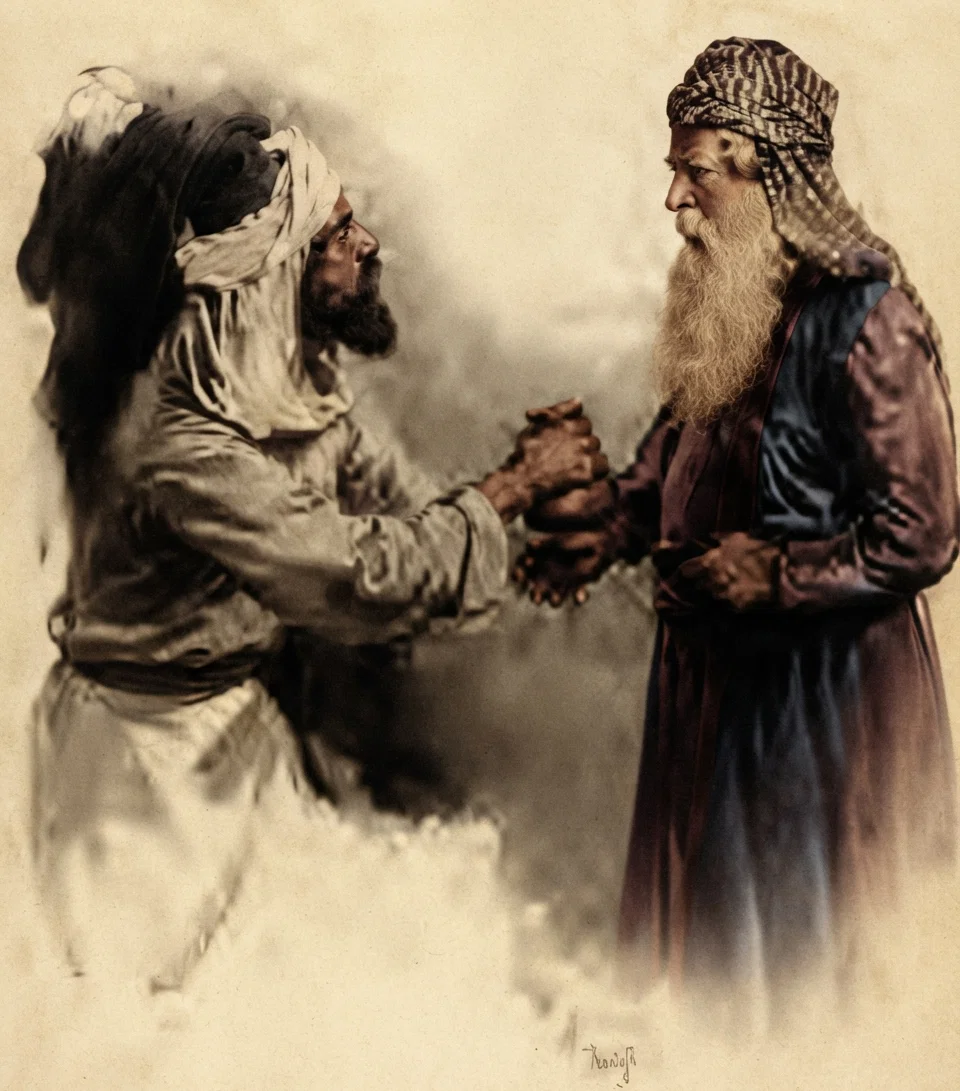
There is no evidence of genuine repentance, unless it works reformation. If he restore the pledge, give again that he had robbed, confess his sins, and love God and his fellow men, the sinner may be sure that he has passed from death unto life.
Rome's Broken Sword
By Percy T. Magan
By
Percy T.
Magan
"Out of the chaos and ruin and wreck which Rome expects will exist at the end of the present war, she designs to bring into existence again, if there be any possible way to do it, her temporal possessions as they existed prior to 1798."
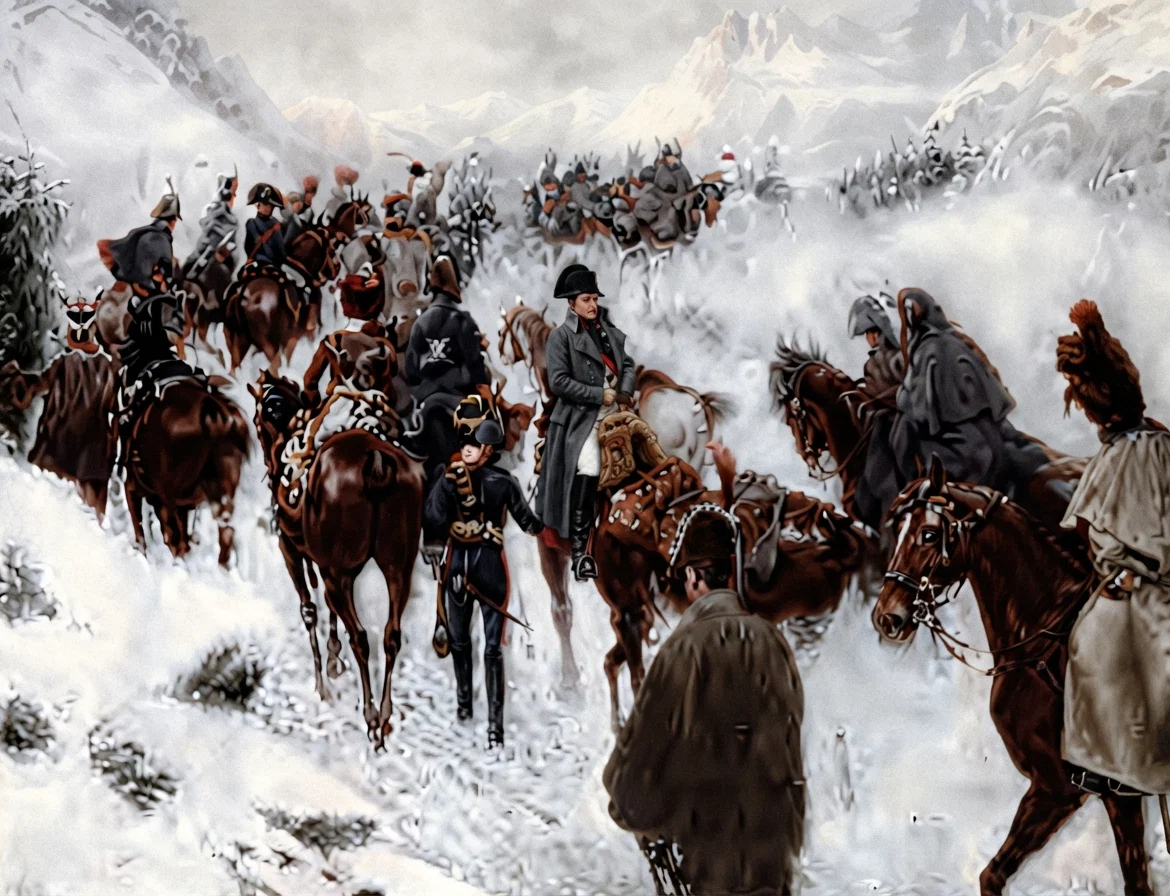
“When Napoleon and his army crossed the Alps”
EVER since the days when the generals of Napoleon Bonaparte first abolished the temporal sovereignty of the papacy, Rome has not only declaimed against her loss in terms most vindictive, but she has also striven most assiduously to regain her lost estate; and at no time more than the present have the supreme pontiff and the Curia Romana done more to bring about a reëstablishment of the Temporal States of the Church. In fact, this is one of the great objects which the papacy designs to achieve by her policy during and at the close of the present war.
This is clearly set forth in the closing paragraphs of the first encyclical letter — Ad Beatiissimi — of Pope Benedict XV, which he issued on the occasion of the Feast of All Saints, November 1, 1914. Let me give his exact words:
"And now, venerable brethren, at the end of this letter, our mind turns spontaneously to the subject with which we began; and we implore with our most earnest prayers the end of this disastrous war, for the sake of human society and for the sake of the church [italics mine]; for human society, so that when peace shall have been concluded, it may go forward in every form of true progress; for the church of Jesus Christ, that, freed at length from all impediments, it may go forth and bring comfort and salvation even to the most remote parts of the earth.
Demands a Reinstatement
"For a long time past, the church has not enjoyed that full freedom which it needs — never since the sovereign pontiff, its head, was deprived of that protection which by divine Providence had in the course of ages been set up to defend that freedom. Once that safeguard was removed, there followed, as was inevitable, considerable trouble amongst Catholics. All, from far and near, who profess themselves sons of the Roman pontiff, rightly demand a guarantee that the common father of all should be, and should be seen to be, perfectly free from all human power in the administration of his apostolic office.
"And so, while earnestly desiring that peace should soon be concluded amongst the nations, it is also our desire that there should be an end to the abnormal position of the head of the church, a position in many ways very harmful to the very peace of nations. We hereby renew, and for the same reasons, the many protests our predecessors have made against such a state of things, moved thereto not by human interest, but by the sacredness of our office, in order to defend the rights and dignity of the Apostolic See." — Encyclical Letter, Ad Beatiissimi, pages 21, 22, "Official Translation published with authority," by Burns & Oates, Ltd., London.
The "full freedom" which this pontiff claims the "church has not enjoyed," is the possession of temporal power and the Temporal States of the Church. The causes which led to the abolition of these Temporal States of the Church are of peculiar interest at the present time, because of the fact that out of the chaos and ruin and wreck which Rome expects will exist at the end of the present war, she designs to bring into existence again, if there is any possible way to do it, her temporal possessions as they existed prior to 1798.
Claims Jurisdiction over the Civil
It must be remembered that the Church of Rome has constantly and consistently advocated one-man power, both in church and in state. She has ever taught that the two swords which were given to the apostle Peter represented the spiritual and the temporal power, both of which, she claims, of right belong to her. In other words, she insists that the civil government can only obtain its power and authority from and through her, and that it is subordinate to her. Consequently any theory of civil government based upon the consent of the governed and the will of the people is of necessity opposed to her view.
In the days of the emperor Justinian, the papacy first obtained control of that territory which afterwards developed into the Papal States; and this temporal sovereignty she has ever held to be necessary to her proper power and dignity in order that she might be able to treat upon an equal footing with the great powers of earth.
At the present time, Rome is making the effort of her life to regain possession of her temporal power, and with it, if possible, possession of the territory formerly known as the Papal States. She declares that the latter is necessary to the former. Once Rome regains these two things, there will be an end of both civil and religious liberty. The story of the loss of these territories, and the abolition of the temporal power of the popes, involves the narration of some experiences that occurred between the papacy and the people of France.
The "Monstrous Right" of Liberty
In 1789, the French Revolution was formally opened by the destruction of the Bastille. The revolution itself was immediately followed by fierce denunciations from Rome. Anathema after anathema was hurled from the papal chair; for the French Revolution was a struggle for civil and religious liberty. Pius VI, in the following language, branded as infamous the aspirations for equality and political liberty as set forth in the Declaration of Rights. Here are his words:
"The necessary effect of the constitution decreed by the Assembly is to annihilate the Catholic religion, and that duty of obedience due to the laws. It is in this view that they
establish as a right of man in society this absolute liberty, which not only secures the right of not being disturbed for one's religious opinions, but it also grants the license of thinking, speaking, writing, and even of printing with impunity in the matter of religion, all that the most unregulated imagination can suggest; a monstrous right, which, nevertheless, appears to the Assembly to result from the equality and liberty natural to all men."
Pius VI treated as chimerical the liberty of thinking and acting, and he arose with energy against the refusal of the Assembly to declare Catholicism the national and dominant religion. He announced an approaching excommunication against all recalcitrants, and begged all the bishops of France to prevent the revolution from progressing.
Directed to Destroy the Monster
Next the pope began to arouse the kings of Europe against the people of France. By bulls, edicts, and encyclical letters, he warned the crowned heads that they must destroy the hydra-headed monster of civil and religious liberty which had sprung up in France.
At this time, Austria was the greatest of the Catholic powers in Europe; and she immediately turned all her strength against the struggling French. Prussia threw her weight into the balance against the revolution. Russia also declared war. For a while, England was neutral; but finally she too was drawn into the struggle. France stood absolutely alone in her struggle for liberty, denounced by the great church, and by the powers of Europe that were to a greater or less extent ruled by her.
Both Pope and King
When Napoleon and his army crossed the Alps, the northern part of Italy was largely dominated by Austrian influence. The center of the peninsula was ruled by the pope, the Papal States comprising a goodly strip of territory over which the pope ruled not only as spiritual head, but also as temporal monarch. The pope was pope, and the pope was king. Wherever Napoleon conquered in the northern part of Italy, he established small republics. There were the Cisalpine republic, the Cispadane republic, and the republic of Genoa.
The pope was angered at this beyond expression. He denounced these republics, and the French republic, whence they sprang. He did not content himself with defending the great maxims of the church, but he constituted himself chief of the reactionary movement in Europe, and boldly declared himself conjointly responsible for the ancient régime in France.
It was under this ancient régime that two thirds of the land of France belonged to the nobility6and the clergy, who, so far as numbers were concerned, formed an insignificant part of the whole population; and the remaining one third was in the hands of the common people, whose poverty was most distressing.
Seized with Frantic Fury
The Italian provinces subject to the sway of "His Holiness" were the worst governed in all Europe. Says Thiers:
"A superstitious and ferocious populace, and idle and ignorant monks, composed that population of two millions and a half of subjects.
"Reckoning upon the majesty of his person, and the persuasion of his words, which were great, the pope had formerly taken a journey to Vienna to bring back Joseph II to the doctrines of the church, and to counteract the philosophy which seemed to be taking possession of the mind of that prince. This attempt had not been successful. The pontiff, filled with horror of the French Revolution, had launched his anathema against it, and preached a crusade. He had even winked at the murder of Basseville, the French agent in Rome. Inflamed by the monks, his subjects shared his hatred against France, and were seized with frantic fury on hearing of the success of our arms." — "History of the French Revolution," volume 4, under "The Directory."
Breaking His Temporal Power
The Directory of France commanded General Bonaparte, above all things, to make Rome feel the power of the republic. All the sincere patriots in France insisted on this. The pope, who had anathematized France, and preached a crusade against her, and suffered her ambassador to be assassinated in his capital, certainly deserved chastisement.
The French government insisted that the "holy see" should revoke all the briefs issued against France since the commencement of the revolution. This severely hurt the pride of the ancient pontiff. He summoned the College of Cardinals, which decided that the revocation should not take place. The French government then and there determined to destroy the temporal power of the pope.
Next week, Dr. Magan will continue the presentation of this important question, under the title, "Breaking the Papal Yoke." EDITOR.
Opening Europe's Gates to the Turk
By Jean Vuilleumier
SYNOPSIS: The seven trumpets of Revelation 8 and 9 have been shown to be symbols of war. The first trumpet symbolized the wars waged by the renowned Alaric and his victorious Goths. The fulfillment of the second trumpet is found in the conquests of Italy and Africa by the Vandals under the terrible Genseric. The third trumpet was fulfilled by the Huns under the leadership of Attila, called the "scourge of God." The fourth trumpet signified the career of Odoacer, leader of the Heruli and other tribes, and completed the downfall of Western Rome. The fifth trumpet was symbolic of the conquest of Mohammed and his followers, the new religion sweeping everything before it. EDITOR.
"AND the sixth angel sounded, and I heard a voice from the horns of the golden altar which is before God, one saying to the sixth angel that had the trumpet, Loose the four angels that are bound at the great river Euphrates." Rev. 9: 13, 14.
The order to "loose" the great sixth invasion issues from the throne of God. That "the Most High ruleth in the kingdom of men" (Dan. 4: 25) is one of the teachings to be derived from these successive trumpets. Yes, even the long rule of the Turk over some of the fairest regions of Christendom was allowed, nay, ordered by the will of the Omnipotent.
Practically all interpreters are agreed that "the great river Euphrates" is a symbol of the Turkish power. This river waters the first territory conquered by the Turk Togrul-Bey, in the eleventh century. On it is found the city of Bagdad, the old capital of the Arabian caliphate, which became the cradle of the Turkish power. From here the Turks extended their rule toward the west. But who were they, and whence did they come?
Dream of New Conquests
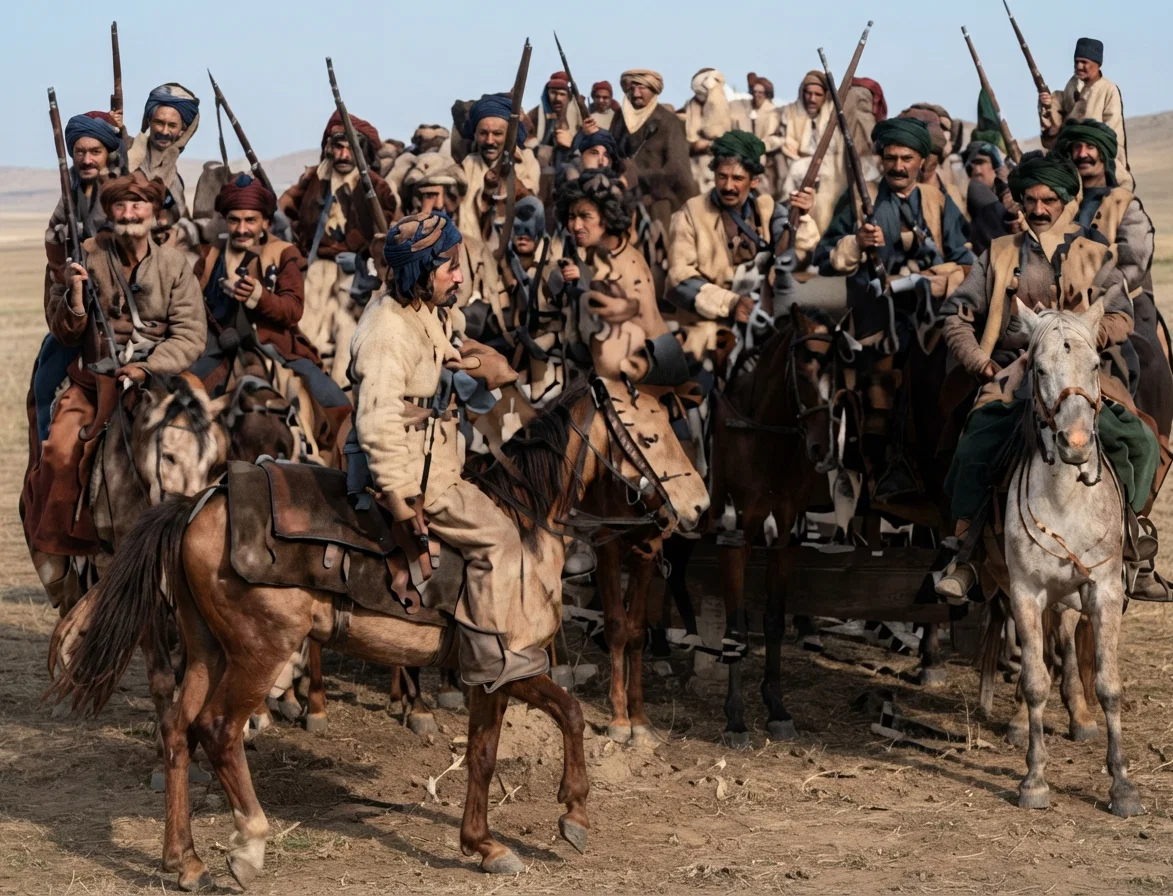
"While the empire of the Saracens was being dismembered and weakened, nomadic Turks, who had emerged from the wilds east of the Caspian Sea, were becoming dangerous by their conquests and their ferocity." While the Eastern Turks always remained in the steppes of Tartary, "the Western Turks occupied the region of Turkestan neighboring Persia and the Caspian Sea, and were divided into three tribes: the Oghouzes, the Seljukides, the Gaznevites. These tribes embraced the Mohammedan belief, and later on, played an important part in the history of the Mussulman states.
"[The Arabian] Caliph Motassem, third son of Harun-al-Rashid, bought in Turkestan a great number of slaves, of which he made his special bodyguard. These were the first Turks introduced into the Mussulman empire. Under the degenerate successors of the caliph, this militia became the arbiter which decided the destinies of the throne. From 862 to 870 it successively made and unmade four caliphs." "The empire of Mohammed was gradually dying."
From the tenth century onward, "the Turkish chiefs were veritable rulers, governing under the name of the lazy caliphs." In the eleventh century, "Togrul-Bey, grandson of Seljuk, emir of Turkestan, began the power of the Seljukides." Bagdad "opened to him her gates. The caliph gave to his new master the title of sultan, . . . and Togrul-Bey reigned in the name of the caliph, to whom he left only childish honors and the pontifical authority. Recently converted to Islam, the Seljuk sultans showed the ardor of new converts, and dreamed of new conquests.
Became Master of Palestine
"Togrul-Bey succeeded [1063] his nephew Alp-Arslan (the brave lion), took Cappadocia, Armenia, Georgia, penetrated into Phrygia, and defeated and made prisoner the emperor of Constantinople, Roman Diogenes. Under Melek-Shah, his successor, the empire of the Seljuks reached its climax [1072-1092]. Master of the Khorasan, of the Persian Irak, of the possessions of the caliphs, of the greater part of Asia Minor, of Syria, of Palestine, taken from the Fatimites [one of the three Arabian divisions, with its seat at Cairo], protector of letters and arts, the sultan was sought as an ally by all his neighbors. But at his death, his three sons quarreled over his inheritance, and the division of the empire brought about its disorganization and decline."—"History of the Ottoman Empire," by De la Jonquiere.
Although this period precedes the "loosing" of the sixth trumpet, it brought much suffering upon the Christians of the East. "The few Christians that remained in Syria, Palestine, and Egypt—who had found tolerant masters under some of the caliphs—fell in the most bitter and humiliating condition. They were deprived of their goods, and reduced to abject poverty. A large number of institutions and monuments, which the Arabs had respected, were destroyed by the Turks.
"Conquering the greater part of Asia Minor in 1063, they submitted all its populations to the law of the Koran, everywhere destroying the cloisters and the churches, and, by the terror which they inspired, at last forced the nations of the West to unite and arm against them, not only to protect themselves, but also, if they could, to drive them from the Holy Land, where their profane hands had scattered devastation.
Were becoming dangerous by their conquests.
"This was the origin of the crusades. . . . As long as these expeditions lasted, the Turks, occupied on their own territory, interrupted their incursions upon the provinces of the Greek empire."—Chastel, "History of Christianity," volume 3, pages 8, 9.
"The barbarian hordes of the Turks . . . threaten all Christian lands. If GOD HIMSELF . . . does not BAR their triumphant march, what nation, what kingdom, can SHUT THEM the gates of the West?" said the pope, at the council of Clermont. This was in 1095, when the first crusade was organized.
Clearly, the sixth trumpet was still bound, and waiting to be "loosed" by "a voice from . . . the golden altar which is before God." The historian continues, "But as soon as the last crusaders had left Palestine, the Turks again took the offensive, and resumed their expeditions against the Greek empire."
Checked by Mongolian Ambition
The hour had not yet struck for the "loosing" of the Turk. Through God's mercy, they were still to be "bound at the great river Euphrates." The crusades had lasted from 1095 to 1270. At this time, a new invasion from the Far East checked the Turks. "The Mongolian hordes had united under Zinghis Khan, who resolved to lead them to the conquest of the world." Their empire was now extending "from the eastern extremities of Asia to the shores of the Euphrates and the Caspian Sea." They had just desolated Poland and penetrated into Hungary. They ruined everything in their devastating march. (S. Menzies, "Turkey Old and New," pages 37, 39.) In 1258, the Mongols took and sacked Bagdad; and the Arabian caliph Motassem, the last of the Abassides, was put to death, with all his family.
This invasion of Mongols put an end to the Seljuk or first Turkish empire. "The Seljukides of Iconium retained, nevertheless, during three generations, the vain title of sultans under the dominion of the Mongols. The last one (Aladdin III) was overthrown in 1307 . . . by Ghazan, khan of the Mongols." (Idem, pages 41, 52.) Aladdin sought refuge at the court of the Greek emperor Michel Palæologus, who cast him into prison, where he died.
The first Turkish empire had passed away. Osman, chief of a nomad tribe of Tartars more recently come from Turkestan, had received from the sultan of Iconium, Aladdin, important territories for services rendered. When the overthrow of Aladdin made the throne vacant, Osman seized it, receiving thus "the inheritance of the Seljukides, . . .7
Opening Europe's Gates to the Turk
(Continued from page 6)
and taking the title of ruler of the Ottomans (Padishah ali Osmani)."
"It was really upon the ruin of the Seljukite empire, destroyed in 1292, that Othman I, son of Ertogrul, laid the foundation of the Ottoman power in 1299." (Larousse, article "Turkey.") "His son Orkhan took Nicomedia and Nice; all Bythinia, and soon after that, Mysia, and Pergamus, its capital, obeyed him. The Osmanli were then established all along the beautiful shores bathed by the Bosporus, the Propontis, and the Hellespont."
Time for the Trumpet Blast
A second Turkish empire, the Ottoman Turks, had arisen on the banks of the Euphrates, and began to threaten Europe. The time seemed to have come for the blasts of the sixth trumpet.
"From there they saw on the opposite side the numerous cities dominated by the cross of Constantine, and they coveted the large and rich metropolis—Constantinople. One night, the Turkish historians tell us, Solyman, son of Orkhan, was sitting amidst the ruins of Cisque, looking at the pathway of the moon upon the Sea of Marmora, leading to the object of his ardent desires. It seemed to him that the formidable shades of the desolated city were extending like a bridge upon the sea; and at the same time, he heard mysterious voices reminding him that the empire of the world had been promised to his race. 'This is a sign from God,' he said to himself.
Entered the Gates of Europe
"At the break of day, he prepared two barges, upon which he stepped with thirty-nine men. A Greek emperor had recently called him to his aid against a rival; and Solyman, at the head of ten thousand horsemen, had run over and ravaged all Thrace and Bulgaria. Upon his return, he had noticed how weak were the Greek guards of the fortresses on the channel. With his thirty-nine men, he took one of them by surprise. Soon after that, an earthquake gave him the most important place in that region, Gallipoli, whence the inhabitants were fleeing, terror-stricken, from what they considered as the wrath of God. Indeed, it was entering their city, but it was through the Turks, who were carrying it in their hands. From that day, they took root in Europe" (1356).—Duruy, "History of the Middle Ages," pages 53-55.
The French historian writes further: "Solyman had opened for the Turks the gates of Europe. They entered the new continent under Amurath; but before attacking Constantinople directly, they turned around it. Amurath took Adrianople (1360), whither he transferred his residence, although the same year, he had selected Ancyre, in the center of Asia Minor. But as he pitched his tent in the midst of merciless enemies, he obliged his people to conquer still; and in establishing himself in the second city of the empire, he forced them eventually to take the first one also. John Palæologus, emperor of Constantinople, not receiving any help from the pope, decided to pay a tribute to the sultan, to become his vassal, and to assist him in his wars."
Crusade Against the Common Foe
Constantinople and the last vestiges of the Greek empire seemed doomed. The storm that was gathering seemed ready to break over Europe. God's four messengers "bound at the great river Euphrates" looked as if they were about to take their flight westward. Yea, they were already on European soil. But the time was not yet. Europe might have repented of her sins, like Nineveh of old, if she had minded the signs of the times. She had time yet.
"Beyond the Hemus, or Balkan Mountains, in the great valley of the Danube, there lived sturdy Christian nations. . . . In 1363, several of them united to crush the Turks; and they came to meet them on the banks of the Marítsa, not far from Adrianople. Their defeat secured the establishment of the Ottomans in Thrace. In 1382, Sophia, the principal city of the Bulgarians, was taken; and in 1389, the princes of Servia and Bosnia were defeated. . . . But a veritable crusade was formed against the common foe. The king of Hungary, Sigismund, was leading; a host of French knights were present; at their head was the son of the duke of Bourgogne, John the Fearless. . . . All were killed. The victors penetrated as far as the Save, and in Thessaly, in Morea, where they took Argos (1397). People began to tremble in the mountains of Austria and beyond the Adriatic.
Conquest's Terrible Personification
"During this time, Constantinople lived in continual panic, and appeased the wrath of the sultan by an abject submission. . . . The history of the Greek empire [after 1340] is only a slow agony which lasts one century, not the struggle of a strongly constituted body fighting against death; and the reason why death did not appear is simply because the Turks forgot Constantinople, in order to run to the shores of the Danube."—Duruy, Idem, pages 535, 538, 534.
An invisible protection—which seems to perplex the historian—still covers the Christian capital of the East. "Retired in Broussa, sultan Bajazet was enjoying his triumphs and resting from his campaigns. . . . His name spread terror far and near." But a storm was gathering, which was not long in striking the proud conqueror. Tamerlane was approaching. The frightful Mongol suddenly invaded Bajazet's estates, crushed his armies, beheaded his son, defeated him at the memorable battle of Angora (1402), and made him a life prisoner.
"Four hundred thousand Turks and eight hundred thousand Mongols took part in this encounter between two barbarisms, either of which brought only destruction in the folds of their standards. . . . This indefatigable old man [Tamerlane] remains in history the most terrible personification of the unholy genius of conquest."—Duruy, Idem, page 541.
Obelisk of Human Heads
To give an idea of this bloody warrior, it may be said here that after taking Bagdad, he erected an obelisk made with ninety thousand heads of men, while at Alep he built towers ten cubits high and twenty cubits in circumference with human heads. Of Bajazet's five sons present at the battle, four escaped: Moussa, Suleyman, Mohammed, and Ica. "The Ottoman empire seemed on the brink of ruin; it was ready to be dissolved. All the states recently subdued, Bulgaria, Servia, Wallachia, resumed their independence. . . . while the sons of Bajazet quarreled, weapons in hand, over the remains of their father's inheritance. . . . Mohammed remained sole master of the empire, but of a tottering, fallen, diminished, exhausted empire. . . . The reign of this prince was spent in repressing incessant mutinies." Finally, in 1416, he succeeded in pacifying his realm, and then the Turks resumed their eternal war against Constantinople.
In 1421, Amurath II, son of Mohammed, succeeded him. But "Constantinople was saved once more, as Amurath seemed to forget it. . . . In 1430, he took Thessalonica by storm; and the following year, he was master in Janina and Croia, capital of Albania. . . . His incursions in Dalmatia, Servia, Wallachia, and even in Transylvania, made the Hungarians feel the necessity of making a great effort to get rid of this Ottoman danger, which was marching upon them by three roads at once, along the Adriatic, on the Danube, and across the Carpathians. John Hunyade was the hero of this war. He defeated the Turks near Hermannstadt (1442), in Servia, and in Bulgaria.
"A new crusade was organized under Ladislas, king of Poland. . . . Amurath, becoming alarmed, demanded peace. The Christian kings swore it, and then broke their oath. They were defeated at Varna, but the Turks were again held in check by Hunyade in 1443. In 1448, 150,000 strong, they almost annihilated the Hungarian army, while the Albanian Scanderberg, their most terrible enemy, harassed them on all sides. After having twice abdicated, Amurath died in 1451."—Duruy, Idem.