Your ShelfYour Projects

Review and Herald, Vol. 88, No. 2.

The Call of the New Year
Earlier text: The Call of the New Year

Mastery of Self

If I could find the height of my ambition satisfied in being a slave to vice, I would that my life might cease; for unless, through the strength of the Almighty, we are masters of ourselves, we are not fit for heaven, and without the hope of eternal glory, life is not worth living.—Charles H. Klippel.

Forget the Past and Press On

F. M. WILCOX
“I count not myself to have apprehended: but this one thing I do, forgetting those things which are behind, and reaching forth unto those things which are before, I press toward the mark for the prize of the high calling of God in Christ Jesus.”
TIME’S rapid passing years, How swift they flee away! It seems but yesterday The year just closed began. How brightly beamed its face When first it came with grace; It banished doubts and fears; Joy thrilled the heart once more— The heart so grieved and sore; New hope it gave to man.
Swiftly its race was run. As passes day of light, As passes dark of night, So passed its little span. To some it brought delight, To others death and blight, With victory well-nigh won. It turned sweet joy to pain, Proved fond imag’nings vain, Wrought havoc in life’s plan.
But now another day, With promise of new power And hope and strength for dower, Bids us forget the past, Reach forth to heights ahead, Leave failures with the dead, From error flee away. The mark is Christ’s own life, In him is peace from strife, Let faith his life hold fast.
Press on the year to come. In His own power divine, Brighter the path shall shine Along earth’s rugged way. Love shall make light the load, Song shall make short the road Which leads to heaven and home. Thus shall the heart be blest With heaven’s eternal rest Throughout each coming day.

Some Common Winter Diseases and Their Treatment

ALFRED B. OLSEN, M. D.
Although frequent enough all the year round, diseases of the lungs and air-passages are most prevalent in winter. Colds, nasal and throat catarrhs, bronchial disorders, and pneumonia are perhaps the most common of these diseases. It is easier to prevent bronchitis than it is to cure it, and so with the other diseases of this class. Therefore we will begin with a few hints about winter hygiene.

A Few Hints

Cultivate an outdoor life, taking care to avoid exposure to wet and cold.
Ventilate your rooms freely. Let the fresh air in both day and night.
Take a tepid or cold sponge-bath each morning, followed by a vigorous rub-down.
If the weather is cold, have a fire in the grate, but keep the air pure.
Breathing foul air in a warm, close, stuffy room, and then going suddenly outdoors, insufficiently clothed, is an excellent way to take cold.
Let the temperature of your living-rooms stand at 65° or 66° F. At night it may be much lower without harm.
A hot, close room relaxes the skin, and poisons the blood and tissues. Beware of it.
Clothe the body equally. It is a mistake to pile the clothing about the waist and hips, leaving the ankles, arms, and upper chest almost bare. Such treatment can not be persisted in with impunity.

Some Don’t’s

Don’t sit with cold or wet limbs. Change the clothing or keep moving. The exercise will prevent taking cold.
Don’t take a hot bath, and then go directly out in the cold. A warm bath should always be followed by a cold application.
Don’t stay indoors simply because the weather is inclement. Dress warmly, and go for a brisk walk in the middle of the day.
Don’t sleep in a damp bed. The spare bed is responsible for many a premature grave.
Don’t overeat. Too much food, even though it is perfectly wholesome, clogs the blood and invites disease.
Don’t sit or stand in a draft.
Don’t neglect a cold; for if no active measures are taken to drive it out, it may develop into something far worse.
Finally, don’t coddle yourself, unless you really want to be ill.

How to Treat a Cold

Now for some general directions as to treatment. When you find you have taken cold, or feel it coming on, stop eating, cleanse the bowels with a full soap enema, and take a warm bath. Then go to bed and rest. Drink water freely, and go on a light fruit diet for a day or two, adding a little stale brown bread or zwieback.
The chilly feeling one has in the early stages of a cold in the head or on the chest is due to a rush of blood to the internal organs. Warm treatment, followed by a cold spray or a wet hand-rub brings the blood back to the skin, and thus equalizes the circulation of the body.
After the cleansing enema give a hot mustard foot-bath, with a cold compress to the head, and hot water or hot lemonade to drink. Have the water as hot as the feet can bear, and add more hot water every three or four minutes. After free perspiration administer a cold-mitten friction, and dry with a coarse towel. Finish with an oil rub, using cocoanut-butter or olive-oil. Put the patient to bed between warm blankets, with a hot-water bottle to the feet. The room should be well ventilated, and the window open. Water may be taken freely, but no food should be taken till the following day. Fruit, both fresh and stewed, with a little well-cooked rice, zwieback, and gluten gruel, should constitute the diet for a few days.

Chronic Nasal Catarrh

This often follows a cold or acute catarrh if it is not properly treated. It is very annoying, and renders one more susceptible to colds. Chronic catarrh is an obstinate thing to deal with, whether it involves the nose, stomach, or some other organ.
Obtain a good vaporizer, and inhale some mild antiseptic, such as equal parts of menthol and oil of eucalyptus. Inhale the medicine for ten minutes three or four times a day. Improve the general health by tonic measures, and a liberal but wholesome diet.

Influenza

Since the epidemic of 1889, influenza has been more or less common, especially in the winter. Most persons have influenza at one time or another during their lifetime.
It begins with severe prostration, intense aching in the head, back, large joints, and bones, a rather high fever, constipation, and sometimes nausea.
Give the patient a warm, full bath or a blanket pack. This will produce perspiration, bring the blood to the skin, and relieve the pain. Put the patient to bed, and give a liquid diet. Fruit juices, malted nuts, gluten gruel, plain custard, junket, and similar preparations may be taken.
Heat applied to the spine in the form of fomentations or a spine-bag will relieve the pain. A hot leg-pack will ease the pain in the lower extremities. It should be followed by a cold-towel rub. The alternate hot and cold compress will relieve the headache.

Acute Bronchitis

There is inflammation of the large bronchial tubes, with mild fever, and mucous expectoration. Exposure to cold, or breathing dust or irritating gases, may excite an attack. Heart-disease and gout predispose to bronchitis.
The inflammation begins with a feeling of chilliness, general weakness and discomfort, fever, soreness in the chest, and a dry, painful cough.
In the earliest stage a hot mustard leg-bath, fomentations to the chest, free hot-water drinking, and an enema, with rest and a light diet, will often check the attack. Bronchitis is most severe upon the young or the aged, and they require rest in bed, and a course of hot applications and tonic measures.
The difficult breathing may be eased by the use of a steam vaporizer.
Sweating baths eliminate the poisons from the body, and stimulate the excretory organs.
The chest-pack and cold compress, and drinking water freely, will relieve the cough.

Winter Cough

Acute bronchitis in the aged is prone to become chronic, and then it is sometimes known as winter cough. It is aggravated by changeable weather and a cold climate. There is a very annoying, persistent cough, and thick, slimy expectoration. Some soreness may be present in the chest, which is more noticeable on coughing. Otherwise the general health may be very fair.
Chronic bronchitis in old people with small vitality is very obstinate. By means of good hygiene and various tonic measures endeavor to improve the general health. The patient should be warmly clad, and engage in light outdoor exercise, such as walking. Fomentations and hot chest-packs will usually give relief. In some cases nothing short of change of residence to a more favorable climate will afford permanent relief. Inhalations and the use of an atomizer are helpful in certain cases.

Pneumonia, or Inflammation of the Lungs

This is the scourge of the aged and feeble, and the greatest care and most rigid hygiene should be used to prevent an attack.
Pneumonia is an inflammation of the proper lung tissue, and consequently involves the air-cells by which we breathe. The affected area becomes solid by the throwing out of fluid, and hence useless for breathing purposes.
A high fever, with chill, great prostration, and painful cough, ushers in the inflammation. There is considerable difficulty in breathing, and a characteristic “rusty” sputum, showing intense inflammation.
The digestive organs are also disturbed, as indicated by the furred tongue, eruption upon the lips, and constipation of the bowels.
Hydropathic remedies are most efficient in treating pneumonia. It is important to keep the skin warm and active. Give special protection to the chest, shoulders, and neck, to avoid further chilling.
To relieve the congestion, give fomentations to the chest, or better still, hot chest-packs at intervals of three or four hours. In the intervals apply cold compresses, which should be changed every fifteen or twenty minutes. Sweating packs for three or four hours, followed by cold-mitten friction, are valuable in eliminating the accumulated poisons from the system.
To strengthen a weak heart, apply cold compresses or an ice-bag to the left side of the chest for ten or fifteen minutes every three hours, or oftener if necessary.
Empty the bowels daily by cold enemas.
Hot packs to the hips or legs will relieve the headache. Treat the pain in the back by fomentations to the spine or a hot trunk-pack.

The Importance of Fresh Air

While using these remedies, do not neglect supplying the patient with an abundance of fresh air. This rule holds good for all pulmonary affections. The organs and tissues require oxygen; but on account of the inflammation of the air-cells, a larger or smaller section of the lungs is of no use. Consequently, the remaining portion must do extra work, and requires plenty of oxygen.
A physician should always be called at the outset; for the disease is a very serious one, especially in the weak and aged.
Caterham, England.

Suitable Literature for Our Young People

R. COBDEN KENNEDY
“Study to show thyself approved unto God, a workman that needeth not to be ashamed, rightly dividing the word of truth.” 2 Tim. 2:15. This was the exhortation of the apostle Paul to young Timothy. Paul also urged Timothy to continue in the things which he had learned, knowing from whom he had learned them, and that from a child he had known the Holy Scriptures, “which,” said Paul, “are able to make thee wise unto salvation.” As it was essential for Timothy to know the Holy Scriptures, in order to be wise unto salvation, so it is necessary for the youth of our time to have the same saving knowledge. Wisdom is from God, and our youth need to obtain it.
The exhortation is to study. But we find that many young people to-day are not studying God’s Word. There is so much cheap literature on the markets, so much that is untrue and unreal, there are so many enticing stories, that the young are led to read these things, and so to take a false view of life and its solemn responsibilities. Many a young man, many a young woman, who might have been a blessing to the world, has made shipwreck of life by reading trashy literature. Sad it is that this kind of reading has found its way into the ranks of the young people of this denomination.
Consider the uplift that comes to the life from wholesome, solid reading. No subject can so broaden and strengthen the mind as history. “Pilgrim’s Progress,” if read and studied by the youth, will lead them to bear the experiences of the Christian life with fortitude. Our denominational books, “Great Controversy,” “Desire of Ages,” etc., and our good papers, especially the REVIEW, should be carefully read. Such reading by our young people would awaken in their hearts a desire to give the message to all the world in this generation. In this class of literature they will find food for thought and for study. Above all should they study the Book of books, the Bible, an estimation of which is given in the words of the psalmist: “I will worship toward thy holy temple, and praise thy name for thy loving-kindness and for thy truth: for thou hast magnified thy word above all thy name.”
Grand Cayman, West Indies.

The Baby

ALL educators agree that the crown and flower of all education is the training of character. It is also the most elusive of all educational processes. We can easily hire a man to drill mathematics or modern languages into a boy’s head; but where shall we hire the inscrutable forces that shape a strong character? Usually in an entire college faculty there are only two or three men who have that divine gift. To them the boys look back with veneration and gratitude, because they called the man in them into life. A rich man might well give half his fortune to buy such an influence for his son’s life.
But almost every baby does just that for his parents. He gives them a post-graduate course in character. He matures and ennobles them in a way that would seem miraculous if it were not so universal. He turns a vain, selfish, idle girl into a patient, self-forgetful woman. He tethers the vagrant instincts of a young fellow, and makes a man of him, serious, loving, and strong. To the great mass of men and women the baby is a very important means of winning them to a higher life. He is a force capable of bursting the seed-capsule of their selfish life, and of giving them a chance to strike root, and grow up into the larger reaches of humanity.
For the older children of a family the baby is the best assistant educator that the parents could engage for any money. He develops the nobler, protective emotions in them by appealing to the dormant parental instincts. He puts them into the position of teachers, and by teaching they learn. In general he helps to turn selfish young savages into members of a family community, willing to render help as well as to receive it.—Ladies’ Home Journal.

Occupations That Prevent Worry

SEE that all the hours of the day are so full of interesting and healthful occupations that there is no chance for worry to stick its nose in.— Luther H. Gulick

Sharing Burdens and Blessings

“If I share another’s burdens, I forget about my own; And in speaking words of comfort, Oft I find my troubles flown. I can double all the blessings That God sends me every day, If I share them with the comrades That I meet along the way.”

In His Keeping

WORTHIE HARRIS HOLDEN
IN the keeping of Jehovah Lay I down to rest; When the morning dawns, he'll wake If he deemeth best.
In the keeping of Jehovah Rest my hope, my all; There upon his arms reposing I can never fall.
To his keeping I surrender Heart and mind and soul, Knowing ere my will resigned them, He redeemed the whole.
Earth's alarms can never frighten, Foes can ne'er prevail; For his love is a munition That can never fail.
Portland, Ore.

Central America

D. C. ROSS, M. D.
In company with Brother and Sister J. G. Pettey, who were called to teach in the English school in Guatemala city, I sailed from New Orleans, October 18, for Puerto Barrios, the main port on the Atlantic side of the republic of Guatemala.
Our first stop was at Belize, the capital of British Honduras. As that is a part of the Central American Conference, and we were to remain there six hours, Brother Pettey and I hired a gasoline launch, and went ashore to get our first view of a tropical city. On account of shallow water, large vessels do not land at Belize, but anchor out in the bay; and if the passengers wish to go ashore, they must transfer to small boats and launches. Belize is a city of more than ten thousand population, many of whom speak English, and it seems to be quite a progressive place.
We left there at 4 P. M., and anchored at Puerto Barrios that night at midnight. As soon as it was day, we prepared to land. Elder N. V. Willess, the conference president, met us at this place, and assisted us in getting through the custom-house, and arranged for our railroad transportation. We appreciated his help very much. He has been studying hard on the language since he arrived in the field, and is able to get along very well. To the rest of us the language was a mass of sounds that reached our ears, but conveyed no meaning whatever to our minds. One thing that was very troublesome to us at first was the difference in value between the money here and what we had been used to at home. It takes almost seventeen dollars of Guatemalan money to equal one of ours, and it is very easy for a stranger to get the worst end of a bargain. Knowing neither the value of the article nor its equivalent in money, he can easily be taken advantage of.
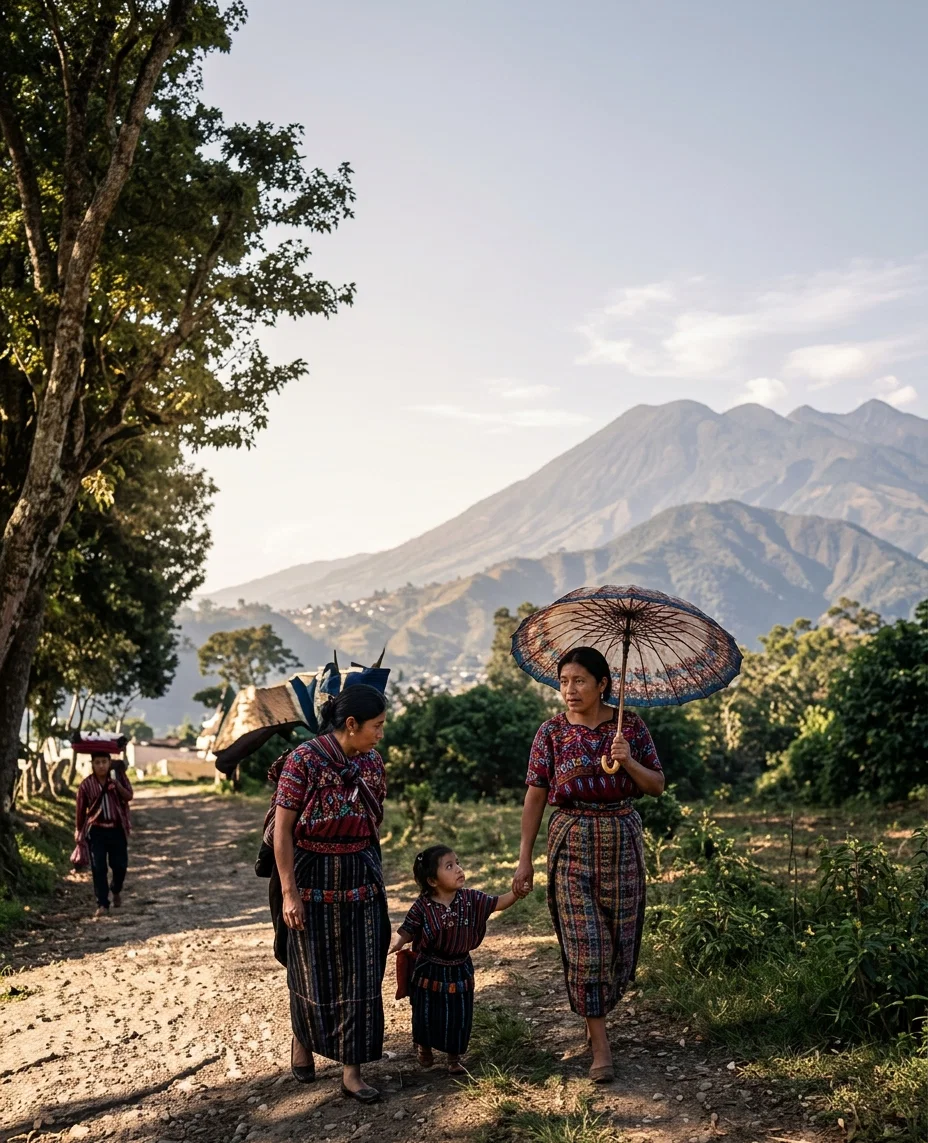
INDIANS TAKING THEIR PRODUCE TO THE GUATEMALA MARKET
We finally passed all the requirements necessary, and started for the capital, one hundred ninety-five miles inland. We passed through beautiful tropical valleys, and then among mountains, climbing up until we reached an elevation of nearly five thousand feet. We had opportunity to see the natives in their homes, and get an idea of how they live, dress, and work.
At Zacapa we stopped thirty minutes for dinner; but instead of going to the hotel, we bought fruit, and ate that with native bread and enjoyed it very much. Fruit is delicious and quite plentiful, although much of it was new to me both in looks and taste. Soon after dark we arrived in Guatemala city, where we were met by all the workers and all the servants who could leave. They had heard we were coming, and it was encouraging to see how glad they were to welcome us. The news that help was on the way, and a determination to do their duty, were all that had kept some of those faithful workers from giving up; for the work had been quite trying, and all had been carrying heavy burdens. Now the work will be easier for all.
Guatemala is a city of one hundred thousand inhabitants, but it is very compact, and to a stranger it does not seem so large. Nearly all the houses are made of adobe, and are seldom more than two stories in height. The streets are nearly all paved; there are street-cars drawn by mules, electric lights, water-works, sewers, and many miles of cement sidewalks. The houses are quite artistic in design, and usually well painted; and though they seem a little odd at first, they are really quite pretty. Inside, many of them are well arranged and handsomely furnished. There are twenty-six Catholic churches in the city, I believe, and they are usually very showy and imposing.
  • (Concluded next week)

Nagasaki, Japan

WALTER L. FOSTER
It has now been four weeks since our tent-meetings were begun in this old city, and you may be sure our little company of workers are all awake. In the midst of our meetings came a great festival, lasting one week. It was with much anxiety that we saw the festival approaching; and to begin with, we were very cautious to locate our tent a safe distance from the theater grounds. But as we see it now, the Lord guided us to a place within a stone’s throw of the center of the festival. However, we were protected somewhat from the noise on two sides by quite large buildings.
Before the festival, we had obtained a few thousand back numbers of the Owari, our Japanese paper, and distributed all of them among the people who visited our tent. In one day nearly two thousand were used in this way. The same evening, more than six hundred persons attended the service. Meetings were also held during the day, in which our younger workers were given thirty minutes each to speak to the people. One day six such meetings were held, besides two one-hour services. This message has power with it, and the Lord intends it shall be proclaimed in “high places.” It will be a witness to all nations, and I have faith to believe that many Japanese will accept it.
When the subject of baptism was presented, Brother H. Kuniya asked for those to stand who wished to keep all of God’s commandments and be baptized. All who have expressed a desire to be baptized were not present; so we did not count all of them, but there were fourteen present who signified their desire. We expect to organize, when they are prepared, with no fewer than twenty-five new Sabbath-keepers. Of course, some of these were just waiting for the opportunity when the meetings opened. It is indeed encouraging to see these poor people come from such darkness, and fully identify themselves with us. They learn to love this message as much as any of us, and are just as willing to sacrifice for it. I am thankful to be called as an ambassador of Christ to Japan.
Our canvassers are all doing quite well, and are staying by the work. They certainly are doing well, considering the kind of literature they are compelled to use. Because of our lack of facilities to print better, it is not the best in appearance. We are praying and still hoping that a good printer will soon come, and that we may have means enough to institute a new order of things in our publishing work. All of us are looking for it, praying for it, expecting it. The salaries now paid the canvassers would more than support a printer; and with better papers and small books, the canvassers would be able to support themselves.
Recently, I visited a business man here, and he said: “I like those special numbers of the Owari.” At the same time, I was surprised to see him bring out all the specials we have printed. They were nicely kept, and he had read each article a number of times. So it is; when the work on our publications is well done, there is a lasting impression. The writer well knows our donations to foreign missions come “by hard lines;” and it is fresh in his memory when all his donations were earned by following the plow, laying stone, or plastering, and he was tempted sometimes to think he had given a great deal. But, O brethren, I had not then seen the darkness, the sin, and the misery that exist in Japan.

Australasian Union Conference

G. B. THOMPSON
The eighth biennial session of the Australasian Union Conference was held at Warburton, Victoria, October 13 to November 2. Warburton is located about fifty miles northeast of Melbourne. The Signs Publishing Company is ideally established here, among beautiful hills, in the valleys of which grow ferns of unusual size and beauty.
The first week of the meeting was devoted to a convention, where the various departments of our work were given careful study, especially the publishing and educational work. Most of the delegates were present at the convention, and the careful consideration given to the forming of plans for future work assisted very much in the regular work of the conference. The delegates were entertained by the Warburton church, who extended every hospitality, and did all they could to render our stay pleasant. The weather was quite cool during part of the meeting; the day before the delegates arrived, the hills were covered with snow.
There were eighty-six delegates present from the commonwealth and New Zealand.
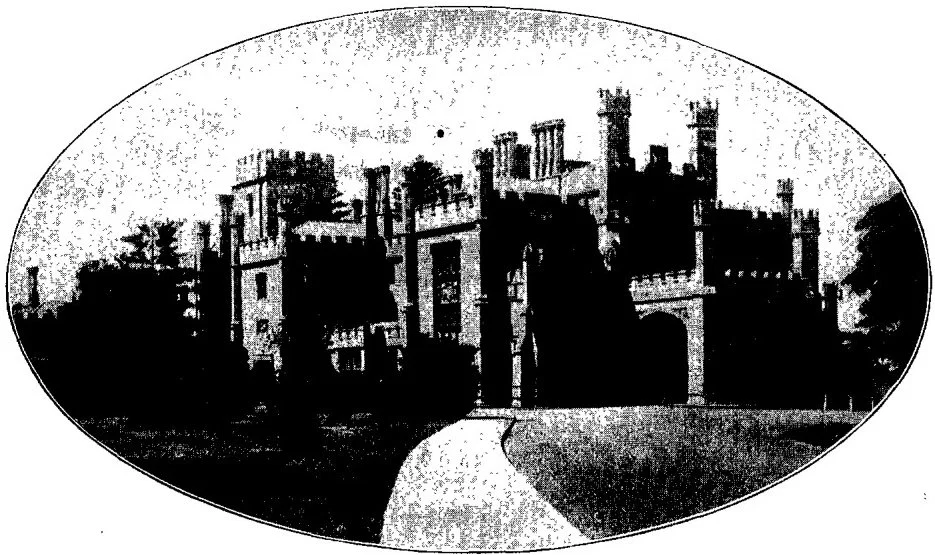
GOVERNMENT HOUSE, SYDNEY, AUSTRALIA
The island fields were represented by nine delegates: Sister P. Tunheim, from Java; S. W. Carr and wife, from New Guinea; Brethren Christian and McCoy, from Norfolk; and Brother and Sister A. G. Stewart and two native workers—Alipati Rainama and Ratu Ambrose—from Fiji. It would be very desirable to have all the workers present at these union meetings, but the tremendous stretch of territory included in this union conference makes this impossible. Only those who have been in this field can fully realize this. For instance, Pitcairn Island is in this union; but it is some five thousand miles distant from the union office, and is nearer to the coast of South America than Australia .
It takes as long for the president of the union to reach some of the missions in the East Indies as to make a journey from Australia to Washington. Then to cross over from Australia and attend a camp-meeting in New Zealand and return, requires about a month's time. The sea voyage to the West Australian Conference requires a longer time than to cross from New York to Liverpool. Besides this, the territory of Australia itself is about as large as the United States.
A good beginning has been made among the numerous islands of this measureless area; but there are hundreds of islands where the standard of truth has not yet been unfurled, and on some of these cannibalism is still practised; yet these must hear God's message for the last days. These islands all swarm with human beings, made in the image of God, but lost in the gloom of heathenism. This union has a population of about fifty million. Java alone has some thirty-two million pagan inhabitants.
On account of the time and expense involved in getting workers from so vast an area of land and water together, as well as for other reasons, it was decided not to call another session of the conference for four years, unless special circumstances seemed to demand it.
To superintend a field embracing so wide a range of territory is a task entirely beyond the capacity of one man. Much travel by sea as well as land is necessary, requiring months of absence from the office. Besides, these island fields need close supervision, in order to hold the ground that is gained. In view of this, and in order that the work already started might be properly supervised, and the plans for the extension and growth of the work might be carried out, provision was made for two vice-presidents to assist the president in his work. The executive committee was also enlarged to twenty-one members.
WARBURTON (VICTORIA) CHURCH BUILDING
I was continually impressed during the conference with the growth of the message in this field. Only a few years have passed since continual and urgent calls were coming to us for money to establish the work in this field. Some could not understand why this was, but it is all plain now. It is always wise to follow the counsel of the Lord. From this center the great island world of the Pacific is being warned, and workers are being trained for the field. How this immense island field could be warned without a strong center in Australia, I have no idea.
All the reports from the various departments and institutions showed an encouraging growth. There has been an increase in the membership of about four hundred during the two years just closed. The total tithe received by the local conferences and mission fields in the union showed an increase of nearly $20,000. The Pacific Archipelago constitutes a great foreign mission field, which is managed by the Australasian Union as a part of its territory. In this island world are about ninety laborers at the present time; and aside from a small appropriation made by the General Conference, this entire staff of missionary workers is supported by the Australasian Union Conference.
The educational work showed progress. In the larger schools there was an enrolment of 359 pupils during the last year, and twenty-eight teachers were employed. The Avondale School for Christian Workers has had an excellent year, and showed a substantial financial gain. The outlook for the coming year is good. From this school, workers have gone to every state in the commonwealth and to New Zealand, and they are found also in Java, Singapore, the Philippines, and China. Three are now working in New Guinea, eight in Fiji, two in Sumatra, and three in Tonga who were Avondale students. The schools in West Australia and New Zealand have also done good work.
The sale of our literature has been greatly blessed during the year. The publishing-house showed a profit of about eighteen hundred dollars. An excellent spirit of unity and co-operation between the field and the office was manifested during the meeting, and the outlook for the book work for the coming year is encouraging, and promises good results in seed-sowing.
The need of a magazine in the field has been realized for some time. After careful and prayerful study, it was decided to increase the health magazine to sixty-four pages, publish it as a bi-monthly, and make it in every way an up-to-date publication, the price to be sixpence. This will enable agents to support themselves by its sale. The magazine will be printed at the Signs office instead of Avondale. The printing of the Sabbath-school lesson pamphlets was transferred to Avondale, that the work there might not be crippled in any way.
Brother A. G. Miller, of the circulating department at the Signs office, was chosen as field missionary secretary, and will give the magazine special attention. It is hoped that a circulation of at least twenty-five thousand will be speedily secured and maintained. If this can be done, it will be a financial help to the Signs office, besides being of great value to the medical department and the work in general.

The Time to Work

MRS. S. T. BELDEN
“OUR missionaries watch every move in the home lands that means help for the fields abroad. Every splendid gift from conferences or people for missions sends a thrill of joy around the world-wide circle of our work.”
I picked up an old REVIEW, and read this paragraph. Yes, that is very true. And my heart cried out, How long, O Lord, how long, ere the sowers will be ready, having the means in hand, to enter the many fields yet untouched, and others with only a beginning made?
If we all truly believed that the Lord is coming in this generation, there would be no holding back of men or means. Those of us who accepted the truth over fifty years ago are fast dropping away; there are very few of us left. It seems to me this generation can not be stretched out much longer. No time now to be adding field to field and house to house. Shall any hold on to their silver and gold to throw to the moles and the bats by and by? How much better to spend it now, in saving souls, and thus lay up treasure in heaven.
By our actions we show just how much we love the Lord, and long for his coming. Words are of little account if we say, and do not. Meanwhile thousands are falling every day into the grave, without Christ and without hope. Shall their blood be found on our garments when the Judge cometh? My heart aches when I read of the heathen pleading for teachers, and none to send to their help.
Is there a heart so hard that it can not be roused to action by these cries for help? Shall we sit with folded hands and let them perish? A tremendous work is before us if every creature must hear this warning message. Now we must work; the resting must be by and by, when the work is finished.
Norfolk Island, South Pacific Ocean.

The Polynesian Field

The first issue of the Union Conference Record, the official organ of the Australasian field, giving the reports from different island fields, as well as from the home territory, presented at their recent union conference, has been received. These reports reveal an expansion of the message that is truly encouraging. Every superintendent from the island section presented imperative need for additional facilities with which to meet the demands of God’s opening providence before them.
“Our Pitcairn Island people,” reports Brother F. E. Lyndon, “are faithful, as a whole, in paying their tithe, most of which is sent us in arrowroot. The school work seems to be prospering. The people are pleased with Brother Carey as a teacher. He is a mechanic, and is able to help the islanders erect their houses and improve their places.” But he may not remain long with them. “This field,” the Eastern Polynesian Mission Field, Brother Lyndon continues, “from a human standpoint seems a hard one; but when God waters it with the dews of divine grace in answer to the prayers of his people, there will truly be responses from honest hearts when the truth is brought to them.”
Thus the message, pressed forward by the faith of Jesus in the hearts of the remnant, wins its way into the dark quarters of the earth.

When It Is Beyond Us

God’s infinite power can work through those who are consciously weak as it can not work through those who think they are strong. Many a struggling little church is so weighted down with its own burdens of financial support that it knows it could not do anything for foreign missions—as it could not, in its own strength. But note this statement made by one of our mission boards: “The Chinese women of the Pastingfu church have organized a missionary society, and have sent to a distant outstation a Christian woman as their own representative. Small churches in America, ‘please copy.’” Only the infinite resources of God are equal to this sort of service. But God’s resources are as freely offered to America as to China. —Sunday School Times.

The Sudan

THIS region is larger than the whole of Europe, minus Russia, and has a population of from fifty millions to eighty millions. This vast territory is to-day under European control. From Abyssinia across to the Atlantic, and from Egypt south to the great lakes, a new world has within a decade passed under Christian rule. The mahdi has fallen, the Nile has become British, the Niger is divided between England and France; a new German protectorate sweeps from the Gulf of Guinea up to Lake Chad, and shares with France and England the states of the Central Sudan. The power of Islam, which for a thousand years had closed the Sudan, has been broken, and the church of the twentieth century is confronted with a vast new region to win for Christ.—Selected.

The Effects of Evil Thoughts

“Evil thoughts, if cherished, blight virtue, destroy purity, and undermine the stablest foundations of character. They are very much like rot in timber, like rust in iron. They eat into men. And when the process has gone on for a while, and there comes the stress of an outward temptation, down they go into a mass of ruins.”

The Life of Jesus

If men would only look at the life of Jesus, to see what Christianity is, and not at the life of the poor representatives of Jesus, whom they see around them, there would be so much more clearness; they would be rid of many difficulties and doubts.—Phillips Brooks.
Continue reading: Editorial