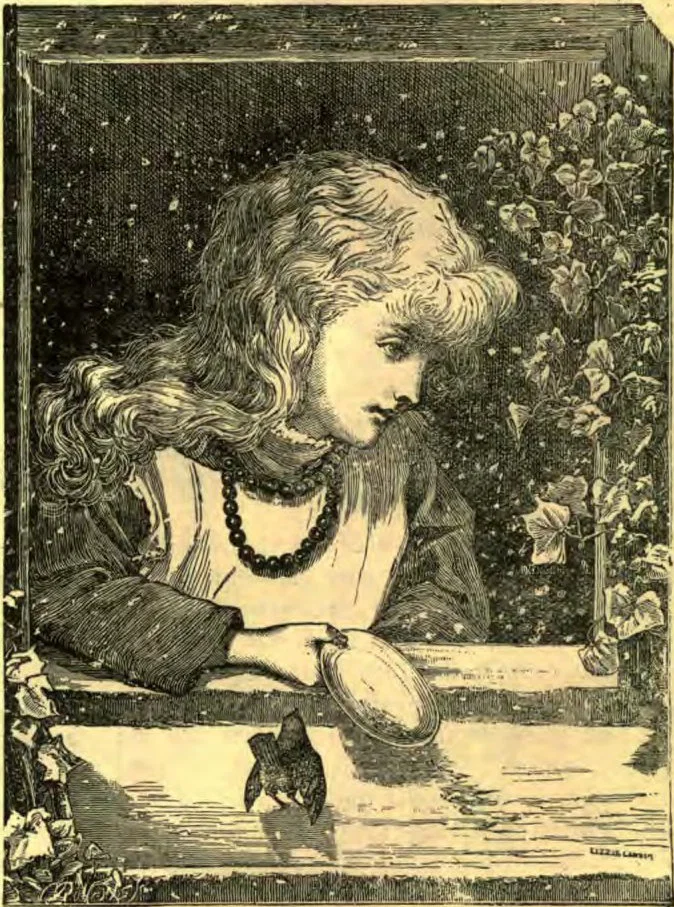
It was under certain disadvantages that Sammy Boyd went into the hen business. In the first place, he lacked capital, having just invested most of his money in a bicycle. Then he had no proper facilities, as his parents lived in an upper tenement on a somewhat crowded city street; and, besides, he knew nothing whatever about hens. But he had plenty of confidence in himself, and persistence that had seldom met defeat.
“What do you suppose Sammy has taken into his head now?” asked Mrs. Boyd of her husband, as he entered the house one night. “Well, it’s hens! He read in a newspaper about some boy’s great success in keeping hens, and he is just bound to go into the business himself.”
“Hens!” exclaimed Mr. Boyd, derisively. “Where in the world would he keep them?”
“Why, he thinks he can keep them up on the roof, where we hang out our clothes.”
“That’s nonsense, you know! He might as well give up that idea at once.”
“But he has already begun.”
“Begun! What, to keep hens?”
“Well, yes, to keep a hen. He brought one home that he says he picked up at a bargain, and he is out on the roof now, fixing up a coop for her out of a dry-goods box.”
“I’ll put a stop to that in short order!” declared Mr. Boyd, with some emphasis. “I’ll go right up and see Sammy now.”
But after he had seen Sammy, he decided, as he told his wife, that perhaps he would better let the thing run along for a day or two and die a natural death.
Meanwhile Sammy was full of enthusiasm for his new business. He did not find an egg the first day, as he had hoped, but he was willing to allow a reasonable time. When, however, the second and even the third day went by with nothing to the hen’s credit, he thought it was time to try a powder which he had seen displayed in a store window, and which, according to one of the claims set forth upon the wrapper, would make hens lay.
But even this failed to produce results, and Sammy concluded to make a change in his plan. As the hen was not in the mood for laying, she might as well spend her time hatching chickens.
With Sammy, to think was to act, and he proceeded forthwith to the nearest grocery store. Here he found eggs in different boxes, with placards showing grades and prices. One box was devoted to fresh eggs, another to strictly fresh eggs, and a third contained eggs—the last named being the lowest in price in the store.
On reflection, Sammy decided that, for his purpose, eggs of the least freshness would be the most desirable, as it was reasonable to suppose that they would hatch out in the shortest time.
“Haven’t you any cheaper eggs?” he inquired of the grocer.
“Well, none that we should want to recommend,” was the reply.
“I don’t want very fresh eggs,” Sammy explained. “I am not buying them to eat, you see.”
“Ah!” said the grocer, in some surprise. “Well, I’ll see what I can do,” and he succeeded in picking out a dozen that he was able to offer at a satisfactory discount from quoted prices. After reaching home, Sammy soon found that coercive measures would be necessary in order to have the hen perform the part assigned to her, as when left to herself, she would not remain contentedly on the eggs.
So, finding a soap box of suitable size, he covered the bottom with straw, put in his eggs, placed the hen on them, and after a struggle, succeeded in fastening down the cover. It was a close fit for the hen, although Sammy had thoughtfully cut a hole in the box, through which she could thrust her head. On the whole, Sammy was well pleased with his work, and he ran to call his mother to see it. But when he came back, he perceived at once that all was not well. The box was moving about in a jerky fashion over the roof, the hen was uttering harsh notes of displeasure, and there was reason to believe that she had broken some of the eggs. Under the circumstances, Sammy could do nothing less than release her from her confinement; and as he did so, he conceived, for the moment, something like a distaste for the hen business.
“I really wish that you would speak to Sammy,” said Mrs. Boyd, almost in tears, when her husband came home the next night. “Somebody has told him that hens won’t lay unless they have a chance to scratch in the dirt, and since he came home from school, he has been carrying up coal-hodful after coal-hodful of dirt, and spreading it about on the roof; and it’s to-morrow that Mrs. Murphy comes to wash.”
“I’ll attend to it in the morning,” said Mr. Boyd; and he was confirmed in his purpose by the fact that a brisk little shower came up in the night, leaving the roof in a very unsatisfactory condition.
“Now, Sammy, this won’t do at all,” he urged, the next morning. “The fact is, we have no place to keep hens, and you want to give it up like a good boy. I’ll tell you what I’ll do, I’ll take your hen off your hands, and pay you well for her. Come, now, what do you say?”
But Sammy was not prepared to trade. He could not bear the thought of failure; and, besides, he had developed quite an affection for his hen.
“I’ll think about it,” was all that he would say for the present.
It was Saturday morning, and after breakfast Sammy started on a bicycle ride, from which he returned just as his parents were beginning their midday meal.
“Father, how much does it cost to move?” he asked, as he took his seat at the table.
“It depends somewhat on how much there is to move and the distance.”
“This place is about twelve miles out, I guess,” said Sammy, half to himself.
“What place?”
“Why, a place there is to let in Welham, out on the Fitchburg Road. It is a magnificent place. It has a hen-house, with a large yard with a wire fence all around it. I want you and mother to go out on the train this afternoon and see it.”
“How about the house?” asked his father, with a smile.
“Why, it’s a nice house, big enough for thirty hens.”
“I meant the house to live in.”
“Oh, that is all right, too. You’ll go out, won’t you?”
“It would be of no use,” said Mrs. Boyd. “It would be too far for papa, and you don’t know how much the rent would be.”
“Oh, yes, I hunted up the man that has the say of it, and found out. And I went to the station—it is only half a mile—and found what commutation fares to the city would be. And I’ve got it all figured out, and it comes to less a month than we are paying now,” and Sammy triumphantly produced a crumpled sheet of paper for proof. “The man says it is a bargain, and—I engaged it.”
“Engaged it?” echoed Mr. Boyd.
“Well, I told him that you would be sure to take it when you saw it. You are going out, aren’t you?”
“Oh, yes, let’s go,” said Mr. Boyd, laughingly. “We might as well spend the afternoon in that way as any, and I should like a breath of country air.”
When Mr. Boyd and his wife, following carefully mapped-out directions, reached the place, they found their son, who had gone out on his bicycle, and also the agent, awaiting them.
“Just look at that hen-house!” shouted the boy, by way of greeting, waving his hand toward an unpainted structure that was almost too plainly visible from the street.
But there were other things to look at. There was the house, rather small, somewhat old, and a little out of repair, but looking as if it had once been a home, and might be again. There was the old garden, where in place of the prevailing6burdocks and thistles, one could imagine the bright flowers and thrifty vegetables of its better days. There, in the background, were apple-trees, stricken by age, but able still to make some show of leaves at the call of spring. And there was the ample front yard, with the unkempt beauty of grass and dandelions, and the teasing fragrance of the lilac bloom. Altogether, regarded as a “gentleman’s place,” it left much to be desired; but as a possible country home it was not without its appeal to these people from the up-stairs tenement.
“Party that owned the place was along in years, and let it run down,” explained the agent. “The heirs are willing to rent it at a reasonable price, and will fix it up some, if you want to take it.”
“We’ll take it, won’t we, pa?” said Sammy.
“I’ll let you know the first of the week,” was Mr. Boyd’s final word, after a thorough inspection of the premises.
“I’ve a great mind to take the place,” he said to his wife on their way home. “It has its outs, but I declare it makes me homesick to think of going back to our flat. And a city street is no place to bring up a boy. What do you think?”
“Why, I hardly know,” replied Mrs. Boyd. “It is quite a venture, but it is a rather sweet old place, and I should like to get at that garden. And I should enjoy living in a house with nobody over my head or under my feet.”
The change was made, and although some years have passed, it has never been regretted. And, needless to say, the hen business, under Sammy’s experienced management, is now a gratifying success.—F. E. C. Robbins.
Not a Sparrow Can Fall
By Mrs. Elizabeth Rosser
DEAR little sparrow, sweet was thy song,
When green was the grass, and the June days were long,
When hid was thy nest amid leafy boughs,
And thou and thy mate were keeping house.
Though the hawk hovered about thy wee nest,
Though storm-clouds gathered dark in the west,
Yet did God guard thee safe through it all,
For without him not a sparrow can fall.
Dear little sparrow, hushed is thy song;
White is the ground, and the winter nights long;
Tossed is the nest upon naked boughs;
Long since thy brood has flown from thy house.
Yet, though the ground be covered with snow,
Though nights are long, and winter winds blow,
Still doth God guard thee safe through it all,
For without him not a sparrow can fall.
MRS. ELIZABETH ROSSER.
Miles of Dollars
FROM perhaps the most important publication sent out by our recent International Congress we take the following:—
Economic Facts for Practical People
The new explosive, Maximite, can instantly destroy any battle-ship that floats.
“Were half the power that fills the world with
terror,
Were half the wealth bestowed on camps and
courts,
Given to redeem the human mind from error,
There were no need of arsenals or forts.”
A first-class battle-ship costs as much as all the ninety-four buildings of Harvard University.
A million dollar bills packed solidly like leaves in a book, make a pile two hundred seventy-five feet high. One thousand million dollars, the price which Europe annually pays for armaments in time of peace, equal a pile of dollar bills over fifty-two miles high. This expenditure for the supposed prevention of war represents one thousand million day’s labor at one dollar a day, and this, be it remembered, every year, to enable each nation merely to hold its own.
A second pile of dollar bills over fifty-two miles high represents the annual payment for interest and other costs of past wars.
To these inconceivably large amounts must be added the earnings of the millions of able-bodied men in army and navy who are withdrawn from productive industries, and are supported by taxed peoples.—Our Dumb Animals.
The Absolute Pettiness of an Atom
How large is an atom? Perhaps the simplest, though not the most exact way of arriving at a rough estimate of the size of atoms is by measuring the thickness of a soap-bubble film where it is as thin as possible just before it bursts, says a writer. Such a film if composed of atoms must be something like a pebble wall. Now, a pebble wall would not stand if it were not several pebbles thick; and if we had reason to suppose that it was about a dozen pebbles thick, we could easily make an estimate of the size of a pebble by measuring the thickness of the wall. That is the case with the thinnest region of a soap film. It is found to have a very definite uniform thickness. It is the thinnest thing known, and by refined optical means its thickness can be accurately measured. It must contain not less than something like a dozen atoms in its thickness, and yet it is only about the twenty millionth of an inch in thickness by direct measurement. So that the diameter of an atom comes out between one two hundred millionth and one three hundred millionth of an inch, so from about two hundred million to three hundred million of atoms can lie edge to edge in a linear inch.—Week’s Progress.
A Chloroform Tree
A REMARKABLE tree, says the Los Angeles Times, has been discovered in a mountain canyon in a spur of the San Jacinto Mountains, near the Mexican line. It was found by a party of prospectors who were searching for water. The tree seems to be unknown, but its appearance and strange qualities are thus described:—
The leaves of the tree resemble in size and shape the fig leaf, but they are of a vivid purple color, and the under side of the leaf is thickly covered with stiff hairs, which stand out from the leaf fully half an inch. These hairs are sharp and thorn-like, and easily penetrate the skin, and, when they do so, they are poisonous, causing swelling and much pain.
The blossoms are as peculiar as are the branches and leaves. They are of a rusty red color, and are about two inches in diameter. In shape they are a very good representation of the tarantula. There is a huge, hairy bulb, in shape resembling the abdomen of the poisonous spider, and there are several stamens, corresponding to the legs of that insect.
The most peculiar feature of the plant, however, remains to be told. Whenever one approaches the plant, or when the wind agitates the branches of the tree, the flowers give off an abundance of perfume—heavy, sickening, and deadly. This perfume has the quality of chloroform, and a few inhalations of the odor produce unconsciousness. The prospectors who made the discovery of the plant were rendered insensible upon approaching the tree to examine it.
As the plant seems to have no botanical name, two names have been suggested by the qualities of the plant itself. One is tarantula plant, the other, chloroform tree.—Selected.
Discovering a Self-Irrigating Orchid
MR. SUVERKROP, a naturalist who has made many journeys in South America to enrich the Kew Gardens, near London, with new plants, reports the discovery of a remarkable plant belonging to the orchid family. The plant has a peculiarity which seems to distinguish it from any other. When it is thirsty, it lowers to the water a tube from its station on the tree of which it is a parasite. When it has imbibed the needed amount of water, the tube rolls up into a neat coil, and takes its place again in the center of the plant.
The naturalist tells this story of his discovery: “I was sitting one hot afternoon on the shore of a large lagoon in the neighborhood of the Rio de la Plata. I observed a number of leafless trees whose life had evidently been nearly absorbed by the growth of parasitic plants that hung upon their trunks. My attention was soon directed to a flat plant with a number of large leaves, in form like spear heads, arranged like a sunburst around the center. It was a plant I had never seen before.
“It was nearly as flat as a platter, except that there was a growth from the center, a sort of hollow tube of small circumference which extended several feet to the water below, the end of the tube being about four inches beneath the surface. I investigated the tube more closely, and found to my surprise that it was sucking up water. I could distinctly feel the inflow as I put my finger over the mouth of the tube.
“But my astonishment was unbounded a minute later when I saw the tube begin to roll up, the process continuing until the coil thus formed had reached the middle of the plant, where it came to rest. Casual inspection would give the impression that it was a part of the growth raised a little above the surface.”—Search-Light.
Novel Inventions with Paper
IN the rebuilding of the king of Korea's palace, which was recently destroyed by fire, papier mache will be solely employed. To obtain a sufficient quantity for the purpose there has been engaged a staff of one thousand Koreans possessed of strong teeth for chewing paper.
At Savinoroska, in Russia, is a paper house. It has been entirely built of blocks of papier mache, even the foundations and roof being made from that material. So, too, are the chimneys, although the paper used in their construction was first mingled with a fire-proof material. The house, which is of considerable extent, and will, says its architect, outlast such as are built of stone and brick, cost over forty thousand dollars.
In certain towns of Russia, too, the experiment is now being made of utilizing paper for paving the roads and streets. In this case also blocks compressed to great solidity are employed, and are said to stand excellently the wear and tear of traffic. The cost, however, is at present too great to permit of anything like their universal adoption. For courtyards of mansions and similar purposes where expense need not be of much consideration, paper pavement, it is averred, will soon come into vogue.
The late Henry Krupp completed, a few months before his death, a number of paper field pieces. These unique guns, which were made to the order of the German government, are intended for the exclusive use of the infantry. Their caliber is very small, being, indeed, less than two inches, and so light are they that a single soldier can, unaided, shoulder one with ease. Despite their small weight, however, the resistance is greater than that of a steel field piece of the same caliber.
Germany, too, can boast itself the pioneer in a dental novelty, in paper teeth, which are constructed from paper pulp instead of from the porcelain or other material usually employed. They are said to have given satisfaction to such as have ventured on their use, for not only do they keep their color well, but, not being brittle, are much less liable to chip than the ordinary false teeth. They are guaranteed to be durable.—Search-Light.
An Auction in Japan
JAPAN has auctions, but does not conduct them after the American method. The auctioneer exhibits the article which he proposes to sell, and asks for bids upon it. He does not exhort or cajole, and there is no excited clamoring of bidders. Each man who wishes to make a bid writes upon a slip of paper the highest price he will pay, and drops the slip into a box. After the bids are all in, the auctioneer opens the box, glances over the slips, and promptly awards the article to the man who offered the largest sum.
X—Our Pattern and Our Sufficiency
(March 11)
MEMORY VERSE: “Wherefore in all things it behoved him to be made like unto his brethren. . . . For in that he himself hath suffered being tempted, he is able to succor them that are tempted.” Heb. 2:17, 18.
Questions
1. For what purpose did Christ come into the world? Luke 19:10.
2. Through what did Adam and Eve lose their earthly dominion? Gen. 3:6, 17-19.
3. Since it was upon the point of appetite that our first parents fell, where did Jesus begin his work? Matt. 4:1, 2; note 1.
4. How did Christ’s condition and surroundings during this severe temptation differ from those of Adam in his temptation? Gen. 1:27; Mark 1:12, 13; note 2.
5. After Christ had fasted forty days, what temptation did Satan bring? Matt. 4:3.
6. How did the Saviour meet this temptation? Matt. 4:4.
7. Under what circumstances were these words first uttered? Deut. 8:3.
8. What was their significance? Note 3.
9. What one important lesson are we to learn from this experience of our Saviour? Note 4.
10. What is the special significance of his victory? Note 5.
11. What was made feasible by Christ’s victory? Note 6.
12. Through whom only may we gain the victory in every temptation? Phil. 4:13; Rev. 3:21.
13. What rule should govern us in this matter of appetite? 1 Cor. 10:31.
Notes
1. “With Christ, as with the holy pair in Eden, appetite was the ground of the first great temptation. Just where the ruin began, the work of our redemption must begin. As by the indulgence of appetite Adam fell, so by the denial of appetite Christ must overcome.”—“Desire of Ages,” page 117.
2. “When Christ bore the test of temptation upon the point of appetite, he did not stand in beautiful Eden, as did Adam, with the light and love of God seen in everything his eye rested upon; but he was in a barren, desolate wilderness, surrounded by wild beasts. Everything around him was repulsive. With these surroundings he fasted forty days and nights, ‘and in those days he did eat nothing.’ He was emaciated through long fasting, and felt the keenest sense of hunger. His visage was indeed marred more than the sons of men.”—“Redemption,” page 35, by Mrs. E. G. White.
3. “The demands of appetite were not to supersede strict faith in and obedience to God’s word. His word brought the manna from heaven, and the water from the smitten rock. It was a perverted appetite which could not be satisfied by faith in God’s promise, ‘bread shall be given him; his water shall be sure.’”
4. “Of all the lessons to be learned from our Lord’s first great temptation, none is more important than that bearing upon the control of the appetites and passions.”—“Desire of Ages,” page 122.
5. Read “Desire of Ages,” page 122, next to last paragraph.
“Christ was our example in all things. As we see his humiliation in the long trial and fast to overcome the temptation of appetite in our behalf, we are to learn how to overcome when we are tempted. If the power of appetite is so strong upon the human family, and its indulgence so fearful, that the Son of God subjected himself to such a test, how important that we feel the necessity of having appetite under the control of reason. Our Saviour fasted nearly six weeks, that he might gain for man the victory upon the point of appetite.”—“Redemption,” pages 50, 51, by Mrs. E. G. White.
6. “And here in the wilderness Christ achieved a victory in behalf of the race upon the point of appetite, making it possible for man, in all future time, in his name, to overcome the strength of appetite on his own behalf.”—“Redemption,” page 46, by Mrs. E. G. White. Also read *“Desire of Ages,” page 123, second paragraph.
INTERMEDIATE LESSON
X—Synopsis of Old Testament History from the Flood to Egypt (March 11)
MEMORY VERSE: “By faith Abraham, when he was called to go out into a place which he should after receive for an inheritance, obeyed; and he went out, not knowing whither he went. . . . For he looked for a city which hath foundations, whose builder and maker is God.” Heb. 11:8, 10.
It was the Lord’s plan that the descendants of Noah should settle in different parts of the earth, that it might be filled with inhabitants. But about one hundred thirty years after the flood there was a certain large company who went to the plain of Shinar, and dwelt there. “And they said, Go to, let us build us a city and a tower, whose top may reach unto heaven; and let us make us a name, lest we be scattered abroad upon the face of the whole earth.”
This tower they thought to make of such a height that if another flood should come, they could go into it, and be safe. Thus they showed their unbelief in God’s promise, and defied him in their hearts. But God came down to see the city and the tower, and he confused their speech; so the work of building ceased, and the builders were scattered abroad.
As time passed, men became more and more wicked; still there were a few, scattered here and there, who loved God, and served him. Abram, who lived in Ur of the Chaldees, was a good man, and the Lord chose him to be the father of a people who should be in a peculiar sense his own. In the midst of the wickedness on the earth, they were to keep his laws, and be a light to the nations around them.
The Lord called Abram to leave his home and his kindred, and go out to a land that he would show him; and Abram obeyed, and went out, not knowing whither he went. The Lord led him to the land of Canaan, and this land he promised to give to Abram and his heirs. He also told Abram that his seed should dwell in a land that was not theirs for four hundred years, and should be in bondage to the people of that land.
Lot, Abram’s nephew, who left Ur of the Chaldees with him, chose the valley of the Jordan for his home, and went to live near the wicked city of Sodom. At last, when the city was burned with fire and brimstone because of its sins, Lot and his two daughters escaped with their lives. All his great wealth was lost.
Isaac, Abraham’s son, became the father of Jacob and Esau; and Jacob, in turn, became the father of twelve sons, who were the heads of the twelve tribes of Israel.
Joseph, the best beloved son of Jacob, was sold into slavery by his jealous brothers, and carried down to Egypt. Here he became a trusted and honored servant in the house of the captain of the king’s guard; but at last he was thrown into prison because he refused to do wrong.
Some time after this Pharaoh had two dreams that troubled him, and that none of his wise men could interpret. Then one of his servants told him of Joseph, who had explained to him the meaning of a strange dream that he had had two years before, and the king sent for him in haste. But Joseph, when he had come into the king’s presence, refused to take the praise to himself, but gave the glory to God. “It is not in me:” he earnestly declared; but added the assurance, “God shall give Pharaoh an answer of peace.”
When the king told his dreams, Joseph explained that they both meant the same thing,—there would be seven years of bountiful harvests, followed by seven years of dire famine.
Pharaoh at once promoted Joseph to be the chief man in the kingdom, next to himself, and entrusted him with the important work of preparing the country to withstand the famine.
The famine affected other countries as well as Egypt, so the people of all nations came to Joseph to buy corn. The sons of Jacob came also; and when they stood before him, Joseph knew them, but did not reveal himself to them. On their second visit, however, when Benjamin was with them, he made himself known to his brethren, and wept and kissed them.
At this time, too, he sent gifts to his father, Jacob, and invited him to come down to Egypt to live. To Jacob and his sons, Pharaoh gave the land of Goshen, a land where there was good pasture for their sheep and cattle.
Thus the children of Jacob, or Israel, came to live in “a land that was not theirs.” As long as Joseph lived, they were kindly treated; but when he was dead, with all those who had known of the great service he had done to Egypt, the Egyptians made slaves of the children of Israel, and treated them very cruelly.
Questions
1. Where did a certain company of Noah’s descendants go? What did they wish to make for themselves? What did they build? What thought was in their hearts as they built the tower? Tell how their plans were overthrown.
2. Who was Abram? What did the Lord call him to do? Tell how Abram showed his faith in God. How do we know that he was not looking for an earthly country? Memory Verse.
3. To what land did the Lord lead Abram? To whom did he tell Abram this land should belong? What else did he tell him about his descendants?
4. Who was Lot? What part of the country did he choose for his home? Why? See Gen. 13:10–13. What finally happened to him? Genesis 19.
5. Who was Isaac? Of whom was he the father? How many sons had Jacob? What did these men become?
6. Tell the story of Joseph to the time that he was thrown into prison in Egypt. How did he come to be called from prison? What did Joseph tell Pharaoh that his dreams meant? To what honor was Joseph promoted?
7. How far did the famine extend? Who came to Egypt to buy corn? On their second visit, what did Joseph do? For whom did he send? What land was given to the children of Israel?
8. How long were the children of Israel treated kindly? What was their experience then?
Salvation Finds Us in the Dark
“SALVATION finds us in the dark, but it does not leave us there.”
Unless Your Will Has Retreated
UNLESS your will has retreated, you are never conquered.
A Legion of Evils
SATAN hardly needs more than one weapon in his warfare for the conquest of the world, and that the weapon of liquor. Statistics say that nine tenths of the poverty and three fourths of the crime of this country are due to the use of intoxicants, that ninety-three per cent of the inmates of penitentiaries are habitual drunkards, and that thirty-nine out of every one hundred deaths result from the use of liquor.
The evangelization of the world as a realization recedes to an infinite distance in face of the fact that every year increases the number of drunkards, the last ten years recording an increase of thirty-seven per cent. It recedes in face of the fact that there are twenty-five saloons to every church or other place of worship, sixty saloons to every public school, one hundred to every hospital; and that for each dollar spent in the world for religious purposes more than five thousand are paid for drink.
But Satan has more than one weapon for the downfall of man. The tobacco habit is responsible often for creating the appetite for liquor, and it is responsible for many other evils which lessen the moral tone and spiritual life of the people. It is a sad thing to see any young man voluntarily yielding himself to the degrading power of tobacco. But the saddest of all is to see a young man addicted to the use of this narcotic who has been reared by Christian Seventh-day Adventist parents, and who knows so well the ill effects of tobacco using, and the uselessness and expensiveness of the habit.
When we thoughtfully look about us to see the means the enemy has in active use for accomplishing his purposes, we are appalled, and wonder whether any can escape the snares set for destroying souls. Were it not that instant and constant communion with our God is possible, none could hope to prove loyal to heaven.
A Word to You
By Editor
THERE are over thirty letters waiting for a place in the Letter Box; so if all who are thinking of writing will wait at least until the first of May, it will give us a chance to use those on hand. If you are beginning the Reading Course, the editor will be very glad to have you send a postal card stating the fact. A number have already responded. Do not feel that you must decide immediately which five books you will read; but choose one, and perhaps after reading it, you will know better what to select for the second. It would be well to choose from the several sets of books, and not altogether from one. History, biography, science, missionary books, and our denominational works are all of service in giving useful knowledge. Then, too, do not think the list was meant to include all that are worth reading. Some one suggested in a letter that a certain book should have been included. For lack of space many that could have been recommended were omitted. Let those who read a book not named in the list, which they think is exceptionally good, send the name of it to the editor. D'Aubigne's “History of the Reformation” ought to have had a place in the list. Young men and women would find it both profitable and entertaining.
Paragraphs on Children
THE sweetest mystery of earth—a baby. It thinks, feels, and wills, but what none can tell. It observes, rejoices, grieves, and loves, but how much even the mother’s heart can not know. It reciprocates, it appreciates, but to what degree the wisest scholar fails to discern. And the little autocrat persuades and commands father, mother, brother, sister, by this same mysterious silence!
“Me no ’ittle boy, me am papa’s man,” said a little fellow of three summers when his mama told him that a little boy couldn’t have matches. “O, little strategist, you have won more than one victory over your mother by ready arguments; but even ‘papa’s man’ can not have matches,” said the mother, as she stooped to kiss her pretty boy.
MYRIADS of fluffy, downy snowflakes came from the gray of the morning sky. The north wind sent them hurrying through the air in a blinding whirl to the earth below, where they covered roof, lawn, and pavement with a pretty mantle. Scores of little people danced with joy at sight of the crystal cold, and the thought of coming fun brought to their cheeks a cheery glow.
THREE little girls, with brooms of becoming size, vainly but energetically endeavoring to keep the pavement free from the falling autumn leaves—that was all; but it made a pretty picture, so seriously in earnest were they in looks and effort, yet apparently so unconscious of the disproportion between work and worker that even the shaggy old tree above them shook with laughter, and sent down afresh a shower that made the little lassies double their diligence.
Going Among Cannibals
A COMPANY of workers has recently located in Singapore, Malay Peninsula. Brother G. F. Jones, who worked so successfully in the island fields, has charge of the company. While en route, they stopped at New Guinea and New Britain. Of the latter place, Brother Jones wrote:—
“Work ought to be begun at once. Real, living faith must be exercised by the workers who go among these cannibal tribes. New Britain offers an experience for our workers, among treacherous and hideous savages, that would exceed any experience of faith previously written by missionaries of other denominations, inasmuch as we hold the very message with which we can not fear to go anywhere. Only a few coastal tribes have been reached by the Catholics and Wesleyans. Twenty miles into the interior the country has not been entered by any one. I believe there are hundreds of our people willing to hazard their lives among savages of the worst type. What an infusion of new life would flow through every one of our churches, should these forbidding fields be entered now.
“I would deem it a privilege for the Christian experience and pleasure it would give, to go with the Lord into the bush among these untamed people. But I trust others of our brethren will soon have this happiness, while we continue our journey to our appointed field in the Indies.”