Your ShelfYour Projects

Signs of the Times, Vol. 29, No. 6.

THE REVELATION OF JESUS CHRIST
Earlier text: THE MESSENGER

LESSON 9.—FEBRUARY 28.—EXPERIENCES IN THE WILDERNESS.

Lesson Scripture, Psalm 106:21-33, A. R. V.
(21) “They forgat God their Saviour, Who had done great things in Egypt,
(22) Wondrous works in the land of Ham, And terrible things by the Red Sea.
(23) Therefore He said that He would destroy them. Had not Moses His chosen stood before Him in the breach, To turn away His wrath, lest He should destroy them.
(24) Yea, they despised the pleasant land, They believed not His word,
(25) But murmured in their tents, And hearkened not unto the voice of Jehovah.
(26) Therefore He sware unto them, That He would overthrow them in the wilderness,
(27) And that He would overthrow their seed among the nations, And scatter them in the lands.
(28) They joined themselves also unto Baal-peor, And ate the sacrifices of the dead.
(29) Thus they provoked Him to anger with their doings; And the plague brake in upon them.
(30) Then stood up Phinehas, and executed judgment; And so the plague was stayed.
(31) And that was reckoned unto him for righteousness, Unto all generations for evermore.
(32) They angered Him also at the waters of Meribah, So that it went ill with Moses for their sakes;
(33) Because they were rebellious against his spirit, And he spake unadvisedly with his lips.”

QUESTIONS.

  1. How far did God’s people neglect Him?
  2. What reason had God given them for remembering Him?
  3. What was the character of the works He had wrought for them?
  4. In what other place had He shown His power in their behalf?
  5. To what decision did this lead?
  6. What attitude did Moses assume? For what purpose?
  7. How did the people regard the promised land?
  8. How did they show their lack of faith in God?
  9. What was the climax of their rebellious course?
  10. What did God declare that He would do unto them?
  11. What would become of their seed?
  12. How would He bring an end to their national existence?
  13. In what way did they show their complete apostasy to idolatry?
  14. What was stirred up by their wicked course?
  15. What came upon them in consequence of this?
  16. What course did Phinehas take?
  17. What was the result of his action?
  18. What permanent blessing did the mediation of Phinehas bring to him?
  19. What course did the people pursue when the water failed?
  20. What influence did this have upon the experience of Moses?
  21. How did the people treat Moses?
  22. What did this lead him to do?

NOTES.

1. UNSANCTIFIED memory is a treacherous thing. Notice how continually the people forgot God and His deliverances, and remembered the trials and difficulties. They remembered the leeks and onions of Egypt, but forgot the bitterness of their bondage. Let us count the mercies, and forget not the Lord’s benefits.
2. WHEN Moses plead with God for the people, he based his plea for pardon upon the covenant with Abraham (Ex. 32:11-13), the promise of forgiveness and righteousness by faith in Christ.
3. MANY of the people, as they journeyed, lost sight of the aim of the movement, and did not believe the promise of an inheritance, hence the murmuring by the way. Now, with the inheritance just before us, let no one murmur in his tent. There is where it usually begins,—in the home.
4. At Baal-peor they ate the sacrifices that had been offered to the dead, joined in the heathen rites of ancient Spiritualism. As ancient Israel had to contend with this delusion, so in these last days the deceptive doctrines of Spiritualism, Theosophy, and such like, are spreading abroad to ensnare souls. But the very increase of Satan’s deceptions is evidence that the time is short.

LESSON 8.—FEBRUARY 22.—CHRISTIAN LOVE.

Lesson Scripture, 1 Cor. 13: 1-13, A. R. V.
(1) “If I speak with the tongues of men and of angels, but have not love, I am become sounding brass, or a clanging cymbal. (2) And if I have the gift of prophecy, and know all mysteries and all knowledge; and if I have all faith, so as to remove mountains, but have not love, I am nothing. (3) And if I bestow all my goods to feed the poor, and if I give my body to be burned, but have not love, it profiteth me nothing. (4) Love suffereth long, and is kind; love envieth not; love vaunteth not itself, is not puffed up, (5) doth not behave itself unseemly, seeketh not its own, is not provoked, taketh not account of evil; (6) rejoiceth not in unrighteousness, but rejoiceth with the truth; (7) beareth all things, believeth all things, hopeth all things, endureth all things. (8) Love never faileth; but whether there be prophecies, they shall be done away; whether there be tongues, they shall cease; whether there be knowledge, it shall be done away. (9) For we know in part, and we prophesy in part; (10) but when that which is perfect is come, that which is in part shall be done away. (11) When I was a child, I spake as a child; I felt as a child; I thought as a child: now that I have become a man, I have put away childish things. (12) For now we see in a mirror, darkly; but then face to face: now I know in part; but then shall I know fully even as also I was fully known. (13) But now abideth faith, hope, love, these three; and the greatest of these is love.”
Golden Text.—“Now abideth faith, hope, love, these three; and the greatest of these is love.” 1 Cor. 13: 13.

SUGGESTIVE QUESTIONS.

(1) What will make of none effect the grandest words that can be spoken? To what does the apostle liken such speech? Verse 1. Note . (2) What would this lack of love do for one who even possessed the gift of prophecy? For the one who had a knowledge of all mysteries? For one who might have all faith? What would be the true value of one who possessed all those things without love? Verse 2. (3) What great deeds might we do to no profit? What is lacking in this case? Verse 3. (4) How does love bear ill treatment? What characterizes its treatment of others? How does it conduct itself toward others in their prosperity? What does it refuse to do for self? Verse 4. (5) What is said of its own personal conduct? What else does it refuse to do for self? How does it take ill usage? How does it relate itself to evil? Verse 5. Note . (6) How does love relate itself to unrighteousness? In what does it rejoice? Verse 6. (7) What four things does it do? To what extent? Verse 7. Note . (8) How long will it endure? In this respect how does it differ from prophecy? From the gift of tongues? From our finite knowledge? Verse 8. (9) What is lacking in knowledge and prophecy? Verse 9. (10) When will the imperfect be done away? What will take its place? Verse 10. (11) What do we do when children? When manhood comes, what change does it bring? Show the connection between this and the preceding verse? Verse 11. Note . (12) What is now the characteristic of our spiritual vision? When sin is removed and God's kingdom set up, how shall we see? What is the characteristic of our knowledge now? When that day comes, what change will it bring in this regard? Verse 12. (13) What three things remain? Which is the greatest? Verse 13. Note .

NOTES.

Vest-Pocket Inhaler

25¢
25¢
For treating Catarrh, Coughs, Colds, etc. This inhaler is in all respects the same as the higher priced ones, only it is made of hard wood instead of hard rubber. Will be mailed with a bottle of medicine for 25¢. Address
ALFRED MALLETT, Nyack, N. Y.
AGENTS WANTED

THE GREAT DAY OF THE LORD.

By M. C. Wilcox. This tract of 40 pages sets forth in brief some of the more important events of the Great Day of God Almighty. It discusses the character of that day, shows when it begins, the coming of the Lord, the events in connection with that coming, the Millennium, the Saints in Judgment, when the Day of the Lord Ends, and the Eternal Home of the Redeemed. Bible Students' Library No. 65. Price, 5 cents.

CHICAGO IN LESS THAN 3 DAYS

From San Francisco at 10 a. m.

CHICAGO UNION PACIFIC & NORTHWESTERN LINE

Pullman fourteen-section Drawing-Room and Private Compartment Observation Sleeping Cars, with Telephone. Electric-reading Lamps in every Berth, Compartment and Drawing-Room. Buffet, Smoking and Library Cars, with Barber and Bath, Dining Cars—meals a la carte. Electric-lighted throughout.
Daily Tourist Car Service at 6 p. m. and Personally Conducted Excursions every Wednesday and Friday at 8 a. m. from San Francisco. The best of everything.
R. R. RITCHIE
617 MARKET STREET (PALACE HOTEL) GEN. AGENT PACIFIC COAST SAN FRANCISCO

THERE IS HELP IN GOD

This encouraging statement is clearly established in this very interesting tract.
A. G. L. No. 56. 50 cents per 100.
PACIFIC PRESS PUBLISHING CO.
New York City  Oakland, Cal.  Kansas City, Mo.

The Winning of Margaret

How Margaret and her skeptical friend Ralph were converted. A well-told story.
Price, $1.00 per 100.
PACIFIC PRESS PUBLISHING CO.
New York City Oakland, Cal. Kansas City, Mo.

About Your Boy

Has the subject of his mental and moral training caused you anxiety? Would you appreciate some good, sound, sensible advice on these vital matters by a gentleman who has spent years laboring among boys, and who has made their development a life study? If so read

THE BOY PUZZLE

By the REV. JOSEPH F. FLINT
This valuable little book is full of faithful warnings and helpful suggestions. A treasure for Christian mothers everywhere. 217 pages; 22 illustrations; attractively bound.
Price Seventy-five Cents

3,922 Copies Testimony Volume 7

Sold in less than two months. A second edition is now running on the presses and will soon be ready. Its first section is entitled ACCEPTABLE SERVICE. In it the following subjects are treated in a most practical manner:—
THE WORK OF SOUL-SAVING: The Christian’s obligations—A work for parents—The need of earnestness.
THE SIGNAL OF ADVANCE: The closing work—An ever-widening work—The shortness of time.
WORK FOR CHURCH-MEMBERS: Ministers to work outside the church—Church members to be workers—The waste places of the earth—Self-supporting missionaries.
WORKERS FROM THE RANKS: Humble workers to be encouraged—Children to be workers—Results of humble service.
EXTENDING THE TRIUMPHS OF THE CROSS:—The work of the church—The Holy Spirit, our efficiency—Power given the apostles—The same power to be revealed to-day.
THE WORK IN THE CITIES: An important council—The field is the world—The message is world-wide—The work in New York City.
DELAY NO LONGER: The needs of cities—Camp-meetings—Restaurants.
FAMILY WORSHIP: The perils of to-day—Duties of parents—A lesson from Abraham.
RESPONSIBILITIES OF MARRIED LIFE: The first year of married life—True affection—The marriage relation a symbol—Exercise of patience—Unselfish ministry.
There are other divisions equally as good. Address your tract society.
Cloth, 75 cents Limp Leather, $1.25

ARE YOU SURE?

Are you quite sure that you speak correctly? Some of our most common expressions are not only incorrect, but sometimes vulgar and absurd. Read

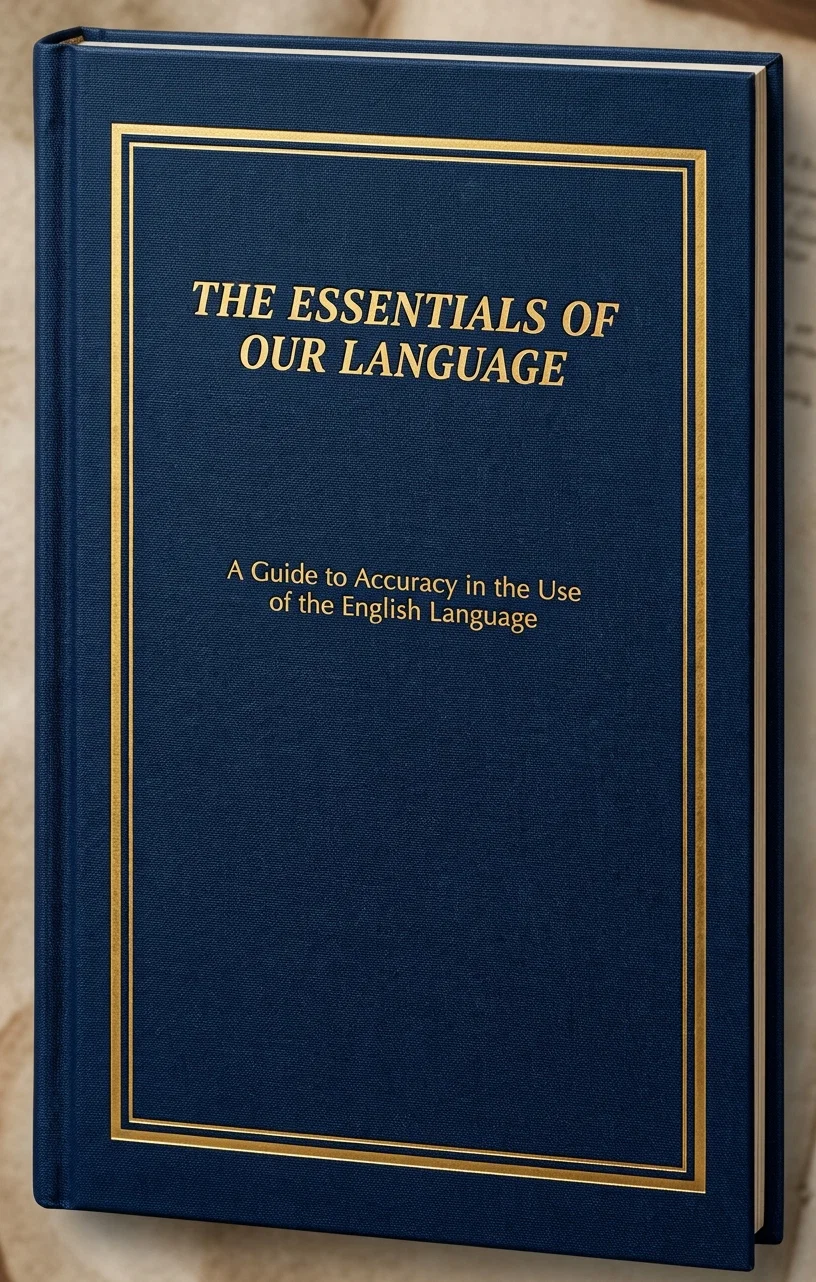
The Essentials of Our Language

By Geo. W. Rine, B. L.
This new book is not only invaluable to students, speakers, and writers, but it is, unlike most works of a technical nature, very interesting and even entertaining.
Price Seventy-five Cents

Power for Witnessing

The paper-covered edition of this wonderful book has met a hearty welcome. Many who have read the cloth-covered book of the first edition have purchased quantities of this cheap edition to loan and give away.
It is the best book we know of on the office and work of the Holy Spirit. A book that is much appreciated by all classes of Christians

Paper-Covered Edition Only 25 Cents

A small discount from the regular price is made where ten or more copies are ordered. Ask your tract society about it.
Pacific Press Publishing Co. :: Oakland, Cal.
11 W. 20th Street, New York City :: 18 W. 5th Street, Kansas City, Mo.

Heralds of His Coming

Is the end near? May we know the time? are important questions deserving of the most serious consideration. These, together with many others bearing on Christ’s second advent, are fully answered in this tract.
A. G. L. No. 51 :: 1½c each :: 98c per hundred
PACIFIC PRESS PUBLISHING COMPANY
OAKLAND, CALIFORNIA
11 W. Twentieth St., New York  18 W. Fifth St., Kansas City, Mo.

UNLIMITED AND LIMITED.

The generosity of a Christian ought to be as unlimited as the love of Christ, taking in all needy ones everywhere. That is the proper disposition for a Christian to have. The practical beneficence of such a Christian is, however, subject to all human limitations. The poorest man may be generous enough to give the world. Evidently the poor widow was; but her beneficence was limited by two mites. Since California Conference last autumn generously voted to pay the expenses and salaries to as many of her workers as would go out into the regions beyond, and several thousand dollars more, persons in various parts of this country and Europe have seemed to think that California’s resources, like her generosity, were practically unlimited. If California—that is, the people of God in California who are believing and giving to the world God’s last great message—were worth more, she would give more. Her material resources are limited. Let the editor of the SIGNS OF THE TIMES, unsolicited by any others whatever, say a few words, which he hopes may help to a better understanding.
1. What California has already done will use up all her surplus, and make it a question of coming out even at the end of the year. Her dollars will have to be laid the longest, broadest way to meet current expenses.
2. In respect to the institutions in this State, all of them are in debt, sanitarium, college, and publishing house. And the two former, which do, in the nature of the case, much charitable work, are greatly in need of funds; and the third has donated for missionary work, during the last two years, from $12,000 to $15,000.
3. As respects Oakland Church itself. It has a large membership—nearly 600—but many of these are non-resident members; many are not producers in the sense that they are able to help much financially; some, as in many churches, are unwilling leaners instead of lifters; and, therefore, the chief burdens fall very heavily upon a few, a hundred or less. These are lifting nobly, faithfully, constantly.
4. The church has its local burdens. It still has a debt upon its house of worship of $6,000; a few years ago it was double that amount. It expends for its poor about $500 a year. Its church-school expense the past year has been nearly $1,000; its running expenses, repairs, etc., $800. Its tithes and offerings for the last year amount to about $12,000. Living expenses—house rent, fuel, provisions, etc., are constantly increasing, without a corresponding increase of wages.
5. Upon the other churches in the Bay District great burdens also rest. While business is brisk in California, as a general thing there is not the ready money among the masses there was twenty years ago.
We are not saying this to boast of the benevolence of California or Oakland, but that our brethren and friends may know that whatever our spirit of sympathy or generosity may be, our beneficence and ability, as a whole, are much more limited than our friends or we could desire.

Delitzsch versus Genesis

A great amount of discussion has been aroused in religious circles over an address before Emperor Wilhelm by Professor Delitzsch, the Orientalist, on “Babel und Bibel,” in which the professor contends that all the principal part of Genesis, and even the worship of the self-existent God, whom he denominates Yahwe, are borrowed from Babylonian myths. The Independent remarks that in the decision “it is a noteworthy fact that Delitzsch has not found a single Orientalist or theologian who will approve of his proposition that the leading stories in the book of Genesis, the account of creation, of the Deluge and the like, are only reproductions of Babylonian mythology, and that, too, in degenerated forms. Least of all has he been able to gain friends for his hypothesis that the name and the worship of Yahwe were derived from Babylonia. Rather singularly, even the more radical Old Testament men dissent in almost every particular. Cornill, of Breslau, characterizes the position of Delitzsch as ‘an extravagant glorification of Babylon at the expense of the Bible, against which it is the duty of the Old Testament specialist to protest vigorously.’ The veteran Nöldeke, of Strassburg, repeats a conviction expressed some years ago—namely, that outside of purely Assyriological problems Delitzsch’s judgment is very unreliable.” Somehow these profound students of exhumed remains do not seem to grasp what might have been a simple fact, that the mythology of Babylon is but the perversion of the true; and the true is perpetuated to us in the Bible. If Professor Delitzsch should live two thousand years hence, studying the archaeology of the Christian era, he would conclude that the New Testament teaching was gathered from the early “Fathers,” and the Reformers drew their power and inspiration from the Dark Ages. Nevertheless, God’s Book, Genesis and all, will stand—for men if they wish it so, against them if they will to run their puny heads against the thick bosses of its buckler.

True Education.

There are many educators in our land. The public school, or common school, teachers, paid from State funds, constitute a vast army—more than 428,000 in the United States. Many of these bright-minded persons are longing for better methods, better ways, better means of not merely teaching the intellects of their pupils, but of helping them to build good, strong, reliable characters. These long for something better for themselves, something better for their pupils. To meet these needs as far as one publication can do it, the publishers of the Advocate of Christian Education, Berrien Springs, Mich., propose to devote its March issue. They will set forth in that month’s Advocate the true principles of Christian education, the education which will mould body and mind and soul for the most effectual helpfulness to mankind and for the glory of God. In order to do this as it should be done, to the widest extent possible, hearty co-operation of the friends of Christian education will be demanded. The articles which this special number will contain are as follows: “Should the Child’s Spiritual Nature Receive Attention?” “Who Should Train the Morals?” “The Public Schools and Protestantism;” “Democracy and the State Schools;” “Universal Education—Its Results;” “Where Is the Church in the Race?” “Duties and Responsibilities of Teachers;” “What Becomes of the Children You Teach?” Price, 5 cents a copy. Do all in your power to place it before teachers. If you can not use these papers personally, send donations for this purpose to the Advocate, and the money, we can assure our readers, will be well used.

Moses and the Resurrection of the Dead

Moses taught that the dead are dead. And the scripture teaches (John 5:45-47) that believing the writings of Moses is essential to a belief in Christ as the Saviour. When Moses taught the resurrection of the dead, he showed that it was necessary in order that they might again have life. The Sadducees denied the resurrection, and Christ refuted their position by referring to Moses. “As touching the dead, that they rise; have ye not read in the book of Moses, how in the bush God spake unto him, saying, I am the God of Abraham, and the God of Isaac, and the God of Jacob?” To this Christ adds, “He is not the God of the dead, but the God of the living.” Mark 12:26, 27. So the resurrection of Abraham is essential to God’s being the God of the living and yet the God of Abraham. Altho dead, Abraham is reckoned as living in the purpose of God to raise the dead. His life is “hid with Christ in God.” See Col. 3:3, 4.

Tract Circulation

Tract Circulation.—Since issuing the new numbers of the Bible Students' Library—“We Would See Jesus,” “Signs of Our Times,” and “The Gospel Remedy for Present-day Isms”—the number of tracts sent out daily from this office has far exceeded the 42,000-page mark announced a short time ago. The figures now are hundreds of thousands of pages daily. On last Friday about one-half million pages of the three mentioned above were mailed. Number Four of the series, “What Do These Things Mean?” is just out, and is No. 176 of the Bible Students' Library. Standing orders will be filled at once. These are good tracts, and there are many others equally good in our libraries, which should be circulated. All orders, as far as possible, should be sent through the usual channel—the State tract society. The home office address is Pacific Press Publishing Company, Oakland, Cal.

February Cosmopolitan Highlights

The February "Cosmopolitan" has an interesting illustrated article on Damascus, one of the oldest towns in all the world. The "Captains of Industry," considered in this issue are August Belmont, Henry M. Whitney, and William Andrews Clark. The Rev. Jenkin Lloyd Jones has an article on "Making Choice of a Profession," the subject of this number being the ministry. It opens with these words: "There is no disguising the fact that the churches of to-day, at least the Protestant churches of America, are sick. The ministry has lost its old-time prestige." Words too true.

Prepared for What?

Prepared for what?—God is not asking His people to prepare to die, but to prepare to live. It is live men that God wants. It is life not death that He gives. No man is truly prepared to die a Christian's death till he is prepared to live a Christian life. Therefore, Christian brother and sister, prepare to live; and if it be that God wishes you to rest for awhile, prepare to live still throughout all eternity. The man who is prepared to live here will live there; for the only true living is by faith in righteousness.

Adventist Growth in 1902

According to a recent statement by Carroll D. Wright, the eminent statistician, in the Washington (D. C.) Times, the Seventh-day Adventists had grown more than twice as rapidly as any other denomination in the United States during the year 1902. H. K. Carroll, L.L. D., in the Christian Advocate, of January 8, gives the gain for the year as 9,872 in this country. At the beginning of 1902 they stood at 53,739; Jan. 1, 1903, at 63,521. It is not, however, numbers that count, but power.

The Value of Encouragement

No Christian—no man or woman—ever loses by a word of encouragement to others. It may be unappreciated, sneered at, but his own soul is made larger and brighter by its speaking.

You have reached the end of this edition.

Signs of the Times · Feb 11, 1903