For nothing should we pray more earnestly than for a clean, pure heart. No treasure of earth can equal this. David, realizing his sinfulness, cried out, “Create in me a clean heart, O God; and renew a right spirit within me. Cast me not away from thy presence; and take not thy Holy Spirit from me. Restore unto me the joy of thy salvation; and uphold me with thy free Spirit.” Ps. 51: 10-12.
This prayer should be the prayer of every Christian. We need a clean heart more than we need anything in this world. Sin is a terrible thing. It has wrecked the world, filling it with sorrow and woe, and it finally nailed to a cross of wood the Son of the infinite God. And in the prayer quoted from the psalmist, it is implied that it is possible for the Holy Spirit to be withdrawn from us. This should startle us. It is a terrible thing to cling to a sin which the Holy Spirit has been condemning, and pleading with us to give up. O, how earnestly we should pray for victory over every besetment! How much time do we take to pray for victory over all the carnality in the heart?
As Christians, we must have the Holy Spirit. “Now if any man have not the spirit of Christ, he is none of his.” Rom. 8: 9. Our daily prayer should be that the Lord would fill us with the Holy Spirit. But there must be an emptying before a filling. Many a man prays to God to fill him when he is already full of something. Before praying to be filled we should pray to be emptied.
Our churches need reviving. There are plenty of carnally minded critics, but very few clothed with the life and power of the Holy Spirit. Moody describes the condition of many thus: “I have seen these wooden pumps where you had to pour water into them before you could pump any water out, and so it is with a good many people; you have to get something in them before you can get anything out. People wonder why it is that they have no spiritual power. They stand up and talk in meeting, and don’t say anything; they say that they haven’t anything to say, and you find it out soon enough. This describes the condition of those who do not pray.”
We have a dry, dead experience simply because we do not really thirst for the Holy Spirit. The Lord says, “I will pour water upon him that is thirsty.” He promises that those who “hunger and thirst after righteousness . . . shall be filled.” There is no power that can quicken a dead soul but that which raised the crucified Lord from Joseph’s sepulcher. That quickening power is the Holy Spirit. Rom. 8: 11.
We ought to study Jacob’s experiences. He wrestled with God in prayer till he won the victory. We are fast hastening on to the time known in the Scripture as “the time of Jacob’s trouble.” “Alas! for that day is great, so that none is like it: it is even the time of Jacob’s trouble; but he shall be saved out of it.” Jer. 30: 7.
This weak, erring, mortal man won the victory. He “had power over the angel, and prevailed.” Hosea 12: 4. Circumstances had placed Jacob in a close place. He was facing a crisis, and must have help or perish. He was “greatly afraid and distressed.” The lonely patriarch was facing the results of his own sins. Esau was coming. Something must be done.
What did he do? He did what we ought many times to do, but often fail to do. He sought refuge in prayer. In the solitude of the mountain, among the haunts of wild beasts and murderous bandits, Jacob decided to spend the night in prayer. What a splendid way to fight! I commend it to all. Take time to pray, for you can’t do much till you do. No avenging army was a match for this wrestler, agonizing in prayer and pleading the immutable promises of the most high God. The conflict was intense, but persevering prayer won the battle, and destruction was diverted. While Jacob wrestled in prayer, an angel wrestled with Esau, and his wicked, rebellious heart was changed and subdued.
“Jacob prevailed because he was persevering and determined. His experience testifies to the power of importunate prayer. It is now that we are to learn this lesson of prevailing prayer, of unyielding faith. The greatest victories to the church of Christ or to the individual Christian, are not those that are gained by talent or education, by wealth or the favor of man. They are the victories that are gained in the audience-chamber with God, when earnest, agonizing faith lays hold upon the mighty arm of power.
“Those who are unwilling to forsake every sin and to seek earnestly for God’s blessing, will not obtain it. But all who will lay hold of God’s promises as did Jacob, and be as earnest and persevering as he was, will succeed as he succeeded.”
—“Patriarchs and Prophets,” page 203.
“Those who are unwilling to deny self, to agonize before God, to pray long and earnestly for his blessing, will not obtain it. Wrestling with God—how few know what it is! How few have ever had their souls drawn out after God with intensity of desire until every power is on the stretch. When waves of despair which no language can express sweep over the suppliant, how few cling with unyielding faith to the promises of God.”—“Great Controversy,” page 621.
Takoma Park, D. C.
Aids for Bible Readers
Historical quotations and extracts from various writers which may assist the thoughtful student of the Scriptures.
Duration of Our Lord's Ministry
On the phrase feast of the Jews (heorte ton loudion) (John 5:1) turns mainly the question as to the duration of our Lord's public ministry. John notes distinctly three passovers.John 2:13; 6:4; 12:1. If now this feast be another passover, then our Lord's public labors continued during three and a half years; if not, then the time of his ministry must in all probability be reckoned one year less.
The only reasonable ground of doubt in this case, is the absence of the definite article before feast. But even as the text now stands, it may assuredly in itself just as well denote the great Jewish festival as any other. The following considerations seem to show that it does most probably thus stand for a passover; viz., the second in our Lord's public ministry.
1. The word feast (heorte) without the article, is put definitely for the passover, in the phrase kata heortan. Matt. 27:15; Mark 15:6; Luke 23:17. Comp. John 18:39.
2. In Hebrew a noun before a genitive is made definite by prefixing the article, not to the noun itself, but to the genitive; see Davies's translation of Gesenius's Heb. Gr., par. 109; I Nordheim Heb. Gr. ii., p. 14, g. This idiom is transferred by the LXX. into Greek: e. g., Deut. 16:13, heortan ton skanon poieseis seauto, i. e., the festival of tabernacles. So too in the New Testament: Matt. 12:24, en to Beelzeboul archonti ton daimonion, i. e., the prince of demons. Hence, in the passage before us, according to the analogous English idiom, we may render the phrase by the Jews' festival; which marks it definitely as the passover.
3. It is not probable that John means here to imply that the festival was indefinite or uncertain. Such is not his usual manner. The Jewish festivals were to him the measures of time; and in every other instance they are definitely specified. So the passover (John 2:23; 12:1), even when Jesus does not visit it (chap. 6:4); and also when it is expressed only by the feast. Chap. 4:45; 11:56; 12:12, 20, al. So, too, the festival of tabernacles (chap. 7:2); and of the dedication. Chap. 10:22. This is all natural in him; for an indefinite festival could afford no note of time.
4. The plucking of the ears of grain by the disciples shows that a passover had just been kept; which tallies accurately with this visit of our Lord to Jerusalem.
5. This feast could not have been the festival either of Pentecost or of tabernacles next following our Lord's first passover. He returned from Judea to Galilee not until eight months after that passover, when both these festivals were already past. That it might by possibility have been the Pentecost after a second passover not mentioned, and before that in John 6:4, can not perhaps be fully disproved; but such a view has in itself no probability, and is apparently entertained by no one. At any rate, it would also give the same duration of three and a half years to our Lord's ministry.
6. Nor can we well understand here the festival of Purim, which occurred on the fourteenth and fifteenth of the month Adar, or March, one month before the passover. See Esther 9:21, 22, 26-28. Against this the following considerations present themselves: (a) The Jews did not go up to Jerusalem to celebrate the festival of Purim. The observance of it among that people throughout the world consisted solely in reading the book of Esther in their synagogues on those days, and making them “days of feasting and joy and of sending portions [dishes] one to another and gifts to the poor.” Esther 9:22; Jos. Ant. xi. 6, 13, Reland, Antiq.; Heb. 4:9. But the “multitude” (John 5:13) seems to imply a concourse of strangers at one of the great festivals. (b) It is very improbable that Jesus would have gone up to Jerusalem at the Purim, to which the Jews did not go up, rather than at the passover which occurred only a month later. His being once present at the festival of dedication (John 10:22) is not a parallel case; since he appears not to have gone up for that purpose, but this festival occurred while he remained in or near Jerusalem after the festival of tabernacles. John 7:2, sq. (c) The infirm man was healed on the Sabbath (John 5:9); which Sabbath belonged to the festival as the whole context shows. John 5:1, 2, 10-13. But the Purim was never celebrated on a Sabbath; and, when it happened to fall on that day, was regularly deferred. See Reland l. c.
7. The main objection urged against taking this feast as a passover, is the circumstance that in such case, as our Lord did not go up to the passover spoken of in John 6:4, but only at the subsequent festival of tabernacles in John 7:2, sq., he would thus have absented himself from Jerusalem for a year and six months; a neglect, it is alleged, inconsistent with his character and with a due observance of the Jewish law. But a sufficient reason is assigned for this omission; namely, “because the Jews sought to kill him.” John 7:1; comp. 5:18. It obviously had been our Lord's custom to visit the holy city every year at the passover; and because, for the reason assigned, he once let this occasion pass by, he therefore went up six months afterward, at the feast of tabernacles. All this presents a view perfectly natural, and covers the whole ground. Nor have we any right to assume, as many do, that our Lord regularly went up to Jerusalem on other occasions besides those specified in the New Testament.
In this instance, the most ancient view is that which takes feast for a passover. So Irenæus in the third century: “Et posthac iterum secunda vice adscendit [Jesus] in diem paschæ in Hierusalem, quando paralyticum, qui juxta natatoriam jacebat xxxviii annos curavit.”—Adv. Hær. ii. 39. The same view was adopted by Eusebius, Theodoret, and others; and in later times has been followed by Luther, Scaliger, Grotius, Lightfoot, Le Clerc, Lampe, Hengstenberg, Greswell, etc. Cyril and Chrysostom held to a Pentecost, as also the Harmony ascribed to Tatian; and so, in modern times, Erasmus, Calvin, Beza, Bengel, etc. The festival of Purim was first suggested by Kepler (“Eclogæ Chronicæ,” pp. 72, 129, sq. Francof. 1615); and at the present day this is the only view, aside from the passover, that finds advocates. Those who hold it, as Hug, Neander, Olshausen, Tholuck, Meyer, Wieseler (Lücke and De Wette leave the question undecided), regard John 6:4 as having reference to the second passover during our Lord's ministry; which thus becomes limited to two and one-half years. See generally, Greswell's Dissert. viii. vol. ii., Neander's Leben Jesu, 3te Ausg. p. 434. Wieseler's Chronol. Synopse der Vier Evangelien, pp. 211-222.
From “Harmony of the Gospels,” following that in Greek, by Ed. Robinson, D. D., LL. D., published by the Religious Tract Society (pages 199-200).
“That this feast was a passover, was certainly the most ancient opinion, and it is the opinion of the great majority of critics, being that of Irenæus, as early as the second century, Eusebius and Theodoret among the fathers; and of Luther, Beza, Maldonat, Grotius, Lightfoot, Le Clerc, Lampe, Hengstenberg, Greswell, Robinson, Tholuck in his 6th edition, and apparently in his 7th and last, Middleton, Trench, Webster, and Wilkinson,” etc. Commentary on New Testament, Rev. D. Brown, on John 5:1.—Foot-note in “The Approaching End of the Age,” by H. Grattan Guinness, Fourth Edition, pages 451-453.
The Duration of Christ’s Ministry
It has already been shown that about three months intervened between his [Christ's] baptism and the passover following; which was probably that of 780 [A. D. 27], the first of his ministry. John 2:13. Two other passovers are mentioned by this evangelist (John 6:4 and 11:56), the latter being the last passover. If there were but three passovers during his ministry, it was only of two years and some months' duration. But John speaks of a feast (chap. 5:1) which he does not name, and which many regard as a passover; if so, there would be four passovers, and his ministry extend a little over three years. . . . Assuming here that it was a passover, we reach the result that his ministry, computing from his baptism in 780 [A. D. 27], continued about three years and three months.—“The Life of Our Lord,” by Samuel J. Andrews, Charles Scribner's Sons, New York, 1891, pages 39, 40.
Bad Reading
By FRANK L. BENNETT
FRANK L. BENNETT
WHAT are the young people reading? Are they reading novels and sensational stories? It is almost as bad to have a great novel reader in the family as to have a moderate drinker; in fact, the one who reads sensational novels and stories habitually, does so for the intoxication that is derived therefrom.
Greece and Rome were sunk to the lowest depths of degradation by the literature of the corrupt writers of those times,—writings which have, unfortunately, descended to this time to do the same work for us.
The world has a swarm of cheap writers,—cheap, judged by the quality of the writings sent out under their signatures. They write stories which are unfit for grown people, and are veritable poison to young boys and girls in the plastic period of life, when impressions for good or bad are easily received and slowly obliterated.
The reading of sensational literature is really a more serious matter than most people suppose, as it overstimulates the nervous system of the young, and injures the mental, moral, and physical health. One writer who had written many trashy stories which met the popular taste, said, “If you get something salacious into the story, and get it in early, it will make the story a great success.”
Many people who find something positively immoral in the first chapter of a story, hunt eagerly for a repetition of the offense.
How many readers have in mind the apostle's admonition, “Whatsoever things are pure, whatsoever things are lovely, whatsoever things are of good report; if there be any virtue, and if there be any praise, think on these things,” when they read long, lurid descriptions of murders, robberies, illicit amours, and the hundred and one sad and sensational crimes and offenses against honesty, decency, and morality?
Many like to read literature which does not cause them to think; for thinking is too hard work to suit the mentally lazy story-reader.
Many young people create for themselves a fictitious world, filled with vagaries and fancies imbibed from romances. These young people get a false estimate of life; everything is greatly good or greatly bad; the emotions are cultivated beyond the power of self-control. Foolish, irresponsible men, and silly, romantic women, are the inevitable result.
The boy who begins in early years on nursery stories, comes up to the period when he longs to kill Indians or encounter outlaws and pirates; and he finally reaches the age when man is too liable to discover it possible to realize the ambition of becoming at least a robber; piracy is out of date.
Finally, the reading of fiction takes away the relish for solid literature, travels, history, and for the Scriptures, which are able to make us “wise unto salvation.” Try to keep the young from sensational stories and fiction, remembering that “a little evil corrupteth much good,” and that “whosoever loveth or maketh a lie” remaineth outside the city of our God forever.
Warrensburg, N. Y.
The Home Influence
But one word in the language strikes deeper into the heart of the average man or woman than “home,” and that word is “mother.” The two are so closely related that mother means home. Where she is, exists that wonderful something that Webster says is “the abiding-place of the domestic affections.” Home and mother are the first things we learn to know, and throughout our lives there exists a feeling of deep and sacred reverence for them. No matter to what heights we may rise, nor to what depths we may fall, our memory ever serves to carry us back to the innocence of youth when home was our refuge and mother our strength. Nothing was too great for mother to do, and, best of all, she always knew how to do it. Perhaps there were methods employed and decorations used which we by no means continue in our present establishments; but association has made dear the peacock feathers in the gaudy vase and the wax flowers under the glass dome. Even the rigid enforcement of the law of lines and angles, by which the parlor furniture was arranged, is enhanced by time, and the picture of Pocahontas and John Smith, still in memory, has power to charm.
It is in the home that our characters are molded. The home is the soil in which the seed is planted, and if the home is rich in good things, the fruit will be wholesome, unless some blight comes in after-life; but if the soil be barren, it is exceedingly hard to bring forth good fruit. We may well be sure that whatever is best in us is a survival of the home and mother training. How careful, then, should those of us who are making homes for those who will some day fight life’s battles, be in creating an atmosphere of love and right, and in making the home a living place for the boys and girls and their friends. How many homes, alas, have no place for the noise and fun of the children, and how many yearning hearts are on the streets because there is no place at home “to have fun.”
Let our homes be right, and in the heart of no child will there be room for deceit or falseness.—Home Herald.
Pork-Eating Condemned
THE trichina is usually found in pork, although cases have been reported in which cattle have contained the worms in large numbers. It exists only in the lean part of the meat, lying encysted between the muscle fibers. When eaten by a human being, this tiny parasite attaches itself to the wall of the stomach or intestines, rapidly develops, and in a few days brings forth several hundred, or even a thousand, of its young. Speedily these little creatures make their way into the body of the individual in whom they were born, usually causing such symptoms as are present in diarrhea, dysentery, or even cholera morbus, but sometimes producing much more marked effects, so that the signs much more resemble those of typhoid fever or inflammation of the brain. The similarity of trichinosis, as the condition is called, to other diseases, at times gives rise to a wrong diagnosis, and thus the frequency of this dangerous malady is not appreciated, even by physicians.
The incurable nature of trichinosis, and the readiness with which consumers contract the disease, should be reason enough for entirely discarding fresh pork, or even cured bacon and ham. Should these facts not be sufficient to convince14the reader, let us consider in a few sentences the life history of another hog parasite, the tapeworm.
There are several forms of tapeworm, one variety making its habitation in cattle, another in dogs, and still another in the chief scavenger of our yards and refuse hills, the hog. As in the case of trichina, the tapeworm, when taken into the body, fastens by tiny hooks onto the delicate lining membrane of the bowels, and there grows to an enormous size, sometimes measuring many feet in length. Thousands of eggs are laid by each worm, usually to be cast out of the body, but not always. The eggs may hatch in the alimentary canal, and the young worms are often absorbed into the system, to form hydatid cysts. Only a few weeks ago the writer was urged to operate upon a gentleman for the purpose of evacuating several large hydatid tumors, but it was too late to do any good even by the adoption of surgical measures.
The flesh of pork is whitish in color, resembling the dead tissue of man more than does that of any other animal. It is very difficult of digestion, requiring on an average about five hours in a healthy stomach. In individuals suffering with indigestion a much longer time is necessary. A very large proportion of the body of a hog is fat, there being only a small amount of real strength-giving material.
From the foregoing, then, we learn that (1) the hog is a scavenger; (2) as such, its food and drink are unwholesome; (3) the hog suffers from invasion of tapeworm and of trichina, and can transmit these parasites to human beings who consume its flesh; (4) fresh pork and bacon do not contain a large amount of strength-giving material, as compared with many more wholesome foods; (5) both are very difficult of digestion, bacon being rendered more so by the curing and frying process which it undergoes before being served on the table; (6) the hog is unfit for human food.—Selected.
He Careth for You
Are you troubled, weak, and weary,
Through the lonely hours of night,
Watching for the break of morning,
Longing for the dawn of light?
O! remember One is near you,
Who had lonely nights and days
On the mountain top of sorrows,
And he careth, yes, always.
Are you far from friends congenial,
Toiling through life's busy throng?
Have you lost the one sweet center
Of your human heart and song?
Has the minor key of sadness
Locked your soul within its groove?
O! remember that he careth
With unutterable love.
Have the friends you trusted failed you
In your hour of deepest need,
And you sit within the gloaming,
Thinking o'er each broken reed?
O lean hard upon the Saviour,
Who was left alone to die,
When they all forsook and failed him
At the cross of Calvary!
For he careth, O! he careth
With a tenderness so sweet,
With a love that passeth knowledge,
With a sympathy complete.
Then cast all your care upon him,
For he careth night and day.
You have never far to seek him;
He's beside you; yes, alway.
— Selected.
The Message in Great Britain
By E. E. ANDROSS
E. E. ANDROSS
It is with pleasure that we report very substantial and ever-increasing progress in the work of the third angel's message in the British Union Conference. The work of seed sowing has been faithfully carried forward for more than twenty-nine years; and during this time much has been done by our dear brethren in America to place the work in this field on a substantial basis by the liberal supply of laborers and means; all of which is very gratefully acknowledged.
During the year 1905, six churches were organized, 248 persons were baptized, and ten were received by vote. In 1906, seven churches were organized, 276 persons baptized, and thirty-three received by vote. The tithe for 1906 was $23,147.53, and the offerings amounted to $3,641. The gain in tithes over 1905 was $3,417.72, and in offerings $1,524.61. At the close of 1906 we had a membership of 1,727.
The prospect is favorable for a larger increase financially and numerically during the present year than we have had in the past. In every part of the field the cause of truth is onward. We are now reaping some of the fruit from the large amount of literature that has been distributed in the past. One most encouraging feature is the fact that we frequently hear of people who have embraced the truth from the reading of our paper or a tract; and these often prove to be very substantial and earnest people. This is a new experience for such a conservative country as is this. We take it as an evidence that angels of God have gone out before us and prepared the hearts of many for the truth; and we are now encouraged to believe that soon we shall see the work going with mighty power.
The Lord is blessing our efforts to establish the work in the Catholic portion of Ireland, and we hope soon to have a church organized in Dublin.
In Scotland the work is moving forward with a new impetus. From the land of John Knox we hope to see many young men and women go forth, actuated by the same spirit that inspired that fearless soldier of the cross in his warfare against evil, to engage in the last fearful conflict and to sound the last invitation of mercy. The past year has witnessed many more accessions to the faith than any previous one. Though the people move slowly, they are generally of sterling character, and prove to be strong supporters of the cause of truth when they have once embraced it.
No more earnest, zealous, and faithful people can be found anywhere than are espousing the cause of truth in the principality of Wales. Thus far they have taken the lead in home missionary work. The two tent efforts conducted this season have proved quite fruitful. Brother Reed has taken up the study of the Welsh language with a view to laboring among the Welsh-speaking people. We are also getting out some literature in that language.
Our publishing house and health food factory have been removed to Stanborough Park, and Wednesday, October 2, our college opened with an attendance of fifty-six. Since then it has increased to about seventy students. With scarcely an exception, the young people have given themselves to the work of God, and are seeking a preparation for efficient service.
We were never of better courage in the Lord, and our confidence in the truth of the third angel's message is unbounded. Gladly we consecrate our lives and our substance to its advancement, believing that very soon we shall realize the fulfilment of our fondest hopes.
London N, England.
A New Russian Conference
By Guy Dail
GUY DAIL
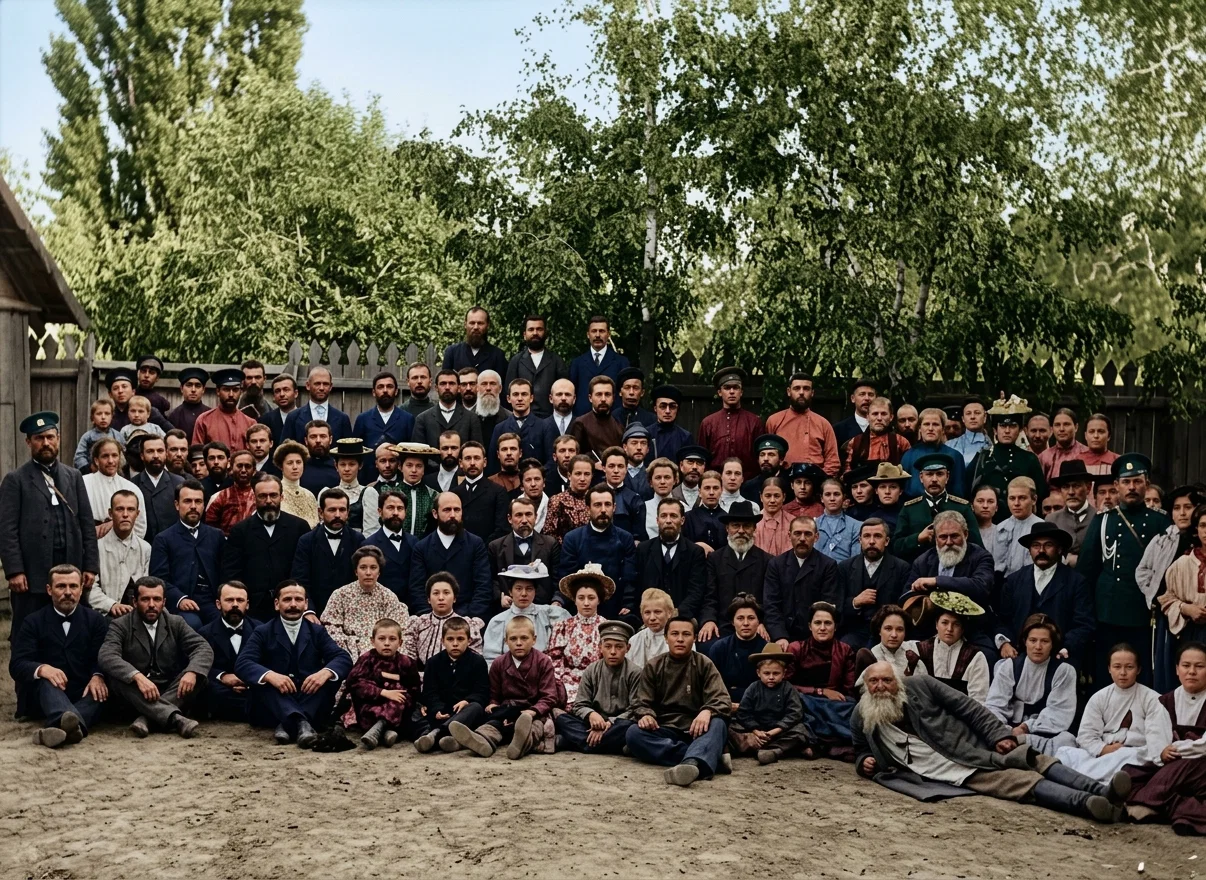
The second annual meeting of the South Russian Mission was held September 25-29, in Bender, a quiet city of about twenty-five thousand inhabitants, northwest of Odessa, in Bessarabia. The meeting was attended by about ninety German- and sixty Russian-speaking brethren, of whom twenty-seven were delegates, representing fifteen of the nineteen churches and companies in this field. Brethren L. R. Conradi, J. T. Boettcher, H. J. Loebsack, and O. Wildgrube received a warm welcome, and their efforts to assist the local workers and to present the word were blessed of God, and appreciated by the people.
The conference was held in the largest hall in the city. The chief district official, with a number of officers, attended the first meeting, and two policemen were on hand most of the time to preserve order—a very different purpose than actuated the police who sometimes visited our meetings a few years ago. Leading citizens of Bender also were seen at the public lectures.
The territory of the South Russian field is composed of the governments of Bessarabia, Kherson, Kharkof, Yekatrinoslaf, Taurien, and Don District II, with a population of 14,201,000, and a membership of 474 (their gain for the year was 142). This great district to the north of the Black Sea was organized into a mission a year ago, and now its delegates were able to see their way15clear, after having attentively considered the privileges and the duties of a conference, to vote in favor of the organization and hearty support of the South Russian Conference, whose organization becomes effective Jan. 1, 1908. The field is self-supporting, and will pay a tithe of its tithe to the Russian Union. It will also have its conference poor fund, which receives a tithe of the local poor funds that are taken up every first Sabbath in the month. The Sabbath-school, the First-day, and the annual offerings go to the General Conference, through the Russian Union treasury.
ATTENDANTS AT OUR MEETING AT BENDER, SOUTH RUSSIA
Owing to the very great difficulty we formerly experienced in receiving and instructing our members (for often the worker had to enter a place, hold his meetings, and leave between sunset and daybreak), there has in many cases been an imperfect idea of many points of present truth, especially among the native Russians. The Bible plan of supporting the gospel ministry has been one of the subjects most poorly understood, and the results of this are plainly visible in some of the Russian churches to-day where there is such a low average in the tithe. One remarked that to mention the tithe to him was as if one were to stab him through the heart with a sharp knife. This fact will account for the importance given to the tithing system in all our Russian meetings this year.
Another great need here, as in other parts of the world, is that of properly qualified native laborers—workers who are soul winners, and successful organizers. Heretofore, quite a number of young people from various parts of Russia have been trained in Friedensau; but, as the Russian field is now developing, we believe the time must soon come when our institutional work ought to be established in this great empire; and to assist in raising the necessary means, the plan of circulating “Christ’s Object Lessons” and “Ministry of Healing” was earnestly recommended, and about one hundred sixty-five dollars was raised toward the material fund for the latter book.
As a knowledge of reading, writing, and arithmetic is so necessary to every Christian, and as there are many millions of people in Russia who are unable to read and write, it was voted that the task of educating the children, at least in the elementary branches, be earnestly undertaken by our people in the South Russian field, and that, where it is possible, they be instructed either in the home or in the church.
Seeing we now have more liberty to circulate our literature, the delegates also gave due attention to the canvassing and tract society work, and four canvassers will enter the field the coming year. As yet, but comparatively little has been done in this department of the message. There have been many difficulties connected with the circulation of our literature in the past, and, indeed, we believe that there will still be problems to solve in this work in the near future. However, there must be a way found to freely circulate our literature, for we know the power of the press is being very materially felt in Russia, and that there is a great awakening among the Russian people.
Now, while there certainly is enough to be done in the South Russian Conference to employ all the means and talents of the brethren there, yet the delegates took hold heartily of the idea of contributing their share to the work among the heathen, and bearing their part in gifts and free-will offerings.
In all the business meetings there was unanimity of action, and the brethren, some of whom had been five days en route to attend, say this is the best meeting we have had here. Four were baptized. Sabbath was especially a good day for all, for many renewed their consecration to the Master’s service. The proceedings of the conference were conducted in the German and Russian languages. Brother Daniel Isaak was unanimously chosen president of the conference. He, assisted by three other gospel workers, goes forth to the work for the coming year, trusting in God to water the seed sown, and to give the increase. We bespeak for this young conference a hearty interest in the prayers of God’s people.
*Bender, Russia, Sept. 29, 1907.
Happiness Comes Through Giving
“Happiness eludes every searcher for it, but comes quickly and abundantly to the one who seeks to bestow it upon some one else. The searcher for happiness may get wealth, and power, and fame, but none of these advantages will avail anything in getting happiness. Even from friends it can not be gotten, for happiness comes from what is given out rather than from that which is gathered in. Loving, unselfish service, the persistent, enthusiastic effort day by day to bring sweetness, light, comfort, and goodness into the lives of others will surely bring happiness into the life of any man, or woman, or child. No sorrow of heart, no doubt of the future, no restlessness or aimlessness of the present, no loneliness or bitterness of soul, but will yield and be resolved into joy and peace and purpose as soon as the days are filled with labors of love—as soon as the eagerness to get happiness is replaced by an eagerness to give it.”