Your ShelfYour Projects

Review and Herald, Vol. 85, No. 10.

Publishers' Page
Earlier text: What Youth and Children Can Do for Missions

Tamil Sabbath-Keepers of South India

J. S. JAMES
For a number of years our people have known of a company of native Tamil Sabbath-keepers living in the Tinnevelli District of South India. Mention has been made of them in the REVIEW and other papers from time to time, but not until recently have any definite steps been taken to learn the history and nature of this sect. By their urgent request, in company with Elders Shaw and Enoch, I made a visit to this district, and remained with these people over ten days, during which time I learned much of their history and organization. The reception we were given and the experiences we had during this visit will be described elsewhere.
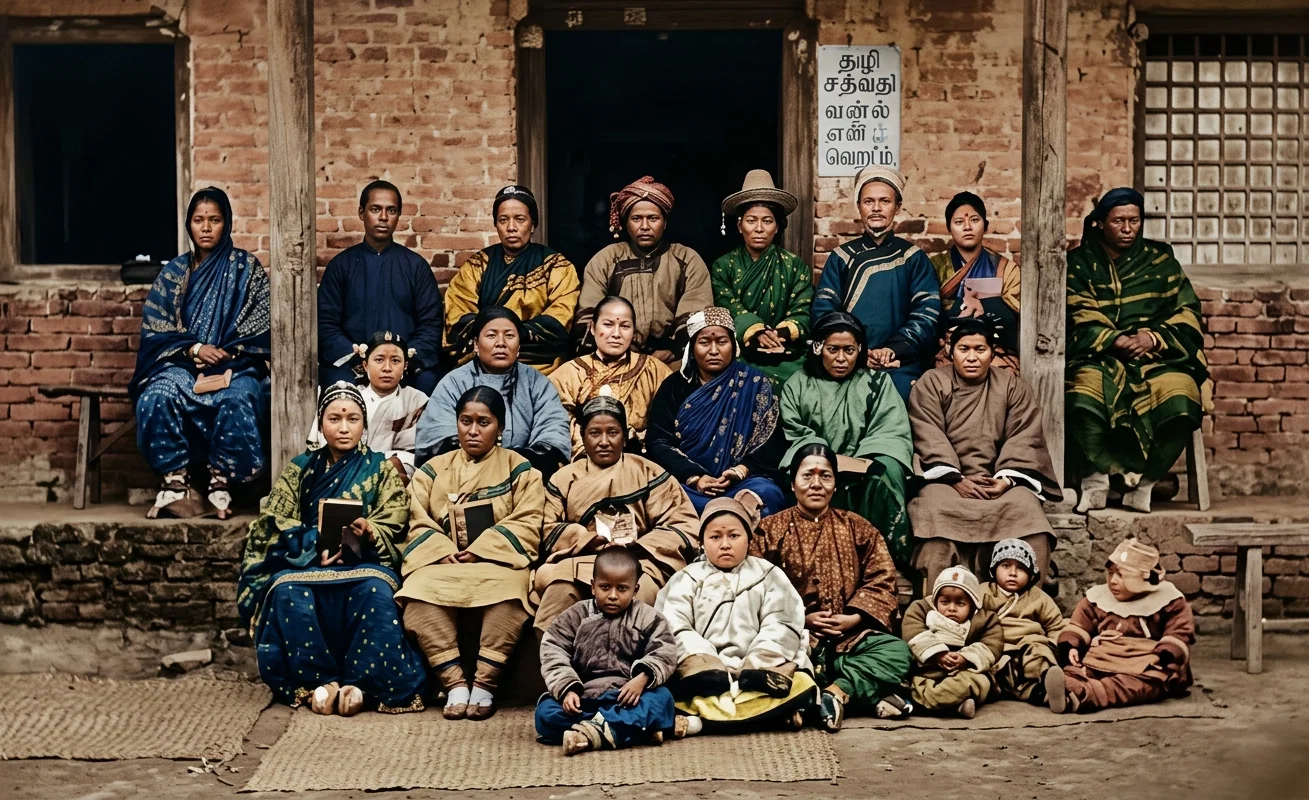
SISTERS ATTENDING GENERAL MEETING, SIANG CHENG
In the year 1845, a native Tamil Christian by the name of A. N. Chattampillai was selected by the Church of England and educated for the priesthood in that faith. He completed this part of his education in 1850, and was about to be ordained as priest when trouble sprang up between himself and the presiding missionary relative to his marriage. It was the missionary's desire that Mr. Chattampillai marry a girl of the mission whom they had educated, and who had considerable money. But the girl not being of his own caste, he refused to be influenced by the missionary's desire, and turned his attentions to a poor girl of his own caste, with but little education, and married her. This step on his part greatly displeased the missionary, and only served to increase their differences.
Because of the hostility and unkind treatment coming from his former associates, Mr. Chattampillai was compelled to leave his home in Tinnevelli. Desiring to obtain justice at the hands of his superiors, he placed his grievances before the secretary, archdeacon, and bishop of the church both in person and in writing, but was not given any satisfaction.
Having become fully convinced that the Church of England was teaching error in many of her doctrines, and finding nothing in the creeds of other churches to claim his reverence and support, he retired to Madras in 1852, and spent his time until 1856 in a comparative study of different religions and sects. At the end of 1856 he returned to his home, and founded the present sect in 1857. He began preaching his views to the people of his own and other villages until he had a following of over six thousand native Christians, most of them coming out from the Church of England. It seemed for a time that this movement would sweep everything before it, but it was not to occupy an undisputed field very long.
Shortly after the formation of this new sect, the other missionary societies began a war of extermination against it, the larger part of the opposition coming naturally from the Church of England. The missionary in charge of the work in the Tinnevelli District, afterward becoming bishop, issued a threatening proclamation against this new sect, copies of which were posted on the walls and doors of public buildings in many of the surrounding villages. I read with my own eyes the original of this proclamation, signed by the missionary then in charge. It was issued Oct. 5, 1857, and gave the members of his congregation a sort of indulgence while they waged war with the members of this new sect and their leader, Mr. Chattampillai. This document savors strongly of the spirit of popery and the Dark Ages. It justified the people in taking any means they saw fit to stamp out this new organization and bring the leader to repentance. Persecution began to come in real earnest to these people. In the years between 1857 and 1870, more than one hundred court cases, instituted largely upon false charges, were brought against the leading members of this sect. In those days the court and municipal officers were largely influenced by the European missionaries, consequently many of these charges were decided against the members of the new sect, and resulted in the loss of property and in serious damage in many other ways. Scores of them were haled before the courts and committed to jail without bail at a time when their crops, if neglected, would perish in the field. Many who were traders had their business boycotted and ruined. Some of the leaders were handcuffed and led in the public streets in the presence of their friends and relatives, while the heathen mocked them with every indignity. Many of their houses were broken into by mobs, and their women insulted and robbed of their jewels. They were assaulted in their meeting-houses, and every effort was made to exterminate them and drive them from the community. It seems almost incredible that a great deal of this work was sanctioned and even planned by those who professed to be preaching the gospel of Jesus Christ, but they are unvarnished facts supported by the testimony of scores of living witnesses.
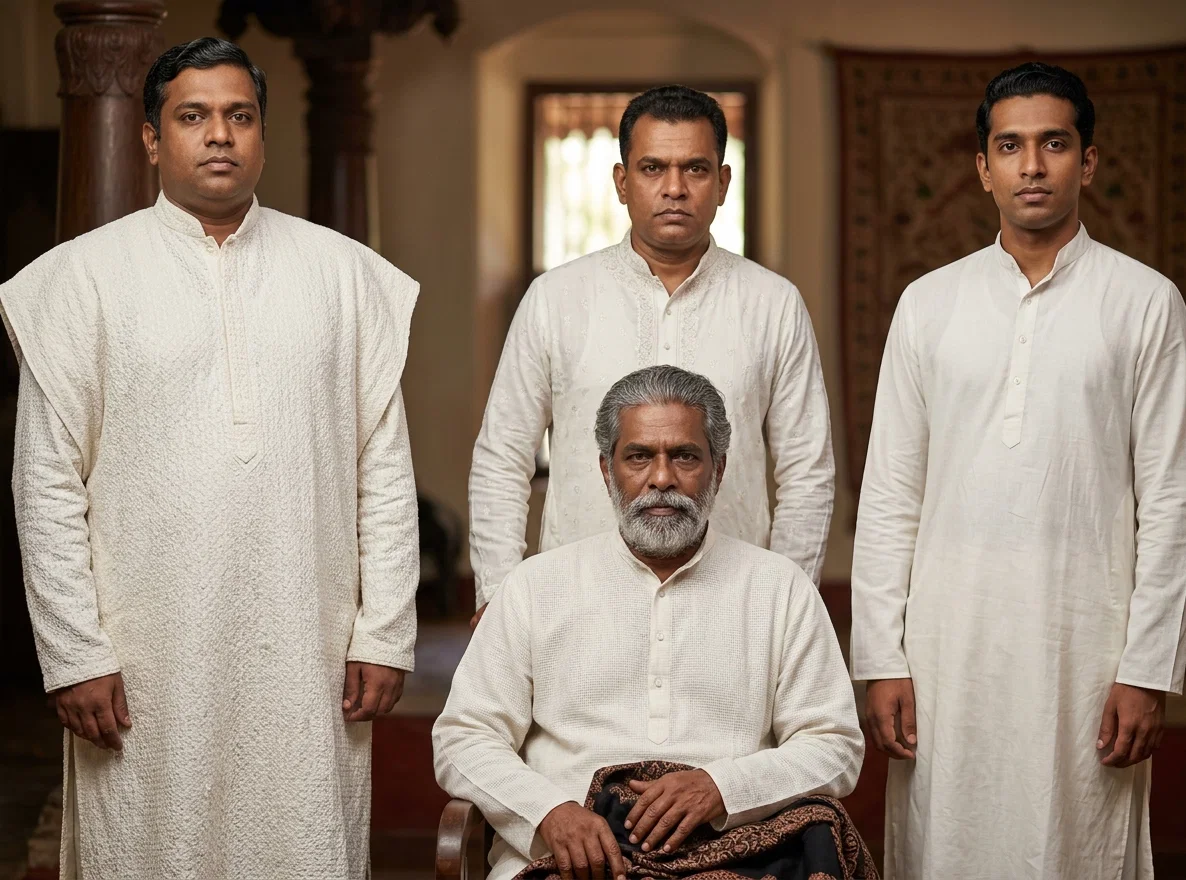
Things went on in this manner with more or less activity until 1883, when a division arose among them concerning some landed titles held in trust by their leader and founder. Differing somewhat in doctrine and church ritual, and desiring to rid themselves of a Pharisaical system of religion to which they had unwillingly submitted themselves, they rejected their leader, and started a new organization on new lines. The founder and his family, together with three or four other families, are all that are left of the original body. They still maintain their church services in their church, which stands only a few rods from the church of the larger body. Mr. Chattampillai is now in his eighty-fourth year, and is growing very feeble. In the accompanying picture he is seen sitting in the chair, while standing in the rear are his three sons. Mr. Chattampillai is a man of great learning, and in his more active days was possessed of a strong personality and ability as a leader and organizer. It is said that at one time he was able to read and converse in sixteen different languages. While visiting him, I was shown through his library, which contains over eight thousand volumes. Among these were books in Hebrew, Greek, Sanskrit, Syriac, Latin, together with the Dravidian languages spoken in South India. His collection of books dealing with theological questions is very valuable, many of them being rare prints.
A. N. CHATTAMPILLAI AND HIS SONS
In 1885 the company that left their founder built a church of their own, in a village of about five thousand, closely adjoining another village, which has served as a headquarters for their organization ever since. This church is described in another article. The people with whom we have to deal at present are those who broke off from the parent church in 1883. At that time they numbered about four thousand, but since then their numbers have been greatly reduced by persecution and apostasy, until at present they number between ten and fifteen hundred. There are about four hundred of them in Ceylon, where they endeavor to carry on their church services on the Sabbath.
These people have a fairly good system of organization. They have a system of government which reminds one very much of the Jewish economy, with a few modifications from the New Testament. They have twelve elderly men chosen by the people to take the oversight of affairs. Six of these are regarded as elders, and hold seats of honor in all their councils and deliberations. However, it was quite noticeable to us that there were a few young men who were active in carrying out new and up-to-date ideas. The work of the other six men corresponds to that of the deacons. They also have deaconesses to look after the interests of the women. They have a secretary and treasurer of ability to look after the funds of the church and make proper disbursement of the same. Their funds, which accrue from tithes, free-will offerings, thank-offerings, first-fruits, etc., are collected into one general fund, and all expenses are met from this. Each officer has his particular work in the church, which is performed in the most punctilious fashion. One has charge of the cash funds, another looks after the offerings and first-fruits, another has the care of the lamps, another the blowing of trumpets, and so on.
The first-fruits are offered every Sabbath in the church as a part of their praise and worship. They esteem it a blessed privilege to give to God on the Sabbath, and giving, to them, is an act of worship just as important as prayer. After the Sabbath is past, these offerings, which consist largely of grains, vegetables, eggs, fowls, etc., are sold to the highest bidder, and the money is put into the common fund.
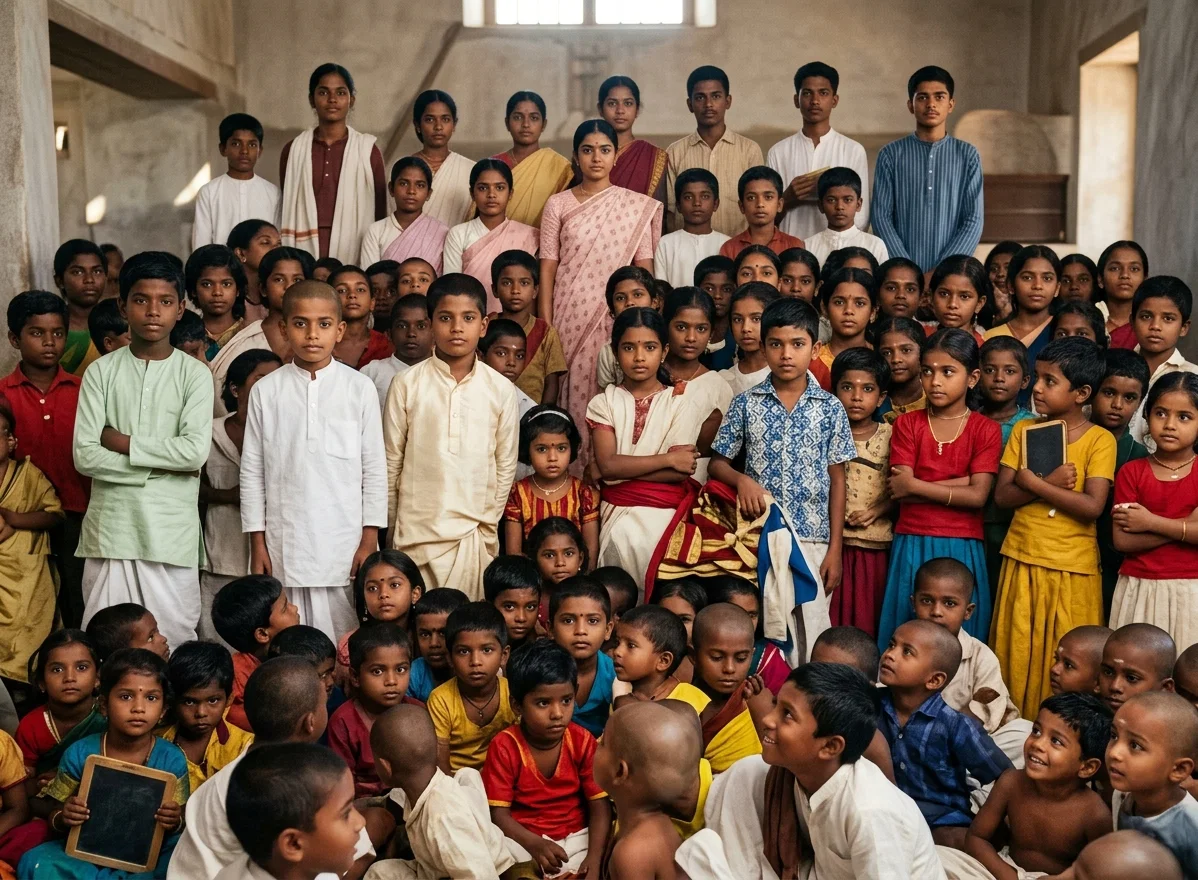
These people are imbued with a missionary zeal. They feel that they are morally responsible for propagating and keeping alive the truths they possess, especially the Sabbath. The principle upon which their schools are operated is almost identical with that of our church-schools. They will not allow their children to attend schools taught by people who keep Sunday, and they never allow their daughters to marry an unbeliever. Hundreds of these people have grown to manhood and womanhood without an English education, a thing greatly prized by the native of India, simply because they would not be taught by unbelieving Europeans. Through lack of a good standard of education of their own, many of their bright young men and women have been enticed away to attend other schools, only to be lost to their church in a few years.
Now that these people are acquainted with us and our methods of work, they plead with us to send them help. They are willing to have us teach them in all their churches. They have offered to turn over their entire school system to us to operate after our own standards, and teach all our doctrines to their children. In short, they want us to make first-class church-schools of them. They are anxious to see their young men educated to carry the Sabbath truth all over South India. They have come forward with a generous offer of land on which to build a dwelling-house, if we will come and help them. They have promised to assist us in many different ways in building new buildings and getting our work started.
If ever there was a people who stretched out their hands for help, here is one. Here are hundreds of bright young people who are eager to know the truth. Here is talent and ability, if properly developed and trained, that will carry the third angel's message to all South India. We have prayed for this favorable opening for many months. Now that it has come, are we ready to render them the help they so much need? Thank God, we are able! We believe that while God has been preparing the hearts of these people for his truth, he has also been preparing the hearts of his people on the other side of the earth to come to their assistance when it was needed. Dear brethren and sisters, that time has fully come, and now we look to you, humbly praying that this providential opening for the truth among these Tamil Sabbath-keepers will appeal to every heart and inspire all with greater zeal and sacrifice in spreading this message to all the world. I ask you to carefully read the articles that will follow by Elders Shaw and Enoch, dealing with other interesting features of our visit among these people. We ask to be remembered in your prayers that we may be led of God as we endeavor to lead these people out into the full light of his truth for this time. We need his special blessing.
Cleveland Town, Bangalore.

The Southwestern Union Conference

THIS conference convened at Keene, Tex., February 7, and continued until the seventeenth. There was a full representation of delegates from each of the three conferences composing the union conference, and one delegate from New Mexico. The sessions of the conference were held in the Keene church, which was sufficiently large to accommodate comfortably not only the delegates and visiting brethren, but the entire number of students of the Keene Academy.
It was arranged that the school should attend the forenoon session, and thus get the benefit of the Bible studies that were given each day, beginning at half-past ten and closing fifteen minutes before twelve. The morning hours prior to the time of the Bible lesson were taken up in social meetings and conference business. One of the afternoon sessions was devoted to conference work, and another to Bible study. Public preaching services were held each evening during the entire conference. The reports from the different conferences revealed quite a gain in membership, and also a very healthy increase in tithes and all regular funds and special funds for the promulgation of the work both at home and abroad. New Mexico was added to the conference as a mission field, in harmony with the action taken at the General council. Arrangements were made for a local board of management, and plans were made for the necessary funds to prosecute the work in this new field. A large portion of the western part of the State of Texas was also set off as a mission field, and was put under the supervision of the conference committee.
GROUP OF TAMIL CHURCH-SCHOOL CHILDREN
The work among the colored people of the district that had heretofore been carried on under the direction of the union conference committee was at this meeting given over to the several States. The work of the Keene Academy (the school of this union conference) is very prosperous. The school is full to overflowing with an excellent class of students. The missionary spirit seems to be kept well to the front by the faculty. A number of those who are about to finish their course gave in their names for the Mission Board to draw from to supply the need in the foreign fields.
As I looked over the village of Keene and saw the many comfortable homes and the large church and the school buildings with their accompanying industries, and saw the large company of students as they marched to and from the church each day, and then thought back only a few short years to the time when this same ground was without an inhabitant and covered with trees, I could form some idea of how rapidly our message is going. Already from this school there are missionaries in many of the foreign fields. Brother and Sister Jones, who now stand at the head of the mission in Singapore, were for a time students at the Keene Academy. Brother C. B. Hughes, the first principal of the school, and one who has had much to do with bringing it to its present state of efficiency, is laboring to build up a school for the West Indies. There are many others whom I might mention if space would permit. The dry weather of the past summer, which caused a partial failure of the cotton crop, and the financial scare of the closing days of 1907, have affected the collections of the school quite materially. Nevertheless the business manager’s report revealed the gratifying fact that the school would come out even in its finances.
It having been demonstrated by several years’ trial that a sanitarium could not be successfully operated at Keene, the Texas Conference has sold the sanitarium building to the school, and it will be moved to the school grounds, and be used as a dormitory for the boys. Four hundred dollars of the purchase price was donated by the conference to the Keene church to apply on its indebtedness. This amount, added to some pledges they already had and to a cash collection that was taken during the conference, wiped out the debt on the church, and left a few dollars for some necessary repairs. The debt being provided for, the church was formally dedicated by appropriate services on Sunday afternoon, the closing day of the conference.
Having been present at the union conference two years ago, and having attended camp-meetings in each of the conferences the year following, I was better able to appreciate the progress that had been made in the conference, in finance, increase of membership, and spiritual growth.
While much business was done, and many questions considered that would have a bearing upon the future of the work, and upon which the delegates had different views in the beginning, it was a noteworthy and often-mentioned characteristic of the conference, that there was not a dissenting vote from the beginning to the end. Elder Thompson and the writer were present during the entire time of the conference. Elder Daniells arrived about the middle of the conference, and remained until the Sunday morning that it closed. His presence and labors were very much appreciated by the delegates and brethren. Elder Porter was unanimously re-elected president of the union conference, with Elder Santee vice-president. Brother C. N. Woodward was re-elected secretary and treasurer. These officers have the entire confidence of the brethren throughout the field. This, added to the courage that was manifested by the delegates and workers at the conference, betokens prosperity and a large increase in the work during the coming biennial period.
GEO. A. IRWIN.

Burma

MOULMEIN.— The work seems to be moving on here quite nicely. I am not having all the work I might do, but all I should do while studying the language. Here we get the poorer class first, but have received cash for work amounting to three hundred sixty-three rupees. This was all taken during the last few months. I did work amounting to two hundred rupees more, but it is credited.
Last week I treated a baby that was sick with pneumonia. I tried to keep the chest protected, but with its clothing it was impossible. One morning I sent to the bazaar for some flannel. Then I sat down on a mat, and made a shirt for the baby. The same day I was called to show a woman how to make comforters, as we have just had the coldest weather in the history of Burma—sixty-four degrees.
One aged woman was much afflicted. She has been steadily improving since I began treating her, and I am told that she offers special prayers for me to her god.
One woman, when she found I could wash and iron, said, “O, won’t you please come and teach me? Often the dhobi does not come, and how thankful I would be if I could wash, starch, and iron the children some clothes!”
I mention these things that those who are planning to go as missionaries may be impressed with the importance of obtaining a knowledge of the practical things of life. I believe the secret of successful medical missionary work is in being ready and willing to do anything. We should not get an idea that because we have passed the examination of a medical college, or a sanitarium examination for trained nurses, we are exempt from the most humble work.
It would have done your heart good to step into our little Sabbath-school last Sabbath morning. We hold it in my rooms. Although it is only six months old, it has grown to twenty-four classes. The Burmese adult class is taught by David Pho Hla, and the Burmese children by Mah May. I teach the English adults, but will take the children, and Dr. Cooper will take the former. Last Sabbath in the Burmese class was a Chinaman, with his long queue. In my class were Dr. Cooper and family, who had moved in what is known as the higher circle in India. There was a man present, who, though in European dress, plainly showed by the mark on his forehead that he was a Hindu, and of lower caste. At his side was a graduate of the University of India, who had been raised a Brahman. I represented the Americans. It did me much good to see all these classes. I thought of the grand Sabbath-school when there will be representatives from every tribe and people.
I am doing what I can with the language; and, while the progress is slow, I can see improvements, and feel that the Lord is helping me. I have begun to read the Bible through in Burmese.
The climate here is delightful. Sometimes at midday it is hot, but the nights and mornings are delightful.
We are expecting Brother Shaw soon. Our people are looking forward to the time; for we are so far away, it is seldom any worker comes here.
I feel that the Lord is preparing us for a great work. I am thankful for the good reports of progress, and I look for greater advancement in 1908 than ever before. I hear there are financial troubles at home. I have heard business men, men of the world, say that for the last two years it has been coming, and they have been preparing for it. All these things are only telling us that we are just a little nearer the end. When one is off alone, there is in every sign a joy and sweetness which he never knew before.
OLLIE OBERHOLTZER, M. D.

Central Union Conference

The third biennial session of the Central Union Conference was held in Boulder, Colo., January 23 to February 2. This session of the conference was preceded by an educational convention lasting two days. Several of those especially interested in educational matters were present, also some of the delegates, and a number of plans for the advancement of this department of the work were carefully considered.
A good delegation was present from the various conferences in the union, and quite a number attended who were not delegates. Some changes have been made in the territorial lines of the conference since the last session. Iowa had become a part of the Northern Union Conference, and New Mexico a part of the Southwestern Union. The work had grown in Wyoming so that the territory hitherto known as the Wyoming Mission Field had been organized into a conference. This conference was admitted into the union at this session.
The proceedings of the conference were marked with the utmost harmony. I do not remember of ever attending a meeting where there was greater unity in acting upon the plans presented. This is especially encouraging when we remember that great efforts have of late been made to disorganize and divide us as a people. The Spirit of God manifested itself from the beginning. In answer to prayer some were healed of bodily infirmities of long standing. The same sweet spirit continued with us until the close of the meeting.
The reports from the conferences and the various departments of the work showed an encouraging degree of progress. There was a marked degree of increase in the tithes and offerings to missions over the previous biennial period.
A number of very important resolutions and plans of work were adopted, looking not only to the advancement of the message within the borders of the union, but in the “regions beyond” as well. The plan to raise in each conference a sum equal to ten cents a week per member for missions, the Sabbath-school, midsummer, and annual offerings to be included in the above sum, met with a hearty response. If this sum is raised, it will more than double, in the union, the offerings of the past biennial period, and will be a great help in financing the work in the destitute and needy fields abroad. This plan was taken hold of in a most enthusiastic manner. Conference presidents and others expressed themselves as in full sympathy with the plan, believing that it would be accomplished, and all returned to their fields with a determination to carry it through. The plan is both simple and practical. The average of a dime a week for each member to carry a message world wide in its scope, is a very small sum. When we stop to consider that this includes all we give to missions,—annual, midsummer, and Sabbath-school offerings, as well as the regular weekly offerings,—surely none can be so faithless as to believe that it will not be accomplished. If conference officers will organize the work in each church, appointing some one to look after the matter each week, this sum will be easily raised.
The union and local conferences are committed to the plan of sending all their surplus tithes to mission fields. This is as it should be. Why should a union or a local conference keep a surplus in the bank when it has a steady, assured income? Our workers in distant, difficult mission fields are working without any surplus funds, paid from a treasury which is continually drained, and we believe the time has come when the conferences in the home field should turn all their funds over and not hoard a surplus.
It was also voted to send the Missions number of the Signs to the ministers of the various denominations in the union, each conference becoming responsible for the number supplied to the clergy in its territory. One hundred dollars was appropriated from the union treasury to assist in this work.
Resolutions were passed touching the educational work in Union College, and the establishment and operation of intermediate and industrial schools in the union. If these are carried out, it will greatly strengthen the educational work. The adoption of the second tithe was commended to the prayerful study of our people as a means of supporting our church-schools. Consideration was also given to the canvassing, publishing, young people's, religious liberty, medical, and Sabbath-school work. A committee was appointed to investigate the needs of the destitute aged poor and the orphan children in the union, and to make recommendation regarding the establishment of such home or homes as may be needed to make provision to meet their needs.
During the conference, daily Bible studies were given on important topics, such as religious liberty, church organization, the improvement of the educational work, the young people's work, etc., and the evening preaching services were well attended by the church and others in the city.
Free entertainment was furnished to the delegates by the Boulder Sanitarium and the Colorado Conference, and everything possible was done to make those attending the meeting welcome and comfortable.
The Boulder Sanitarium is an excellent institution, and is doing splendid work, not only in caring for the sick, but in training missionaries for the field. An excellent spirit pervades the entire institution. It certainly ought to have the hearty support of all our people.
Elder E. T. Russell was re-elected president of the union; Elder A. T. Robinson, vice-president; Elder B. E. Huffman, secretary; and Brother C. T. Caviness, auditor. Elder Meade MacGuire, of Colorado, was chosen secretary of the young people's work.
Elder R. C. Porter, Prof. M. E. Kern, and the writer were present to share with the laborers in the union the burdens and blessings of the meeting. We feel sure that the excellent spirit which characterized this meeting is an omen of great advancement and of the abundant blessing of the Lord during the future biennial period. To this end let us all work and pray. G. B. THOMPSON.

Financial Statements

Receipts and Disbursements of the General Conference for the Year Ending Dec. 31, 1907

Cash on hand Jan. 1, 1907 $21,627.85
Conference and Tract Societies 2,116.62 $2,808.16
Work for the Colored People 9,944.49 11,301.73
Depositors 29,401.46 28,165.04
District of Columbia Evangelical Committee 11,114.63 11,204.29
Expense 5,164.95
From Confs. and Individuals for Support of Laborers 18,027.56
General Conference Association 28,398.54 28,918.87
General Conference Corporation 842.00 4,072.33
Orphanage Fund 1,044.86 1,987.25
Loans 48,521.76 33,399.98
Publishing Houses 27,994.46 26,008.36
Religious Liberty Bureau 2,555.75 592.35
Specific Accounts 25,037.22 25,090.30
$150,000 Fund 112,284.23 107,043.17
Annual Offering 29,751.50
First-day Offering 17,342.97
Missions 96,881.21 27,876.54
Midsummer Offering 2,832.26 2,286.54
Sabbath-school Donations 48,281.68
Tithe 13,582.85
To Laborers 48,410.59
To Mission Fields 179,556.98
By Cash on hand Dec. 31, 1907 3,696.47
Total $547,583.90 $547,583.90
I. H. EVANS, Treasurer.

Financial Statement of the General Conference for the Year Ending Dec. 31, 1907

RESOURCES
Bills Receivable $4,536.98
Mission Fields for 1908 11,880.00
Accounts Receivable 18,486.83
General Conference Library 1,172.00
Cash on hand Dec. 31, 1907 3,696.47
Total $39,772.28
LIABILITIES
Accounts Payable $6,256.25
Depositors' Accounts 7,268.65
General Conference Corporation 1,282.64
$150,000 Fund 8,895.76
Trust Funds 3,819.82
District of Columbia Evangelical Committee 3,484.88
Total $31,008.00
Resources ........................................ $39,772.28 Liabilities ....................................... 31,008.00 Excess of Resources over Liabilities ............ $8,764.28
I. H. EVANS, Treasurer.

China

CHOA CHOW FU.—Present truth has gained another foothold in China. In this city of several hundred thousand inhabitants, a company of over twenty meet in a private house from Sabbath to Sabbath to worship their Creator and soon-returning Lord. Their pastor, Brother Ang, is a man of long experience and winning influence. He was educated in the Baptist schools, and for years served as an ordained pastor; but recently he and his flock have been more or less independent of the denomination. When the Sabbath truth was presented to Mr. Ang last winter, he with his family took his stand, and gradually since then they and those to whom he ministers have advanced step by step into the fuller light of the gospel.
In November Brethren Keh and Hoksin, and the writer spent three weeks in Choa Chow Fu and the surrounding district, visiting from house to house and preaching the word. During one third of this time Elder J. N. Anderson, of Canton, was with us. This being the season of rice harvesting, it was very difficult to assemble the believers on the week-days, so we went to them in the evenings; and after their day's work was done, met in a bamboo house decorated with plows, harrows, and rice, and there, around a table, studied the “words of eternal life.” The believers were much encouraged, and showed their interest by asking many questions about the gospel.
Sabbath, November 23, after a sermon by Elder J. N. Anderson, the whole congregation repaired to the riverside, where four souls, including Brother Ang's two oldest daughters, were baptized. This scene was witnessed by hundreds of people, many of whom jeered; but the gospel must be preached to these also. The following Sabbath these souls were received into Christian fellowship, after which twenty-eight persons partook of the Lord's supper. Visitors were much interested. One man from a distant city stepped forward and said, “Although I am a member of another church, yet may I not unite with you in the observance of this ordinance?” The Sabbath truth found a lodgment in his heart, and tobacco was cast out into the street.
Eighteen miles from Choa Chow Fu an earnest young man is keeping the Sabbath, and at the same time working zealously to give the message to others. This man first heard the truth in Swatow. Thus the truth of the Sabbath is going inland to mission stations.
While these people have received new light, they have yet much to learn. But who will teach them? It is not meet that south Kwang Tung or Fukien provinces should share its few workers with Choa Chow Fu, people of a different language. And yet they continually ask, “When will a Seventh-day Adventist missionary come to teach us?” Their request is not only reasonable, but it is urgent, and this call is first of all other calls in China, and must be answered at once lest an opportunity be lost. The door to six million Hok-lo speaking people is now open. Who will go and bring to these people the whole gospel of salvation? B. L. ANDERSON.

Chang-Sha

CHANG-SHA.—A great change has come over our teacher, after the several months’ contact with present truth in its various phases. He is bringing others to meetings. It is somewhat unique to see the inquirers bringing out their note-books and pencils at our Bible classes. Two are being trained for colporteurs. They study with me for two hours each day, and canvass the remainder of the day. One came in from the station, where it is reported there are fourteen who meet on the Sabbath more or less regularly. This place is nine days distant by post from here.
The other student has tendered his resignation to the Methodist Mission, that he may keep the Sabbath. He was for eight years in their school at Kiukiang, a treaty port on the Yangtze. Word is daily expected from a very capable evangelist who we expect will accept the message; also from a woman who has attained to the honor of being a school-teacher, such women being uncommon in Hunan.
Our Bible classes, although they may not reach a high average, certainly are stirring the hearts of men who attend. All these men can read and write well. Better still, they give their testimony before others. Pray for these people, that they may fully accept this message so full of joy and peace. This work and the translating takes up our time so fully that we do not put in many hours at school teaching English. We trust this gap will yet be filled, if it is the Lord’s will that Seventh-day Adventists are to enter this branch of labor in China.
To supply our wants, wooden blocks are being carved, from which tracts are being printed. This method has the merit of being cheap, and takes up none of our time; for the original is given to the carver, and he returns a block and as many tracts as we request.
We thank God the work is not ours, but his. If we but let him work through us, there will be showers of blessing untold. Praise God for the progress of his wonderful message. P. J. LAIRD.
Continue reading: British Columbia