Your ShelfYour Projects

Signs of the Times, Vol. 27, No. 17.

STREAMS IN THE DESERT
Earlier text: "HIGH MORAL CHARACTER" IN THE ARMY

THE HORSE AS A SCOUT.

Major Burnham, the famous American scout, who fought with the British forces in South Africa, in a recent interview in a London newspaper, greatly appreciates the advantages of a “quick-witted” horse to a scout. “We can get important lessons in scouting from the animals,” says Mr. Burnham. “The horse is especially well worth watching. Many times, when out on the plains alone with my horse, I have lain down and gone to sleep in perfect security, while the horse grazed close at hand. However exhausted I might be, I would wake up instantly if the animal stopped grazing. And it would be instructive to watch him then.
“You could tell by the way he held his head that he was saying to himself, Didn’t I hear something a little unusual then? He would cock one ear back and listen behind him, and then go on grazing if convinced that everything was all right. But sometimes, when so far as the human ear can tell there is no sound, the horse holds his head high, with his ears pointed steadily in some particular direction; then it is time to make investigations.”
“There is as great a difference in horses, of course, as there is in men, and it behooves a scout to travel with an intelligent, quick-witted horse, and to study him thoroly, especially the language of his ears.”

KISSING CHILDREN.

MOTHERS should give strict directions to those who have the charge of their children that no promiscuous kissing by strangers is to be allowed. The custom which has grown up for even strangers to kiss young children is most regrettable. Colds in the head, not to mention other more dangerous diseases, are often communicated in this way; and even at the risk of giving offense, it is better for a woman to refuse to allow her child to be kissed by those outside her own household.—Herald of Health.

Choosing the Best Way

CHOOSE always the way that seems the best, however rough it may be. Custom will render it easy and agreeable.—Pythagoras.

NATIVE INDUSTRIES IN THE SOCIETY ISLANDS.

IN the Society Islands the men work harder than the women do, tho none of them are in danger of overdoing in the line of work. The larger part of those living in the smaller islands and country districts have no regular employment. They usually cultivate a few vegetables, and perhaps some bananas and pineapples for their own use; but they spend most of their time in eating, sleeping, and talking.
As the man of the house is not very busy, he gets the food and cooks it. He probably has no ripe vegetables in his garden, so he starts early in the morning for the mountains, and several hours later returns with a heavy load of plantain. He then makes the oven, which is a hollow in the ground, where small stones are first heated, and then the food is put in and covered over to bake. Perhaps he was out fishing the night before, and has some fish to be cooked and eaten with the plantain. If he has coconuts he grates some and squeezes out the milk from the grated nut. Salt and lime juice are added to the milk, and it is called “mite hoari,” said to be a very palatable sauce to eat with the plantain and fish. After dinner the man feels that he has done a good day’s work, and he lies down and sleeps for a few hours. It is not necessary to go after plantain every day, for one load is usually made to last about a week. During the breadfruit season very little plantain is used.
Tahitian Workmen.
Tahitian Workmen.
Nearly every native owns some land and has some coconut trees. The nuts are used for making copra, which is shipped to the larger countries and used in making hair-oils, co-nut, etc. When they are ready to make the copra, the natives begin by splitting the nuts and hanging them up on racks to dry. When they are partially dried, the kernel is dug out of the shell and spread in the sun. If the weather happens to be rainy, the nut does not dry very fast, and it molds so that it is often badly rotted by the time it is ready to sell. But the money received for their copra is about the only income that many families have, and they covet it so much that they will watch closely for a chance to steal a few pieces from a neighbor to add to their own; or they will steal the nuts whenever they have an opportunity.
Those living near Papeete often do quite a business in raising bananas and other foods, and selling them in the market. Native foods are much more expensive in Papeete than in country places; for so many people in one place make a greater demand for them, and there is always a ready sale for raw fruits and vegetables. Some men spend their whole time in making doughnuts, griddle-cakes, and “poi,” and selling them in the market. They cook during the day, and toward evening put their food into a wheel-barrow and take it over to the market, where it is arranged on a table and offered for sale. It sells well; for natives like “good things” to eat, and can seldom resist the temptation to buy if they have any money in their pockets.
Vanilla-growing has become quite an industry in Tahiti, and some natives have large plantations. During the season when the vanilla is in bloom, many workers are employed to go out each morning and fertilize the blossoms. This is considerable work when there are many plants. After that no further attention is required until the beans are full grown. Then they are gathered and dried. As the natives dry the vanilla, the process takes several months; but now a professional drier buys most of it of the natives, and dries it in a week or two with artificial heat.
Another occupation is fishing. Nearly all do more or less in this line, tho many use all the fish they obtain for their own families. Others make quite an extensive business of it. Large nets are used for fishing inside the lagoon; the spear and the hook and line also are in use. Some go outside of the reef in sail-boats, and sail back and forth with lines dragging behind. The hooks used in such cases are often made of mother-of-pearl and bone, and large fish are caught in this way. Men are often out the whole night; and if they do not have success, they may stay all day too without coming home. Sometimes they have an extra good haul, and make as much as $20.00 in one night. There is always a ready sale for fish, for the islanders are very fond of them.
In Papeete many men have steady employment doing manual work for the white people. Besides the work around stores and ships, many of them work as cooks in private families. Some are also employed as government clerks or as clerks in stores. The sailors on the small boats running between the islands are natives, and the captain is often a native.
Some young men are teaching in public schools. The standard of education, however, is not as high there as it is in this country.
The Tahitians have a natural talent for music. Papeete can boast of four trained bands of musicians, of which most of the members are either natives or half-castes.
In places where the natives have seen the most of white people, they have been aroused to more ambition, and are more industrious than those who come in contact with none but their own people. But the influence of the Gospel has done more than anything else to uplift and civilize the islanders.
B. J. CADY.

OUR WORK AND WORKERS.

THE issue of April 6 of the Sentinel of Liberty is a good one for special circulation, that is, if you are going to count one number as above another in importance, and give it paramount attention. That one gives a practical illustration of the meaning of the principle of religious liberty in the United States.
IN the Montana Bivouac we find mention of the death of Brother H. Grant, in the eightieth year of his age. He commenced the observance of the Sabbath of the Lord in 1857, and began public labor in 1862. He served sixteen years as president of Minnesota Conference. Later in life he lived six years at College View, Neb., but since the fall of 1899 he has resided at Missoula, Mont., with his son-in-law, Brother W. B. White, president of the Conference.
OF the work in the Hawaiian Territory, Brother B. L. Howe says, in the California Missionary: “In the islands we have all the conditions of soil, and no soil, that can be found. Our sowing has to be done in faith.” It is a good thing that it has to be done that way, for sowing done in any other way would not be very productive in any country. Brother Howe also says: “We have a large population of Chinese. We have a well-organized school for Chinese boys, under the management of an earnest corps of workers.” Some subscriptions are being taken for the Japanese paper published in Tokyo, Japan, and a successful canvass is being made by Brother Da Silva for the Portuguese paper published in Valparaiso, Chile. Brother Howe arrived in California recently en route to the General Conference at Battle Creek, Michigan.
AT Canandaigua, N. Y., Sister Lulu Wightman reports five additions to the cause.
ON March 24 two candidates were baptized in the Delaware River at Camden, N. J., making five recent additions to the church.
FIVE persons have begun the observance of the Bible Sabbath at Orange, Wis., under the special labors of Brother J. B. Locken. This report was only the beginning of the interest at that place.
ON the 11th ult., Brother L. Johnson baptized eleven persons at Meadow Grove, Neb. Since that date three others have accepted “the faith which was once delivered to the saints,” and for which they were exhorted to “earnestly contend.”
THE South Lancaster (Mass.) Academy has announced a summer school for church-school teachers, beginning early in July and continuing two months. Concerning this school those especially interested should address Prof. Frederick Griggs, principal.
SABBATH, April 20, has been set apart as a day of thanksgiving in the Keene (Texas) Academy school district, to thank God for the way in which He is blessing in the selling of “Christ’s Object Lessons,” and to ask for a continuation of the same.
A new church organization has been formed at Mountain View, Mo., under the labors of Brethren W. S. Cruzan and W. L. McNeely. The church started out with thirty-two members, and a new house of worship. Brother J. M. Rees, president of the conference, was present at the organization and dedication.
A REPORT in the Atlantic News from Brother R. G. Patterson notes that in connection with his labors in Patchogue, L. I., he has forty-five families reading and paying for the SIGNS, and is kept quite busy evenings giving Bible-readings to interested families. He teaches a class in the Congregational Sunday-school, and has twice occupied the pulpit of the Baptist church when the minister was sick.
AT the beginning of the General Conference four new conferences were admitted, as follows: (1) Queensland, Australia, with 226 members; (2) South Australia, with 193 members; (3) Ontario, Dominion of Canada, with 415 members; (4) Cumberland, with 394 members. The territory of Cumberland Conference comprises Eastern Kentucky and Eastern Tennessee, formerly known as Cumberland Mission Field.
ON her way to the General Conference at Battle Creek, Mich., Sister E. G. White went the Southern route from California. We have before noted her stops at Los Angeles and Vicksburg. Leaving the latter place, she stopped over at Memphis, Tenn., and spoke to the church there. Then going on to Nashville, she attended meetings in that city at which a number of representative brethren were present. This was her first visit to what is known to our people as the Southern Field, and she spoke very commendingly of the work of the Southern Missionary Society. It is encouraging to know that while bearing the infirmities of age and physical weakness that would ordinarily unfit one for travel or labor of any kind, she is able to write much, and to speak to the people when necessarily called upon to do so. Notwithstanding a sudden prostration while at Los Angeles, she was enabled to pursue her journey and take part in the meetings already mentioned, and to bear important testimony at Battle Creek before and at the opening of the General Conference. Like the apostle Paul, her many and arduous labors are performed in spite of much physical suffering.
THE president of California Conference, Brother C. Santee, makes this timely suggestion, which is just as good for other conferences: “In the canvass for ‘Christ’s Object Lessons’ there will be a grand opportunity to circulate the SIGNS OF THE TIMES. There will be many who will not feel that they can take a book, and with these we can leave a paper, and in some instances it will be the means of drawing them to search for the truth. If one soul in the State can be drawn to the truth by all that all can do in this way, it will be a grand success. But there will be more than this. Then, I believe that we can not do a better work than to leave a paper with every one that subscribes for the book. We can afford to do this, and the influence of doing more for the person than they had a right to expect will also be good. Dear brethren and sisters, in your meetings arrange to take a club of the SIGNS to use in this way, and it will be the best of missionary work. It will be getting out the paper, and at the same time it will be leaving a better impression in regard to the people who are selling the book. It will be a means also of doing missionary work with the paper in a thoro way, with no loss of time for this alone. I feel certain that the Lord will bless this addition to the canvass.”

FROM DAY TO DAY.

On sand-wastes brown God’s manna fell Amply from day to day, And records old the story tell How wondrously He gave, and well, Food for the desert way.
Day after day the dreary sands Showed naught of growth or life, Save stunted thorns that tear the hands, That grow in matted clumps and bands, Sword-pointed as for strife.
Day after day the gravel dry Under their sandals rolled, And for the end with weary sigh They looked and wished fair Canaan nigh, Or longed for Egypt’s fold.
“O for the Jordan’s dashing flow, For vineyards, wheat-fields broad! O, that we ne’er again might know The bare rock’s heat, the desert’s glow, The sultry, bitter road!
“O that our feet might plash across Some swelling, limpid stream, Where the soft gales the oak boughs toss, Where apples’ tint and olives’ gloss From fruit-filled orchards gleam;
“Where as the red sun sank behind The western mountains’ shade, At eve on grassy seats reclined We might a happy resting find With none to make afraid!”
Hard was the journey, rough the road, Yet help came day by day; The cloud-shaft still a right path showed, At night the fiery column glowed In glory o’er the way.
And if at Marah, bitter springs Mocked their impatient thirst, To prove them God allowed life’s stings; The desert led to happier things; Heaven waits, but earth comes first.
And day by day the manna fell Abundant, free, and good. At no mart might they buy or sell, Yet bounteously they fared, and well, On heavenly angels’ food.
Were life’s way made as kindly fair As human hearts desire, If the arched sky, the heavens rare, Dropped ceaseless joy without a care O’er this world’s dust and mire,
Our souls on earth would rest content, Wrapt in sin’s blight and gloom, The tokens in God’s firmament, The signs of doom so kindly sent, Might never drive us home.
“Come home, My children,” so God’s voice Sounds down the starry way: “Make My pure world your happy choice. You’re destined for angelic joys Above earth’s frowning day.”
So day by day we journey on In patience o’er life’s path; The fire, the cloud, lead toward God’s throne; We eat heaven’s food, we’ll wear it’s crown, Nor deem life’s lessons wrath.
THOMAS ROBERT WILLIAMSON.
Oakland, Cal.

Famine Softens Hearts in India

A MISSIONARY writes from India: “I do not doubt but that the famine has been the means of softening the hearts of these people, and that it has been the occasion of so many coming out in confession of Christ. They have seen that their own gods are helpless and useless in such an emergency.”

Timely Truths on this important subject Tersely Told

“The intercession (of Christ) in man’s behalf in the sanctuary above is as essential to the plan of salvation as was His death upon the cross.”
The pamphlet, “Christ Our Advocate,” is filled with

Timely Truths on this important subject Tersely Told

No other single work will help you so much in its study.
Used in connection with the present series of Sabbath-school lessons, it will become simply invaluable, and its sale should reach 15,000 copies.
PRICE TEN CENTS
Obtainable at your Tract Society, or
Pacific Press Publishing Co.
OAKLAND, CALIFORNIA
11 W. 20th St., New York City 18 W. 5th St., Kansas City, Mo.
Review & Herald Publishing Company
BATTLE CREEK, MICHIGAN

LESSON 4.—APRIL 28.—JESUS APPEARS TO THE APOSTLES.

Lesson Scripture, John 20:19–29, R.V.

19 “When therefore it was evening, on that day, the first day of the week, and when the doors were shut where the disciples were, for fear of the Jews, Jesus came and stood in the midst, and saith unto them, Peace be unto you. 20 And when He had said this, He showed unto them His hands and His side. The disciples therefore were glad, when they saw the Lord. 21 Jesus therefore said to them again, Peace be unto you; 22 as the Father hath sent Me, even so send I you. And when He had said this, He breathed on them, and saith unto them, 23 Receive ye the Holy Ghost; whosesoever sins ye forgive, they are forgiven unto them; whosesoever sins ye retain, they are retained.
24 “But Thomas, one of the twelve, called Didymus, was not 25 with them when Jesus came. The other disciples therefore said unto him, We have seen the Lord. But he said unto them, Except I shall see in His hands the print of the nails, and put my finger into the print of the nails, and put my hand into His side, I will not believe.”
26 “And after eight days again His disciples were within, and Thomas with them. Jesus cometh, the doors being shut, and 27 stood in the midst, and said, Peace be unto you. Then saith He to Thomas, Reach hither thy finger, and see My hands; and reach hither thy hand, and put it into My side; and be 28 not faithless, but believing. Thomas answered and said unto 29 Him, My Lord and my God. Jesus saith unto him, Because thou hast seen Me, thou hast believed; blessed are they that have not seen, and yet have believed.”
Golden Text: “Blessed are they that have not seen, and yet have believed.” Verse 29.

SUGGESTIVE QUESTIONS.

(1) As the disciples were together the evening after the resurrection, who suddenly appeared in their midst? Why had they fastened the door? What did Jesus say to them? Verse 19. Note 1. (2) When He had thus spoken, what did He do? What effect did this have upon the disciples? Verse 20. Note 2. (3) What words did Jesus repeat to them? What mission did He propose for them? Verse 21. Note 3. (4) Then what gift did He bestow upon them? Verse 22. Note 4. (5) What authority did He give them? Verse 23. Note 5. (6) Which one of the apostles was not present? Verse 24. Note 6. (7) What did the other disciples afterward tell Thomas? What was Thomas’ reply? Verse 25. (8) When did Jesus again appear to the disciples? What was His salutation this time? Verse 26. (9) What did He then say to Thomas? Verse 27. (10) How did Thomas express his conviction? Verse 28. Note 7. (11) What important principle did Jesus then set forth? Verse 29.

NOTES.

1. The Fifth Appearance.—In our last lesson we left the two disciples who returned from Emmaus just as they reached the lodging-place of their brethren in Jerusalem. It was on the evening of the day of the resurrection. Jesus had appeared that day (1) to Mary Magdalene, (2) to the other women, (3) to Simon Peter (4) to Cleopas and his companion; and now He manifests Himself the fifth time, just as the two latter brethren had reported their experience.
2. Not Sunday Observance.—People who maintain that the apostles established the Sunday-sabbath institution sometimes represent that they were religiously observing Sunday at this time. But the Scripture records show that they were abiding there for the time, and that they were not yet established in the belief of the resurrection. At this very meeting He showed them His hands and feet, in order to convince them that it was indeed He, and “they yet believed not for joy.” See Luke 24:36–47. They were still so bewildered that they did not know what to do, and kept their doors shut for fear of the Jews.
3. “Peace.”—Twice on this occasion Jesus proclaimed peace to His disciples, in order to reassure them and to quiet their fears. At this meeting He began to give them instruction regarding their future labors—that they were to take up the Gospel work in behalf of their fellow-men. They were to continue the message of “Peace on earth, good-will to men.”
4. “Receive Ye the Holy Ghost.”—The parallel of this expression in Luke’s account is, “Then opened He their understanding, that they might understand the Scriptures.” This was also the impartation of spiritual life—the breath of Christ. It was not only essential to the understanding of the Word, but to practical godliness of life, and the ability to impart spiritual instruction to others.
5. Remitting and Retaining Sin.—No man can of himself remit or retain sin for another. This power lies with God alone. The individual can only work thru the Word. The reception of the Word will insure the remittance of sin; its rejection will retain the sin. The church, however, is to deal faithfully and earnestly with those members who fall into sin. If they repent, their forgiveness by the church will be recognized in heaven; but if they persist in their sin, the judgment of the Word pronounced by the church will be indorsed by the great Judge of all. They that persist in the works of the flesh “shall not inherit the kingdom of God.” Gal. 5:19–21.
6. Thomas is a Hebrew word meaning “a twin,” and Didymus is the Greek form of the name.
7. Doubting Thomas.—It was possible for Thomas to have his doubts dispelled by visible evidence, and Jesus, in His pitying love, gave him the evidence He desired. Sometimes doubters of to-day excuse their lack of faith by the example of Thomas. They deem it a virtuous caution to demand that everything must be minutely demonstrated before they will believe. But those who now take the stand that Thomas did, must suffer disappointment; for Christ will not condescend to appear in person to those who will not accept His Word. When He does appear again in such form that “every eye shall see Him,” the doubters will not be able to stand before Him. It will then be too late. In addressing His Father in behalf of His disciples on the night of His betrayal, He said, “Neither pray I for these alone, but for them also which shall believe on Me thru their word.” The Scriptures are able to make us “wise unto salvation, thru faith which is in Christ Jesus,” and to demand more than this is to cut ourselves off from the favor of God.

LESSON 5.—MAY 4.—THE SANCTUARY AND ITS COVERINGS.

[Note to the Student.—These lessons are not designed to be exhaustive, but suggestive. In references to the “Desire of Ages,” in the lessons, the subscription edition is referred to. Those who have only the trade edition will find the matter in chapters 1, 4, 11, 27, 71, 77, 78; also read “Patriarchs and Prophets,” chapters 5 and 30. “Christ Our Advocate,” Bible Students’ Library, No. 129 (price, 10 cents), and “Looking unto Jesus” (price, $1.00) will be found a great help. The SIGNS OF THE TIMES will have an article on the subject of each lesson this quarter by J. O. Corliss. Read these articles in connection with the study of the lesson. We have not space to print all the scriptures. Let the student study them carefully from the Bible. Those printed are from the Revised Version.]

SUGGESTIVE QUESTIONS.

1. WHERE do we find God’s way revealed?
“Thy way, O God, is in the sanctuary; Who is a great god like unto God?” Ps. 77:13.
2. Of what were the sides of the tabernacle made?
“And thou shalt make the boards for the tabernacle of acacia wood, standing up.”
“And thou shalt overlay the boards with gold, and make their rings of gold for places for the bars; and thou shalt overlay the bars with gold.” Ex. 26:15, 29.
3. How many boards were used? What were their dimensions?
“Ten cubits shall be the length of a board, and a cubit and a half the breadth of each board.”
“And thou shalt make the boards for the tabernacle, twenty boards for the south side southward.”
“And for the second side of the tabernacle, on the north side, twenty boards.”
“And for the hinder part of the tabernacle westward thou shalt make six boards.”
“And two boards shalt thou make for the corners of the tabernacle in the hinder part.”
“And there shall be eight boards, and their sockets of silver, sixteen sockets; two sockets under one board, and two sockets under another board.” Verses 16, 18, 20, 22, 23, 25.
4. Of what was the ceiling or roof of the tabernacle made?
“Moreover thou shalt make the tabernacle with ten curtains; of fine-twined linen, and blue, and purple, and scarlet, with cherubim the work of the cunning workman shalt thou make them. The length of each curtain shall be eight and twenty cubits, and the breadth of each curtain four cubits; all the curtains shall have one measure. Five curtains shall be coupled together one to another; and the other five curtains shall be coupled one to another. And thou shalt make loops of blue upon the edge of the one curtain from the selvage in the coupling; and likewise shalt thou make in the edge of the curtain that is outermost in the second coupling. Fifty loops shalt thou make in the one curtain, and fifty loops shalt thou make in the edge of the curtain that is in the second coupling; the loops shall be opposite one to another. And thou shalt make fifty clasps of gold, and couple the curtains one to another with the clasps; and the tabernacle shall be one.” Ex. 26:1–6. Note 1.
5. What was used to cover the tabernacle?
“And thou shalt make curtains of goats’ hair for a tent over the tabernacle; eleven curtains shalt thou make them. The length of each curtain shall be thirty cubits, and the breadth of each curtain four cubits; the eleven curtains shall have one measure. And thou shalt couple five curtains by themselves, and six curtains by themselves, and shalt double over the sixth curtain in the forefront of the tent. And thou shalt make fifty loops on the edge of the one curtain that is outermost in the coupling, and fifty loops upon the edge of the curtain which is outermost in the second coupling. And thou shalt make fifty clasps of brass, and put the clasps into the loops, and couple the tent together, that it may be one. And the overhanging part that remaineth of the curtains of the tent, the half curtain that remaineth, shall hang over the back of the tabernacle.” Verses 7–13. Note 2.
6. What other coverings were made for the tabernacle?
“And thou shalt make a covering for the tent of rams’ skins dyed red, and a covering of sealskins above.” Verse 14. Note 3.

NOTES.

1. THE linen curtain which formed the ceiling of the sanctuary was a beautiful symbol of the fine linen which is said to be the righteousness of saints. Rev. 19:8. This is obtained by faith in Christ, the Antitype of the goat that was slain for a sin-offering, of which the goats’ hair curtain would be a constant reminder.
2. THE first covering was of goats’ hair. The goat in the type was the sin-offering whose blood cleansed the people and the sanctuary. It was a type of Christ, the true Sin-offering, whose blood actually takes away sin.
3. THE second covering was made of rams’ skins dyed red. Our sins are said to be “red like crimson.” Isa. 1:18. The wages of sin is death. Sin forfeits the life, it demands the shedding of blood, for “without shedding of blood is no remission” (Heb. 9:22), that is, no remission of sin. The blood is the life. The rams’ skins “dyed red” would be emblematic of the sinner, whose sins require the shedding of blood. The outer covering was made of badger skins or sealskins, as most Bible expositors teach. The words in the original seem to indicate that they were sealskins or something similar. From this we conclude that this outer curtain was for the purpose of protection from the elements.

VIRGINIA HOMES.

You learn all about Virginia lands, soil, water, climate, resources, products, fruits, berries, mode of cultivation, prices, etc., by reading the Virginia Farmer. Send 10 cents, for three months' subscription, to Farmer Co., Emporia, Va.

Premium Yellow Dent Field Corn

RIPENS IN 90 DAYS

It is particularly recommended for planting in all Northern states on account of its extreme earliness, great productiveness, and absolute purity. Has deep kernels set very compact, with a small red cob; two good-sized ears are frequently found on a single stalk. It has excellent milling qualities, and is an enormous yielder; has taken premiums at every fair at which it has been exhibited. Has yielded 100 bushels of shelled corn to the acre. If you want to get a stock of a pure distinct variety of field corn, order some of the Premium Yellow Dent.
A trial package by mail for 10c. for postage. One bushel $1.00, sacks 10c. extra; in five-bushel lots, sacks free. Address—
F. B. Wilson, 102 N. Clark St., Chicago, Ill.

Good Health

Everybody wants it who hasn't it, but it is not always easy to get it.
GOOD HEALTH is the leading health journal of the world, and no household should be without it. It is the purpose of this magazine to give scientific instruction to those who are well whereby they can keep well; to the sick whereby they may be able to get well. Subscribers are at liberty to ask questions, which are answered in the correspondence department by the editor.
A special offer is made to subscribers for the next sixty days. Send us a year's subscription to Good Health, $1.00, and the names of five persons who ought to be interested in the question of diet, and we will send you Good Health for one year, postage prepaid, and our

FAMILY BOX FREE

Just think of it! $1.50 worth of Battle Creek Sanitarium Food Co.'s and Sanitas Nut Food Co.'s cereal and nut foods, and other household necessities, and a year's subscription to Good Health, a 64-page magazine, 800 pages a year, all for $1.00. We could not do this only that the manufacturers have made us a present of these articles to use for this purpose, well knowing that the merits of the foods will secure for them sufficient trade to pay their expense. Cut out this clipping and send to us with $1.00 and we will do the rest.
N. B.—We do not pay freight or express charges. Have the goods go by freight. One Family Box weighs 14 pounds. Get six persons to join with you, which will make 100 pounds. Have all shipped to one address, and the expense will be but a few cents each.
GOOD HEALTH PUBLISHING COMPANY Battle Creek, Michigan

The U. S. Department of Agriculture still Prefers THE DENSMORE

The Department of Agriculture has given us a contract for supplying all their typewriters for the current year.
This award, made by the most discriminating judges, to meet the most exacting conditions, and from the large number of machines offered, indicates high efficiency in the Densmore. It stands the “test of time.”
United Typewriter and Supplies Company

2 FOR THE PRICE OF 1

SPECIAL COMBINATION OFFER
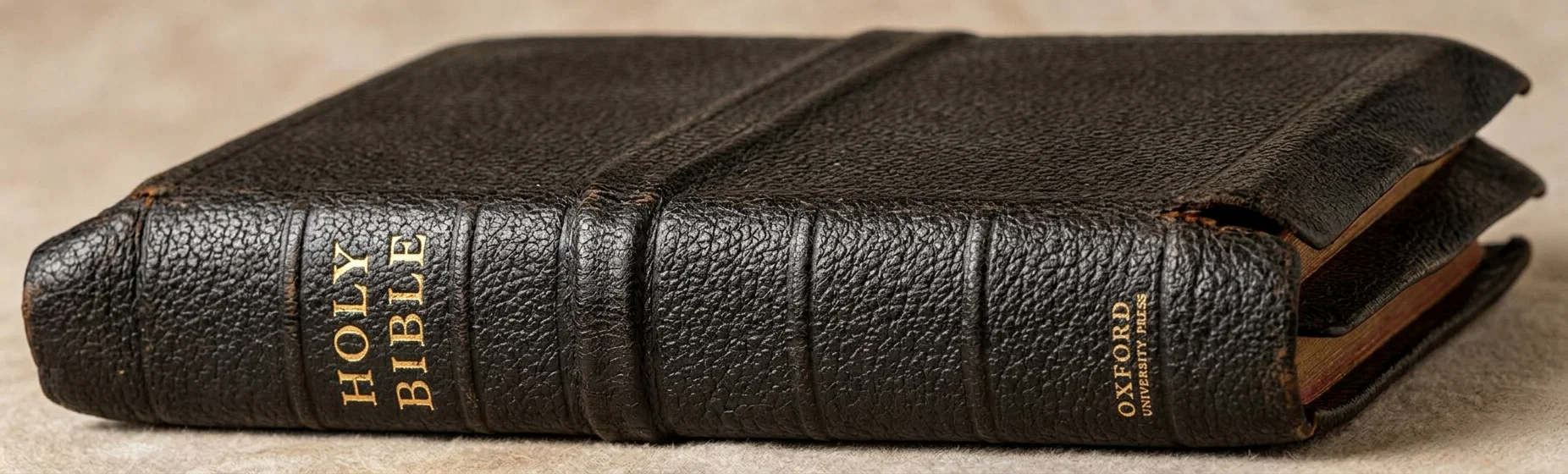
Signs of the Times and Genuine Oxford Bible
The SIGNS OF THE TIMES, a sixteen-page weekly, illustrated, family journal, devoted to the exposition of Scripture, the prophecies especially, and to the promotion of temperance and all true morality.
A GENUINE OXFORD BIBLE, printed in long primer type—large and clear, beautifully and substantially bound in Arabian Morocco, divinity circuit, leather lined to edge, silk sewed, round corners, red under gold edges, has all necessary helps, concordance, dictionary of proper names, subject index, maps, etc. It is a great favorite.
The regular price of the SIGNS is - - - - - $1.50
The regular price of the Bible is - - - - - 3.25
The SIGNS OF THE TIMES for one year and the Bible sent, post-paid, for the price of the Bible alone $3.25
The Bible may be sent to one address and the paper to another.
A name in gold letters will be put on the Bible for 25 cents extra.
Address SIGNS OF THE TIMES, Oakland, Cal.

SANTA FE ROUTE

ONLY LINE WITH ITS OWN TRACKS FROM SAN FRANCISCO TO CHICAGO

THE CALIFORNIA LIMITED

The Santa Fe new and sumptuous train, through to Chicago in 75 hours. Leaves every morning at 9 o’clock.
OVERLAND EXPRESS, with through Palace and Tourist Sleepers, to Chicago, every evening at 8 o’clock.
BAKERSFIELD LOCAL leaves every morning at 7.20, and STOCKTON LOCAL every afternoon at 4.20, giving best service through the San Joaquin Valley.
PERSONALLY CONDUCTED Tourist Excursions every Monday, Thursday, and Saturday, in Vestibuled Tourist Cars.
The service on these Personally-Conducted Excursions, is all that counts for comfort and convenience. Clean linen and bedding, the proper lavatory and toilet accommodations are provided. The aisles are carpeted and the windows double, to keep out the dust, and wide to allow an unobstructed view of the scenery en route. Full information regarding the Santa Fe Route, with handsome folder and correct map of the section through which it runs, may be had at the Company’s offices.

CALL OR WRITE

1118 BROADWAY, OAKLAND 641 MARKET ST., SAN FRANCISCO

Wanted

WANTED—Salesmen or Ladies—Do you want to make more money? You can do it by working for the largest manufacturing company in our line, in the country. Salary guaranteed; expenses advanced weekly. Write Monarch Co., 608-46 Jackson St., Chicago, Ill.

Salesmen for Paints and Varnishes

Wanted.—Salesmen to travel with most complete line of Paints, Colors, and Varnishes on the market. Jewel Refining Co., Paint Department, Cleveland, Ohio.
Continue reading: EGGS