"THERE are $2,000,000,000 invested in the dairying business in this country," said a citizen with a predilection for statistics. "That amount is almost double the money invested in banking and commercial industries. It is estimated that it requires 15,000,000 cows to supply the demand for milk and its products in the United States. To feed these cows 60,000,000 acres of land are under cultivation. The agricultural and dairy machinery and implements in use are worth over $200,000,000. The men employed in the business number 750,000, and the horses over 1,000,000. The cows and horses consume annually 30,000,000 tons of hay, nearly 90,000,000 bushels of corn765meal, about the same amount of oat meal, 275,000,000 bushels of oats, 2,000,000 bushels of bran, and 30,000,000 bushels of corn, to say nothing of the brewery grains, sprouts, and other questionable feed of various kinds that are used to a great extent. It costs $450,000,000 to feed these cows and horses. The average price paid to the laborer necessary in the dairy business is probably $20 a month, amounting to $180,000,000 a year.
"The average cow yields about 450 gallons of milk a year, which gives a total product of 6,750,000,000 gallons. Twelve cents a gallon is a fair price to estimate the value of this milk, at a total return to the dairy farmers of $810,000,000, if they sold all their milk as milk. But 50 per cent. of the milk is made into cheese and butter. It takes 27 pounds of milk to make one pound of butter, and about 10 pounds to make one of cheese. There is the same amount of nutrition in eight and one-half pounds of milk as there is in one pound of beef. A fat steer furnishes 50 per cent. of boneless beef, but it would require about 24,000,000 steers, weighing 1,500 pounds each, to produce the same amount of nutrition as the annual milk product does."—Philadelphia Press.
SUNSHINE JUST OVER THE WAY.
Oh! why be downhearted and tearful?
'Tis wiser by far to be cheerful.
Come, stir up to flame joy's dim ember!
Vain sorrowing never will pay.
While you walk in the shadow, remember,
There is sunshine just over the way.
Why let little worries annoy us?
'Tis easier, far, to be joyous;
There is happiness ever before us.
For a while, though our skies may be gray,
The clouds will soon pass that loom o'er us,
Showing sunshine just over the way.
It seems like a sin against duty
To be sad in a world full of beauty.
Ah, life, it is well worth the living!
Enjoy every heart-beat we may.
Why our years to dark shadows be giving
When there's sunshine just over the way?
—Golden Days.
PROTECT THE CHILDREN.
By John W. Kirton, LL.D.
MOTHERS, remember that a child's soul is more tender than the tenderest plant. See how carefully the gardener protects and shelters the young and tender plant from every biting wind and chilling influence. He knows full well that its future strength and beauty depend upon the manner with which it is thus guarded and watched over in its early days. If it is neglected then, no after care can supply the tone or vigor which has been wasted. If you pierce the young leaf of the shoot of a plant, even with the finest-pointed needle, the prick will form a knot, which will grow with the leaf, and become harder and harder, and so prevent its obtaining its perfect and complete form. It is very much the case with the human soul. Wounds which touch the tender germ, injure the heart leaves of its being, and blunt or dwarf the beauty of its future life. A harsh word, a black look, a gesture, a sound, are sufficient to inflict such wounds. How needful, therefore, to be on the watch against anything and everything which may sully the bloom, or mar the beauty, of the young and tender life placed in the charge of fathers and mothers.
How different it might have been with thousands of men and women, if each one had been properly protected in their tenderest age, in every possible way, as becometh a human soul, holding, as it does, within itself the spark of some celestial fire, or the fruit of some choice grace. If it is worthy of thought, care, and attention, to manifest every kind of care towards a plant or tree, whose beauty will, after all, only be of a short duration, how much more so is it to guard with jealous care the first buddings of life in the infant mind. Preserve, then, its strength, and it will amply repay you by its vigor, beauty, and fruit, in after days. The child can thus be trained to become a tree of the Lord's right-hand planting, instead of a thorn which will prove a source of sorrow and pain to those around it. Protect, therefore, the tender plant from its earliest days from every noxious and chilling influence.—John W. Kirton, LL.D.
TWO KANSAS CITIES.
A GREAT deal of confusion exists in the country outside of Kansas, as to whether Kansas City is in Kansas or Missouri, or both, because it is as often located in one as in the other State. A correspondent of the New York Evangelist tries to clear up the confusion by the following explanation:—
The distinction between Kansas City, Missouri, and Kansas City, Kansas, is simply compelled by the necessity of the distinction of the two States. For every social, religious, and commercial purpose, the cities are one. The earlier name of Kansas City, Kansas, was Wyandotte; but a few years ago the legislature of Kansas consolidated Wyandotte, Armstrong, and Armourdale into one corporation, under the name of Kansas City, Kansas. A very large proportion of the packing business is on the Kansas side of the line; so that while in the bank balances the business shows to the credit of Kansas City, Missouri, the real business is in Kansas City, Kansas. The cable-car system, running as it does through both, makes them for every purpose and convenience one great city. Recently this cable-car system has reached the higher bluff land west of the Missouri and Kaw Rivers; and much of the finest residence property of the future is to be found on that side. The prevailing winds leave it clear of the city's smoke, and the Kansas prohibitory law leaves it clear of saloons; and betwixt the two, it is quite a desirable region both for quiet residences and for manufacturing enterprises that prefer sober workmen.
THAT "SPARE ROOM."
By A Minister
It makes us shiver to write of it; it has no place in our casket of pleasant memories. Away off in the farther corner of the house, separated from the fire by one or two rooms, unused for several weeks, the same air remaining in the room for the same length of time, and the bedclothing cold, damp, and musty. How the chills creep over you as you enter that room! How like a subterranean vault it smells; and you almost imagine you see the demons of disease lurking in the dark corners, and laughing at the prospect of another victim.
You rush to the window, thinking to admit the pure, free, life-giving air as a welcome guest, and drive out the enemy from his dominion, although he has peaceable possession. But lo! to your dismay the window cannot be raised, and you are doomed to pass the night in misery. You turn to the bed, and the climax is reached. There you find a great, overgrown, disease-breeding feather-bed, that has come down through succeeding generations from the time when the "memory of man runneth not to the contrary."
Undergoing a slow decomposition, it has also within itself the germs of disease of those who have at different times been enveloped within it. You retire, and with you all sweet, pleasant thoughts and happy dreams of childhood, when you slept on straw and husk mattresses, in a chamber where the moon and stars shone through the cracks. Yes; sweet rest is driven away by the demons of that "spare room." You arise in the morning with cold, headache, dullness, and weariness. Your kind hostess asks you how you rested; and you are constrained by her kindly manner to answer, "As well as usual." And indeed you usually have rested badly.
We are glad this picture is not universally true. We try to appreciate the motives and intentions of our kind hostess; but, dear sisters, please "suffer a word of exhortation" from one who has suffered from "that feather-bed" and "spare room." Just open the windows; air the bedclothing; take off that feather-bed; give us a husk or straw mattress, and we will doubly bless you. No matter if it does seem "hard" and poor to you, let us decide that. Give us these, with good, plain food, and we'll try to give better sermons. But of all luxuries, spare us the feather-bed.
A MINISTER.
ORIGIN OF THE TERM "LYNCH LAW."
IT is not generally known that the term "lynch law" originated in Campbell County, Va., before the Revolutionary war. At that period the country was thinly settled and was infested with Tories and desperadoes, too many of them, apparently, for the local authorities to adequately punish. Col. Charles Lynch, a distinguished officer of the Revolutionary army, undertook to rid his county of the outlaws. He organized a force, arrested the outlaws, and having satisfied himself and comrades of the guilt of the accused, executed them without reference to the constituted authorities. While not altogether approving of the desperate remedy for a desperate cause, the beneficial effect of Colonel Lynch's action was recognized, and has since been known as "Lynch's law" or "Lynch law."
Lynch's process of meting out speedy justice extended to other parts of the country, and is a well-recognized form of redress of grievances to-day, particularly for that class of offenses that are popularly believed not to be adequately punished by the statutes and courts of the State. Colonel Lynch's brother gave his name to Lynchburg, and left a son who was subsequently governor of Louisiana.—Pittsburg Dispatch.
NEW YORK'S FIRST FOURTH.
Knowledge of the act and a copy of the Declaration of Independence reached New York on the 9th of July. Orders were given to have the brigades formed on the parade grounds at 6 o'clock in the afternoon. Within a hollow square, which occupied what is now the city hall park, between the city hall and the post-office building, Washington sat on horseback, while one of his aids read the document that declared the colonies free and independent States. The soldiers welcomed the announcement with cheers, there was general rejoicing throughout the city, and the poor debtors were released from prison to join in the festivities.—Selected.
THE CARE OF THE EARS.
1. NEVER put anything into the ear for the relief of the toothache.
2. Never wear cotton in the ears if they are discharging pus.
3. Never apply a poultice to the inside of the canal of the ear.
4. Never drop anything into the ear unless it has previously been warmed.
5. Never use anything but a syringe and warm water for cleaning the ears from pus.
6. Never strike or box a child's ears; this has been known to rupture the drum-head and cause incurable deafness.
7. Never wet the hair with very cold water, if you have any tendency to deafness; wear an oiled silk cap when bathing, and refrain from diving.
8. Never scratch the ears with anything but the finger if they itch. Do not use the head of a pin, hairpins, pencil tips, or anything of that nature.
9. Never let the feet become cold and damp, or sit with the back toward a window, as these things tend to aggravate any existing hardness of hearing.
10. Never put milk, fat, or any oily substance, into the ear for the relief of pain, for they soon become rancid and tend to incite inflammation. Simple warm water will answer the purpose better than anything else.
11. Never be alarmed if a living insect enters the ear. Pouring warm water into the canal will drown it, when it will generally come to the surface, and can be easily removed by the fingers. A few puffs of smoke blown into the ear will stupefy the insect.
12. Never meddle with the ear if a foreign body, such as a bead, button, or seed, enters it; leave it absolutely alone, but have a physician attend to it. More damage has been done by injudicious attempts at the extraction of a foreign body than could ever come from its presence in the ear.—Health and Home.
SINGING AS AN AID TO HEALTH.
THE time will soon come when singing will be regarded as one of the great helps to physicians in lung diseases, in their incipient state. Almost every branch of gymnastics is employed in one way or another by the doctors, but the simple and natural function of singing has not yet received its full meed of attention. In Italy some years ago statistics were taken which proved that the vocal artists were especially long-lived and healthy, under normal circumstances, while of the brass instrumentalists it was discovered that consumption never claimed a victim among them. Those who have a tendency toward consumption should take easy vocal exercises, no matter how thin and weak their voices may seem to be. They will find a result at times far surpassing any relief afforded by medicine. Vocal practice, in moderation, is the best system of general gymnastics that can be imagined, many muscles being brought into play that would scarcely be suspected of action in connection with so simple a matter as tone production. Therefore, apart from all art considerations, merely as a matter of health, one can earnestly say to the healthy, "Sing, that you may remain so," and to the weakly, "Sing, that you may become strong."—Selected.
WHAT GOES WHEN THE SALOON GOES.
THE brothel.
The gambling hell.
The tramp.
The criminal.
The drunkard.
Political corruption.
Pauperism.
Broken-hearted motherhood, blighted childhood.
Ignorance.
Bad debts and hard times.
The saloon.
The saloon keeper goes—to work.—Seattle Leader.
News Items
—Jefferson Davis died at New Orleans on the 6th inst., aged 81 years.
—Solomon Hirsch, of Oregon, has been appointed Minister to Turkey.
—The public debt was decreased $4,869,672 during the month of November.
—Kansas City recently added twenty-two square miles to its corporate limits.
—Los Angeles is to have a smelting establishment for gold and silver ores, to cost $100,000.
—President Harrison suggests that Congress provide a stronger and more satisfactory government for Alaska.
—Queen Victoria says she has long been opposed to the popular sport of stag hunting, and has decided to abolish it.
—At a recent fire in Franklin, Ky., three colored children were burned to death. They had been left at home alone.
—Important discoveries have been made of the details of the attempt to assassinate the Hungarian Prime Minister, Tisza.
—It is reported that the fugitive Frenchman, General Boulanger, has been engaged for a series of lectures in the United States.
—The Peking (China) Gazette claims to have been in existence 1,000 years, and asserts that 1,900 of its editors have been beheaded.
—The cashier of the House of Representatives of Congress is a defaulter for over $70,000, the missing funds being the salaries of Congressmen.
—A three-story brick building, corner Second and Huntington Streets, Philadelphia, was burned on the 2d inst., including six human lives in the loss.
—The President's message to Congress favors the proposal of Senator Blair to give money from the national treasury to educate the negroes of the South.
—An English syndicate has purchased for $2,000,000 all the coal mines, nine in number, on the line of the Hannibal and St. Joseph Railroad in Macon Co., Mo.
—The confession of a Los Angeles burglar implicates the head of a detective firm, A. J. Lucas by name, as being also the head of a series of mysterious burglaries.
—A New York dispatch of the 2d inst. says: "An incoming bark reports that yesterday at the Delaware breakwater she passed three dead bodies floating in the water."
—A contract for thirty-six large guns, to cost 4,500,000 marks, has been concluded with Krupp by the Chinese Government. The guns are intended for the Northern forts.
—Of 1,549 marriages in Prussia last year between blood relations, 1,422 were between cousins, 110 between uncles and nieces, and 16 between aunts and nephews.—New York Sun.
—The Oakland Morning Times proposes a fund for the purpose of giving a turkey dinner to all the poor in the city. It claims that there were 500 hungry families in the city on Thanksgiving-day.
—Throughout most of the State of California, the rainfall the present season has been double that of last year up to the same date. In some localities it has been three times as much as last year.
—A discovery of gold on the banks of the river Imperial, in Chili, is reported. The governor of Nueva Imperial has taken, it is said, to Santiago a nugget weighing 22,860 ounces avoirdupois.
—The American bark Cheesbrough was destroyed in a gale in Japanese waters, October 30, and nineteen lives lost. There was terrible suffering during the disaster, and only four persons were saved.
—The President has appointed Justice David J. Brewer, of Kansas, to be Associate Justice of the Supreme Court of the United States. The new appointee is a nephew of Justice Stephen J. Field.
—The superstition in regard to Friday being an unlucky day has such a hold on seamen that even an admiral of the U. S. navy would not start out on a cruise with a squadron of new vessels on that day.
—The proposed emigration of Mormons to the rich prairie lands of the Northwest Territory, is not receiving much favor in the Dominion of Canada. Sir John Macdonald recommends special legislation on the subject.
—The California State Board of Examiners have passed an appropriation of $50,000 for the purchase of a site for the home of feeble-minded children, at Glen Ellen, Sonoma County. The property is known as the Hill Ranch.
—The Supreme Court of California has decided that a street-car conductor has no right to eject a passenger who has nothing less than a five-dollar gold piece. The legal principle is that the amount tendered must be reasonable.
—The depredations of the seal pirates in Alaskan waters are becoming so serious that the Alaska Commercial Company will not renew its lease of the American seal islands unless the United States guarantees protection from the illicit hunter.
—The French steamship Bearn recently arrived at Argentine and Brazilian ports with 270 Turks on board. Neither government would allow these would-be emigrants to land, and the vessel consequently carried them back to Europe.
—There are at present the United States of America, the United States of Mexico, the United States of Venezuela, the United States of Colombia, and the United States of Brazil, to which will soon be added the United States of Central America.
—The product exhibition known as "California on Wheels" started on its second tour of the continent on the 3d inst., from San Francisco. The train consists of three cars. New exhibits will be forwarded to it every week by the State Board of Trade.
—A plan for a system of floating light-houses and relief stations at intervals across the Atlantic, has been laid before the International Marine Conference at Washington. The proposed stations would be about 170 miles apart, and the estimated cost, $2,500,000.
—Officers of whaling vessels report that the Indians along the shores of the Arctic Ocean have learned to distill spirits and make rum. Of course it is horrible stuff, but it intoxicates, and that is all they want. It is said to be killing them off at a rapid rate.
—There was an explosion in the Trefz Brewery, Newark, N. J., on the 2d inst., and "rivers of beer" ran in the streets, flooding a number of cellars. This is one of the breweries recently purchased by an English syndicate, and their loss by this disaster is $175,000.
—A Vienna dispatch of the 2d inst. says: "In Austria a great snow-storm has been raging for thirty-six hours, seriously impeding railway travel. Three thousand sweepers and twenty-four snowplows were unable to clear the tracks in the neighborhood of this city."
—Alton Bay, N. H., experienced two lively shocks of earthquake on the 3d inst. Large quantities of crockery and glassware were broken, clocks were stopped, the bell of a steamer on the bay was rung, and the people rushed out of their houses, thinking they were going to fall.
—A Berlin dispatch says: "Two hundred thousand miners, employed in the Treasury coal mines, in the Saar district, have petitioned the kaiser to intervene in their behalf. They complain that even unmarried men cannot live on the wages they now get, as all things are very dear."
—The Chinese steamer Gaelic arrived in San Francisco on the 1st inst. The revenue cutter Bear had gone out to intercept her, and search for smuggled opium; but the big steamer ran away from the government vessel, and came into port ahead. The captain will be prosecuted for refusing to heed the order of the government officer to halt.
—The restaurateur who furnished the luncheon for the Pan-American delegates, at the White House, has had experience with six Presidents. He says: "Mr. Harrison is quite liberal. There were four cases of champagne, besides sherry and Chateau Margaux, and three cases of champagne were drunk. There was no limit placed upon anything."
—In the German Reichstag, recently, in the presence of the emperor and Prince Bismarck, Herr Bebel, a Socialist deputy, uttered the following, among other pointed remarks: "The people desire peace, but the government is driving them towards war. During the past three years we have spent nearly a billion marks for preparation, and there seems to be no end to it."
—In deference to the petition of careful (?) mammas of Paris, that Sarah Bernhart would play in some role which they could safely take their daughters to witness, she has consented to appear in "Joan of Arc" during the Christmas holidays. Society is in a decidedly bad plight where there is such a desire to patronize an actress who cannot deign to be decent without a special petition. It will be little short of an accident if her attempt at decency under such pressure does not prove a failure.
—Emin Pasha, who had just been rescued from a perilous situation in the heart of Africa, by Henry M. Stanley, met with an accident which may prove fatal, just as he came to the borders of civilization. The company were resting in a village, where they were to take a steamer for Zanzibar, when the Pasha (who is a German) walked off a parapet of the hotel, and met with serious injuries. His near-sightedness was the cause of the accident. Since the death of General Gordon, he had been endeavoring to carry on the work of civilization, and was governor of some equatorial provinces, but his enemies cut off his communication with the coast, and he was in a precarious situation, until relieved and escorted out by Stanley.
ARE YOU GOING EAST?
By Editor
If so, you will find it to your advantage to correspond with B. R. Nordyke, Pacific Press, Oakland, Cal., about routes, tickets, etc.
Parties are being formed to go East nearly every week. He has through car arrangements, and excellent accommodations for the traveling public. His next party for Chicago and New York will leave Oakland December 20 or 22.
Books.
By Editor
[Every book sent to us by the author or publisher will be promptly acknowledged, the title of the book, number of pages, the names of author and publishers being given in every case, together with the price, when we are informed what it is. Such other notice will be given as the merit of the several works may demand. Marked copies of the paper containing notices will be sent to publishers.]
"MY RELIGIOUS BELIEF, AND JOYFUL EXPERIENCE DERIVED FROM THE BIBLE," by W. E. Benham, Meriden, Conn., is a little pamphlet of 32 pages, in which the author lucidly sets forth his belief. With the exception of his views on baptism and the Lord's Supper, and one or two other points, we wish everyone had as good a belief. But his indifferent views concerning the ordinances above named are certainly not "derived from the Bible."
We do not know but that the faith-cure theory, as at present advocated, would die of itself. But Mr. William Gribbon desires to hasten its defunction by the means of a little pamphlet of 37 pages, entitled "Trophimus; or a Discussion of the Faith-cure Theory." It contains some good things and shows the folly of the ultra theory of faith healers. The author, however, need not depart from the Bible, as he has in some instances, to meet the erroneous views of the theory he is opposing. Price, five cents. Address the author, No. 1263 Lexington Avenue, New York City.
A new theological work, "The Extinction of Evil," by Rev. E. Petavel, D.D., free lecturer in the University of Geneva, Switzerland—three theological essays by this distinguished evangelical scholar, in support of the doctrine of conditional immortality as the only antidote for prevailing Universalism. This work is translated from the French, with an introductory chapter by Rev. C. H. Oliphant. The preface by Rev. Edward White, author of "Life in Christ," etc. The book may be obtained through book-sellers, or of the publisher, Chas. H. Woodman, 144 Hanover Street, Boston, Mass. Cloth, 12mo., 75 cents.
"THE FEDERAL GOVERNMENT OF SWITZERLAND; AN ESSAY ON THE CONSTITUTION," by Bernard Moses, Ph.D., professor of history and political economy, University of California. Pacific Press Publishing Co., Oakland and San Francisco, Cal., 43 Bond Street, New York, 48 Paternoster Row, London.
What true patriotic American ought not to be interested in the little federation of Central Europe, which, amid the imperialism of medieval ages, and the revolutions of later times, maintained the principles of liberty,—principles trammeled, it is true, by the tenacious traditions of past ages, and a perverted religion, but ever growing brighter and clearer as we near the present. Professor Moses has portrayed these gradual steps of emancipation in a clear and graphic style. His analysis of the Swiss Government, of its advantages and disadvantages, its various steps toward its present form as compared with American republics, are lucid and striking. The chapter headings will give something of an idea of the scope of the work: Antecedents of Swiss Federalism, Distribution of Power, The Legislature, The Executive, The Judiciary, Foreign Relations, Internal Relations, The Army and the Finances, Rights and Privileges, The Common Prosperity. These features are all made more striking by comparing them with those of other republics, notably our own. It is an excellent treatise and text-book upon a subject, and concerning a country, which ought to be much better known. The book is comprehensive, concise, clear, and interesting, and deserves a wide circulation.
YOUR ATTENTION
TO THIS LIST OF BOOKS.
JUVENILE BOOKS.
BIBLE BIRTHDAY RECORD—A text-book for the young. By the author of "Hymns from the Land of Luther," etc. 32mo, cloth extra, gilt edges, 50c.
BIBLE BIRTHDAY BOOK—A choice selection of texts for every day in the year. By the author of "Hymns from the Land of Luther," etc. 32mo, cloth extra, gilt edges, 50c.
BIBLE SCENES AND STORIES—Containing 50 of the finest drawings of Gustave Doré, with descriptive letter-press. Royal 8vo, cloth, $3.00.
DORE'S BIBLE GALLERY—Containing a selection of 100 of the finest drawings of Gustave Doré, with descriptive letter-press. By T. W. Chambers, D.D. Crown folio, cloth, full gilt, $4.00.
FIRST STEPS FOR LITTLE FEET IN GOSPEL PATHS—By the author of "The Story of the Bible." 328 pages, with colored frontispiece and 140 illustrations. 16mo, cloth, 75c.
As its title indicates, this work is designed for the little ones, and consists of short lessons followed by questions so simple that the little hearers, if attentive when the passage is read, may readily answer.
PALESTINE FOR THE YOUNG—By the Rev. Andrew A. Bonar.
A finely illustrated description of the Holy Land, which, though written in a style adapted to the understanding of the young, is at the same time full of instruction for those of maturer years. It will add an interest to the study of the Scriptures in both old and young. 12mo, cloth, $1.00.
PILGRIM'S PROGRESS—By John Bunyan. 12mo, cloth, $1.00.
RIDE THROUGH PALESTINE (The)—By the Rev. John W. Dulles, D.D. Illustrated by 184 maps and engravings. 2d edition; 12mo, cloth, $2.00.
The author has sought to make this book one that will be acceptable in the family circle, and that will not only go into the Sabbath-school library, but be taken out of it also.
FAVORITE BIBLE STORIES FOR THE YOUNG—With numerous illustrations. 16mo, handsomely illuminated board covers, 50c; cloth extra, 75c.
GARDEN SWING, AND OTHER STORIES (The)—A book for boys and girls. Large 4to, cloth, inked and illuminated side, large type, many beautiful oil-colored and other illustrations. $1.75.
LITTLE WORKERS—A book for boys and girls. Large 4to, cloth, inked and illuminated sides, large type, many beautiful oil-colored and other illustrations. $1.75.
ROLLO'S TOUR IN EUROPE—By Jacob Abbott. 10 vols., fully illustrated. 16mo, cloth, black and gold, in box, $10.00—reduced to $7.00.
Among all the books written for youth there are few which have equaled, and none have surpassed in interest or instruction, the writings of Jacob Abbott. His name has become a household word throughout the land.
STORY OF THE GOSPEL (The)—By the author of "The Story of the Bible." The New Testament in simple form for children, written in language easy to understand. Printed in large, plain type, and filled with pictures. 360 pages, 16mo, with 150 illustrations and a frontispiece in colors; cloth, 75c.
STORY OF A POCKET BIBLE (The)—A book for all classes of readers.
This volume is exceedingly interesting, and full of valuable religious instruction. Its thread of imaginary autobiography guides the reader through a delightful path of rich and beautiful incident, which can scarcely fail of making deep and holy impressions on his heart. 12mo, cloth, $1.00.
STORY OF THE BIBLE (The)—From Genesis to Revelation. Told in simple language, adapted to all ages, especially to the young. By the author of "First Steps for Little Feet" and "The Story of the Gospel."
"The Story of the Bible" differs from all other books of its class. It does not contain stories about the Bible, but it is a simple version of the main portions of the Bible itself, from Genesis to the Revelation; 704 pages, 300 illustrations; 12mo, cloth, $1.50.
A Story of the Bible Animals—Containing 704 pages and 300 illustrations. Bound in fine English muslin. Price, only $1.50.
This book contains a description of each animal mentioned in the Bible, and tells of its appearance, its habits, and the use to which it was put by mankind.
New Lights on Old Paths—By the author of the "Story of the Bible." Size, 9½x8x1½ inches, 496 pages, 330 illustrations, bound in fine cloth, gilt edges. Price, only $2.00.
A very interesting and profitable book for both old and young.
TOY BOOKS.
BIBLE PICTURE SERIES—Four kinds. Beautifully printed in colors, with pictorial covers. 4to, 25c each, on paper; per doz., $3.00.
Series I.
Queen Esther.
Daniel.
Joseph and His Brothers.
Life of Christ.
Series II.
King Solomon.
Moses.
Ruth.
David.
KITTEN SERIES—Four kinds; beautifully printed in colors, with pictorial covers. 4to, on paper, per dozen, $2.00; 20c each.
Fourfooted Friends and Favorites.
Pussies at Mischief.
The Three Little Kittens.
The Three White Kittens.
"LANDSEER" SERIES OF PICTURE BOOKS (The)—With letter-press descriptions by Mrs. Surr. Four books in the series, each containing four of Landseer's pictures, beautifully printed in oil colors. With eight pages of bold letter-press descriptions. Covers ornamented with additional designs after Landseer. 4to; per doz. $2.00; 20c. each.
Return from the Warren, etc.
Children and Rabbits, etc.
Duke of Sutherland's Children, etc.
Beauty's Bath, etc.
Advertisements.
By Editor
ADVERTISING RATES made known on application. No advertisements of patent medicines, novelties, cigars, tobacco, liquors, novels or anything of a trivial, intemperate, immoral or impure nature accepted. We reserve the right to reject ANY advertisement.
MORAL AND SCIENTIFIC COMPANION, Florence, Arizona; illustrated, wide-awake; 25c per year. Ads 1c per word.
SCIENTIFIC AMERICAN
ESTABLISHED 1845.
Is the oldest and most popular scientific and mechanical paper published and has the largest circulation of any paper of its class in the world. Fully illustrated. Best class of Wood Engravings. Published weekly. Send for specimen copy. Price $3 a year. Four months' trial, $1. MUNN & CO., PUBLISHERS, 361 Broadway, N.Y.
ARCHITECTS & BUILDERS
Edition of Scientific American.
A great success. Each issue contains colored lithographic plates of country and city residences or public buildings. Numerous engravings and full plans and specifications for the use of such as contemplate building. Price $2.50 a year. 25 cts. a copy. MUNN & CO., PUBLISHERS.
TRADE MARKS.
In case your mark is not registered in the Patent Office, apply to MUNN & Co., and procure immediate protection. Send for Handbook.
COPYRIGHTS for books, charts, maps, etc. quickly procured. Address
MUNN & CO., Patent Solicitors,
GENERAL OFFICE: 361 BROADWAY, N. Y.
HEALDSBURG COLL’GE
HEALDSBURG, CAL.
A MODEL EDUCATIONAL INSTITUTION
Four courses of instruction, classical, scientific, biblical, and normal; also preparatory instruction given in a primary and grammar course.
Instruction thorough and practical, not only in the collegiate course but especially so in the preparatory courses.
Discipline rigid, yet parental, combined with strong moral and religious influence.
Expenses moderate. The whole cost to the student for tuition, board, lodging, lights, washing—all expenses except for books and clothes, from $18 to $20 per month of four weeks.
Spring term begins Wednesday, January 1, 1890. For descriptive catalogue and further information, address the principal,
W. C. GRAINGER, Healdsburg, Cal.
Fresno and Merced County Lands
TO RENT AND FOR SALE.
75,000 Acres of Wheat and Sugar Beet Land in the above Counties, to rent for a term of years. Also
100,000 Acres of fine Raisin, Fruit, Alfalfa, and Sugar Beet Land, with water for irrigation, for sale in tracts of from 20 acres to large tracts suitable for Colony purposes.
For particulars, apply to
E. B. PERRIN,
402 Kearny Street,
San Francisco, - Cal.
RESIDENCE LOTS
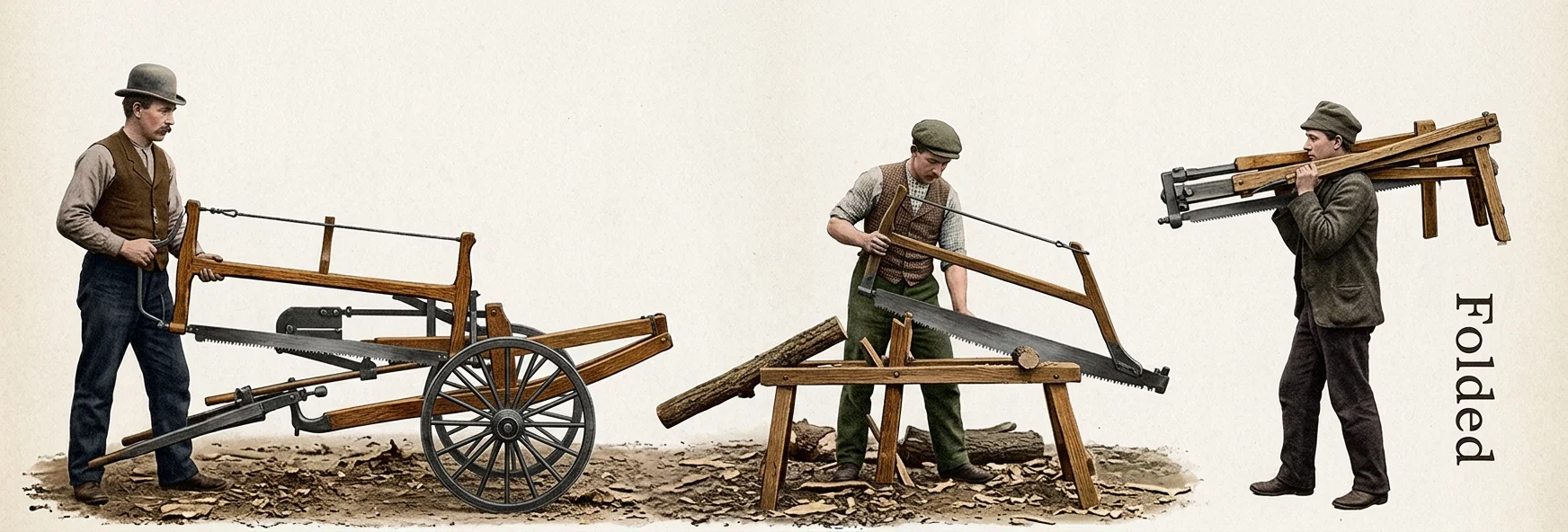
BY ONE MAN. Write for descriptive catalogue containing testimonials from hundreds of people who have sawed from 4 to 9 cords daily. 25,000 now successfully used. Agency can be had where there is a vacancy. A NEW INVENTION for filing saws sent free with each machine, by the use of this tool everybody can file their own saws now and do it better than the greatest expert can without it. Adapted to all cross-cut saws. Every one who owns a saw should have one. Ask your dealers or write FOLDING SAWING MACHINE CO., 808 to 811 South Canal Street, Chicago, Ill.
RESIDENCE LOTS.
A GOOD LOCATION for residence. Lot 50x100 feet, on Forty-second Street, near Market, within three blocks of Telegraph Avenue street-cars on the east, and three blocks to San Pablo Avenue cable line on the west. These lots in the Alden Tract are selling for $500 on time payments. I will sell the above described lot, 50 feet front, on sunny side of street, for $425 ($225 cash, balance on $10 monthly installments, with interest on said installments at the rate of 8 per cent per annum), if sold within 30 days from date of this newspaper. For map, abstract, and free conveyance to the property, call on B. R. Nordyke, at the Pacific Press buildings, corner Twelfth and Castro Streets.