The Youth’s Instructor, Vol. 34, No. 35.

GROWING IN GRACE

The Youth’s Instructor

Sep 1, 1886

S. D. A. Publishing Association · Battle Creek, Mich. · Sep 1, 1886

GROWING IN GRACE.
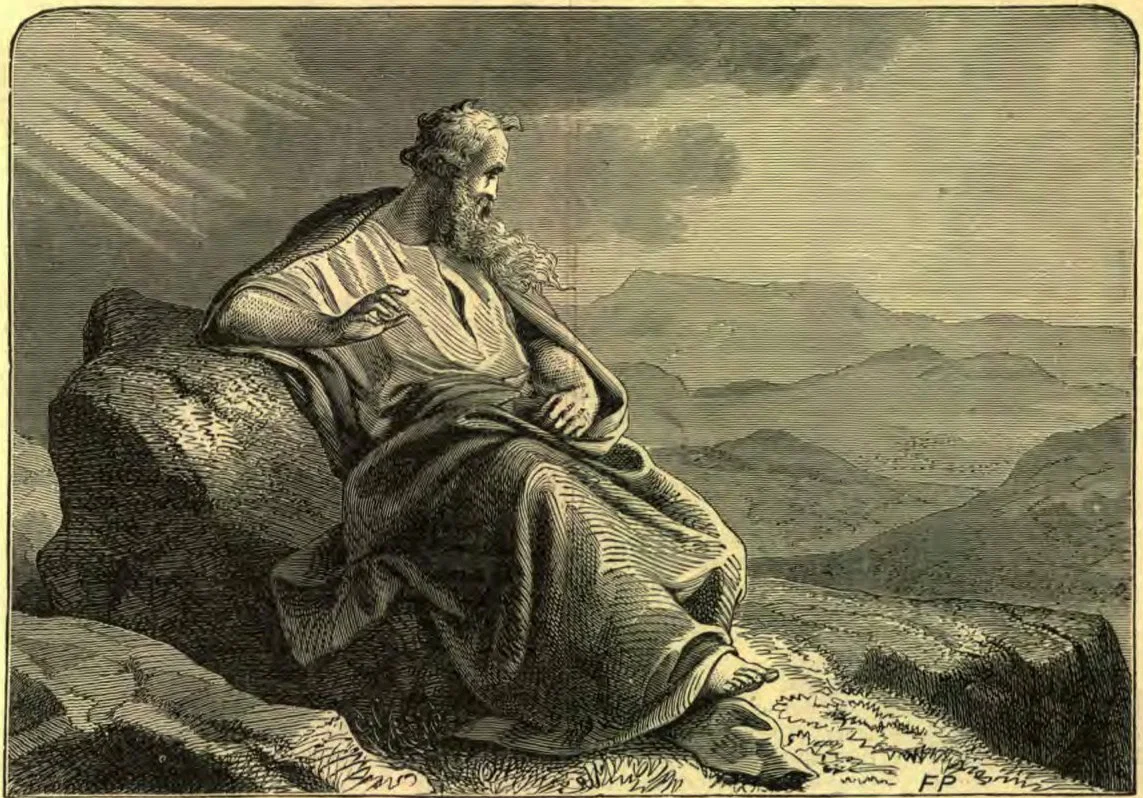
“But grow in grace, and in the knowledge of our Lord and Saviour Jesus Christ.” It is the privilege of the young, as they grow in Jesus, to grow in spiritual grace and knowledge. We may know more and more of Jesus through an interested searching of the Scriptures and then following the ways of truth and righteousness therein revealed. Those who are ever growing in grace will be steadfast in the faith, and moving forward. There should be an earnest desire in the heart of every youth who has purposed to be a disciple of Jesus Christ to reach the highest Christian standard, to be a worker with Christ. If he makes it his aim to be of that number who shall be presented faultless before the throne of God, he will be continually advancing. The only way to remain steadfast is to progress daily in divine life. Faith will increase if, when brought in conflict with doubts and obstacles, it overcomes them. True sanctification is progressive. If you are growing in grace and the knowledge of Jesus Christ, you will improve every privilege and opportunity to gain more knowledge of the life and character of Christ.
Faith in Jesus will grow as you become better acquainted with your Redeemer by dwelling upon his spotless life and his infinite love. You cannot dishonor God more than to profess to be his disciple while you keep at a distance from him, and are not fed and nourished by his Holy Spirit. When you are growing in grace, you will love to attend religious meetings, and you will gladly bear testimony of the love of Christ before the congregation. God, by his grace, can make the young man prudent, and he can give to the children knowledge and experience. They can grow in grace daily. You should not measure your faith by your feelings. Closely examine your own heart, and the state of your affections toward God. Inquire, Have I devoted the precious moments of to-day in seeking to please myself, seeking for my own amusement? or have I made others happy? have I helped those connected with me to greater devotion to God and to appreciate eternal things? have I brought my religion into my home, and there revealed the grace of Christ in my words and in my deportment? by my respectful obedience, have I honored my parents, and thus kept the fifth commandment? have I cheerfully taken up my little, every-day duties, performing them with fidelity, doing what I could to lighten the burdens of others? have I kept my lips from evil, and my tongue from speaking guile? have I honored Christ my Redeemer, who gave his precious life that eternal life might be within my reach?
At the beginning of the day, do not, dear youth, neglect to pray earnestly to Jesus that he will impart to you strength and grace to resist the temptations of the enemy in whatever form they may come; and if you pray earnestly, in faith and contrition of soul, the Lord will hear your prayer. But you must watch as well as pray. Jesus has said: “Ask, and it shall be given you; seek, and ye shall find; knock, and it shall be opened unto you; for every one that asketh receiveth; and he that seeketh findeth; and to him that knocketh it shall be opened. Or what man is there of you, whom, if his son ask bread, will he give him a stone? or if he ask a fish, will he give him a serpent? If ye then, being evil, know how to give good gifts unto your children, how much more shall your Father which is in heaven give good things to them that ask him?”
Children and youth may come to Jesus with their burdens and perplexities, and know that he will respect their appeals to him, and give them the very things they need. Be earnest; be resolute. Present the promise of God, and then believe without a doubt. Do not wait to feel special emotions before you think the Lord answers. Do not mark out some particular way that the Lord must work for you before you believe you receive the things you ask of him; but trust his word, and leave the whole matter in the hands of the Lord, with full faith that your prayer will be honored, and the answer will come at the very time and in the very way your heavenly Father sees is for your good; and then live out your prayers. Walk humbly and keep moving forward.
“For the Lord is a sun and shield: the Lord will give grace and glory: no good thing will he withhold from them that walk uprightly.” “O fear the Lord, ye his saints; for there is no want to them that fear him. The young lions do lack, and suffer hunger; but they that seek the Lord shall not want any good thing.” “Keep thy tongue from evil, and thy lips from speaking guile. Depart from evil, and do good; seek peace, and pursue it. The eyes of the Lord are upon the righteous, and his ears are open unto their cry. The face of the Lord is against them that do evil, to cut off the remembrance of them from the earth. The righteous cry, and the Lord heareth, and delivereth them out of all their troubles. The Lord is nigh unto them that are of a broken heart, and saveth such as be of a contrite spirit.” Here are promises, rich and abundant, upon conditions that you cease to do evil and learn to do well. Then set your aim in life high, as did Joseph and Daniel and Moses; and take into consideration the cost of character-building, and then build for time and for eternity. Satan will oppose your efforts to advance. Your path will not always be smooth, but there are encouragements in God’s rich promises. The Lord has pledged his word that in every effort toward righteousness he will help us. We are weak and without wisdom, but God has said: “If any of you lack wisdom, let him ask of God, that giveth to all men liberally, and upbraideth not; and it shall be given him.” Only learn to be thorough, never to let go your hold upon God, to persevere in his service, and you will be an overcomer through the blood of the Lamb. In doing this work for yourself you are having an influence on many others whom you associate with. Words spoken in season, how good are they! How much strength a word of hope, courage, and determination in a right course will give one who is inclined to slide into habits that are demoralizing! The firm purpose you may possess in carrying out good principles, will have an influence to balance souls in the right direction. There is no limit to the good you may do. If you make the word of God the rule of your life, and govern your actions by its precepts, making all your purposes and exertions in the fulfilling of your duty a blessing and not a curse to others, success will crown your efforts. You have placed yourself in connection with God; you have become a channel of light to others. You are honored by becoming co-laborers with Jesus; and no higher honor can you receive than the blessed benediction from the lips of the Saviour: “Well done, good and faithful servant, enter thou into the joy of thy Lord.”
MRS. E. G. WHITE.

MOSES

To his rest on the lonely hills, To his rest where no man knows, By the secret birth of the rills, And the secret death of the snows;
To the place of the silent rocks, Where no voice from the earth can come, But the thunder leaps, and shocks The heart of the nations dumb;
To the long and desolate stand On the brink of the ardent slope, To the thought of the beautiful land, And the woe of unanswered hope;
To the fallen fate from God On the life yet young within; To the sense of the smothering sod, And the crush of remembered sin;
To the moments that gather the years, Like clouds on the heaven afar; To the tumult of terrible fears; To the flush and the triumph of war;
To the plagues of the darkness and dead, And the cry of a conquered king; To the joy of the onward tread, And the beat of a cageless wing;
To the march of the pillar of cloud, And the rest of the pillar of fire; To the song of the jubilant crowd, And the passionate praise of the lyre;
To the mountain, ascended alone, And the law in its thunder given, And the glimpse of the feet of the throne, And the light of the shadows of heaven,
To a grave, where no marble above Can be voiceful of peril and praise, Where no children can weep out their love No widow recall the lost days;
To these—but his step is not weak, And he moves as one moves to a throne— Alone with the past on that peak, With his grief and his glory alone.
—Unknown.

PHYSICAL DESCRIPTION OF AUSTRALIA.

The Dutch navigators who first discovered Australia named it New Holland. It was afterward known to European geographers as Terra Australis, or the Southern Land. The name Australia was finally adopted at the suggestion of Flinders, one of the early explorers of the country. Australasia, or Southern Asia, is a geographical name designed to include Tasmania and New Zealand. The continent of Australia stretches in the direction of north and south a distance of 2,000 miles in a direct line, which takes in the extreme points of Cape York in the north, and Wilson’s Promontory in the south. The average distance across the continent in this direction is but 1,200 miles. From east to west its dimensions are 2,400 miles, making an area of territory of nearly 3,000,000 square miles.
From near Cape York, a chain of coral reefs, known as the “Great Barrier Reef,” extends southward along the coast for more than 600 miles, and at an average distance from the shore of thirty miles. Inside of this reef the water is usually quite calm, and affords a safe passage up the coast for the steamers that trade between the different points. There are but a few openings in the entire length of the reef through which vessels can pass from one side to the other, and until an accurate survey of it was made, the navigation of the sea on that part of the coast was not only difficult but attended with great danger.
The highest mountains in Australia, are the Australian Alps. These are in the southeast corner of the continent, and mostly within the Colony of Victoria. They are between sixty and seventy miles from the coast. Their highest peak, known as Kosciusko, is 6,500 feet above the sea, and is capped with perpetual snow. On many of the other higher portions of this range, snow lies during the greater portion of the year.
The Blue Mountains, a portion of which is known as the Liverpool Range, stretch further northward through New South Wales, in a line with the eastern coast. Their highest point, Mount York, is less than 4,000 feet elevation; but these mountains are everywhere steep and rugged, intersected by deep and precipitous ravines. In many places are seen stupendous chasms between walls of solid rock, which give these hills a grandeur and sublimity beyond any other part of the Colonies.
The rivers of Australia are generally small. Many of them become nearly or quite dry during the long and frequently intense heats of summer. The river Murray with its tributaries, form the largest water-course on the continent. This river rises on the western slope of the Australian Alps, and flows, the greater part of its course, in a westerly direction, and for a long distance forms the boundary between Victoria and New South Wales. It then takes a southerly direction through South Australia toward the ocean, and is joined, in its lower course, by the rivers Darling and Murrumbidgee. The last named river flows between very high banks, fringed with a beautiful tree which in appearance is intermediate between the spruce and Scotch fir. Some of the rivers which flow from the east coast towards the interior are lost in the immense flats of the latter region, and never reach the sea. This is the case with the Macquarie River, which takes its rise on the western slope of the Blue Mountains, and after flowing three hundred miles in a northwesterly direction, is lost in the arid plains of the interior.
The face of the country varies greatly. On the western side of the great eastern coast chain, vast upland plains of undulating character appear, which gradually descend, towards the interior, into an almost perfectly level country. Between the hills of the higher parts are ponds, fed by the mountain streams, supplying water for very extensive cattle ranges. In some parts of the country, the timber is much scattered, and one looks upon what would almost appear to be an extensive artificial park, with occasional openings. The varieties and quality of the timber change according to locality. On the margin of rivers, and on the rich soil, dense forests of gigantic gum-trees, intermingled with cedar, rosewood, wild vines, and various parasitical plants, form the “thick brush” or jungle of the country. In the dry and sterile regions the trees have a stunted, forlorn looking appearance, to which the term “scrub” is applied. In such localities black snakes and lizards abound.
A large part of Queensland lies within the tropics and is adapted to a variety of vegetation. Here may be seen in rich profusion the fig-tree, the bean-tree, and the pine, with many other varieties growing thickly together, and overhung with a rich drapery of creepers in the form of turrets and stalactites, all bespangled with flowers and fruits. Wild roses, tulips, and other flowers are scattered about high and low. Much has been written about the salubrity of the climate in those parts, for which I could not vouch.
The greater portion of Tasmania is mountainous. Mount Wellington rises to a height of 4,200 feet, and is covered with snow at least half the year. This colony has a number of large lakes which lie on the high central table lands of the island. These seem to be large natural reservoirs, in which the waters of numerous small streams collect, and these in their overflow form some of the principal rivers. The united area of these lakes is 75,000 acres. This colony is better supplied with rivers than any of the continental colonies.
J. O. CORLISS.
Melbourne, Australia.

REMEMBERING AND FORGETTING.

It is a good thing to be able to remember, but it is no less desirable to be able to forget. Happiest among men is he whose will exercises the strongest control over his memory, for he can bury his cares in oblivion, and record the pleasant incidents of his life where “every day he turns the leaf to read them.”
Some men can remember nothing. Theirs is a great misfortune, for experience is of no use to them. They walk in darkness, lacking the lamp by which wiser feet are guided, and of course stumble as they go. There are others who remember pleasurably all that good men strive to dismiss from their recollection. Their minds are like filters, which permit that which is pure and excellent to run through them, but retain whatever is coarse and noxious. Their fund of immoral information is inexhaustible; but of facts which illustrate the best traits of human nature, or the wisdom and benevolence of its Author, their memories are bare.
But if we want the best kind of memory, one that will give us pleasant pictures when we grow old, we can follow no better rule than that given by the apostle Paul: “Whatsoever things are true, whatsoever things are honest, whatsoever things are just, whatsoever things are pure, whatsoever things are lovely, whatsoever things are of good report, . . . think on these things.”

HARVEST

NOTHING to do? Idling the beautiful hours through, While swift and noiseless the wheel of Time Whirls round through the cold or the sunny clime? While the harvest waits with its golden store, For the reapers are few and the sheaves are more Than e’er before.
Then turn and see! Look over the beautiful, golden sea; See how it stretches away—away! And all should be doing ere close of the day; The sheaves bend low ’neath their golden weight,— Go thou with the reapers ere it is late For the precious freight!
Go forth and try! Do not thou stand idly by! Go to the fields, and it may be Others, seeing, may follow thee; Gather quickly, ere set of sun, And the Master will say to thee, “Well done!” When thy sheaves are won.
—Christian Weekly.

THOROUGHNESS

WHEN I was a boy in school, a good many years ago, our principal used to give us from time to time practical talks on subjects that did not come in the regular line of study, but that were very useful. Some of those talks have been very helpful to me all my life since. In one of them he told us that when we were blacking our shoes, we ought to pay attention to the heels as well as to the front; that even if a shoe was shining in front, if the heel was rusty, it was not well blacked.
“Oh, pshaw!” some boy says. “Do you call that useful talk? Only about blacking the heels of your shoes and such like!”
Yes, it was a useful talk. There was an idea in it that went farther than the heels of one's shoes. It is true that when you are walking along the street you can see only the front part of your feet. You have “shined up” that part of your shoes; but you said to yourselves, “Oh, well, I can't see the heels; it don't make much difference about them.” But even if you cannot see them, everybody that comes behind you sees them. Those persons will be very likely to say of such boys that they are slovenly in their habits, and they will summon your shoe heels as witnesses against you.
Then there is another point to be thought of here. It is that such a neglect indicates lack of thoroughness. “Whatever is worth doing at all is worth doing well,” the old proverb tells us. Rusty heels are bad not simply in the eyes of those who walk behind you, but they are bad because they show that the wearer thinks “well enough” will do instead of “just right.” But any such principle is not a good one upon which to build conduct or character.
The fact is, boys and girls, you never know what part of your character or your conduct is to come before the eyes of men. You may think that in this thing or in that you will escape observation; therefore you take no particular pains with that part of your life. But the first thing you know, that is somehow just the part that comes before men. Then they judge you by that which they see to be a defect, rather than by those things upon which you have spent some care. Every schoolboy knows that if in preparing a lesson he learns the answers to every question but one, somehow that question is the one that is most likely to be put to him. Then his lack of thoroughness at one point makes it appear as if he had not studied at all.
But now this thoroughness in everything—in blacking the heels of one's shoes, in preparing lessons, in forming character—ought to be sought not simply or mainly because of what people will say or think, but because it is right. It is the only real way to live, to seek to be complete. God asks of us that we strive to be fully rounded in character. He lays his command upon us, “Be ye perfect, even as your Father in heaven is perfect.” The apostle James shows us that to be perfect means to be “lacking in nothing.” That is, it means that there be no part of a good character of which we shall be destitute. Surely we can seek after this. We can strive to have every part of our character just what it ought to be. We shall never reach perfection if we do not aim at it. No one ever drifted into completeness.
In our weakness we must ask God's help day by day. He will give it to us. When he tells us to be perfect, he will give us—if we ask for it—strength to become perfect.—The Child's Paper.

HOW THE BOYS TURNED OUT.

It is an old saying that the boy is father to the man. This means that you can tell by the boy, when he is a child, what he will be when he is a man. If the boy is mean and wicked, he will be pretty sure to be the same when he gets to be a man; and on the other hand, if he is honest, truthful, and good, he will make a good, truthful, worthy man. It is true that once in a great while there is an exception to this rule; cases have been known where a bad boy has become a good man, but these are very rare. Generally the character of the man is much like the character of the boy; so that, being acquainted with the boy, you can tell almost to a certainty what kind of a man he will become.
The Bible seems to teach the same thing. It says, “Even a child is known by his doings, whether its work be pure, and whether it be right.” Prov. 20: 11. You see it is his work that tells what he is, good or bad. There is an old proverb which says, “The way the twig is bent, the tree is inclined;” that is, the way the child does, so the man is inclined to do. I have been thinking of the boys who grew up where I was raised some forty years ago. Of course they have all become men; and as I look them over, I see that all, without an exception, have turned out to have the same character when they were men that they had when they were little boys. Let me tell you of a few of them; I dare not call their names, for most of them are yet living, and might not like to see this.
The first I will mention was a boy with whom I was intimately acquainted till we were both of age. He was known throughout the neighborhood as a saucy, disobedient, quarrelsome, mischief-making boy; he would swear and lie and steal. He claimed it was only for fun, to have amusement; he said that when he got older, he would be just as good as anybody. But how has he turned out? He has become an exceedingly bad man, a real vagabond. He has married three women, quarreled and parted with all of them. Nobody likes him, and all his people are ashamed of him.
Let me tell you one of a different character. This boy was always known in the neighborhood as one of the most truthful, industrious, studious, and trustful of boys. In his youth, he retained the same character. He loved his books and school, and was good to work. He has become a useful minister, and I trust has done much good in the world. His people are not ashamed of him, and his life has been an honorable one. You see, children, that the character of the boy tells what the character of the man will be. What kind of a boy are you? Do not think that you will find it easy to change by and by and leave off your evil ways, if you have any. That is a delusion.
There was one of our neighbor’s boys, whom I knew very well, indeed. He was one of your bad boys. He did not mean to be bad, he said, but he liked fun and mischief, did not like to work very well, and was always getting into trouble. I remember that just before he was of age, he one day struck his mother. Everybody predicted then that he would come to some bad end, for that was about as mean and shameful a thing as a boy could do. I knew him as long as he lived; he was always in trouble, and finally, some years ago, died a miserable drunkard and a pauper, and had to be buried by the town.
You see the boy showed what the man would be. There was another boy whom I remember was quite poor and ignorant when I first knew him. But he studied hard, and was very industrious. Everybody loved and trusted him. He stayed right in the neighborhood where he was raised, married well, and now is one of the first citizens of the town, respected, honored, and well-off. Just what we might expect from such a boy.
There was another one who from a little boy was a lover of money, close, selfish, and saving. He never went to parties, did not care for fun, took little interest in his books. He was all for working and saving money. To-day he is a very wealthy man; but he does not love God, nor the Bible, and everywhere he has the reputation of being close and sharp in his dealings. The boy shadowed forth the man. So I could go on through the neighborhood and give you the names and history of all the boys who grew up with me; and without an exception each one has turned out to be just what we would expect from having known the boy.
Now boys, and this applies to girls just as well, what kind of children are you? Are you kind? are you obedient at home? are you orderly in school? do you love to work? do you take care of your money? do you love the Bible? do you fear God? I trust this is so. That is the kind of a man you mean to be, is it not? But if you are quarrelsome, always in trouble, disobedient at home, disorderly at school, if you will tell an untruth, if you do not love the Sabbath, if you do not fear God, be careful; for you will be almost certain to be just like that when you grow up. Now is the time to settle what your character shall be hereafter. D. M. CANRIGHT.

IMPORTANT BIBLE SUBJECTS.

LESSON 22.—THE FIRST DAY OF THE WEEK.

1. On what day of the week did Christ rise from the tomb? Mark 16:9.
2. Did the disciples whom Mary Magdalene saw believe that he was risen? Mark 16:10, 11.
3. Where did two of the disciples go that same day? Luke 24:13.
4. Who joined them on the way? Luke 24:15, 16.
5. After Jesus had made himself known to them, what did they do? Luke 24:33, 35.
6. Did the other disciples believe what these two told them? Mark 16:12, 13.
7. What time of day was it when the disciples were thus gathered together? John 20:19.
8. Why is it impossible to suppose that they were celebrating the resurrection of Christ?—Because they did not believe that he had risen.
9. How did it happen that they were all together at that time?—They had a common dwelling place. Acts 1:13.
10. Who appeared to them on that first-day evening? John 20:19.
11. Were the disciples expecting him? Luke 24:36, 37.
12. What did Jesus do to assure them that he was a real being and not a phantom? Luke 24:38–43.
13. How was it that they had food so handy? Mark 16:14.
14. What is the only recorded instance of a religious meeting on the first day of the week? Acts 20:7.
15. On what part of the day was this meeting held? Acts 20:7, 8.
16. What part of the day comes first? Gen. 1:5, 8, 13, etc.
17. With what does the day begin? Lev. 23:32.
18. When is it evening? Deut. 16:6; Josh. 8:29; Mark 1:32.
19. Then since this meeting was on the dark part of the first day of the week, when would we say it was held?—On what is commonly known as Saturday night.
20. How long did the meeting last? Acts 20:11.
21. For what place did Paul start on the first-day morning after the meeting closed? Acts 20:13, 14.
22. While Paul was preaching, what were his companions doing? Acts 20:13, first part.
23. What is the only commandment in the Bible concerning the first day of the week? 1 Cor. 16:2.
24. Can a person “lay by him in store” that which he puts into a contribution box at church?
25. How is each one to know how much to “lay by”?—“As God hath prospered him,” after examining his accounts, he is to lay aside a certain per cent of the profits. 1 Cor. 16:2.
26. In consideration of all these things, among what must the first day of the week be classed?—Among the “six working days.” Eze. 46:1.

NOTES.

The student, after learning that the evening begins the day, may wonder how the disciples could be gathered together “at evening” near the close of the day of the resurrection, and it still be the first day of the week. John 20:19. This is made clear when we remember that the Jews reckoned two evenings to each day. Dr. Clark, on Ex. 12:6, says: “The Jews divided the day into morning and evening; till the sun passed the meridian, all was morning or forenoon, after that all was afternoon or evening. Their first evening began just after twelve o’clock, and continued till sunset; their second evening began at sunset, and continued till night, i. e., during the whole time of twilight.” See also Scott, McClintock, and Strong’s Cyclopedia, etc. Ex. 12:6, margin, reads, “between the two evenings.” It will be seen that the day began and ended with an evening. The evening at the close of the day was the first of “the two evenings,” and the one at the beginning of the following day, from sunset onward, was the second evening. When John speaks of the evening of the first day of the week, referring to the close of the day, he evidently means the first evening. But when Luke (Acts 20:7) speaks of a meeting on the first day of the week, we know that he refers to the second evening, the one which began the day, because lights were then required.
But when we say that “when John speaks of the evening of the first day of the week, referring to the close of the day, he evidently means the first evening,” we do not mean that all the events of that evening took place before sunset, nor that it was before sunset when Jesus met with the disciples in their room in Jerusalem. The language of John 20:19 does not demand such a conclusion. The disciples assembled in their room for their evening meal while the sun was yet above the horizon, their hour for eating being about the same as that of the disciples who lived in Emmaus. But as in that country darkness very quickly follows the setting of the sun, it must have been some time after dark when the two disciples returned from Emmaus. Still it was the first day of the week when the disciples assembled.
In chapter 20 of Conybeare and Howson’s “Life and Epistles of the Apostle Paul,” we find the following in regard to the meeting spoken of in Acts 20:7: “It was the evening which succeeded the Jewish Sabbath. On the Sunday morning the vessel was about to sail. The Christians of Troas were gathered together at this solemn time to celebrate the feast of love which the last command of Christ has enjoined on all his followers.” A few paragraphs further on we find the following: “Strength and peace were surely sought and obtained by the apostle from the Redeemer, as he pursued his lonely road that Sunday afternoon, in spring, among the oak woods and the streams of Ida.”
From Troas to Assos is at least nineteen miles, and therefore Paul must have been still on the way in the afternoon of that Sunday, although he started at break of day. Acts 20:11. On the supposition that he recognized Sunday as the Sabbath, is it not strange that he should leave the church at Troas on Sunday morning, and spend the entire day in traveling? And this, we remember, is the only time when the first day of the week is mentioned in connection with a religious meeting.

SOME CURIOUS BRIDGES.

THE following interesting description of curiously constructed bridges in less civilized countries than our own we clip from an article upon the subject of bridges in a late Christian Weekly.
“Who constructed the very first bridge, and of what material?” would be a question of much interest if it could only be correctly answered. Perhaps man, in the most primitive times, may have caught the idea of bridges from the ingenious devices of insects and animals. The gossamer thread the spider weaves across vague space will never cease to be marvelous; the predatory ants make bridges of their own small bodies, and monkeys, forming themselves into a living rope suspended from some tall tree, swing, pendulum-like, back and forth until the clasping tail at the loose end at length attaches itself to another tree across the stream, thus making a hanging bridge unique and useful.
“In any event necessity must have led man, while yet in a rude state, to construct some sort of bridges between districts separated by rivers. Fords there were, doubtless, at certain points, and stepping-stones used, and trees laid from stone to stone would have formed the rudiments of something more substantial. But so far as history informs us, bridge-making did not advance beyond this point for a long time. Skill and science combined have thrown marvelous structures across great rivers in modern times, the history of each of which is well known; who was the architect, of what material constructed, how long and wide and high it was, when it was begun, and when finished.
“But travelers tell us of bridges in certain countries of a style quite different from any of these—bridges that have no date or written history, unique and ingenious, but fragile; that perhaps have been rebuilt from time to time, for ages, in the same old fashion, but for which in the future there may come structures as magnificent as any of our own bridges. Who can tell?”
“Among the Dyaks of Borneo the bamboo and rattan, which sometimes grow to the surprising length of fifty or one hundred feet, are woven into bridges of ingenious architecture. A single bamboo a few inches in diameter affords quite sufficient support to a Dyak, whatever may be the depth of the abyss beneath. So he selects a place where the trees on each side the stream have overhanging branches, and long bamboos or rattans are made to sustain a very shaky structure. Perhaps a slight hand-rail is placed on the side. But while the Dyak crosses easily and fearlessly, an ordinary traveler feels much as if he would slip through—a catastrophe which does sometimes happen, and then he carries bridge, rail, and everything down with him on the rocks below. These bamboo bridges are often sixty or eighty feet long, sometimes two or three times that length. Travelers say that the bamboos sway in such an alarming manner that when crossing, even the most romantic of them never give a thought to the picturesque bridge.”
“Livingstone, in his travels in Southern Africa, frequently had occasion to cross bridges which were constructed of various tough climbing plants twined together into ropes and stretched from tree to tree on the banks of rivers.”
“Du Chaillu gives a thrilling account of his passage over the Ovigui River in equatorial Africa by means of one of the native-built bridges. The stream was a mountain torrent, about ninety feet wide, which rushed wildly through the forests, overflowing its banks. So swift was it, that even a good swimmer would be helpless in its current and must inevitably be dashed to pieces against the fallen trees that jutted out in every direction. Native ingenuity had constructed a passageway across this wild stream, though it was a complicated and shaky structure, which a civilized traveler shrank from testing. The Ovigui, like many of the mountain streams in Africa, had, from some cause, changed its course in comparatively recent times, and in its new bed stood huge trees, about twenty or twenty-five feet from the shore, which served as piers for the bridge. Other trees on the banks had been cut so as to fall upon and be supported by these trees in the river. The central space was united by a long, slender bamboo limb, which sagged down in the center so that when it bore a man’s weight, it dipped two or three feet below the surface of the rushing tide. Strong vines had been made into a sort of railing, but, being slack like the bamboo, were of little use.
“It was scarcely encouraging to Du Chaillu, as he stood looking at this African bridge, to be told by his guides that many had been drowned here, although this was a much better structure than others in the vicinity. Nor did it add to his steadiness of nerve to see one of his companions slip when midway of the stream and barely recover himself, and another drop into the water the package he was attempting to carry over. However Du Chaillu had conquered many dangers, and he managed to cross safely, though with much inward trepidation, which he adroitly concealed from his native companions.”

NEW ZEALAND FLAX, ETC.

One of the natural products of New Zealand soil is a species of flax-plant, related to the lilies and aloes. It grows more or less abundantly in all parts of the colony, but in certain localities it grows in great quantities, to a height of from twelve to fifteen feet, and has the appearance of large bunches of bushes. It is a perennial plant, having very long, narrow leaves of a fine, silky, and very strong fiber. Although it may not be quite as useful to the natives of that country as the cocoa-nut is to the natives of the Samoan Islands, yet it is good for some purposes that the cocoa-nut is not. Like the cocoa-nut it is used for houses, clothing, etc., and also for ropes, and many other useful things.
This flax is so strong that when they wish to transport their logs down the bay, they fasten them together with it, making them ready for the times of freshet, which come in January and July, when the swollen streams carry them down.
The houses built of this flax are called whares. They have no windows, and are usually so low that one cannot stand erect in them. The flax serves as a covering and siding to their houses. Their floor is the ground. Their bedstead is simply boards placed around, and for their bed they use something resembling hemlock boughs.
This flax furnishes an excellent substitute for leather. A few layers of it woven together with sticks make a perfectly tight roof, and one which will last for years. The natives scrape the fibers of the flax with sea-shells and make it into large fishing nets, and mats of fine texture. Baskets are also made of it, and bags in which the children carry their books to school. It is also made into clothing, which was formerly worn more by the natives than at the present time.
This plant looks very beautiful when growing, each one bearing from ten to twenty orange red flowers of the shape of the lily. Each bloom contains a drop of honey about the size of a pea, which is used for food, and repays the trouble of gathering.
Briars and thorn-bushes are not natives of this country, everything of this nature having been imported. There are no snakes, neither are there any harmful worms, or any thing that would endanger any one's life were he to sleep outdoors on the ground. In this respect it may be said that there is nothing to harm or molest in all the islands of New Zealand. S. N. HASKELL.
Continue reading: DIRT IN CHINA