Your ShelfYour Projects

Review and Herald, Vol. 59, No. 41.

CHRISTIAN LIBERALITY
Earlier text: WISCONSIN

MISSOURI SABBATH-SCHOOL ASSOCIATION.

The annual session of the Missouri Sabbath-school Association was held in connection with the camp-meeting at Sedalia. The first meeting convened Sept. 14, at 9:30 A. M., the President, N. W. Allee, in the chair. The Secretary being absent, J. M. Gallemore was chosen Secretary pro tem. Nine delegates were present, representing seven schools.
On motion, the Chair appointed the following committees: On Nominations, Wm. Jones, A. E. Cross, Flowers, Wm. Evans; on Resolutions, J. M. Gallemore, C. H. Knight, R. S. Donnell.
Adjourned to call of Chair.
SECOND MEETING, SEPT. 18, AT 6:30 P. M.—Opened with prayer by Bro. Watt. Minutes of previous meeting read and approved.
The Committee on Nominations made the following report: For President, D. T. Jones; Secretary, Joseph Clarke; Executive Committee, D. T. Jones, J. G. Wood, and C. H. Chaffee. These persons were duly elected to their respective offices.
The Committee on Resolutions reported the following, which were adopted as a whole:—
Whereas, The tendency of the times in which we live is such as to exert an influence for evil upon the minds of the young, and—
Whereas, We look upon the Sabbath-school as the great nursery in which our children can be instructed in the way of righteousness; therefore—
Resolved, That we urge upon our people throughout the State the necessity of taking a deeper interest in Sabbath-school work, by using every means given of God to make it a power for good in every community in which it may be established.
Resolved, That the important truths of the third angel's message should be taught in our Sabbath-schools.
Resolved, That the parents keep before their children the importance of this branch of the work by taking a deep interest in it themselves, setting the example of perfect lessons, promptness, and regular attendance.
Resolved, That we earnestly recommend to our scattered brethren who are not in reach of Sabbath-schools the importance of taking the Instructor, and getting the lessons regularly as though they were members of organized schools.
On motion, the Association adjourned sine die.
N. W. ALLEE, Pres.
J. M. GALLEMORE, Sec. pro tem.

NEW YORK SABBATH-SCHOOL ASSOCIATION.

The fifth annual session of the New York Sabbath-school Association was held at Union Square, New York, in connection with the camp-meeting. The first meeting was called Sept. 20, 1882, at 5:30 P. M. The President in the chair. Prayer by Eld. B. L. Whitney. The minutes of the last annual session were read and approved.
Eight schools were represented by delegates presenting credentials. A motion was made and supported that ministering brethren and brethren from abroad participate in the deliberations of the meeting.
The Chair was empowered to appoint the usual committees.
Meeting adjourned to call of Chair.
SECOND MEETING, SEPT. 22, AT 5 P. M.—After the opening exercises, the minutes of the preceding meeting were read and approved.
The Committee on Nominations presented the following partial report, which was accepted, and the officers elected by considering each name separately: President, M. H. Brown; Secretary, Mrs. N. J. Walsworth.
The Committee on Resolutions submitted the following:—
Whereas, The Sabbath-school work is designed of God, not only to teach the theory of the truth to our children, to our people in general, and to all others who may be brought into our schools, but also to be a means of grace to aid us in spiritual advancement; therefore—
Resolved, That we urge our brethren and sisters everywhere to put forth every consistent effort to sustain the Sabbath-school work by their presence, their interest, and their means, and by putting forth proper efforts to bring others under Sabbath-school influence.
Resolved, That in harmony with the action of the General Sabbath-school Association, the Constitution be amended by striking out Sections 1, 2, and 3 of Art. III, and substituting the following:—
“This Association shall be represented by all members of Sabbath-schools and all ministers and licentiates within the limits of the State Conference who may be present at any regular meeting of the Association.”
These resolutions were considered separately, and each adopted.
Meeting adjourned to call of Chair.
THIRD MEETING, SEPT. 25, AT 7 P. M.—The minutes of the previous meeting were read and approved.
The final report of the Nominating Committee was presented at this meeting as follows: Executive Committee, M. C. Wilcox, E. M. Plumb, G. W. Bliss, J. E. Swift. These individuals were elected to the office named by considering each name separately. After brief remarks by the President on the subject of reporting, the meeting adjourned sine die. M. H. BROWN, Pres. MRS. N. J. WALSWORTH, Sec.

MICHIGAN S. S. ASSOCIATION.

The fifth annual session of the Michigan Sabbath-school Association was held on the Lansing camp-ground, Thursday, Sept. 28, 1882, at 9:30 A. M. The President and Secretary being absent, Eld. J. Fargo was called to the chair, and C. H. Giles appointed Secretary pro tem. After receiving the delegates’ credentials, it was voted that the Chair appoint the usual committees. The meeting then adjourned to call of Chair.
SECOND MEETING.—This meeting was called Sunday, Oct. 1, at 6:30 P. M., Eld. A. O. Burrill being chosen Chairman. After the reading of the Constitution for State S. S. Associations, the delegates who had come upon the ground since the first meeting were received. It was found that there were over one hundred delegates present, representing very nearly fifty schools. It was then voted that, in accordance with the suggestions made at the last session of the General Sabbath-school Association, the State Constitution be amended as follows: that Art. III. be stricken out, and the following be substituted:—
This Association shall be represented by all members of Sabbath-schools within its limits who may be present at any regular meeting.
After the State Constitution had been thus amended, all members of Sabbath-schools present were invited to take part in the meeting.
The Nominating Committee, consisting of C. W. Stone, F. Howe, and C. C. Lewis, then reported the following names: For President, A. B. Oyen; Vice-president, C. H. Giles; Secretary, Eva Bell; Executive Committee, J. Fargo, A. O. Burrill, M. B. Miller. The officers recommended were duly elected.
The Committee on Resolutions, consisting of Eld. A. O. Burrill, Frank Starr, and Bro. Mather, then presented the following resolutions:—
1. Whereas, The duties of the State Sabbath-school Secretary are such as require of her much time and faithful labor, therefore—
Resolved, That we recommend each school in the State to pay yearly for her remuneration a sum equal to five cents per member.
2. Resolved, That we recommend the holding of Sabbath-school Conventions throughout the State, as the Executive Committee shall advise.
3. Whereas, Great benefit has been derived from the use of such helps as maps, Bible dictionaries, blackboards, etc., therefore—
Resolved, That we recommend that every school in the State provide itself as far as possible with these helps.
These resolutions were adopted. The meeting was then adjourned sine die.
C. H. GILES, Sec. pro tem.

“NOT A STRANGER.”

Job 19 : 26, 27, marginal reading.
When this dream of life is ended, When I wake to sleep no more, Shall I then all unbefriended Stand upon the eternal shore? Ah! methinks mine eyes, now holden, Shall in “open vision” see God, my Saviour, “Not a stranger,” Waiting there to welcome me.
When the dear familiar faces Fade, then banish from my sight; When with loving, fond embraces, We have said our last “good-night,” Shall I hear no word of greeting When the morning’s dawn I see? God, my Saviour, “Not a stranger,” Will be there to welcome me.
He who lived this life I’m living, When the robe of flesh he wore, Died the death on Calvary, giving Life to me forevermore; Risen now and interceding, That his glory I may see, God, my Saviour, “Not a stranger,” Waits in Heaven to welcome me.
On his throne of glory seated, Gone my mansion to prepare, Counting not his joy completed Till his kingdom I could share, Waiting to fulfill his promise, Where I am, there ye shall be,— God, my Saviour, “Not a stranger,” Comes again to welcome me.
Closer than a brother cleaving To the soul he died to save, Friend divine! on him believing, I shall triumph o’er the grave. He who bore the shame and sorrow, That the victor I might be,— God, my Saviour, “Not a stranger,” With a crown will welcome me.
Blessed Saviour! closer pressing To thy side my steps shall be, All my worthlessness confessing, All my confidence in thee. When amid life’s evening shadows Homeward shall my footsteps be, God, my Saviour, “Not a stranger,” Come, oh, come to welcome me!
—Christian Press.

A Restful Dress.

I took up a paper a few days ago, and read the following: “The last piece of folly on the part of fashion writers is to call a gown restful.” I smiled at the absurdity; and then followed the sad thought of the impossibility of restfulness from any such source. It might be a profitable study to think of the restlessness of our women of fashion. Alas! no matter how restful the color of the dress may be, it takes a restful heart to appreciate its quiet beauty; and God does not always give the appreciation of the things and the things themselves to the same person. But the train of thought suggested by the paragraph was the fact that there is a dress spoken of in the Bible that gives rest. It may be truly called a restful dress, and all we are asked to do is to put it on. It is finished!
Only the favored few can be free from care with regard to dress for the body. Only those of ample means can order a dress, and have it sent home finished, ready to put on. But there is a dress for the spirit that all can have, without money, without price; and so beautiful that we can appear in it before the angels, before God; and as I once heard a clergyman say, “A dress in which we are fit to be seen.”
The grandest reception that this universe has ever seen is yet to come off, and though all are invited, none can appear except in court dress. If we will not put on the Lord Jesus Christ, we shall miss the restful dress now, and we can never be presented faultless there.
We must procure the dress now.
“They have clean robes, white robes.”
The white robe is the righteousness of Christ, and that awaits our present acceptance.—Mrs. Margaret Bottome.

News of the Week.

SUNDAY, OCT. 8.—A Paris journal asserts that England is negotiating for the purchase of 200,000 Suez Canal delegation shares. She already own a large proportion of the canal.
—Terrific lightning and rain storms, accompanied by slight shocks of earthquake, occurred on the Isthmus of Panama during the last days of September.
—At Manila, Philippine Islands, there are daily from 30 to 40 deaths from Asiatic cholera.
—At a meeting in New York of the committee investigating the Fenian “skirmishing” fund, a member said enough evidence had been procured to send the trustees to the penitentiary.
—Peru has increased her import and export duties 50 per cent. The political situation is still unsettled. Calderon and U. S. Minister Logan are attempting to effect peace arrangements; while Montero, who was associated with Calderon in the provisional government, is placing himself at the head of the new party, and aims to become President of Peru. In the meantime, a former Minister of War, under Pierola, has pronounced against the provisional government of Calderon and Montero, and with 7 departments in the north will convene a congress in Pierola’s interest.
—A train conveying Chilian soldiers from Pisco to Inca, Peru, was partially blown from the line by torpedoes laid by Montoneros, and seven or eight soldiers were killed. The Italian Consul Piasco, who was on the train, was captured by the Montoneros, who ask $100,000 for his release. An Italian man-of-war has gone to endeavor to have him liberated.
—The President of the United States of Colombia and his Secretary have been assassinated, and political disturbances in several States of the Union are likely to result.
—It is stated on good authority that the British Consul has informed the Khedive that the “Control,” which has created so much dissatisfaction in Egypt, will be abolished.
—The British Ambassador at Constantinople has informed the Porte that England intends to secure the permanency of the pacification she has effected in Egypt, and the temporary presence of a certain number of troops will be necessary.
MONDAY, OCT. 9.—There is ill feeling between the Sultan and the Khedive, and an open rupture seems probable.
—Dispatches from Alexandria, Egypt, state that two natives, convicted of murdering Messrs. Ribton and Cattani on the 11th of June, were executed this morning. This would seem to indicate that Bro. Ribton’s murderers have suffered the penalty of their crime.
—All the Catholic bishops of Ireland, except Archbishop McCabe, have granted the priests permission to participate in the Mansion-House evicted tenants’ aid movement, and in the new Labor League and Industrial Union, founded by Parnell. As a consequence, several minor church dignitaries will become presidents of branches of the League, and in that capacity will participate in the conference soon to be held at Dublin.
—Bishop Walsh, of London, Ont., who has just returned from a trip in those countries, says there is proportionately less crime in Ireland than in England, Scotland, or Wales.
—Nearly 200 cases of yellow fever have been bulletined at Pensacola, Fla., since Saturday. At Brownsville, Texas, the disease is rapidly abating.
TUESDAY, OCT. 10.—On account of the alarming increase of pauperism in the south of Ireland, a project is on foot to send 1,000 persons to Canada, at a cost of £7,000.
—Arabi Pasha is treated like the commonest criminal. So great is the feeling against him, that he fears his life may be taken while in prison.
—The indictment against the Egyptian leaders contains three counts: Instigating the Alexandria massacre, directing the burning of the city, and abusing a flag of truce.
—The aid of the charitable is invoked for the suffering city of Pensacola, Fla., where yellow fever is hourly increasing, and contributions are greatly needed. There have been 1,300 cases since the beginning of the epidemic, and 113 deaths.
—The machine department of the Harrisburg, Pa., foundry burned to-day, involving a loss of $50,000, and throwing many men out of employment. An entire block of business houses in El Paso, Ill., was also destroyed by fire, at a loss of $100,000, with small insurance.
WEDNESDAY, OCT. 11.—The yellow-fever epidemic at Pensacola, Fla., is increasing, and the disease is assuming a malignant form. Fifty-six new cases and 7 deaths are reported to-day.
—Sept. 7, the date of an earthquake on the Isthmus, four tidal waves overwhelmed a Mexican island on the Pacific coast, drowning 70 persons.
—France has sent strong reinforcements to Tunis, with the intention of proceeding vigorously against the insurgents during the cold season.
—In negotiating with Madagascar, France will claim the restitution of her sovereignty over nine-tenths of the island, which belonged to her a century ago.
—The Egyptian army is to consist of 10,000 men; the officers will all be Turks or Circassians.
—Said Pasha will remain Premier in Turkey only on condition that each minister be held responsible for the workings of his own department, also that the Austro-German alliance be abandoned, and a good understanding be had with England and France on the Egyptian question.
THURSDAY, OCT. 12.—The number of Egyptian prisoners awaiting court-martial is 143. Arabi Pasha made an able defense before his examiners to-day. He denies complicity in the massacres and in the burning of Alexandria, and the evidence thus far elicited fails to convict him of these crimes.
—Ingestre Hall, the seat of the Earl of Shrewsbury, near Stafford, Eng., was completely destroyed by fire. The loss is estimated at £500,000.
—Henry Ward Beecher has voluntarily withdrawn from the Congregational Church, on account of his heterodox views. But the Congregational Association of New York and Brooklyn does not believe that Mr. Beecher’s beliefs are greatly at variance with the church’s teachings, and hopes he will reconsider his determination.
—Russian revenues increased 30,128,000 rubles from January to August, while the expenditures for the same period were reduced 26,603,000 rubles.
—Geo. D. Rise, cashier of the Lebanon (Pa.) Dime Savings Bank, was robbed of a satchel containing $30,000, all in bills, while on the way from his house to the bank. The robbery occurred about 8 o’clock in the evening. The cashier was severely handled by the robbers, who knocked him down, beat and kicked him, and left him covered with blood. His outcries brought no one to his assistance, a gentleman who was passing supposing it to be a drunken fight. A reward of $3,000 has been offered for the apprehension of the robbers.
FRIDAY, OCT. 13.—An English barrister will defend Arabi Pasha. It is believed that landed property valued at $2,000,000 belonging to the Egyptian leaders, will be confiscated.
—John F. Caine, a monogamist, was nominated by the Mormon convention as successor to Cannon in Congress. He is the city clerk of Salt Lake, manages the church theater, and is part owner of the Herald.
—John Hurd’s elevator at Bridgeport, Conn., containing 100,000 bushels of grain, burned to-day, causing a loss of $135,000.
—More than 1000 huts and houses were demolished by the recent cyclone in Cuba, many of them being tobacco-drying establishments. Fifteen persons were drowned by the overflowing of the rivers, and many are still missing.

MISCELLANEOUS.

—The Christian Weekly states that the inhabitants of the northern part of Ireland are contented, prosperous, and law-abiding, as compared with those of the rest of that distracted island, and from facts stated in the census, concludes that this happy condition of things is due to the preponderance of Protestants in that portion of Ireland.
—The District Attorney of New York has received a letter protesting against the recent attack on the lottery dealers of that city. The writer urges that the attack cannot fail to have a disastrous effect on the Democratic cause at the next election, as it has excited great indignation among the 30,000 or 40,000 voters who are the patrons of these institutions.
—The Mormons have sent 22 missionaries to Europe. Mr. Gladstone, who has been appealed to on the subject, says he has no power to prevent their deluding work, as their proselytes voluntarily emigrate to Utah. However, if on reaching our shores they avow their willingness to support polygamy, which our laws pronounce crime, they should be sent back, like other criminals.
—It is estimated that more than 100 persons lost their lives and three times as many more were seriously injured, by the terrible railroad accident near Freiburg, Germany, Sept. 3. The train, consisting of 24 passenger cars, carrying 1200 excursionists, was overtaken by a heavy storm of wind and rain, and while rounding a curve upon a steep embankment, struck a telegraph pole which had been blown across the track. Nineteen cars were either smashed to pieces or precipitated down the embankment into a morass, into which they sank. The victims of the disaster were either crushed in the broken cars or smothered in the morass. Some of the dead were mutilated beyond recognition.

Obituary Notices.

“Blessed are the dead which die in the Lord from henceforth.”—Rev. 14:13
Cook.—Died of inflammation of the stomach and bowels, Sept. 19, 1882, at Sheldon, Iowa, Charles Edison, son of E. L. and Salome Cook, aged three years and nine months. E. A. Luce.
Brown.—Died Sept. 28, 1882, at his home in Amherst, N. H., Bro. William Brown, aged ninety years, eight months, and twenty-three days. In early life Father Brown became a Christian, and united with the Methodists. When the first angel’s message was proclaimed, he received it; and when his attention was called to the present truth, he as readily took hold of that. He embraced the Sabbath about fifteen years ago. At the age of seventy-five, he laid aside his tea, coffee, and tobacco. The house where he lived the last sixty years of his life was the birthplace and early home of Horace Greeley. Bro. B.’s daughter and her husband tenderly cared for him during his illness. Remarks were made at his funeral by the writer. D. A. Robinson.
Tubbs.—Died Sept. 10, 1882, our beloved brother, Ira Tubbs, aged eighty-two years, six months, and eight days. He was taken with a congestive chill, followed by paralysis, and remained unconscious about fifty-three hours. Only a few evenings before his death, our weekly prayer-meeting was held at his house. The Lord seemed especially near on that occasion. He took an active part, and seemed cheerful and happy in the Lord. He had been a faithful member of the Wright (Mich.) church for more than twenty-five years. He leaves a wife and several children and step-children, all of whom deeply mourn his loss. Funeral services were delayed for a short time, that they might be in attendance, one step-daughter coming from the Sanitarium, and a son from the East. Eld. J. L. Edgar spoke tender words of comfort on the occasion. Mrs. E. B. Lane.
Brown.—Died of consumption, April 28, 1882, Alzena H. Brown of Danvers, Mass., aged thirty-one years and six months. Five years ago, under the labors of Elds. Canright and Stone, Sr. B., with her husband, embraced present truth. In her death, Bro. Brown loses a faithful, devoted companion, and the church at Danvers, an earnest, godly member. Of her it can truthfully be said, “She hath done what she could.” At her funeral the church was crowded with many of the citizens of the place, members of the church, and relatives of the deceased, to whom Eld. Haskell spoke words of comfort and consolation from Rev. 14:13.
Soon He cometh with the reapers; Soon He’ll gather in the grain; Soon the saints of God will waken, Evermore released from pain. O ye weary, sad, and worn ones, Take new courage in the strife; Soon the conflict will be ended, Death be swallowed up of life. D. A. Robinson.
Lawrence.—Melvin A. Lawrence, son of Eld. R. J. Lawrence, of Rochester, Mich., was killed at Rochester, June 13, 1882, by jumping from a moving train of cars. The following particulars are condensed from the Cass City Enterprise: He was on his way to attend the soldier’s re-union at Detroit. Meeting his father at his brother-in-law’s, and speaking of the grand events of the day, the latter replied, “Some one will be killed to-day,” little thinking the prophecy would prove true of his son. The son took the morning train, running into Rochester at a rapid rate of speed, where it had been previously arranged that his little boy should meet him, and accompany him to Detroit. The boy was there, and the father, seeing him on the platform and wishing to avoid the crowd, jumped from the steps while the train was still running rapidly. He struck the ground safely; but as in such cases several steps are taken before a person can recover his balance, he struck his foot against a pile of express baggage lying close to the track, falling upon his face beyond. In this position he lay a moment as though stunned, and then, attempting to recover himself, raised his foot, which caught in a wheel, and he was thrown in an angling position head foremost under the train. Three cars passed over him, mangling his body in the most horrible manner from his feet to the abdomen. He was borne a short distance to his father’s house, where he lived a half hour, speaking several times. The deceased seemed to be greatly beloved by the community where he lived. C. C. L.
Bogart.—Mrs. Annie Bogart died of consumption, Sept. 9, 1882, aged twenty-seven years and thirteen days. She bore her sufferings with meekness, patience, and Christian fortitude. Her religious experience seemed to be deep and genuine, and her faith and hope unwavering. Her last words were, “Blessed Jesus.” She leaves a husband and three little ones, also parents and three brothers and four sisters. May God preserve them blameless to meet her in the kingdom. Rev. 21:4 was chosen by the deceased as a text from which the writer spoke on the funeral occasion, Oct. 11.
The following lines were written on the death of sister Annie:—
A loved one is gone from our circle, A sweet, gentle spirit has flown, A link in the chain is now severed, The one we so fondly loved gone; Gone from earth’s sorrows and crosses, Gone from its sickness and pain, Free from its cares and its losses, Cleansed from all sin and its stain. Cross the pale hands on the bosom, Pulseless now, the life has fled. Close the eyes; their tender love-light Now is quenched; our dear one’s dead. Yes, she sleeps; but in life’s morning, When our glorious Life shall come, Past the weeping and the anguish, Comes the glad, glad gathering home. M. H. Brown.

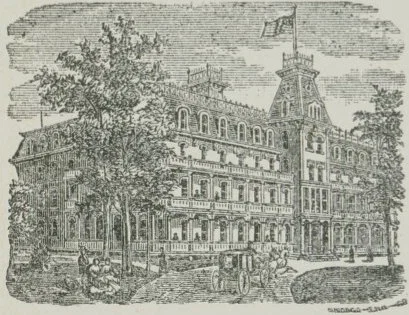
MEDICAL AND SURGICAL SANITARIUM,

Battle Creek, Michigan.
This institution, beautifully located in one of the most healthful cities of Michigan, is everywhere recognized as the

GREAT SANITARIUM OF THE WEST.

More than 4,000 patients successfully treated. The erection of new buildings and the addition of all the most approved remedial appliances known to the profession, have made it The Most Complete Institution of the Kind in America. All modern hotel conveniences furnished. Terms very reasonable.
J. H. KELLOGG, M. D., Medical Superintendent.

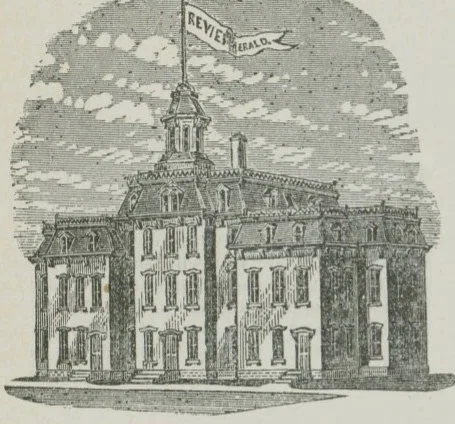
REVIEW AND HERALD PUBLISHING HOUSE.

BOOK AND JOB PRINTING,

BOOK BINDING,

Electrotyping, Stereotyping, Paper Ruling, Blank Book Manufacturing, Etc.
The largest and best equipped printing office in the State.
Orders by mail promptly attended to.
Address REVIEW AND HERALD, Battle Creek, Mich.

Companion to the Revised English New Testament

COMPANION TO THE REVISED VERSION OF THE ENGLISH NEW TESTAMENT, EXPLAINING THE Reasons for the Changes Made in the Revised Edition.

By ALEXANDER ROBERTS, D. D.,
Professor of Humanity, St. Andrew’s, and Member of the New Testament Company.
With Explanations of the Appendix to the Revised New Testament, which contains the Changes Suggested by the American Committee, but which were not assented to by the English Committee. By a Member of the American Committee of Revision, who is well acquainted with all the facts, having been connected with the work from the beginning.
Dr. Chambers, of New York, says of this book: “Many persons have expressed a desire that simultaneously with the issue of a Revised New Testament, there should appear an authentic explanation of the reasons for such changes as will be found in its pages. The work of Dr. Roberts is exactly fitted to meet this desire. Under the heads of alterations due to a revised text, and those due to a new translation, the author furnishes a clear and perspicuous statement which will give to the English reader all the light on the subject which the case admits.”
Paper, octavo size, 25c. Cloth, 16mo. 75c.
Address REVIEW & HERALD, Battle Creek, Mich., Or. PACIFIC PRESS, Oakland, Cal.

THE SIGNS OF THE TIMES.

PUBLISHED WEEKLY AT OAKLAND, CAL., FOR THE MISSIONARY SOCIETY OF SEVENTH-DAY ADVENTISTS.
A live Religious Family Paper, containing, in addition to the great variety of original articles, which make it a desirable prophetic journal. Departments devoted to Temperance, The Home Circle, News, The Missionary Work, and the Sabbath-school. Price per year, $2.00
In clubs of five or more copies to one address, to be used for missionary work, each 1.50
Address SIGNS OF THE TIMES, Oakland, Cal.

MUSIC BOOKS.

Temperance and Gospel Songs. By J. E. White. Acknowledged by competent judges to be the best book of the kind ever issued. The music is new, by our best authors. Price in board covers, 30 cents; $3.50 per dozen.
Songs for Class and School. By J. E. White and Frank M. Davis. For Singing-school, Day school, Convention, and Fireside. Nearly every piece is written specially for this book by our best authors. A new system of instruction is introduced, which is invaluable to the new teacher as well as to the old, as it maps out the work for each lesson, and tells how to teach it. 160 pp. Price in board covers, 35 cents; $3.60 per dozen. A liberal discount to teachers.
Better than Pearls. A New Collection of the best Gospel Songs, Hymns, and Tunes for use in Tent and Camp-meetings, as well as in Revival, Social, and Praise Service. By J. E. White, A. B. Oyen, and C. W. Stone.
A careful selection has been made from a vast amount of material, which renders the book of special value for the purposes indicated. BETTER THAN PEARLS contains 112 pages, the first 70 of which are devoted to gospel songs, selected with regard to merit only from the best authors of the day. The remainder of the book contains over 50 tunes and nearly 200 standard hymns for church service, selected and adapted with great care, with variety sufficient for all occasions.
CLOTH—40 cents per copy; $4 per dozen; $35 per hundred.
BOARD—the usual style of Sabbath-school Singing-books—30 cents per copy; $3 per dozen; $25 per hundred.
PAPER—25 cents per copy; $2.50 per dozen; $20 per hundred.
In ordering by mail at dozen or 50 rates, 3 cents per copy should be added for postage.
Address. Review & Herald, Battle Creek, Mich.

THE GIANT CITIES OF BASHAN, And Syria's Holy Places,

By REV. J. L. PORTER, A. M.
THIS work brings out before the reader the departed glory of the Ancient Cities of Bible Lands, their present condition and aspect, and the tribes that inhabit them, in a more interesting and vivid portrayal than any other book we have seen.
Its cheapness brings it within the reach of all, and its worth recommends it to teacher and scholar.
Price, by mail, $1.25
Continue reading: A MODEL SUPERINTENDENT,