TALMAGE tells us that “Robert Hall, the prince of the Baptist preachers, was converted at twelve years of age; Matthew Henry, the commentator, at eleven years of age; Isabella Graham, immortal in the Christian church, at ten years of age; Dr. Watts, whose hymns will be sung all down the ages, at nine years of age; and Jonathan Edwards, perhaps the mightiest intellect that the American pulpit ever produced, at seven years of age.”
In a recent sermon on “The Unpardonable Sin,” Dr. W. E. Biederwolf, a successful American evangelist, asserted that “nine tenths of all the decisions for Christ are made before the age of twenty,” and confirmed his statement in a striking way. He called upon all Christians in his audience to rise, and about two thousand did so. Those converted under twenty were told to be seated, and only about two hundred remained standing.
Those converted under thirty were then seated, and seventy-five remained on their feet. By the same method it was found that only sixteen of the two thousand were converted over forty, two over fifty, and not one over sixty. The preacher contended that, allowing for early deaths, the chances were five thousand to one against conversion after twenty, and twenty-five thousand to one against conversion after a person was thirty years of age.
Others who have made this subject a study have arrived at similar conclusions. It is in the contemplation of12such figures that we are brought to realize the immense importance of work among the young. Parents, teachers, and evangelists have a great responsibility on their hands. They have to do with the human soul in its most plastic state, and should they neglect to mold it in the image of Christ, their opportunities are forever lost. And if the children of Christian parents, under the regular influence of Christian teachers, may be neglected, how much more pitiable is the condition of the unfortunate waifs of our large cities who are subject to no such beneficent influences!—The Australian Christian.
The Work of Saving the Lost
IN all the pastor’s teaching of repentance and conversion, of obedience and holiness, this ought definitely to be his aim—to call men to come and serve God in the noble, holy, Christlike work of saving the lost, and restoring God’s kingdom on earth.—Selected.
The Little Fellow
THERE are times the work seems heavy; there are days when toil is rough,
When your grinding occupation seems like drudgery enough,
There are hours of busy planning; there are schemes to figure out;
There are grave and sober moments of anxiety and doubt.
Oftentimes you leave your business with your mind perplexed with care,
When the clouds hang dark and heavy, and ’tis gloomy everywhere;
But the sunshine comes to cheer you out of skies of deepest blue
If there’s just a little fellow waiting at the gate for you.
— Selected.
Disagreeable Things
A NOVICE, working among prickly plants, noticed how deftly the Scotch gardener handled them, and commented upon the fact. “Aye, there’s many a scratch ye get at the first,” answered the old man, “but if ye’re canny, ye shall soon learn not to grip the thorns.” It is a lesson of life as well as of gardening.
The prickly, disagreeable things are plentiful; the uncomfortable happenings, the little slights and offenses, the cross-grained tempers, and the unreasonable words, are everywhere pushing themselves into unpleasant notice, but it is not necessary to “grip” them. There are those who do that all their days, and go about in a continual state of hurt, soreness, and complaint. He who is “canny” will learn to put them aside with light touch, and for the most part avoid their sting. They are not worth taking seriously enough to bring torn hands or heart.—Selected.
C. W. IRWIN
By C. W. IRWIN
Ceylon
C. W. IRWIN
AFTER a long and uneventful trip of nine days from West Australia, we reached Ceylon. As we approached the harbor, we could see the palm trees along the ridges. Soon the pilot came out and guided us in. There is no natural harbor at Colombo, but a fairly good anchorage has been provided by the construction of a good breakwater.
There are three and one-half million people in Ceylon: two and one-half million Cingalese, and nearly one million Tamils. There are a few thousands of Europeans and thirteen thousand aborigines, which would compare with the mound-builders of North America or the Druid worshipers of Great Britain. Ceylon is a little smaller than Tasmania, its area being twenty-five thousand square miles.
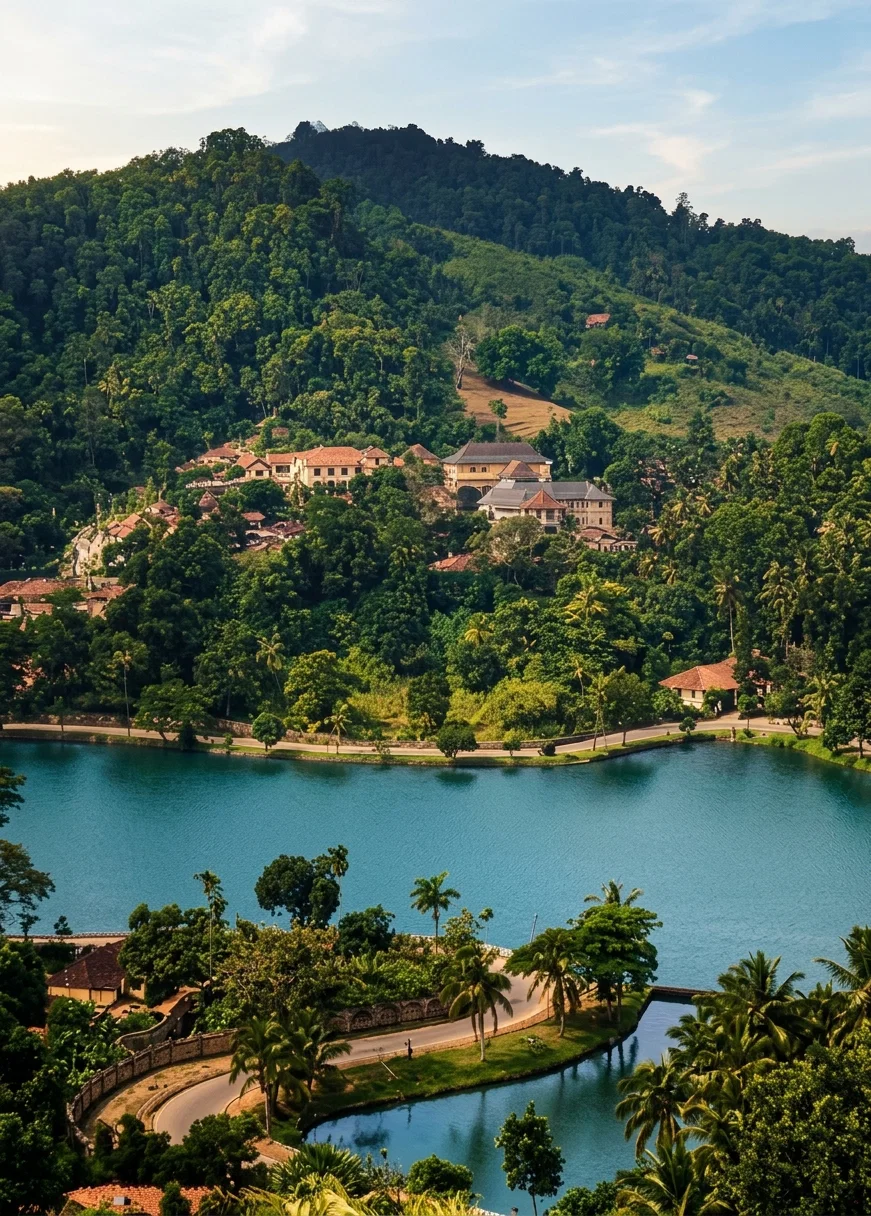
A VIEW IN KANDY, CEYLON
In Ceylon we see the palm, breadfruit, bananas, jack-fruit, etc., but we are especially interested in the people and their customs. The men are dressed in all sorts of ways, varying from a loincloth to a full European dress. The women wear a sort of blouse and skirt. They are very fond of jewelry, which consists of rings, bracelets, necklaces, earrings, nose-rings, etc. Sometimes the lobes of the ears are so distended by the weight of the earrings that one could thrust his thumb through the opening.
Again we see ears that have been pierced at frequent intervals right around the margin of the ear, and perhaps a dozen rings have been inserted. Some have pierced the side of the nostril and inserted jewels. The finger-rings, bracelets, and necklaces are quite similar to those worn by white natives in so-called civilized lands.
There are swarms of beggars in Colombo. Some of them are really pathetic cases. We were pleased to meet a group of seventy-five schoolchildren walking along the road accompanied by their teacher, who was able to speak English. Their general attitude, decency, and cleanliness of dress, and respectful manner, and the entire absence of the begging spirit were a striking testimony to the value of education for native people. As soon as we came to the parting of the ways, they all, led by their teacher, gave us a parting salutation. Their schoolhouse consists of an airy building supported by pillars, with no enclosure other than a low wall.
Buddhism in Ceylon
We saw a man clothed in a yellow robe carrying an umbrella over himself and walking with solemn mien. We were told he was a Buddhist priest. We paid a visit to the principal temple in the vicinity. It is enclosed by a white wall, and everything in and about the temple is kept in good order. Just as we approached the door we met the devout worshipers coming out. We went no farther than the threshold, as we did not want to do violence to their sense of propriety by profaning their temple by our presence. We feel that so long as they are in this condition, we should respect their convictions, although we pity their blindness.
From our position at the doorway we could see a large image of Buddha sitting in a cross-legged attitude on an elevated platform, and in front of him tapers were burning. Below the tapers were tables covered with bouquets, which evidently had been taken there for the pleasure of Buddha.
Here and there on the tables were bowls for the reception of donations to various charitable enterprises. The temple13floor is paved with beautiful tiles set in nice designs, and the whole interior is beautifully finished.
Buddhism was introduced into Ceylon about 300 B. C., by a Buddhist missionary from the mainland of India. “As the monarch had become an ardent supporter of the new faith, Buddhism rapidly gained ground, and it was not long before the whole population was converted to its new tenets. In contrast to Java, where it was soon supplanted by the teachings of Mohammed, here Buddhism, though it experienced many reverses, never retrogressed permanently, and today probably numbers as many adherents on the island as ever it did.”
Ceylon contains the remains of great cities and immense temples of wonderful architecture, which, if restored, would rival the temples of any other heathen nation of antiquity. There are Mohammedan mosques and Hindu temples, which represent the religions of invaders or immigrants from India. But these are conspicuously in the minority as compared with the evidences of Buddhist worship.
A Needy Field
So far as we can determine, there is not a single representative of the third angel's message to be found in the whole island. Our observations would lead us to suppose that no Christian denomination has as yet done much for this people. It is true that some work has been done by our people, but every one of the three and a half million inhabitants must be warned of the second coming of Christ, for his commission is, “Go ye into all the world, and preach the gospel to every creature.”
Many of the objectionable traits of this people are due to the fact that they do not have the gospel of Jesus Christ. In order for them to have this message there must be messengers. When one sees with his own eyes the millions of people who are still in heathen darkness and superstition, he begins to wonder how it is possible for all these people to hear this message in this generation: but we turn to the book of Jonah and learn how one man warned a great city in a few days' time; and when we consider the promise that God will cut short his work in righteousness, and that with God all things are possible, we begin to see by the eye of faith how this work will be done in a very brief space of time. This thought cheers our hearts.
Colombo.
The Boy Who Does Good
By O. W. Holmes
You hear that boy laughing? You think
he’s all fun,
But the angels laugh, too, at the good
he has done;
The children laugh loud as they troop to
his call,
And the poor man that knows him laughs
loudest of all.
— O. W. Holmes.
The Theater
THE following question and answer appeared in a recent number of the Christian Endeavor World. The answer is given by Mrs. G. R. Alden, popularly known as “Pansy:” —
“Will you give several reasons why a Christian should not attend the theater?”
“In compliance with this request, let me quote a few sentences from several authors:—
“Whatever may have been the character of actors and actresses when they went on the stage, it is undeniable that in multitudes of cases the stage has worked its degeneration. How could it be otherwise? Palmer, the great theater manager, says: ‘The chief themes of the theater are now, as they ever have been, the passions of men, ambition leading to murder, jealousy leading to murder, lust leading to adultery and death, anger leading to madness.’ Could any man go through all this, entering with real feelings into these acts, without being affected by them?”
“So long as the stage is as unclean as it is, and acting involves, as it constantly does, the simulation of the basest passions and emotions, and this even in good plays, it is almost impossible for a man to support it at all without in a real sense lending his support to all.”
“When a resolve or a fine glow of feeling is allowed to evaporate without bearing practical fruit, it is worse than a chance lost; it works so as positively to hinder future resolutions and emotions taking the normal path.”
“Henry Irving committed at least fifteen thousand murders on the stage. Miss Ada Cavandish was betrayed, deserted, or abducted fifty-six hundred times. And true acting consists in entering into the spirit of the murderer, the betrayer, etc.”
“What can not be done without a tendency to moral harm can not be seen without a tendency to moral harm.”
T. E. BOWEN
By T. E. Bowen
Madagascar
T. E. BOWEN
This large island on the eastern shores of the great Dark Continent is one of the places where the third angel's message has not yet gained a foothold. As we have no missionaries to report for us from this interesting island field, let us hear from others who have been there and learned of its history both political and religious. The Lord certainly must have some among the Malagasy people of more than two million souls who shall be gathered out to be numbered with the remnant commandment-keepers.
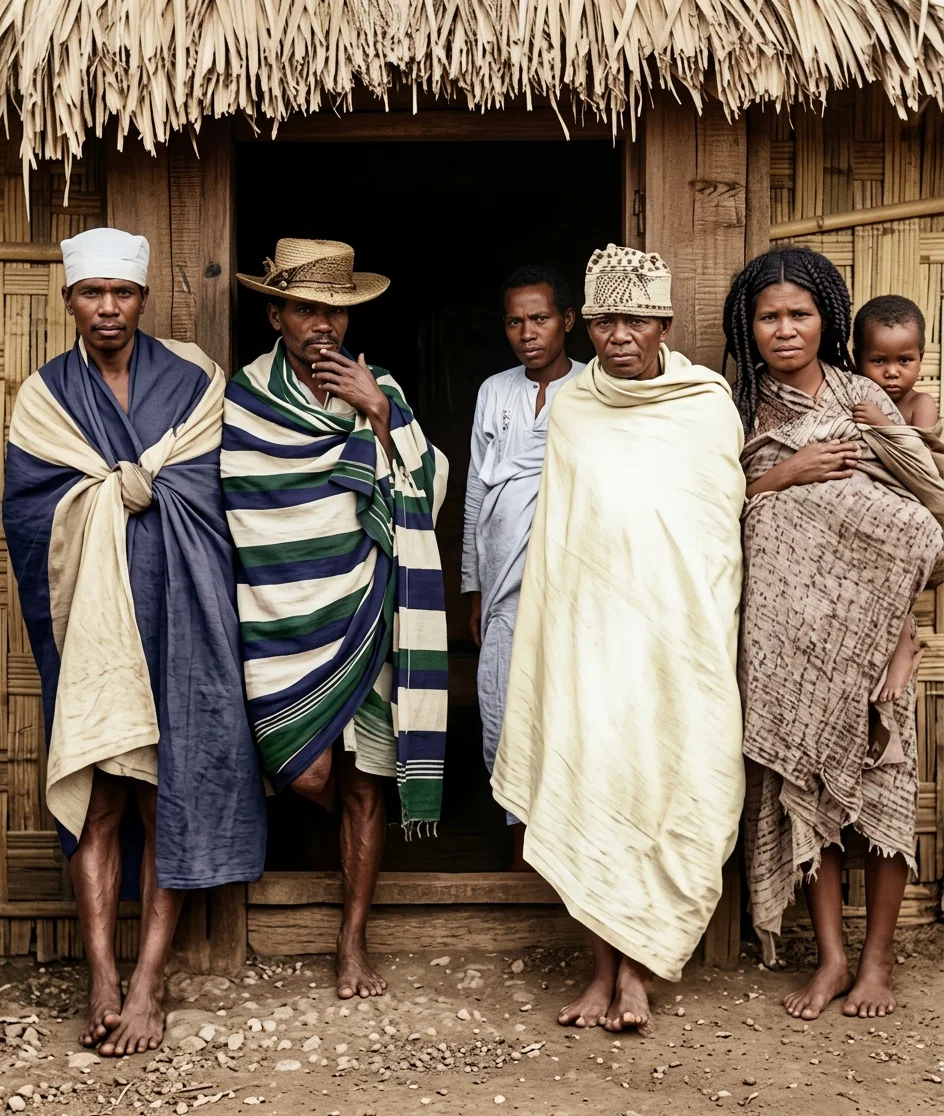
A GROUP OF MALAGASY
From the August number of the Bible in All the World we glean the following interesting facts concerning the history of gospel work in Madagascar:—
‘This great African island is almost one thousand miles long, with an average width of two hundred fifty miles, and has an area nearly four times as great as England and Wales. The plains round the coast are often belted with dense forests, and the elevated inland regions rise into mountains nine thousand feet high. Madagascar seems to have been originally peopled from the Malayan and Melanesian archipelagoes, with whose peoples the Malagasy show close affinity, while they have little in common with any African race. The various Malagasy tribes, numbering about two million seven hundred ten thousand, all speak what is practically one language, though great dialectic differences exist. The important Hova tribe, which numbers eight hundred fifty thousand, has its home in the central province of Imerina, and at the end of the eighteenth century had gradually made itself dominant in the island.
‘As early as the year 1820 mission work was begun in Madagascar by the pioneers of the London Missionary Society, who reduced the language to a written form, founded a number of schools, gathered converts, and made a version of the Malagasy Bible, which was published by the aid of our society. From 1828 till 1861, however, a severe persecution took place, in which numbers of Malagasy Christians were martyred, and European teachers and traders excluded. The country was reopened in 1861, and before many years the native rulers accepted Christianity. Other missions took part in evangelizing the people. The Society for the Propagation of the Gospel commenced work in 1864, the Norwegian Lutheran Mission in 1866, and the Friends' Foreign Missionary Association in 1867. In 1885, as a result of hostilities with France, a French resident was installed at the capital. In 1895-96 the French took possession of the island, the queen was dethroned by General Gallieni, and Madagascar was proclaimed a French colony. At that time the Christian population was estimated at four hundred fifty thousand Protestants and fifty thousand Roman Catholics.’
Under French rule missionary effort in Madagascar has suffered many reverses. Aside from the administration of General Gallieni, the governor-general for several years, who regarded with kindly interest, if not favor, the work of the missions, the government has assumed an attitude of antagonism. By forbidding any schools to be carried on any longer in churches, where for many years past almost all primary schools have been taught, about three fourths of the mission schools have been closed, and thus many thousands of children deprived of any education whatever, the few official schools being utterly insufficient for the requirements. The Malagasy Y. M. C. A. has been summarily dissolved. The greatest difficulties are thrown in the way of getting permission to build new churches or to rebuild old ones, the governor-general plainly declaring that there are far too many churches already in Madagascar,—where two thirds of the population are still heathen,—and that he will allow no churches to be built where there is no European to superintend them. This strikes a severe blow at native Christian pastors and teachers, on whom the evangelization of the country must largely depend.
‘Toward the close of 1907 and at the beginning of 1908 the policy of the government was one of suppression; consequently, work was being closed down on every side for any trivial reason, or for no reason at all. Many of the officials in the country districts, knowing that their action would be looked upon with favor at headquarters, systematically opposed all forms of missionary activity; and this spirit of antagonism was immediately caught up by not a few of their obsequious agents. Small wonder can be expressed at the discouraging effect this had upon those who thought that the labor of past years was seriously imperiled. . . . This year has witnessed some change for the better—at least in the central provinces. Although some vexatious restrictions have now been removed, even the few Christian schools permitted by the government are still heavily penalized, and the scholars remain under serious disadvantages as compared with those from the official schools.’
‘Meantime the Bible society has not been idle. For many years past it has14supplied all the Protestant missions at work in Madagascar with all the editions of the Scriptures which they need for their work, on terms which entail no charge whatever on the missions, but involve a heavy loss on the society. In face of the antichristian attitude of the French authorities, it is not surprising to learn that the circulation of the Scriptures in Madagascar has declined from 17,363 copies in 1906 and 15,193 in 1907 to 9,786 in 1908. At the united request of all the Protestant missions on the island, our committee resolved early in 1909 to employ twenty-four native Christian colporteurs in Madagascar, who will sell the Scriptures in the markets and villages under the direction of the missions themselves. One generous friend in England has undertaken to support twelve of these colporteurs.’
Thus the way is being prepared for the last message to go to these people. Some one will be raised up by the Lord to do the work, which ought not to be longer delayed.
Takoma Park, D. C.
Mission Work in Portuguese East Africa
ELDER R. C. PORTER writes that T. J. Gibson, who has been connected with the Cape Colony Conference office as secretary and treasurer, and his wife have decided to go to Portuguese East Africa to open up mission work there. They go as self-supporting missionaries, but with the hearty moral support of the South African Union Conference committee. If the work demands it, other helpers will be sent to connect with them later. Thus field after field is being entered. Soon the work will be finished, and Jesus will come.
The Meeting at Friedensau
By Louis Richard Conradi
L. R. CONRADI
Among the summer meetings in the European field none was of greater importance than that held at Friedensau. The German Union Conference is not only the most populous (with one hundred forty million people), but it is one of the strongest in membership and in finance. Eleven years ago its first conference was organized, and by the end of this present year, it will contain, including the two union districts, thirteen local conferences. In 1901 the German Union Conference was organized. At that time Russia was a part of its territory. By the beginning of 1910 there will be three union conferences to take the place of the one that was organized eight years ago; namely, the Russian, the East German Union Conference, and the West German Union Conference, with a membership of probably more than thirteen thousand. Although we have had our German Union Conference sessions annually at Friedensau, yet the attendance this year was greater than at any time in the past. As we called for a show of hands on the part of those who had come into the truth during the year, many quickly responded. During the year over two thousand had been received into church-membership, and the tithe had increased twenty-four thousand dollars.
In view of this rapid growth, and of the fact that if we count the mission fields, there are some twenty organizations included within the territory of the German Union Conference, it was thought best to proceed to a redivision of the territory. When we cut off the Russian Union Conference two years ago, the membership of the whole was about ten thousand. By the end of this year it will be about the same, while the finances during this time have nearly doubled. As both of the proposed unions will be fully able to support themselves from their tithe, we saw no reason for delay in making a division. It is possible that the East German Union Conference may have a few hundred members more than the West German Union Conference, yet the proposed division is just about as equally made as it was possible to make it. Each union conference will have about five thousand members, and an annual tithe of about fifty thousand dollars.
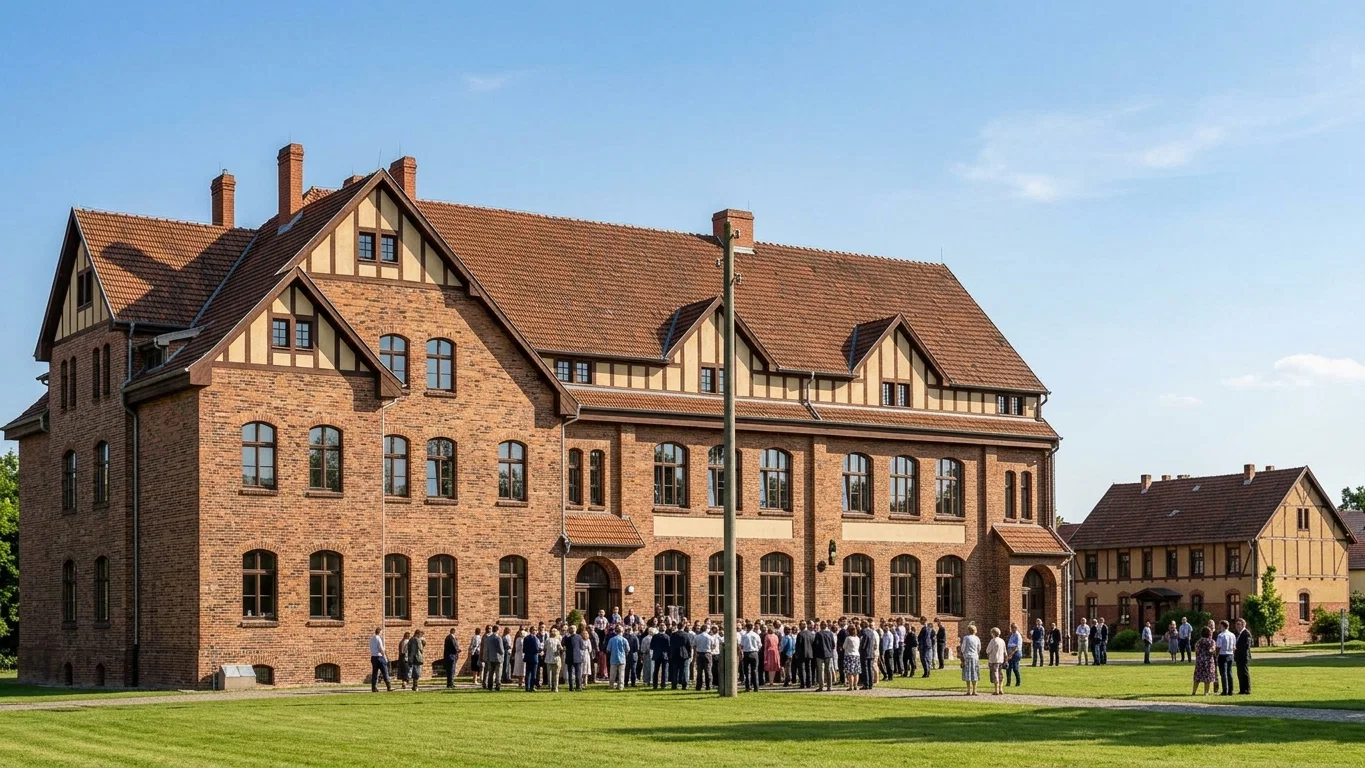
NEW SCHOOL BUILDING AT FRIEDENSAU
Owing to the great size of the territory, and the complexity of its interests so far as the institutions are concerned, we felt that we needed the especial blessing of the Lord to enable us to present a plan of division that would satisfy the interests of the cause in every way, and meet with the approval of the people as a whole. Our past experience has demonstrated to our satisfaction that the success of the work of the Lord does not depend on the multiplication of institutions, but rather upon the exertions of a ministry filled by the Spirit of God, that will bring many souls to Christ; and that institutions will only be beneficial so long as they are added in due proportion to the development of a suitable constituency of believers who will support them; and we sincerely believe that the Lord has set his seal to this policy. The Hamburg Publishing House, which is supplying literature in eighteen different languages, to over three hundred million people, has been able not only to do as much missionary work as any house we have, but it stands free from debt to-day. The Friedensau school, which has been supplying laborers to the entire field, has been able to put up and pay for its main building and dormitories, costing about forty thousand dollars, and it now has half of the money to pay for the much-needed second building that was dedicated at the conference, and which cost about twenty thousand dollars. The Old People's Home (erected at a cost of twenty-five thousand dollars) is also free from debt. On the other hand, the health work, with the sanitarium, has quite a little debt to be lifted, before it will stand free.
In view of the facts alluded to, it was the mind of the brethren in general that there should be no multiplying of institutions connected with the division of the German Union Conference. It was therefore arranged that the Hamburg House be located in the West German Union field, and that the Friedensau institutions be in the East German Union Conference, and that a committee of ten members be chosen to look after these institutions. This board of trustees is made up of the two union conference presidents, and the two vice-presidents of the German union conferences, the Russian Union Conference president, the principal of the Friedensau school, the business manager at Friedensau, the Friedensau Sanitarium medical superintendent, the manager of the Hamburg Publishing House, and the European vice-president of the General Conference.
Hamburg-Altona was left as the union district for the West German Union Conference, and the East German Union Conference enlarged its union district of Friedensau by the addition of Berlin, thus giving them a good field for the training of their students in practical work.
The institutions are thus to be kept as common property for the use of the union conferences, while the funds on hand are to be equally divided, and the tent inventory goes to the East German Union Conference, and the two ship mission inventories, in Hamburg and Rotterdam, to the West German Union Conference.
That the Lord was guiding in the plans proposed was best seen by the unanimous and hearty vote of all parties concerned, and in the unanimous support accorded in the selection of officers.
From the very beginning, considerable time was given to the consideration of the religious interests of the camp. On the first Sabbath over sixty new converts came forward, and more than forty were baptized during the meeting, while a number of others waited until their return to the home churches for their baptism.15
The applications for admission into the Friedensau school were more numerous than ever. About ninety persons offered themselves as students, and about sixty were received.
The new school building shown in the cut was dedicated on the twenty-eighth of July. You will see that the building as it stands is not complete—there being only one wing and the main part. The main part supplies much-needed additional class-rooms, library, music-room, etc., while the wing gives five dwellings for the teachers. As it stands, it cost about twenty thousand dollars, and nearly one fourth of the sum was raised on the grounds. The other wing is to contain room for fifty students, and it is not to be erected until the present quarters at Friedensau are too small.
As so much of our land at Friedensau is now occupied by buildings, and the number of students and employees is constantly increasing, it was voted to buy another fifty acres of land about a mile from our Friedensau buildings, and not very far from the second parcel of land which we purchased in the Friedensau estate when the property was first bought. This will give us about one hundred forty acres of land, all told. The owner of the property we are just now securing went into bankruptcy, and we learned that we could buy this forty acres, with its buildings, for five thousand dollars—really the value of the buildings themselves.
Another special feature of the meeting was the missionary spirit that prevailed in it. Liberal offerings were given to missions, and best of all, quite a number of young people dedicated themselves to service in foreign lands. Although the German Union Conference itself has a population of over one hundred forty million, yet when the call was made for men, the home fields were willing to give of their best. Thus Elder E. Frauchiger, who has been connected with the work in the German Union Conference ever since 1886, accepted a call to take charge of the Turkish Mission. Brother Scior is to go to Turkey, and learn the Greek language. Brother Edgar Hartmann is to go to Egypt. One or two additional nurses will have to be sent to Syria. Several have offered their services. Brother Domnick will go to German East Africa.
One very impressive scene was the ordination of Brethren Kotz and Seefried. Brother Kotz had been laboring faithfully for nearly five years in Africa. He is now home on a furlough, and to help us get out literature in the African language. The Lord has truly blessed his work. Brother Seefried is a native of Macedonia. He was born of German parentage at Uskub. His father worked in Macedonia and Albania many years for the British Bible Society, and had dedicated his son to the service of God from his youth. After Brother Seefried had finished his work in the Friedensau school, he labored faithfully, and with success, in the propagation of the message a number of years, and now he, and his wife, who is a graduate nurse of Friedensau, will go to work among the Rumanians of Hungary. Brother Seefried is somewhat acquainted with the Rumanian language.
There were not less than forty recommendations made by the committee on the distribution of labor, and these calls were willingly responded to.
All were pleased to have the privilege of greeting Brethren O. A. Olsen and J. C. Raft at this meeting; but that which rejoiced our hearts most of all was the presence of the Spirit of God, who wrought for the conversion of souls and for the unity of his people. To him be all the glory.
Hamburg.
Prayer
By A. W. Bartlett
DANIEL through prayer became a man of power. The secret of his lifelong, steadfast integrity is found in his habit of prayer. That was the discipline that made him what he was. “I set my face unto the Lord God, to seek by prayer and supplications, with fasting, and sackcloth, and ashes.” Daniel was well known in heaven, and greatly loved there. His constant intercourse with God had made him a man with whom heaven delighted to co-operate; and when Daniel began to pray, immediately the angels were at work to fulfil his heart’s desire.
It was in prayer that Jacob found power with God and with men. Prayer is the unfailing key to life’s problems. Look at the situation that confronted Ezra. Among the people returned from Babylon to rebuild the temple and city of Jerusalem, he found great numbers, even among the priests, who had fallen into the old fatal sin of marrying strange wives. The people were corrupted in their very homes, and how could they serve the Lord in purity? Yet who would venture to separate the men and their wives? An attempt to do so would bring Ezra into conflict with a stubborn and immovable multitude. In his hopeless perplexity, Ezra cried unto the Lord; and while he lay on his face, pleading for divine help, lo, the situation miraculously changed. When Ezra finished his prayer, he found about him the very ones who had taken the strange wives, all of them weeping sorely, confessing their sin, and anxious to retrace the wrong steps they had taken. It was prayer that had wrought the wonderful change. Prayer opens a way when there is none. Prayer makes it possible for the Omnipotent to work. Prayer makes weak and erring man a prince of heaven. — A. W. Bartlett.
The Desire to Do Something Larger
SAD will be the day for every man when he becomes absolutely contented with the life that he is living, with the thoughts that he is thinking, with the deeds that he is doing, when there is not forever beating at the doors of his soul some great desire to do something larger, which he knows that he was meant and made to do because he is still the child of God.— Phillips Brooks.
Harvest Ingathering Campaign for Missions
By Editor
“Thy people offer themselves willingly in the day of thy power, in holy array.” Ps. 110: 3, A. R. V.
Special Campaign Week, Nov. 1 - 6.
Full Campaign Period, Nov. 1 to Dec. 31.
Notes
THE solicitors’ cards and printed canvasses will be sent direct from headquarters, accompanying each supply of papers.
THE pages for the Missions number of the REVIEW are now made up. It will be a beautiful and interesting issue, of thirty-two pages, reviewing the world-wide field of our work.
OUR isolated brethren and sisters are becoming deeply interested in the campaign. Most of their orders call for double the number of the special REVIEW they used last year.
WE trust that every one of our book and periodical agents is planning, even now, to consecrate his services to the cause of foreign missions during campaign week, November 1-6.
ONE by one our conferences are beginning to send in their orders for the special Missions number of the REVIEW. The first order received from the Virginia Conference called for nearly five thousand copies. This is a good beginning.
THE following letter, just received from a brother in Tennessee, shows the general sentiment of our brethren and sisters with reference to this important work: “Please send me two hundred of the Missions number of the REVIEW as soon as convenient. Last year I took one hundred copies. They said at the office that I did very well in the last campaign, but this year my youngest daughter (a very successful canvasser) will accompany me, and I shall perhaps need more copies.” A. J. S. B.
How to Order Supplies
By A. J. S. Bourdeau
IN ordering the special Missions number of the REVIEW, campaign supplies, etc., kindly bear in mind these three suggestions:—
1. Send all orders to the secretary of your conference tract society.
2. Where there is no conference tract society, or in case the tract society address is unknown, order direct from A. J. S. Bourdeau, Takoma Park, Washington, D. C.
3. Give us as much time as possible to fill your orders.
Let all unite in making the present campaign the best ever known in the annals of Seventh-day Adventist missionary enterprises.