—We pay $1,000,000 a year to the examining surgeons in the pension service.
—Owing to his declining mental faculties, the venerable historian, George Bancroft, has entirely ceased his literary work.
—St. Peter’s Catholic church at Mansfield, Ohio, was destroyed by fire Tuesday. The loss, it is said, will reach $40,000.
—Fire at Smithfield, N. C., Sunday afternoon, almost destroyed the town, a violent wind-storm favoring the flames. The losses exceed $100,000.
—The resolution for a prohibition amendment to the Constitution was defeated Wednesday in the Illinois House—seventy-nine to forty-nine—not the necessary two-thirds vote.
—It is reported from the lumber woods of Upper Michigan that over 1,000,000,000 logs are banked, and ready to be floated to the mills, but cannot be moved, owing to the lack of water in the streams.
—Two cases of death by hydrophobia have occurred near Coal City, Ill., within the past week, both victims being young men. They were bitten in February, and it is stated that several other persons were bitten at the same time.
—Charges have been made against the Ohio State Board of Pardons to the effect that some members of the Board have been doing a brokerage business in pardons. There is talk of abolishing the Board or completely reorganizing it.
—Governor Fifer, of Illinois, issued a proclamation Monday, designating April 30 as a day of thanksgiving and patriotic instruction, in honor of the one-hundredth anniversary of the inauguration of George Washington as the first President of the United States.
—Fire at Savannah, Ga., Tuesday afternoon, destroyed the Savannah Cotton Mills and a row of eight tenement houses. The loss on the mill and machinery is $100,000, with $49,000 insurance, while the loss on the tenements is about $3,000, with but little insurance.
—The report of the State Board of Agriculture of Massachusetts notes the great growth of the butter business in the State, and speaks particularly of the development of the co-operative system, twenty-six such institutions having made during the year 2,000,000 pounds.255
—A census of Baltimore just completed gives that city a population of 500,000.
—A loss of $500,000 was caused by the burning of the Hubbard property at Pittsburg, Pa., Sunday afternoon.
—The burning of Buchanan & Lyell’s jute mills at Brooklyn, L. I., early Friday morning, occasioned a loss of $400,000.
—In the Michigan House Thursday a measure to prohibit the manufacture and sale of cigarettes was passed by a vote of 74 to 3.
—Much damage was done to buildings and crops in parts of Pennsylvania, Ohio, and Maryland, by wind, hail, and thunder storms last Friday.
—A street-car strike began Thursday at Minneapolis, and extended the next day to St. Paul, and all the men in the latter city have left work, except those employed on the cable line.
—The house of W. P. Word, a carpenter living in Rabun County, Ga., was burned Wednesday night, and his entire family, consisting of a wife and five children, perished in the flames.
—Mrs. Elizabeth Smith, aged eighty-nine years, recently traveled on foot from Wheeling, W. Va., to the residence of her sons in Worcester, Mass., sleeping at farm houses and police stations.
—A visit of “white caps” to the residence of Mr. Lansford, a road supervisor in Dubois County, Ind., early Thursday morning, resulted in a free discharge of fire-arms by the latter, and the retreat of the marauders, five of their number being wounded.
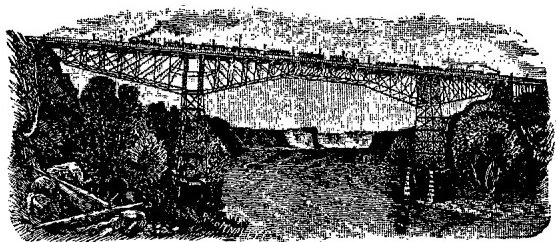
—A fool-hardy athlete named Meredith Stanley, on Thursday accomplished the feat of jumping from the high bridge on the Cincinnati Southern Railway into the Kentucky River beneath, a distance of 285 feet, sustaining only slight injuries. The bridge is said to be, with one exception, the highest in the world.
—The first Arbor Day was observed in Nebraska seventeen years ago, when 12,000,000 trees were planted. There are now growing in the State 605,000,000 trees. In other States many millions of trees have been planted, and at the present time thirty-four States observe an Arbor Day, many of them during the present month.
FOREIGN.
—Japan has 30,000 schools and one large university.
—A dispatch from the city of Mexico says work on the Tehuantepec Railroad has begun.
—An explosion Wednesday in the Erin Colliery, at Castrop, Australia, caused the death of twenty-five persons.
—M. Michol Eugene Chevreul, the distinguished French chemist and centenarian, is dead. He was born in 1786.
—The empress of Austria is in a very precarious condition, with rheumatism. She has abandoned all thoughts of a visit to the United States.
—The officials in charge of the Eiffel Tower at Paris say that from the top of the tower a view can be obtained to a distance of forty miles.
—The Austrian colony at Buenos Ayres has sent a golden wreath valued at 10,000 francs to be placed on the tomb of Rudolph, the suicided crown prince.
—A dispatch from Zanzibar to the Independence Belge says the rumor that Stanley and Emin Pasha were marching in the direction of Zanzibar was an Arab invention.
—Dispatches from India say that 15,000 persons have been rendered homeless by a great fire at Surat. To add to the prevailing distress, cholera has broken out in the town.
—Advices from Western India announce the failure of the pearl fisheries, owing to the prevalence of cholera. The failure involves a loss to the Government of four lacs of rupees.
—The steamship “City of Chester,” which arrived at Queenstown April 12, reported having passed the Danish steamer “Danmark,” of the Thingvalla Line, in mid-ocean, deserted and apparently on the point of sinking. She carried between 700 and 800 people, 650 of whom were passengers. Hopes are entertained that most of these were rescued.
—A proposal from Prince Bismarck, that the German and United States governments be represented at Samoa by only one vessel each, has been agreed to by Secretary Blaine, and the gunboat “Alert,” now at Honolulu, will be ordered to that station. This agreement is to be observed pending the expected settlement of the Samoan difficulty by the coming Berlin conference.
—Scotland seems likely to be granted a form of home rule. In the House of Commons, Monday night, April 8, a bill was introduced to that effect by the Lord Advocate. The bill creates county councils, the members of which are to be elected by householders. All boroughs with a population of less than 7,000 will be merged into counties; the others will be self-governed. The powers of the councils extend to private bill legislation. The right of legislating on private-bills has hitherto been vested in Parliament. The functions of the councils are otherwise similar to those of the English councils.
RELIGIOUS.
—There are in Africa at the present time thirteen missions,—six British, four German, and three French.
—It is said that in the city of New York there are upward of fifty able Methodist preachers who are paid less than $500 per year.
—The petition of the Ministerial Association of Canada to the Government, to have the canals closed on Sunday, is opposed by the Corn Exchange Association.
—Bishop Foster of the M. E. Church has aroused some indignation among high-salaried clergymen by declaring that no preacher is worth $10,000 a year.
—The Methodist ministers’ meeting of Philadelphia has voted to make prohibition the topic of pulpit discussion until after June 18, the date of the vote on the proposed Constitutional amendment in Pennsylvania.
—The Rev. Dr. Morgan Dix, rector of Trinity church, New York, carried the rigors of the Lenten season to such an extent that on a recent Sunday he was overcome by vertigo, and was unable to conduct the services.
—One of the greatest hindrances to the gospel in Ceylon is said to be “the coquetting with Buddhism which has become fashionable among Europeans.” So the coquetting of the church with the world is one of the greatest hindrances to the gospel in civilized lands. In Ceylon, Buddha’s birthday is now a Government holiday.
—The African Methodist Church, which has not a white man among its members, neither maintains any organic relation with church organizations of the whites, reports a membership of 460,000, with 12,000 places of worship and 10,000 ministers; has 15,000 Sabbath-schools, supports its own denominational papers, has missions in the West Indies, Mexico, and Africa, and its reported annual church contributions average more than $2,000,000.
OLD TESTAMENT HISTORY.
LESSON 17.—OFFERINGS FOR SIN.
(Sabbath, April 27, 1889.)
INTRODUCTION.—This lesson considers briefly the use of the various articles of furniture pertaining to the tabernacle, described in the preceding lesson.
Questions, with Scripture Texts, and Notes.
1. What has God represented himself as most willing to do?
“Let the wicked forsake his way, and the unrighteous man his thoughts: and let him return unto the Lord, and he will have mercy upon him; and to our God, for he will abundantly pardon.” Isa. 55:7.
2. In what does he delight?
“Who is a God like unto thee, that pardoneth iniquity, and passeth by the transgression of the remnant of his heritage? he retaineth not his anger forever, because he delighteth in mercy.” Micah 7:18.
3. How great is his mercy?
“For as the heaven is high above the earth, so great is his mercy toward them that fear him.” Ps. 103:11.
4. What will he do for our iniquities? and where will he put them?
“He will turn again, he will have compassion upon us; he will subdue our iniquities; and thou wilt cast all their sins into the depths of the sea.” Micah 7:19.
5. How far does he remove our transgressions from us, if we but repent?
“As far as the east is from the west, so far hath he removed our transgressions from us.” Ps. 103:12.
6. What assurance have we of all this?
“What shall we then say to these things? If God be for us, who can be against us? He that spared not his own Son, but delivered him up for us all, how shall he not with him also freely give us all things?” Rom. 8:31, 32.
7. What is it that cleanses from sin?
“The next day John seeth Jesus coming unto him, and saith, Behold the Lamb of God, which taketh away the sin of the world.” John 1:29.
“But if we walk in the light, as he is in the light, we have fellowship one with another, and the blood of Jesus Christ his Son cleanseth us from all sin.” 1 John 1:7.
8. Yet what were the Israelites required to do when they committed sin?
“And if any soul sin through ignorance, then he shall bring a she-goat of the first year for a sin-offering. And the priest shall make an atonement for the soul that sinneth ignorantly, when he sinneth by ignorance before the Lord, to make an atonement for him; and it shall be forgiven him.” Num. 15:27, 28.
9. Tell the particulars of this sin-offering.
“And he shall lay his hand upon the head of the sin-offering, and slay the sin-offering in the place of the burnt-offering. And the priest shall take of the blood thereof with his finger, and put it upon the horns of the altar of burnt-offering, and shall pour out all the blood thereof at the bottom of the altar. And he shall take away all the fat thereof, as the fat is taken away from off the sacrifice of peace-offerings; and the priest shall burn it upon the altar for a sweet savor unto the Lord; and the priest shall make an atonement for him, and it shall be forgiven him.” Lev. 4:29–31.
10. In case the entire offering was burnt, what was done with the blood?
“And the priest that is anointed shall take of the bullock’s blood, and bring it to the tabernacle of the congregation: and the priest shall dip his finger in the blood, and sprinkle of the blood seven times before the Lord, before the vail of the sanctuary. And the priest shall put some of the blood upon the horns of the altar of sweet incense before the Lord, which is in the tabernacle of the congregation; and shall pour all the blood of the bullock at the bottom of the altar of the burnt-offering, which is at the door of the tabernacle of the congregation.” “And the skin of the bullock, and all his flesh, with his head, and with his legs, and his inwards, and his dung, even the whole bullock shall he carry forth without the camp unto a clean place, where the ashes are poured out, and burn him on the wood with fire: where the ashes are poured out shall he be burnt.” Lev. 4:5–7, 11, 12.
11. What is said of the blood?
“For the life of the flesh is in the blood: and I have given it to you upon the altar to make an atonement for your souls: for it is the blood that maketh an atonement for the soul.” Lev. 17:11, last part.
12. When only the fat of the sin-offering was burnt, what was done with the flesh?
“The priest that offereth it for sin shall eat it: in the holy place shall it be eaten, in the court of the tabernacle of the congregation.” “And no sin-offering, whereof any of the blood is brought into the tabernacle of the congregation to reconcile withal in the holy place, shall be eaten: it shall be burnt in the fire.” Lev. 6:26, 30.
13. In this case, what was the flesh considered as bearing into the sanctuary?
“And Moses diligently sought the goat of the sin-offering, and, behold, it was burnt: and he was angry with Eleazar and Ithamar, the sons of Aaron which were left alive, saying, Wherefore have ye not eaten the sin-offering in the holy place, seeing it is most holy, and God hath given it you to bear the iniquity of the congregation, to make atonement for them before the Lord?” Lev. 10:16, 17.
14. Was there any power in these offerings to cleanse from sin?
“For the law having a shadow of good things to come, and not the very image of the things, can never with those sacrifices which they offered year by year continually make the comers thereunto perfect.” “For it is not possible that the blood of bulls and of goats should take away sins.” Heb. 10:1, 4.
15. Yet were not the people actually and fully pardoned when they made these offerings?
“And the priest shall make an atonement for the soul that sinneth ignorantly, when he sinneth by ignorance before the Lord, to make an atonement for him; and it shall be forgiven him.” Num. 15:28; see also Lev. 4, noting especially verses 20, 26, 31, 35.
16. Then what must have been the significance of these offerings? Ans.—They represented the death of Christ, “who his own self bare our sins in his body on the tree, that we, being dead to sins, should live unto righteousness” (1 Peter 2:24), by whose stripes we are healed. God’s promise makes future things as real as though they had been already performed, and so the blood of Christ was as powerful to cleanse from sin in the days of Moses as it is now. The sin-offerings that the people brought, simply showed their faith that the Lord had laid upon Jesus the iniquity of us all, and that there is cleansing in his blood. It was by faith that all sacrifices that were of any value were made. Heb. 11:4. It was faith that made the people whole in those days, as well as in the days of Christ, or at the present time; and without faith it was as impossible to please God then as it is now.
17. If there was not true repentance, would any sacrifice avail?
“If I regard iniquity in my heart, the Lord will not hear me.” Ps. 66:18.
18. What does the Lord require of us?
“For I desired mercy, and not sacrifice; and the knowledge of God more than burnt-offerings.” Hosea 6:6.
“Wherewith shall I come before the Lord, and bow myself before the high God? shall I come before him with burnt-offerings, with calves of a year old? Will the Lord be pleased with thousands of rams, or with ten thousands of rivers of oil? shall I give my first-born for my transgression, the fruit of my body for the sin of my soul? He hath showed thee, O man, what is good; and what doth the Lord require of thee, but to do justly, and to love mercy, and to walk humbly with thy God?” Micah 6:6–8.
19. What are the real sacrifices of God?
“For thou desirest not sacrifice; else would I give it: thou delightest not in burnt-offering. The sacrifices of God are a broken spirit: a broken and a contrite heart, O God, thou wilt not despise.” Ps. 51:16, 17.
When the Lord says, “For I desired mercy, and not sacrifice,” and David says, “Thou desirest not sacrifice, else I would give it: thou delightest not in burnt-offering,” we must understand it as meaning that God never had any delight in sacrifices and burnt-offering unaccompanied by a contrite spirit; for immediately after David had said what we have just quoted from him, he added: “Then shalt thou be pleased with the sacrifices of righteousness; with burnt-offering and whole burnt-offering.” The meaning is that God is not pleased with mere form and soulless ceremony. He does not desire a person to do penance, and his favor cannot be bought by any amount of treasure, or affliction of one’s body. See Micah 6:6–8. But he is pleased with a broken and contrite heart; and such a heart will say from the fullness of its sense of the divine mercy, “What shall I render unto the Lord for all his benefits toward me? I will take the cup of salvation, and call upon the name of the Lord. I will pay my vows unto the Lord now in the presence of all his people.” Ps. 116:12–14.
NOTICE FOR NORTHERN DAKOTA.
By Byron Tripp
The quarterly meeting for the Fargo church, together with the quarterly meeting for Dist. No. 10, will be held at Fargo, Dak., May 4, 5. Meetings will begin Friday night. We greatly desire to see a large number of our scattered friends from different parts of the district in attendance. Many important points will be considered, and the spiritual interest, we hope, will receive special attention.
Now, brethren, the meeting has been delayed until this date, that you might get through seeding, and we hope you will not disappoint us, but be at the meeting on Friday, to stay until the close. The end is nearing; and as we see it approaching, let us not forsake “the assembling of ourselves together, . . . but exhorting one another, and so much the more as ye see the day approaching.”
We expect to secure rooms and fit them up in the same building where the meeting will be held, so that all may be comfortable; but it would be well to bring along a few blankets, and what cooked food can be conveniently carried. If we come praying for the blessing of God, we shall have a precious season.
We are in hopes that some laborer from the eastern part of our Conference may be present. Those who come will make sure of comfortable quarters by dropping me a line a week in advance of the meeting. BYRON TRIPP, Director.
THE INDIANA STATE MEETING.
By F. D. Starr
THIS meeting, to be held at Marion, May 1-7, is now close at hand. We hope that many of our people are planning to attend, and that as far as possible, they will come to stay throughout the meeting. The Marion church will cheerfully entertain all who come, but request that where convenient to do so, the brethren and sisters will bring bedding and some provisions. Opportunity will be afforded for those who prefer to do so, to board at a very low cost, the same as has been the custom at our other State meetings.
We have secured reduced fare on the railroads, so all can return for one-third fare. Let all remember to get certificates at the offices where they take the cars in going to the meeting, showing that they have paid full fare to the meeting; then they can return for one-third fare. We shall no doubt be favored with the labors of one of the members of the General Conference Committee. Instruction will be given in the tract work, the canvassing, Sabbath-school, and Bible work, the National Reform movement, health reform, church discipline, etc. The proper manner of conducting tent-meetings will also be considered. Church and T. and M. officers should make a special effort to be present. We hope to see delegates from as many of the churches as possible. This will doubtless be the last opportunity of this kind that we shall have before the camp-meeting season. Important events may transpire before that time, and we want to lay wise plans for carrying on the work of God in our Conference. Let us seek the Lord earnestly before the meeting, that his blessing may be bestowed upon us richly at that time. F. D. STARR.
Travelers' Guide.
MICHIGAN CENTRAL NEW CANTILEVER BRIDGE, NIAGARA FALLS.
MICHIGAN CENTRAL.
“The Niagara Falls Route.”
EAST
Mail
Day Express.
N. Y. Express.
Atlantic Express.
Night Express.
Kal. Accom'n
Local Pass'gr.
STATIONS.
Chicago
am 5.00
am 9.00
pm 3.10
pm 10.10
pm 9.10
pm 4.40
Michigan City
7.23
11.03
4.54
12.23
11.27
6.57
Niles
8.37
pm 12.10
5.49
1.50
am 12.55
8.20
Kalamazoo
10.20
1.40
6.58
3.35
2.27
pm 10.00
pm 5.30
Battle Creek
11.15
2.18
7.33
4.25
3.15
7.05
6.25
Jackson
pm 1.20
4.15
8.49
5.15
4.45
9.35
8.20
Ann Arbor
2.43
5.37
9.41
7.50
6.00
10.40
Detroit
4.10
6.45
10.45
9.20
7.30
11.50
Buffalo
am 3.35
am 6.15
pm 4.55
pm 8.05
Rochester
6.50
9.15
8.00
11.45
Syracuse
9.30
11.25
10.15
am 2.15
New York
pm 7.00
8.50
7.20
11.15
Boston
10.00
10.50
9.55
pm 2.50
WEST
Mail
Day Express.
Chicago Express.
Pacific Express.
Evening Express.
Kal. Accom'n
Local Pass'gr.
STATIONS.
Boston
am 8.30
pm 3.00
pm 9.15
New York
10.30
6.00
11.30
Syracuse
pm 7.40
2.10
am 9.05
Rochester
9.55
4.20
11.30
Buffalo
am 12.15
6.15
pm 1.30
Detroit
am 7.30
9.10
pm 1.20
d 10.15
pm 3.00
pm 4.00
Ann Arbor
8.55
10.40
2.24
11.35
9.15
5.40
Jackson
10.13
11.45
3.27
12.54
10.55
7.10
am 6.25
Battle Creek
pm 12.09
pm 1.16
4.38
2.15
am 12.27
8.52
7.55
Kalamazoo
12.50
1.55
5.15
3.07
1.20
pm 9.45
8.40
Niles
2.27
3.20
6.27
4.32
3.07
6.40
Michigan City
3.48
4.35
7.32
5.43
4.31
8.03
Chicago
6.10
6.40
9.30
7.45
7.00
10.20
O. W. RUGGLES,
General Pass. & Ticket Agent, Chicago.
O. E. JONES,
Ticket Agent, Battle Creek.
CHICAGO & GRAND TRUNK R. R.
Time Table, in effect Feb. 17, 1889.
GOING WEST
STATIONS.
GOING EAST
Mixed Train.
Mail.
Day Exp.
Pacific Exp.
B. Crk. Pass.
Mail.
Lmtd Exp.
Atlte Exp.
Sun. Pass.
Pt'n Pass.
am 5.55
am 7.15
pm 8.00
pm 4.10
Dep. Port Huron Arr.
pm 2.20
am 1.15
am 7.05
am 10.50
7.28
8.31
9.31
5.40
Lapeer
8.40
11.58
6.17
9.17
8.03
9.10
10.10
6.20
Flint
7.55
11.27
5.40
8.38
8.48
9.50
10.58
7.15
Durand
7.15
10.58
5.08
8.00
10.01
11.30
12.10
8.26
Lansing
5.20
10.07
4.04
6.35
10.31
11.40
12.30
9.03
Charlotte
4.42
9.37
3.25
6.02
am 11.30
am 11.45
1.15
10.05
† BATTLE CREEK †
3.45
8.55
3.25
5.15
5.15
6.40
am 12.05
2.20
Vicksburg
3.40
8.50
2.30
am
7.55
12.50
2.21
Schoolcraft
2.52
8.11
1.44
8.12
1.00†
2.32
Cassopolis
2.40
1.38
Val.
9.31
Sun. Pass.
1.50
3.19
South Bend
1.50
7.28
12.45
Acc.
10.50
2.30
4.07
Haskell's
1.05
6.50
12.00
am
3.41
5.30
am
Valparaiso
11.40
5.30
10.00
8.40
7.00
7.20
4.00
5.50
6.55
Chicago
9.05
3.25
8.10
1.15
4.25
am
am
pm
am
am
Arr. Chicago Dep.
pm
pm
pm
pm
pm
†Stops only on signal. Where no time is given, train does not stop. Trains run by Central Standard Time. Valparaiso Accommodation, Battle Creek Passenger, Mixed Train, Pt. Huron Passenger, and Mail trains, daily except Sunday. Pacific, Limited, Day, and Atlantic Expresses, daily. Sunday Passenger, Sunday only.
GEO. B. REEVE,
Traffic Manager.
W. J. SPICER,
General Manager.
NEW ENGLAND, ATTENTION!
By E. E. Miles
WE wish to emphasize the importance of a careful and thorough preparation for the canvassing work, and to speak a word in favor of attending the special course at the South Lancaster Academy which is to begin April 25, and continue until May 14. Board at the Students’ Home and tuition only ten dollars. We must, in our work, enter many refined and cultured homes, and we have constantly to deal with minds; how important that we avail ourselves of the best advantages to obtain the necessary qualifications. Great pains is taken in the Academy family to practice just the things that we ought to know as we move about in society. Canvassers need to be studious, and it will do us good to associate with the students and teachers, and join them in close application to study for a time. In the school we have blackboards and other advantages, and I need not speak of the other things in the course, or of the meetings. We expect a rich feast and the blessing of God; and in view of all these things, we would urge all to come who can. More trained and consecrated laborers are needed in every department of the cause, and our time to work is fast drawing to a close.
E. E. MILES, State Ag’t.
LABOR BUREAU.
Help Wanted.
FARM-HAND. John L. Turner, Remington, Jasper Co., Ind.
At once, farm-hand and gardener, young man, D. E. Dickinson, Box 61, So. Amherst, Mass.
Miller. A man of experience to work in a flouring mill, to dress burs, etc. None but a Sabbath-keeper need apply. Address W. J. Maxwell & Co., Duquoin, Perry Co., Ill.
Employment Wanted.
FARM-HAND. John Ellis, Ithaca, Mich.
BUSINESS NOTICES.
[Under this head, short business notices will be inserted at one dollar for each notice of four lines or less. Over four lines, twenty-five cents a line. Persons unknown to the managers of the REVIEW must give good references as to their standing and responsibility. Ten words constitute a line.]
WANTED.—A good woman competent in common sewing and household duties. Also a boy to help on a farm. Address, C. H. Battler, Dakota City, Humboldt Co., Iowa.
WANTED.—A girl to do housework. Wages $2.50 per week. Also a boy, thirteen to sixteen, who wants a home. Good school privileges offered. Mrs. H. M. Goodell, Lyndon, Whatcom Co., Washington Territory.
Appointments.
“And he said unto them, Go ye into all the world, and preach the gospel to every creature.”—Mark 16:15.
I HOPE to meet with the church at Lucas, Wis., May 3-5. W. W. SHARP.
THE Upper Columbia Tract and Missionary Society will hold its annual session in connection with the camp-meeting to be held at Colfax, Wash., May 22-29, 1889. H. W. DECKER, President.
A GENERAL meeting will be held for Dist. No. 5, Ohio, with the Portage River church, April 19-22. Eld. H. H. Burkholder, and perhaps other help, will be there to give instruction in the work. A full attendance is desired. GEORGE KLOPFENSTEIN, Director.
THE Upper Columbia Conference will hold its annual session for the transaction of business, in connection with the camp-meeting to be held at Colfax, Wash., May 22-29, 1889. Let all churches see that delegates are elected, and provided with credentials. CONF. COM.
ADDRESSES
THE post-office address of Eld. W. B. White is Parker, Turner Co., Dak.
The P. O. address of Eld. H. A. St. John, is 916 Laguna St., San Francisco, Cal.
THE address of Eld. J. W. Scoles will be Oakland, Cal., care of Pacific Press, until further notice.
Independent on the Papacy's Temporal Authority
The New York Independent of April 11, 1889, speaking of the present outlook for the papacy, says: “In a few years it is clear that the doctrine of the pope's temporal authority will cease to be a matter of contention, though now it is, as a matter of courtesy to the pope, proclaimed with more noise of lung than earnestness of heart.”
Something New.
“Those Tent Meetings. A Rhyming Recital, founded on Actual Facts, and Every-day Experiences.”
Such is the title of a little work of 88 pages, by M. B. Duffie, of the Review Office. The first inquiry, on reading the title-page, will be, “What tent-meetings?”—“Well,” the answer would be, “almost any that are held by S. D. Adventists.” Many of our readers became acquainted with the views advocated by this people, and were led to embrace them, by efforts put forth by our ministers in tent-meetings. They cannot but remember how first curiosity was aroused, then interest was excited, then the agitation of the clergy over the matter, the opposition manifested, perhaps a challenge presented and a discussion demanded, the failure to sustain popular errors, the admission finally by the great majority of the people that the views presented at the tent were according to the Scriptures, and the decision of a few to obey.
All these points are set forth in this little work, in apt and easy rhyme that is sure to hold the attention of the reader to the end. And while it will be of interest to many as describing their own personal experience, it will be entertaining to all, and suggest to thoughtful and candid minds many points calculated to lead them to look into the Bible to see what it does say on these important themes. At the foot of the verse on each page are given texts of Scripture that apply to and illustrate such scenes as are described as the work reaches each succeeding stage of its progress.
The following original illustrations have been prepared expressly for this work: Pitching the Tent, Pastoral Call, Opening Service, Interpretation of Prophecy, Searching the Scriptures, The Consultation, Challenge, Discussion, Garnering the Sheaves, and Baptism. Many will want it to send to friends; and in every place where a tent-meeting is in progress, it will doubtless find a lively circulation, being so true to life.
Bro. Duffie has been to the expense of getting up this neat monograph, with the hope that the attention of many will thereby be called to the truth, who would not be inclined to read works of a different nature. Only a small edition has been printed, and he will depend on the disposal of this edition at retail to reimburse him for his outlay in the matter. Price 25 cents. Address M. B. Duffie, Battle Creek, Mich.