In remarking on these chapters, the ram, goat, little horn, 2300 days and 70 weeks will be briefly noticed.
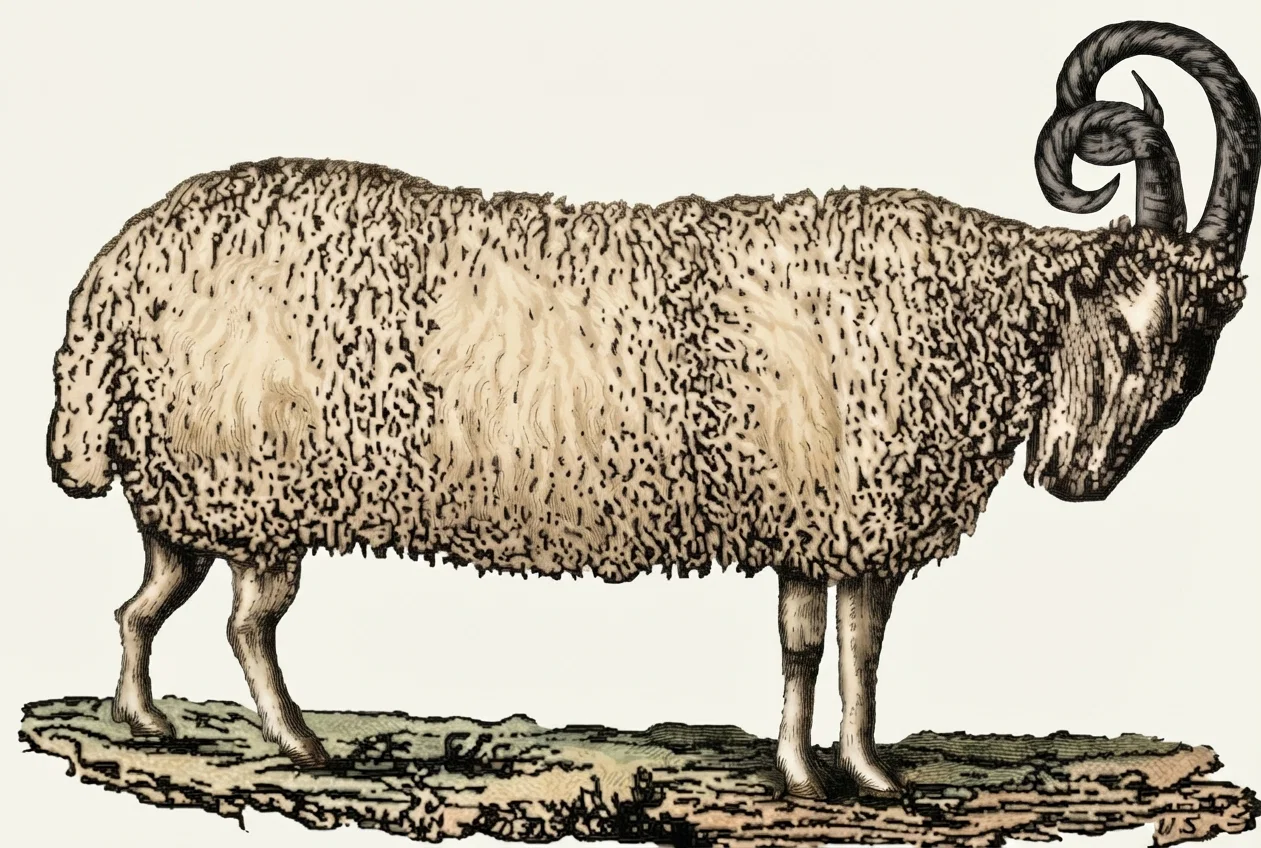
1. THE RAM. Verses 2, 3. "Then I lifted up mine eyes, and saw, and behold, there stood before the river, a ram which had two horns; and the two horns were high; but one was higher than the other, and the higher came up last. I saw the ram pushing westward, and northward, and southward; so that no beasts might stand before him, neither was there any that could deliver out of his hand; but he did according to his will, and became great."
This symbol is explained by the angel in verse 20. "The ram which thou sawest, having two horns are the kings [kingdoms] of Media and Persia." It represents the same as the breast and arms of silver of Chap. ii, and the bear of Chap. vii. This vision does not begin with the empire of Babylon, as do those of the second and seventh chapters, but it commences with Media and Persia, at the height of its power.
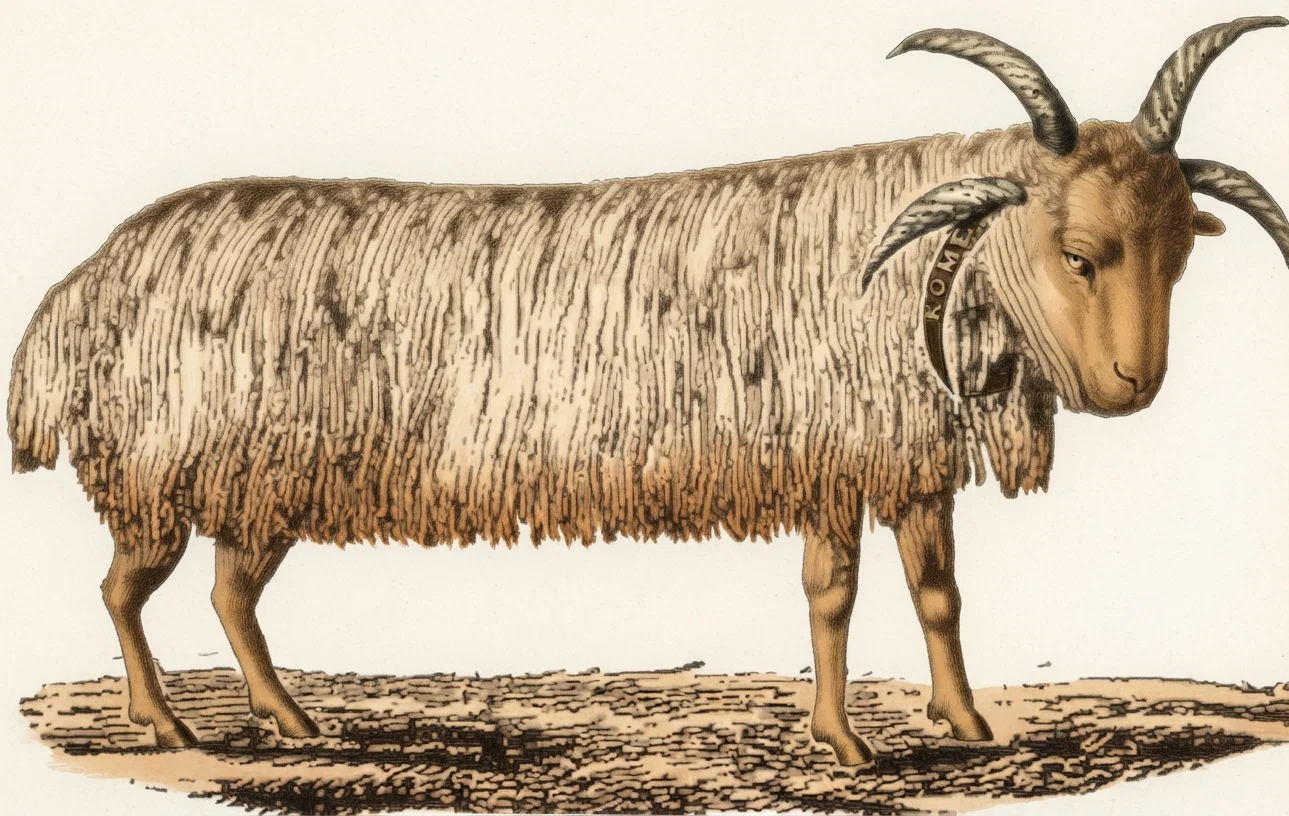
2. THE GOAT. Verses 5-8. "And as I was considering, behold an he goat came from the west on the face of the whole earth, and touched not the ground; and the goat had a notable horn between his eyes. And he came to the ram that had two horns, which I had seen standing before the river, and ran unto him in the fury of his power. And I saw him come close unto the ram, and he was moved with choler against him, and smote the ram, and brake his two horns; and there was no power in the ram to stand before him, but he cast him down to the ground, and stamped upon him; and there was none that could deliver the ram out of his hand.
Therefore, the he goat waxed very great; and when he was strong, the great horn was broken; and for it, came up four notable ones toward the four winds of heaven."
The angel explains this symbol in verses 21, 22. "And the rough goat is the king of Grecia: and the great horn that is between his eyes is the first king. Now that being broken, whereas four stood up for it, four kingdoms shall stand up out of the nation, but not in his power." The goat, then, represents Grecia, the same as the brass of the image of chapter ii, and the leopard of chapter vii. Greece succeeded Persia in the dominion of the world, B. C. 331. The great horn is here explained to be the first king. The four horns that arose when this horn was broken, denote the four kingdoms into which the empire of Alexander was divided after his death. The same is represented by the four heads and four wings of the leopard of Dan. vii. See Chap. xi, 3, 4.
3. THE LITTLE HORN. Verses 9-12. "And out of one of them came forth a little horn, which waxed exceeding great, toward the south, and toward the east, and toward the pleasant land. And it waxed great, even to the host of heaven; and it cast down some of the host and of the stars to the ground, and stamped upon them. Yea, he magnified himself even to the Prince of the host, and by him the daily sacrifice was taken away, and the place of his sanctuary was cast down. And an host was given him against the daily sacrifice by reason of transgression, and it cast down the truth to the ground; and it practiced, and prospered."
This symbol is explained by the angel in verses 23-25. "And in the latter time of their kingdom, when the transgressors are come to the full, a king of fierce countenance, and understanding dark sentences, shall stand up. And his power shall be mighty, but not by his own power; and he shall destroy wonderfully, and shall prosper, and practise, and shall destroy the mighty and the holy people. And through his policy also he shall cause craft to prosper in his hand; and he shall magnify himself in his heart, and by peace shall destroy many: he shall also stand up against the Prince of princes; but he shall be broken without hand."
To avoid the application of this prophecy to the Roman Power, Pagan and Papal, Papists have shifted it from Rome to Antiochus Epiphanes, a Syrian king who could not resist the mandates of Rome. See notes of the Douay [Romish] Bible on Dan. vii; viii; xi. This application is made by the Papists, to save their church from any share in the fulfillment of the prophecy; and in this, they have been followed by the mass of opposers to the Advent faith. The following facts show that
THE LITTLE HORN WAS NOT ANTIOCHUS.
1st. The four kingdoms into which the dominion of Alexander was divided, are symbolized by the four horns of the goat. Now this Antiochus was but one of the twenty-five kings that constituted the Syrian horn. How, then, could he, at the same time, be another remarkable horn?
2d. The ram, according to this vision, became great; but the little horn became exceeding great. How absurd and ludicrous is the following application of this comparison:
Great. Persia. Very Great. GRECIA. Exceeding Great. ANTIOCHUS.
How easy and natural is the following:
Great. Persia. Very Great. GRECIA. Exceeding Great. ROME.
3d. The Medo-Persian empire is simply called great. Verse 4. The Bible informs us that it extended "from India even unto Ethiopia, over an hundred seven and twenty provinces." Esther i, 1. This was succeeded by the Grecian power, which is called VERY GREAT. Verse 8. Then comes the power in question which is called EXCEEDING GREAT. Verse 9. Was Antiochus exceeding great when compared with Alexander, the conqueror of the world? Let an item from the Encyclopedia of Religious Knowledge answer:
"Finding his resources exhausted, he resolved to go into Persia, to levy tributes and collect large sums which he had agreed to pay to the Romans."
Surely we need not question which was exceeding great, the Roman power which exacted the tribute, or Antiochus who was compelled to pay it.
4th. The power in question was "little" at first, but it waxed or grew "exceeding great toward the south, and toward the east, and toward the pleasant land." What can this describe but the conquering marches of a mighty power? Rome was almost directly northwest from Jerusalem, and its conquests in Asia and Africa were, of course, towards the east and south; but where were Antiochus' conquests? He came into possession of a kingdom already established, and Sir Isaac Newton says, "He did not enlarge it."
5th. Out of many reasons that might be added to the above, we name but one. This power was to stand up against the Prince of princes. Verse 25. The Prince of princes is Jesus Christ. Rev. i, 5; xvii, 14; xix, 16. But Antiochus died 164 years before our Lord was born. It is settled, therefore, that another power is the subject of this prophecy. The following facts demonstrate that
ROME IS THE POWER IN QUESTION.
1st. This power was to come forth from one of the four kingdoms of Alexander's empire. Let us remember that nations are not brought into prophecy, till somehow connected with the people of God. Rome had been in existence many years before it was noticed in prophecy; and Rome had made Macedon, one of the four horns of the Grecian goat, a part of itself B. C. 168, about ten years before its first connection with the people of God. 1 Mac. viii. So that Rome could as truly be said to be out of "one of them," as the ten horns of the fourth beast in Chap. vii, could be said to come out of that beast, when they were ten kingdoms set up by the conquerors of Rome.
2d. It was to wax exceeding great toward the south, and toward the east, and toward the pleasant land. [Palestine. Ps. cvi, 24; Zech. vii, 14.] This was true of Rome in every particular. Witness its conquests in Africa and Asia, its overthrow of the place and nation of the Jews. John xi, 48.
3d. It was to cast down of the host and of the stars. This is predicted respecting the dragon. Rev. xii, 3, 4. All admit that the dragon was Rome. Who can fail to see their identity?
4th. Rome was emphatically a king of fierce countenance, and one that did understand dark sentences. Moses used similar language when he evidently predicted the Roman power. Deut. xxviii, 49, 50.
5th. Rome did destroy wonderfully. Witness its overthrow of all opposing powers.
6th. Rome has destroyed more of the "mighty and holy people," than all other persecuting powers. From fifty to one hundred millions of the church have been slain by it.
8th. This power is to be broken without hand. Compare with Chap. ii, 34, 45, where it is said that the stone "cut out without hands," smote the image, &c. Its destruction then takes place at the final overthrow of all earthly powers.
4. THE 2300 DAYS.—The field of vision, as we have seen, is the empires of Persia, Grecia and Rome. We will here introduce the inquiry of one saint, [angel,] and the answer by another.
Verses 13, 14. "Then I heard one saint speaking, and another saint said unto that certain saint which spake, How long shall be the vision concerning the daily sacrifice, and the transgression of desolation, to give both the sanctuary and the host to be trodden under foot? And he said unto me, Unto two thousand and three hundred days; then shall the sanctuary be cleansed."
It is a fact that 2300 literal days (not quite seven years) would not cover the duration of a single power in this prophecy, much less extend over them all; therefore the days must be symbols, even as the beasts and horns are shown to be symbols. It is also a fact that a symbolic or prophetic day is one year. Eze. iv, 5, 6; Num. xiv, 34. Hence, the period is 2300 years.
In regard to the date of the 2300 prophetic days, they evidently commence with the vision, at the height of the Medo-Persian empire. Anything more definite, this chapter does not furnish, we must therefore look elsewhere for the definite explanation of this matter.
5. THE 70 WEEKS. We regard this period of Chap. ix, as the only key to the time of the vision of Chap. viii. Notice as follows:—
1st. The command to Gabriel, [Chap. viii, 16,] "Make this man (Daniel) to understand the vision."
2d. Gabriel did make the Prophet to understand what the ram, goat and little horn meant, yet,
3d. Daniel says, at the close of this interview with the angel, "I was astonished at the vision, but none understood it." None understood the time—where to commence the 2300 days, and "what manner of time" they were.
4th. The ninth chapter of Daniel records another visit of Gabriel. The Prophet is praying when the angel touches him, and says, "I am now come forth to give thee skill and understanding." It was on time that the Prophet needed "understanding," as the other symbols had been explained and mark the heavenly messenger's first declaration, after telling Daniel to "consider the vision:" "Seventy weeks are determined [cut off] upon thy people," &c. Cut off from what? Most certainly cut off from the 2300 days, as a period of time can only be cut off from time.
The "going forth of the commandment to restore and to build Jerusalem" is mentioned in verse 25 as the event to mark the commencement of the 70 weeks. As the 70 weeks are cut off from the 2300 days, it follows that they form the first 490 of those days, and both periods begin at the same date. Here we take leave of this subject, and refer the reader to our works on the 2300 days and the Sanctuary, where it is shown that the 2300 prophetic days began B. C. 457, and terminated A. D. 1844.
Malicious Insinuation.
By Editor
AMONG the numerous wicked misstatements which are now being heralded abroad by a few persons, we deem it proper to select the following on account of the bearing it may have upon the readers of the Review. The writer says:
"I remarked that I did not think we would need to publish more than three months, before the administration of the paper at Rochester would be changed and supersede the necessity of publishing here. Neither did I change my mind until the Conference at Franciscoville, in Sept. last. There, to my surprise, I was informed that Bro. White had taken the precaution when he paid the money (which was sent in by the brethren) for the press and type, to take the receipts in his own name; and at the Conference in Rochester last year, claimed it all, and still more for his Editorial fees. This satisfied me that our warfare with error would be of longer duration than I had at first anticipated."
It is not true that Bro. White made any such statement, or that he claimed any "Editorial fees" whatever. Food and raiment is all that he has ever asked as a remuneration for the labor, care and toil of years. The persons who are anxious to sieze the Review and to place it in other hands, are those who have done little or nothing toward sustaining it.
The following is a brief statement of the purchase of the press &c. The Conference at Ballston, N. Y., took action on this as follows. See the Review for March 23d, 1852.
"Friday, P. M. the 12th, the subject of publishing the paper was introduced. Several brethren spoke of the disadvantages of having it published as it had been, and of the propriety of having an Office at the control of Sabbath-keepers. And after investigating the matter it was decided by a unanimous vote. (1) that a press, type, &c. should be purchased immediately. (2) that the paper should be published at Rochester, N. Y., (3) that Brn. E. A. Pool, Lebbeus Drew and Hiram Edson compose a Committee to receive donations from the friends of the cause to purchase the press, type &c., and to conduct the financial concerns of the paper, (4) that the brethren abroad be requested through the next number of the Review and Herald to choose agents in their churches to receive donations for the purpose of establishing the press, and carrying forward the publishing of the paper, and (5) that those donations that are immediately sent in, should be sent to Hiram Edson, Port Byron, N. Y."
Brn. Pool and Drew not being able to leave home to attend to this business, Bro. Edson alone purchased the press and type, being requested by Bro. White to take the receipts not in the name of Bro. W., but in that of the Committee. Bro. Edson can speak for himself as to the course which he pursued.
But in the Review for May 6th, 1852, at Bro. Edson's request, the following statement was made:—
"Bro. Edson wishes us to say, as he expects to be from home a portion of the time for the future, the money to pay for printing materials had better be sent to us."
This made it necessary that Bro. White should afterward attend to the business of such purchases as have since been made for the Office.
J. N. ANDREWS. } Publishing
R. F. COTTRELL. } Committee.
U. SMITH.
Advent Harbinger alias Prophetic Expositor.
By John Nevins Andrews
"CAN the Ethiopian change his skin, or the leopard his spots? then may ye also do good that are accustomed to do evil." We are forcibly reminded of this language of inspiration whenever we read the so-called Prophetic Expositor. This sheet at first styled itself the Voice of Truth; but after some time changed its name to Advent Harbinger, assigning as one of its reasons the fact that all which it published was not truth. Under the name of Advent Harbinger it has for years manifested its venom and malice toward us whenever opportunity has presented itself. During the same period it has been diligently engaged in warring against the Advent faith, until at length it drops the name under which it has betrayed the Advent cause, and assumes that of Prophetic Expositor. This time it assigns as a reason for the change, the propriety of a less odious name than the one it had been wearing for some time. We could have wished that with its new name it had begun to lead a new life; but to our regret we discover that though the serpent has shed its skin, it remains the same serpent still. Apparently every item of scandal against the REVIEW that falls into the ear of the Editor of the Expositor, meets a ready reception. No sooner does an infamous sheet commence its attack upon us, than he extends to it a helping hand, as to a fellow laborer. A good illustration of this may be seen in the editorial columns of the Expositor for Oct. 7th.
But for deliberate falsehood, perhaps the following from the Expositor of Nov. 18th, is worthy of notice. The Editor informs his reader that "The Messenger of Truth" published "by a number of sincere Jewish Sabbatarians, to expose the gross corruptions of the ADVENT REVIEW, of this city and its publishers—has been enlarged, and is now generally supported as their organ by these honest but mistaken brethren."
In making the foregoing statement, he could but be aware that he was uttering a deliberate falsehood. It is true that the conductors of the sheet referred to, have imposed upon every friend of the REVIEW, whose name they could obtain, by sending to their address a quantity of their sheets. But the Editor of the Expositor has no other ground than that of pure malice, for the falsehood which he utters that that sheet is now generally supported by the Sabbath-keepers. In this case it is very evident that the wish is father to the thought. Anything that will war against the REVIEW, no matter how, or with what materials, meets his unqualified approbation. But we can assure him that those who have been delivered from the carnal mind, that is at enmity against God and his holy law, have not the same relish for such things that he seems to have. The only excuse that he has for this statement is this: he judged the Sabbath-keepers by himself, a very false standard indeed.
But how does it happen that he has thus suddenly become convinced that certain whom he styles "Jewish Sabbatarians" are "honest," "sincere" "brethren?" It was not long since that he published several of these "honest, sincere brethren" as wicked fanatics, designating one of them by the brotherly appellation of "liar." He has in time past seized on the faults of these very persons to brand with infamy all that keep the fourth commandment. For attempting to correct the faults of these persons, we have made them our enemies, and thus transformed them into brethren of the Editor of the Expositor.
It is no mystery, therefore, that Herod and Pilate have thus become friends. The Editor of the Expositor very well understands that it is not merely against us, but also against the faith which we cherish, that these men are making their attack, as they now place the Third Angel's proclamation in the future.
In regard to the ADVENT REVIEW, it is proper that we say a word. It was formerly sent out gratuitously. When the terms were changed to $1 per year it might have been expected that there would be a considerable falling off from the names on our list. But instead of this, it would be safe to say that at least two have been added for every one that has fallen off. And those who have requested their paper discontinued, were not, to our knowledge, Sabbath-keepers. And more recently we have been receiving new subscribers almost daily.
Whatever may be the trials of the way, we have no fears for the REVIEW so long as it continues to proclaim the truth of God. We would express our gratitude to God that hitherto the Lord hath helped us; and with cheerfulness we commit ourselves into his hands. J. N. A.
No paper next week.
By Editor
On account of severe illness in the family of Bro. White there will be no paper next week. Sister Anna White is at the point of death, and can probably survive but a few days. The health of Bro. White is also much impaired by labor and care. We would at this time especially request the prayers of the people of God in his behalf.
Bro. W. is in want of pecuniary aid at this time. The publication of new and important works, together with the expenses of protracted sickness in his family, make it necessary that the readers of the REVIEW should comply with its terms and that the friends of the cause should render immediate aid in this time of distress, by purchasing Tracts, &c. PUB. COM.