The Youth’s Instructor, Vol. 27, No. 25.

HOME POLITENESS

The Youth’s Instructor

Jun 25, 1879

S. D. A. Publishing Association · Battle Creek, Mich. · Jun 25, 1879

HOME POLITENESS.

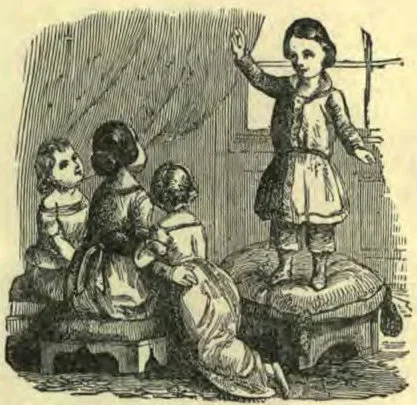
A BOY who is polite to his father and mother is likely to be polite to everybody else. A boy lacking politeness to his parents may have the semblance of courtesy in society, but is never truly polite in spirit, and is in danger, as he becomes familiar, of betraying his real want of courtesy. We are all in danger of living too much for the outside world, for the impression which we make in society, coveting the good opinions of others and caring too little for the good opinion of those who are, in a sense, part of ourselves, and who will continue to sustain and be interested in us notwithstanding these defects of deportment and character. We say to every boy and to every girl, Cultivate the habit of courtesy and propriety at home—in the sitting-room, the dining-room, and the kitchen, as well as in the parlor, and you will be sure in other places to deport yourself in a becoming and attractive manner. When one has a pleasant smile and a graceful demeanor, it is a satisfaction to know that these are not put on, but that they belong to the character, and are manifest at all times and under all circumstances.

LITTLE THINGS.

It seems to me that’s a very small thing!” said a clear-faced boy, with just a shade of impatience in his voice.
“Yes; but trust me, my son; it only seems so. In this world nothing is small, nothing is unimportant!”
The two passed on, but the words stayed behind.
“Nothing is small, nothing is unimportant!”
Let us follow a “little thing” on its travels for one day, and see to what it led.
Frank Walden was very much out of sorts one morning. He had a headache, for one thing; he had found trouble with his lessons, and his teacher had given him a sharp reproof the night before. He came home angry, went to bed angry, and rose in the morning feeling himself an injured boy. He did not like his breakfast, and he resented deeply the half-laughing comments of his father and sister upon his gloomy face and manner. Nellie, his gentle little sister, followed him into the hall. She held something tightly in her hand.
“See, Frank, I saved this for you, ’cause I love you so,” and she gave him a sudden hug, and slipped a red candy heart into his hand. Then the little feet pattered down the hall, and Frank put on his hat, and started for school. But a little glow had been kindled in his heart, and as he went down the walk he stopped suddenly before a rose-tree. “I don’t want Miss Elmer to think I’m sulky,” he thought, and he cut half a dozen of the lovely roses and buds, and laid them on her desk with a pleasant “good-morning.” Now Miss Elmer was conscious that she had been unduly severe with Frank the day before. But she had a great deal to try her, and this morning her nerves were unstrung. She had a difficulty to settle with a very troublesome boy, and when Frank came with his roses and smile and pleasant words, she was just saying to herself, “I believe I will send him home, and have done with it!” Joe Hendy was very trying; but when he came a few minutes later to receive his sentence, to his surprise Miss Elmer said, with a serious but kindly smile, “I think, Joseph, we had better try again. Suppose we put ourselves on one side? Two are stronger than one.”
Joseph went to his seat with a new thought in his heart. It worked there all the morning, and it has not stopped working yet. He did put himself on Miss Elmer’s side, the side of order and right, and every one says, “What has got hold of Joe Hendy?” Miss Elmer is very glad that she did not send him home, and wonders what changed her mind. She says she acted upon an impulse. Frank acted upon an impulse in cutting the roses, and dear little Nellie started it all, by her sweet impulse of love and tenderness! Such a little thing! But nothing is little, nothing is unimportant. We might follow this little thing much farther, but then we could never come to the end of the story, for it will never end.
And just so, it may be, nay, it must be, with many and many a thing to which we never give a second thought. We drop our hasty words, we indulge our sudden tempers, and never once think how the waves of influence we start will go widening and widening forever! It is a startling thought, and it is not strange that it is an unwelcome one. We do not wish to hurt others by our influence, but we are thoughtless and careless, and so we just go on in our own way. Oh, let us stop and think about these things!
Wellington was a great general, and won great victories; but it is said that his successes were due to the fact that he looked, in person, after such small matters as soldiers’ shoes, biscuits, horse fodder, and the like.
Nelson, the great naval commander, was not above little things. Especially was he scrupulous in regard to time. He would on no account break an engagement, nor would he be behind time if it was a possible thing to be prompt. He himself said that he owed all his success in life to this habit of looking after the minutes.
It was a very little thing that insured the discovery of this continent. The sailors, faithless and discontented, rose up in mutiny against Columbus. Glancing over the ship’s side, he saw sea-weed floating by. Such a little thing! Yet it was enough to convince them that land must be near. But Columbus would not have seen this little thing if he had not kept open eyes. It is the people who do not see that stumble along and make so much mischief. We must form the habit of looking after the little things. To do this, we must know that they are of importance. We must take this truth into the heart and think about it, and let it influence our words and actions. This will make us think twice before we speak; it will keep us from acting rashly, and save us, oh, how often, from the regretful, “I did n’t think!”
Oh, the little things! They are the great things, if we can but learn to look at them in the light of the next world!—S. S. Classmate.

THE SEED.

The farmer planted a seed— A little, dry, black seed; And off he went to other work— For the farmer was never known to shirk; And cared for what he had need.
The night came with its dew— The cool and silent dew; The dawn came, and the day, And the farmer worked away At labors not a few.
Home from his work one day— One glowing summer day— His children showed him a perfect flower; It had burst in bloom that very hour; How, I cannot say.
But I know if the smallest seed In the soil of love be cast, Both day and night will do their part; And the sower who works with a trusting heart Will find the flower at last.

Facts About Varnish.

THERE is nothing that plays a more important part in all external decoration, and still perhaps receives less credit for the same, than does varnish, to which many objects owe their beauty and durability.
How many of our readers have admired the interior of the palace car, with its beautiful mirror-like walls of native wood, and thought how essential is varnish in bringing out all this beauty. Like the glass with the amalgam behind, it becomes a reflector, and it matters little what surface it may cover, whether wood, brass, or paint, varnish serves to render it more attractive.
Before applying the varnish or finishing coat to a carriage body, the painter is very careful that every defect is removed, and every rough spot or hollow is made smooth or level. He applies coat after coat of a preparation called filler, until he is quite sure that the grain of the wood is all filled. He then takes pumice, or rubbing stone, and water, and carefully scours his work till it is perfectly smooth. The color is then applied, which is followed by what is termed rubbing varnish, of which two or more coats are used. The surface must now go through another process of scouring; but this time the painter uses the fine ground powder of the pumice stone, so fine that the surface is not scratched.
The carriage body is once more carefully examined by the workman, and if all has been well done, the surface is smooth, like glass, and after washing with the greatest care, to remove all particles of the pumice stone, the work is ready to receive the last touch of beauty. The door of the varnish room is now closed against all intruders, and with brush in hand, the painter begins carefully and quickly to apply the finishing coat of varnish. If all has been skillfully done, the surface will shine like a mirror; but if a small mote or speck has adhered to the body, it is reflected by the varnish, and, as it were, becomes a mountain in the eyes of the beholder.
Varnish is very particular in regard to the company it keeps, and will not work readily when applied, if mixed with any other substance. I hope the readers of the INSTRUCTOR are just as careful in the choice of their companions, not to select those who use rough and vulgar language, or indulge other wrong habits; for though these may seem like small faults to you, yet to Him who sees all things, they appear like serious defects, marring the character far more than the motes in the varnish injure the finished work of the painter.
Let us cleanse our hearts from everything evil, and put far away from us even the so-called small sins, that not a speck or mote may be found upon our characters in the last great day, when the hidden things of the heart shall be made known.
C. N. STUTTLE.

TEXAS

HAVING now returned home after a stay of several months in Texas, the writer resumes with pleasure her work in connection with the INSTRUCTOR. Perhaps its readers will be interested in the narration of a few facts gathered during her absence, together with some incidents of travel. The “Lone Star State,” so called because its coat of arms consists of a single star, is the largest in the Union, its area being greater than that of New York, Pennsylvania, Ohio, Virginia, Maryland, Delaware, and the six New England States, all combined. Texas is naturally divided into three parts: the seacoast, of nearly a thousand miles in extent, and running inland from seventy-five to a hundred miles; the uplands, or Middle Texas, which is diversified with hill and valley, forest and prairie; and far to the west and northwest, still the home of the savage and the feeding place of the buffalo, the great plains and table-lands, broken by lofty mountain chains.
In the south, along the semi-tropical line of the Gulf of Mexico, is the region of the lemon, the citron, and the orange; farther north are rice, sugar, and cotton fields; and beyond these are produced vast crops of grain. Bounded by perpetual spring on the south, and by almost eternal winter on its farthest border line, the State presents a variety of soil and climate; the remarks which follow will apply particularly to the northeastern portion.
The soil is very fertile, farmers cultivating their land year after year, without enriching it. Texans claim that their climate is remarkably healthful; the summers are long, but the heat is said to be no more oppressive than at the North; sunstrokes are of even less frequent occurrence, and the nights are usually cool. Yet it is the opinion of visitors who have had good opportunities for observation, that they never before saw so much poverty and sickness as they have seen in Texas.
Almost every one has the “chills;” fevers prevail in summer, and pneumonia in winter. No doubt much of this is due to the habits of the people. Ardent spirits are freely drank by nearly all classes, and tobacco is used, not only by men, but by women and children. Most women indulge the habit of “dipping” snuff. Swine’s flesh is largely used, and it is difficult to obtain any article of food which is free from its contamination.
Yet even these wrong habits cannot wholly account for the sickness prevailing; for many Northern families who are free from them have suffered from the diseases incident to the climate until they are but shadows of themselves; and they have been glad to flee from the State. Many more would leave, had they the means. So much for the boasted healthfulness of Texas.
M. A. D.

“IS YOUR NOTE GOOD?”

A Boston lawyer on School Street was called upon a short time ago by a boy who inquired if he had any waste paper to sell. The lawyer has a crisp, keen way of asking questions, and is, moreover, a very methodical man. So, pulling out the lower drawer, he exhibited his stock of waste paper, laid smoothly in, sheet after sheet, a solid mass.
“Will you give me twenty-five cents for that?”
The boy looked at the paper doubtfully a moment, and offered fifteen.
“Done,” said the lawyer; and the paper was quickly transferred to the bag by the boy, whose eyes sparkled as he “hefted” the weighty mass.
Not till it was safely stowed away did he announce that he had no money.
“No money! How do you expect to buy paper without money?”
Not prepared to state exactly his plan of operations, the boy made no reply.
“Do you consider your note good?” asked the lawyer.
“Yes, sir.”
“Very well; if you say your note’s good, I’d just as soon have it as money; but if it isn’t good, I don’t want it.”
The boy affirmed that he considered it good: whereupon the lawyer wrote a note for fifteen cents, which the boy signed, and lifting his bag of paper, went away.
Soon after dinner the little fellow reappeared, and, producing the money, said that he had come to take up his note.
“Well,” said the lawyer, “this is the first time I ever knew a note taken up the day it was given. You keep your honor bright, very bright.”

SONG

Hark, how sweet the thrushes sing! Hark, how clear the robins call! Chorus of the happy spring, Summer’s madrigal!
Flood the world with joy and cheer, O ye birds, and pour your song Till the farthest distance hear Notes so glad and strong!
Storm the earth with odors sweet, O ye flowers, that blaze in light! Crowd about June’s shining feet, All ye blossoms bright!
Shout, ye waters, to the sun! Back are winter’s fetters hurled; Summer’s glory is begun; Beauty holds the world!
—Celia Thaxter.

LESSONS FOR CHILDREN.

LESSON XXV.—SAMUEL.

If you will begin at the thirteenth chapter of Judges, and read four chapters, you will learn how Samson killed a lion with nothing but his hands; how he carried off the gates of the city on his shoulder; and some other things not told in these lessons.
After the death of Eli and Samson, Samuel judged Israel. He was born about the same time as Samson. He was his mother's only son, and she gave him to the Lord when he was a little child. As soon as he was weaned, she took him to the house of the Lord at Shiloh, and gave him to Eli, the high priest. Every year his mother, whose name was Hannah, went up to see Samuel, and carried him a present of a little coat.
Eli had two sons, whose names were Hophni and Phinehas. Now these young men were very wicked, and did evil in the sight of the Lord. And there came a man of God to Eli, and told him that his sons should both die in one day.
One night, when Samuel was sleeping, the Lord called to him; but Samuel thought Eli called him, and ran to see what was wanted. Eli said he did not call him, and told him to lie down again. Thus Samuel was called three times; and the third time, Eli perceived that it was the Lord that had called the child, and told Samuel that if he heard the voice again, he must say, “Speak, Lord; for thy servant heareth.” After this, the Lord called Samuel, and told him that the family of Eli should no longer serve him as priests, but that it should come to an end because Eli had allowed his sons to do so wickedly.
Next morning Eli asked Samuel what the Lord had shown him in the vision. “And Samuel told him every whit, and hid nothing from him.” And Eli said, “It is the Lord: let him do what seemeth him good.”
After this, the Lord appeared unto Samuel at different times, and it was known throughout all Israel that Samuel was a prophet of the Lord.

QUESTIONS.

1. What chapters of the Bible tell about Samson?
2. Who judged Israel next after Eli and Samson?
3. At about what time was he born?
4. To whom did his mother give him when he was a little child?
5. Where did she take him as soon as he was weaned?
6. How often did she visit him? 1 Sam. 2:19.
7. What present did she always take to him?
8. How many sons had Eli?
9. What were their names?
10. What was their character?
11. What did a man of God tell Eli?
12. What did Samuel hear one night while he was sleeping? 1 Sam. 3:4.
13. Who did he think it was that called him?
14. What did Eli say when Samuel came to him?
15. What did Eli perceive when Samuel came in the same way the third time?
16. What did he tell Samuel to do if the Lord called him again?
17. What did the Lord show Samuel in vision that night?
18. What did Eli say when Samuel told him the vision next morning?
19. Did the Lord appear to Samuel at other times after this?
20. How was Samuel regarded throughout all Israel?

HINTS TO TEACHERS.

THE Bible Class Teacher, in an article of some length on the best manner in which to overcome an indifferent spirit in the class, makes the following valuable suggestions to teachers:— 1. Appreciate all the interest there is in the study. 2. Never scold. 3. Get full of the lesson. There is no recipe for dullness so sure as a great deal of study. 4. Be sure to impart definite and tangible ideas. Thought is a mind-awakener; vagueness is what puts the mind to sleep. To know something exactly is interesting; to guess at something, and guess very dimly at that, is tedious. 5. Get work out of the pupils. Every effort made by the scholar will add to his interest. A little work on his part will often arouse an interest better than the most eloquent class lecture.
THE talent of success is nothing more than doing what you can do well, without a thought of fame. If it comes at all, it will come because it is deserved, not because it is sought after. It is a very indiscreet and troublesome ambition which cares so much about fame, about what the world says of us, as to be always looking in the face of others for approval, to be always anxious about the effect of what we do or say, to be always shouting to hear the echoes of our own voices.—Longfellow.

BIBLE LESSONS FOR YOUTH.

LESSON LI.—BALAAM.

1. To what place did the children of Israel come as they returned from Bashan? Num. 22:1.
2. How were the Moabites affected at the sight of such a multitude?
3. What did they say to the elders of Midian?
4. Who was king of Moab at this time?
5. To whom did Balak send his messengers?
6. What power was Balaam supposed to have?
7. What message did Balak send to him? Verses 5, 6.
8. What did Balaam say to the messengers?
9. What counsel did the Lord give him?
10. What course did Balaam pursue when Balak sent more honorable messengers, promising great reward if he would but come and curse Israel?
11. Do you think God was pleased to have Balaam inquire of him a second time, when he had already received a definite answer?
12. What trouble did he have on the way?
13. Describe the encounter with the angel.
14. What did he say to the king of Moab when he met him? Num. 22:38.
15. What preparation did Balaam require Balak to make?
16. Where was the first offering made? The second?
17. How many times did Balaam attempt to curse Israel?
18. From what place was the third attempt made?
19. What did the Lord make Balaam do every time he tried to curse Israel?
20. Did Balaam tell Balak how a curse might be brought upon the people of God? Num. 31:15, 16.
21. How was it accomplished? Num. 25:1-3.
22. How many of the Israelites were destroyed by the plague?
23. How were Balaam and the Midianites punished? Num. 31.

SYNOPSIS.

When the children of Israel had returned from Bashan, they came to the borders of the plain of Moab. Now the Moabites had heard what the children of Israel had done to Sihon, king of the Amorites, and Og, king of Bashan; and they feared greatly, saying to the elders of Midian, “Now shall this company lick up all that are round about us, as the ox licketh up the grass in the field.”
Then Balak, king of the Moabites, sent messengers to Balaam, who was supposed to have the power to affect the destinies of men by blessing or by cursing them, asking him to come and curse Israel.
When Balaam received the messengers, he asked them to remain over night, that he might have time to counsel with God. “And God said unto Balaam, Thou shalt not go with them; thou shalt not curse the people: for they are blessed.”
In the morning, Balaam told the messengers he could not go with them; but when they returned to Balak, he sent other messengers, more honorable than the first, offering Balaam great reward if he would come and curse Israel. Balaam said to the messengers, “If Balak would give me his house full of silver and gold, I cannot go beyond the word of the Lord my God, to do less or more.” Yet he so much desired the reward, that he asked them to remain with him that night, that he might again consult the Lord.
Now the Lord was so much displeased with Balaam for coming to him the second time with what had once been plainly answered, that he told him to go with the men, but to speak only such words as he should give him. Balaam eagerly accepted this permission, and went immediately to Balak, although he barely escaped death from an angel who met him on the way.
At three different times and in three different places, Balaam tried to curse Israel, but every time the Lord made him utter a blessing. At the last, he uttered some remarkable prophecies concerning the future prosperity of God’s people.
Finally Balaam gave counsel which led to sad results. Following his wicked suggestions, the women of Moab enticed the men of Israel, and led them to worship Baal-peor, the god of the Moabites. For this, twenty-four thousand of the Israelites were destroyed by a plague, and Balaam and the Midianites were slain in war.
G. H. BELL.

REVIEW

It would be difficult to over-estimate the importance of frequent reviews. We teach too much as though the main object were to get one lesson off from our hands in time for the next, rarely if ever taking a backward look in search of some golden grain which may, perchance, have been overlooked before. The longer a subject can be kept in mind, the more benefit we are likely to derive from it.
We have heard old people say, people who have read the Bible through again and again, that never, until they had these Old Testament studies in Sabbath-school, did they have any proper conception of the wonderful richness of the Old Testament Scriptures. The reason was, they were obliged to confine their thoughts to one subject in its connections for at least one whole week. If, now, we can anchor the lesson of to-day in the preceding one, and then reach out after the coming one, doing this every Sabbath, we shall find ourselves, by and by, in possession, not of a few interesting, isolated facts, but a chain of rarest pearls. Just this is the object of the review.
Let us not think we have done with a lesson as soon as it has been recited. Go back each Sabbath to the preceding lesson. Put the lessons of a month into a single view, and invite the class to look at it. At the close of the quarter, take the main points out of each lesson for that quarter, and put them into one lesson. Review. Review frequently. Review constantly.—S. S. Journal.

A LITTLE BOY'S SERMON.

“EDDIE,” said Harry, “I'll be a minister, and preach you a sermon.”
“Well,” said Eddie, “and I'll be the peoples.”
“May we come and hear too?” asked May and Ida.
“Yes, if you'll sit still; but I'm going to preach for Eddie.”
Harry began: “My text is a short and easy one—‘Be kind.’ There are some little texts in the Bible on purpose for little children, and this is one of them. These are the heads of my sermon:—
“First: Be kind to papa, and don't make a noise when he has a headache. I don't believe you know what a headache is; but I do. I had one once, and I didn't want to hear any one speak a word.
“Second: Be kind to mamma, and don't make her tell you to do a thing more than once. It is very tiresome to say, ‘It is time for you to go to bed,’ half a dozen times over.
“Third: Be kind to baby”—
“You have left out, be kind to Harry,” interrupted Eddie.
“Yes,” said Harry, “I didn't mean to mention my own name in the sermon. I was saying, Be kind to little Minnie, and let her have your red soldier to play with when she wants it.
“Fourth: Be kind to Jane, and don't scream and kick when she washes and dresses you.”
Here Eddie looked a little ashamed, and said, “But she pulled my hair with the comb.”
“People mustn't talk in meeting,” said Harry.
“Fifth: Be kind to Kitty. Do what will make her purr, and don't do what will make her cry.”
“Isn't the sermon 'most done?” asked Eddie; “I want to sing.” And without waiting for Harry to finish his discourse or give out a hymn, he began to sing, and so Harry had to stop.

A STRANGE CLOCK.

A strange clock is said to have once belonged to a Hindoo prince. In front of the clock’s disk was a gong swung upon poles, and near it was a pile of artificial human limbs. The pile was made up of the full number of parts necessary to constitute twelve perfect bodies; but all lay heaped together in apparent confusion.
When the hands of the clock indicated the hour of one, out from the pile crawled just the number of parts needed to form the frame of one man, part coming to part with a quick click; and when completed, the figure sprang up, seized a mallet, and walking up to the gong, struck one blow. This done, he returned to the pile, and fell to pieces again. When two o’clock came, two men arose, and did likewise; and at the hours of noon and midnight the entire heap sprang up, and marching to the gong, struck, one after the other, his blow, making twelve in all; then returning, fell to pieces as before.—Young Folks’ News.

THOUGHTLESS FUN.

A WRITER SAYS: “In a small town many years ago, some children were met for a social evening at an old farm-house. While the sport was at its height, a little boy thought it would be ‘funny’ to draw a chair out from under a little girl, and let her sit down on the floor. He watched his opportunity, and made the attempt; but the little girl, seeing what he was doing, jumped back into the chair, and, striking her spine on one of its projections, broke her back. For seven years, from fourteen to twenty-one, she lay upon her bed, and during all that time was carried from her chamber to the parlor but once. Thirty years have passed; thirty years of disability and pain as the consequence of a thoughtless deed by a little boy. A few strangers minister to her daily wants, without whose aid she would be sent to the poor-house. Terrible consequences to follow a thoughtless act! Let boys be careful.”
We know a similar case, where a young girl on her way home, was stoned by some rude boys. One of the stones struck her ankle; an open sore was formed, which the physicians could not heal, and all her life (and she was an old lady when we knew her) she was compelled to use a crutch.

THE LONGEST DAY.

AT London, England, and at Berlin, Prussia, the longest day has sixteen and a half hours. At Stockholm, in Sweden, the longest day has eighteen and a half hours. At Hamburg, Germany, and at Dantzig, Prussia, the longest day has seventeen hours, and the shortest seven hours. At St. Petersburg, Russia, and Tobolsk, Siberia, the longest day has nineteen hours, and the shortest five hours. At Tornea, in Finland, the longest day has twenty-one and a half hours, and the shortest two and a half hours. At Wanderhaus, in Norway, the day lasts from May 21 to June 2, without interruption; and at Spitzbergen the longest day is three and a half months.
Continue reading: LETTER BUDGET