Your ShelfYour Projects

Signs of the Times, Vol. 36, No. 9.

THE EARTHQUAKE IN SOUTHERN ITALY
Earlier text: The Great Threefold Message

“Ever Higher.”

The true standard of the Christian is the holy law of God. The exemplification of that standard in moral conduct is Jesus Christ our Lord. That law worked out perfectly in humanity gave us the character of Jesus of Nazareth—perfect in motive, perfect in God-given wisdom. None could rightfully accuse Him of sin, the transgression of the law. It was His own consciousness which led Him to say, “I have done the work which Thou gavest Me to do;” “I have kept My Father’s commandment, and abide in His love.”
That perfect standard and transcendent example lifts us ever higher. As we get nearer to Him, as in His light we see the exceeding breadth of the law of God, our ideal broadens in our vision, while our standard remains the same. Constantly do we see more of beauty, more of excellence, more of all the qualities which constitute “the exceeding riches” of God’s righteousness, wisdom, love, and power, yet the same true, unswerving standard remains. It does not leave us to drifting or speculation. It is an anchor to the soul both sure and steadfast.
To know this standard and its exemplification and then to accept a lower standard is to set our face to the down-hill end of the road, and to prove disloyal to God. The weak of faith, and the uninstructed may choose a lesser standard and still advance. He is following something beyond himself, and through the ordinary above him God may lead him on to the good, from the good to the better, from the better to the best, even the perfect standard and example. His face is Godward, and he follows the light.
But wo to the man who turns from the best and is satisfied with the better, or who ignores the better and is satisfied with the good. He has turned from the light to the shadow; the darkness has blinded his spiritual vision, and it will be but a little while before he will drop to the good, then to the ordinary, thence to the bad, worse, and worst. Our only hope is constant progress in the good way, with the perfect standard and its perfect exemplification ever before us. By beholding we shall become changed into the same image “from glory to glory.”

Our Bible Band

Schedule for Week Ending March 13, 1909.

Morning Evening
Su. Mar. 7 Deut. 3, 4 Mark 10:23-52
Mo. “ 8 “ 5, 6, 7 “ 11:1-18
Tu. “ 9 “ 8, 9, 10 “ 11:19-33
Wed. “ 10 “ 11, 12, 13 “ 12:1-27
Thu. “ 11 “ 14, 15, 16 “ 12:28-44
Fri. “ 12 “ 17, 18, 19 “ 13:1-20
Sa. “ 13 “ 20, 21, 22 “ 13:21-37

Suggestive Notes.

Our Old Testament lessons lie wholly in Deuteronomy, including Deuteronomy 3 to 22. Beginning with chapter 3, Moses continues to recount the experiences of Israel and the guidance of God. It is one constant, tremendous appeal to them to serve the Lord, to turn away from the sins which wrecked the other nations, and exemplify Him. Only in this would lie their greatness and continuance. Chapter 5 is a repetition of the law bringing in some additional appeals to gratitude as to why they should observe it; and the chapters which follow are wonderful developments of the precepts of the law, and the gracious promises of God. We are told in wonderfully graphic words in the ninth chapter of how Moses in righteous indignation at the transgression of the people, broke the first two tables of stone; and in the 10th chapter how he prepared new tables and God wrote upon them the words of the first tables.
Chapter 13 warns us against false prophets; even those who may work signs and wonders, and there as in other scriptures we are given the standard by which they are to be tested, the law of God. See also chapter 18. Any prophet which should lead away from that law was false. One needs to appreciate something of the conditions which surrounded Israel to see the wonderful working and superiority of these laws which God gave to Israel.
Our New Testament lessons begin with Mark 10:32 and close with chapter 13. They cover the interesting lessons of the healing of blind Bartimaeus; the triumphal entry of our Lord into Jerusalem; cursing of the fig-tree; cleansing of the temple; the lesson on faith; the efforts put forth by the enemies of our Lord to trap Him in His teaching, and their utter defeat; their own inability to answer His questions; the lesson of the widow’s mites; and the striking chapter on the destruction of Jerusalem and the end of the world. These are very important lessons and we can not give them too much thought.

Prohibition in Georgia.

Contrary to what is stated many times by papers in the liquor interests, Mr. Frank W. Connor in the Woman’s National Daily, quotes the words of a Georgia woman who says that Georgia is so much better off under prohibition that she would gladly die rather than see the prohibition law repealed; and that many men in Georgia feel just that way about it. It is believed that it would take a revolution to put the open saloon back in the state. She further declares that “prohibition is a success in Georgia. I care not who advances an argument to the contrary, the official records, open to the eyes of every man, speak more convincingly than anything I could possibly say. Even newspapers that fought the prohibition law have been forced to come out frankly and say to the people of Georgia that the police statistics all over the state show a distinct diminution of crime of every description, that building operations have largely increased, that the poor man has money to spend for the necessities of life, and provide decently for his family instead of spending his wages at the saloon, and that the moral tone is immeasurably higher.” These are the advantages that invariably will follow the suspension of the liquor traffic. As an economical measure, pure and simple, there is not a state or country in the world but what would be justified in adopting it. And liquor dealers themselves would sooner or later see and acknowledge its benefits.

Philadelphia Appendicitis Club Honors Surgeon

There is a unique society in Philadelphia called the “Appendicitis Club,” who hold in special honor Dr. John B. Deaver. In one year he has performed 650 appendicitis operations. His record is an average of six major general operations a day. In one afternoon he performed twelve operations. He was chosen by more than 200 fellow physicians and surgeons from the Gulf to the Pacific to operate on them.

Our Catholic Friends’ Idea of Protestantism.

THE following is from The Western Watchman of Oct. 29, 1908. It will speak for itself:
“Protestantism has become such a colorless, amorphous thing, that it is now impossible to differentiate one Protestant sect from another. At the dedication of a Jewish synagog in this city a couple of weeks ago, all the different Protestant churches took part. At the dedication of a Baptist church here last week, there were sermons from ministers of all the Protestant denominations, and the vaudeville performance was so well received that it is to keep up another week. No wonder a thoughtful Protestant paper in Germany should announce a general forward march toward Rome.”

Milton Needed in Our Age

In the recent tercentenary celebration of Milton’s birth, Mr. George Meredith, the aged poet, sent a poem to the London celebration. One of the stanzas voices the feeling of many in regard to the very times in which we live. It reads as follows:
“We need him now, this latest age in repetition cries: For Belial, the adroit, is in our midst; Mammon, more sworn to squeeze the slavish sweat From hopeless toil: And overshadowingly (aggrandized monster in his grinning mask Of hypocritical Peace) inveterate Moloch Remains the great example.”

Earthquake of Southern Italy

By Our Own Correspondent.
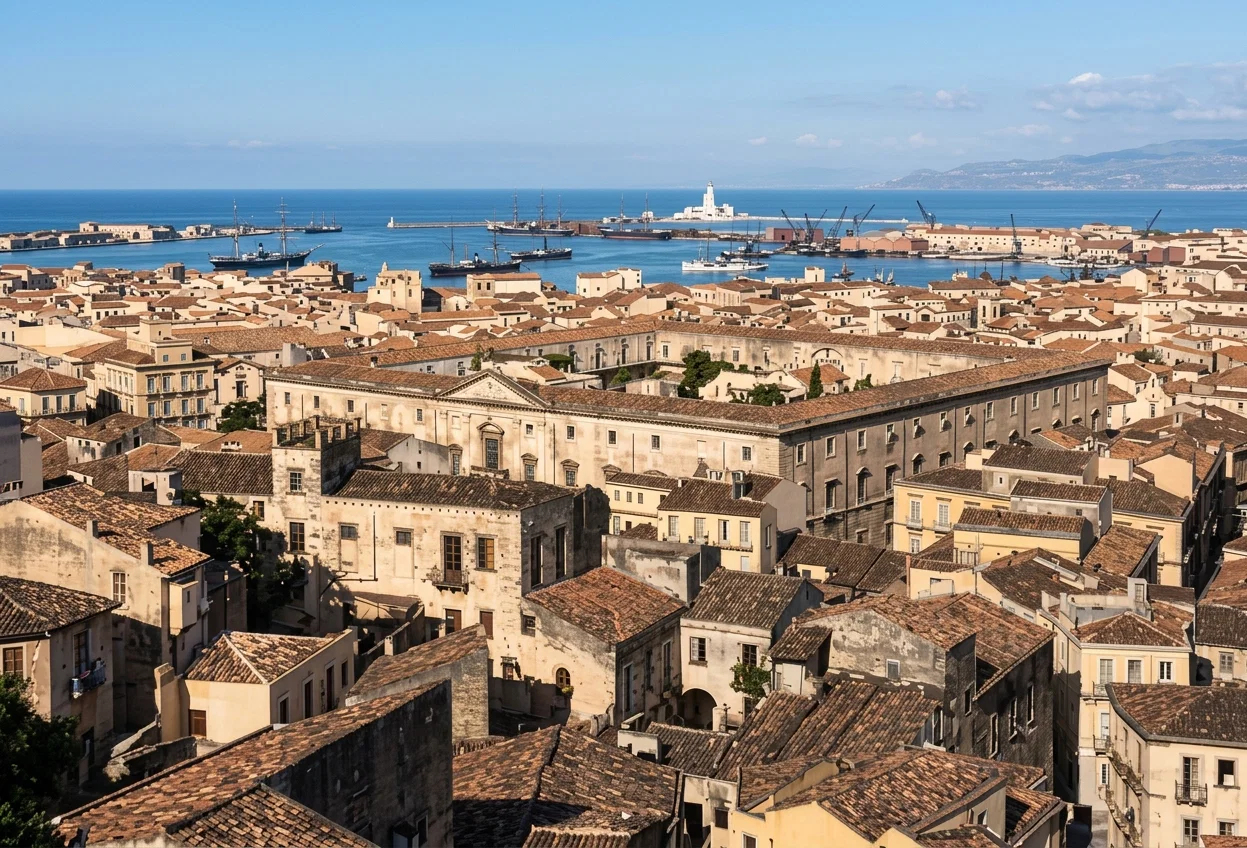
A View of Messina Before the Earthquake.
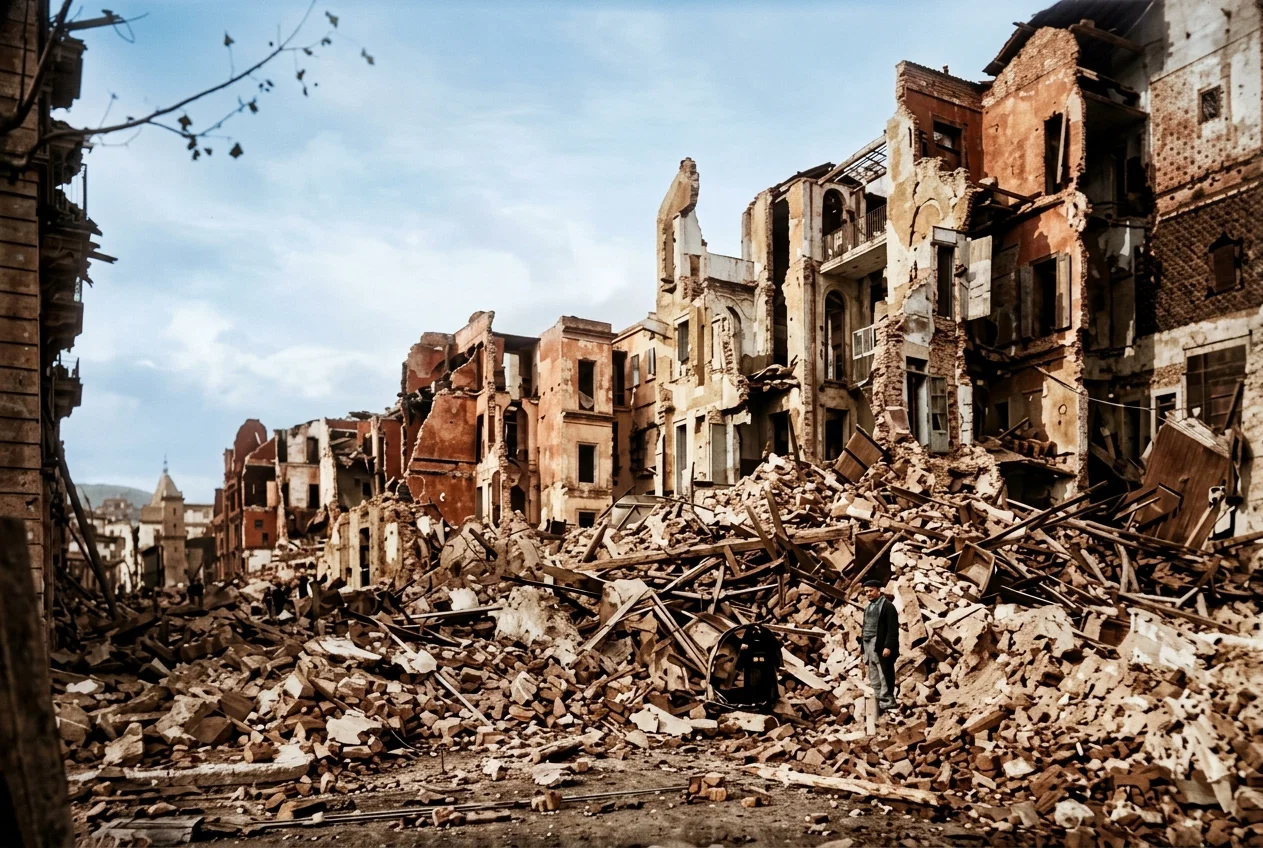
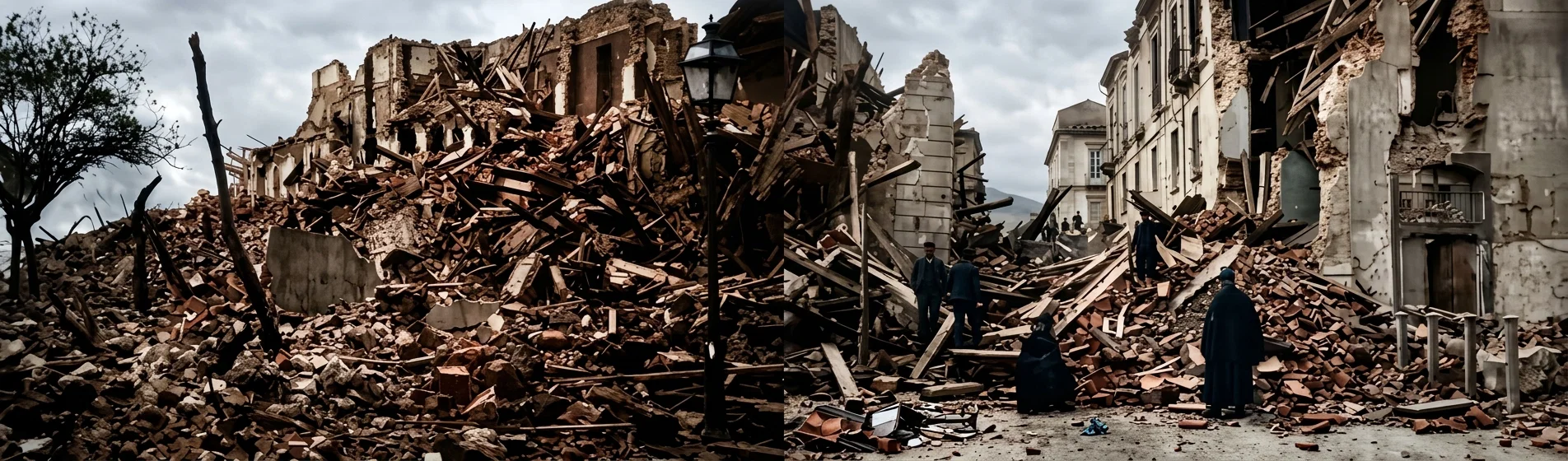
A Portion of Messina After the Earthquake.
After a sojourn of several days in the land of death and desolation, I am back again in the “Eternal City.” The mighty catastrophe that devastated southern Italy, the morning of the 28th of December last, eclipsed in destructibility all the earthquakes that have ever visited this old world of ours. Tongue can never describe nor pen portray the terrible ravages wrought by the great tremblore in a few seconds of time on one of the most beautiful spots of this fair land.
The words of the Italian Minister of Justice, fresh from the scene of the disaster, will help us to form some idea of the cruel cataclysm: “It is such a terrible catastrophe that it is impossible to find words adequate to portray it. It is certainly a calamity that can not be conceived of with the highest flight of imagination. The first reports of any disaster are usually highly colored and greatly exaggerated, and so I had hopes that such might be the case in this instance; but the spectacle that met my gaze can find its portrayal only in the apocalyptic descriptions of the end of the world.”
And the following words pronounced in the Italian parliament by a member representing one of the devastated regions will help to render the picture of the calamity more vivid: “In a cataclysm which no human mind could ever have conceived, not even the dreams of a Macaberesque fancy, that no word can describe or pen portray, we have lost everything. An entire people, or nearly so, have perished, and with their destruction fell the roofs under which our fathers were born and where we first saw the light of day: the churches where our mothers prayed; the museums where our treasures of art were collected; the archives where our documents of state and history were deposited: we have lost everything as if nature had wished in a moment of time to interrupt centuries of our history.”
“The catastrophe has overturned everything in its destructive fury. Commercial, social, industrial, and, in fact, every phase of life has come abruptly to a close. Men who before the earthquake were rich, go groping around among the ruins, reduced to paupers; orphans are found who are ignorant of their name and their family; there is hardly a survivor who has not lost all or a part of his family, and I do not know whose lot is more sorrowful, whether it be that of the people buried under the ruins, or the living who must affront the great calamity in all its terribleness.”
These words may seem to be born of a momentary agitation or a flight of eloquence, and not entirely in conformity with the facts in the case, but after one has climbed over mountains of debris for hours and hours at a time, and seen ruins and nothing but ruins as far as eye could see, and witnessed death and distress sown broadcast on every hand, he is fully convinced that the half of the gruesome story has never been, nor will ever be, told.

The Territory.

The cities razed to the ground by the terrific earthquake shock were situated upon the Straits of Messina, just where the toe of the Italian boot almost touches “the pearl among islands,” Sicily. Upon these smiling shores nature has bestowed with a lavish hand the choicest of her gifts. Seen from the opposite shore of the channel, Reggio or Messina presented a most charming aspect, with their white houses shining in the glorious Italian sunlight, at the foot of beautiful hills covered with vines and groves of orange, lemon, mulberry, and other fruit-trees. These cities, overhung with the radiant canopy of the deep blue Italian sky and reflected in their shining waters of the straits, formed a picture of a veritable fairy-land basking in the climate of eternal spring-time. The words of Byron will more fully describe this beautiful land:
“Thou art the garden of the world, the home Of all Art yields, and Nature can decree: E’en in thy desert, what is like to thee! Thy very weeds are beautiful, thy waste More rich than other climes’ fertility.”
This region has a very old and varied history. As I was wandering through Reggio, I saw upon the front of the cathedral the inscription, “Acts 28:13,” which refers to the visit of the apostle Paul to this historic town.
Messina, Reggio, and many towns and villages adjacent to them, were wrapped in deep sleep the morning of December 28, when at 5:20 the earthquake giant arose in all his fury and dealt the most decisive blow that he has ever given humanity in all its history.
The inhabitants of these beautiful towns went to bed the evening before without the slightest warning of the fate that awaited them. Peacefully they slept, cradled in the beautiful arms of nature, little suspecting that old mother earth would that night play havoc with her slumbering children.
The earthquake lasted about 32 seconds, but it was a terrible shock. It seems as if the earthquake literally picked up the houses and then dropped them all in a heap. Some of the buildings were three and four stories high, and its looks as if the floors fell through and then the walls closed in upon the unfortunate sleepers. It was absolutely impossible to dream of escape in the case of the greater part of those that perished in the catastrophe. Death had full sway and gathered into its grim bosom all without regard to age or condition.
The story of the catastrophe might be told in a few words: a terrific shock, a mighty cloud of dust arising from falling buildings, a wail of distress and anguish, followed by deep silence and impenetrable darkness, and many beautiful towns and villages were transformed into extensive cemeteries in which were buried dead and living.
Some who managed to escape from their homes, while hurrying down the streets, were buried under the falling walls which closed in over them from either side of the street and made escape impossible. And when it is taken into consideration that almost all the people were asleep at the time of the earthquake, and that there is scarcely a house left intact, we no longer wonder that so many perished, but rather that any escaped.
The population of Messina before the earthquake is estimated at 160,000 inhabitants, of which 100,000 are supposed to have perished in the catastrophe. Of the 60,000 inhabitants composing Reggio, it is estimated that more than half perished. Besides these two larger cities, there were about two hundred smaller towns and villages which were almost wiped out. The total number of victims that perished in the mighty catastrophe is put as high as 200,000 souls. Besides, thousands were wounded, and some of these died as a result of their injuries. Others were reduced to a deplorable condition, without a living relative to share their unhappy lot.
A Pile of Ruins, Reggio. Palace of the Prefect, Reggio.
In comparison with this mighty catastrophe, some of the great earthquakes of the past seem mere child’s play. San Francisco, with its 1,000 victims (probably nearer 5,000.—Ed.), and Lisbon, with its 50,000 sacrificed to the Moloch, earthquake, seem to lose much of their terribleness when put alongside of this great cataclysm.
The earthquake was accompanied, as in the case of the Lisbon disaster, by a great tidal wave. The mighty tremblore rolled the sea in upon the stricken cities, engulfing many of the people who had escaped from the clutches of the earthquake. In one place a boat was hurled hundreds of yards up against a railroad bridge. At Pellaro the lower part of the town disappeared under the sea. It was estimated that in that beautiful town of about 6,500 inhabitants, the greater part were swallowed up by the greedy sea. In Reggio, I saw several freight-cars in the sea and railroad-tracks suspended in mid-air as the bank had been washed away by the tidal wave. I saw a whole line of freight-cars so terribly damaged that a great railroad wreck could not have reduced them to greater ruins. At places the shore has been greatly lowered so that the sea covers a great section of the bank. Merchandise was scattered upon the turbulent waters. The aspect in general was one of a combination of all the calamities to which mankind is subject.
Great fissures are to be seen in the streets, especially in those bordering the sea. It is said that at Reggio, behind the railroad station where a huge fissure is to be seen, hot water and gases gushed forth. It is certain that in other localities boiling water issued forth, at times rising to quite a height. In one place there has been formed a fissure 650 feet long by four feet wide and sixty feet deep; the people call it the “gateway to hell.”
One of the guards stationed on the sea-shore stated that while doing service on the shore, suddenly an immense wave rolled in upon him, dashing him against the debris close at hand and then carried him out to sea, and if he had not been able to swim, he would have been lost, as were his companions, in the turbulent waters and the deep mud formed on the shore. Many bodies were washed ashore by the sea on both the Sicilian and Calabrian sides of the straits, for the distance is not very great from Messina to Reggio, only about forty minutes’ ride on the ferry-boat.
Dense darkness reigned everywhere immediately after the tremblore had begun its deadly work, as all the lighting plants were quickly disabled by the terrific shock. Suddenly the awful scene was lighted up by the fires which broke out here and there in different parts of Messina, and which helped to destroy the little that was saved from the earthquake and the tidal wave.
The terror-stricken people who survived these terrible onslaughts of the tremblore, the sea, and the fire, were drenched by the torrential rains that pelted down upon them unmercifully as they sought a refuge from the falling walls, in the open country. In fact, it seems that every element of destruction that nature holds in her storehouse was turned loose on this wretched people to insure as complete a catastrophe as it is possible to imagine. Then, added to the deadly work of the destructive forces of nature, the ferocious nature of man asserted itself to render the scene more gruesome. At the time of the earthquake, the prison of Messina contained about 500 prisoners. Of these, about three hundred escaped destruction, and were turned loose on the doomed city. Then from the neighboring towns and villages, the Sicilian brigands hurried to the spot of the disaster and began to loot and plunder, sparing neither living nor dead.
The city authorities, the police, and the garrison, were almost completely destroyed by the earthquake so that the city was left the prey of these bandits until help could be obtained from the government. But as all means of communication were completely cut off, the arrival of troops was delayed for some time. In the meantime these hyenas in human form looted everything that they could put their hands on, stripping the dead and terrifying the living.
A lady who was buried under the debris called to a passer-by, who proved to be a robber, and he came to her rescue only to relieve her of her rings and cut off one of her fingers to obtain one ring that he had not the patience to remove. A marchioness shouted from a window for help, when a robber came to her aid and relieved her of her rings and a finger. Many similar acts might be mentioned, but these will suffice to show that the most ferocious beast of this globe is man when depraved by sin. For even the beasts of the forest seem to have a heart when calamity overtakes one of their number.
These dastardly deeds highly incensed the whole Italian nation, and the earthquake-stricken region was in consequence immediately put under martial law. It is said that several hundred robbers have been shot by the military authorities since the earthquake. The last day that I was at Messina I saw four robbers in chains being conducted to the temporarily constructed jail of the military tribunal.
The Russian and English marines, who were among the first to arrive on the spot of the disaster, performed wonderful deeds of heroism in rescuing the unfortunate inhabitants of the earthquake-stricken districts. They also showed great bravery in warding off the brigands who had invaded the place. The self-sacrifice and ceaseless activity displayed by these brave marines won the applause and affection of the Italian people. They certainly merit all the praise that has been bestowed upon them, for they worked like Trojans, running here and there, wherever they heard a cry of distress, digging out those who were buried under the debris and carrying them to the hastily constructed hospital, equipped by the supplies that they had aboard their war-ship. Many were thus rescued who would otherwise surely have perished. However, it must not be imagined for a moment that their work was anything like adequate to the great needs of the case. For with about 200,000 persons buried under the ruins of 200 cities and villages, what could a few marines accomplish, even with a Herculean effort? For while riding on the ferry-boat, I could see, by means of a field-glass, town after town, village after village, and isolated buildings in the country that were but piles of ruins.
C. E. MILTON.
(Continued next week.)

Opium Importation and Prohibition

One of the subjects in Washington which is causing more or less discussion is the matter of opium. A revenue of a million dollars is, it is said, at stake on the matter of smoking-opium which is imported into this country; a large part of which is used in California. Those who favor prohibition do it on moral grounds; some would permit it for the sake of the revenue, the same as they do whisky selling.

U.S. Steel Earnings Fall in 1908

The net earnings of the fourth quarter of 1908 of the United States Steel Corporation netted $26,225,485, being over six million less than in 1907, and fifteen million less than in 1906. The falling off was occasioned by the company doing only about 58 per cent of its normal business. The total net earnings in 1908 were nearly $92,000,000.
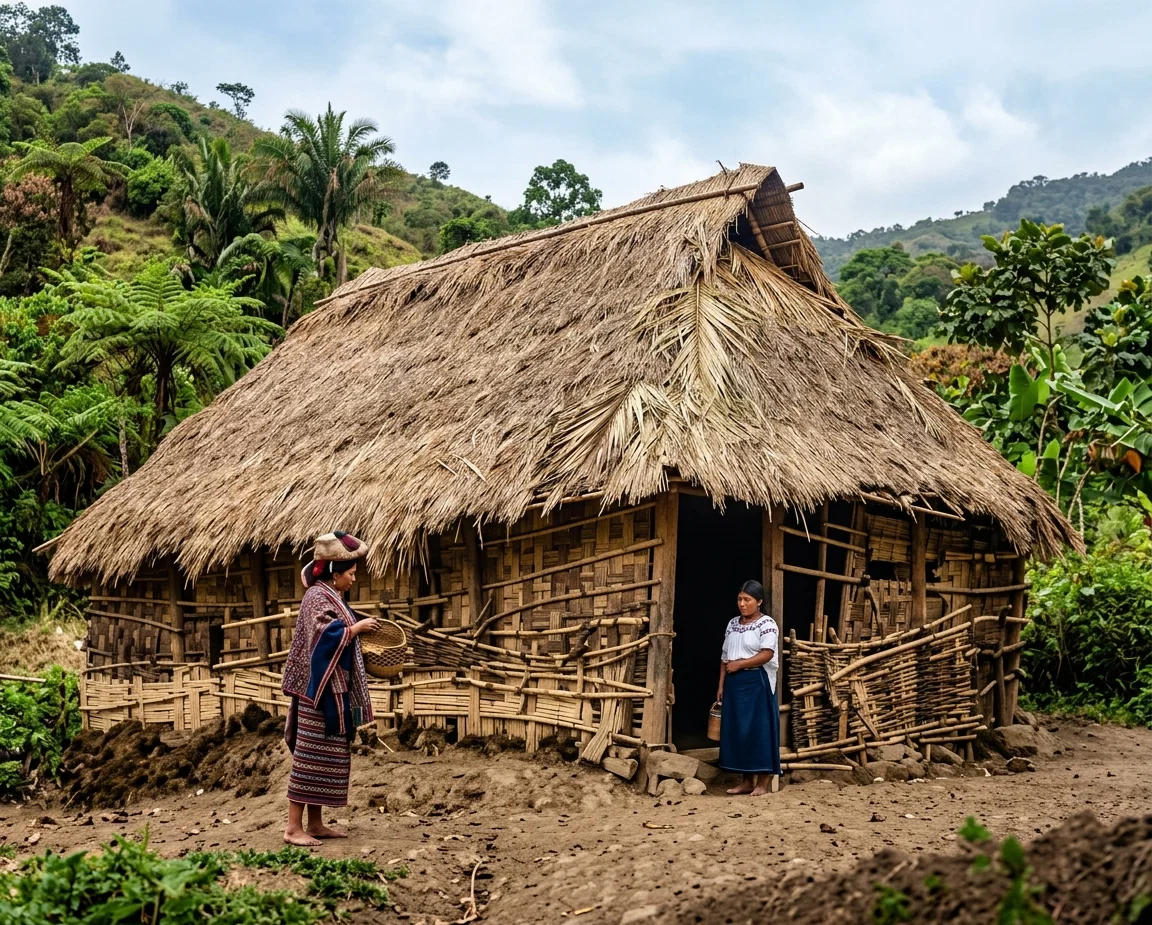
Typical House of Ecuador Indians.

Ecuador.

During the last session of the South American Union Conference, held in Argentine in the month of March, 1908, we were asked to go to Ecuador to take charge of the work there. Altho we have passed through serious trials in the work in Chile, yet we were loath to leave, as we liked the country and enjoyed working for this people. But considering the needs of the fields, we finally decided to make the change.
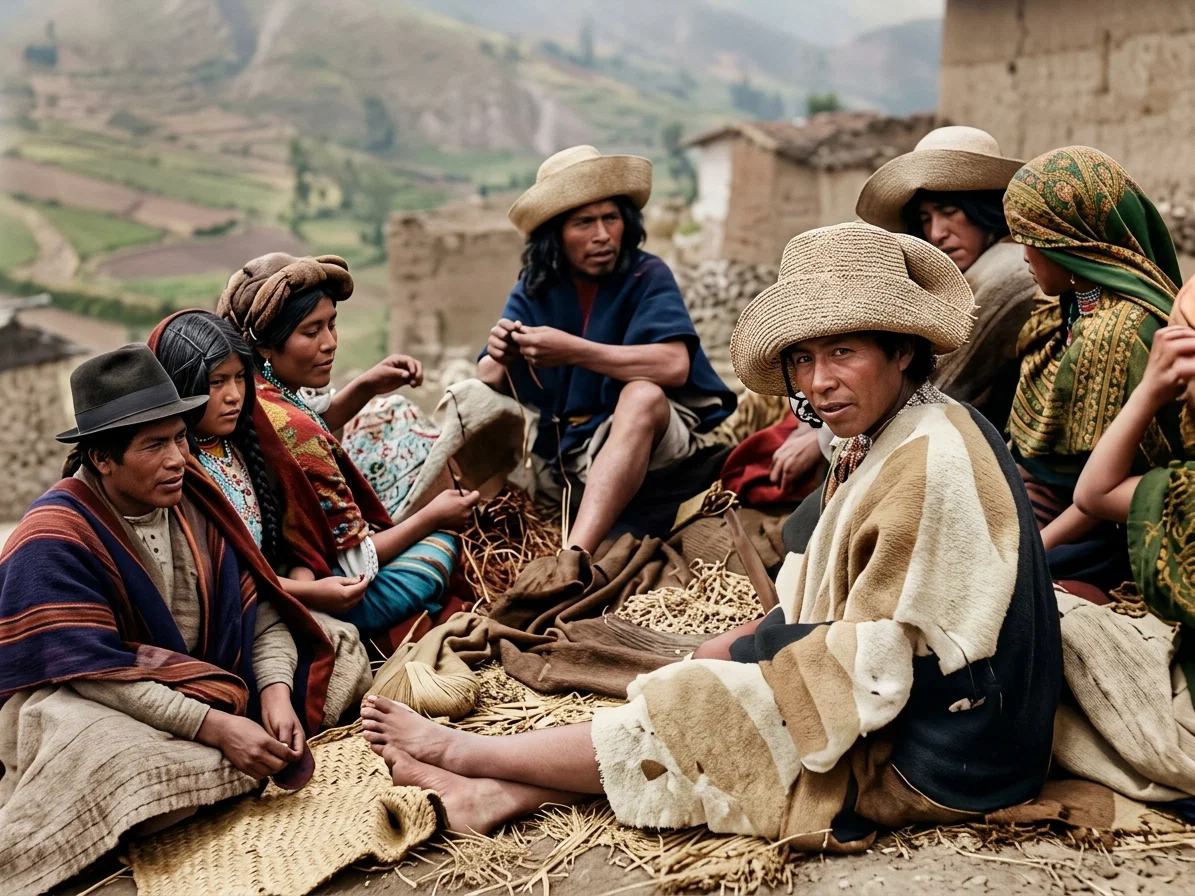
Costumes of Native Indians of Ecuador.
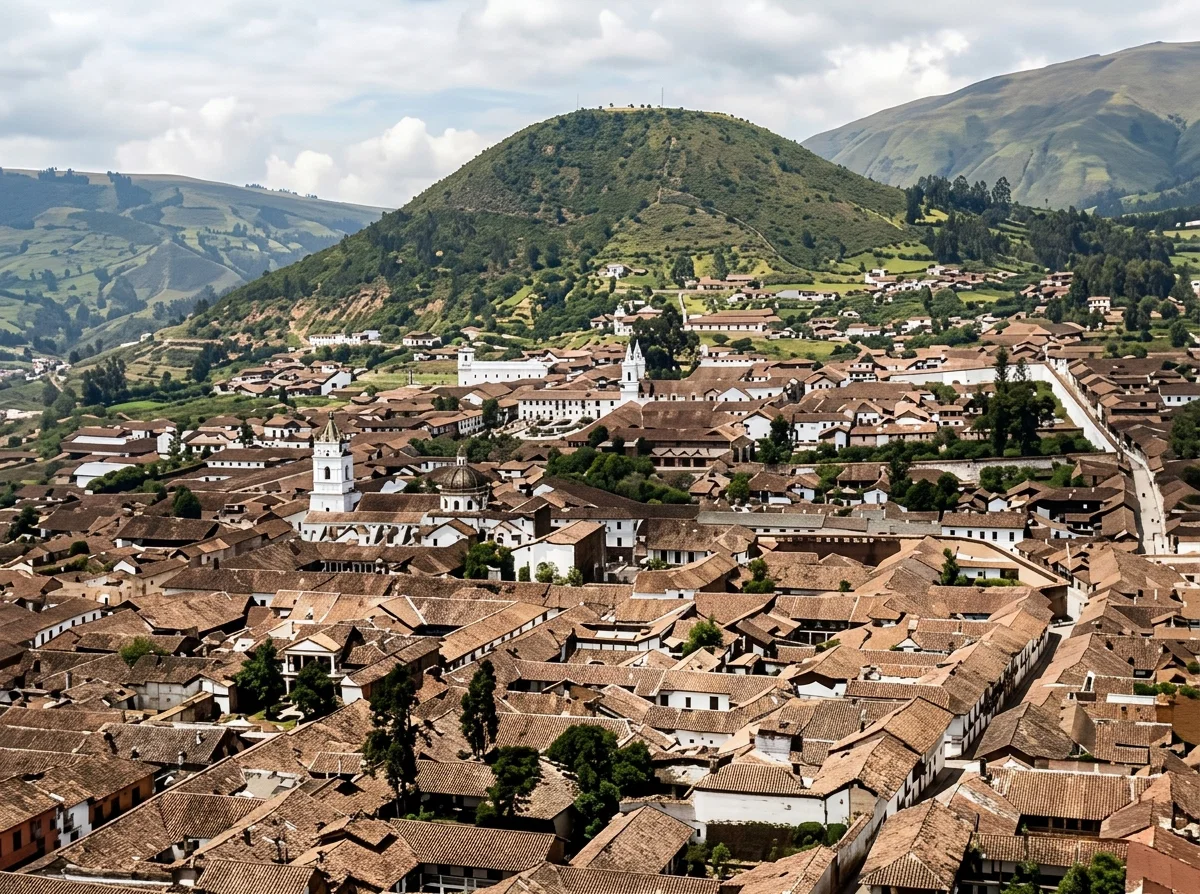
Panorama of Quito, Ecuador.
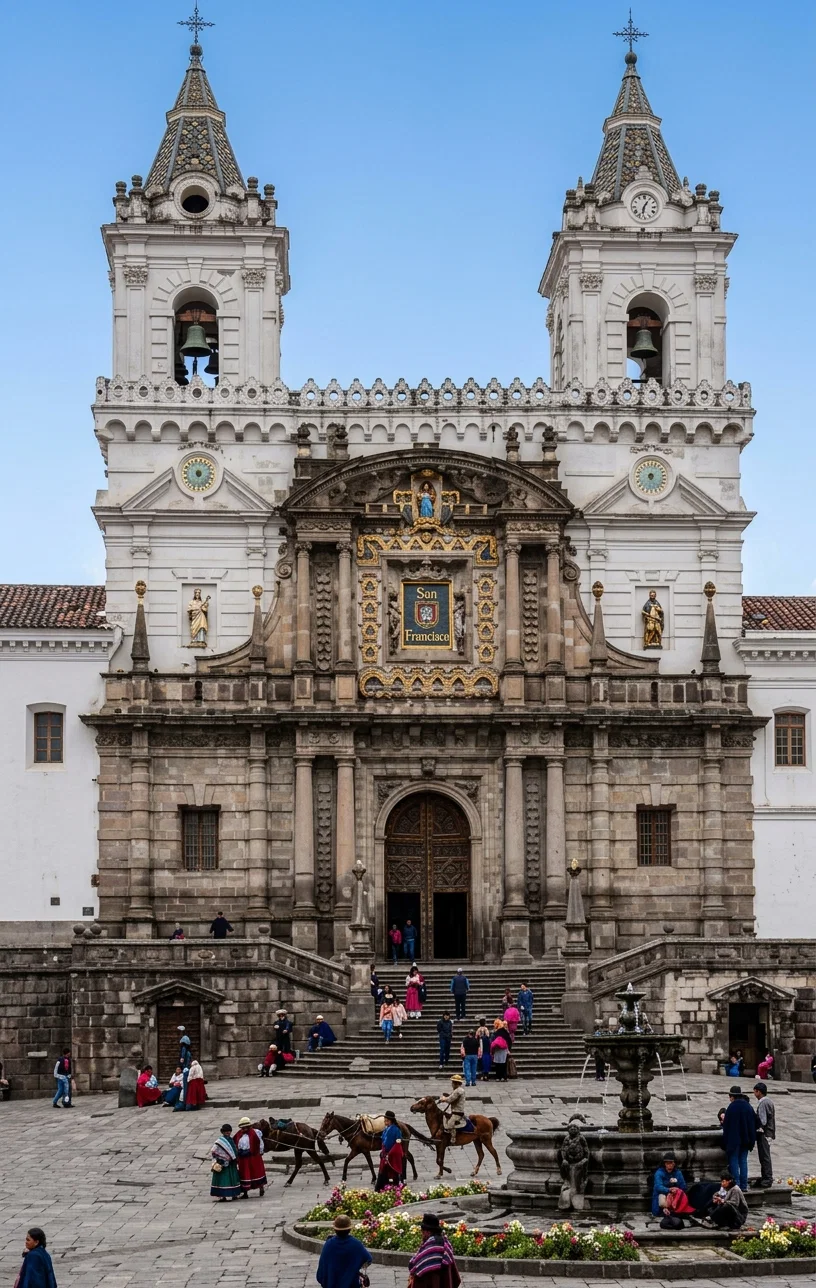
Cathedral of San Francisco, Quito, Ecuador.
We sailed from Valparaiso, May 30, and were joined at Iquique by Brother Octavio Navarrete and wife. This is the same brother of whom I wrote after the earthquake as having such marvelous success selling our paper, Las Señales de los Tiempos. Since that time he has continued in the canvassing work, selling thousands of books, papers, Bibles, and tracts.
We arrived in Callao, Peru, June 10, where we were met by Brother Perry, who has charge of the work in that field. We remained there one month.
During our stay, in company with Brethren Perry and Espinoza, we visited the interior, looking for a site to establish a mission school among the Indians. There are about 5,000,000 of these poor people in Bolivia, Peru, and Ecuador, who are nothing more than slaves to the land owners and the priests. They are the remnant of the ancient Incas, who at the time of the conquest numbered more than 40,000,000. The Incas had the best government that has ever existed in this world, except, perhaps, that of ancient Israel. The one object of the government was to better the condition of its subjects. It is true they worshiped the sun, which to them embodied life and all they possessed. But one sad day the Spaniard came seeking riches and bringing one of the greatest tyrannies that the world has ever known, church-and-state religion. The treasure-hunters took all the riches of the nation and destroyed the inhabitants by overwork in the mines. The priests took away their images of the sun and gave in their stead images of the saints and the cross; by force the poor Indians had to worship them without understanding why. Thousands who refused were put to death. Finally that proud nation, the Incas, which enjoyed a higher state of civilization than her conquerors, perished, and there remains to-day only a remnant, given to every class of debauchery.
How to give the Gospel to this poor people is one of the greatest problems with which we have to deal. Probably the best way would be by mission schools like those established for the negroes of Africa. Here a number of bright young Indians could be gathered together and taught the fundamental principles of the truth, and these in turn could carry it to their people.
We can not work among the Indians with literature because there are very few who can read. The Catholic Church still keeps them in ignorance.
July 12, we reached Guayaquil, and three days later came to Ambato, where Brother Davis has lived for about two years. The last year he has been able to do but little, having the sole care of his little children. He expects to leave soon for Chile to take charge of the canvassing work on the west coast.
As soon as possible after our arrival the three of us went to Quito, the capital, to become acquainted with the city and to do some missionary work. Brother Davis took orders for “Patriarchs and Prophets,” and Brother Navarrete and myself worked with Las Señales de los Tiempos. During the three days we worked, we took sixty yearly subscriptions, besides selling many collections and single copies. Brother Davis took more than thirty orders for “Patriarchs,” but in the Catholic strongholds many refuse to receive them on delivery because they are Protestant books and the priest has condemned them.
On our return to Ambato, we decided to hold some meetings, if possible. We hunted the town over for a room, but when the people found we wanted it for meetings, all refused to rent to us.
Through the mayor and his secretary, who are liberal, we secured the theater free for two weeks. Thus far we have held four meetings. The first night there were about 200 present. The second night, about 100. Just before the close of the meeting, a mob stoned the theater. In shutting the door, two of the brethren were struck by flying stones but were not injured. When we dismissed the meeting, the mob dispersed, but on our way home many stones were thrown at us, but thanks to the protecting care of God we escaped unharmed. Since then we have had the protection of the police.
This is one of the most difficult parts of Ecuador. If we distribute tracts or papers, the greater part of the people tear them up or burn them without reading. The priest tells them it is a mortal sin to read one. He also has threatened to excommunicate all who attend the meetings. Those who attend are chiefly young men. Last night Brother Navarrete distributed some tracts after the meeting, and the people made a bonfire of them in the street.
Yesterday, while I was distributing invitations to the meetings, one good old Catholic woman picked up a last and invited me to step into her house that she might brain me with it. She said, “We are Christians, and want nothing to do with your doctrine.”
“Pardon me,” I said, “but I doubt it very much, as true Christians do not act as you are acting.”
As a rule, the women are more fanatical than the men, being virtually slaves of the priests. If the people were not afraid of the law, which is very liberal, we would quickly be put out of existence.
We expect to continue the meetings a few nights longer, then go to the coast to work, as now is the most favorable time of the year to work there.
WILLIAM STERLE.
Apartado 3, Ambato, Ecuador.

The Song of Life’s Brigade.

WOUNDED? Yes, but marching And singing as we go; Singing up to victory, Or death before the foe.
Weary? Yes, but marching, And thirsty as we cheer, That other flagging footsteps May quicken as they hear.
Fainting? Yes, but marching, To bear a comrade slain Beyond the glare of battle To friendly beds of pain. — Martha Gilbert Dickinson Bianchi.
Continue reading: California Association Annual Meetings