“Thus saith the high and lofty One that inhabiteth eternity, whose name is Holy: I dwell in the high and holy place, with him also that is of a contrite and humble spirit, to revive the spirit of the humble, and to revive the heart of the contrite ones.”
Christ dwells in him who receives him by faith. The trials may come upon the soul, yet the Lord’s presence will be with us. The burning bush in which was the Lord’s presence did not consume away. The fire did not extinguish a fiber of the branches. Thus will it be with the feeble human agent who puts his trust in Christ. The furnace fire of temptation may burn, persecution and trial may come, but only the dross will be consumed. The gold will shine brighter because of the process of purification. Greater is He that is in the heart of the faithful, than he that controls the hearts of unbelievers. Complain not bitterly of the trial which comes upon you, but let your eyes be directed to Christ, who has clothed his divinity with humanity, in order that we may understand how great his interest in us since he has identified himself with suffering humanity. He tasted the cup of human sorrow, he was afflicted in all our afflictions, he was made perfect through suffering, tempted in all points like as humanity is tempted, in order that he might succor those who are in temptation. He says, “I will make a man more precious than fine gold, even a man than the golden wedge of Ophir.” He will make a man precious by abiding with him, by giving unto him the Holy Spirit. He says, “If ye then, being evil, know how to give good gifts unto your children, how much more shall your heavenly Father give the Holy Spirit to them that ask him?”
The Lord has instructed us to call God our Father, to regard him as the fountain of paternal affection, the source of the love that has been flowing from century to century through the channel of the human heart. All the pity, compassion, and love which have been manifested in the earth have emanated from the throne of God, and, compared to the love that dwells in his heart, are as a fountain to an ocean. His love is perpetually flowing forth to make the weak strong, to make the faint-hearted firm, and give moral courage to the wavering. God works through Christ, and man may come unto the Father in the name of the Son. Our science and our song is, “Hear what the Lord hath done for my soul.”
Who can comprehend the gift of Infinite Love? “When the fullness of time was come, God sent forth his Son, made of a woman, made under the law, to redeem them that were under the law, that we might receive the adoption of sons.” For centuries before the manifestation of Christ to the world, God exercised forbearance toward a rebellious world. He saw his holy law trampled in the dust, and he let his judgments fall upon the world in a flood; but man did not learn the lesson from this experience, and turned to his rebellious ways.
Again men multiplied upon the earth, and again they took the attitude of rebellion against God. Loyalty to the law of God was not only condemned, but punished as a crime. Men made void the law, and naturalized the principles of sin. Those who did not disregard the law of God were subject to the strongest enmity; for every species of sin was legalized. Satan boasted before the angels of heaven that he held dominion over the creation of God. The unity of society was made by enmity to God. A corrupt harmony existed among men in their aversion to God, which bound them together in one vast army. The universe of heaven, and the angels of God, were watching for the exhibition of justice, but when the unfallen worlds expected retribution to be administered, mercy prevailed, and the counsel of God was with the Prince of heaven. He was to unfold the scheme of redemption, to make manifest the plan of salvation. He who was equal with God, who was great in counsel, mighty in working, was equal to the emergency that had arrived in the government of God. God sent his Son into the world, not to pass sentence of condemnation upon a rebellious race, but to make manifest his love, and to hold out the hope of eternal life to those who should believe in his Son.
Here was love, and amazing grace that triumphed over justice. Retribution fell upon no less a personage than the Son of the Infinite God, and the universe of heaven rejoiced in the glory of God’s benevolence and self-denial in giving the Prince of heaven to our world. Such love was beyond the comprehension of heavenly angels. Christ came to the world to seek his lost pearl, and he had to go through the gates of death to recover his lost jewel. For “as Moses lifted up the serpent in the wilderness, even so must the Son of man be lifted up; that whosoever believeth in him should not perish, but have eternal life.” All who look to him in faith will be healed of their spiritual maladies. He is the Balm in Gilead, he is the great Physician. Christ was the one who consented to meet the conditions necessary for man’s salvation. No angel, no man, was sufficient for the great work to be wrought. The Son of man alone must be lifted up; for only an infinite nature could undertake the redemptive process. Christ consented to connect himself with the disloyal and sinful, to partake of the nature of man, to give his own blood, and to make his soul an offering for sin. In the counsels of heaven, the guilt of man was measured, the wrath for sin was estimated, and yet Christ announced his decision that he would take upon himself the responsibility of meeting the conditions whereby hope should be extended to a fallen race. He understood the possibility of the human soul, and united humanity to himself, even as the vine knits the grafted branches and twigs into its being, until, vein by vein, and fiber by fiber, the branches are united to the living Vine.
The merchant man sold all to buy the pearl of lost humanity. The sinner also is to lay down his all in order to become a partaker of the divine nature, having escaped the corruption that is in the world through lust. He who unites with Christ has his life hid with Christ in God. Christ and the believing soul are joined by the bands of love, and the Lord calls this union “continuing in his love.” He says: “If ye keep my commandments, ye shall abide in my love; even as I have kept my Father’s commandments, and abide in his love.” “As the Father hath loved me, so have I loved you; continue ye in my love.”
Jesus takes man into copartnership with himself, and the unity and love between Christ and his Father bear the credentials to the world of Christ’s divinity. Transformed in character, the believer presents the fact that Christ alone can reshape, purify, and ennoble the soul. The love that God has manifested toward men has no parallel. Jesus says, “Therefore doth my Father love me, because I lay down my life” for the sheep. In this expression he would prove to man that the Father’s love is so large, so unbounded towards man, that he even loves the Son for the sacrifice which he made for the recovering of humanity. God himself suffered in the suffering of his Son. While Jesus walked the earth in the habiliments of humanity, he could say, “I and my Father are one.” Having undertaken the work of redemption, the Lord spares nothing, however costly, which is essential to the completion of his design. He withholds not heaven itself, but continues to surround men with its favors, heaping gift upon gift, until the world itself is flooded with its boundless mercy and love. Jesus says, “These things have I spoken unto you, that my joy might remain in you, and that your joy might be full.”
PRAYER
By C. H. Spurgeon
Prayer is to us a reality; and God hears it and answers us, and gives us many evidences of his love in the answers to our prayers. Some of these we can tell to the praise of his glory; but there are ten times as many which we would not tell for all the world, for they are like love passages between two enamored souls—they are too precious to be whispered to other ears. It would be casting pearls before swine if the spiritual man, who dwells with God apart, were to tell all that he asks of God, and all the Lord’s answers to his prayers.
But, O, believe me, you can not enjoy real fellowship with God in prayers, and come out of the closet with Luther’s, “Vici! Vici!” (I have conquered! I have conquered!), on your lips, and live to enjoy the fruits of your victory in wrestling with God in secret, and then have any doubt whether you have a right and title to the eternal heritage. The6prophet Micah said, “My God will hear me,” and if you can truly, from your soul, say the same, you have a blessed evidence that you are an heir of heaven.—C. H. Spurgeon.
Down by the Sea
By Eliza H. Morton
BY ELIZA H. MORTON.
Down by the sea, the wide, deep sea,
Our Saviour walked,
Down by the Sea of Galilee
He preached and talked.
Sad were the hearts, the weary hearts,
That came to him,
Sweet was the word the people heard
Through shadows dim.
Glad was the song, the happy song,
That Love gave birth:
“Glory to God, glory to God,
Good-will on earth.”
Down by the sea where all must go
The boatman pale
Stands on the shore, and evermore
Cries out, “All hail!”
Down by the sea, the wide, deep sea—
Jesus the same,
Ready to save from the dark, cold grave,
Praise to his name.
North Deering, Me.
THE SPIRIT AND THE SINNER.
By Wm. Covert
BY ELDER WM. COVERT.
Sin is contrary to all life and righteousness, but so deceitful that its presence is scarcely recognized by the sinner himself. His condition is one which is described as “dead in trespasses and sins” (Eph. 2:1), or “alienated from the life of God” (Eph. 4:18), and “strangers from the covenants of promise, having no hope, and without God in the world” (Eph. 2:12). This condition is a heedless, careless, indifferent one, with no convictions of sin, listless and benumbed to all claims of righteousness.
In this condition the sinner yields almost unquestioned obedience to sin. As Paul, speaking to them, says, “Ye have yielded your members servants to uncleanness and to iniquity.” While this was their attitude toward sin, he remarks, “Ye were free from righteousness.” Rom. 6:20. In this dead state they heeded not the demands of righteousness. There was then no life in their natures which responded to the Life which is the Source of all righteousness. Sin is negative in its kind to all that is good. It is repellant to righteousness.
Therefore, in the situation as seen from the above description, the sinner is a living organism, whom God says he has created for his glory, and yet that organism is prostituted to the service of Satan. In this case God is giving the sinner life physically and caressing him with countless blessings and tender mercies; and yet his service is given to the enemy. To bring about a change in the condition of the sinner which will enable him to see his danger, is what is needed. The Lord is continually working by his Spirit to accomplish this change. The Saviour said of the Spirit, “When he is come, he will convince the world of sin.” John 16:8, margin and R. V.
Notwithstanding the dormant condition of the sinner, yet it may not be said that he is totally depraved in the sense that he has no conscience. Sin has dulled and benumbed the spiritual attributes, and kept them from developing. Man has yielded to the calls of the flesh, and obeyed the demands of a spirit which will call into action only the grosser propensities, until in many cases the call of God’s Spirit is never heeded. Often he can see enough to know that he is a sinner, and yet not have quickness of touch which will beget an action and produce a change. With such there is no conviction. There is then no calling upon God to remove guilt and save from condemnation. Those who reject the pleading of the Spirit are then left to perish in their own corruptions. The sin must be destroyed, and if the transgressor has chosen to remain with his sins, he can hope for nothing but to perish with them.
It is of these that the Lord says, “All day long I have stretched forth my hands unto a disobedient and gainsaying people.” He urges them to choose life, saying, “Repent, and turn yourselves from all your transgressions; so iniquity shall not be your ruin.” Eze. 18:30.
But the sinner should never try in the strength of himself to overcome. This would only be self against self, flesh against flesh— sin endeavoring to overcome sin. In this case the result is only lost effort. Jesus says, “It is the Spirit that quickeneth.” John 6:63. The flesh must yield the ground to the Spirit, and let the Lord work in his own way.
There is such a thing as man yielding his will or spirit unto the will of God, and letting God work. In that case man still has a will, but it is controlled by God’s will, enveloped in the strength and Spirit of the Infinite One. It was when the apostle was speaking to this point that he said, “Ye are not in the flesh, but in the Spirit, if so be that the Spirit of God dwell in you.” Rom. 8:9. And again, “If Christ be in you, the body is dead because of sin; but the Spirit is life because of righteousness.” Verse 10. Because of sin the flesh should not be permitted to rule in our own bodies. The tendencies of the flesh are such, because of sin, that they would even destroy our bodies. Therefore the Spirit must rule the whole being. Body, intellect, and will, must all be under the control of the Spirit of God. From these considerations the apostle further writes: “Therefore, brethren, we are debtors, not to the flesh, to live after the flesh. For if ye live after the flesh, ye shall die; but if ye through the Spirit do mortify the deeds of the body, ye shall live.” The Spirit imparts ability to do, and a mind to love the works of righteousness, while man abides in its embrace; “for the law of the Spirit of life in Christ Jesus hath made me free from the law of sin and death.” Here is life emanating from the very Spirit of all life; and by the power of this life the sinner is liberated from the thraldom of Satan, and made free in Christ.
It is when this is done that the believer enters upon that sonship relation by which he becomes an heir of God. Having yielded to the Spirit, and accepted the conditions of sonship, he is ready to be guided by the Spirit into all truth. Christ says it is the office of the Spirit to take the things of God and show them to his children. John 16:13–15. But we should be certain that the things which are shown are of God. Therefore the best possible help rendered to the believer by the Spirit of God is through the devout study of the word of God.
THE POWER OF THE WORD.
By Geo. H. Heald, M.D.
BY GEO. H. HEALD, M.D.
“For I am not ashamed of the Gospel of Christ; for it is the power of God unto salvation to every one that believeth.” The Gospel does not simply tell of the power of God; it is the power of God. What is the Gospel?—It is the good news of salvation, the message of God to a lost race. It is the word of God spoken to a world of sinners; and as God’s word, “Let there be light,” was the power of God unto creation, so the word, “I will put enmity between thee and the woman, and between thy seed and her seed; it shall bruise thy head, and thou shalt bruise his heel,” was the power of God unto salvation.
“In the beginning God created the heaven and the earth” by his word; for “by the word of the Lord were the heavens made; and all the host of them by the breath of his mouth;” “for he spake, and it was done; he commanded, and it stood fast.” “For the word of God is living [R. V.] and powerful.” This power is manifested not only in creation, but also in maintaining the universe; for we learn of Christ “upholding all things by the word of his power.” A crude illustration of this power is seen in the engineer who, by a motion of the hand, opens a valve, when the steam starts and maintains the ponderous machinery in motion. So the word of God, which ages ago brought the world into existence, is still powerful in maintaining that existence. This is the word which we might say is the power of God unto creation.
When man had sinned, God in his mercy spoke a message of conditional pardon. That message, while it included the promise of a Saviour, also was the power which enabled man to accept the proffered salvation. The Gospel “is the power of God unto salvation to every one that believeth.” “For the preaching of the cross is to them that perish, foolishness; but unto us which are saved, it is the power of God.” “When ye received the word of which ye heard of us, ye received it not as the word of men, but, as it is in truth, the word of God, which effectually worketh also in you that believe.” “For by grace are ye saved through faith; and that not of yourselves: it is the gift of God.” “Faith cometh by hearing, and hearing by the word of God.”
God’s power is infinite. Could he not have decreed that the heart of the most wicked would be made to praise him? Could not that word which caused light to shine out of darkness, have caused the light of his presence to shine in every darkened sinner who has ever trod the earth? Such would be within the power of an Almighty God; but the earth would then be peopled with those who serve God of necessity, and not with free moral agents, who, having the power of choice, choose the good and not the evil. So in establishing the free moral agency of his creatures, God has to that extent limited the power of his word of salvation (which otherwise would save every being on the earth and in the universe) to those who choose to accept that word. “Whosoever will, let him come.”
That word of God has been, ever since the fall, with mighty power and in various ways, influencing fallen man to accept the mercy of a tender Father. It is “the everlasting Gospel,” which, before Christ’s second coming, is to go “to every nation, and kindred, and tongue, and people, saying with a loud voice, Fear God, and give glory to him; for the hour of his judgment is come.”
Should we not esteem it a most exalted privilege to be permitted to take part in proclaiming this Gospel? While our efforts may seem weak and faltering, and “to them that perish, foolishness,” we can take courage in the fact that God has “chosen the foolish things of the world to confound the wise,” and “the weak things of the world to confound the things which are mighty,” in order “that no flesh should glory in his presence.” Let us, therefore, with Paul, “take pleasure in infirmities, in reproaches, in necessities, in persecutions, in distresses for Christ’s sake,” remembering that God’s strength—the power of his word—“is made perfect in weakness,” is manifested through us when we find ourselves perfectly helpless, and will let him work through us.
Battle Creek, Mich.
Ministers of the Gospel, Not of the Law
THE ministers of Christ are not ministers of the law, but ministers of the Gospel. Their mission is not to advocate the enactment and enforcement of civil law, but to preach the Gospel of Christ, which, when received, will write God’s law upon the heart,
“WHAT SHALL BE THE SIGN?”
By R. J. Hyatt
BY R. J. HYATT.
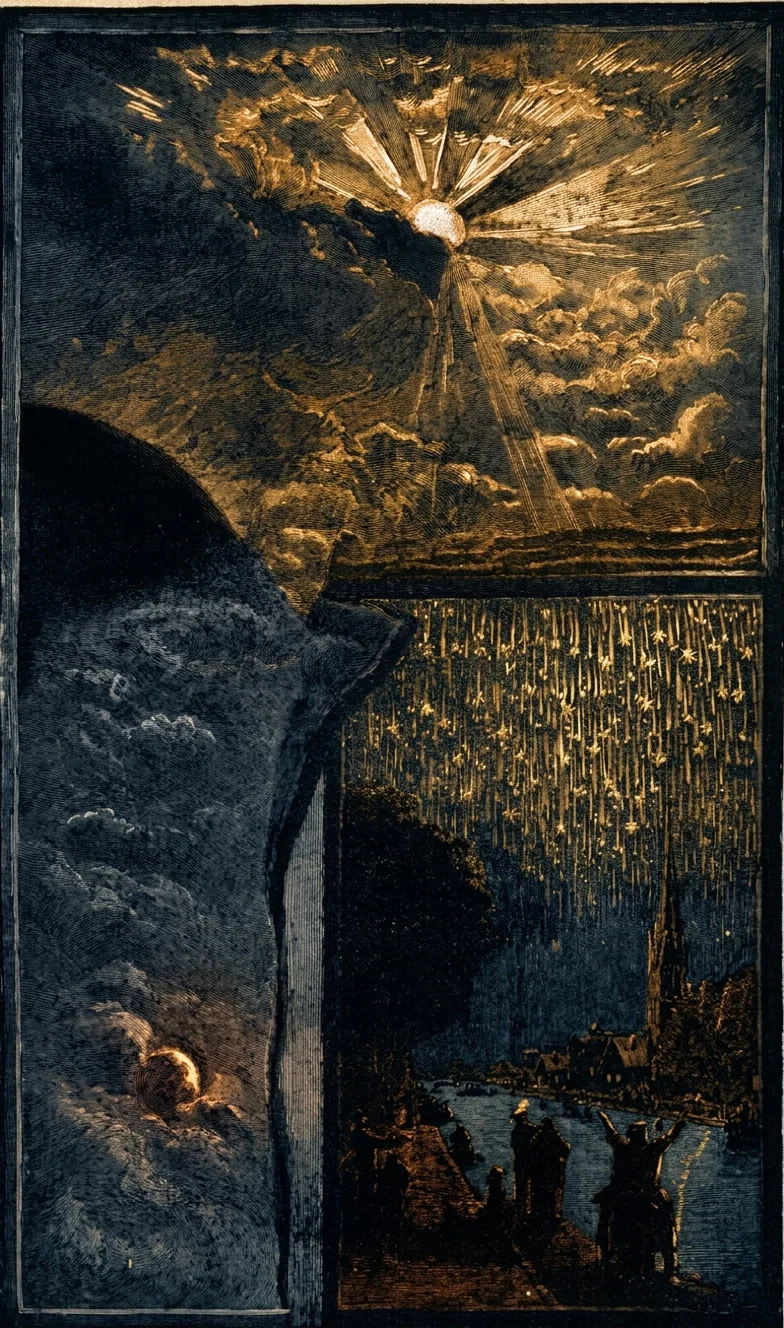
The Mount of Olives, which is before Jerusalem on the east” (Zech. 14:4), is where the disciples came to Jesus “privately” with an interrogation, the answer to which should be of solemn interest to all mankind. The question they asked was, “What shall be the sign of thy coming, and of the end of the world?” Matt. 24:3. Surely it was not a foolish question or he would have kindly reproved them. Instead he proceeded to answer the question concerning that great and important event—the sign of his return—saying, “There shall be signs.” Luke 21:25.
In the consideration of any great event or question there naturally arises in our minds the where, the when, the what, and the how of the matter. So with the sign of Christ’s coming. The World’s Fair in Chicago, May to October, 1893, an exhibition of arts, sciences, etc., displayed and operated in immense buildings, the buildings themselves constituting part of the exhibition, is an illustration, and those four questions were solved before the fair began. So also Jesus gave all this information in regard to the signs of his coming.
1. Where would be the signs of his coming? “In the sun, and in the moon, and in the stars,” etc. Luke 21:25–27.
2. When would they occur? “Immediately after the tribulation of those days.” Matt. 24:29. The tribulation here referred to is evidently that of verse 21, “such as was not since the beginning of the world.” This had its fulfillment during the papal supremacy, commonly called the Dark Ages, when many myriads of Christians were put to death. It was the greatest tribulation of God’s people recorded in history. 2 Thess. 2:3 says, “That day shall not come, except there come a falling away first, and that man of sin be revealed, the son of perdition,” which implies that after the man of sin—the Papacy—had made an exhibition to the world of his wicked exaltation and opposition to God by oppos- ing his truth and wearing out his saints (Dan. 7:25), then we might expect some sign of Christ’s coming. And so there was: “Immediately after” (Matt. 24:29), May 19, 1780, the sun was darkened.
3. What were some of these signs? “After the tribulation of those days shall the sun be darkened, and the moon shall not give her light, and the stars shall fall from heaven.” Matt. 24:29.
4. How did these signs take place? “The sun shall be darkened, and the moon shall not give her light, and the stars shall fall.” How? In Rev. 6:12, 13, in another line of prophecy, we are told that “the sun became as black as sackcloth of hair, and the moon became as blood; and the stars of heaven fell unto the earth, even as a fig tree casteth her green figs, when she is shaken of a mighty wind.” (Margin.)
History tells us that on the 19th of May, 1780, it was so dark that a “sheet of white paper held within a few inches of the eye was equally invisible with the blackest of velvet,” and that “the moon appeared as blood.” Nov. 13, 1833, the stars did fall as green fruit from a tree, that is, from the tree outward all around the tree, while ripe fruit falls straight to the ground. We are also told by witnesses of that wonderful meteoric display that the stars, or meteors, “appeared to emanate from a point in the constellation Leo,” and from this point they fell “as thick as the flakes in the early snows of December.”
“Now,” says Jesus, “learn a parable of the fig tree: When his branch is yet tender, and putteth forth leaves, ye know that summer is nigh; so likewise ye, when ye shall see all these things, know that He is near, even at the door.” Matt. 24:32, 33, margin. In verse 34 he says, “This generation shall not pass, till all these things be fulfilled,” which includes the coming of the Son of man in the clouds of heaven (verse 30). True, but “this generation” does not refer to the people he was talking to, but the people he was talking about, which “shall see all these things,” and the last sign, the falling stars, occurred Nov. 13, 1833; Jesus could refer to no other people than those living on the earth at that time. That generation, which is this generation, shall not pass away, but be living when Jesus comes in the clouds of heaven, with power and great glory, with all the holy angels with him. Many years of this generation are in the past, and surely the “end of the world” is at hand, Christ’s coming draweth nigh.
What are we to do? In Rev. 14:12 we are told what the people of God will have, and what they will be doing. They will have patience, and be keeping the commandments of God and the faith of Jesus. So we are admonished, “Be ye also patient; stablish your hearts; for the coming of the Lord draweth nigh.” James 5:8; Joel 2:1.
Anderson, Ind.
CHURCH AND STATE UNION.
By W. N. Glenn
BY W. N. GLENN.
It has been, and is yet, quite generally assumed that the people of the United States never would accept the doctrine of church and state union. However, in the face of this popular assumption, more than forty years ago the men who led out in the Seventh-day Adventist movement contended that Rev. 13:11-17 was prophetic of a church and state government in the United States; and when the National Reform movement first assumed definite shape, our periodicals and other publications pointed to it as the precursor of the fulfillment of that prophecy. True, the National Reform leaders, while stoutly advocating the principles of church and state government, have all along persistently denied that they designed any such result.
When the American Sabbath Union came into existence, as an advocate of certain special features of the National Reform scheme, its leaders denied any thought of church and state union, altho it was plainly pointed out that the success of the Sabbath Union’s pet measures would logically lay the foundation of a church and state government. To show that the religious people of this country are more ready than is generally supposed to indorse such a principle of government, we have only to refer to the work of three men who have visited the state of California within the past seven years. First there came Rev. W. F. Crafts, as representative of the Sabbath Union, having for his special object the securing of a state Sunday law. He scouted the idea of the movement having anything of the church and state principle in it, for it was only a “civil sabbath” that was contemplated. Mr. Crafts did not receive the encouragement from the churches that he expected, and his reception by the ministry was quite limited and decidedly formal.
Next came Dr. Edward Thomson, with the sanguine expectation that a three years’ campaign would secure a civil Sunday law. He, too, disclaimed any idea of church and state union, and the coöperation of the ministry in his work was not by any means8 (152)enthusiastic. Altho he set on foot the partially successful scheme of plastering the state with municipal and county Sunday-closing ordinances, his scheme for a state law failed, and considerable of his municipal work raveled out. Yet it is true that he watered the seed sowed by Mr. Crafts, and reiterated the sophistries of that notable predecessor, until quite an impression was made upon the minds of a certain class of people.
Next came Professor Herron, by special invitation of the Congregational ministers of San Francisco and the towns contiguous to the bay. Unlike Mr. Crafts and Dr. Thomson, Professor Herron came out squarely for church and state, and, unlike them, he was enthusiastically received by the ministry, of course with a few exceptions. The president of the Pacific Theological Seminary rated him as a seer of so great value that it would be profitable to sacrifice half the people rather than to lose him. He did not remain long on the coast, but his church and state ideas, to be inculcated through the “Christian citizenship” movement, received marked indorsement by the churches wherever he went. His doctrine, boldly stated, made a far deeper impression than did the covert attempts of Mr. Crafts and Dr. Thomson to inculcate the same theories under the guises of physical necessity, police regulation, civil Sunday legislation, etc. The fact that the mass of the popular church membership in California would not be averse to a union of church and state, were it deemed a political possibility, is pretty well indicated by the reception given to the three individuals to which we have alluded. And if this sentiment be so conspicuous in California, what may be surmised in regard to other states?
Another straw showing which way the wind is blowing is found in a recent number of the Christian Statesman, organ of the National Reform Association. That journal has always disclaimed any advocacy of a church and state government, but now it publishes with approval an address, delivered before the National Christian Congress at Atlanta, Ga., in December last. In said address are enumerated “some of the blessings of legislation . . . in the ancient Roman Empire under Constantine in the fourth century.” Among these “blessings” is this significant sentence: “Christians were given high offices in the state—as they should have to-day.” Again it is maintained that this “Christian legislation in the Roman Empire is the most blessed and enduring heritage which has come down to modern civil government from this dark period of the past.”
In order to evade the appearance of church and state advocacy a feeble apology is inserted, which on the face of it is the blandest subterfuge. Here it is: “We know that Constantine afterwards went too far, and sowed the seeds which ripened into that accursed harvest, ‘the union of church and state,’ but this was not a necessary evil.”
Such assertions will not blind any reader of history. So far from Constantine’s sowing the seeds of church and state when he adopted Christianity, that principle had always been the character of the Roman Government. He merely changed his religious profession, and nominally assumed the support of the Christian religion instead of that of paganism, and the change, as his subsequent actions abundantly show, was merely a political move. The “seeds” had been sown in the Christian Church long before, and had grown until the apostatized body was ready to enter into the unholy alliance with the state. Of the church even in apostolic days Paul said, “The mystery of iniquity doth already work.”
The idea of professed Christians that they, by virtue of that profession, should be “given high offices in the state” was born of church and state union, in its very incipiency, and it “ripened into that accursed harvest,” church control of the state, or the Papacy, followed by centuries of the most cruel and intolerant policy of which history gives any account. And this is the idea openly advanced by the National Reformers to-day. That the sentiment is growing in the popular churches is seen in the fact that thirty years ago the movement was hardly recognized outside of the single denomination in which it originated, while at its annual meeting a few months ago nearly all the professed Protestant denominations were represented. The opinion which has so long prevailed, that the people of the United States never will tolerate the principle of church and state government, may as well be abandoned. The thing against which our institutions have been supposed to be proof, is already among us—if not in name, at least in the sentiment of an element whose influence is fast gaining the ascendency, and to a degree in legislation, municipal, state, and national.
WHERE IS YOUR TRUST?
By L. A. Hansen
BY L. A. HANSEN.
“AND hope maketh not ashamed.” Rom. 5:5. The hope that is here meant is the hope that one has in God, the belief or trust that is placed in him, “for the Scripture saith, Whosoever believeth on him shall not be ashamed.” Rom. 10:11. The words just preceding those last quoted say that “with the mouth confession is made unto righteousness,” and from this we would understand that if we have hope in the Lord, that is, believe or trust in him, we will not be ashamed to confess him.
Our Saviour knew the perversity of the human heart, and well understood that man is prone to be ashamed to own his Lord in every place, at all times, and under all circumstances. He has told us that if we confess him before men, he will confess us before his Father and the holy angels, and if we deny him, he will deny us. Luke 12:8. It is therefore of very great importance that we have that which “maketh not ashamed,” and that is, hope in the Lord.
We notice that it says, “Hope maketh not ashamed.” No, hope in Christ does not cause one to be ashamed at any time, but it has the opposite effect altogether. It makes one glory in the Gospel. Paul said, “I am not ashamed of the Gospel of Christ.” It is the privilege of the Christian to glory in the cross of Christ. Gal. 6:14.
The Christian is to add to his faith “virtue,” or “courage” to declare his faith. When all are called before the bar of God, much will depend on who or what we have had hope in, or have trusted in for salvation. There are many that have their hopes founded on falsehood. Many have hope in something that they consider meritorious, some goodness or worthiness of their own, but it will only be those that have placed implicit hope and trust in the Lord that will not be made ashamed at his coming. The very things that others have hoped in will make them ashamed, but hope maketh not ashamed.
An investigation of the subject will show that many scriptures present the fact that it is only as we have our hope and trust in the Lord that we can be kept from being ashamed. In many places we read of the blessings of the man that trusts in God, and frequently we read that such a man shall not be ashamed, or be confounded. While the thought that men who trust in the Lord will not be ashamed to confess him is not excluded, yet it seems that the greatest blessing is that in the great day of the Lord they will not be put to shame, confounded, or disappointed. At the coming of the Lord many will cry to the mountains and rocks to fall upon them to hide them from the presence of the Lord (Rev. 6:15, 16), while another class will say, “Lo, this is our God; we have waited for him, and he will save us” (Isa. 25:9). God says, “They shall not be ashamed that wait for me.” Isa. 49:23.
It might be well to notice in connection with this some of the things that men put their trust in. The Saviour spake a parable “unto certain which trusted in themselves that they were righteous.” Luke 18:9. We are told in 2 Cor. 1:9 “that we should not trust in ourselves.” Self is, perhaps, the thing that is most frequently trusted in, and yet nothing will more certainly put us to shame than that. “He that trusteth in his own heart is a fool.” Prov. 28:26.
While those who trust in their own righteousness do not see that it is but “as filthy rags,” yet the Bible says it is, and one day they will sense it. In this life men are very much ashamed to be clothed in dirty, ragged clothing, but how will they feel in the day when their condition is manifested in the glorious light of the righteousness of Christ? They will then surely be ashamed.
While very strange, yet it is true that some trust in riches, so true that God has seen it necessary to give admonition on that point. Those that are rich should not “trust in uncertain riches, but in the living God.” 1 Tim. 6:17. All do not heed this injunction, but often there is seen a man who believes that, because he has much wealth, and gives perhaps quite freely to religious enterprises, he is excused in not obeying God, and that it will perhaps not be so bad with him in the time of reckoning. “The righteous also shall see, and fear, and shall laugh at him: Lo, this is the man that made not God his strength; but trusted in the abundance of his riches.” Ps. 52:6, 7. “He that trusteth in his riches shall fall.” Prov. 11:28.
The importance of knowing the truth and putting our trust in it instead of trusting in the falsehoods of men is presented to us in the Scriptures. It is plainly shown that there is great danger of our putting our trust in the lying words of men. The thirteenth chapter of Ezekiel tells about people that will say that the Lord has said a thing when he has not said it. We learn from that chapter and from other scriptures that great condemnation rests upon those who divine lies and lead people to trust in them. Those who believe in them are not excusable for not finding out what truth is; and while there may be a great many that are agreed in practising a thing for which there is no scriptural authority, but only the word of man, yet, despite the greatness of the number of such, in the day when God’s presence shows them to be transgressors, they will every one be ashamed.
Those who trust in other gods will be “as the thief is ashamed when he is found” (Jer.92:26), but “blessed is the man that trusteth in the Lord, and whose hope the Lord is” (Jer. 17:7). The last words are given in contrast to the fact that cursed is “the man that trusteth in man, and maketh flesh his arm, and whose heart departeth from the Lord.” Verse 5. Man is not cursed because the Lord pronounces a curse upon him, but because he takes the course that he does; it is but the inevitable result of trusting in anything but the Lord. “And now, little children, abide in him; that, when he shall appear, we may have confidence, and not be ashamed before him at his coming.” 1 John 2:28.