Your ShelfYour Projects

Review and Herald, Vol. 87, No. 29.

Not Forsaken
Earlier text: Not Forsaken

The Alaskan Mission Field

F. W. TEMPLE
In many ways Alaska is a hard field to work. In area it is about one fifth the size of the United States, with no railroads except a few stub lines that run out a short distance from important mining centers, but are of no real value to transportation in general. The slow inland methods of travel by pack-trains and dog-teams, and the transient population of all nationalities, combine to make conditions unfavorable for the establishment of a foundation for our work; nevertheless the good seed is being sown, and the Lord of the harvest knows what the results will be.
ONE OF ALASKA'S TOTEM-POLES
The chief industries of this territory are fishing and mining. As a rule the men who follow this life are a rough, hardy class; yet cold and indifferent as they often appear, within many a breast there beats a tender, kind heart, which can be warmed by the rays of light of present truth if reached in the right way. We have labored among the fishermen along the shores where they were mending their nets; we have talked with the people in their humble camps; we have shared our provisions with them, and they have in turn shared theirs with us. In the mines we have visited the bunk-houses, and have handed out tracts in the stamp-mills, where the roar of rock-crushers prohibits talking. We have climbed from stope to stope [a horizontal working of a mine, one above another, the face, or opening, of which presents the appearance of a flight of steps], and passed from tunnel to tunnel, down shafts and through cross-cuts, by candle-light, handing out tracts and laboring with the men. At one mine, in order to reach the men working in the upper cuts, I took an aerial flight over two thousand feet up the side of a mountain, in an ore-bucket suspended by a heavy cable several hundred feet above the ground. “Behold, I will send for many fishers, saith the Lord, and they shall fish them; and after will I send for many hunters, and they shall hunt them from every mountain, and from every hill, and out of the holes of the rocks.” Jer. 16:16.
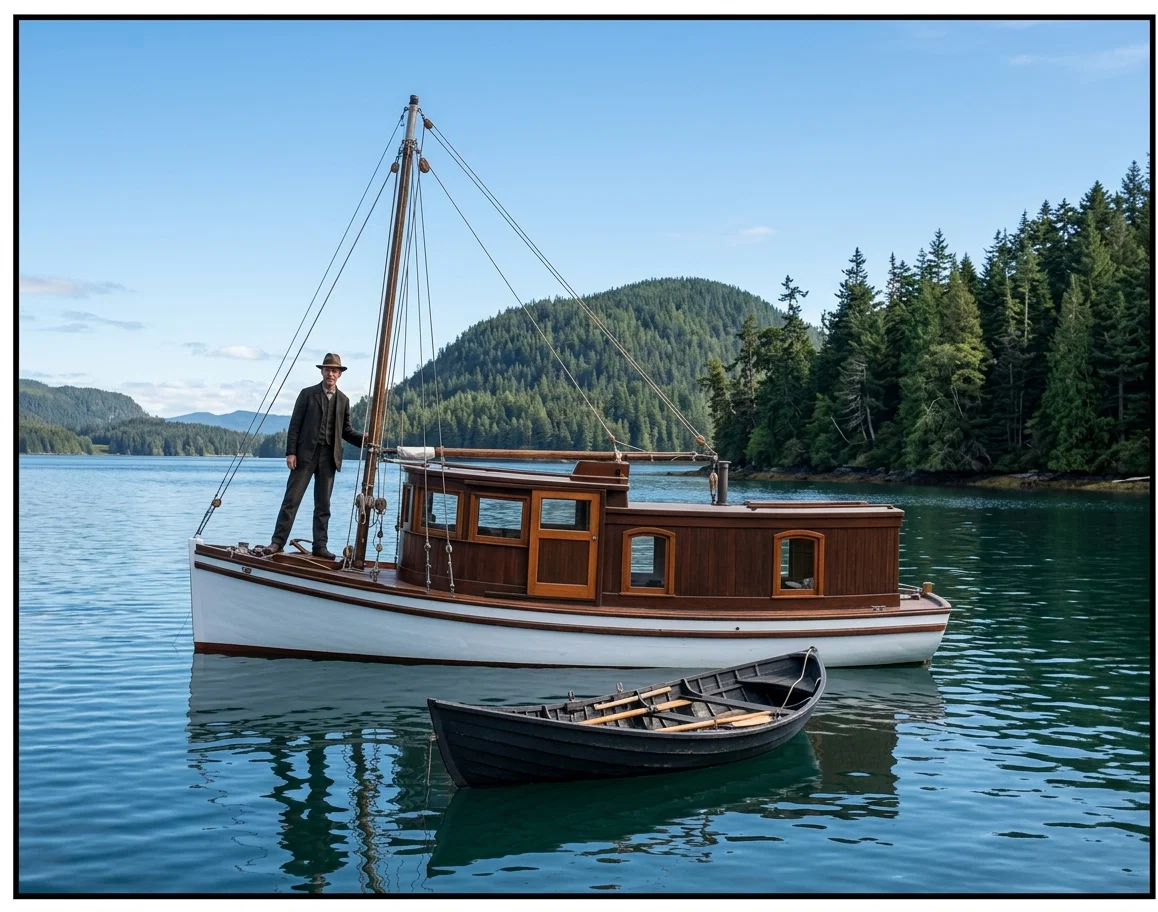
Last May Brother W. F. Furber and myself were asked by the North Pacific Union Conference to come to this field, with the understanding that we were to take up the canvassing and evangelistic missionary work. As all travel must be done by boat, and local transportation is very expensive, we soon saw the need of having a boat of our own, in which we could carry a supply of books, and visit the camps and stations when we chose. With the assistance of a kind brother here at Ketchikan we were able to purchase and equip the little launch “Evangel,” which appears in the picture. This shows us lifting anchor for a long run up Lynn Canal toward Skagway. Our launch is only twenty-four feet long over all, and is equipped with a two-cycle six-horsepower Gray gas engine. Our speed under normal conditions is about seven miles an hour. In this launch we carry two steamer trunks full of books, our typewriter and personal belongings, besides a stove, provisions, and bedding. For three months we slept ashore only two nights, making the boat our home and general headquarters. We suc-ceeded in selling a number of “Great Controversy” and “Daniel and the Revelation,” but the work was all new to us, and we had to learn by practical experience. ‘If the iron be blunt,’ says the wise man, ‘and he do not whet the edge, then must he put to more strength: but wisdom is profitable to direct.’ Eccl. 10:10. So with our work. We had to find in what condition the tools were, and nothing could show this better than the actual test. We had to put to more strength, then begin whetting the edges.
About the first thing we learned was that our boat was not large enough to carry the variety of books and papers needed to meet the demands of the field. We were constantly receiving calls for Bibles, but did not have a single copy to sell. There was a demand for small books for children, also for illustrated Bibles, but we could not fill the orders.
Our summer’s run among the islands of southern Alaska has proved profitable in many ways. While there are many hardships to encounter, I believe I can truly say that the worker is more than doubly repaid. The scenery of Alaska during the summer months is grand beyond description. We passed several glaciers, and traveled among floating icebergs. The glaciers at a distance show varying colors from a deep green to a pure white. These valleys of ice reach for miles back into the mountains, and are belted to their very edge with evergreens. Standing by the side of one of these rivers of ice, one can rest one hand on the glacier, and with the other can easily grasp the twigs of a growing tree. These ice rivers are filled with cracks and yawning crevasses, a fall into which would mean death, so intense is the cold. Tourists seldom attempt to explore one of these great bodies of ice unless tied to one another by a long rope, there being several feet of rope between the members of the party, and a guide in the lead. Several schools of whales were seen spouting water into the air to a height of more than a hundred feet. We gave these sea monsters a wide field, not caring to interrupt their gigantic games, which they apparently enjoy as heartily as minnows darting about in a park pond. There is no danger of their attacking a boat, but their clumsy movements are often fatal to small craft. We saw several whale-boats cruising cautiously among the islands, their harpoons all loaded for their victims. So hard is it to take the life of these giants, that a powerful bomb is attached to the harpoon, which explodes after entering the whale’s body.
During our run in our own boat we were brought into direct connection with the people and their manner of life, and learned the needs of the field. Taking orders and delivering the books later, as is common in the canvassing work in the States, will never prove successful here. The stock must be carried ready for immediate delivery, as the following incident will illustrate: Two orders were taken at Cape Franshaw, on our way up during the summer. When we reached this place on our return trip, two months later, the men were reported as being at Cape Bendel. We crossed the straits to this camp, over twenty miles distant, and arrived one day too late to see our men, who had put out to sea on a fishing-schooner. Thus we made in vain a run of about forty miles to deliver two books.
The nature of the occupation of the people naturally bars them from church services, even should they desire to attend; thus open-air meetings at the camps are an appreciated change from the daily monotony. Reading-matter is at a premium in many camps; old papers and magazines are read and reread, and even the advertisements are known by heart. What a pity that our good papers and magazines, so many of which are lying idle in the homes of our brethren in the States, are not scattered among these mentally starved men. I shall be glad to receive any clean copies of our magazines,—Signs, Instructor, Watchman, Little Friend, etc.—that are sent post-paid, and will take this opportunity to thank any who respond to this call. Alaska is filled with gold hunters, but among them are many who long for something better than the riches of this world,—for gold refined in the smelters of heaven, for treasures incorruptible and insured against burglary.
ALASKA MISSION BOAT "EVANGEL"
Brother Furber is away for a time, but I am expecting some one to join me in the work this spring. Pray for the work in Alaska.
Ketchikan.

His Mother's Version

A BIBLE-CLASS teacher was telling of the various translations of the Bible and their different excellences. The class was much interested, and one of the young men that evening was talking to a friend about it.
“I think I prefer the King James Version, for my part,” he said, “though, of course, the Revised is more scholarly.”
His friend smiled. “I prefer my mother’s translation of the Bible to any other version,” he said.
“Your mother’s?” cried the first young man, thinking his companion had suddenly gone crazy. “What do you mean, Fred?”
“I mean that my mother has translated the Bible into the language of daily life for me ever since I was old enough to understand it. She translates it straight, too, and gives its full meaning. There has never been any obscurity about her version. Whatever printed version of the Bible I may study, my mother’s is always the one that clears up my difficulties.”—Selected.

The Wonders of Fresh Air

“FRESH air, how wonderful it is! It permeates all our body; it bathes the skin in a medium so delicate that we are not conscious of its presence, and yet so strong that it wafts the odors of flowers and fruit into our rooms, carries our ships over the seas, and the purity of sea and mountain into the heart of great cities. It is the vehicle of sound, bringing to us the voices of those we love and the sweet music of nature; it is the great reservoir of the rain, which waters the earth; it softens the heat of day and the cold of night, covers us overhead with a glorious arch of blue, and lights up the morning and evening skies with fire.”

The Path We Have Passed Over

HUMAN experience, like the stern-lights of a ship at sea, illumines only the path which we have passed over.—Coleridge.

Korea

MRS. W. R. SMITH
WONSAN is located on the eastern side of Korea, on the Gulf of Korea. By the Japanese the town is called Gen-san, and it is so given on the late maps. We came to this place last November, and are the only Adventist missionaries on this side of the mountains.
Just now the people are very busy putting in their crops. One man with his ox-team plows back and forth across the field, thus turning a double furrow. A man follows him, sticking his heels into the soft dirt to make holes for the seed; then comes a third man, with a large basket swinging in front of him, in which are the seeds and fertilizer thoroughly mixed. As he walks, he throws a handful of this mixture into each depression left by the heels of the man in front. A fourth man covers the seed, and a fifth tramps down the earth with his feet. Wheat, barley, and, in fact, all the crops are sowed or planted in rows, and kept free from weeds by hoeing with a short-handled hoe, the handle not exceeding twelve or fourteen inches in length.
The women are also busy getting the summer clothing ready to wear, and washing the winter clothes. The banks of the streams are lined from early morning till late at night with women and girls pounding the clothes on flat stones with wooden paddles. The winter garments are made of two thicknesses of cloth padded with cotton. In order to wash them, every seam has to be ripped open. Their method of ironing is to fold the garment smoothly over a small block, and then pound it with two sticks shaped something like Indian clubs. If the clothing is kept clean, it means an immense amount of work for the poor women. One who sees their lives of toil can easily understand why they are generally ignorant, and do not learn to read. The boys are given instruction, but from their earliest years the girls are taught to work.
In order that the women may learn their Sabbath-school lessons, I have them meet here once a week, and try to help them. Some come more than ten miles. They were much interested to learn that the Sabbath begins at sundown, and that in order to observe it properly, all our work should be done the day before.
One day the woman who helps me about my work asked why I did not wear a ring. As I was explaining to her that we do not believe the wearing of jewelry to be in accord with the teaching of the Bible, a young girl came in. She at once became interested, and I had her read the familiar texts upon this subject. She asked, “Would not Sabbath-keepers wear rings, like my brother’s wife?” When I said, “No,” she answered, “But it is Korean custom for women to wear them.” “So is it the American custom,” I replied, “for all who can afford it to wear rings; but Adventists do not, because the Bible tells us not to wear gold and costly apparel.” I haven’t seen her sister-in-law wear her rings since. These dear people are willing to take the Bible as it reads.
Wonsan.

Missionaries Advance in Native Language

WHILE at Blantyre not long ago Brother and Sister S. M. Konigmacher took advantage of the opportunity to take an examination in the native language. Mr. Holmes, the educational inspector, spoke very highly of their advancement, saying they stood as high as the average of their missionaries. Especially was Sister Konigmacher's paper complimented. This speaks well for Brother and Sister Konigmacher, and shows they are making progress. They have improved their time to advantage, the short time they have been in Nyassaland, to make so good a record.

Tamil Sabbath-Keepers in Ceylon

J. S. JAMES
I HAVE just returned from a ten days' visit to Ceylon, in company with two of our native workers. Ever since we gained a knowledge of the sect known as Tamil Sabbath-keepers, we have been told that a number belonging to their religion were living in Ceylon, and were following certain lines of trade. It had been my purpose for a long time to visit these people, and come in closer touch with them. From them in the past has come most of the means which has kept their society alive in these parts, and from them also came a large part of the money which purchased the land we now own.
When I visited these people, I found them stationed at four different points on the railway between Colombo and Point de Galle, but their numbers were much fewer than had been reported. While there, I met and talked with most of the men who had helped us in the past, and held some public meetings where it seemed advisable. I also met those who had identified themselves with us in the separation last fall, giving them counsel, and encouragement, and instruction about our work. A number of men expressed themselves as very much pleased with my visit, and promised future support, and some gave liberal free-will offerings.
It is perplexing to know how to reach these people in Ceylon with any systematic instruction in the truth. They go there only for the purpose of trade, and constantly move about from place to place, selling their goods. A few keep shops and are quite well-to-do, but most of them are coolies, hawking their wares about the streets from house to house.
I had planned to visit a fourth station; but after returning to Colombo, I felt strongly impressed to return at once to India. Twice I tried to shake off this feeling, but it clung to me so strongly that I finally yielded, and took passage the same night for home. Imagine my feelings upon arriving to learn that a severe cholera epidemic had broken out in our village, and many were being taken off by it. Mrs. James had been alone in waiting on the sick, and the anxiety and work in the heat had almost exhausted her. In addition to this my oldest boy had fallen from a tree fifteen feet high, severely spraining his ankle, and barely escaping death. My first work was to visit most of those who were stricken, give them instruction about the boiling of water, the cooking of food, and other sanitary precautions, and assist in treating the sick.
It is terrible to see what ignorance and superstition have done for the human race. Death itself does not seem strong enough to turn them from their foolish ways. As a rule all sanitary measures have no meaning to them. Directions that water be boiled are treated as of little or no importance. When an epidemic breaks out, the people act like frightened animals. Bewildered, dazed, they shut themselves up in their houses so as not to be caught by the death angel, who is supposed to be about at such times, and especially between the hours of seven and nine in the evening. In these native houses, damp, foul-smelling, and void of light and air, they remain, expecting every moment to be seized. I know of several instances where persons have died of sheer fright, without one symptom of cholera.
But in spite of the natural unwillingness of the people to be taught precautionary measures, repeated demonstrations have their effect, and we can see evidences that right ideas are gaining ground. It is in such places as these that we are to be not weary in well-doing, but go over the same thing times without number; for these people learn more from example than from precept.
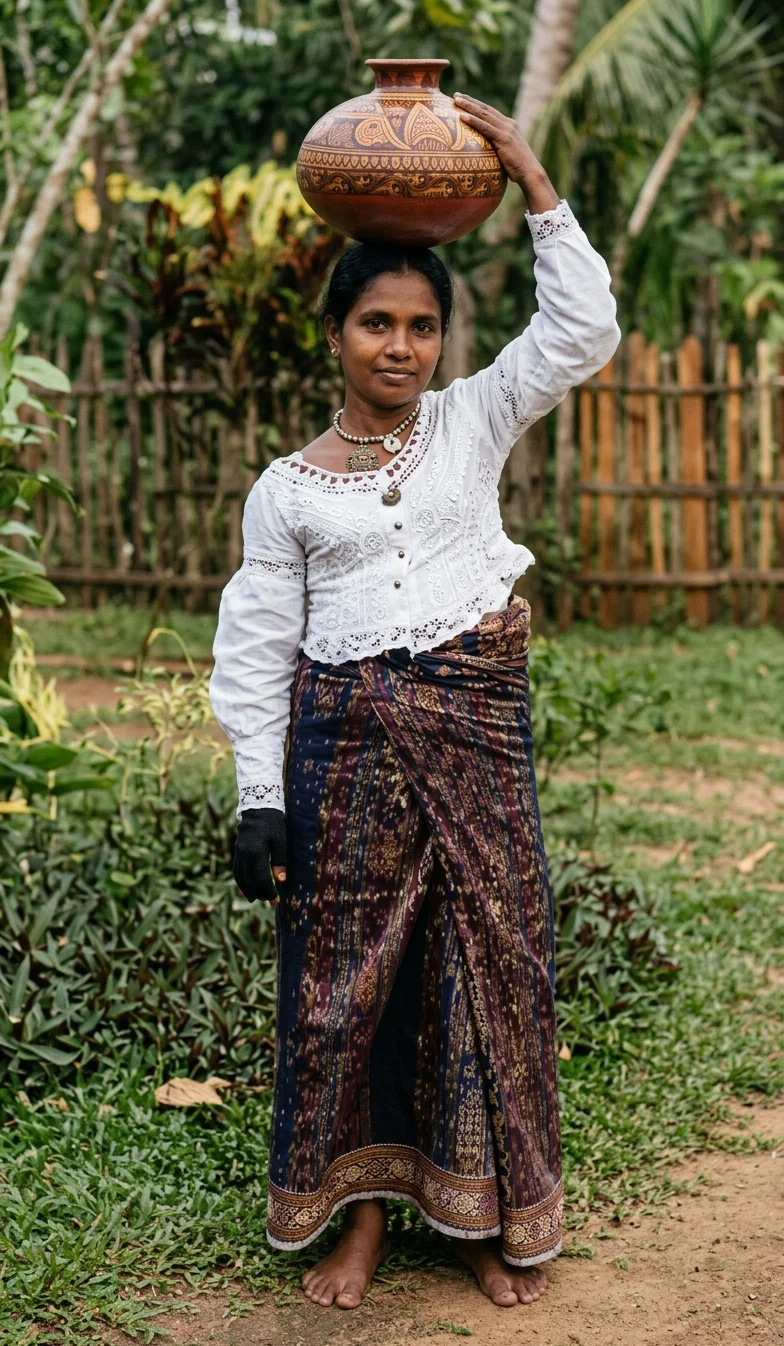
A SINGALESE WOMAN
A SINGALESE WOMAN
My visit to Ceylon has confirmed me in the opinion that all our mission stations should be strongly equipped for medical work. The influence of this work can not be overestimated in a foreign field. It neutralizes religious bitterness, breaks down prejudice, and awakens the strongest sympathies of the human heart. In every place at which I stopped while in Ceylon I met men to whose homes I had been called in times of sickness two years ago. In the city of Point de Galle, in the southern extremity of Ceylon, I came face to face with a man whose wife's life had been saved by our timely aid over a year ago. At that time he was living fourteen miles south of our home in Nazareth. These men and others had talked about our work so much that we were known almost as well there as around our home in India. One of these men, a Roman Catholic, provided us with food and lodging for four days during our visit.
Tinnevelli.

A Cave Village of Palestine

WHEN we went to the house of the cave, the owner pointed out the entrance, and said: “There is the cave, but I dare not take you in. The place is full of underground streets and houses and shops, and one can go for miles and miles in them; but it won’t do to go in, because the caves are full of spirits who hate to be disturbed. The first time any one went in, a boy of my family was killed by the spirits; the next time a girl died, and the one or two other times ill luck fell on the household. If we sacrifice a goat, it will be all right; but I can’t sacrifice one.” We expressed our willingness to pay for a sacrifice, and asked if he had a goat to sell. Yes, he had, and he dived into a shed, and yanked out a kid by the ears. He would sell us the goat and show us the cave for three mejidiehs.
“Go ahead and sacrifice it,” we said, but he seemed in no hurry, and, after pretending to get ready, remarked: “It is getting late now, and you haven’t much time. The cave is very big. If you want to hurry, I will just cut off the beast’s ear, and complete the sacrifice later.”
When all was ready, we were, one by one, let twirling down by a rope into a cistern where straw was stored. The only opening was a hole two feet in diameter, through which we squeezed head first, and found ourselves in a passage of about the same height. Lighting our candles, we went forward, sometimes on hands and knees, and sometimes on our stomachs, like worms trailing over the damp mud of the cavern floor. We were expecting to get to a larger passageway, but never did, although occasionally the tunnel widened into a cave where one could stand and walk around. Three times we came to chambers large enough to furnish shelter to a score of people; again we traversed passages whose branches ended sometimes in blank walls of masonry, or in shafts leading up to the courtyards of houses in the village, or in dry cisterns which once furnished water to the people of the caves. We crawled for an hour and a half, and came out plastered with mud from head to foot. No one knows just when the caves were made, but their use is evident. They were places of refuge from the Arabs. Each house seems to have had a well communicating with the underground chambers. When there was an alarm, the people and their chief valuables could promptly be hidden in the caves. The enemy might plunder or burn the houses, but no one would ever risk attacking the refugees in their dark burrows, where death might lurk at any corner. There are probably other cave villages of the same sort, for an inscription at Kanawat, thirty miles northeast of Edrei, has been interpreted as an exhortation of Agrippa I to the people to give up the practise of living like wild beasts in caves.—Ellsworth Huntington, in Harper’s Magazine for April.

Editorial

“THE burden of Dumah. He calleth to me out of Seir, Watchman, what of the night? Watchman, what of the night? The watchman said, The morning cometh, and also the night: if ye will inquire, inquire ye: return, come.” It is a message for a time of inquiry.
THE spirit of inquiry is all abroad in these days of swiftly moving events and changing scene. People would know the meaning of the times and the seasons. And the prophecy says, “If ye will inquire, inquire ye.” With the inquiry ever springing up from burdened and longing hearts, it is a blessed response that the watchmen have to make, and a serious response as well. Through all this generation we have been proclaiming the cry of Isaiah’s watchman, “The morning cometh, and also the night.”
The Watchman’s Cry. — In the editorial columns of the REVIEW of Sept. 3, 1857, Elder U. Smith wrote:—
Anxious inquirer, we proclaim to you that the morning cometh. Weary watcher, the morning cometh; and when that glorious day that shall succeed that morrow shall be ushered in, there’ll be no suffering couch for you to watch by then. The inhabitants of that land shall no more say, I am sick; for the long train of evils that held their revels through the night of time, fed and fostered by the curse, shall flee away with the darkness, and be found no more at all.
Bereaved mourner, the morning cometh,—a morning whose light shall pierce the dark prison-house of the tomb, where Death for long ages has been gathering in his trophies; and the prisoners of hope shall be released, and the loved forms torn from your embrace brought back again from the land of the enemy.
The morning cometh to remove from every soul bowed down, its weight of woe. There is no wrong but shall then be righted; there is no shadow but shall then be chased away. All the ills that have thronged the pathway of human life, all cruelty and oppression, all forms of sorrow, pain, and death that have cast their dark shadows over the world, are engulfed, and forever lost, in that one grand and glorious promise—“The morning cometh”!
“Hail, glorious morn That ushers in a cloudless, endless day!— Morning whose holy light shall sweep the shades Of sin and death away; and with them flee Their noisome brood that in the darkness lurk,— The glorious restitution morn, that brings The weary saints all home from pilgrimage To rest in lovely bowers of peace and joy.”
Reader, are you ready for this morning? Will the great crisis before us be to you an event of rejoicing or sorrow? for there is a night scene to the picture, as well as a bright one. The watchman says not only that the morning cometh, but he adds, “And also the night.”
THROUGH the long-suffering mercy of our God, time still lingers, and still the cry is, “The morning cometh.”

The Prodigal’s Example

In many things we are all prodigals. We have taken that with which our Father has endowed us, and have used it for our own purposes. Then, when failure comes, when the frosts of adversity sear and burn the tender shoots of our selfish hopes, we “come to ourselves;” we resolve to “turn over a new leaf.” That is what the prodigal did when he “came to himself.” He acknowledged his wrong, and, as soon as he did, he began to yearn for the better way. But, in turning over that new leaf, he did not stay where he was. He said, “I will arise and go to my father.” It was that which made his turning a success, which brought joy to his father’s heart, which brought him back again into the estate of manhood.
It is right there that so many fail in their good resolutions. They stay right where they were; they forget to go to Father’s house, where there is “bread enough and to spare” to keep their souls from famishing. They depend upon their own efforts right in the enemy’s country, where they met all their disaster. The enemy surrounds them on every side, and soon they are his again. In fact, they remained his so long as they remained away from Father’s house, and they had no strength to resist the powers of his chosen minions.
It does no good to turn over a new leaf unless you go to the Source of power and wisdom for that which will enable you to write on that new page a record that will not shame you at the year’s end and at your life’s end. Feeding husks to swine is no business for the Christian to be engaged in. It is better to be in that place where you can draw from your Father’s house that bread of life which is designed to feed the hungry souls of men and women, and will feed your own soul also.
No matter in what thing we have shown ourselves prodigals in the past, let us arise and go to our Father’s house. He is waiting for us with a heart filled with the most loving tenderness; he will give us glad welcome; he will own us as his; he will keep us from falling, not only through the year, but through all time, and make us children of his household forever. C. M. S.

Notes from the Edinburgh Missionary Conference

THE largest world's congress on missions ever held is in session in Edinburgh, Scotland. There are gathered here from all lands about twelve hundred delegates of the Protestant societies, in the congress proper; and several thousand other representatives are in attendance at parallel meetings, really a part of the congress.
This great gathering is of the deepest interest to us, as a sign that the day of the Lord is at hand. Here is focused a mighty movement that comes in the providence of God to prepare the way for the closing work of the gospel.
The sure word of prophecy predicted the rise of the great apostasy. It predicted also the shortening of the days of the papal supremacy, and the breaking in of the light once again. The great Reformation movement of the sixteenth century accomplished this work, and set free the Word of God.
But the sure word of prophecy also foretold the world-wide spreading abroad of the light of that Word in the days just before the coming of the Lord. And the great missionary movement of the nineteenth century came as the complement and the successor of the Reformation movement.
Both were of God in preparation for the finishing of his work in our generation. The Reformation gave the blessed Word again to the world. In the modern missionary movement we see the Lord breaking down all barriers, opening all lands, and putting that Word into the tongues of all tribes and peoples.
It is the work of God; and the facts that we face appeal as the voice of the living God to Seventh-day Adventists to rise in his name, and carry to all nations the definite message that we know is to close the gospel work on earth.
It is of deep significance that the keynote of this great congress, representing so diverse and even conflicting views, should be that now, just now, is the time to strike for the evangelization of the world.
That was the note struck the opening day. If others see so clearly the challenge of this very hour, how much more clearly should Seventh-day Adventists see it, and throw into service every resource of time and strength and money.
Here, for instance, the highest ecclesiastic in Britain, the Archbishop of Canterbury, said in the opening meeting:—
It is frankly incomprehensible to me why the Christian leaders and teachers of former generations, in the last few hundred years, gave so comparatively small a place to direct missionary endeavor. . . . Whatever the facts of other days, there can be no manner of doubt about the facts of our own. The opportunity is almost limitless. It is urgent, and even clamorous. It is perhaps temporary, and even passing away. And it is ours. . . . The place of missions in the life of the church must be the central place, and none other. . . . Secure for that thought its true place in our plans and policy and prayers, and it may well be that “there be some standing here” to-night who shall not taste of death till they see—in a way we know not now—“the kingdom of God come with power.”
How well we know that men now living, and that ere many years, will see the kingdom literally coming in power and glory! And there is a pressure in this time that is laying every force under contribution to hasten the day.
Mr. Robert E. Speer said:—
No one can now follow Him without following him to the uttermost parts of the earth. If we follow Christ, we must follow him to all nations of men. That which has waited all these centuries need wait no longer.
And Mr. John R. Mott, the permanent chairman of the conference, declared, in his opening outline of the work to be done:—
In our judgment this time is the time of all times for the evangelization of the non-Christian world. There never has been a time when, in all the non-Christian countries, the conditions confronting Christianity were so favorable for a great and well-considered advance as at the present time. . . . Before the eyes of many of us shall close in death, the opportunity, at least, may be given for all peoples of the non-Christian world to accept, if they will, the living Christ.
We Seventh-day Adventists well know this note of urgency. For years the message has rung in our ears, “Now, just now, is the time to work in foreign fields.”
It is not a call to neglect any home field. Rousing ourselves to meet the call of Providence in all the wide world, we shall be the better fitted to witness in neglected parts at home. But the fact is, the time has come to carry the witness to all the world, and the Lord is definitely preparing the way for this definite message to reach every tribe and people before many years have passed.
In this congress we see some of the forces of God’s preparation, that have been putting his Holy Word into the languages of all nations, so that even to-day it speaks the wonderful works of God in tongues understood by ninety-five per cent of the peoples of earth. Never before was such a thing known. Now, in our time, God’s providence has wrought it out; and we know why. It is because the generation is come, and is now closing, that is to see the end.
Beginning with Friday, and continuing over Sabbath and to-day (Sunday), we have turned aside from the congress to meet with our Scottish brethren in their little annual conference. The fellowship and blessedness of the meetings with this little flock seemed emphasized by the contrast with the great gathering we had left. The Lord has been with us in the little meetings. Thank God for the third angel’s message, and the blessed hope of the Lord’s soon coming! It is the only hope. Men talk and dream of a world-conversion; but we know the futility of such a thought. All the forces of this great missionary conference can not remove the slums and the depravity of these ancient narrow passages in Edinburgh, that adjoin the very place of the missionary congress. The coming of the Lord is the only hope of the world. The greatest betrayal of trust in the history of man would it be for Seventh-day Adventists to settle down to mere philanthropic and humanitarian effort. We can never heal the hurt of this world; but we can obey our Lord’s command, and carry the witness of his last message to all the world, and then he will come to put an end to sin. This we shall see within the next few years.
Brethren L. R. Conradi, W. J. Fitzgerald, H. C. Lacey, W. T. Bartlett, and Guy Dail, of Europe, are in attendance at our Scottish conference and at the missionary congress. To our Scottish believers in other lands I would say, Be of good cheer, and pray for our work in Scotland. It has moved slowly here; but the new time is coming even in kirk-bound Scotland, and the hearts of the believers here abound with fresh hope and courage.
Here we are to call the people back to the Sabbath-keeping ways of the early Scottish people; for until the twelfth century the north British people, the Culdes, kept the seventh day. On Castle Rock, just above the meeting-place of the congress of missions, is Queen Margaret’s Chapel. And it was Queen Margaret, the Saxon princess, who came to Scotland from Catholic England, to marry Malcolm the Great, and who used all her royal power to pervert the Sabbath-keeping Scottish people. She declared to them that the “blessed Pope Gregory” had commanded that men ought not to rest on the Sabbath, but to work; and at last she persuaded the people to adopt fully the Romish practise.
But the days of final reformation have come, and now again the message of the Sabbath is to be heard over Scotland.
W. A. S. Edinburgh.
Continue reading: True to the Past