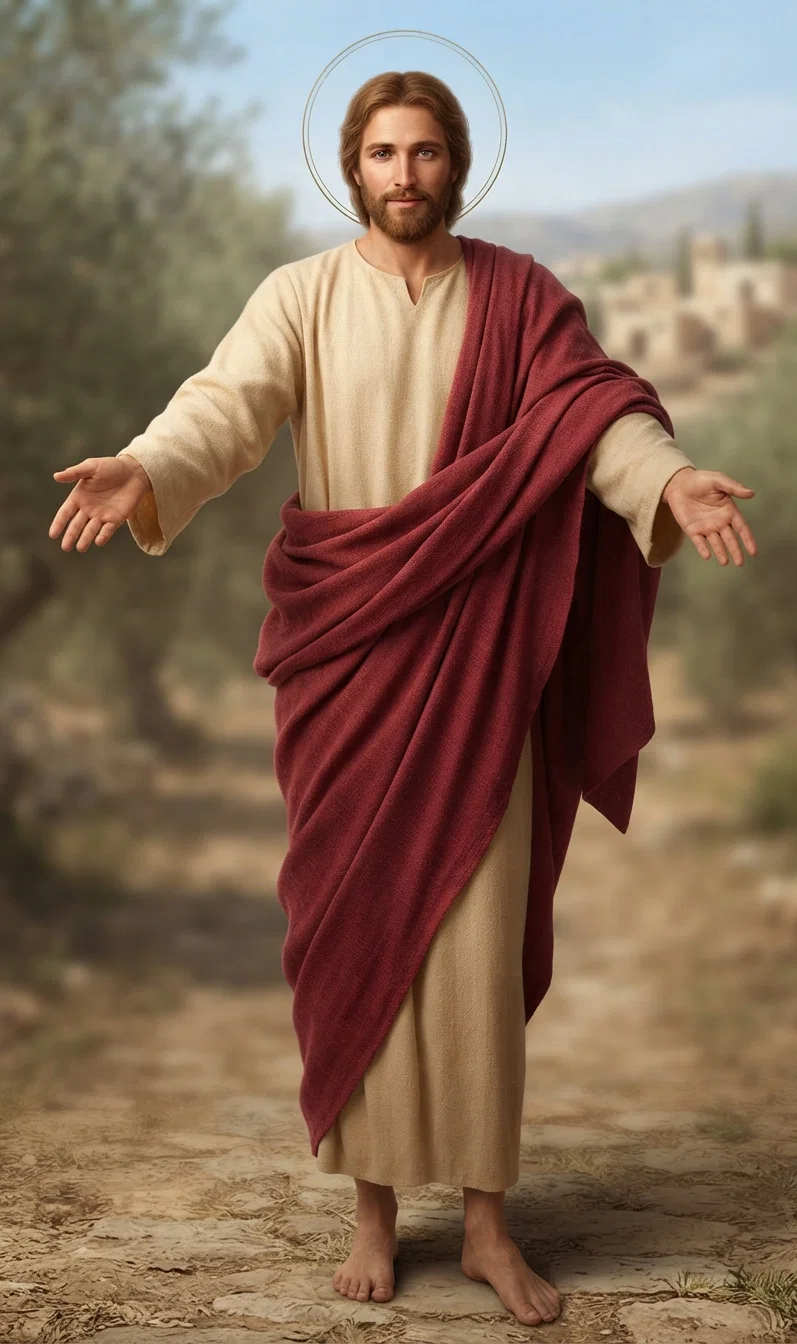
"Come unto Me, all ye that labor and are heavy-laden, and I will give you rest." These words of comfort were spoken to the multitude that followed Jesus. The Saviour had said that only thru Himself could men receive a knowledge of God. He had spoken of His disciples as the ones to whom a knowledge of heavenly things had been given. But He left none to feel themselves shut out from His care and love. All who labor and are heavy-laden may come unto Him.
Tenderly He bade the toiling people, "Take My yoke upon you, and learn of Me; for I am meek and lowly in heart; and ye shall find rest unto your souls."
In these words, Christ is speaking to every human being. Whether they know it or not, all are weary and heavy-laden. All are weighed down with burdens that only Christ can remove. The heaviest burden that we bear is the burden of sin. If we were left to bear this burden, it would crush us. But the Sinless One has taken our place. "The Lord hath laid on Him the iniquity of us all." He has borne the burden of our guilt. He will take the load from our weary shoulders. He will give us rest. The burden of care and sorrow also He will bear. He invites us to cast all our care upon Him; for He carries us upon His heart.
The Elder Brother of our race is by the eternal throne. He looks upon every soul who is turning his face toward Him as the Saviour. He knows by experience what are the weaknesses of humanity, what are our wants, and where lies the strength of our temptations; for He was in all points tempted like as we are, yet without sin. He is watching over you, trembling child of God. Are you tempted? He will deliver. Are you weak? He will strengthen. Are you ignorant? He will enlighten. Are you wounded? He will heal. The Lord "telleth the number of the stars;" and yet "He healeth the broken in heart, and bindeth up their wounds." "Come unto Me," is His invitation. Whatever your anxieties and trials, spread out your case before the Lord. Your spirit will be braced for endurance. The way will be opened for you to disentangle yourself from embarrassment and difficulty. The weaker and more helpless you know yourself to be, the stronger will you become in His strength. The heavier your burdens, the more blessed the rest in casting them upon the Burden-bearer. The rest that Christ offers depends upon conditions, but these conditions are plainly specified. They are those with which all can comply. He tells us just how His rest is to be found.
"Take My yoke upon you," Jesus says. The yoke is an instrument of service. Cattle are yoked for labor, and the yoke is essential that they may labor effectually. By this illustration, Christ teaches us that we are called to service as long as life shall last. We are to take upon us His yoke, that we may be coworkers with Him.
The yoke that binds to service is the law of God. The great law of love revealed in Eden, proclaimed upon Sinai, and in the new covenant written in the heart, is that which binds the human worker to the will of God. If we were left to follow our own inclinations, to go just where our will would lead us, we should fall into Satan’s ranks and become possessors of his attributes. Therefore God confines us to His will, which is high, and noble, and elevating. He desires that we shall patiently and wisely take up the duties of service. The yoke of service Christ Himself has borne in humanity. He said, "I delight to do Thy will, O My God; yea, Thy law is within My heart." "I came down from heaven, not to do Mine own will, but the will of Him that sent Me." Love for God, zeal for His glory, and love for fallen humanity, brought Jesus to earth to suffer and to die. This was the controlling power of His life. This principle He bids us adopt.
"Learn of Me," says Jesus; "for I am meek and lowly in heart, and ye shall find rest." We are to enter the school of Christ, to learn from Him meekness and lowliness. Redemption is that process by which the soul is trained for heaven. This training means a knowledge of Christ. It means emancipation from ideas, habits, and practises that have been gained in the school of the prince of darkness. The soul must be delivered from all that is opposed to loyalty to God.
Hofmann.
The yoke is placed upon the oxen to aid them in drawing the load, to lighten the burden. So with the yoke of Christ. When our will is swallowed up in the will of God, and we use His gifts to bless others, we shall find life’s burden light. He who walks in the way of God’s commandments is walking in company with Christ, and in His love the heart is at rest. When Moses prayed, "Show me now Thy way, that I may know Thee," the Lord answered him, "My presence shall go with thee, and I will give thee rest." And thru the prophets the message was given, "Thus saith the Lord: Stand ye in the ways, and see, and ask for the old paths, where is the good way, and walk therein, and ye shall find rest for your souls." And He says, "O that thou hadst harkened to My commandments! then had thy peace been as a river, and thy righteousness as the waves of the sea."
As we walk with Jesus in this life, we may be filled with His love, satisfied with His presence. All that human nature can bear, we may receive here. But what is this compared with the hereafter? There "are they before the throne of God, and serve Him day and night in His temple; and He that sitteth on the throne shall dwell among them. They shall hunger no more, neither thirst any more; neither shall the sun light on them, nor any heat. For the Lamb which is in the midst of the throne shall feed them, and shall lead them unto living fountains of waters; and God shall wipe away all tears from their eyes."
Consecration to Service.
By A. G. Daniells
ONE of the highest and most important purposes of the church of Christ is service. “Follow Me, and I will make you fishers of men.” “I will bless thee, . . . and thou shalt be a blessing.” Gen. 12:2. “As every man hath received the gift, even so minister the same one to another, as good stewards of the manifold grace of God.” 1 Peter 4:10. Saved to serve is the divine arrangement. It is thus that the church is the “light of the world,” the “salt of the earth.”
It is the Holy Spirit that enables Christ’s followers to render effectual service. He first gives them victory over their sins. He then uses them as witnesses for Christ to those who have not experienced what they have. No phase of the Spirit’s ministry in the church is made so prominent in the word as this. In His parting instruction to the church, Jesus said, “Ye shall receive power, when the Holy Spirit is come upon you; and ye shall be My witnesses.” Luke 24: 47-49; Acts 1:8.
Nothing could be plainer than that a most essential requisite to a Spirit-filled church is the consecration by the church of its time, talents, and means to the service of God for the redemption of a lost world. It is idle for the church to pray to be filled with the Spirit if she declines, or even neglects, to make this consecration. The Spirit is6Christ’s invisible ambassador to this world to finish His work. The church is the Spirit’s visible medium thru which He is to bear witness for Christ to all men, to win them to Him. The church that does not understand this and consent to the plan can not be a Spirit-filled church.
As the church of Christ includes all the individual believers in Christ, all that pertains to the church as a whole affects each member personally. To have a Spirit-filled church there must be Spirit-filled pastors, church officers, and individual members. The conditions with which the church must comply in order to be filled with the Spirit are precisely the conditions with which each individual believer must comply in order to be filled. This whole question, then, is intensely personal. It is of no special value as a theory. Nothing less than personal experience will answer.
A. G. DANIELLS.
How God Has Honored the Sabbath
By S. N. Haskell
By S. N. Haskell
THE Sabbath is a memorial of God's creative power. It is also a memorial and a sign of the redemption wrought by Christ. It was given at the close of the creation week. God completed the work of creation on the seventh day. In this He laid the foundation for the Sabbath. "And God blessed the seventh day, and sanctified it; because that in it He had rested from all His work which God created and made." Gen. 2:3. God placed in the day His own sacred rest. He then blessed the seventh day which He had measured out of eternity. This blessing pertained to all the seventh days of the septenary cycles that would follow, for the day upon which He rested was passed. He also sanctified the seventh day, or set it apart, for a holy and religious use. Thus the Sabbath was made for man by God's first resting upon the seventh day; secondly, blessing it; thirdly, setting it apart for a holy use.
The work of creation was the work of God thru Christ: for God, Christ, angels, Adam, and Eve were present when the first Sabbath of earth was instituted; for when He "laid the foundations of the earth, . . . the morning stars sang together, and all the sons of God shouted for joy." Job 38:4-7.
Two thousand five hundred years later, when Father and Son spoke the Ten Commandments, the Sabbath was placed in the very bosom of the Decalogue. Myriads of angels in glory were present. The very mount was sanctified. Thus Moses describes the scene: "The Lord came from Sinai, and rose up from Seir unto them; He shined forth from Mount Paran, and He came with ten thousands of holy ones; from His right hand went a fiery law for them. Yea, He loved the people; all His saints are in Thy hand; and they sat down at Thy feet; every one shall receive of Thy words." Deut. 33:2, 3. Here again the Ten Commandments, with the Sabbath as the center of the law, were associated with God, Christ, angels, and His people whom He loved.
Another most remarkable Sabbath observance was at the death of the Son of God. After redemption's plan had been carried out, and Christ, in dying, had said, "It is finished," He was taken down and placed in Joseph's new tomb, where He rested the Sabbath day from the work of redemption. There was grief among those who loved Him on earth, but there was joy in heaven. The fate of Satan was sealed, and the promise of a restored creation was secured beyond a doubt. The salvation of a redeemed race was eternally secured. God and angels saw this, and ever after these events were to be linked with the observance of the Sabbath.
The disciples saw how His body was laid, and they returned and prepared spices, and while their Lord rested in Joseph's new tomb, they were in their homes and rested on the Sabbath day according to the commandment. Here God, Christ, angels, and the disciples were in harmony in keeping the Sabbath. Thus the seventh day became a memorial of redemption as it was of creation. Christ became the Redeemer, because He was the Creator. "In whom we have redemption thru His blood, even the forgiveness of sins." "For by Him were all things created, that are in heaven, and that are in earth, visible and invisible, whether they be thrones, or dominions, or principalities, or powers; all things were created by Him, and for Him; and He is before all things, and by Him all things consist." Col. 1:14, 16, 17.
The remnant of God's people are recognized as commandment-keepers. "The dragon was wroth with the woman, and went to make war with the remnant of her seed, which keep the commandments of God, and have the testimony of Jesus Christ." During the time between creation and the giving of the law on Mount Sinai, the importance of observing the Sabbath had at times been lost sight of; but the events that took place on Sinai's mount, the speaking of the law, placed the Sabbath in its proper relation and restored it to its proper place.
The failure of the fulfilment of the promise made to the Jews of the city remaining forever if they would observe the Sabbath, shows that the true keeping of the Sabbath was lost even among the Jews. Jer. 17:21-27.
One object in the life of Christ was to restore the Sabbath to its original sacredness, and He left a company keeping the Sabbath according to the commandment.
We again pass over a period of nearly two thousand years, during which time the "man of sin" has thought to change times and laws. The seventh-day Sabbath has been replaced by a spurious day which God never blessed nor required man to keep, but the remnant of God's heritage is found observing the Sabbath, keeping all of God's commandments.
The prophet Isaiah, looking down thru the Dark Ages thru which the church passed, uttered the following prophecy: "Thus saith the Lord, Keep ye judgment, and do justice; for My salvation is near to come, and My righteousness to be revealed. Blessed is the man that doeth this, and the son of man that layeth hold on it; that keepeth the Sabbath from polluting it, and keepeth his hand from doing any evil. Neither let the son of the stranger, that hath joined himself to the Lord, speak, saying, The Lord hath utterly separated me from His people. . . . For thus saith the Lord: . . . The sons of the stranger, that join themselves to the Lord, to serve Him, and to love the name of the Lord, to be His servants, every one that keepeth the Sabbath from polluting it, and taketh hold of My covenant; even them will I bring to My holy mountain, and make them joyful in My house of prayer." Isa. 56:1-7. "If thou turn away thy foot from the Sabbath, from doing thy pleasure on My holy day; and call the Sabbath a delight, the holy of the Lord, honorable; and shalt honor Him, not doing thine own ways, nor finding thine own pleasure, nor speaking thine own words; then shalt thou delight thyself in the Lord; and I will cause thee to ride upon the high places of the earth, and feed thee with the heritage of Jacob thy father, for the mouth of the Lord hath spoken it." Isa. 58:13, 14. God has honored His day; shall not we honor it?
Lo He Comes!
By C. M. Snow
By C. M. Snow.
THRU the twilight, thru the gloaming,
Of the swiftly passing day,
God is flashing to the nations
Signals of the coming fray.
Men may read it in the judgments
That are falling on the world
For the deeds that quench the Spirit,
Where Sin's banners are unfurled.
They may read it in the reckless
Race for riches, place, and fame,
While the racers crush the helpless
In their Mammon-maddened game.
It is written in the records
Of the strivings of the soul
That has bartered all of heaven
For a gilded, crumbling goal.
Weary wasting, wanton wooing,
Deep conspiracies of fraud,
Can not still the mighty chorus
That is crying up to God.
Faithful witness is not wanting—
God's own angels testify
Of the deeds the strong are doing,
Who God's holy law defy.
God is waiting, sternly waiting,
Justly balancing the scale;
And no power of man's devising
'Gainst that justice can prevail.
Sure as shines the sun above us;
Sure as rivers seek the sea;
God will soon declare, "'Tis finished—
Time is now eternity."
Heed, ye careless! Heed the warning
God is flashing forth to-day!
Earth and heaven are loudly telling
That our God will not delay.
He is coming, say the prophets—
Shout it till the welkin rings!
He is coming—earth declares it—
Lord of Lords and King of Kings!
The Second Coming of Our Lord
By Geo. B. Thompson
He Will Come Again.
THERE is no truth of the blessed Gospel which is more clearly taught than that our Redeemer will return the second time. Before this awful event all others pale. It is the sublimest spectacle and most matchless display of transcendent glory connected with the scheme of redemption. When the Lord spoke the eternal principles of His own perfection from the flaming top of Sinai, and traced them in stone with His own finger, the whole earth trembled, and the glory of God was revealed in mighty majesty. But this divine exhibition of heavenly glory will be surpassed when the Redeemer comes to take to Himself the people whom He has saved from the terrible thralldom of sin.
At His first advent He came in weakness. He came as a helpless babe to show the frailties of our frame. As a lamb He came to bear the burdens of a weak and degenerate race. But how different the scene when He appears the second time to overturn the proud and stately empires of earth and scatter them like chaff driven by the wind! We may think of the glorious event, and it is well to let the picture linger in the mind, yet we can never take it in. The human mind can never comprehend in its fulness the hour when, crowned King of all kings, the Saviour comes to reap the harvest of the earth.
How He Will Come.
The coming of our Lord is a real thing. It is no fantom. It is the advent of a real personal being. Jesus left the earth a real person, bearing in His body the marks of His humiliation. "And while they [the disciples] looked steadfastly toward heaven as He went up, behold, two men stood by them in white apparel; which also said, Ye men of Galilee, why stand ye gazing up into heaven? this same Jesus, which is taken up from you into heaven, shall so come in like manner as ye have seen Him go into heaven." Acts 1:10, 11. An angelic cloud received Him into glory, and when He appears the second time, He is seated upon a "white cloud," "having on His head a golden crown, and in His hand a sharp sickle." Rev. 14:14.
When He comes He will be escorted, like the victorious conqueror which He is, by "all the holy angels." Matt. 25:31. When one angel came to the sealed tomb to call the Redeemer as He lay locked in the fixed embrace of death, the glory which attended the celestial messenger struck to the earth the guard of Roman soldiers who were watching the sepulcher. How much glory, think you, will be revealed when the unnumbered millions of mighty angels come with their Redeemer? They come as reapers to gather the sheaves into the heavenly garner. But this is only a little of the glory which is to be seen. The King comes in the most supernal glory, "the glory of His Father." Matt. 16:27. He will come in "His own glory, and in His Father's, and of the holy angels." Luke 9:26.
In the past, kings, emperors, and potentates of earth have sought to show the glory of their empires. In triumphant splendor and overweening pride they have exhibited all their regal pomp and glory. But they have perished, and their glory is no more. But the consuming majesty and glory which attends the coming of Jesus overshadows theirs as the sun shining in its zenith power eclipses the rays of a candle, and His glory will endure thruout all ages. Its luster will not be dimmed by passing cycles.
When He Is Coming.
And now, as in ages in the past, the Lord will warn the world of the event which is approaching. He warned the antediluvians; He warned Sodom; He warned Nineveh; and when His first advent was impending, He sent His forerunner with a special message for the time. And when we reach the closing days of the world's history, we read that there will be "signs in the sun, and in the moon, and in the stars; and upon the earth distress of nations, with perplexity; the sea and the waves roaring; men's hearts failing them for fear, and for looking after those things which are coming on the earth; for the powers of heaven shall be shaken. And then shall they see the Son of Man coming in a cloud with power and great glory." Luke 21:25-27.
Reader, this glorious day draws near; it will soon be ushered in. Prepared or unprepared, its stern realities will soon be upon us. For the righteous it is a day of the greatest joy, when they can look up and rejoice. For sinners it is a day of gloominess, desolation, and destruction. While the Life-giver is still on the mercy-seat, offering pardon to the impenitent, shall we not turn to Him with full repentance, that we may find forgiveness, and be numbered among those who can look up and say, "Lo, this is our God; we have waited for Him, and He will save us"? Isa. 25:9.
The Saints' Inheritance.
1. What encouraging promise did the Lord make to Abraham?
"Lift up now thine eyes, and look from the place where thou art northward, and southward, and eastward, and westward; for all the land which thou seest, to thee will I give it, and to thy seed forever." Gen. 13:14, 15.
2. To whom was this promise renewed?
"Which covenant He made with Abraham, and His oath unto Isaac; and confirmed the same unto Jacob for a law, and to Israel for an everlasting covenant." Ps. 105:9, 10.
3. What promise was given thru Daniel?
"The kingdom and dominion, and the greatness of the kingdom under the whole heaven, shall be given to the people of the saints of the Most High, whose kingdom is an everlasting kingdom, and all dominions shall serve and obey Him." Dan. 7:27.
4. In what did Isaiah's hope center?
"Behold, I create new heavens and a new earth; and the former shall not be remembered, nor come into mind." "And I will rejoice in Jerusalem, and joy in My people; and the voice of weeping shall be no more heard in her, nor the voice of crying." "And they shall build houses, and inhabit them; and they shall plant vineyards, and eat the fruit of them. . . . And it shall come to pass, that before they call, I will answer; and while they are yet speaking, I will hear." Isa. 65:17, 19, 21-24.
5. Did the patriarchs and prophets receive the promised inheritance?
"These all died in faith, not having received the promises, but having seen them afar off, and were persuaded of them, and embraced them, and confessed that they were strangers and pilgrims on the earth." Heb. 11:13.
6. The promise is to Abraham; how then do others receive the benefits of it?
"For as many of you as have been baptized into Christ have put on Christ." "And if ye be Christ's, then are ye Abraham's seed, and heirs according to the promise." Gal. 3:27, 29.
7. In what order will the redeemed receive their reward?
All at one time. "These all, having obtained a good report thru faith, received not the promise; God having provided some better thing for us, that they without us should not be made perfect." Heb. 11:39, 40.
8. What is the inheritance?
Abraham "looked for a city which hath foundations," a country great and broad; in vision Isaiah saw homes, with vineyards, in a land whose deserts rejoice and blossom as the rose; John saw a beautiful city with jasper walls, a life-giving river, a tree of life, and the throne of God and of the Lamb, before which the redeemed throng bow in adoration; Peter looked for "new heavens and a new earth, wherein dwelleth righteousness." This earth, then, will be restored to its Edenic beauty to be the home of man. Isa. 45:18; Zech. 14:4, 9.
9. What events precede the reception of the inheritance?
At the close of earth's probation (Rev. 22:11), the Saviour comes to receive His people, the righteous of all ages, calling the dead from their graves (2 Thess. 4:16), changing the righteous living to immortality (1 Cor. 15:51, 52), receiving both companies together in the clouds (2 Thess. 4:17). In heaven they live and reign with Christ a thousand years (Rev. 20:4), judging the wicked (Rev. 20:12, 13), who will have been slain by the brightness of His coming (2 Thess. 2:8). At the end of the thousand years, the New Jerusalem descends to earth (Rev. 21:1, 2), the wicked dead are raised to receive their just punishment (Rev. 20:12-15), and the earth is wholly freed from sin and its effects (Rev. 22:3). Then the saints shall possess the land; "the meek shall inherit the earth."
10. Who only partake of the joys of that land?
"To him that overcometh will I grant to sit with Me in My throne." "He that overcometh shall inherit all things." "Blessed are they that do His commandments, that they may have right to the tree of life, and may enter in thru the gates into the city." Rev. 3:21; 21:7; 22:14.
H.
What Is Your Choice?
By James Russell Lowell
ONCE to every man and nation comes the moment to decide,
In the strife of Truth with Falsehood, for the good or evil side;
Some great cause, God's new Messiah, offering each the bloom or blight,
Parts the goats upon the left hand, and the sheep upon the right;
And the choice goes by forever 'twixt that darkness and that light.
—James Russell Lowell.
Salvation Only by the Resurrection
By W. N. Glenn
By the Late W. N. Glenn
"The wages of sin is death; but the gift of God is eternal life thru Jesus Christ our Lord." Rom. 6:23. This, with the statement that "all have sinned" (chap. 3:23), gives us at a glance the condition of the natural man, and the remedy for that condition. Adam was the head of the race, and he sinned. By his sin he brought not only death upon himself, but sin and death upon all his posterity. "In Adam all die." 1 Cor. 15:22. So far as Adam and the life we receive from him are concerned, death ends all; for the sentence upon Adam, and per consequence upon all his descendants, was, "Dust thou art, and unto dust shalt thou return." Gen. 3:19. Then eternal life could not possibly inure from such a source; it is not in any sense hereditary. It is purely a gift—"the gift of God,"—not thru Adam or anything derived from Adam, but thru Jesus Christ.
The Scriptures having settled this fact, the question arises, How do we finally come into the enjoyment of eternal life thru Christ? It can not be by virtue of anything in the natural man; for "if any man be in Christ, he is a new creature." He is not a patched-up affair; he is new. That is true spiritually even in this life; "old things are passed away; behold, all things are become new." 2 Cor. 5:17. In order to obtain anything thru Christ we must follow Him, follow Him spiritually and physically. He lived a life of humility, and "became obedient unto death." Paul says, "I delivered unto you first of all that which I also received, how that Christ died for our sins according to the Scriptures; and that He was buried, and that He rose again the third day according to the Scriptures." 1 Cor. 15:3, 4.
That Christ died, that His life was absolutely resigned, is shown, first, by His having assumed human nature for that very purpose (Heb. 2:14-16); secondly, by His declaration on the cross, "Father, into Thy hands I commend My spirit," to which is added the statement, "and having said thus, He gave up the ghost" (Luke 23:46); thirdly, by the fact that He was raised "from the dead" by the power of God (Eph. 1:19, 20). True, Christ said to His disciples concerning His life, "I have power to lay it down, and I have power to take it again." John 10:18. But that was all committed to the Father to use for Him; and the Father gave it to Him again after the resurrection. See Matt. 28:18-20; Eph. 1:19-23. In the same sense "God hath given to us eternal life, and this life is in His Son." 1 John 5:11. "For ye are dead, and your life is hid with Christ in God. When Christ, who is our life, shall appear, then shall ye also appear with Him in glory." Col. 3:3, 4.
Now all the blessings we have and are to have in Christ are dependent not alone upon His humble life and sacrificial death, but upon His resurrection. Could the adversary have held Him in the grave, the plan of salvation must have failed. The Son of God would have lost in the controversy in behalf of the fallen race. But for the resurrection, He never could have given to the church that blessed assurance, "I am He that liveth, and was dead; and, behold, I am alive forevermore, Amen; and have the keys of hell and of death." Rev. 1:18. He never could have held the keys of hades (the grave) had He not come forth from its silent confines Himself. So long as the Lord holds the keys to the tomb, the gates of that cold, dark sleeping-room can no more hold its occupants on the great resurrection day than could Joseph’s new tomb, with the Roman seal upon it, hold the Son of God on the day appointed for His resurrection. That the plan of salvation would have fallen short without the resurrection of Christ, is plainly set forth in the fifteenth chapter of 1 Corinthians. This exposition was called forth because some brethren had imbibed the idea that "there is no resurrection" (verse 12), and Paul reasons on this wise: "If there be no resurrection of the dead, then is Christ not risen; and if Christ be not risen, then is our preaching vain, and your faith is also vain. Yea, and we are found false witnesses of God because we have testified of God that He raised up Christ; whom He raised not up, if so be that the dead rise not. For if the dead rise not, then is not Christ raised; and if Christ be not raised, your faith is vain; ye are yet in your sins. Then they also which are fallen asleep in Christ are perished." Verses 13-18.
Our Hope.
Therefore Christ in the tomb was powerless to save, and even those who believed on Him and slept in the tomb were perished, without His resurrection. There would be no virtue in being baptized in His name if He were dead. "What shall they do which are baptized for the dead, if the dead rise not at all?" Verse 29. So His resurrection, and consequently their resurrection, was and is essential to salvation. But could not God raise them up without the Son?—No; for the plan of salvation contemplated "eternal life thru Jesus Christ our Lord." Salvation must be thru faith in His name, and if He be not raised up from the dead, "your faith is vain; ye are yet in your sins." So God raised Him from the tomb and gave Him the keys. For what purpose?—That He might open unto others. "For as the Father raiseth the dead and quickeneth them, even so the Son also quickeneth whom He will. For neither doth the Father judge any man, but He hath given all judgment unto the Son." John 5:21, 22.
If the dead Son of God could not have life again without a physical resurrection, much less can the natural children of men. So Paul argues: "If after the manner of men I have fought with beasts at Ephesus, what advantageth it me, if the dead rise not? let us eat and drink; for to-morrow we die." 1 Cor. 15:32. Surely Paul had no idea of a future life only thru a resurrection from the dead. In further confirmation of this doctrine, he says: "Behold, I show you a mystery: We shall not all sleep, but we shall all be changed, in a moment, in the twinkling of an eye, at the last trump; for the trumpet shall sound, and the dead shall be raised incorruptible, and we shall be changed. For this corruptible must put on incorruption, and this mortal must put on immortality. So when this corruptible shall have put on incorruption, and this mortal shall have put on immortality, then shall be brought to pass the saying that is written, Death is swallowed up in victory. O death, where is thy sting? O grave, where is thy victory?" Verses 51-55. So then immortality is not inherent; it must be put on at the resurrection. And the grave is victorious until the resurrection takes away its victory. "Thanks be to God, which giveth us the victory thru our Lord Jesus Christ."
In the expression "we shall be changed," in the foregoing scripture, the apostle refers prophetically to the righteous ones who shall be living at the resurrection day, and will be translated. That he did not expect himself to be one of that class is shown by 2 Tim. 4:6: "I am now ready to be offered, and the time of my departure is at hand." This letter was written shortly before his execution. The verses following this one have been already quoted in this article, and show the apostle’s expectation concerning himself. This is further emphasized in his ardent desire as expressed in Phil. 3:10, 11: "That I may know Him, and the power of His resurrection, and the fellowship of His sufferings, being made conformable unto His death; if by any means I might attain unto the resurrection of the dead."
The change, or translation, of the righteous who shall be living at the "first resurrection," or resurrection of the righteous dead, is equivalent to a physical death and a resurrection with a new, incorruptible body. The change places them on an equality with the resurrected ones. "For this we say unto you by the word of the Lord, that we which are alive and remain unto the coming of the Lord shall not prevent [or precede] them which are asleep. For the Lord Himself shall descend from heaven with a shout, with the voice of the Archangel, and with the trump of God; and the dead in Christ shall rise first; then we which are alive and remain shall be caught up together with them in the clouds, to meet the Lord in the air; and so shall we ever be with the Lord." 1 Thess. 4:15-17.
Inconsistent Christians
By Dwight L. Moody
SOME Christians are like the well of a man I know. The well is all right, with two exceptions—it freezes up in winter and dries up in summer.—Moody.
The Fleet and the City.
By Editor
THIS issue of our journal marks an event of note in the history of California and San Francisco. The gathering of the great armada will be one of the greatest displays of fighting-machines which this generation has seen. Its peaceful trip of the war fleet around "The Horn" without mishap will be hailed by ardent admirers as an epic in the military marine history of the nation. From the first intimation of its coming it has been a matter of interest, remark, conversation, and article. The commander of the fleet—Admiral Robley D. Evans—has been greeted in anticipation as a conquering hero many times, and all sympathize with the veteran officer because of his indisposition. No providence preventing, the coming of the fleet will be a great gala day for San Francisco.
The city will also be of interest to the comers by land or sea. Three years ago San Francisco was the Queen of the West. One year later the city by the Golden Gate was lying literally in sackcloth and ashes. The mighty quake had shaken and broken her buildings and streets, and the consequent fires burned out her very heart. Never ancient ruin looked more desolate and hopeless. Only he who saw it then could know the vastness of the ruin, the heaps of desolation, the awful and tremendous loss of life and property. It was predicted she would never rise again.
The restoration of the city has been marvelous. To one who has known the handicaps and hindrances and barriers in the shape of halting and grinding insurance companies, in exorbitant and prohibitive prices in all building commodities, labor included, in the greed and graft of corrupt city officials, and commercial companies, together with a threatened epidemic of plague, it is wonderful, the work which has been wrought. Ruins have been cleared away, basements and foundations settled deep and deeper in the earth, and from these great steel and concrete structures have arisen like temples in a night, till parts of the city are better builded than ever before; and the great wastes of desert are rapidly becoming small islands. These evidences of tremendous energy and determination will be appreciated only by those who have known the loss. One can but wonder at what might have been done if the spirit manifested for a few weeks after the fire had continued, if the saloons had been kept closed, and if greed and graft had been smothered in embryo.
And yet, we would be neither a good friend to the city nor a faithful watchman of God if we did not say that a city shall not stand unless it is established in righteousness and equity. Men may build of steel and cement; they may sink the foundations to the virgin rock, yet the corroding power of sin in the hearts of men that rule will crumble the walls of steel and leave the foundations of rock. It is well to honor men, to "honor all men," for the work they have done, are doing, and will do, and for the possibilities of character within if the will is yielded to the grace of God, but it is better to "fear God, and give Him glory." Rev. 14:7. In His decisions, determined by the choice of each of us, lie our destinies. Weigh all things in the balances of His sanctuary.
The True Outlook.
THE only true outlook of worldly things is from the watch-tower of God. He who looks from any of the towers erected by human wisdom sees but in part. His vision is absorbed in strong lights or deep shadows, and he loses even the outline of the important. The nearer objects of vision, often-times small and insignificant, obscure the great and essential. The near by-way seems larger than the more distant traveled road. The little, sluggish, artificial canal seems more than the mighty stream of time on which empires are drifting to destruction. A mere partisan measure of to-day hides the eternal moral principle. A name of some exalted human hero shuts from our view the great God and our duty to Him. "We see dimly in the present what is small and what is great." The temporal, worldly view is always a present view; it is the view of the sensuous, the covetous; it is the view of the brute.
But the outlook from the watch-tower of God takes in time past, present, and future. The observer sees the great Stadium of Time, and the nations passing in review before him. Babylon, Egypt, Assyria, Judah, Persia, Greece, Rome, are fallen. The divided nations of earth are struggling for conquest, for enlargement, for power, wealth, and glory. Just on before lie the tremendous issues of the judgment of God and the coming of the King of Kings, in whose presence nations and kingdoms shrivel and perish. In human view Might often makes Right; de factode jure; but in God's plan and outlook there is one eternal standard of Right; and the end demonstrates that it is eternal Might. O friend, turn thee to the true light, the "more sure word of prophecy"! Go up into the mount with God.