Your ShelfYour Projects

Signs of the Times, Vol. 30, No. 11.

A PRESENT HELP
Earlier text: CAUGHT UP TOGETHER

Labor Troubles and Disasters

Picketing by strikers is declared illegal by the appellate court at Chicago. This decision upholds an injunction against the striking iron moulders issued by Judge Holdom on petition of the Illinois Malleable Iron Company. In Oakland, Cal., the proprietors of the principal butcher shops have declared a lock-out against the union butchers, as an answer to certain demands of the union. The employers declare that they will employ no more union butchers as such, and have advertised for non-union help. The packing houses are upholding the employers, and state that they will supply no meat to butcher shops operated under the rules of the union. There is a strike of teamsters now on in Kansas City, Mo. The drivers of the local transfer companies have joined the striking truck drivers, and it is feared that eventually all the drivers of the city, numbering 3,000, may go out. It is feared that there may be further trouble, also, in the Colorado mines over the arrests of union men.
Twenty persons are reported killed through the collapse of the steel skeleton of the Hotel Darlington in New York on March 2. Carelessness and the violation of building regulations were the cause of the disaster. The steamer Queen, of the Pacific Coast Company, plying between San Francisco and Puget Sound ports, was partially consumed by fire, while about thirty miles off shore, on February 27. Two women and twelve men lost their lives, most of whom were drowned in putting off from the ship in boats. After the fire was extinguished, the surviving passengers returned to the ship, which managed with much difficulty to reach her destination. A great amount of damage was caused in Oklahoma and Kansas on March 3, 4, and 5 by extensive prairie fires. Only three lives are reported lost, but the damage done to farms and buildings is estimated at $500,000.
Notwithstanding the fact that the "powers" of Europe are endeavoring to maintain the outward form of peace in Bulgaria, Macedonia, and Turkey, ugly rumors of impending war continue to come from that district. It is reported that the Turkish ruler has finally decided to refuse the plan for the reorganization of the gendarmerie proposed by Austria and Russia. Fears are expressed in the capital of Bulgaria that, even if war with Turkey is not imminent, it will be impossible to avoid a conflict later, unless some agreement with the Porte is soon reached. The Albanians are still under arms in spite of the fact that they have had several disastrous meetings with the Turks. A fresh outbreak is reported in Albania of considerable extent. Russia, Austria, and Italy are now considering the Balkan questions with a view to the maintenance of the statu quo.
In the case of Senator Reed Smoot, of Utah, who is now before the Senate committee appointed to inquire into the legality of his election, testimony has been given several days in succession, by President Smith, of the Mormon Church, regarding the polygamous practises of the Mormon apostles. President Smith freely admitted that he continued to live with and support all five of his wives, and also admitted that other prominent members of the Mormon Church were doing practically the same thing. He also freely admitted that in so doing he was violating the laws of his own State; but that he preferred to do that rather than abandon any of his families. Senator Smoot's right to his seat in the Senate is not being questioned over indulgence in polygamy, but because of the oath which he took as an apostle of the church.
The Panama Canal is receiving considerable of the attention of the President and his cabinet. The matter of the canal title has been under consideration during the week. Attorney-General Knox has rendered a decision to the effect that the title is perfect, and that the President is authorized at once to pay to the Republic of Panama the $10,000,000 provided for by the treaty, also to pay to the Panama Canal Company the $40,000,000, which the United States has agreed to pay that company for the property. The canal commission will soon go to the isthmus, and the work of actual construction will begin soon after.
The Japanese-Korean treaty is not favored by all the Koreans. The opposition, on March 3, threw a number of bombs at the residence of the foreign minister and his secretary. These officials escaped uninjured. Japan has cautioned Korea to prevent further demonstrations of this kind. It is reported that four of the "powers" have refused to recognize the new treaty between these two countries. Russia was, of course, the first so to declare herself.
A bill, aimed at the disfranchisement of the negro, has passed the Maryland Legislature by a strict party vote. It provides for the amendment of the Constitution to regulate suffrage, and its admitted purpose is to eliminate the negro vote.
Chicago's Health Department reports 2,300 deaths from pneumonia during this winter, and that the epidemic is now at its height. It claims nearly twice as many victims there as does tuberculosis.

BEDTIME TALKS WITH THE CHILDREN.

BY MRS. L. D. AVERY-STUTTLE.
A GREAT cry came from the nursery, causing grandma and me to look up wonderingly, and papa to lay down his paper, with the remark:—
"I don't know what we are going to do with those children. I am getting to dread their bedtime, and I am sure their poor mother feels as badly as I do. I sometimes think—"
Another shriek interrupted him:—
"Me don't want to go to bed. It's all black and lonesome in the bedroom, and me wants to sit up and hear papa read, and see the bright light in the pitty parlor; O! O! me must sit up, mama!"
A look of anxiety spread over grandma's patient face as the sharp tones of Mrs. Thorpe arose threateningly:—
"Now, Willie Thorpe, I'm too tired to bother with you any longer! Come here, sir, and let me fasten your nightgown. You'll go, won't you, Annie—that's a good girl? Mama's head aches, and she's so tired."
"Then why don't you go, mama, if you's tired? Me isn't tired one bit," protested Annie, unable to see the faintest connection in the fact that she should be required to go to bed because her mother was tired.
But Mrs. Thorpe was tired,—so much so that she quite forgot to be patient; and the wailing cries in the direction of the bedchamber announced the fact that what could not be done by reasoning and persuasion had been accomplished by force.
It is needless to say that the children had my sympathy. And when, a moment later, Mrs. Thorpe appeared, excited and nervous, my sympathies were divided.
"I am utterly discouraged and quite tired out," she explained, and there were traces of tears in her eyes. "I am actually getting to dread the evening hour more than all the rest of the day. Does your Jimmie ever give you such trouble?" she questioned anxiously, turning to me.
"He used to, dear, until I learned how to manage. It seems too bad to dread the evening hour,—it is the sweetest in the day, I think."
"I must beg you to tell me your secret, Lucinda, if you please. The children were so angry and rebellious to-night, and I was tired and nervous, and did not wait for their prayers, and Willie was so stubborn that he refused to kiss me."
By this time my sympathy was so aroused that I promised to relieve the anxious mother the next evening. It seemed so sad that the little ones should be allowed to go to sleep in such an unhappy frame of mind and with no word of prayer. Passing through their bedroom an hour after, I saw traces of tears still on their cheeks.
The next evening, at eight o'clock, I asked the children if they would like me to tell them a story. Annie glanced uneasily at her mother, and Willie, who had carefully counted the strokes of the clock, seemed surprised that no one had asked him to go to bed. They were both pleased at the promise of a story, and climbed into my lap joyfully. Then I told them about the dear Christ-child—the Babe of Bethlehem—and how the shepherds and the wise men came to visit Him, and found Him sleeping in a manger, because He had no other bed. "O, tell us more, please, please," begged Willie. "I love to hear about the little boy."
"I will, dear, but I will finish my story when you are snugly tucked into your bed."
In prospect of the story, they both followed me willingly to their room, where I told them sweet stories from that best of story-books—the Bible—until the dear little eyes grew heavy with slumber. No tear-stained cheeks to-night; no angry tones, and no vain regrets.
That night I had a long talk with my friend.
"I'll tell you, Lucinda," she faltered, in a penitent voice. "I've been thinking it over, and I have about made up my mind that I am as much at fault as the children. They often beg me for a story at bedtime; but I am always so worn-out and nervous—"
"I knew you would be tired out yesterday," I interrupted, "when I saw you stitching those ruffles on Annie's new frock. Excuse me, my dear, but I am quite sure, if you would spend less time upon the outward adorning of your children, you would have more time to give them at the evening hour."
O mothers, mothers! can we forget that some day we will be called to give an account of our stewardship over the precious little ones entrusted to our keeping? O, shall we be so engrossed with the corroding cares of the day that we forget our duty? At best, we can not have our darlings with us long in their sweet childhood. While they are with us, let us so mould their plastic minds that, as the temptations of after years beset them, the precious instructions of mother shall form, as it were, an impregnable barrier against the wiles of the enemy. Then gather the children in the arms of love at the quiet hour of evening. Not always shall the blessed opportunity be ours. Let the corroding cares of the day be forgotten for a little while, and let the good-night kiss be lingering and sweet. Do not disappoint them of their little story. Be ready to tell them some sweet tale, the influence of which shall be, in after days, a savor of life unto life. You need never lack for material. The blessed Book of books is a storehouse as inexhaustible as it is rich. Let the last conscious thoughts of the children be pleasant ones. If correction and reproof must be given, better defer it until the morning, so that the evening hour may never be dreaded. Some little ones are born with such a horror of the darkness of night that nothing but the wisest and gentlest and most painstaking effort can rid their sensitive minds of the illusion that "danger" and "darkness" are synonymous terms. If there is anything sweet and pleasant and encouraging and beautiful in the happenings of the day,—and there always is,—let it be reserved as one of the topics of conversation at the bedside of innocent, happy childhood. Ah! how many little hearts hunger in vain for the love and sympathy which ought to be freely given.
Then, my sister, hurry through the morning hours, if you must, and do the arduous duties which fall to your lot, and bravely bear the heat and burden of the day; but when the time comes for tucking the little ones away in their cozy beds, let there be no haste, no ill-timed conversation,—nothing but peace and harmony and tenderest love. Ah, we may not know how soon the last "good night" may be spoken. We may not know how soon the shadowy pinions of the grim messenger may be stretched over our household, or how soon the dark shadow may fall athwart the snowy cot of our darlings, and the sweet sleep of childhood be changed into the sleep of death. How do we know?
Then, O, let the good-night kiss be sweet, When the cares of the day are past; The road may be rough for the baby feet; And the passing day, with its toil and heat,— Who knows but it be the last?

Lilies

NATURE LESSONS. NO. 3.

Lilies.

BY ARTHUR FOX, (Continued.)
CONSIDER the lilies, and see how God makes His beauty.
What a complicated process when man manufactures his beautiful things. The ax must cut down; the tree must be rent; the plane must smooth; the turning-lathe and chisel must be at work. Dust fills the air, chips and turnings litter the ground. There is the din of the hammer and the heat of the fire. I watched one making his flowers of glass—here the fierce furnace, heated to its utmost; then the lump of glass thrust in, twisted and turned; then the pinchers seizing it and pulling it and pushing it; and then the thing plunged into the fire again and again.
Perhaps some folks think that is how God makes us beautiful. Let us consider the lilies, how they grow, and see. Furnace and heat, hacking and hewing, rending and tearing—hammer and pinchers—where are they?
Tell us, lily, how did He make you beautiful?
"O, He blew me about with His south wind, and sent His great sun to shine on me, and refreshed me with the showers, and the dew came noiselessly while I slept. Day after day He cared for me, and I came to this."
Do not be afraid of the process of God in beautifying us. He does not burn and beat and break that we may be adorned; but He breathes His Holy Spirit upon us and shines upon us with His favor and shapes us by His grace, and so He makes us beautiful.
Now, again, let us consider the lilies, how they grow, and see how heaven and earth do meet and blend. The dark root lay in the ground, down amongst the clods of the earth, and on the stick that marked the spot was thrust a label with a name grand enough to turn the head of any simple flower.
And the lily said: "What have I to do in this dirty earth? Faugh! I can not bear to touch it. I, who am of the Lilia splendiosa—to be a prisoner here like this. I ought to be up in the heavens, lifting my head proudly and unfolding all my glory to the sun." And it sulked and muttered and refused to thrust out the root—and it missed heaven because it neglected earth.
Take care how you grumble at your circumstances—so many difficulties, so many hindrances, to cry out against. To do our duty on earth is the only way of getting to heaven.
But think of another flower that should say: "O, it is all a mistake to call me a lily. Lily indeed! I am just a poor, dirty brown thing, and haven't any beauty in me—without any stem, without any leaf, without any flower. It is no use of my dreaming of heaven, and of my coming to be anything."
And it thrust its roots into the earth, but it forgot to push its stem up into heaven. The heavenly-minded man, who neglects his duty in the world, is as unlovely to God as he is ugly to men.
And the man who is so absorbed in earth that he forgets heaven, misses the very beauty and blessedness of life. God gives to every man enough of earth to live in and enough of heaven to grow into. This much He has pledged to His children everywhere.
But, lastly, the message of the lilies ends in this much more. Christ says, "I am the Lily of the valley." And we are made in the image and likeness of God. Let us lift our eyes from the lily of the field to Him who holds it in His hand. For the lily God hath given the sunshine and shower, the ordered seasons and refreshing dew; but for us He hath sent the blessed Lord Himself, the well-beloved. Think of Him going on to darkness and agony of the cross—giving Himself for us that He might present us to Himself a glorious church, not having spot or wrinkle or any such thing. If the beauty of the lily be the outcome of sunshine and shower, what finished beauty, what perfect blessedness, is that which shall satisfy Him who hath loved us and given Himself for us!
"When from the dust of earth I rise, To claim my mansion in the skies, My beauty this—my glorious dress— Jesus the Lord our righteousness."
St. Helena, Cal.

KISSES THAT CAME TOO LATE.

"Pease, mama, pease, tiss me dood night." My blue-eyed babe, with sunny curls, Stood pleading in a tearful plight— I said, "I can't kiss naughty girls." To her snowy cot I led her o'er; "Pease, mama, pease," she sobbed again, "I won't be naughty any more." I left her; all her pleadings vain.
I had been reared in Spartan view, And deemed it duty to control With rigid rule, nor ever knew That law with love should sway the soul. I heard her sob; my heart aweep With yearning filled to meet her prayer, Yet I refrained; and in her sleep My baby still lay moaning there.
'Twas midnight when I felt a thrill— A fevered hand was on my brow; My white-robed baby pleaded still— "Pease, mama, pease, I tan't sleep now." All through that agonizing dark, Delirious she moaned in pain; Still plead the little broken heart For kisses that I gave in vain.
At dawn the angels hovered o'er; She nestled close and smiled and said, "I won't be naughty any more." And in my arms lay baby—dead. And I am old—the passing years Have brought no comfort in their flight; That sobbing cry my heart still hears: "Pease, mama, pease, tiss me dood night." —Selected.

AWFUL, BUT TRUE.

THE following appeared some time ago in a religious weekly, published in New York City.
A young lawyer won and married a bride that was the object of her parents' refined affections, and the favorite of all the circles of her numerous friends.
A beautiful cottage, elegantly located, and beautifully furnished by her parents, was the home of this favorite pair. Several years glided by, and the husband began to ply the sparkling glass. Warning from the Bible, entreaties from his devoted partner, the solemn pleadings of his friends, could not arrest his downward path.
One fierce winter's night he came reeling through the snow, and found his wife in a miserable, cold room, an invalid, and trying to keep her two babes warm. The drunken madman swore he would soon have it warm enough. Midnight came. The tempest had increased; the elements were in fierce conflict, while the raging fiend in human form was within. How he fired his home will never be known. The flames, fanned by the wind, drove the wife out, bearing her darlings, to face the awful tempest. A quarter of a mile off stood the nearest house. Soon exhausted, she sank down in the deep snow, with her helpless babes clinging to their mother. But a few moments sufficed to reduce their lovely home to ashes.
In the morning the sobered author of this ruin, with the parents and friends, were searching under snowdrifts for the lost ones. At length, wrapped in a spotless winding-sheet, they were found. White as marble, the lovely features of the mother disclosed frozen, silent tears on the cheeks, and the cherub forms clasped in her arms.
What changed that promising young lawyer to a fiend? Who murdered those two innocent babes, clinging to the dead form of the fond mother? Who destroyed that happy home, blighted the fondest hopes and blotted out the young life of that devoted wife and affectionate mother? The skeleton fingers of that silent form point to the saloon as the place where the man became the fiend, and to the rum-seller as the guilty party.
"Woe unto him that giveth his neighbor drink, that puttest thy bottle to him, and makest him drunken also." Hab. 2:15.—Selected.

A MONUMENTAL STRUCTURE.

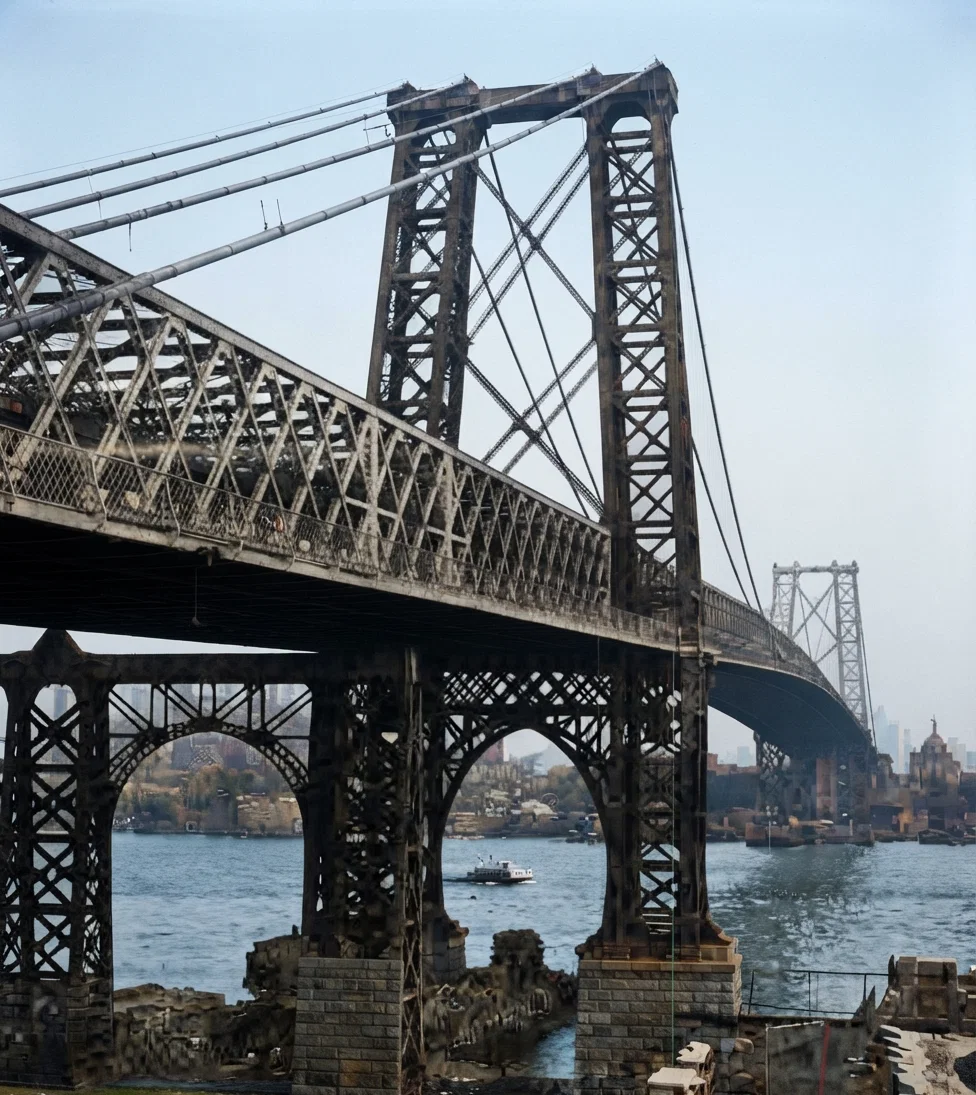
ONE of the greatest bridges in the world, if not the greatest, is the new East River Bridge, connecting New York and Brooklyn about a mile and a half from the old Brooklyn Bridge. It is said to be the widest and strongest bridge in the world. The accompanying illustration will give one a fair idea of the mammoth structure. It is 118 feet wide, and its entire length between terminals is 7,200 feet. The length of the main span is 1,600 feet. It is thus 33 feet wider and 1,211 feet longer than the Brooklyn Bridge. It also exceeds the old bridge greatly in its carrying capacity, being double-decked and having six car tracks. The new bridge also surpasses the old in the firmness of its construction.
The New East River Bridge connecting New York and Brooklyn.
The foundations of the towers, which are made of concrete, are in every case sunk to bedrock. Upon these lowest foundations are built solid masonry piers, two for each tower, which rise 23 feet above high water. Massive granite pedestal blocks are set upon each pier to form the immediate support of the four legs of the tower. The tops of the towers are 335 feet above the river, and 442 feet above the lowest foundation. The center span of the bridge suspended over the East River channel, is carried on four great steel cables, each of which is 18 inches in diameter. Stiffness is imparted to the new bridge by two continuous lattice trusses 40 feet in depth and of great solidity. The new bridge has no terminal stations, the purpose being to give a broad, continuous thoroughfare, over which trains, vehicles, and pedestrians may pass without any interruption, the bridge thus forming a part of the street system of Greater New York.

AGENTS' BONANZA.

If you live in a manufacturing town, send 5 cents for a sample of AMERICAN HAND CLEANER. Removes all dirt and stain from the hands in an instant without injury to the skin. Prevents chapped hands. An agent wanted in every town. Fifty per cent profit for the agent. Circular will explain.
Address, ALFRED MALLET, 907 Second Ave. Baltimore, Md.

WORKERS WANTED

to SHOW at once the superiority of Braham's Patented Pens. Write 20 times longer than common pens with one dip of ink. If your order reaches me before the 25th of March with old sample pen and 35 cents for one dozen postpaid, I will include: 1 automatic ejecting penholder; 1 carbon ink tablet; 1 automatic gold pen; and 50 neatly-printed visiting cards. Remember 25 per cent of profits goes to Life Line Mission, Des Moines, Ia., where over 20 souls have been rescued from sin and drink during the last three months. Money returned if not satisfied.
P. S. Every user of pen and ink buys on sight.
Des Moines, Ia. ETHAN BROWN.

TOURIST CARS EAST

VIA

S. P. LINES

Personally Conducted Cheapest Rates Quickest Time
Your choice of a dozen routes
Through cars to— Portland, Los Angeles, Salt Lake City Omaha, Denver, Kansas City St. Paul, Minneapolis, Chicago St. Louis, Louisville, Cincinnati Memphis, El Paso, San Antonio Houston, New Orleans, Montgomery Atlanta, Washington, D. C.
Remember these cars run through to above named cities without a change from Oakland or San Francisco. Our fast limited trains in connection with the above mentioned service. . . .
G. T. FORSYTH Div. Pass. Agent 12 San Pablo Ave., Oakland, Cal. PHONE MAIN 543

TRIM THY LAMP.

Out on the shore where thy small house Stands dark, stands dark, this night, Full many a wanderer, thither tossed, Is driven on that rock and lost Where thou hast hid thy light.
Tho but a candle thou didst have, Its trimmed and growing ray Is infinite. With God no light Is great or small, but only bright, As is His perfect day.
The world hath sorrow, nothing more To give or keep for thee; Duty is in that hidden flame, And soaring joy; then rise for shame That thou so dark shouldst be.
Rise, trim thy lamp—the feeble past Behind thee put and spurn. With God it is not soon or late, So that thy light, now flaming great, Doth ever fiercer burn—
Fierce with its love, and flaming great In its humility, Shunning no soul in sinful need, Fearing no path where He may lead, Glowing consumingly.
Thou shalt not want for light enough When earthly moons grow dim; The dawn is but begun for thee, When thou shalt hand, so tremblingly, Thy empty lamp to Him.
—Sarah Pratt McLean Greene.

CHINA IN THE LIGHT OF PASSING EVENTS.

WE are now on the eve of another Chinese New Year, which, on account of the extra intercalary month, comes later this year—about the middle of February. And thus another year has been added to China's millenniums, and still stands the empire which antedates the days of Abraham, and flourished in the days of Isaiah, as the great middle kingdom occupying the central portion of the Asiatic continent. Not only has she witnessed the rise of all the great empires of antiquity, but, as these have passed, giving place to modern nations, she has continued intact to the present, despite her many rebellions and dynastic changes. China is the one only kingdom definitely mentioned in Old Testament prophecy (Isa. 49:12), which was to survive the storms of time, retaining its indentity until the final ingathering of God's people.
In view of such facts what wonder that the "Sons of Han" feel proud of their nation, their institutions, and their civilization, and look down upon other nations with mingled contempt and pity, who in comparison are but as moderns in point of age, and but few as respects numbers. This, however, is retrospective, and affords but little comfort as to China's present and future. The great Oriental giant has at last been aroused by the persistent and unwelcome intrusion of the Western barbarians, only to find his strength shorn and his many merciless enemies ready and eager to plunder and despoil. But for the hope held out by the Gospel, these are most sad days for China. Politically she is oppressed rather than ruled by a dynasty essentially foreign, and wholly antagonistic to her best interests. Bribery, venality, and corruption prevail in high places.

Quang-si Famine and Rebellion.

After three successive crop failures in large sections of Quang-si, due to droughts and floods, the famine was broken by a harvest last autumn. It is only just to say that the famine sufferings in that unfortunate province were not due to the absence of food supplies. It is a well-attested fact that during the very height of the famine plenty of large shops could be found filled with an abundance of rice, while just outside on the streets people fell down dead for the want of food which they could not buy on account of the exorbitant prices, since it is no secret that, pound for pound, children sold for less than half the price of rice.
To alleviate this condition, many Chinese acted a generous and noble part in connection with a large number of foreigners, both English and American. As the Chinese keep no statistical account of such things, it is quite impossible to make even a rough estimate of the number of persons that succumbed, nor is it easy to determine the actual conditions which prevailed during the ravages of this famine; yet I feel safe in saying, on the authority of foreigners who were eye-witnesses, that the barbarities and unnatural crimes which such conditions usually provoke were not nearly as common nor as shocking as some of the reports in the foreign press would give us to believe.
But this is only one of the troubles of that province. It is a hotbed of rebellion against the constituted authority. It was from this province that the great Tai-Ping rebellion had its origin, and the frequent outbreaks, which have come to be almost chronic, would easily lead to the conclusion that its roots are still there. It is only a few months since the new governor-general of the two Quang provinces returned from Quang-si, after a vigorous and brilliant campaign against the rebels. His success, however, seems to have been only partial and temporary, as preparations are once more afoot for a fresh attack on no small scale. These people are a rough, hardy, and, in a measure, a liberty-loving people, who, living as they do at a great distance from the central government at Peking, may yet succeed in fomenting a second general anti-dynastic rebellion.
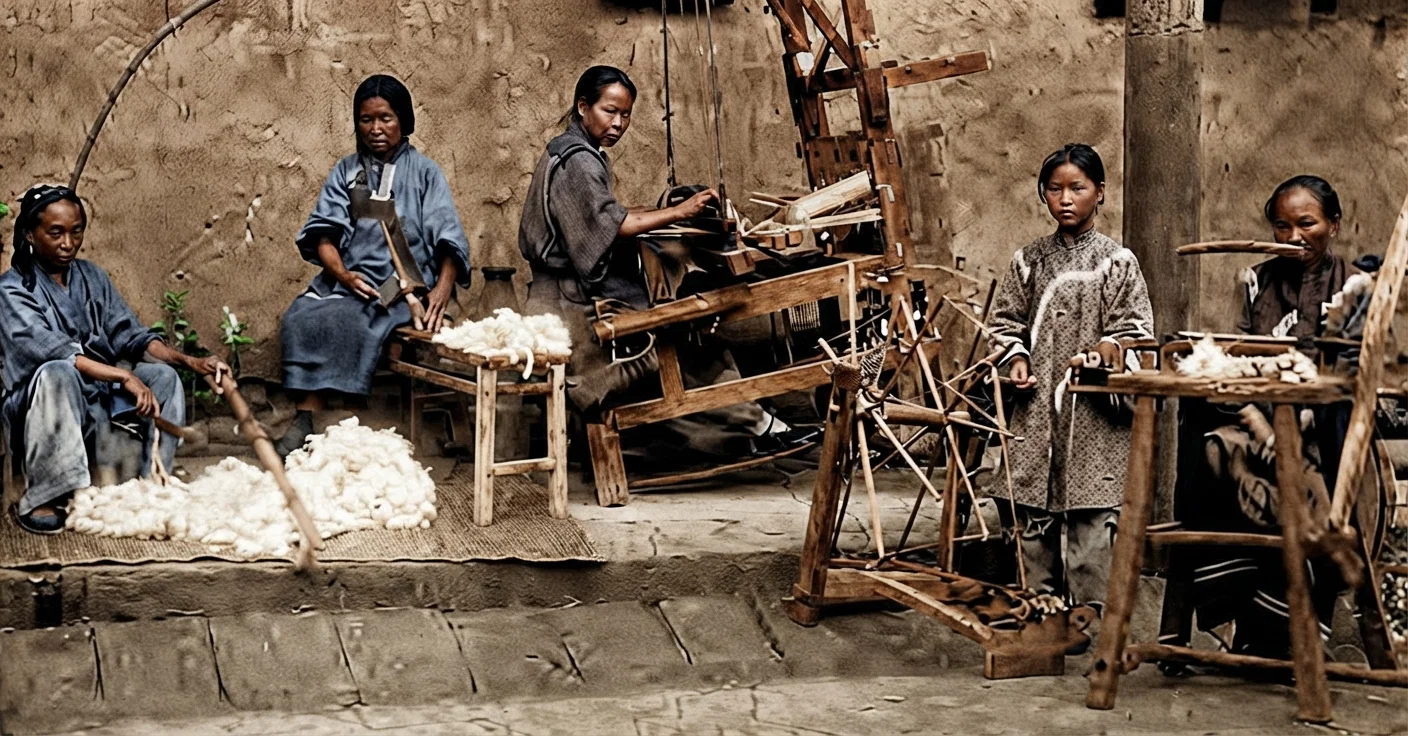
Whose Chief Concern It Is to Live Without Molestation.

China's Reactionary Attitude.

Following close upon the uprising of 1900 it was quite generally believed that China's attitude toward the West and Western thought and civilization had undergone a radical change. The evidence adduced was the very friendly feelings manifested in official circles and at the court itself, mingled with expressions of regret at the late unfortunate affair, and the still more favorable omen, viz., the wide-spread and urgent demand for Western books and education. This, however, has almost entirely subsided. Many schools which started at the impulse of this supposed Chinese renaissance are now said to have dwindled to almost nothing. A large number of students who have likings for Western ideas seem to be terrified by the attitude of the government toward those who stand for reform and Western thought, and in consequence prefer to remain in safety, foregoing the much-desired modern education.
Two years ago extensive sales of Western books were made at the annual literary examination at Nanking. The same experiment was tried again last year, with the result that almost no books were sold. We may therefore conclude the demand has ceased, which fact speaks volumes for China. Speaking of this tendency to reaction, the editor of the Chinese Recorder (November) concludes that "China is frittering away her day of grace, shilly-shallying, procrastinating, temporizing, deceiving—anything but the right thing. How form is to be brought out of this chaos, order out of this confusion, and just government out of this anarchy and oppression, is more than we can fathom, and we are more glad than ever that we are a missionary and not a diplomat, for we still believe in the power of the Gospel to set China right."
From items of interest in China's Millions for November, we quote the following, as illustrating the present trend of events:—
In consequence of the cruelty perpetrated by the Chinese Government in the execution of Shen Chien, the reformer, and their dereliction of duty in connection with the Supao case, which inaction compels the prisoners to remain in prison, the British minister and all the British legation and their wives refused to attend the reception in the summer palace given by the empress-dowager and emperor on October 9 and 10.
The empress-dowager has endeavored to stop gossip by the issue of a popular edict refusing any honorific characters on the occasion of her birthday, as the selection of two more to add to the sixteen she already possesses was under discussion. Each character represents an annual income of 360,000 taels—the edict therefore saves officials 720,000 taels (about one-half million dollars U. S. gold) a year; but it does more,—it turns public opinion, which has been boiling over with indignation, back into the grooves of thinking the empress-dowager is not such a bad sort after all. While thus soothing suspicion to rest, she and her party are carefully prosecuting the anti-progressive crusade, and a veritable time of terror has been introduced by the offer of third-class metropolitan rank to any one who will arrest any prominent reform leaders, or the recovery of forfeited rank to those who arrest a particularly notorious and influential man.

The Manchurian Question.

The controversy between Russia and Japan puts China between two fires, since it is one of her dependencies—the very home of the reigning dynasty—which is the bone of contention. It seems impossible for her to remain neutral, yet which of the two can she trust? Has she not already been betrayed beyond all hope? This peril which threatens the whole empire is, however, taken to heart only by the ruling order, whose chief ambition it is to guard and conserve their own personal interests. Patriotism and national honor count for very little among the masses of China, whose chief concern is to live without molestation.

Treaty Revision.

One of the most important events of the past year is the treaty between China and the United States, which was signed at Shanghai, October 9. While the open-door policy of the American nation, calling for two treaty ports in Manchuria, is designed to benefit trade interests, it can not be doubted that a door open to trade means at the same time free entrance to the Gospel, a privilege which it is feared would no longer obtain should Russia's purposes be realized.
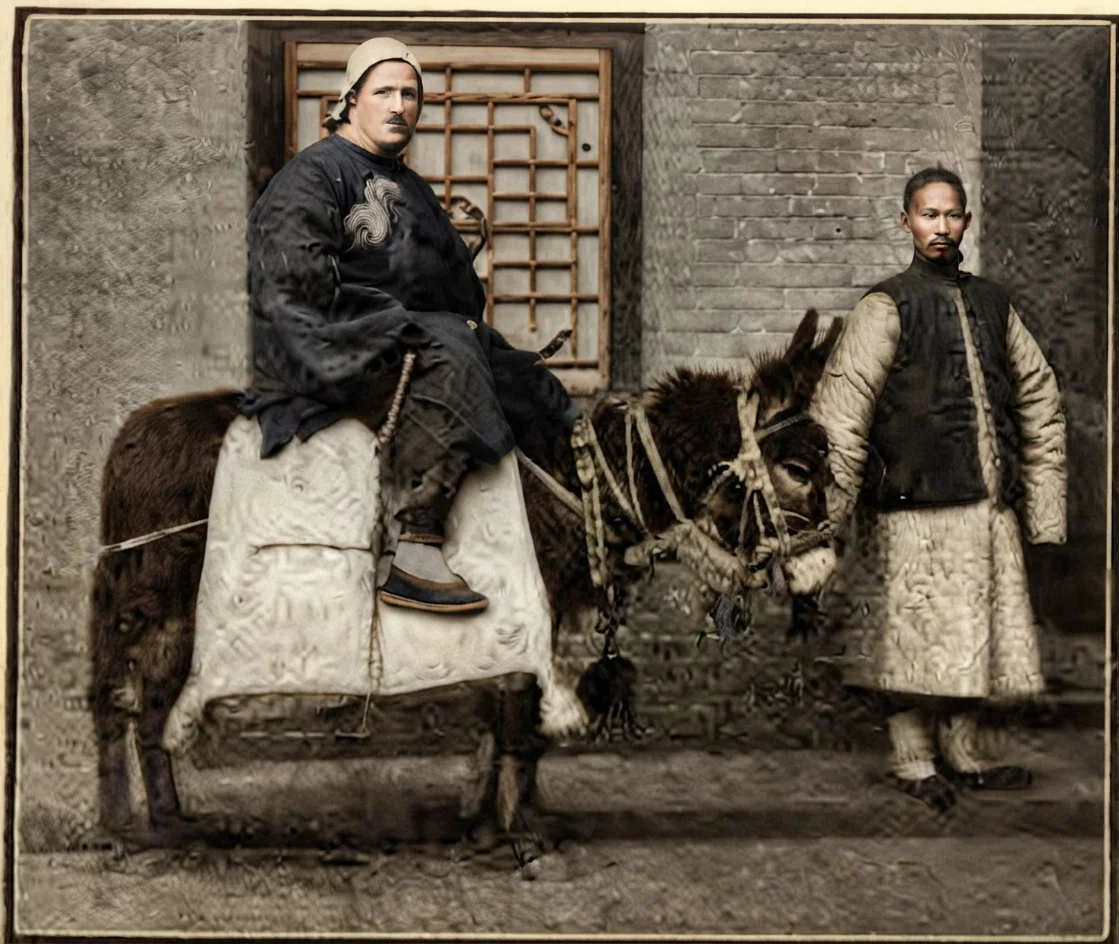
A Missionary with His Native Helper.
The important point in the treaty as respects missionaries is the insistence on the part of signatory powers that missionaries are to hold themselves aloof from all interference in the exercise by Chinese officials of their jurisdiction over Chinese subjects; 'nor shall the native authorities make any distinction between converts and non-converts, but shall administer the laws without partiality, so that both classes can live together in peace.'
Continue reading: THE WORK IN TRINIDAD