Signs of the Times, Vol. 55, No. 14.

Only Christianity Has a Christ

Signs of the Times

Apr 3, 1928

Pacific Press Publishing Association · Mountain View, California · Apr 3, 1928
Christianity alone can satisfy the heart longings of the multitudes of earth.

Only Christianity Has a Christ

The question of the comparative values of the great religions of the world considered.
JENNIE CUNNINGHAM BEARDSLEY
“Thou hast made us for Thyself and restless is our heart until it finds its rest in Thee.”—Augustine.
DEEP in every human heart God has planted the lure of Himself. Man was created a spiritual being, and the longing for that nameless something outside of and beyond one’s self is as natural to a man as is a song to a bird. To sage or savage, refined or base, primitive or modern, whatever race or color, the urge is the same. There is not a tribe or a race of people but worships, in one way or another, a superior being before whom they feel their helplessness and whose favor they court. From earliest times this has been true.
The history of primitive man is a history of his religion. The history of every people has been colored and determined by their attitude toward religion. Religion is the strongest passion of the human heart; it is stronger than love, for the best loved is sacrificed to it; it is stronger than the fear of physical pain, for men suffer for it; it is stronger than the love of life, for men die for it. Men give their lives to its promulgation, and sacrifice health, wealth, and the comforts and pleasures of life to acquaint others with their tenets of faith. For by devious ways have men followed the lure of the unseen, hoping to attain peace and rest of soul.
Take five of the great, outstanding religions in the world to-day, Confucianism, Buddhism, Taoism, Mohammedanism, and Christianity. Is one better than another, or does it matter? Each of these great religions has been adopted by the people of certain countries, and the civilization of a country is a measure of the possibilities of its religion for the betterment of the social and economic living conditions of the people. Europe and America are adherents of the Christian religion. Is this religion superior to all others?
This can be answered only by investigating the fruit that each one bears.
All these religions except Mohammedanism are older than Christianity. If Christianity has nothing better for men, let the old suffice. All these great religions have some things in common. If Christianity is superior, what makes it so? Each religion at its beginning had a leader who seemed to stand out above his fellows; each had a system of morality; each leader gathered disciples about himself for personal instruction that they might perpetuate his teachings. What has one of these religions done for its people more than another?
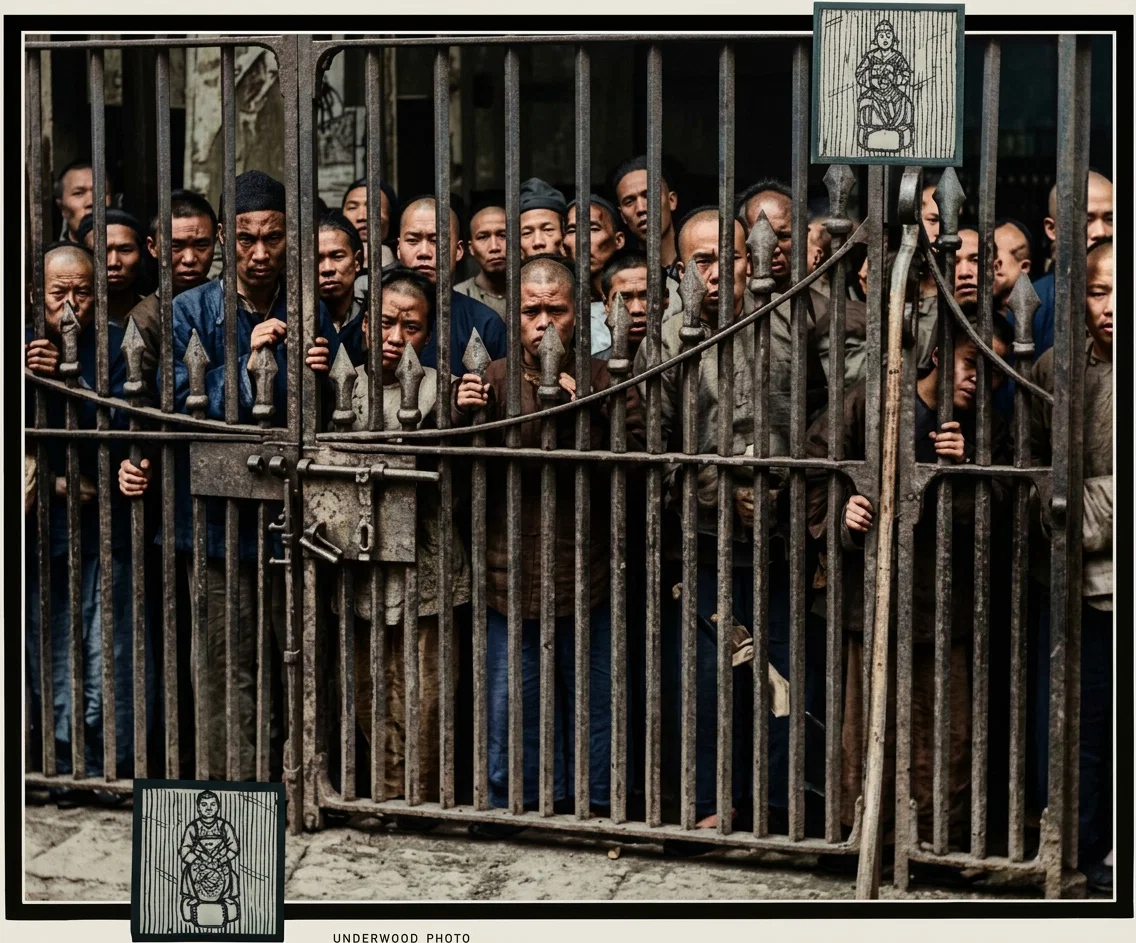
In the lands where the “isms” hold sway, poverty, ignorance, and vice prevail; social and economic conditions have remained the same for centuries; the condition of women and little children is little better than that of beasts of burden; there are no hospitals, schools, or churches; no doctors, teachers, or philanthropists; the aged and infirm are hurried out of the world; in superstition and dread and without hope the people go down to their graves.
In Christian lands how different! A church stands on the hill and a schoolhouse in the valley. Hospitals and institutions for the unfortunate abound. Modern conveniences and scientific inventions have left little to be desired for material advantage. By every test Christianity has proved itself vastly superior to every other religion. The teaching of Christ about God, sin, redemption, holiness, and love has impressed, inspired, and influenced human life as nothing else has done or can do.

WHERE THE SUPERIORITY?

The superiority of Christianity lies in the superiority of its Author. Confucius laid claim to no higher character than that of a sage, drawing from no other fountain than human wisdom. Buddha was a moral reformer and true philanthropist, the propounder of humane and ethical precepts; yet it can not be shown that he renovated India society or radically changed for the better the character of India. Neither of these men claimed divinity or even divine inspiration for themselves. Mohammed made no higher claim than divine inspiration.
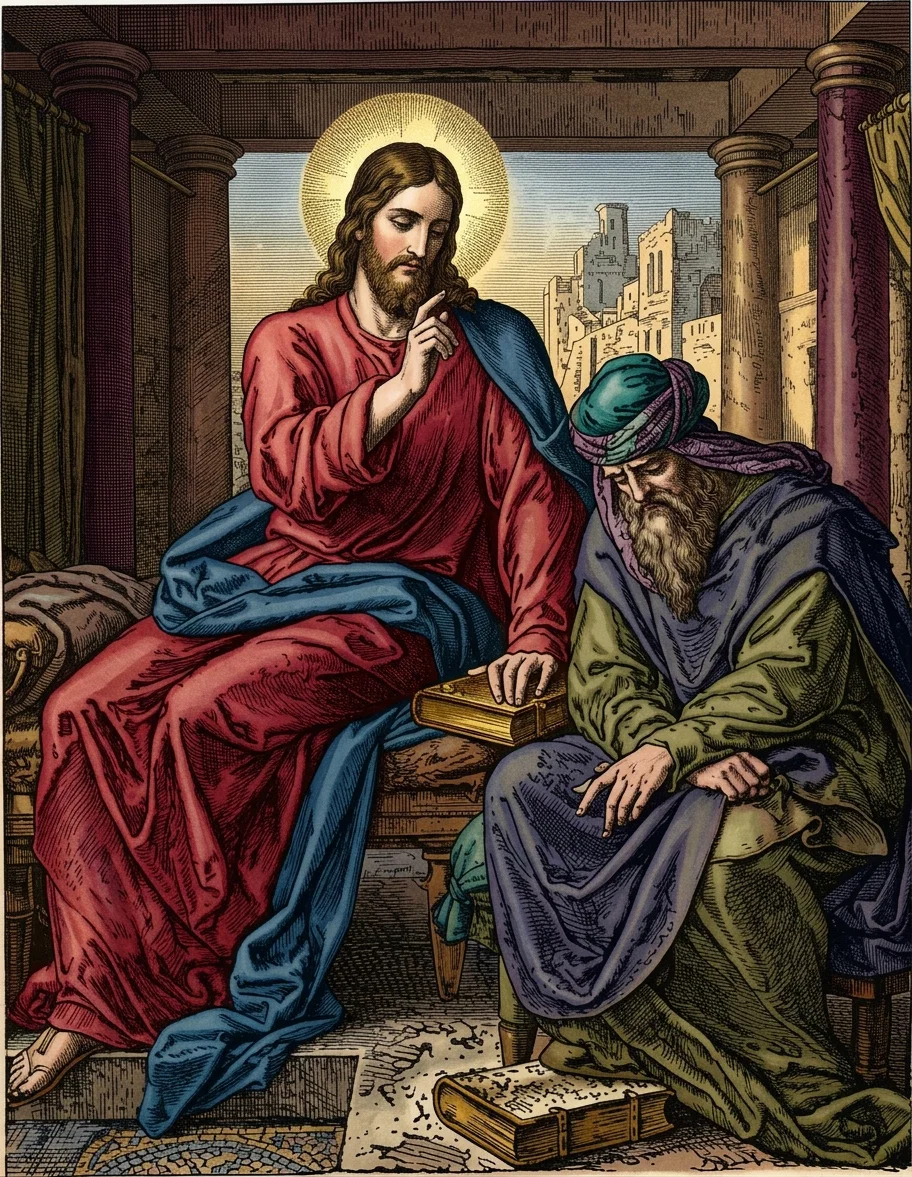
The claims of Jesus to divinity within Himself transcends all other claims. He claimed to be God manifest in the flesh. His doctrine is Himself; “Christianity is Christ. He is its essence and its substance, its foundation and its superstructure, its source and its stream, its root and its flower. He is its ‘alpha and omega,’ its beginning and its ending.” In this distinction is Christianity’s separation from other religions most emphatic and pronounced. They all in common have sacred houses, inspired books, sacerdotal orders, ceremonial observances, and solemn worships, and to some extent, the same fundamental teachings; but only Christianity is merged in its Author, and is the shadow of His presence and the aureole of His glory.” He Himself is the totality, the wholeness, the entirety, of the church which He established.
This idea is continually prominent in both His own and the apostles’ teaching. He assumed to stand as the only means of access to the Father. The kingdom He founded was His kingdom; the church established was His church; the disciples were His disciples. They were made clean through His word; they were to pray in His name, rejoice in His joy and He Himself promised to answer their petitions and to be with them always “even to the end of the world.” He makes Himself the central point of every announcement. ‘It is I,’ is the great text of all His teaching.
The teaching of each of these other religions has been a code of morals; a religion of good works; a plan of betterment which the world has tried for four thousand years and failed. “Do and your soul shall live” has been their text; but such salvation was powerless to work a reformation. No man could do. Christianity says, “It is done.” “Be of good cheer,” says Christ; “I have overcome the world.” John 16:33. “Thou shalt call His name Jesus: for He shall save His people from their sins.” Matthew 1:21. “Who saved us, and called us with an holy calling, not according to our works, but according to His own purpose and grace, which was given us in Christ Jesus before times eternal.” 2 Timothy 1:9. “Being justified freely by His grace through the redemption that is in Christ Jesus.” Romans 3:24.
Is it possible for us to realize fully the issue here brought before us? Here is a young man scarcely thirty-three years old, emerged from obscurity only for the brief space of three and a half years, living during those years under the scorn of the world which grew steadily in intensity and hatred, and at the end, dying the death of the worst of malefactors upon the cross of shame. But death did not hold Him; and from that empty tomb came the germs of a worldwide community determined to carry to all the world the message of that cross and the resurrection, and of the power of the crucified and risen Lord to save men from sin. And so great was their passion, and so true their purpose, that well within twenty-five years they could say that the gospel had been carried to all the world.
So rapidly did Christianity spread that Satan feared for the success of his kingdom, and began an attempt by fire and sword to exterminate it. No other religion ever suffered such relentless opposition, but the more the Christians were persecuted the more numerous they became.
Failing thus to overcome their zeal, Satan began to make Christianity popular, and men everywhere scrambled to get into the church. Popularity did what chains and fagot could not do; doctrine was destroyed and the invisible Christ was superseded by the visible theocracy implicated and involved in political embarrassments and in the assumption of temporal power.
However, some remained true, but they were hunted like beasts of prey as they fled to the mountains and hid themselves in the caverns of the rocks. But they left torches of light behind them, which finally burst into the glory of the Reformation. Men threw off the shackles of medievalism and began to think for themselves. Knowledge increased. Men fought for liberty of conscience and for freedom of speech. Justification by faith was Luther’s new theology. Again Satan was defeated, and from the ashes of a defeated and apostate church grew up Christianity as it was known in later times.
Never again, it seemed, could Satan so completely triumph over Christ; but six thousand years of experience with men in sin has made him a wise and cunning foe. The church had survived every onslaught. A new plan must be tried. If the church could be persuaded to look to some other source for its power than that of Christ, it might yet be overcome.

SATAN’S PLAN NOW

The Bible began to be discredited. Our children are taught that the story of creation and of the Flood are myths; that the Christ life is but an ideal. The end of the world and the literal coming of Christ are treated as a huge joke. Satan would persuade men to look to and to trust in their own wisdom; to dispense with Christ even though they retain His name. A modern theology would have us believe that it is quite possible to be Christians and to have a code of morality sufficient for salvation without Christology or a belief in the historicity of Christ,—that man needs no savior outside of himself. They put God and the supernatural entirely out of their reckoning. Their condition is described thus: “Knowing God, they glorified Him not as God, neither gave thanks; but became vain in their reasonings, and their senseless heart was darkened. Professing themselves to be wise, they became fools, . . . for that they exchanged the truth of God for a lie, and worshiped and served the creature rather than the Creator.” Romans 1:21-25, A. R. V. No wonder that Christ, reading the future, could say, “When the Son of man cometh, shall He find faith on the earth?” Luke 18:8.
Eighteen hundred years have passed, and the faith of Christ is still a power in the world. In spite of Christianity’s collision with the elements of the world,—political power, national temperament, antecedent tradition, philosophical antagonism, moral and physical limitations of whatever kind,—it is steadily marching on to victory. We need not expect the world to be reconciled to Christ. “The mind of the flesh is enmity against God.” Romans 8:7. But in the deep recesses of the individual personality the Holy Spirit works His blessed and marvelous way, transforming character, uplifting ideals, inspiring hopes, and gathering out a people for His name.
The most marvelous and astounding thing in nineteen centuries of history is the power of Christ’s life over men. The terrible deluge of sin in which the world is at present floundering is not the result of any lack of power in Christianity to save men from sin. Christianity is just as potent today as it was two thousand years ago, but men have rejected Christ, who is the only source of salvation from sin. Like the Jews of old they declare, “We will not have this Man to reign over us.” But as long as Christ lives, Christianity will retain its old-time power, for Christianity is Christ and “Christ [is] the power of God, and the wisdom of God.” 1 Corinthians 1:24.
Christianity has demonstrated to all the world its superiority to all other religions, and soon, very soon it will triumph gloriously. “For yet a very little while, He that cometh shall come, and shall not tarry.” Hebrews 10:37. “What do ye devise against Jehovah? He will make a full end; affliction shall not rise up the second time.” Nahum 1:9.
Christianity may seem to wane; Satan may seem to triumph, but Jehovah has His thousands that have not bowed the knee to Baal. There is now going forth the last message of mercy to a world lost in sin. The controversy is soon to be ended. Here and there the angels are searching out the honest in heart, who, Jesus says, shall walk with Him in white; for they are worthy. “Wherefore also He is able to save to the uttermost them that draw near unto God through Him.” Hebrews 7:25. “Come; for all things are now ready.” “Now is the day of salvation.” Mercy lingers. Make haste. “Escape for thy life.” “And the angel that I saw standing upon the sea and upon the earth . . . sware . . . that there shall be delay no longer.” Revelation 10:5, 6. “Behold, I come quickly; and My reward is with Me, to render to each man according as his work is.” Revelation 22:12.

His Abiding Presence

ROBERT HARE
*“With you always”—still His promise Lingers through the dimly shaded years; “With you, in the gloom and darkness And the valley of thy tears. Still, when sunlight kindles brightly, And the rainbow spreads its arching rays, I am with you ever, always To the ending of the days.*
*“Fear not, then, though, in the valley, Setting suns may crowd the distant west; Friend unseen, I still am with you, And My Presence offers rest. Thorns that pierce and angry tempests From beneath and overhead distress; Still in friendship’s changeless guiding I am with thee, and to bless.*
*“Mountains rising from the vision, Tasks unmeasured would thy soul appall; Galilees may toss their billows; I am Master of them all. Never mount too high or rugged Where My Spirit can not guide and cheer; Never sea so wild with tempest That My Presence is not near.”*
*Blest, abiding Presence, linger, Teach this anxious heart of mine to sing; Let me feel the shadow o’er me Of thy everlasting wing. Then, the tempests all forgotten, Thorns that pierce, with ever-darkened skies, Faith will press in courage onward, To the everlasting prize.*

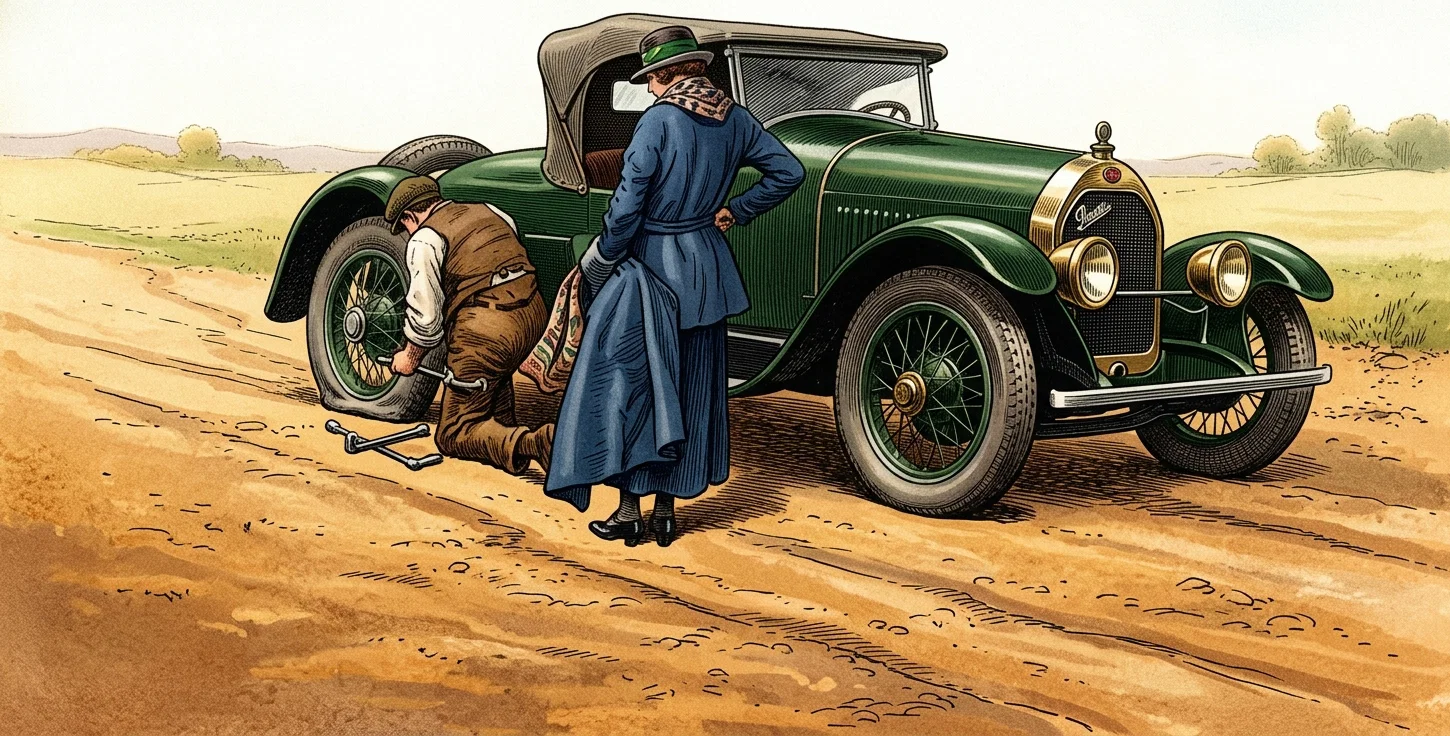
Flat Tires

CHARLES L. PADDOCK
Do you drive a car? If you do, you have had tire trouble and know the sensation it always brings. One peculiar thing about tire trouble is that it almost always comes unexpectedly. Usually it is when you are in a hurry and haven’t a moment to spare. It can happen at such unlikely times and places,—maybe on a dark, stormy night or when you are rushing to meet an appointment.
But when you have a flat tire, there is only one thing to do—pull out to the side of the road, and give it attention. We have all learned that.

BUMP, BUMP, BUMP

Not long ago we were on a long drive on a paved highway. The day was beautiful, and the scenery was grand. We were enjoying it immensely, and trying to get to the next large town by noon, when, all of a sudden, we hit a particularly rough place in the road, and the car began to bump, bump, bump. We began to complain of the road. But there was nothing wrong with the road—we had a flat tire, and had to stop for repairs. While we labored away at our unpleasant task, others, yes, many, many cars, went driving by with no thought of trouble.
But tire troubles come to all automobilists, rich and poor, old and young. On our journey through life we all have our troubles too. The rich are no more exempt than the poor. Their troubles may be of a different nature, but none the less vexing. When we are passing through our trials and afflictions, we often feel our troubles are greater than anyone else’s, and that the rest of the world is care free.
But when we get our tire repaired and start on our way again, we don’t drive long until we see some fellow tourist halted by the wayside with tire trouble.
And while we don’t get any pleasure out of seeing others in trouble, it does help us to realize that we are not the only ones who have trials and difficulties. We are told that “misery likes company.” That is not exactly our feeling. But when we see a fellow traveler whistling as he jacks up his car and changes a tire, it makes us ashamed for complaining when a little trouble was our lot.
And when we have had troubles and trials ourselves, it does soften our hearts and make us more sympathetic for our fellow mortals who may be passing through the furnace of affliction. If we don’t feel more sympathetic, we should. When you see a fellow motorist in the ditch or having tire trouble, do you step on the gas and give him a haughty look as you hurry by, or Good-Samaritan-like do you stop and give him a lift?
We never know, either, when we shall pick up a nail or a tack. Punctures and blow-outs come without warning. It may be on a pleasure trip when all is jolly and gay. So in life, trouble, trial, and affliction come unexpectedly. The days of cloud come mingled with the sunshine.
Just when our family budget seems to be working nicely and we feel we can lay a little money away, something happens,—some bad luck, some unforeseen expense,—and our plans are all spoiled.
Just when we feel we are getting the victory over some of our besetting sins, an unexpected temptation faces us, and we fall. Some of us have felt we were getting the mastery of our temper, when some one irritates us and there is a real blow-out; we fall.
But remember just then that you are not the only tourist on life’s highway. Others are having tire trouble too; they are struggling with tempers just as vicious as your own. Change your tire, and resume your journey. We have all sinned, and sins can be forgiven. “If we confess our sins, He is faithful and just to forgive us.” Confess your sins, and start anew.

HOPE EVEN IN DEATH

Friends may fail you. But you are not the only one who has been betrayed by those you love. Jesus was betrayed by one of the twelve, denied by another, and at the great crisis of Calvary forsaken by all.
Loved ones may be snatched from us in death. But there is hope and courage to be had even in this experience. There is to be a resurrection. The Lord is preparing mansions for those who love Him, where they may reign throughout eternity.
Maybe you have failed in business,—not just a puncture, but a real blow-out,—and you feel there is no use trying again; no hope. Thousands of others have failed completely, tried again, and succeeded.
Did you ever notice how light-hearted you feel after the tire is repaired and you are on your way again? We always appreciate the sunshine more after a few days of rain and cloud and storm. Springtime seems all the more glorious after a long, cold winter.
We are all tourists on life’s highway, and sooner or later we may expect flat tires, troubles, disappointments, discouragements. But at the end of the journey we are promised a home where trouble will be no more. And we shall appreciate heaven all the more because of the trials which beset us.
When troubles thicken and trials beset you, just get down the Guidebook, pause by life’s highway for just a little while, and read the thirty-fifth chapter of Isaiah and the twenty-first chapter of Revelation.
We shall soon be at the end of our journey, and our tire troubles will be over. May we be faithful and push on.

The INDESTRUCTIBLE LAW

To the questioning lawyer who asked, “Master, which is the great commandment in the law?” Jesus replied, “Thou shalt love the Lord thy God with all thy heart, and with all thy soul, and with all thy mind. This is the first and great commandment. And the second is like unto it, Thou shalt love thy neighbor as thyself.”
It is impossible that the Decalogue should be done away with, for its principles are divine and eternal.
GEORGE W. RINE
About six months ago I contributed to the Signs of the Times an article under the title, “The Unchangeable Sabbath.” Dr. G. F. Storing of Austin, Minnesota, is one of the many thousands who have read the article. In a letter addressed to the editors he declares that he can not agree to the conclusions of the article. With his letter he inclosed a lengthy “thesis,” purporting to be a justification of his disagreement. His principal contention is that the law of Ten Commandments and the law regulating the ritual and typical services of the ancient Jewish tabernacle, and later of the temple at Jerusalem, constituted one and the same law, one legal code. From this, as a premise, he naturally concludes that when the ritual was abolished by the atoning death of Christ on the cross, the Decalogue (the Ten Commandments), as a component part of the same law, was abolished at the same time.
But it is Dr. Storing’s premise, namely, that the Decalogue is identified with the law of rites and ceremonies, and therefore with the first or old covenant, that is Scripturally untenable; in short, erroneous. If his premise were true, it would, as we shall see, prove the Bible, by not a few lines of demonstration, to be a mass of contradictions. On the other hand, by accepting the repeated testimony of Holy Writ to the effect that the Decalogue is, in its very nature, inviolable and of perpetual force, we prove the absolute consistency of every phase of Bible teaching with every other phase.

BIBLE TERM “COVENANT” OF VARYING IMPORT

It is true that the Decalogue is, in the Bible, a number of times called covenant. In Exodus 34:28 it is expressly so named. The two tables of stone, on which the Decalogue was “written with the finger of God,” are, in Hebrews 9:4, designated “tables of the covenant.” In Deuteronomy 9:11 those tables are given exactly the same title. But the Ten Commandments are never, in themselves, called either the old or the new covenant. The word “covenant” is used variously in the Scriptures. In Isaiah 28:18 the Lord declares to His apostate people that their “covenant with death shall be disannulled.” In Numbers 25:12, 13 the Lord promises to give to Phinehas “the covenant of an everlasting priesthood.” We must not forget that the Ten Commandments are Scripturally known by many titles; as, testimonies, judgments, precepts, statutes, the law, et cetera. Devout students of the Bible often refer to the Decalogue as the “covenant commanded.” (See Deuteronomy 4:13; Psalm 111:9, etc.)

INSEPARABLE FROM THE NEW COVENANT

That the Decalogue is not the old covenant, and therefore not abolished with it at the cross, is made absolutely and eternally certain by the fact that the Lord declares categorically that the new or everlasting covenant consists in writing His law, by His Spirit in the “minds” and “hearts” of believers. (See Jeremiah 31:31-34; Hebrews 8:8-12; 2 Corinthians 3.) Observe that the passage in Hebrews 8 is a free quotation of the passage cited from Jeremiah 31; and remember, too, that the book of Hebrews was written thirty-three years after the abrogation of the old covenant at Calvary. Is it thinkable that God would write in the hearts of His people an obsolete law, a dead law?
Every time a sinner experiences genuine conversion there is instilled, by the Spirit of God, into his inmost heart and mind the living law of the living God. When the Holy Spirit incited holy men of God to write the Bible passages cited above, could He (the Spirit) have erred? One shudders at the very question. The process of having God’s law inscribed in your heart, makes you to that extent like Jesus; for when He came into our world as the Lamb of God, He declared to the Father: “I delight to do Thy will, O My God: yea, Thy law is within My heart.” Psalm 40:8. (This prophecy is applied to Christ in Hebrews 10.) We see, then, that the Lord’s testimony respecting the vital place which His law fills in the gospel covenant, the covenant validated by the blood of Christ (Matthew 26:26-28), and the dogma declaring that the law expired at the cross, stand, each to the other, in hopeless contradiction. Can it be that Inspiration was mistaken?
Jesus and His apostles taught nothing more clearly than the unique fact that God’s law expresses itself in love, and that His love fulfills itself in law. To abolish one is to abolish the other. The annulling of love means the annulling of God (if that were thinkable), for “God is love.” 1 John 4:8. To abolish the law of God is as impossible as to abolish the love of God. For divine love expresses itself in lawfulness; that is, in fulfilling divine law, for “love is the fulfilling of the law.” Romans 13:10.
Let us observe now how beautifully and impressively Jesus enunciates the same marvelous truth. A lawyer once asked Him, “Master, which is the great commandment in the law?” Jesus answered: “Thou shalt love the Lord thy God with all thy heart, and with all thy soul, and with all thy mind. This is the first and great commandment. And the second is like unto it, Thou shalt love thy neighbor as thyself. On these two commandments hang all the law and the prophets.” Matthew 22:35-40. To love God supremely and our neighbor as ourselves is to obey God not only through the many specific precepts of the prophetic books proper, but also through the all-comprehensive precepts that constitute His law, the Ten Commandments.
With what exquisite nicety this instruction from the Master fits into the structure of the Decalogue! To obey from the heart the first four commandments is, as we all know, to fulfill our duty to God, and to obey the latter six is to fulfill our duty to our fellow men. Of course the obedient keeping of the first four precepts implies the keeping of all, and the converse is just as necessarily true. Now, let me ask the reader, Is it conceivable that, in loving God and man, as Jesus here indicates, we fulfill or keep a law that no longer exists? You can no more separate divine law from divine love than you can separate the sun from light or light from the sun.
How tersely the Holy Spirit, through the apostle John, predicates this interpervasion of law and love: “For this is the love of God, that we keep His commandments: and His commandments are not grievous” (“not irksome,” Weymouth). 1 John 5:3. No, God’s commandments are not irksome when prompted by divine love shed abroad in the heart. (Romans 5:5.) The love of God filling and pervading my heart constrains me to cry with my Lord—“I delight to do Thy will, O my God: yea, Thy law is within My heart.” The Holy Spirit sheds God’s love abroad in my heart, and thus writes His law there. He writes His law in my heart, and thus sheds abroad His love therein. Love issues in obedience; obedience springs from love. Dr. G. C. Morgan aptly says: “Every breach of the Decalogue is a violation of love. . . . Every breach of law is due to lack of love.”

LAW AND SIN

In Romans 5:12 we have this suggestive statement: “Wherefore, as by one man sin entered into the world, and death by sin; and so death passed upon all men, for that all have sinned.” Of course that “one man” was Adam, the head of the race. By him, Inspiration declares, sin entered our world. “But sin is not imputed where there is no law.” Verse 13, latter part. In verse 14 we find the phrase, “Adam’s transgression.” Sin, then, was imputed to him. Hence, in keeping with verse 13, Adam must have had and known a law when he sinned. In committing that first human sin, what law did Adam transgress? We shall find the answer clear and full in the Scriptures. “Whosoever committeth sin,” declares the apostle of love, “transgresseth also the law: for sin is the transgression of the law.” 1 John 3:4.
Now if other scriptures did not clearly identify the law that Adam transgressed, we should naturally conclude that it is the law of God, the Ten Commandments. But we need not infer or conclude in a matter so vital and momentous; we may and should know: “What shall we say then? Is the law sin? God forbid. Nay, I had not known sin, but by the law: for I had not known lust, except the law had said, Thou shalt not covet.” Romans 7:7. It was by the law which forbids coveting that Paul had recognized himself a sinner. We all know, of course, that it is the tenth precept of the Decalogue which contains the imperative, “Thou shalt not covet.” Unmistakably, then, the law, the transgression of which John declares to be sin, is the Decalogue, which every child reared in a Christian family knows as the Ten Commandments.
Let us now briefly note a few statements found in James 2. In verse 9 James asserts, “But if ye have respect to persons, ye commit sin, and are convinced of the law as transgressors.” When one commits sin, by what law is he brought under conviction of being a transgressor? The words of verse 11 answer this question so simply and pointedly as to render misunderstanding impossible. “For He that said, Do not commit adultery, said also, Do not kill. Now if thou commit no adultery, yet if thou kill, thou art become a transgressor of the law.” Of what law, James? Can an honest mind mistake his answer? Of course, the law that forbids the commission of adultery and murder. The veriest tyro in Bible knowledge knows that law to be the law of Ten Commandments.
The inspired Paul declares that “where no law is, there is no transgression.” Romans 4:15. In verse 14 of chapter 5 we read, however, of “Adam’s transgression.” The conclusion is inescapable that Adam knew the law of God forbidding covetousness, adultery, and murder—in short, the Ten Commandments. Do men commit sin to-day? The question answers itself. “But,” says Paul, “I had not known sin, but by the law.” Men know themselves to be sinners to-day only because the Holy Spirit, through the law of God, flashes that conviction into their hearts. Is God’s law dead? I ask again.
Our friend of Austin, Minnesota, declares that the law proclaimed in awful majesty and glory by the voice of the Most High was annihilated at the cross with the old typical covenant and its typical laws. God’s law abolished? As well might you think of abolishing His government. In his lectures on preaching, Bishop Simpson long ago declared: “Our congregations should be gathered as around the base of Mount Sinai, while from its summit is heard the voice of God in those commandments which are unalterable and eternal in their character.”
“Do we then make void the law through faith? God forbid: yea, we establish the law.” Romans 3:31.
(Concluded next week)

PREPARING FOR HIS COMING

“To wait for His Son from heaven” does not mean inactivity and idleness. Some who do not know the teaching of the Scriptures concerning Christ’s second coming mistakenly think that interest in “that blessed hope” makes for a passive folding of the hands and doing nothing. But Paul writes to the Thessalonians, “How ye turned to God from idols to serve the living and true God; and to wait for His Son from heaven.” There can be no passivity in serving the living and true God. When the Lord appointed seventy, He “sent them two and two before His face into every city and place, whither He Himself would come.” While that refers to the travels of His earthly ministry, when He first came to this earth, it may have also a suggestion of the truth made so prominent elsewhere, that the church must carry the good news to every part of this earth, to which Christ is so soon coming again. His next words to the seventy are significant. “Therefore said He unto them, The harvest truly is great, but the laborers are few: pray ye therefore the Lord of the harvest, that he would send forth laborers into His harvest.” And when he was teaching His disciples about His second coming He said: “And the gospel must first be published among all nations. . . . And then shall they see the Son of man coming in the clouds with great power and glory.” Mark 13:10, 26.—Sunday School Times.
Continue reading: TEN