Signs of the Times, Vol. 55, No. 14.

Only Christianity Has a Christ
Earlier text: How are Your CHEWERS?

GENESIS—the Unknown Book

MORE LIGHT

CHAPTER VII
ROBERT BRUCE THURBER
Well, stir up the fire again, old scout; put on the pot for dinner; and let’s get on with the story while we wait. We talk so much about it that we don’t get much of the real thing,” and the sick man gathered up his feet, and got into a new position.
“It’s a great old Book, after all, friend of mine. There’s so much in a little. No wasted words there.” So saying, Fenner rose and went out and around to the lean-to, and gave Cheeky something to eat. The storm was whistling round the cabin and moaning through the trees, hiding every view with whirling snow and heaping fresh drifts on the already choked trail.
“‘Clare to goodness,” he muttered as he came back in, “it’s good to be under shelter on a day like this! That pony is going to be hungry pretty soon. Got only a peck of corn and a few wisps of grass left for him.”
He was soon settled in his chair again, the patient was resting easy, and the narrative was continued:
“‘And God said, Let the earth bring forth grass, the herb yielding seed, and the fruit tree yielding fruit after his kind, whose seed is in itself, upon the earth: and it was so. And the earth brought forth grass, and herb yielding seed after his kind, and the tree yielding fruit, whose seed was in itself, after his kind: and God saw that it was good. And the evening and the morning were the third day.”
There was a pause for comments.

TWENTY-FOUR-HOUR DAYS

“Taking it just as it reads, that certainly means those were twenty-four-hour days. It says the same thing for every day, as if that were to be made emphatic,” mused his listener. “And I don’t see why, if He made these things at all, He could not as well make them in one day as in a thousand or a million years. It doesn’t say He made the seed and planted it, either, but He made the full-grown plants on that day.”
The heavy brows were wrinkled and the eyes half closed. Then light came.
“Say, read that again. I see something.”
Fenner repeated it.
“There you have it! The grass producing seed, and the tree producing fruit, each ‘after his kind.’ And it was made to keep on producing after its own kind. No evolution there, old boy. For, to evolve, it would, after a while, have to produce some other and higher kind. It comes around to its own kind every time. Don’t you see that?” He grew enthusiastic. “Every year it starts with a grain of corn, and when it is through it produces a lot of grains just exactly like the first grain. And the measure of its success, as any farmer will tell you, is the degree to which it reproduces itself. And that has been going on ever since the beginning, and is going on to-day.”
Fenner winked and nodded assent, and again bent over the Book. “‘And God said, Let there be lights in the firmament of the heaven to divide the day from the night; and let them be for signs, and for seasons, and for days, and years: and let them be for lights in the firmament of the heaven to give light upon the earth: and it was so. And God made two great lights; the greater light to rule the day, and the lesser light to rule the night: He made the stars also. And God set them in the firmament of the heaven to give light upon the earth, and to rule over the day and over the night, and to divide the light from the darkness: and God saw that it was good. And the evening and the morning were the fourth day.’”
The two men looked at each other. The prospector frowned. The professor scowled. Then both sniffed. The pleasing odor of rabbit broth filled the room.
“I’d like to absorb some of that savory odor and think about this fourth-day business,” and the sick one lay back on the bunk with a satisfied sigh. “Some posers when it comes to astronomy, getting out away from this world. But my mind is working well this morning. Nothing I’d like better than to attack the problem of the fourth day.”
“First, we had better attack some dinner, and then you take a cat nap, and after that we’ll be in better shape than ever,” suggested the cook. So it was; but the patient carried the brunt of the first attack, Fenner only making a sortie and retreating.
It was well along in the afternoon before the cat nap was over, and darkness was closing the short winter day. By the flickering fire light the fourth day account was read again, and the professor opened up:
“To get the problem before us, T. P. says, ‘If the sun was not made until the fourth day, how could vegetation, made on the third day and which requires light and heat, grow and flourish? Since the earth is only one planet in a system of planets, all together controlled by the sun as the central body, and the whole system nicely balanced by the laws of gravitation, which system is in turn exactly balanced to other systems in the universe, how could the earth be created and held in space before the sun was created to be its larger, drawing body and hold it to its orbit? And the stars: astronomers have found that some of them are so far away that it takes more time than the whole age of the earth for their light to reach our eyes. Then how could they have been made on the fourth day of this earth’s history?’”
“I can answer that first one myself,” said Fenner. “Last winter my interest led me to read the reports of the voyages of the ship ‘Challenger,’ also Beebe’s tale of his trip on the ‘Arcturus’ and his explorations at the bottom of the sea. The variety and amount of marine life, both animal and vegetable, reported by these men is well-nigh incredible. And a lot of it exists where no light penetrates at all. Why, buddy, they tell me that so far down in the ocean depths that the pressure of the water would crush a steel submarine like an eggshell, where the temperature is many degrees below zero, and not the faintest ray of light ever shines, millions of sea animals and plants come into existence and live and die without ever having a chance to be anywhere else. They get them, specimens of them, by these deep-sea soundings. In the sea under the polar ice there is plenty of plant and animal life also. So plants don’t have to have light and heat to live.”

WHAT LIGHT WAS IT?

“You are right, Fenner,” responded the other man; “but you don’t need to throw that in here. Didn’t God make light on the first day; and is there any reason why we should consider it any different than sunlight, even though it didn’t come from the sun? And of course it was in existence on the third day. Light shone on the water on the first day, and with the light came heat. The heat would vaporize the water, part of it, but there was no air on which the vapor could rise. So on the second day God made the air. Then the vapor, caused by the heat of the light on the water, and being lighter than air, rose and made clouds, which was the water above the firmament, according to the record. On the third day the land appeared. Then with soil, light, heat, and moisture in the air, the plants could grow. You couldn’t find a more logical and scientific order. God knew what He was doing.”
“Yes, but what light was that, if it wasn’t sunlight?”
“Well, I judge God could make light without the sun, since He made the light for the sun. And He made the light for all these thousands of suns we call stars. It seems to me the Bible says somewhere that God Himself is light. The only conclusion I can come to, without speculation, is that this first-day light must have been a special light, with all the characteristics of sunlight, which He made on the first day to start things going, and which He transferred to the sun on the fourth day. I don’t know why He did it that way; but I don’t see but that that view of it is scientifically correct.”
“Then your theory is that God created the sun, moon, and stars on the fourth day?”
“Not exactly that; I would say that He gave light to the sun on the fourth day, just as He gave form to the land on the third day, and made plants, animals, and man out of the elements in the ground on other days.
“With the sun and all our planets in existence before the first day, the laws of the heavenly bodies would be in operation, and all planets, including the earth, would be moving in order about the sun, and the moons about their planets, as they do now. Gravitation would work without light and heat. Then on the fourth day God set the sun alight, and all the planets and the moons were immediately lighted by reflection from the sun. Thus, and only thus, it seems to me, could the sun, moon, and stars be said to be made on the fourth day.”

OUR SYSTEM ONLY

“The only way I can explain it is that the record means the stars in our system, our planets; except that last statement, which must be parenthetical. ‘He made the stars also,’ meaning that the suns outside of our system were made by God also, but not on the fourth day. I think a textual criticism of the Bible would allow of that interpretation. The way I see it, God accommodated His language to suit the modes of thought expression of the time and the people; but the Bible is not therefore unscientific, any more than that I believe and teach that the sun moves because I say it sets.”
“Quite a theory,” added Fenner, with admiration and some doubt written on his countenance.
“That’s all I claim for it,” resumed the professor. “That’s all the evolutionists have,—a theory. But their theory doesn’t fit the facts of science, the Bible, or common sense; and this fits all three.”

THEORY AND THE FACTS

The prospector’s eyes again fell on the page before him:
“‘And God said, Let the waters bring forth abundantly the moving creature that hath life, and fowl that may fly above the earth in the open firmament of heaven. And God created great whales, and every living creature that moveth, which the waters brought forth abundantly, after their kind, and every winged fowl after his kind: and God saw that it was good. And God blessed them, saying, Be fruitful and multiply, and fill the waters in the seas, and let fowl multiply in the earth. And the evening and the morning were the fifth day.’”
“There’s that evening and morning again,” Fenner stopped to observe, “but doesn’t it say somewhere in the Bible that a day is a thousand years with God? These evening and morning days of creation may have been a thousand years long.”
He consulted the concordance, and finally lighted on two verses that he wanted: Psalm 90:4, “For a thousand years in Thy sight are but as yesterday when it is past, and as a watch in the night;” and 2 Peter 3:8, “But, beloved, be not ignorant of this one thing, that one day is with the Lord as a thousand years, and a thousand years as one day.”
He read them himself slowly first, and then scratched his head over them awhile. Afterwards he read them aloud to the waiting listener. Both were slow to speak. Presently the professor said, “You picked those verses out; now let’s hear what the line of argument is in that connection. Especially that second reference sounds to me as if there must be something with it that explains its meaning.”
Fenner read aloud the whole third chapter of Second Peter.

ENLIGHTENING

“Oh, that’s enlightening,” exclaimed the professor; “Peter seems to be trying to make it clear that Bible prophets have said that at some time in the future, Christ is coming back to the earth, and that just before He comes a lot of people will scoff at the idea, just as they did before the Flood. And it will seem as if God is not keeping His promise that Christ will come, because the coming is long delayed. But He assured them that, no matter how long delayed, He will surely come; that He has not delayed because He is slack in keeping His promises, but because He wants to give every one a chance to get ready for the return. And Peter emphasizes the point by saying that as far as God’s keeping His promise is concerned, a thousand years are with Him as one day. That is, He is just as sure to remember His promise to keep it after a thousand years as He is after one day. Friend, don’t you see that it doesn’t say that one day is a thousand years, but that one day is as a thousand years? There’s a big difference. It’s a figure of speech, a simile. There’s no definition of a thousand-year day there. Isn’t that plain?”
“I don’t know but that it is, the way you go after it,” acknowledged the other with admiration in his voice. “You certainly have an analytical mind, old man. I suppose this other verse can be disposed of in the same way.”
“I believe it can,” returned the sick man, a little abashed by the generous praise of his companion, but choosing to ignore it. “The word as is used there too, I believe. The whole tenor of that writer’s sentiment seems to me to be that God’s purposes and plans and thoughts stretch over all eternity. The lapse of time makes no difference to Him, as it does to man. A millennium is to Him as a few passing hours would be to man in carrying out a plan. If this proves that a day of creation were a thousand years, it also proves that a few hours’ watch in the night is a thousand years. It proves too much, that way.”

CAN’T BE FIGURATIVE

“Then, too, old scout, those verses in Genesis say evenings and mornings; and the way I understand language, that means a day. If it doesn’t mean a day, it is figurative language. And if it is figurative, then the language before and after it is figurative. That would imply that the words fowl, and fish, and water, and earth, and air, and all the others mean something else than what they really say. But that is nonsense on the face of it. There are no such words as as or like here. This is literal language. No, we’ll have to stick to our original conclusion that these are twenty-four-hour days. What do you say?”
The prospector was not disposed to disagree with him, and was ready to go on with the reading.
“Are you getting tired of this?” he asked solicitously. “Maybe you had better go to sleep now, and we will have a good round at it to-morrow.”
“No, sir; no sleep for me now. I’m wide-awake. Doesn’t that first chapter end pretty soon? I believe we can finish it to-night.”
“All right; it’s you for it,” laughed Fenner, as he got up to fix the fire.
(Continued next week)

It's so easy

To find any book in a Nelson Bible! The patented Inside Cover Index (exclusively Nelson's) makes the locating of any book in the Bible an instant's affair. And the Nelson guaranteed binding* that makes your Bible last longer is a feature you will appreciate. There are King James Bibles, yes; but the

NELSON AMERICAN STANDARD BIBLE

Reaches the heart through the understanding. The obscure meanings of the old Bible are made clear and unmistakable in this scholarly version. Be sure to find out about it, and mail the coupon today.
“All lovers of the Bible are indebted to the American Standard Bible for its richer translation.”
From an earnest Bible student (name on request)
THOMAS NELSON & SONS
383-385 Fourth Ave., New York City
DEAR SIRS: Kindly send me a FREE copy of your book entitled “The Wonderful Story,” telling how the Bible came down through the ages. This does not obligate me in any way.
Name
Street No.
City

Gentleness in Reclaiming the Erring

“It is always humiliating to have one's errors pointed out. None should make the experience more bitter by needless censure. No one was ever reclaimed by reproach; but many have thus been repelled, and have been led to steel their hearts against conviction. A tender spirit, a gentle, winning deportment, may save the erring, and hide a multitude of sins.”

Do YOU Want HEALTH?

Did you know that there is a chain of sanitariums stretching from the Atlantic to the Pacific where the most advanced scientific methods are employed to restore health? Hydrotherapy, that is, water treatments, are featured. Particular attention is also given to correct diet. The policy of these institutions is not simply to treat the patient for his present affliction, but to point out the way whereby he may keep well. A postal card to the sanitarium nearest you will bring full information. In writing, mention the Signs of the Times.
IOWA SANITARIUM — Nevada, Iowa
WICHITA SANITARIUM — Wichita, Kansas
WASHINGTON SANITARIUM — Takoma Park, D. C.
FLORIDA SANITARIUM — Orlando, Florida
CRESTONE HEIGHTS SANITARIUM — Colorado Springs, Colorado
NEW ENGLAND SANITARIUM AND HOSPITAL — Melrose, Massachusetts (Near Boston)
HINSDALE SANITARIUM — Hinsdale, Illinois
PARADISE VALLEY SANITARIUM — National City, California (Near San Diego)
ST. HELENA SANITARIUM — Sanitarium, California (Near San Francisco)
IN THESE SANITARIUMS HEALTH IS CONTAGIOUS

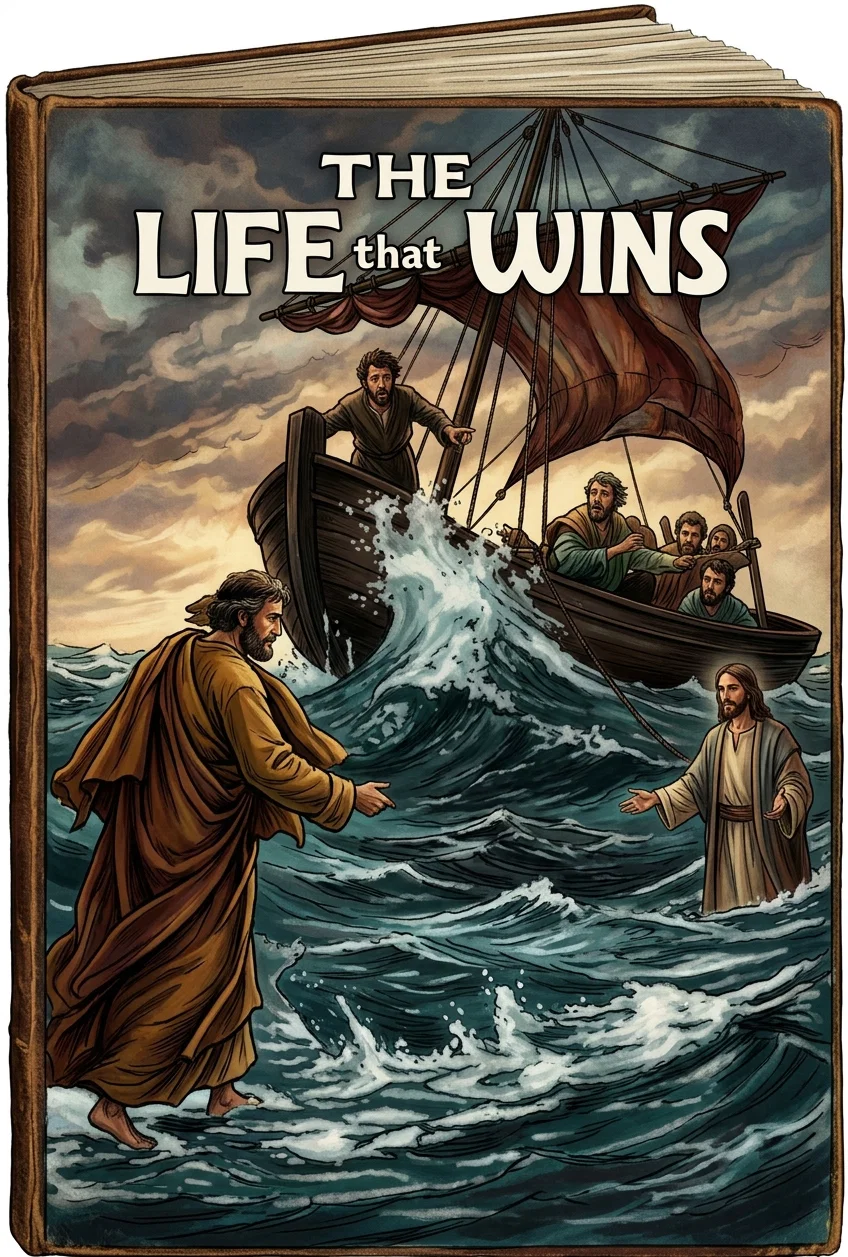
The Life That Wins

WHAT the world needs to-day is not doctrine or creed; not a hair-splitting theology; but religion—simple, genuine religion. Sooner or later every individual yearns for this. “Talk to me about religion,—simple, experimental religion,” was the request of Thomas Huxley, the infidel scientist, to a Christian friend one day as they walked in the garden.

The Life That Wins

Emphasizes strongly this kind of life experience. Such a book is surely needed now when there is so much profession of Christianity, and so little evidence of the genuine manifest in the life.
When you have read this book, you will be firm in the conviction that the Christ life is not so much something to talk of and theorize about, as it is something to live. The book contains 168 pages. Price, postpaid, cloth, $1.00; Keratol, limp, $2.00.
Address our nearest representative or PACIFIC PRESS PUBLISHING ASSOCIATION, Mountain View, California

In an Hour Ye Think Not

The farmer folk of San Francisquito Cañon and of the Santa Clara River basin in Southern California lay sleeping. When they retired that fateful night everything about them bespoke peace and security. Their apricot and peach orchards were bursting into bloom. The opening buds from their orange groves wafted sweet odors through the windows. Their dairy cows lowed contentedly in the alfalfa meadows. The great St. Francis dam, which towered high at the head of the cañon, only meant that the millions of tons of winter waters which it held back would quench the thirst of the far-flung orchards and meadows in the parching heat of the summer to come.
But suddenly, in the still hours of the early morning, the sleepers were startled into consciousness by the reverberation of a mighty wall of rushing waters. With the cry of terror upon their lips, “The dam has broken!” they leaped from their beds, only to be caught up and flung to their death by the angry flood as it swept homes from their foundations and dashed them along in the tumultuous deluge toward the not-far-distant sea.
When the light of morning came, there were no homes, only mute fragments here and there. There were no orchards, only nude uprooted trees. There were no meadows, only sand and rock-strewn wastes. Bereaved parents tearfully searched for the still bodies of their children in the débris. Distracted orphans implored rescue workers to find their fathers and their mothers.
One short night had sufficed to shift the scene from prosperity to barrenness; from happiness to tragedy; from life to death.
When upon earth the first time, Jesus Christ declared that His second coming would be catastrophic and sudden like this to those who would not be looking for His advent or be prepared for it. He said:
“For as in the days that were before the Flood they were eating and drinking, marrying and giving in marriage, until the day that Noe entered into the ark, and knew not until the Flood came, and took them all away; so shall also the coming of the Son of man be. . . . Watch therefore: for ye know not what hour your Lord doth come.” Matthew 24: 38, 39, 42.
The antediluvians were going about in the routine of their everyday lives, and refusing to believe Noah that a deluge was imminent.
Christ again urged: “Take heed to yourselves, lest at any time your hearts be overcharged with surfeiting, and drunkenness, and cares of this life, and so that day come upon you unawares. For as a snare shall it come on all them that dwell on the face of the whole earth. Watch ye therefore, and pray always, that ye may be accounted worthy to escape all these things that shall come to pass, and to stand before the Son of man.” Luke 21: 34-36.
But there is one point of startling contrast between such a tragedy as the recent one in Southern California and the second coming of Christ. When that dam broke, it swept all before it. It was no respecter of persons. Sinner and saint perished together. But when Christ returns and this earth is swept with the bosom of renovation and re-creation, those who are Christ’s shall not perish. The flames that consume sin and sinners will not so much as harm a hair of the heads of those who have committed their lives to God.
Are you to-day refusing to believe that Jesus Christ is soon coming again? If so, you are preparing yourself to be taken unawares by that event.
Are the pleasures and foibles of this world eclipsing in your soul the desire for that Christlike character which is necessary to meet Him in peace? If so, with the world you love, you will be destroyed.
Are you neglecting to watch and pray for Christ’s coming and the early establishment of His benign and beneficent kingdom on earth? If so, you never will be a citizen of that better land.
We urge you, hasten your preparation of mind and soul for His coming, for that event draws on apace? B.

Jesus, Receiver of Wrecks

“This man receiveth sinners.” Luke 15: 2.
Walking along the waterfront of a great harbor a few weeks ago, we noticed over an office door the sign, “Receiver of Wrecks.” Upon inquiry, we found that the company represented by that office took the ships that had been battered by the waves and the rocks, rebuilt them, and made them seaworthy again.
That is just what Jesus is—a receiver of wrecks. Souls that have been wrecked on the shoals of sin, battered by the seas of life, submerged by the tides of trouble, are salvaged by Jesus Christ, and made worthy of eternal life.
“The Pharisees and scribes murmured, saying, This man receiveth sinners.” They sought to malign Him and tarnish His reputation by declaring to all the people that He received sinners. But, unwittingly, they paid Him one of the greatest compliments He ever received. By their cavil they raised Him to the heights of reputation. No greater thing could be said of Him than that He “receiveth sinners.” That is the reason He came to this old world, not to call the righteous but sinners to repentance. Christ Jesus showed sinners that sin is the way of death, that He is the way of everlasting life. He showed sinners that sin is degrading and repulsive, but that He would plant their feet on the heights of character and achievement.
Let us fervently thank God that Jesus “receiveth sinners.” B.

Are Foreign Missions Good?

FOR the benefit of those who sometimes declare that foreign missions are a waste of time, effort, and money, let us cite two incidents recently come to light:
A Methodist medical missionary to India has recently returned to his home country here after forty years' service. During those long years of Christian ministration to India's sufferers he has treated more than 2,000,000 people medically, and performed more than 100,000 major operations. Most of his work was done free to the patients.
A Seventh-day Adventist medical missionary in Africa who is operating a leper colony there has recently discovered a new remedy for leprosy, and is actually curing and restoring lepers to their families again. His services are also freely given.
Who, then, would dare say that Christian missions are worthless? B.

You have reached the end of this edition.

Signs of the Times · Apr 3, 1928