Your ShelfYour Projects

Review and Herald, Vol. 84, No. 42.

To Calvary Again
Earlier text: Our Literature in Japan and Korea

Review of Sunday Law Enforcement in Tennessee

In no other State of the Union have there been so many Sabbath-keepers fined and imprisoned in the past as in the State of Tennessee. For several years there has been a lull in this work, but there are evidences that that work is to be revived.
September 4, George B. Thomson and D. A. Deedon, of Manchester, Tenn., were tried for Sunday labor, and fined five dollars and costs, amounting, in all, to $47.80. The brethren did not feel that they could conscientiously pay the fines and costs imposed. They were therefore sentenced to work these out in the workhouse (the county jail), at the rate of forty cents a day.
The work for which they were indicted was that of stretching a wire fence to keep the cattle out of their corn. The work was done on Easter Sunday, in the early part of the season, and the fence they were putting up was along a road which was two miles from the town of Manchester, and practically in the woods. They had no thought of being prosecuted for the work they were doing. They had been very careful not to do any work on Sunday that would unnecessarily give offense. They were held in high esteem as excellent citizens in the community by all the people who knew them.
The two families of which these brethren are the heads, are the only Sabbath-keepers in that vicinity; and by a strange combination of unfortunate circumstances none of our workers knew anything of the trial until after one of them, Brother Thomson, had been in prison for several days.
After hearing of their arrest and imprisonment, in company with Brother Thomson's son, who is one of the nurses at the Nashville Sanitarium, I went to Manchester, and began to circulate a petition to the governor, asking him to remit this sentence. A few years ago Governor Turney pardoned a number of our brethren in the same situation. They had been arrested, and must either pay the fines and costs, or go to jail. We therefore desired to take this matter before Governor Patterson, and state to him the situation, and get him to pardon them, if he thought best to do so.
We called on the judge of the circuit court, and had a very pleasant talk with him. He seemed to regret very much the situation, and said he had the highest regard for these two men as citizens, but that it was his duty to enforce the law; and yet he felt very sorry that they would go to jail rather than pay the fine. He wrote to them that if they would pay twenty-five dollars, he would remit all the rest of the fine and costs. He was very much distressed when they would go to jail rather than accept what he thought a very generous offer. He felt, however, that it was not best for him to sign the petition for their pardon.
The prosecuting attorney took the same position. We found that he had really pressed this case, and in the trial used the usual arguments for Sunday enforcement. He asked the people of the State of Tennessee if these few Adventists could overthrow their sabbath. “The Scripture,” he said, tells us “not to forsake the assembling of yourselves together the first day of the week.” He was highly indignant when Brother Thomson said that there was no such text in the Bible, and correctly read Heb. 10:25.
The sheriff who arrested the brethren spoke highly of them, but held that the law must be enforced, and said that if the brethren did not pay their fines, they would have to go to jail, but that he was very sorry to have these men in jail. He said he had been sheriff for a year, and deputy sheriff for some years before that, but that this was the first case of arrest for Sunday work he had ever known in that community. He said that many of the people do as much work on Sunday as these brethren. I asked him if it were not plain from his own words that these men were in reality arrested because they kept the seventh-day Sabbath. He, however, was not inclined to look at it in this way. The mayor signed the petition, but stated that these men must not break the law again. The leading men of the town also signed it; but the editor of the leading paper of the place declined to publish anything in defense of these men. He, with many others, insisted that they should respect the law, whether the law were right or not.
We held a meeting in the public square, and talked on liberty from the standpoint of the Bible, the Constitution, and the views of the leading men of the United States. Almost all the people seemed to be in favor of the principles of religious liberty, yet there was a strong undercurrent of bigotry, which showed how some would deal with us had they the power.
The judge had arranged that as both these brethren worked the same farm, one could go to jail first, while the other did the work at home. Brother Thomson went to jail first, and Brother Deedon was left to do the work without even being under bonds, so absolutely did the authorities trust this “dangerous criminal.”
We visited Brother Thomson in jail, and found him cheerful, even though the jail had been condemned as unsanitary. The keeper of the jail was very kind to Brother Thomson, and after the first few days he was given the liberty of the corridor, and sometimes even the jail door was left open. Brother Thomson was sick the first few days of his imprisonment, from the odors that permeated his cell. The air was poisonous. Only one window admitted the light and air, and it was more than half iron bars.
After brief visits, I was not sorry to get out in the fresh, open air, and I could not help thinking that it would be very hard, indeed, to stay there for over two months. It seemed out of place to see this honest Christian brother, who is really a self-supporting missionary worker, confined where one would expect to see only criminals, and later probably out on the chain-gang.
We secured the names of nearly all the leading citizens of Manchester, and on the twenty-fifth of September Brother C. P. Bollman and I visited ex-Governor Porter, who is very friendly to our people, and once acted as counsel for some of our brethren who had been arrested for Sunday labor. He gave us a very kind personal letter to Governor Patterson. We had no difficulty in securing an audience with the governor, and presented our petition to him for the release of these two brethren from the payment of their fines and costs. He said that if the brethren did not pay the costs, he could not do anything for them, but that if they would pay these, he could release them. He said he had no authority to release them from the payment of the costs. Nearly every public man in Tennessee knows that a few years ago the governor pardoned some of our brethren who had been imprisoned for Sunday work.
The latest news in regard to this matter is that the judge, stirred up by the circulation of the petition and the agitation of many of the people over the imprisonment of these honest men, levied on Brethren Thomson and Deedon to secure the payment of the fine and costs, by a sheriff's sale of their goods. This sale has been planned, and a day set for it. Brother Thomson has been in jail now twenty days. Surely this ought to awaken us to start such a religious liberty campaign in Tennessee as has never yet been attempted. We believe there are many honest men and women of the very best class, who, when they understand the situation, will stand firm for liberty.
May this arouse our people as they have never been aroused before. We ask the prayers and assistance of our brethren everywhere that we may be able to place before the prominent men of Tennessee the situation as it really is.
The ex-governor, on whom we called, related an incident in regard to our people at a camp-meeting held at Paris, Tenn. He said that an ax of his which had been borrowed by some of the brethren was returned with a new handle in it. It was the first instance in all his life, he said, that he had known of anything being returned better than it was before it was borrowed, and he felt that our people must be an excellent people. Truly we are a spectacle unto men and unto angels. May God arouse his people to-day to the great work that is to be done.
J. S. WASHBURN.

Christian Liberty

Reports, Notes, and Comments Pertaining to the Current History of the Rights of Conscience
Conducted by the Religious Liberty Bureau
K. C. RUSSELL, — — — — — Chairman W. A. COLCORD, — — — — — Secretary

Current Mention

— The Russian Admiralty is preparing to carry out its plan for the construction of a large fleet of naval vessels. Each squadron will consist of four battle-ships, eight cruisers, torpedo-boats, and auxiliary vessels. The battle-ships will be of the “Dreadnaught” type.
— The new turbine steamship “Lusitania,” of the Cunard line, on her second trip from Queenstown to New York, which ended October 10, eclipsed all previous records, as the voyage was completed in four days, nineteen hours, and forty minutes. She is 790 feet long, and carried 3,000 passengers.
— It is reported that the British government has accepted the bandit Raisuli’s revised terms for the release of his captive. Said Sir Harry Maclean, who has been held since July 3. If his present demands are granted, Raisuli will receive British protection for himself and his family, and $150,000 ransom, guaranteed by Abdul-Aziz, sultan of Morocco.
— Despite the precautionary measures taken by the governor to prevent an outbreak at the time of the funeral of a police officer who was killed at Odessa, Russia, in an attempt to break up an anarchistic meeting, the unionists renewed their anti-Semitic outrages. It was found necessary to send eighteen Jews to hospitals on account of the beatings they had received. The police dispersed the mobs, but no arrests were made.

A Fire at Union College

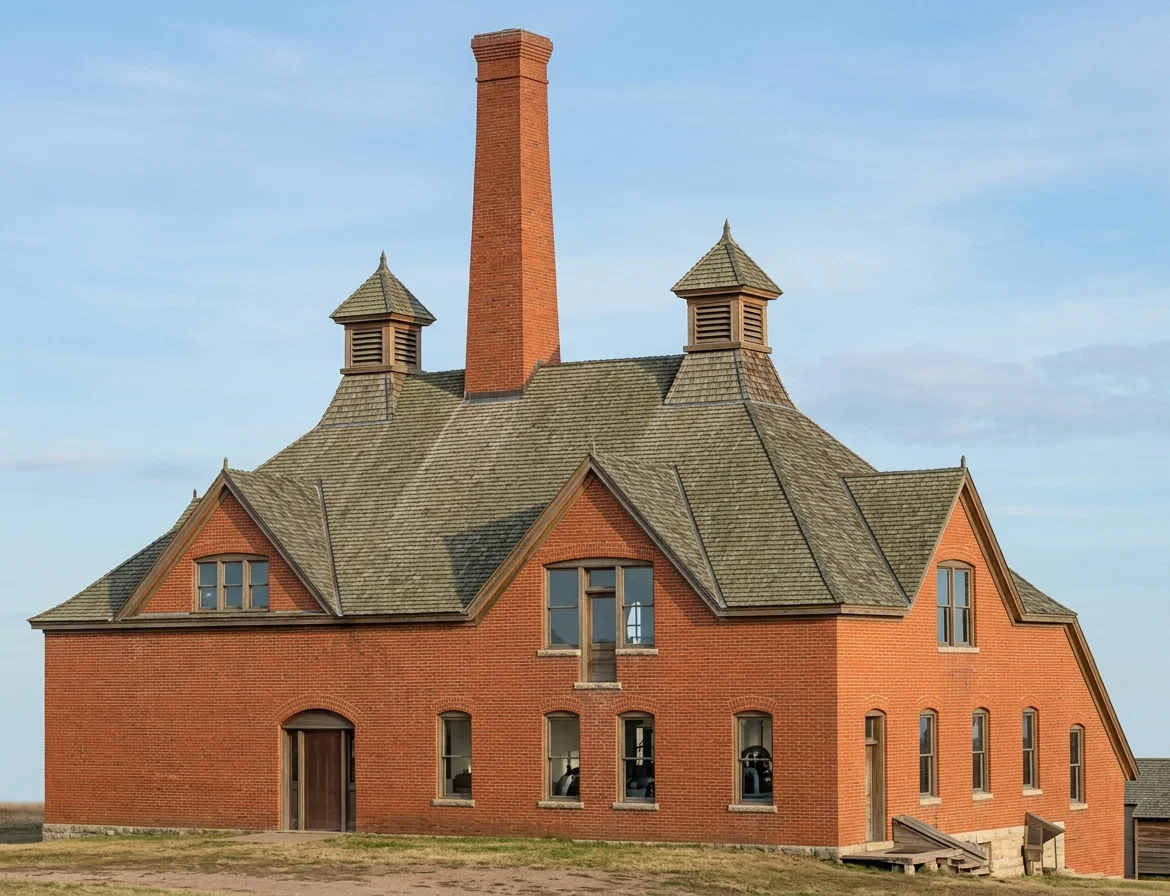
SUNDAY evening, October 6, about half-past seven, while Elder R. F. Andrews was offering prayer at the beginning of a baptismal service in the College View (Neb.) church, the college bell rang the alarm of fire. It proved to be in the college power-house. In some unknown way, perhaps from an electric wire, the fire caught in the upper story of the building, and when first seen was bursting out of the ventilator on the very top. One man was in the boiler room, and another was on the first floor, but neither knew of the fire until it was beyond control. So rapid was the progress of the flames, that it was seen from the first that the building was doomed, especially as there was no adequate provision for fighting fire.
In a short time, the entire building, including boiler room, laundry, printing plant, bakery, blacksmith shop, and carpenter shop, was consumed. Only a few tools, one printing-press, a part of the week's laundry, the College Press account-books, the Messenger list, and a few books, were saved. The loss is estimated at about twenty-five thousand dollars. There was six thousand dollars insurance on the building; nothing on the machinery and printing stock. The actual loss will not be so great as the figures would indicate, since the boilers are thought to be little injured, and a less costly and safer building can be erected. After the fire a few of the managers assembled in the Business Office for a season of prayer and consultation as to the best plans for meeting the necessities of the school. In a short time it was arranged to connect the heating, lighting, and water systems of the sanitarium with those of the college. The parlors and vacant rooms of the sanitarium were placed at the disposal of the ladies of the College Home for study if the weather should turn cold.
THE BUILDING WHICH WAS BURNED
The running of the school was not interfered with by the fire. The recitations proceeded the next day without interruption.
Before ten o'clock the sanitarium water-supply was flowing through the college system. That same night South Hall was receiving light from the sanitarium dynamo. Fortunately, the weather is mild, and there is little need for heat. The steam-heating system of the college is being connected with that of the sanitarium, and soon our buildings will be heated from that source until our own plant can be restored. Work on the new boiler house will begin immediately.
The students are behaving nobly. The boys worked like heroes to save property. Some sustained a few burns and bruises, but no one was seriously injured. A good spirit prevails. There is no talk about going home, but all are determined to stand by the college through this crisis.
At the church the service for baptism proceeded without interruption during the fire. The men went largely to render what assistance they could, but the candidates and a large audience of people remained, or soon came back from the fire. When the electric lights, supplied by the college dynamo, were extinguished, lamps were brought in. Perfect order and deep solemnity prevailed while sixty-two candidates were baptized by Elder Luther Warren. There will be another baptism soon. The good work is still going on in many hearts, and the influence of the solemn preaching of the last two weeks has been deepened by the fire. Pray for the work of the Lord in College View.
C. C. LEWIS.

A Sunday-Law Campaign in Missouri

UNDER date of Oct. 6, 1907, Elder J. W. Norwood, Religious Liberty Secretary of the Missouri Conference, says: “I suppose you have learned by this time that there is a Sunday move on in Kansas City. It seems that the question is getting to be a live one in this State. I have been told that the governor is writing to all the county and city officials in the State, and urging them to enforce the Sunday laws. I am trying to get all the churches in the State to send Liberty to their county and city officers, and to circulate other literature also. All the churches I have asked to do this have responded nobly. Two churches not only sent the magazine to their respective city officials, but also sent it to two other towns near by. The Kansas City church has raised over one hundred dollars to meet the expense of the issue there.”

How a Japanese Viewed Our Work at Kobe
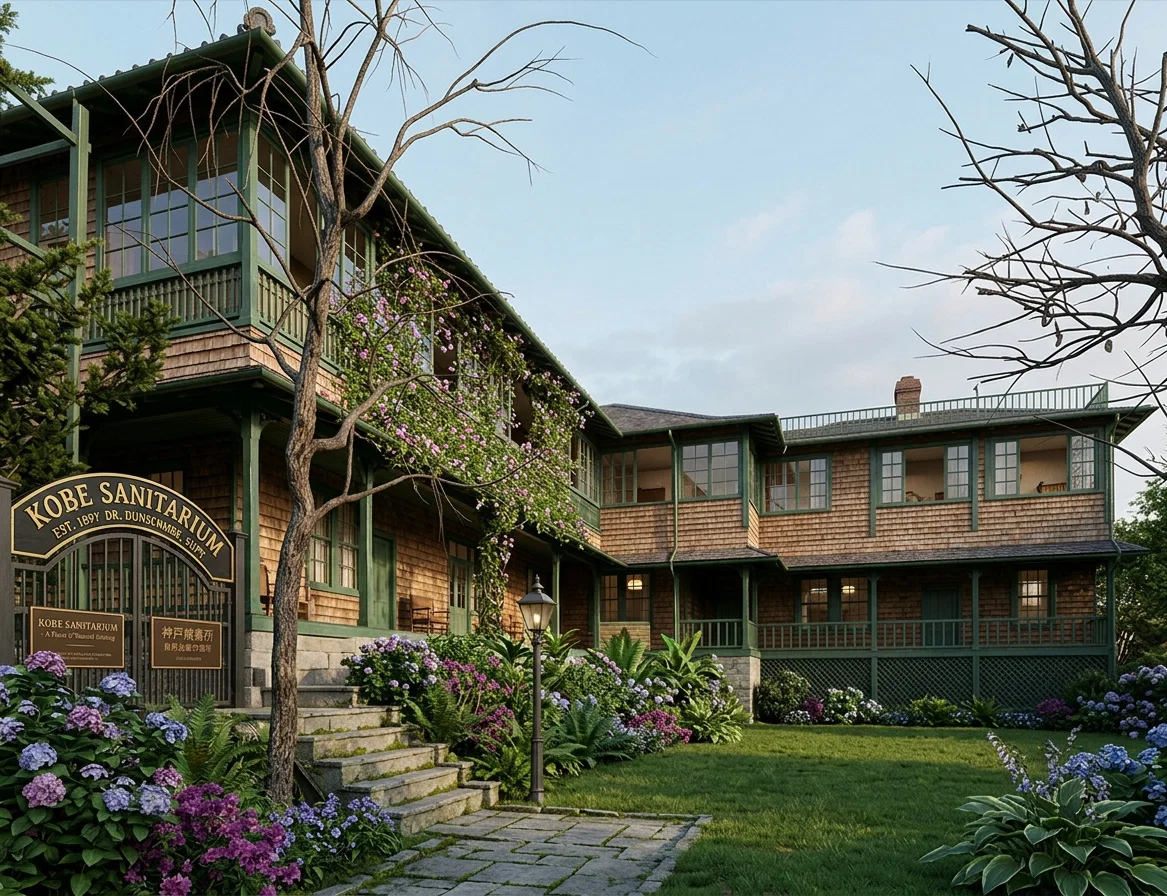
A SHORT time ago a friend introduced me to the editor of the largest Japanese paper in Kobe. I showed him through our sanitarium, and had him take dinner with us. Shortly after this he wrote up the things which he saw here in three consecutive numbers. The Japanese patients have been just pouring in since then. They say they saw the article in the paper, and want to know if we can help them. This was the very thing we have been praying for, to have an opportunity to work for the Japanese people. We were able to take care of some of them at the Japanese sanitarium, and the rest we had to turn away. One of our teachers translated two of the articles, as follows:—
“A Visit to a Strange Place—Strange Experiences—An Afternoon at the Kobe Sanitarium—Skull Working in the Dark—Editor’s Hair Standing on End, and Sparks of Fire from His Body—Skeleton of the Editor Seen through His Clothes—Model of Vegetarian Diet—Hygienic Cooking to Be Taught without any Fee.
“My readers may easily suppose, glancing at my peculiar headings, that I have been dreaming. But it is neither a dream nor a vision that I experienced day before yesterday with my keen, open eyes. You would have noticed a large mansion towering on the right side of the slope which leads from Sankaku-choba to Kitano-cho, and having on the top of the gate these letters, “Kobe Sanitarium,” in the shape of a crescent.
“This is a hospital of a peculiar kind, which is superintended by Dr. Dunscombe, from America. It is quite different in its nature from the ordinary hospitals. Here they do not use any medicine at all, but by nutritious vegetarian food, by electricity, massage, and different kinds of baths, they help their patients to get well by natural means, without caring for profit. There are actually many people who have recovered from chronic diseases by receiving the treatments here in this sanitarium.
“I visited the sanitarium on the afternoon of the day before yesterday through the introduction of my foreign friend. We walked between the green turfs within the gate, and pressed the bell at the porch, which was shaded by the big leaves of spreading branches of white magnolia. It was Dr. Dunscombe who met us at the door. He is a refined gentleman of middle age, and is neither too fat nor too thin. He treated us with very polite manners, and led us into the drawing-room. The room was quite large; although its decorations were not elaborate, it was simple and refined and refreshing. The machinery of electricity seemed as if it were waiting for the guests.
THE KOBE SANITARIUM
THE KOBE SANITARIUM
“When I was there, I was told that the patients were not allowed to smoke, which seemed strange to me, being such a close friend to tobacco.
“Presently Mrs. Dunscombe appeared, and we were introduced by the doctor. She has a very bright complexion, and seems very healthy, and besides all this she is very gentle and graceful. I was surprised by the pleasant manner with which she treated her guests. I felt that foreign ladies are more skilful in the treatment of guests than are the Japanese. Dr. Dunscombe, my friend, and I talked over various subjects, and we were presently invited to dinner.
“At the opposite side of the table sat Dr. and Mrs. Dunscombe, and I took a seat beside my friend opposite the doctor. I waited almost impatiently for my dishes, being very anxious to see what they could give me without using meat. By and by the boy carried in soup. Indeed it was peculiar. It was made of fruit entirely, and had a pink color. The host first bowed his head and asked the blessing. Though a heathen, I was obliged to bow mine also, because I thought it would seem very awkward for a man to keep erect, as he might seem senseless, while the others were offering an earnest prayer.
“I tasted a spoonful of the soup. What a deliciousness my tongue felt! It was cold and sweet, and had a refreshing flavor. Next we had toast, which I will call a nutritious test, and which was peculiar to the sanitarium. The dish which I thought most special to this dining-room was the butter made of nankin mame. This was peanut butter, had a brown color, and is very much like Japanese miso. It was very nice. If you want some, go to the sanitarium and you can get plenty if you are generous enough to pay only seventy-five sen for two pounds.
“Next I had a still more peculiar dish. It was made of nuts, American corn, and tomatoes. ‘How do you like it?’ our host asked. ‘Don’t you taste some meat in it?’
“I was quite sure that I tasted meat in it. If one were not told beforehand, he could easily be deceived to take it for mince-meat. Moreover, it had very light taste, and seemed to me to be easily digested. Besides these there were many dishes, but they were all vegetable. The fruit ice was very nice and new to me, and the sponge-cake, too. I was told that the cake was made without baking-powder. Of course they do not use liquor nor alcohol, but they use lemon juice for drink.
“I tasted and tasted, and felt as if I were taking food that would keep men’s lives as long as they wished.” W. C. DUNSCOMBE, M. D.

Pacific Union Medical Convention

The Pacific Union Conference Medical Convention is being looked forward to with no little interest by those connected with this branch of the work on the Pacific Coast. Arrangements have been completed for holding this institute at the Loma Linda Sanitarium, where accommodations are ample for all who attend. Surrounded as this institution is with large, well-shaded grounds, away from the noise and bustle of the city, it would seem to furnish ideal conditions for a gathering of this kind. In keeping the delegates in close proximity to one another by entertaining them at the sanitarium, the few days set apart for study and counsel may be occupied to the fullest extent; afterward those who have the time can spend a few days in viewing the places of interest in and around Los Angeles. Remember the date, October 28 to November 1.
Those who come from the East on the Southern Pacific can stop off at Loma Linda before arriving at Los Angeles, while those coming over the Salt Lake or Santa Fé roads can change cars at Colton, which is only four miles from Loma Linda. A general invitation is extended to all who are directly connected with the medical missionary phase of the message to attend this convention. It is hoped by this council that the medical and evangelical interests may be more closely united for the early triumph of the truth.
J. R. LEADSWORTH, M. D.

Medical Missionary Department

Conducted by the Medical Department of the General Conference
W. A. GEORGE, M. D., — — — Chairman
W. A. RUBLE, M. D., — — — Secretary

Business Notices

THIS department is conducted especially for the accommodation of the Seventh-day Adventist readers of this paper. Please read carefully the conditions under which business notices will be published.
Brief business notices will be published in this department subject to the discretion of the publishers.
Display advertising, and advertisements which call for agents, will not be accepted, nor do the publishers solicit advertising of any kind for this paper.
All persons unknown to the managers of this paper must send with their advertisement satisfactory written recommendation. Such recommendation should come from one of our ministers, or from the elder of a Seventh-day Adventist church. It is not enough to refer to some individual by name. Secure his recommendation in writing and send it.
A charge of one dollar will be made for each insertion of forty words or less. Each additional word, initial, or group of figures, in excess of forty, will cost three cents.
No discount for several insertions.
We open no accounts for advertising, and cash must accompany each order.
WANTED.—Desiring to keep my three children, 2, 4, and 5 years old, my wife having died, I would like middle-aged woman for housekeeper. No washings. Address W. F. Lane, Printer, Montrose, Pa.
IF you want to secure a farm home, the northeastern part of Finney County, Kansas, offers a good opportunity. Land is still within reach of the man of small means. If further information is desired, address Earl Dixon, Essex, Kan.
WANTED.—A Seventh-day Adventist with family would like to correspond with any one knowing a healthful locality where he could make a living; is first-class confectioner, baker, and ice-cream maker. Address L. E. Dykeman, Mandeville, La.
FOR SALE.—One acre and a quarter good land; good orchard, 7-room house, good water, good barn, wood-shed, good cellar, hen house. Near Walla Walla College and sanitarium and church of Seventh-day Adventists. Address Ada Hughes Warner, College Place, Wash.
FOR SALE.—Absolutely pure peanut butter, made by a scientific process from selected, sterilized peanuts, and guaranteed pure under the National Pure Food Law, only 12 cents a pound. Purest cocoanut oil, 15 cents in 50-pound lots. Address Vegetarian Meat Company, Bond Building, Washington, D. C.
LAND FOR SALE.—The North Michigan Conference has desirable land to sell at a very reasonable price. This land is donated to the $150,000 fund. If you wish to purchase a home cheap and help the cause at the same time, send a stamp for information to S. E. Wight (President North Michigan Conference), 224 Michigan St., Petoskey, Mich.
WANTED.—A lady nurse, to work in bathrooms. Must be well and strong. Good wages. Address the Vancouver Sanitarium, Vancouver, Wash., stating age, weight, and previous experience.
WANTED AT ONCE.—A good, reliable Seventh-day Adventist young man to work in treatment rooms; also a cook for plain cooking. Please send reference; state age, experience, and wages required. Address J. E. Cross, 652 Congress St., Portland, Maine.
FOR SALE.—80 acres level land under canal irrigation; 7-room house, good barn, other outbuildings; 15 acres bearing grapes, berries, and fruit, mostly peaches and pears; remainder hay ground and timber pasture. Desire buyer capable of leading in church work. Address A. W. H. Millard, R. F. D. 3, Chico, Cal.
FOR SALE.—Purest, most healthful vegetable oil for cooking and salads; no odor, keeps indefinitely: 1 gal. can, $1.15, 5-gal. can, $4.50. Also pure virgin olive-oil: 1 gal., $2.75; half gal., $1.40; quart, 85 cents. Lunch Nutrena, a hygienic fat and blood producer: 1-lb. box, 35 cents; send for samples. Address E. W. Coates, 535 W. 110th St., New York City, N. Y.
FOR SALE.—A part or all of my fruit and stock ranch of 160 acres, lying in the midst of the famous apple belt of Hood River, Oregon, only across the Columbia River; 35 acres improved, as much more to clear, the rest is good pasture. Over 500 fruit-trees out, some in heavy bearing. For climate, scenery, water, and soil it can not be surpassed. For particulars, address L. F. Burdoin, White Salmon, Wash.
FOR SALE.—Much of the “olive-oil” on the market is peanut oil. For table uses and for cooking many can not tell the difference. Our “Oliveine” is the pure, refined oil of peanuts, a very fine oil that pleases all who look for the best. Keeps fresh several months. One gallon, $1.50; three gallons, $4.20; five gallons, $6.75. Kornoil, the pure oil of corn, is also a natural food oil, and fine for cooking. One gallon, $1; five gallons, $4. Three gallons Kornoil and two gallons Oliveine for $5. We do not sell cottonseed oil. Address Sanitarium Supply Co., Nashville, Tenn.

Washington Sanitarium Association Annual Meeting

Notice!

NOTICE is hereby given to the constituency of the Washington (D. C.) Sanitarium Association, that the third annual meeting of said association will be held in the Seventh-day Adventist church, West Philadelphia, Pa., Tuesday, Nov. 19, 1907, at 3 P. M., in connection with the third biennial session of the Atlantic Union Conference. The members of this corporation consist of the executive committee of the General Conference of Seventh-day Adventists, the executive committee of the Atlantic Union Conference of Seventh-day Adventists, the executive committee of the Chesapeake Conference of Seventh-day Adventists, the executive committee of the Virginia Conference of Seventh-day Adventists, the executive committee of the West Virginia Conference of Seventh-day Adventists, the executive committee of the board of management of the evangelical work of the Seventh-day Adventists in the District of Columbia, and in Takoma Park, Md., and the board of trustees of the Washington (D. C.) Sanitarium Association.
This meeting is convened for the purpose of electing a board of trustees, rendering and considering reports, and for the transaction of any other business that may properly come before the association.
By order of the Board of Trustees, G. A. IRWIN, Chairman.

General Meeting of the German Workers of the United States

At the General Conference held in the city of Washington in the spring of 1904, a department was created known as the Foreign Department, and a committee of five persons was chosen to stand at the head of this department. The object of the department, and the work of this committee, was to more thoroughly unify and systematize and enlarge our work among the foreign-speaking people in the United States.
As a beginning to this work, a superintendent was appointed, under pay of the General Conference, to have charge of the work among the Danes and Norwegians, and a superintendent to have charge of the work among the Swedes. Two persons were appointed to have the oversight of the German work, one located in the East and one located in the West, the Mississippi River being the dividing line between the divisions.
Much good has resulted from this arrangement. Perhaps no one thing has done more to strengthen and encourage the work and workers in the Scandinavian languages than the institute held last winter for the ministers and workers. In this meeting brethren were brought together from different parts of the field, many of whom had never seen their superintendent before, nor many of their fellow laborers. After spending ten days together, seeking the Lord in prayer and studying the Bible, and in considering the needs of their work and the best methods for its advancement, their hearts were knit together in the bonds of Christian love and fellowship, and all left for their respective fields with greater determination to press the battle to the gates.
Seeing the good results from this meeting, the German brethren have decided to hold a similar meeting for the German workers in the United States. This meeting will be held in Chicago, November 29 to December 9. The place selected is centrally located between the East and the West, and it is hoped that there will be a large attendance of our German ministers and workers at this meeting. There are thousands upon thousands of German-speaking people scattered over the United States, and there is a large work to be done in giving these people the message.
Hitherto our German workers have never had a general meeting to get thoroughly acquainted with one another and with the needs of the work in the different parts of this country. Such a meeting as this, if well attended and properly conducted, will certainly mean much to the German work in the United States. It will mark a new era in its history. Our German brethren have been very loyal to the third angel’s message, and have given liberally of their means to advance the work both in the home land and in foreign fields. And hence, I bespeak for this gathering the same interest upon the part of the presidents of the various local conferences that they have manifested in the Scandinavian meetings. It will certainly be to the interest of the work in the different local conferences for their officers to encourage German laborers within their borders to attend this meeting, and I would suggest that, where necessary, financial assistance be rendered.
We must do everything we can to push forward the work among the different nationalities that God has seen fit to send to our shores. This message is to go to every nation, kindred, tongue, and people, and it will therefore be the part of wisdom to encourage the work among the foreign people in the United States, where it will require less expenditure of means than it will to send missionaries abroad. All these people have friends living in the Old World, and as rapidly as they are brought into the truth in this land, they become just that many more agencies in spreading the message.
In addition to the Bible studies and general instruction given from day to day during the progress of this meeting, time will be given for a general study of the field, and for the discussion of suggested plans for a more rapid extension of our work among the German people both in the United States and in the fatherland. Either Elder Evans or the writer will be present during a portion of the meeting to render whatever assistance lies in his power.
I trust that all our German workers will make especial effort to be present at this meeting, and that the Holy Spirit, the great teacher of righteousness and representative of the One who is mighty in counsel, may be present in a large measure to give intelligent direction to all that may be said or done.
GEO. A. IRWIN, Chairman Foreign Committee.

NOTICES AND APPOINTMENTS

Notice!
NOTICE is hereby given that the fourth annual meeting of the members of the constituency of the Review and Herald Publishing Association of Washington, D. C., will be held in the Seventh-day Adventist church, of West Philadelphia, Pa., on Monday, Nov. 18, 1907, at 3 P. M., for the election of trustees for the coming year, and for the transaction of such other business as may properly come before the meeting.
The following persons are members of this corporation: those composing the executive committees of the General Conference, the Atlantic Union Conference, the Canadian Union Conference, the Lake Union Conference, and the Northern Union Conference of the Seventh-day Adventists; those who compose the executive committees of the several local conferences of Seventh-day Adventists within the territory of the afore-mentioned union conferences; those who compose the board of trustees of the Review and Herald Publishing Association; and such persons as have received certificates of membership in said association. As large an attendance of the membership as possible is desired.
By order of the Board of Trustees, W. W. PRESCOTT, President.

Washington Training College Constituency Meeting

Notice!

The next meeting of the constituency of the corporation known as the Washington Training College, for the election of trustees, and the transaction of such other business as may be necessary, will be held in the Seventh-day Adventist church in West Philadelphia, Pa., Friday, Nov. 15, 1907, at 3 P. M., in connection with the biennial session of the Atlantic Union Conference. Concerning the membership of this corporation, the By-laws provide as follows:—
“The members of this corporation shall consist of the executive committee of the General Conference of Seventh-day Adventists, the executive committee of the Atlantic Union Conference of Seventh-day Adventists, the executive committee of the Chesapeake Conference of Seventh-day Adventists, the executive committee of the Virginia Conference of Seventh-day Adventists, the executive committee of the West Virginia Conference of Seventh-day Adventists, the board of management of the evangelical work of the Seventh-day Adventists in the District of Columbia, and Takoma Park, Md., and the board of trustees of the Washington Training College.”
By order of the Board of Trustees,
G. B. THOMPSON, Secretary.
Continue reading: Interesting Experiences with “Life and Health”