Your ShelfYour Projects

Review and Herald, Vol. 65, No. 38.

A LESSON OF FAITH
Earlier text: A LESSON OF FAITH

The Story of the Cross.

BY FANNIE BOLTON.
When all the skies are filled with glory, And all the singing birds are near, When life seems bright and glad before me, And friends and loves and hopes are dear, Think not that earth and all its gladness Crowd out a secret sense of loss; One thing alone will ease all sadness— Tell me the story of the cross.
When all the flowers are dead, or dying, When hopes are crushed, and joy is o'er; When all the earth has sounds of sighing, And crape is swinging from the door, When through the house the shadows waver, And one lies dead 'neath flower and moss,— Come then, and whisper of my Saviour— Tell me the story of the cross.
When youth's fair light is woven with shadow, And springtime's leaf is brown and sere, And the harvest's gathered from the meadow, And there's not much to hope for here; When opportunities are over, And press the stinging thoughts of loss, O, tell me of my Elder Brother, Who died for me on Calvary's cross.
Tell me of Him who came from heaven To bear the guilt and sins of men; Tell me how I may be forgiven, And cleansed from every spot and stain; Tell of his love, that has no equal, That falls like light athwart our loss; Tell me of heaven, earth's happy sequel— Tell me the story of the cross.
O blessed story of my Saviour! It meets all hearts. It soothes all woes. It points the way to heaven's favor. Its tide's a tide of love, that flows From God's great heart, through Christ, to ease us, To heal our wounds, restore our loss, To make us sons of God through Jesus— Tell me the story of the cross.
And when the darkness folds in shadows Of death's last gloom about my door, And all the mists fall o'er life's meadows; And time, and life, and earth are o'er, Then let me hear of Jesus's power Who conquered death and all its loss. Help me to triumph in that hour— Tell me the story of the cross.

“OF WHAT SORT IS IT?”

BY MRS. ADA D. WELLMAN.
PASSING, on a recent evening, within the glare of an electric light, I chanced to observe the intersection of two shadows—cast by trees lining the avenue—one occasioned by the interruption of the light from the carbons, the other, by that of the moon. We were momentarily surprised to discover that the shadow produced by the moonlight was darker than that caused by the artificial light. True it was, that that pale luminary, from its remote station, so quietly shedding its tranquil rays (even those but borrowed), exerted more power than did the superlatively brilliant flame gleaming in immediate proximity to us.
The circumstance seemed to coincide well with instances noted frequently, not only in the natural world, but in the intellectual and moral as well, in all of which has been often demonstrated the fact that glitter is not confined to gold, while, contrariwise, the brilliancy of the rarest gems is often unapparent, and may seem to be eclipsed by mere crystal.
In conversation, recently, with an erratic skeptic, he appeared utterly exasperated that we should be so gullible as to credit the Biblical account of creation, but deemed it sheer effrontery to presume to question the reliability of those theories regarding that work, which are founded on geological calculations. We referred him, though probably to no avail, as he seemed impervious to reason, to the youthfulness and immaturity of the science of geology, to the explosion of many of its vaunted theories, and to the insufficiency of its data. Indeed, a popular burlesque writer, upon premises equal to those upon which is founded the theory of the earth’s great antiquity, demonstrates that, calculating the difference in the length of the Mississippi River according to various measurements, its diminution, progressing in the same ratio for a given number of years, will reduce the Father of Waters to infinitesimal proportions; while, by the same course of reasoning, it is proved to have been, at a definite period in the past, of such a length as to traverse the entire continent, triumphantly overlapping the great Gulf!
Soliloquizing on the subject subsequently, I recalled the following lines, memorized in childhood:—
“How old art thou?” said a garrulous gourd, As o’er a palm tree’s boughs it poured Its spreading leaves, and tendrils fine, And hung a gloom in the morning shine. ‘A hundred years,’ the palm-tree sighed. ‘And I,’ the saucy gourd replied, ‘Am, at the most, a hundred hours, And overtop thee in thy flowers!’ Through all the palm-tree’s leaves there went A tremor, as of self-content. ‘I live my life,’ it whispering said, ‘See what I see, and count the dead; And every year of all I’ve known, A gourd above my head has grown, And made a boast, like thine to-day, Yet, here I stand; but—where are they!’
Not, therefore, simply because an idea is new to any individual or to any age, is it therefore necessarily unauthentic; for while error often wears the chaplet of years, and bears venerable titles, many a truth has lain for centuries, like the lost arts, buried beneath ignorance and superstition, now again to appear, heralded mayhap as a new acquisition, or scouted as absurd. Some surviving student of the old time “McGuffey’s Eclectic Reader,” may recall the fable of the pebble and the acorn, in which the worthless, non-progressive pebble is represented as boasting of its greater age, declaring,—
“Nor time, nor seasons can alter me; I am abiding while ages flee. Many a foot on me has trod, That has gone from sight, and is under the sod.”
The modest acorn, though possessing the innate elements of a mighty growth, was overawed by the record of superior endurance claimed by its rival, and resolved, abashed, to hide itself in dust. But there, though in obscurity, it was not in idleness; and the pebble was, ere many years, impelled to exclaim,—
“A modest acorn, not to tell What was inclosed in its simple shell! Many a foot will tread on me, That comes to admire the beautiful tree.”
Still, it well becomes any novice, ere he demands recognition, to submit to the tests of time and trial, meanwhile striving less to vaunt his claims than to verify them. No author, whatever his merits may be, is ranked as classic, till his works have withstood the criticisms of generations. A meaning, significant though not direct, might be attributed to Paul’s words in which, referring to the ordeal to which all created things must be subjected, he declares it to be for the purpose of extirpating everything unstable, “that those things which cannot be shaken may remain.”

THE SECRET OF THE LORD.

BY JOSEPH CLARKE.
“The secret of the Lord is with them that fear him; and he will show them his covenant.” Ps. 25:14. The heart of man, when enlightened by the Spirit of God, is indeed a wonderful place. Our Lord, in Matt. 6:22, says, “If thine eye be single, thy whole body shall be full of light.”
The heart (or mind) of man, is the inner temple, where are stored all the treasures that memory retains, and often more than the judgment approves,—all the discipline of education, and the decisions of a life-time, with the more uncertain fables of the fancy; all the results of experience, with the details of a life-time. Solomon says of the sons of men, that God hath set the world in their heart. This temple Satan claims as his; for this he is making war; but when the Lord gives his Spirit, and the heart is cleansed from sin, then it is brought into obedience to the will of God; then is realized what John says in Revelation (chap. 2:17), “To him that overcometh will I give to eat of the hidden manna.” Genuine faith is a grace never appreciated by those who do not possess it; and those who do possess it, do not always value it as they should. This faith is to the worldling an enigma; he does not comprehend it; to him it is a mystery; only its fruits manifest its influence. Truly “the secret of the Lord is with them that fear him.”
—Do right, and although your neighbors may scorn and avoid you to day, in the end you will find the whole world, nature, and God, on your side. Truth is the central sun of the universe. Be truth yourself.—Irontrope.

IN THE NEST.

GATHER them to your loving heart— Cradle them on your breast; They will soon enough leave your brooding care, Soon enough mount youth's topmost stair— Little ones in the nest.
Fret not that the children's hearts are gay, That their restless feet will run; There may come a time, in the by and by, When you'll sit in your lonely room and sigh For the sound of childish fun;
When you'll long for a repetition sweet, That sounded through each room, Of “mother, mother,”—the dear love-calls That will echo long in silent halls, And add to the stately gloom.
There may come a time when you'll long to hear The eager, boyish tread, The careless whistle, the clear, shrill shout, The busy bustle in and out, And pattering overhead.
When the boys and girls are all grown up, And scattered far and wide, Or gone to the undiscovered shore, Where youth and age come nevermore, You will miss them from your side.
Then gather them close to your loving heart, Cradle them on your breast; They will soon enough leave your brooding care, Soon enough mount youth's topmost stair,— Little ones in the nest.
— Unknown.

THE CARES OF LIFE.

“FOR care they live, and must for many care; And such the best and greatest ever are.”
Some people confound cares with troubles, and so view them with an unfriendly eye, or with scowls, and sometimes speak of them as a curse. But this is an error and an evil. For, in their normal style and amount, life’s cares are a true blessing, being to the mind and the character somewhat as exercise is to the body, or air to the lungs, fostering resolution, energy, patience, fortitude, courage, hope, and a healthy self-reliance. Without the ordinary cares of life, we should essentially stagnate, become quite useless, if not positively vicious, and entirely lose a distinct species of happiness that can never spring from idleness or mere ease. “She that liveth in pleasure,” says the apostle, “is dead while she liveth.” And he himself was never so much alive and happy, as when pressed by the laborious ministry of his own daily wants, together with “the care of all the churches.”
Besides, God evidently designed, when he first set out our race, that they should be creatures of care, from the cradle to the grave. Our first parents he placed in the garden of Eden, “to dress it and keep it.” That is to say, he put the garden into their care, as he has put the world, in general, into the care of their descendants ever since, without which the earth would soon go to waste as a wild wilderness, or a barren desert, or an undrained morass. And of this care-taking feature of our lot, God gives himself as the grand pattern. “Doth God take care for oxen?”—Yes, and for the birds, too, and for the fish of the sea, and for every creeping thing. Who can enumerate, estimate, or have any adequate conception of the constant cares of God in his all-superintending providence? And shall we, formed in his image, expect to be free from similar experiences, according to our measure?
Neither are life’s ordinary cares necessarily physically enervating, harmful to health, or productive of premature death. Moses, with his forty years of mountainous cares upon his shoulders, had yet “his eye not dim, nor his natural force abated.” Often were they burdensome, as we know, but, being duly carried to the Lord, he was sustained under them.
It is only when “the cares of this life” are suffered to “surcharge the heart as with surfeiting and drunkenness,” and so to “choke the word that it becometh unfruitful,” that they become evil and harmful. . . .
Otherwise, rightly understood and wisely used, care is like a goldsmith, hammering out and fashioning for us pleasing and valuable jewels, like Solomon’s “ornaments of grace unto the head, and chains about the neck;” and whose face is justly to be beheld with acquiescing smiles, rather than with fretful scowls and frowns.—Rev. J. G. Hall, D. D., in Illustrated Christian Weekly.

SCOPE AND LIMITATIONS OF CHILD-TRAINING.

CHILD-TRAINING can compass much, but child-training cannot compass everything, in determining the powers and the possibilities of a child under training. Each child can be trained in the way he should go, but not every child can be trained to go in the same way. Each child can be trained to the highest and fullest exercise of his powers, but no child can be trained to the exercise of powers which are not his. Each child can be trained to his utmost possibilities, but not every child can be trained to the utmost possibilities of every other child. Child-training has the fullest scope of the individual capacity of the particular child under treatment, and child-training is limited in every case by the limitations of the particular child's capacity individually.
A child born blind can be trained to such a use of his other senses that he can do more in the world than many a poorly trained child who has sight; but a blind child can never be trained to discern differences in colors at a distance. A child who has by nature a dull ear for music, can be trained to more or less of musical skill; but a child who is born without the sense of hearing, can never be trained to quickness in the discerning of sounds. A child can be trained to facility in the use of every sense and faculty and limb and member and muscle and nerve which he possesses; but no training will give to a child a new sense, a new faculty, a new limb, a new member, a new muscle, a new nerve. Child-training can make anything of a child that can be made of that child, but child-training cannot change a child's nature and identity.
The limitations of child-training are more likely to be realized than its extensive scope. Indeed, the supposed limitations of child-training are very often unreal ones. Many a parent would say, for example, that you cannot change a child's form and features and expression by training; yet, as a matter of fact, a child's form and features and expression can be, and often are, materially changed by training. The chest is expanded, the waist is compressed, a curved spine is straightened, or a deformity of limb is corrected, by persistent training, with the help of mechanical appliances. Among some primitive peoples, the form of every child's head is brought to a conventional standard by a process of training; as, among other primitive peoples, the feet or the ears or the eyes or the lips are thus conventionally trained into shape. And in all lands, the expression of the face steadily changes under the process of persistent training.
As it is with the physical form, so it is with the mental and moral characteristics of a child; the range is wide, within the limitations of possible results from the training process. A nervous temperament cannot, it is true, be trained into a phlegmatic one, or a phlegmatic temperament be trained into a nervous one; but a child who is quick and impulsive can be trained into moderation and carefulness of speech and of action, while a child who is sluggish and inactive can be trained to rapidity of movement and to energy of endeavor. An imbecile mind can never be trained into the possibilities of native genius, nor can a moral nature of the lowest order be trained to the same measure of high conscientiousness, as a nature that is keenly sensitive to every call of duty and to the rights and the feelings of others; but training can give unsuspected power to the dormant faculties of the dull-minded, and can marvelously develop the latent moral sense of any child who is capable of discerning between right and wrong in conduct.
The sure limitations of a child's possibilities of training are obvious to a parent. If one of the physical senses be lacking to the child, no training will restore that sense, although wise training may enable the child to overcome many of the difficulties that meet him as a consequence of his native lack. And so, also, if the child have such unmistakable defects of mind and of character as prove him to be inferior to the ordinary grade of average humanity, the wisest training cannot be expected to lift him above the ordinary level of average humanity. But if a child be in the possession of the normal physical senses, and the normal mental faculties, and the normal moral capacities, of his race, he may, by God's blessing, be trained to the best and fullest use of his powers in these several spheres, in spite of all the hindrances and drawbacks that are found in the perversion or the imperfect development of those powers at his start in life.
In other words, if the child be grievously deformed or defective at birth, or by some early casualty, there is an inevitable limitation accordingly, to the possibilities of his training; but if he be in possession of an ordinary measure of faculties and capacity, his training will decide the manner and method and extent of the use of his God-given powers. It is largely a child's training that settles the question whether he is graceful or awkward in his personal movements, gentle or rough in his ways with his fellows, considerate or thoughtless in his bearing toward others; whether he is captious or tractable within the bounds of due restraint; whether he is methodical and precise or unsystematic and irregular in the discharge of his daily duties; whether he is faithful in his studies or is neglectful of them; whether he is industrious or indolent in his habits; whether the tastes which he indulges, in his diet and dress and reading and amusements and companionships, are refined or are low. In all these things, his course indicates what his training has been, or it suggests the training that he needed, but has missed.
And all this goes to show how much for a child depends on his wise training, and how great is the responsibility of one who trains a child.—S. S. Times.

KISSING MOTHER.

A FATHER, talking to his careless daughter, said: “I want to speak to you of your mother. It may be that you have noticed a care-worn look upon her face. Perhaps it was not brought there by any act of yours, still it is your duty to chase it away. I want you to get up to-morrow morning and get breakfast; and when your mother comes, and begins to express her surprise, go right up to her and kiss her. You can't imagine how it will brighten her dear face.
“Besides, you owe her many kisses. Away back, when you were a little girl, she kissed you when no one else was tempted by your fever-tainted breath and swollen face. You were not as attractive then as you are now. And through those years of childish sunshine and shadows, she was always ready to cure, by the magic of a mother's kiss, the little, dirty, chubby hands, whenever they were injured in those first skirmishes with the rough old world; and then, the midnight kiss with which she routed so many bad dreams, as she leaned above your restless pillow,—these have all been on interest for long, long years.
“She may not be so pretty as you are; but if you had done your share of work during the last ten years, the contrast would not be so marked. Her face has more wrinkles than yours; yet if you were sick, that face would appear far more beautiful than an angel's, as it hovered over you, watching every opportunity to minister to your comfort; and every one of those wrinkles would seem to be bright wavelets of sunshine chasing each other over the dear face.
“She will leave you one of these days. Those burdens, if not lifted from her shoulders, will break her down. Those rough, hard hands, that have done so many necessary things for you, will be crossed upon her lifeless breast. When those neglected lips, that gave you your first baby kiss, and those sad, tired eyes, are forever closed, then you will appreciate your mother; but it will be too late.”—Eli Perkin's Book.

Every Human Life Adds to or Subtracts from Happiness

—No human being can come into this world without increasing or diminishing the sum total of human happiness.—Elisha Burritt.

God's Character Secures the Fulfillment of His Promises

—The character of God secures to you the fulfillment of all his promises, and encourages you to trust in him in the darkest day of trial.

THE TRUTH IN OTHER LANDS.

A SKETCH OF NEW SOUTH WALES.
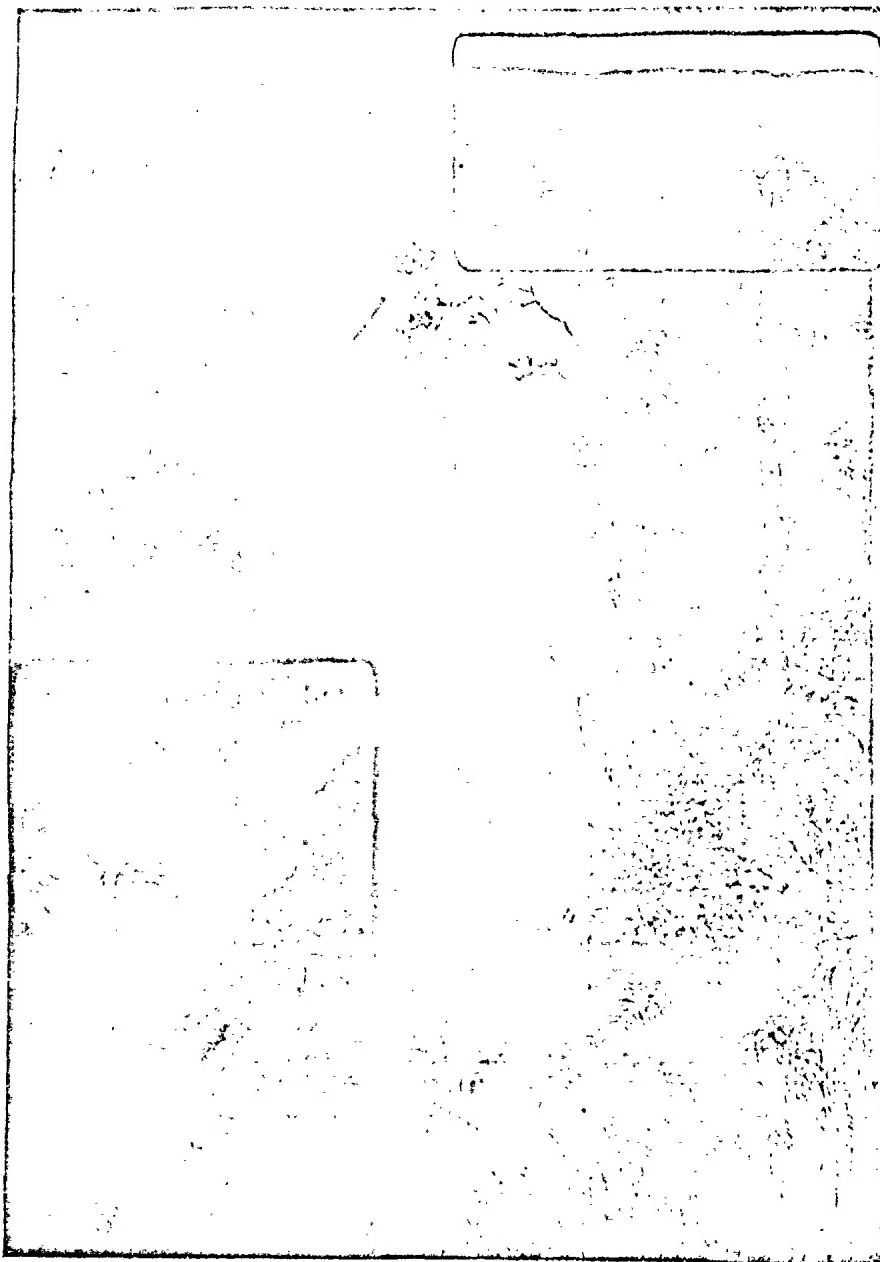
At one time, nearly one half of all Australasia was under the government of New South Wales. Tasmania was the first portion of it granted a separate government, which was formed in 1825. Victoria followed in 1850, and Queensland, on the north, in 1859. The present area of the mother colony is 310,000 square miles, or only about one tenth of the entire continent. It is bounded on the east by the Pacific Ocean, by Queensland on the north, by South Australia on the west, and by Victoria on the south.
The climate in winter is quite mild, the temperature in the table-lands generally dropping to only ten or twelve degrees below the freezing point. In the summer, it rises to 100 degrees or more. On the coast, the air is moist, and somewhat oppressive in the middle of summer. There are, however, occasional hot, dry winds from the interior, followed by reactionary winds from the ocean, causing the thermometer to fall twenty or thirty degrees, and sometimes more, in a few hours. In Sydney, especially, the summer seasons are somewhat disagreeable, and the citizens who can do so, repair to the higher inland country, where the air is dryer, and the temperature much lower. Stretching along the 700 miles of coast belonging to this colony, is the great chain of heights known as the Blue Mountains. Their elevation is not great, but they are everywhere steep and rugged, with deep and precipitous ravines, and in many places stupendous chasms, inclosed by almost perpendicular walls of rock. The illustration this week presents some of the wierd scenery of that region. Two points in the group are familiar to all Blue Mountain tourists. The one inclosed in the circle shows the Mermaid's Cavern, and the view in the lower corner is Govett's Leap. The origin of its name is as follows: In the early days of the colony, a prisoner named Govett escaped from jail, and securing a horse, attempted to cross the mountains. He was hotly pursued by the police until near this point, when seeing that it was impossible to escape, he resolved, rather than be captured, to take his own life. Putting spurs to his horse, he pressed him over the edge of the abyss, and was shattered into pieces among the boulders and brushwood, 1,500 feet below.
The government of this colony is similar to that of all the others of Australasia. The governor is appointed by the crown, and administers the government in the name of England, and in harmony with its laws. At the same time, each colony has a parliament of its own. In the case of New South Wales, the lower house, there called the Legislative Assembly, consists of something over a hundred members, who are elected by the people, for a term of years. The upper house, or Legislative Council, is composed entirely of members appointed by the governor; these hold their seats for life, unless forfeited by misbehavior. The number of members composing the higher body is limited to one half that of the Legislative Assembly.
Owing, however, to the peculiar situation of affairs on account of its being a penal colony, the earlier government was a strictly military one, and, as such, was very unsatisfactory. Many of the earlier governors were extremely despotic, which entailed much trouble, until the people unanimously demanded that the transportation of convicts from England should cease; that trials by jury should be established, and other reforms instituted which would conduce to make the government a rational one.
Paramatta, on a river of the same name, is thirteen miles from Sydney, and at one time was the summer residence of the governor of the colony. During the administration of Sir Thomas Brisbane, he had an observatory established there, but this was removed to Sydney in 1858. When the writer visited the place a year and a half ago, the remains of a granite shaft were still standing on the hill, near where the observatory was located. Not far away was the old mansion, with stables attached, all, however, falling into decay, and looking ancient enough. The grounds are still owned by the Government, but are used for public demonstrations both political and religious. The town has about 6,000 population, but is very quiet, with an air of crestfallen aristocracy which is not seen in any other town of the entire colony. A small quantity of woolen goods, called “colonial tweed,” is manufactured there, and a little salt is made in the vicinity. Besides these, there is no industry except that of orange-raising, which is engaged in by quite a number in the surrounding districts. It is quite a pleasure-resort for the city people, and excursion-boats run there from Sydney, making two or three trips each day during the summer. The trip up the river is interesting beyond description. All along are seen the beautiful villas of the gentlemen and merchant princes nestling among the trees, with velvety lawns extending to the water’s edge, dotted here and there with the choicest flowers and shrubs; while in the distance may be recognized the dark green of the orange groves, specked with their golden fruit.
Among other places of interest near Sydney, are Botany Bay and Coogee Bay. At the first-named resort are a pavilion and race grounds, but many go there to walk on the beach or to sail on the smooth waters of the nearly land-locked bay. The beach is lined the entire distance with the finest of white sand, that glistens in the sun so as to almost destroy the power of seeing objects at a distance. Near the entrance to the bay, stands the historic monument of the ill-fated La Perouse, a French navigator who left that point in the early part of the century, and was never after heard from.
Coogee Bay is only an indentation of the coast where the surging waves roll in upon the beach, bringing shells of various shapes and hues, or lash themselves into foam on the sentinel rocks which impede their course, and dash their spray high in air, only to let it fall in harmless showers on their grim adversaries. One of the greatest attractions in a visit to this place, consists in listening to the wierd music of the waves, as they exhaust themselves in their vain attempt to pass the bounds that nature has placed before them. While viewing the grandeur of the surroundings, my mind was led to the statement of the patriarch: “He hath compassed the waters with bounds,” and I thought, How true is this word. In such a place one can appreciate the omnipotence of God to a degree that seems impossible in the ordinary quiet of routine life.
Gold was first discovered in the colony about 140 miles west and a little north of Sydney, by a Mr. Hargreaves. The place soon acquired the name of Ophir, which it has retained to the present time. At Meroo Creek, not far from the first-mentioned place, a native black, while tending sheep for his employer, accidentally found a nugget weighing a little over a hundred pounds. The black was rewarded for his find with a flock of sheep, a saddle horse, and a team of oxen with which to plough his land. His employer took the gold, which was sold for £20,000. The news of this discovery set the whole country astir, and soon miners from every part of the country were hurrying to the diggings. In less than a year, this colony, with Victoria, had shipped to England eight tons of gold.
When we stop to think that this colony, too, is the only place in the continent where coal is found in sufficient quantities to pay for mining, it will be seen how important is the place that New South Wales occupies among her sister colonies. Coal was first discovered here in 1796, and since that time, a steady supply has been furnished for the entire continent, some also being shipped to America and other points.
Sydney is a city of 200,000 inhabitants, and is, without doubt, a good field for the preacher or canvasser. Last year a sister from the Melbourne church, having business in the place, held some Bible readings while there, and a few embraced the Sabbath. Besides these, a family of Sabbath-keepers from New Zealand have settled there. A letter just received from Bro. Tenney, after a visit to the place, says: “The field is waiting.” The work there is pressing faster than laborers can be found to fill the openings. It is, however, thought that the way will open for some one to enter that vast territory during the next season, which opens in that country, in November.
We rejoice to know that the cause is moving onward as rapidly as it is, in our foreign fields. Could our people everywhere see the importance of the work at these distant points, and unitedly assist, both by their means and their prayers, to carry the message to the remotest corners of the earth, we might well rejoice in the expectation of the near approach of the Master. J. O. CORLISS.
IN THE BLUE MOUNTAINS, NEW SOUTH WALES.

OHIO TRACT SOCIETY PROCEEDINGS.

Pursuant to appointment, the seventeenth annual session of the Ohio T. and M. Society convened, in connection with the camp-meeting at Columbus, Ohio.
FIRST MEETING, AT 9:30 A. M., AUG. 12.—Prayer by H. M. Mitchell. The President in the chair. The report of the last annual meeting was read and approved. The Chair being authorized, appointed the following committees: On Nominations, B. B. Francis, H. J. Vaughn, C. L. Shelton; on Resolutions, L. T. Dysert, E. M. Morrison, E. T. Russell.
SECOND MEETING, AT 9:30 A. M., AUG. 13.—A report of the general sales, and cash received and disbursed by the Society, for the past year, was read. The Committee on Resolutions was called upon, and the following was presented:—
Whereas, The Constitution of the Ohio T. and M. Society makes no provision for a general canvassing agent; therefore,—
Resolved, That Article II. of our Constitution be so amended as to provide for the annual election of a State agent, who shall also serve as a general director.
Whereas, The Vice-President of this Society has for several months been visiting the local societies, and seeking to increase their membership; and,—
Whereas, The fruit of such labor is already visible; therefore,—
Resolved, That we recommend the continuation of such labor, until the entire field shall have been visited.
Whereas, The “Testimonies” say that if there is one work more important than another, it is that of getting our publications before the people; and,—
Whereas, It has been demonstrated by the work done the past year, that all may do something in the canvassing work; therefore,—
Resolved, That, as far as consistent, we will fit ourselves for this important branch of the missionary work, and thus meet the opening providence of God.
Resolved, That we recommend all those canvassers who have made a success with a low-priced book, to take up higher-priced works, as may be recommended by the Tract Society officers.
Whereas, The usefulness of the T. and M. Society is crippled by the amount of indebtedness of the ministers and other laborers employed by the Conference; and believing the cash system, in its ultimate results, will be better for both the society and the individuals; therefore,—
Resolved, That as soon as practicable, the cash system be adopted, and a transfer of the accounts of such laborers as are in the employ of the Conference, be made quarterly to their Conference account.
The foregoing resolutions were separately considered, and after full and thorough discussion, unanimously adopted.
Adjourned to call of Chair.
THIRD MEETING, AT 10:30 A. M., AUG. 16.—The Committee on Resolutions reported further, as follows:—
Whereas, The report blanks of the librarians and district secretaries do not correspond with the new individual pass-book; therefore,—
Resolved, That we request the REVIEW AND HERALD to prepare blanks for the State Secretary, also for the district secretaries and librarians, to agree with the individual pass-book.
This resolution, after some remarks concerning the points of difference, and some inquiries, was adopted.
The committee appointed at the semi-annual meeting, April 19–25, to re-district the State, presented the following recommendations: Dist. No. 1, Athens, Clarke, Fairfield, Fayette, Franklin, Gallia, Greene, Hocking, Jackson, Lawrence, Madison, Meigs, Pike, Ross, Pickaway, Scioto, Vinton; No. 2, Coshocton, Delaware, Holmes, Licking, Marion, Morgan, Morrow, Muskingum, Perry, Union; No. 3, Ashtabula, Cuyahoga, Geauga, Lake, Mahoning, Portage, Stark, Summit, Trumbull; No. 4, Ashland, Crawford, Erie, Huron, Lorain, Medina, Sandusky, Seneca, Wayne, Wyandot; No. 5, Defiance, Fulton, Hancock, Henry, Lucas, Ottawa, Paulding, Putnam, Williams, Wood; No. 6, Allen, Auglaize, Champaign, Darke, Hardin, Logan, Mercer, Miami, Shelby; No. 7, Adams, Brown, Butler, Clermont, Clinton, Hamilton, Highland, Montgomery, Preble, Warren; No. 8, Belmont, Carroll, Columbiana, Guernsey, Harrison, Jefferson, Monroe, Noble, Tuscarawas, Washington.
The President and Vice-President explained at length the reasons for the proposed changes, and pointed out on a map, the boundaries, as proposed. Numerous remarks were made pro and con, the principal opposition being made by members of Dist. No. 2.
By request, action on this recommendation was deferred until the next meeting.
Adjourned.
FOURTH MEETING, AT 5:30 A. M., AUG. 20.—The matter deferred at the last meeting was taken up. Remarks were made by Ellis, Farnsworth, Underwood, and Cottrell, also by Bro. Shelton, Beauman, and Walker; after which the recommendation, as presented, was adopted.
The Committee on Resolutions presented the following additional report:—
Whereas, Recognizing order as heaven’s first law, and firmly believing that far better results can be accomplished by systematic labor than otherwise; and,—
Whereas, Our ministers, Bible workers, canvassers, and colporters not being members of any specific organization, in order to carry out the instruction of the International T. and M. Society more perfectly,—
We recommend, That the membership of all workers now required to report directly to the State Secretary, be transferred to the “Special Workers’ Society,” of which the State Secretary shall act as librarian.
In behalf of the Committee, Bro. Morrison gave some explanation concerning the matter, and the recommendation was adopted.
Adjourned to call of Chair.
FIFTH MEETING, AT 2:20 P. M., AUG. 20.—The Committee on Nominations reported as follows: For President, R. A. Underwood; Vice-President, J. E. Swift; Secretary, L. T. Dysert; State Agent, H. M. Mitchell. Directors: Dist. No. 1, H. W. Cottrell; No. 2, Geo. A. Irwin; No. 3, A. J. Vaughn; No. 4, E. A. Merriam; No. 5, Geo. Klopfenstein; No. 6, E. J. Van Horn; No. 7, L. B. Haughey; No. 8, E. T. Russell.
These names were separately considered, and the nominees elected.
The annual report of labor performed by the Society, and their financial standing, are as follows:—

REPORT OF LABOR.

No. of members 630
“ reports returned 775
“ members added 153
“ “ dismissed 40
“ letters written 1,509
“ “ received 141
“ missionary visits 2,332
“ Bible readings held 711
“ persons attending readings 1,833
“ subscriptions obtained for periodicals 2,508
“ pp. books and tracts distributed 2,185,207
“ periodicals distributed 22,516

FINANCIAL STANDING.

Cash on hand, July 1, 1887, $161 22
“ received during the year, 10,718 31
Total, $10,879 53
Cash paid out, 10,733 61
Balance in favor of Society, $145 92
Adjourned sine die.

Report for Quarter Ending June 30, 1888.

No. of members 630
“ reports returned 247
“ members added 44
“ “ dismissed 9
“ letters written 920
“ “ received 82
“ missionary visits 663
“ Bible readings held 100
“ persons attending readings 332
“ pp. books and tracts distributed 128,311
“ periodicals distributed 4,559
Cash received on book and periodical sales, $320.67; on accounts, $2,538.01; on foreign missions, $18.23; on city missions, $128.50.
Societies that failed to report, Appleton, Bloomington, Dunkirk, Cleveland, Bellefontaine, Genoa, Liberty Center, McClure, McDonald, Newark, Payne, Springfield, Troy, Walnut Grove, West Mansfield, Washington, Yellow Springs, Cleveland mission.
R. A. UNDERWOOD, Pres.
L. T. DYSERT, Sec.
Continue reading: GOOD TESTIMONY FROM AN EX-MINISTER