The Youth’s Instructor, Vol. 30, No. 3.

A REMARKABLE HISTORY

The Youth’s Instructor

Jan 18, 1882

S. D. A. Publishing Association · Battle Creek, Mich. · Jan 18, 1882

A REMARKABLE HISTORY.
A HEATHEN is usually forced to make sacrifices of friends and property and prospects when he forsakes paganism and accepts the Christian religion. But to any who have fresh in mind the Saviour’s promise that those who follow him shall have “an hundred-fold in this present time,” as well as eternal life beyond, the biography of Yung Wing, a Chinese, will be interesting.
This Chinese lad was one of three brought to America thirty-two years ago by Rev. S. R. Brown, D. D., then Principal of the Morrison School at Hong Kong. Placed in the family of Dr. Brown’s mother, in Monson, Mass., Wing began a thorough course of study at the Academy in the town. He not only made rapid advances in scholarship, but became so impressed with the faith and Christian excellence of his friend, the landlady, that he renounced his heathenism and embraced the religion of the cross.
He entered Yale College after his graduation, being when the writer knew him, a fellow-student, though not in the same class. His religious character was a rebuke to many of his fellows born and nursed amid the gospel blessings he had but lately come to know. His progress, too, was such in the studies of a language and people wholly foreign to him, that he repeatedly won prizes over many American competitors.
On receiving his college degree (in 1854), Yung Wing returned to his native country, burning with a patriot’s love and a missionary’s zeal. He had enjoyed the advantages of a Christian education, and knew their worth. He longed to secure the same to other boys of his own nation, and determined to engage the Chinese Government, if possible, in a scheme for sending native lads to school in the United States. This purpose he kept steadily in mind, and sought employment which he thought would yield him the best opportunities. For a time he was engaged as Secretary in the diplomatic service. He studied law, and made himself acquainted with public affairs. He entered the Custom service; and finally traveled as a commercial agent.
Seven years passed, and he was apparently no nearer his grand object. But he persevered. Before the end of another year he made the acquaintance of one of the Imperial Viceroys, Commander-in-chief of the Army, who became his friend, and took him into the Government service, where he was retained, and made a mandarin. His learning and ability soon secured him higher promotion, and he found himself on intimate terms with the most powerful statesmen of the realm. He pressed upon their attention the plan so dear to him in behalf of the youth of his race, and though they were slow to move in the matter, he gained their respectful hearing. Yung Wing proved himself valuable to the Government in many ways, and the time came when he was wanted more than ever. It was when the great investigation took place, over the affairs of the Tientsin massacre. Foreign representatives must be present, and there was international law to be discussed, and interpreting to be done. The magnates saw as they never saw before that for the Empire’s service no one was equal to a talented Chinaman educated in America.
The Educational Mission was soon after organized, and Yung Wing was made its principal agent. Four or five years ago he came to this country, bringing the first company of Chinese boys, to be placed in American schools. They still look to this noble man, the Christian mandarin, as their best friend. In addition to his other honors, Yung Wing holds a provincial office at home, and is now Associate Minister of the Empire to the United States, with a salary that in itself is wealth. He resides in Washington, and is fifty years old. His wife is an American, and his oldest son is named Brown, after Dr. Brown, his early teacher, and Dr. Brown’s mother, the lady with whom he lived in Monson. She was the author of the well-known hymn, “I love to steal awhile away,” and her memory is another record of the far-reaching influence of humble piety.—Youth’s Companion.

All May Be Wise unto Salvation

ALL cannot become great scholars, but all may be wise unto salvation. All cannot acquire wealth, but all may gain the unsearchable riches of Christ. All cannot walk upon the high places of the earth, but all may be great in the sight of the Lord.

Who Are the Meek? A Child's Answer

A LITTLE negro girl in a missionary school was once asked, “Who are the meek?” The child answered, “Those who give soft answers to rough questions.”

WINTER SONG.

SUMMER joys are o'er, Flow'rets bloom no more, Wintry winds are sweeping; Through the snow-drifts peeping, Cheerful evergreen now no more is seen.
Now, no plumèd throng Charms the wood with song; Ice-bound trees are glittering; Merry snow-birds, twittering, Fondly strive to cheer scenes so cold and drear.
Winter, still I see Many charms in thee,— Love thy chilly greeting, Snow-storms fiercely beating, And the dear delights of the long, long nights. —From the German.

THE SNOW-FLAKES.

The ground was bare and frozen, and for days the sky had been of a dull leaden hue, and the sun did not venture to show itself. All seemed instinctively to feel that something was coming, and yesterday, about noon, that something began to come, in the shape of a few feathery flakes of snow. At first we did not think it would amount to much, but they came thicker and faster, until by evening everything was covered several inches deep with the white fluffy-looking down; and still it was falling. Through the night the little flakes did not stop to rest, for this morning we looked out to see the poor, frozen earth covered as with a mantle of ermine. And what a pretty sight it was, before the feet of the busy crowd had trampled and soiled it! The evergreens were heavily laden; and the wood-pile, fences, and even old barrels, had assumed such fantastic forms. The snow had fallen quietly, and so there were no drifts, except where it had eddied into some corner. But in what graceful curves it lay, as if some master artist had sculptured it while we slept!
Soon we are awakened from our reverie by the sound of jingling bells, and along comes some one eager “to try the sleighing,” then the boys with their sleds, and then a man with a snow-shovel—all seemingly determined to spoil our pretty picture, by putting the snow to a practical use. To-night the pure, white garment of the morning is soiled and trampled, but all seem to enjoy doing their part in spoiling it. How the bells jingle, and the merry voices of the sleighers ring out on the clear night air!
And now, shall not those of us who cannot go, talk a little about the snow-flakes! What are they? and where do they come from? Why, snow is the same as rain, only when the temperature of the air is below the freezing point of water, the particles of moisture are frozen, and thus become snow-flakes. Did you ever notice how beautiful the separate flakes are? If not, go to the door and take up a handful of snow lightly, and examine it. You can see their beauty, but perhaps you cannot, without the aid of a microscope, see how many various and curious forms they take. But in the picture below, you may see some of the different shapes which these snow crystals assume, when magnified. On a still, frosty winter morning, have you never noticed these crystals lying on the top of the other snow, so large as to be easily seen? Did you ever try to see how many different shapes you could count, and if you could find two alike? Now the common snow-flakes, when examined by a microscope, look just as handsome and regular as these. A learned man who has given much time to the study of the snow-flakes, has found ninety-six different varieties.
Like ice and other crystallized bodies, snow would be transparent, were it not that the air which it contains renders it opaque. We always think of snow as inseparably connected with whiteness and purity, and “white as snow” is one of the commonest comparisons; but it is said on good authority that snow has been seen, in some places in the polar regions, of red, orange, and salmon color. These snow-storms sometimes present a luminous appearance, and seem to be covering everything with a sheet of fire. This seems almost too wonderful to believe; and although they know it to be a fact, scientific men are not able to explain it satisfactorily.
Many more wonderful things we might tell about the snow, but it is about bed-time, and the sleighers will soon be returning. But let us remember that the little snow-flakes, doing their work so quietly and yet so well, may teach many a useful lesson to us who tread upon them.
“Oh the snow, the beautiful snow! How the flakes gather and laugh as they go! Whirling about in its maddening fun, It plays in its glee with every one. Chasing, laughing, hurrying by, It lights on the face, and it sparkles the eye, And the dogs with a bark and a leap and a bound, Snap at the crystals that eddy around; The town is alive, and its heart in a glow, To welcome the coming of beautiful snow!” E. B.

YOU CANNOT PASS THIS WAY AGAIN.

Breakfast was not quite ready, and while waiting, Mary took up a paper for a minute, and her eye fell upon these words: “A good Quaker was wont to say, ‘I expect to pass through this world but once; if, therefore, there be any kindness I can show, or any good thing I can do, to my fellow-beings, let me not defer or neglect it, for I shall not pass this way again.’”
Mary read the paragraph twice over, and it made a deep impression on her mind. She took her seat at the table thoughtfully, and she wondered, as she glanced up at the already wearied face of her mother, whether she had not let many golden opportunities slip, never to return. She could not go that way again. But here was a long, bright holiday she had proposed to spend in self-amusement; indeed, she had kept herself awake for an hour or more in planning the day’s enjoyment, intending to fill it as full as she could.
Now these words, “I shall not pass this way again,” haunted her mind, and awakened quite a new train of thought. What if that mother’s cheek should grow paler and paler, her cough deeper, and her thin hands—those hands which had so lovingly cared for her—be finally folded away forever on her silent heart! The thought was startling and terrible. Oh, what bitterness of regret she would feel that she had lightened her burdens so little! For this day, at least, she would do what she could.
“Mother,” she said when breakfast was over, “you have been waiting for a spare day to run over to Grafton and see Aunt Mabel, and now is your time. I mean to do all your work to-day,” she continued pleasantly.
“Not to-day, Mary, of all days, when there is so much to be done.”
“Yes, mother, this is just the day. I have nothing else to do but to take your place. You shall see to-night how well I have filled it.”
Mary’s persuasions prevailed, and the mother spent a long, bright summer day visiting a beloved invalid sister, to whom her visit was a joyful surprise. It did “good like a medicine” to both sisters, while the gain to Mary herself was a hundred-fold greater.—Children’s Friend.

A NEW YEAR'S RIDE WITH A LESSON.

A GAY party of would-be young gentlemen and ladies rode up to the hotel of a neighboring town. It was the vacation of the holidays, and the school was out for a ride. While awaiting the call to dinner, one of the young men, looking from the window, saw a strange object approaching, and called the attention of the other members of the party to it. Some of the girls screamed, others burst into laughter. Straight and lithe as an Indian, and somewhat resembling, in tawny skin and unkempt locks, the original proprietors of the soil, was the unconscious originator of all this confusion. As he approached the hotel at a pace reminding one of him of whom Longfellow says, “At each step a mile he measured,” and clad from head to foot in a suit of leather, the young people could not conceal their merriment. They lost no time in making the acquaintance of one who seemed to possess the wisdom of the serpent, combined with the harmlessness of the dove. No first-class newspaper reporter ever received more civil replies to his questions than this dusky son of the forest gave the thoughtless group of which he was the central figure. Their rude sallies of cheap wit, such as, “Who is your barber,” “Please give us the address of your tailor,” etc., were passed by with supreme indifference. After finishing his dinner, and filling the leather bag which hung over his shoulder with the plainer necessaries of life, he paid his bill, registered his name, and, wishing his persecutors a “Happy New Year,” departed.
“Perhaps,” said the landlord, “you would be interested to know that our visitor was no other than John J. Audubon.”
He had selected for clothing the material best suited to the tangles of the forest brushwood through which he must pass in his researches, and had come in from his favorite employment to satisfy the demands of hunger, and provide for future necessity. There were those in the party to whom the name of this illustrious man meant no more than any other name; but there were others whose faces flushed and paled alternately at the thought of their inexcusable rudeness, and the quiet courtesy of the author of “The Birds of America,” pronounced by Cuvier “the most gigantic and most magnificent monument ever erected to nature.”
Bear in mind, dear young friends, that worth is not always habited in the garb of wealth, and that a true gentleman or lady considers equally sacred the feelings of prince or pauper. MARY MARTIN.

GOOD MORNING.

Don't forget to say “Good-morning!” Say it to your parents, your brothers and sisters, your schoolmates, your teachers,—and say it cheerfully and with a smile; it will do you good, and do your friends good. There's a kind of inspiration in every “Good-morning” heartily spoken, that helps to make hope fresher and work lighter. It seems really to make the morning good, and to be a prophecy of a good day to come after it. And if this be true of the “Good-morning,” it is also true of kind, heartsome greetings; they cheer the discouraged, rest the tired one, and somehow make the wheels of life run more smoothly. Be liberal with them, then, and let no morning pass, however dark and gloomy it may be, that you do not at least help to brighten by your smiles and cheerful words.

Self-Denial as Training for Higher Spirituality

WE are to let conscience and experience decide what is doubtful, and the self-denial will be found a grand training for a life of higher spirituality. If we are in doubt, it is better to err on the side of self-denial than on the side of self-indulgence. In addition to the suppression of evil, there must also be the cultivation of good. It is not sufficient to root out the weeds, but you must sow the good Seed in their place.

SCENES IN THE LIFE OF CHRIST.

LESSON 52.—THE FOUR THOUSAND MIRACULOUSLY FED.

When Jesus left the country of Tyre and Sidon, he returned to the Sea of Galilee by a road that he had not before traveled. His first miracle after returning was the healing of a man who was deaf, and had an impediment in his speech. Taking him aside from the multitude, Jesus put his fingers into the man's ears, and spit, and touched his tongue. And looking up to heaven, he sighed, and said unto him, Ephphatha [ĕf'-fa-thah], that is, Be opened. And straightway his ears were opened, and his tongue was loosed, and he spoke plainly. And he charged them that they should tell no one of the miracle, but the more he charged them, so much the more they published it. And the people were astonished beyond measure, and said, “He hath done all things well; he maketh both the deaf to hear, and the dumb to speak.”
In those days great multitudes from all parts of the country flocked to hear Jesus and to be healed of their diseases. And they brought the lame, the blind, the dumb, the maimed, and the sick, and laid them down at the feet of Jesus; and he healed them. And the multitude wondered when they saw the dumb speak, the lame walk, the blind see, and the maimed made whole; and they glorified the God of Israel. Now the people became hungry, and they had nothing to eat.
“Then Jesus called his disciples unto him, and said, I have compassion on the multitude, because they continue with me now three days, and have nothing to eat; and I will not send them away fasting, lest they faint in the way. And his disciples say unto him, Whence should we have so much bread in the wilderness, as to fill so great a multitude? And Jesus said unto them, How many loaves have ye? And they said, Seven, and a few little fishes. And he commanded the multitude to sit down on the ground. And he took the seven loaves and the fishes, and gave thanks, and brake them, and gave to his disciples, and the disciples to the multitude. And they did all eat, and were filled; and they took up of the broken meat that was left seven baskets full. And they that did eat were four thousand men, besides women and children. And he sent away the multitude, and took ship, and came into the coasts of Magdala.”

QUESTIONS.

  1. What miracle did Jesus perform in the country of Tyre and Sidon?
  2. Where did he go, on leaving that country? Mark 7: 31.
  3. How did he go?
  4. What was his first miracle after returning to the Sea of Galilee?
  5. What did Jesus do to the man?
  6. What did he say as he looked up to heaven?
  7. What change straightway took place in the man?
  8. What did Jesus charge the people who had seen the miracle?
  9. How well did they obey him?
  10. How did the people feel when they heard of this miracle?
  11. What did they say?
  12. How great an interest did the people show to hear Jesus in those days?
  13. Who did they bring and lay at his feet? Matt. 15: 30.
  14. What did the kind Saviour do for these suffering people?
  15. What did the multitude do when they saw these wonderful miracles? Verse 31.
  16. What did Jesus say to his disciples when the people were hungry, and had no more to eat?
  17. What reply did the disciples make?
  18. What question did Jesus ask them?
  19. How much food did they tell him that they had?
  20. What did he command the multitude to do?
  21. When the people were seated, what did the Saviour do for them?
  22. How much food was taken up after the people had all eaten?
  23. How many were thus miraculously fed?
  24. Where did Jesus go when he had sent away the multitude?
  25. On which side of the sea was Magdala?—On the west side, between Capernaum and Tiberias.
  26. Who came to Jesus about this time? Matt. 16: 1.
  27. How did they try to tempt him?
  28. What did he tell them they would say about the prospects for the weather at morning or evening?
  29. What did he say about their dullness in discerning the signs of the times?
  30. What did he tell them was the only sign that should be given them? Verse 4.
  31. What did he mean by this?—See Note.
  32. Who was Jonas, or Jonah?
  33. To whom did he preach?

NOTES.

A sign from heaven.—A sign commonly meant a miracle; that is, a sign that God was with the person, or had sent him. By a sign from heaven they may have meant some miraculous appearance in the sky. Such signs had been given by the prophets; and they meant to say that if Christ was the Messiah, his miracles would not all be confined to the earth, but that he would give some signal miracle from heaven. This they did, tempting him, that is, trying him, thinking that he had not the power to do it.
The sign of the prophet Jonas means the sign or evidence which was given to the people of Nineveh that he was from God; that is, that he had been miraculously saved alive, and was therefore sent by God to warn them. So on the evidence of the miracles which Jesus had done before them, the men of that generation should have believed that he was sent to them from God. The word Jonas is the Greek way of writing the Hebrew word, Jonah, as Elias is for Elijah.

NEW-TESTAMENT HISTORY.

LESSON 65.—COVETOUSNESS REPROVED.

“And one of the company said unto him, Master, speak to my brother, that he divide the inheritance with me. And he said unto him, Man, who made me a judge or a divider over you? And he said unto them, Take heed, and beware of covetousness; for a man’s life consisteth not in the abundance of the things which he possesseth. And he spake a parable unto them, saying, The ground of a certain rich man brought forth plentifully: and he thought within himself, saying, What shall I do, because I have no room where to bestow my fruit? And he said, This will I do: I will pull down my barns, and build greater; and there will I bestow all my fruits and my goods. And I will say to my soul, Soul, thou hast much goods laid up for many years; take thine ease, eat, drink, and be merry. But God said unto him, Thou fool, this night thy soul shall be required of thee: then whose shall these things be, which thou hast provided? So is he that layeth up treasure for himself, and is not rich toward God.”
“Therefore I say unto you, Take no thought for your life, what ye shall eat, or what ye shall drink; nor yet for your body, what ye shall put on. Is not the life more than meat, and the body than raiment? Behold the fowls of the air; for they sow not, neither do they reap, nor gather into barns; yet your Heavenly Father feedeth them. Are ye not much better than they? Which of you by taking thought can add one cubit to his stature? And why take ye thought for raiment? Consider the lilies of the field, how they grow; they toil not, neither do they spin: and yet I say unto you, That even Solomon in all his glory was not arrayed like one of these. Wherefore, if God so clothed the grass of the field, which to-day is, and to-morrow is cast into the oven, shall he not much more clothe you, O ye of little faith? Therefore take no thought, saying, What shall we eat? or, What shall we drink? or, Wherewithal shall we be clothed? (For after all these things do the Gentiles seek;) for your Heavenly Father knoweth that ye have need of all these things. But seek ye first the kingdom of God and his righteousness; and all these things shall be added unto you. Take, therefore, no thought for the morrow; for the morrow shall take thought for the things of itself. Sufficient unto the day is the evil thereof.”
“Fear not, little flock; for it is your Father’s good pleasure to give you the kingdom. Sell that ye have, and give alms; provide yourselves bags which wax not old, a treasure in the heavens that faileth not, where no thief approacheth, neither moth corrupteth. For where your treasure is, there your heart is also. Let your loins be girt about, and your lights burning; and ye yourselves like unto men that wait for their lord, when he will return from the wedding; that when he cometh and knocketh, they may open unto him immediately. Blessed are those servants, whom the lord when he cometh shall find watching; verily I say unto you, that he shall gird himself, and make them to sit down to meat, and will come forth and serve them. And if he shall come in the second watch, or come in the third watch, and find them so, blessed are those servants. And this know, that if the good man of the house had known what hour the thief would come, he would have watched, and not have suffered his house to be broken through. Be ye therefore ready also; for the Son of man cometh at an hour when ye think not.”

QUESTIONS.

1. What did one of the company ask Jesus to do? Luke 12: 13.
2. How did Jesus answer him? Verse 14.
3. What remarks did he make about covetousness? Verse 15.
4. What parable did he then relate? Verses 16-20.
5. What application of this parable did our Lord make? Verse 21.
6. What admonition did he then give? Matt. 6: 25.
7. By what question did he show that we ought not to be too anxious about our food and clothes?
8. What example did he give of the providential care of our Heavenly Father? Verse 26.
9. How did he bring this example to bear upon the subject under consideration?
10. By what question did he show our dependence upon the help of God? Verse 27.
11. What beautiful lesson did he draw from nature? Verses 28-30.
12. Why is it unnecessary to be over anxious about our temporal wants? Verses 31, 32.
13. How did he encourage his followers to seek first the kingdom of heaven? Verse 33.
14. What did he farther say to show the unreasonableness of borrowing trouble? Verse 34.
15. What precious promise did he then make? Luke 12: 32.
16. What encouragement was then given to benevolence and generosity? Verse 33.
17. How will giving in the cause of God tend to fix the affections upon heavenly things? Verse 34.
18. What solemn admonition did Jesus then give? Verses 35, 36.
19. What blessing is pronounced upon those that heed this admonition?
20. What solemn warning is given against carelessness? 38-40.

NOTES.

Beware of covetousness,—or rather inordinate desires,—the desire to have more and more, let a person possess whatever he may.—Clarke.
*Consisteth not in [dependeth not on] the abundance.—It is not superfluities that support man’s life, but necessaries.—Ibid.*
No thought.—The word thought, when the Bible was translated, meant anxiety, and is frequently so used by old English writers. The word anxiety would now exactly express the sense, and is precisely the thing against which our Saviour would guard us. There is a degree of thinking about the things of this life which is proper, but they should not be our supreme concern.—Barnes.
Is cast into the oven.—The inhabitants of the East, to this day, make use of dry straw, withered herbs, and stubble to heat their ovens.
Sell that ye have.—Turn the fruits of your fields, which are beyond what you need for your own support, into money, and give it in alms.—Clarke.
Bags which wax not old.—The word bags here means purses, or the bags attached to their girdles, in which they carried their money. Wax is from an old Saxon word, and in the Bible means to grow.
Let your loins be girded.—This alludes to the ancient manner of dress. They wore a long, flowing robe as their outer garment. When they labored, or walked, or ran, it was necessary to gird or tie this up about the body by a sash, or girdle, that it might not impede their progress. Hence, to gird up the loins became a significant figurative expression, denoting readiness for service, activity, labor, and watchfulness.
Your lights burning.—Servants were expected to be ready for the coming of their lord. In the night, they were expected to keep their lights trimmed and burning. They were continually to be ready to receive their master.
In the second watch.—The Jews anciently divided the night into three parts of four hours each, usually called watches. In the time of our Saviour they divided the night into four watches, the fourth having been introduced by the Romans. These watches consisted of three hours each. The first commenced at six, and continued till nine; the second lasted from nine till twelve; the third, from twelve to three; and the fourth, from three to six.

LETTER BUDGET.

Maud Grubb writes from Paulding, Ohio: “There is nobody living in this county that keeps the Sabbath except our own family. Bro. Rupert brought the truth here three years ago. My sister Pauline takes the INSTRUCTOR, and we get the lessons from it, and have Sabbath-school at home. I have four sisters and two brothers. We have two little canary birds. Their names are Bob and Flora, and we love them much. They were presents to us from Sister Crouse before she moved away to Kansas. I am nine years old, and go to day-school. Our teacher is a member of the Seventh-day Baptist Church, and I like him very much. My studies are writing, spelling, reading, arithmetic, geography, and grammar. We get very lonely here sometimes, and would like so much to have some one come here and hold meetings with us.”
Ruby C. Maddock writes from Swanson, Minnesota. She says: “I am nine years old. I have two sisters, Jennie and Ruth. Jennie is seven, and Ruth is five years old. We all like the INSTRUCTOR very much. I would like to see the little girls that read the INSTRUCTOR, and tell them about our Vegetarian Society at home. We had to coax papa a long time before he would join it with us. Ruth has a pledge not to say any bad words, because she used to be cross to Georgie sometimes. He is two years old. We have a Sabbath-school at home; we can’t go to meeting, because it is so far. Papa and mamma belong to the Hutchinson church. We signed the Teetotal Pledge three years ago. We want to be as healthy as Adam and Eve were before they sinned, so we can live to see the Lord come. We like to hear mamma read about temperance. We have kept the Sabbath six years. Ruth says to tell you we have a baby brother five months old.”

THE KING'S JEWEL.

’T WAS a night to make the bravest Shrink from the tempest’s breath; For the winter snows were bitter, And the winds were cruel as death.
All day on the roofs of Warsaw, Had the white storm sifted down, Till it almost hid the humble huts Of the poor, outside the town.
And it beat upon one low cottage With a sort of reckless spite, As if to add to their wretchedness Who sat by its hearth that night;
Where Dorby, the Polish peasant, Took his pale wife by the hand, And told her that when the morrow came, They would have no home in the land.
No human hand would aid him With the rent that was due at morn; And his cold, hard-hearted landlord Had spurned his prayers with scorn.
Then the poor man took his Bible, And read while his eyes grew dim, To see if any comfort Were written there for him.
When he suddenly heard a knocking On the casement, soft and light; It wasn’t the storm, but what else could be Abroad in such a night?
Then he went and opened the window, But for wonder scarce could speak, As a bird flew in with a jeweled ring Held flashing in his beak.
“’T is the bird I trained,” said Dorby, “And that is the precious ring, That once I saw on the royal hand Of our good and gracious king.
“And if birds, as our lesson tells us, Once came with food to men, Who knows,” said the foolish peasant, “But they might be sent again!”
So he hopefully went with the morning, And knocked at the palace gate, And gave to the King the jewel They had searched for long and late.
And when he had heard the story Which the peasant had to tell, He gave him a fruitful garden, And a home wherein to dwell.
And Dorby wrote o’er the doorway These words, that all might see: “Thou hast called on the Lord in trouble, And he hath delivered thee!”
—Phoebe Cary.

LITTLE PILLOWS.

“Behold, He cometh!”—Rev. 1:7.
Does this seem a terrible verse? Do you wonder why it should be one of the “little pillows,” and wish a different one had been given you to go to sleep upon to-night? Look at it again: “He cometh!” Who? Jesus himself, the “same Jesus” who said, “Come unto me.” You thought it would be so nice to come if you could only see him. But you will see him, for he is coming.
Think of seeing him come, so beautiful, so glorious, so “altogether lovely”—him, the very same dear, kind Saviour who loves the little children, who loves you and has called you! Seeing his very face, the very brow that was crowned with thorns, the very eyes that looked on Peter, the very lips that said such wonderful and gracious things! No longer thinking about him, and trying to believe on him, and praying to him, and wishing for him, but really seeing him! Is this terrible? Does it not rather seem something to look forward to very much?
Only one thing would make it terrible, and that is, if you will not come to him now, and will not let him wash away your sins in his precious blood, then it would indeed be terrible, for he would never any more say to you, “Come!” but only “Depart!”
But you want him to wash you clean, do you not? and you did try to come to him? And you believe he means what he says, and really died to save you! Then, oh, shall you not be glad to see him? What if now the cry were heard, “Jesus is coming!” Your heart would beat quick, but I think it would be with gladness, not with terror. Jesus is coming! Would you not go forth to meet him? Jesus is coming! Could anything be happier news? I think we shall not think much about the sound of the trumpet, and the clouds of glory, and all the holy angels that come with him; we shall “see Jesus” and hear his own voice, and that will fill our eyes and our hearts forever.
“Thou art coming, O my Saviour! Thou art coming, O my King! In thy beauty all-resplendent, In thy glory all-transcendent; Well may we rejoice and sing.”
—Frances Ridley Havergal.

TRUE COURAGE.

Some years ago a steamer took fire on the St. Lawrence River, and became a complete wreck. Very many, in their attempts to escape death by fire, met with a watery grave. A boy named Narcisse Lamontayne, aged thirteen years, saved eight children from the wreck. He accomplished his noble deed by seizing the door of a state-room, placing the children upon it, and pushing it before him while he swam. By several such trips he succeeded in landing on a dry rock or on the beach eight of the children who were on board the ill-fated vessel. Now, this is true courage. Many a boy who can make a great and threatening noise before his playmates, would have been too great a coward even to have attempted what this noble young Canadian so bravely accomplished.

Seneca on Fear, Need, and Human Kindness
THERE is none made so great, but he may both need the help and service, and stand in fear of the power and unkindness, even of the meanest of mortals.—Seneca.

BIBLE LESSONS.

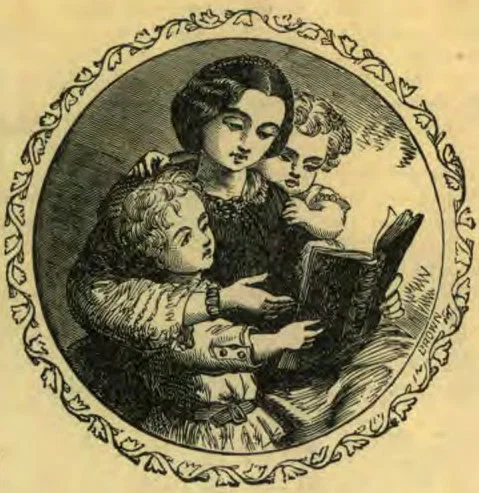
It was the children's hour—between the twilight and the dark,—that quiet time when a hush seems to fall on the balmy summer air, the birds twitter softly, and the flowers begin to fold themselves up, as if they too were going to sleep.
The little folks were tired of play. Ball and hoop were thrown aside, and they crept nearer to mamma's chair as to a haven of rest and peace. Tired of play, but not too tired to listen to the loving voice that read to them sweet Bible stories, or sang with them the hymns that children love. Even two-year-old Tot, fresh and rosy from his afternoon sleep, climbed up over her shoulder, and begged for the “bestest” story, about Jesus being once “an ’itty baby like Tot.”
Then was told again that history of the wondrous birth in Bethlehem, which never wearies or grows old by the telling—how the wise men saw the star in the east, and came, and worshiped the infant Saviour, and how the shepherds were abiding in the field, keeping watch over their flocks by night, and the angel of the Lord brought them those tidings of great joy which were to be to all people. Afterward the children must hear about Jesus taking young children in his arms, putting his hands upon them, and blessing them. Then when the Bible lesson hour was over, they sang with their sweet little voices,—
“Though now he is not here below, But on his heavenly hill, To him may little children go, And seek a blessing still.”
Thus was this good mother fulfilling the divine command: “And thou shalt teach them diligently unto thy children, and shalt talk of them when thou sittest in thine house, and when thou walkest by the way, and when thou liest down, and when thou risest up.”—Child’s World.

You have reached the end of this edition.

The Youth’s Instructor · Jan 18, 1882