Hebron, Thayer Co., May 17.—I have just commenced meetings eight miles northwest of Hebron. An interest has been awakened by missionary labor. There is a good class of citizens here, and I trust some will be benefited by the preaching of present truth. Pray for us. CHAS. L. BOYD.
Riverton, Franklin Co., May 24.—The interest here was good, all things considered, until Monday last, when a wind storm suddenly cut short our work in the tent, by overturning and badly tearing it. For the past two weeks the wind has blown almost incessantly, and has been the hardest the people here ever saw. Held two meetings in the city hall, but deciding it would be too great an expense, moved the meetings two and one-half miles north of town, where the main interest was, and am having a good attendance. I am yet alone. Remember me in your prayers. GEO. B. STARR.
FAMILY PRAYER.
Compass the roof with the balustrade of Family Prayer. This is an important battlement. God hath set the solitary in families. He has instituted the family relation; and the relation carries with it the duty of instruction and worship. This is the oldest organization; and family worship is of ancient and divine origin. Behold the family altar builded by Noah! Remember that when Abraham built a tent for himself he built an altar for his God. We never read that Lot built an altar; no wonder that he looks toward Sodom, and then is soon found in Sodom. When Isaac and his servants pitch their tent and dig a well, they build their altar. Listen to the grand resolution of Joshua, “As for me and my house, we will serve the Lord!” Oh, for more Joshuas and Hannahs as heads of families! The New Testament and the early history of the church contain many similar examples. I cannot in this connection go at length into the duty and advantages of family prayer and religion; many of these advantages suggest themselves at once. You have observed that family life is often the best test of genuine piety. Bunyan’s Christian makes Talkative a saint abroad and a devil at home. It is on record that when Mr. Whitefield was asked whether some one was a Christian, his reply was, “How can I tell? I have never lived with him.”
It is to be feared that in the rush and bustle of our modern life the old-fashioned methods of family instruction and prayer, when all the family and servants were called together, are now much neglected. The Jewish law made the father a prophet and priest in his own family; at the paschal feast he slew the lamb, he sprinkled the blood on the lintels of the door; he also taught the statutes of the Lord to his children and servants. Philip Henry, in his family circle expounding to them the word of God, reminds us of one of those grand men of olden time. Much to be pitied is that home where the voice of prayer is never heard. It is a roof without a battlement, exposed to danger and death; it is a house without a roof, into which the storms of temptation shall fall, and on which the sun of trial will beat with scorching ray. John Randolph said that men charged him with being a French infidel; he denied the charge, but confessed that he would have been one if he had not been taught to bow at his mother’s knee and say, “Our Father.”
Every day should begin with prayer. Let us talk to God before we talk much to men. Begin every duty, decide every question, with prayer. It is said that Pericles, the great Athenian statesman, would not address an audience until he had prayed to the gods; and that Scipio, the Roman General, would not undertake any affair of importance until he had passed some time alone in the temple of Jupiter Capitolinus. The examples of Paul and Christ are still more in point. Remember how earnestly Jesus prayed before entering on his great undertakings! Read the gospels with that thought in mind. Where will you find such an example of prolonged, fervent, and trusting prayer? Remember Paul’s requests for prayer; remember also his own references to his habits of prayer. Do you say you have no time? Excuse me, you have. What is time for, but to serve God here and to enjoy him hereafter? David found time amid his manifold cares and great responsibilities; Daniel found time when he was prime minister in Babylon; Luther used to say, when his gigantic toils pressed upon him, that he could not get on with less than three hours of prayer; Gen. Havelock rose, it is said, at four, when the hour of marching was six, rather than lose the period of prayer and communion with God. No time! Do not say that. You know you have.
Do you say you cannot pray? Stop a little; you can. What is prayer? Eloquence is not needed; the publican’s prayer sent him down to his house justified. It is the pastor’s duty to press home this neglected privilege. I have read that when Richard Baxter went to Kidderminster, there were whole streets in which there were only two or three praying families; and that when he left, there were whole streets in which there were only two or three families that were not praying families. His influence pervaded the town; he canvassed its houses; family altars were built, and the voice of prayer and praise girdled the town and went up acceptably into the ear of God. The papers have reported that President Hayes, in the White House, meets his family morning by morning for family worship; together they read a portion of Scripture, and then kneeling together they repeat the Lord’s Prayer. I am glad he does this much; I wish he did more. Who can tell what an advantage this is to him and the nation? Amid all the excitements of the times, he has gone with clearness of head and cleanness of hand; and when the passions of the hour have subsided, he will take his place in history as one of the best of men and ablest of Presidents. God be thanked for the influence of his Christian wife! May the voice of prayer never be silenced in the White House!
Make the hour of family worship the most joyous of the day. Regard it not so much a duty as a privilege. Husbands and fathers, let nothing rob you of the privilege and glory of being the high-priests in your own families. The children will never forget this hour, even if they are scattered to the ends of the earth. When the great Dr. Nott lay dying they bent over him to catch his whispers, and they heard him murmur, “Now I lay me down to sleep.” The only thing that we can never forget is what is learned in childhood. When you are building the soul-houses of your children, put around them the battlement of prayer. Is there a family represented here in whose home the family altar has been torn down? Go home and rebuild it. Is there one in which it never has been erected? Go home to establish it, I beseech you. Ask a blessing at your table; gather your children366about you, and around them and you throw the balustrade of family prayer. —Extract from a sermon by Robert S. MacArthur.
INDIANA
By James A. Hamilton
Grant City, May 23.—Eld. J. M. Rees arrived here on Friday, the 7th inst. He remained ten days, and preached twelve excellent sermons. After his long absence, his appearance among us was a source of great rejoicing, and he received many warm greetings. On the 16th inst., a church was organized at the Union school-house, two miles south-east of this place, which will be known as the Grant City church of S. D. Adventists. We are few in numbers, but none the less firm in our convictions. Aided by the wise counsel and kind, encouraging words of Bro. Rees, which we hope to share occasionally, we trust that we shall grow in purity, goodness, and the knowledge of the truth.
JAMES A. HAMILTON.
MEETINGS IN VERMONT AND MASSACHUSETTS.
By C. W. Stone
Since leaving Battle Creek, I have spent a Sabbath at South Troy, Vt., with the company of Sabbath-keepers who received the truth a little over a year ago. I found a goodly number firm in the truth and growing strong, while some need encouraging. Met Eld. A. S. Hutchins there, and had a good meeting. The next Sabbath I spoke at Eden Mills, meeting with my father and others who have long loved the third angel’s message. I dwelt with freedom upon these thoughts: Christ as creator and the author of law with the Father. Christ as mediator between God and man, the leader of his people as they journeyed from Egypt, and with them “alway, even unto the end of the world.” Christ as the revelator of the prophecies of the Old Testament and of the New; and the evidence connected herewith,—that the same angel who bore the testimony of Jesus Christ to the prophets anciently and to John on Patmos did state to John that he should visit God’s people in the last days with a like commission.
The thoughts were many of them new to all present, and in the good testimonies that followed nearly all expressed their joy in receiving new light which beautifies the office of Christ, exhibits a new and intensely interesting view of the majesty of the law of God, and gives another sure promise of the perpetuity of spiritual gifts.
I have spent three Sabbaths in Danvers, holding meetings also on two Sundays. It was a great pleasure to meet with these dear friends after an absence of two years, as I had seen nearly all of them accept the truth, while assisting Eld. Canright in holding meetings there in 1877. They are all very anxious to see Eld. Canright again. Some have fallen out of the ranks, but others have stepped in. Our meetings have been very good. One dear sister who had given up the Sabbath, decided to commence anew to serve the Lord.
Last Sunday evening, at their monthly temperance meeting, I spoke to a full house. Two more signed the full pledge, and several the other pledges. They have now over fifty full-pledge members. C. W. STONE.
MINNESOTA
By D. P. Curtis
Labor among the Churches.—May 1-10, was with the church at Monticello. The company is small, and widely scattered, but, with one exception, they are “steadfast in the faith.” Visited all the families within reach. Preached at the Moore school-house on both Sabbaths. Preached two evenings among the Swedish brethren. They have Sabbath-school in both the American and Swedish branches, generally uniting at quarterly meetings. On the last Sabbath, we celebrated the ordinances, with twelve members present. All seemed to feel encouraged.
May 12–16, was with the Oak Springs church. The leader had moved away the first of March, leaving only six members, in three families, from six to thirteen miles apart. They had not met since. Five of them came together on Sabbath, and I spoke to them twice. All gave good testimonies, and seemed strengthened. Selected a new leader, and arranged to meet the first Sabbath in each month. Held two evening meetings, and one on Sunday, at which there was a good outside attendance. An aged Methodist brother and his wife who had lately embraced the Sabbath, not being able to come to meeting, I preached to them at their home, to their apparent encouragement.
At Maple Plain, May 21–23. Two families had moved away, and two had abandoned the truth, leaving only one family remaining firm. Held one meeting on Sabbath afternoon with them. On Sabbath morning attended a quarterly meeting of the Christian Advent church, where I found a family of our brethren, lately from Vermont, who are temporarily living with friends who belong to that church. By invitation, visited them on Sunday while the family were at meeting, in company with a sister. The man of the house learned, in some way, that we were there, and left his meeting and came home, some two miles I think, in the rain, and gave us orders to leave his house immediately. Of course we obeyed. Acts 5:41.
Have sold $4.35 worth of books, and obtained one new subscriber and one renewal to REVIEW.
D. P. CURTIS.
TEXAS
By R. M. Kilgore
Turner's Point, April 24, 25.—From Rockwall I went to Turner's Point, where I remained two days, preaching six times. Five were added to the church, three were baptized, and one was disfellowshipped. Steps were taken to bring about more perfect discipline and order in the church. Members who have so far lost sight of that mutual obligation which should exist between them and the body, that no reports can be obtained from them, are in danger of being cut off. Those who have not life enough to report their standing at least once a quarter, either in person or by letter, give us grounds to believe that they are not bearing good fruit where they are, but are dead branches. We have hope that the Terrell church will yet rise above its enfeebled condition, caused by the removal of the large majority of its membership. The brethren here are working well in the Sabbath-school and meetings, and now their T. and M. society stands free from debt.
SAVOY, FANNIN CO.—Here I spent the following Sabbath and Sunday. We had hoped that an organization could be brought about during this visit. But while the brethren and sisters here have maintained the Sabbath-school, working well in it, other means of grace have not received that attention that their importance demands. When prayer and social meetings are neglected, and true devotion and piety at home are not carefully nourished and cherished, religion is powerless. Where all are active and faithful, prompt to do duty, and will rise above their natural timidity and pride of heart, a rapid growth in grace and a healthy spiritual development is a certain result. I believe the Savoy company will arise and shine. May God help them. I enjoyed this visit much. Preached six times, and left them strengthened and encouraged to go forward.
SHERMAN.—Here I found the friends all holding on, and three others added to their number. On the Sabbath we had the pleasure of meeting good delegations from Denison and Fairview, the friends remaining with us till Sunday. A large hall was secured for this meeting, and this called for labor to some extent for those without the church. The social meetings were encouraging. The list of S. B. pledges was increased, also the membership of the T. and M. society. Organization and baptism were deferred till a future time, there being no suitable water in the vicinity.
DENISON.—Began meetings here Wednesday night, and continued them till Sunday night. The friends show a commendable zeal in their worship, and a growth in grace and in the knowledge of the truth is visible. One was added to the church, and three were baptized. A vigilant missionary society was organized; and steps were taken toward erecting a meeting-house. Pledges were made to the amount of $270. The ordinances were celebrated.
A majority of the brethren and sisters were present from Sherman, and some from Fairview; and to afford opportunity for baptism, the Sherman church was organized with nine members, six of whom were baptized. We were glad to welcome among us a wagon-load from Savoy, among whom were two young ladies just commencing to keep God's holy day.
This was the largest gathering of Sabbath-keepers ever held in this part of the State. All were strengthened and encouraged. It was a profitable meeting.
FAIRVIEW.—I came here on Monday, May 24. Have preached nine times. A Sabbath-school of thirteen members has been organized. Regular prayer and social meetings have been established, and a leader elected. Since the tent was here, some have given up the Sabbath, but others have taken hold. Much prejudice exists, and the outside attendance was very limited. May the Lord help our brethren to seek the true spirit of humility, and walk carefully before the Lord.
R. M. KILGORE.
Sherman, May 25.
Notes of News.
—About 12,000 petitions have been presented to Congress this session.
—There are six periodicals published in the capital of Madagascar.
—There is a report that a rebellion is in progress among the natives of Burmah.
—In Greece the New Testament has been made a text-book in the common schools.
—Forest fires north of East Saginaw, Mich., have destroyed about 2,500,000 feet of pine logs.
—The Society of the Army of the Potomac is to hold its next reunion at Burlington, Vt., June 16.
—About 2,000 Bulgarians recently made a raid on Balkan territory, destroying about a dozen villages.
—The Roman Catholic bishop of Toronto has spoken authoritatively and decidedly against trades unions.
—Charles Reade, the novelist, has been converted, and now promises to use his pen in the service of the Lord.
—A wealthy and benevolent New York lady has erected in that city a new home for newsboys, at a cost of $50,000.
—The Episcopalians are to have a new cathedral at Omaha, Neb. The cost, aside from the windows, is to be $25,000.
—The losses by fire during the six weeks from April 1 to May 15 are estimated at $13,000,000, in this country alone.
—The French Chamber of Deputies has passed a bill abolishing teachers' certificates issued by the bishops to monks and nuns.
—By a cave in a colliery near Shenandoah, Pa., on the 18th inst., one man was killed, and six seriously, perhaps fatally, injured.
—News has been received that a severe tornado passed through portions of Iowa on the 23d inst., doing great damage to farm property.
—Leadville, Col., is threatened with labor troubles. The strikers have made some demonstrations, but as yet they have not resulted seriously.
—Bonsilate, a new substance manufactured in Newark, from bone-dust, is said to be harder than celluloid, and an excellent substitute for hard rubber.
—The officers of the Reading Railroad and Coal and Iron Companies state that there will be no interruption of business in consequence of their recent failure.
—Ruby Lake, Nevada, has entirely disappeared. Seven years ago it was a sheet of water 20 miles long, from half a mile to three miles wide, and very deep.
—A desperate fight recently occurred between the settlers of Tulare Co., Cal., and the United States Marshals, in which several men were killed and others wounded.
—Prince Bismarck's oldest son has just made his maiden speech in the German Parliament. He is said to resemble his father in appearance and manner of speaking.
—The Methodist churches of this country observed May 30 as a special memorial day in honor of Robert Raikes, who a hundred years ago started the first Sunday-school.
—Owing to a strike of the iron puddlers in Pittsburg, Pa., the manufacturers resolved to close every mill in that district on the 1st of June. This will throw 50,000 men out of work.
—Even the French government has been moved to take action against Communists. A resolve has been made to banish foreign Socialists, who are most active in promoting agitation.
—The first temperance meeting ever held in England was held at Bradford, Yorkshire, in 1830. Its semi-centennial is to be celebrated by appropriate services continuing from June 13 to 20.
On the 23d of May an accident occurred on the railroad between San Francisco and Big Trees. Two cars of an excursion train jumped the track, killing 13 persons, and wounding about 40 others.
—At Ancon, Peru, a large torpedo in process of completion exploded accidently, blowing the manufactory to pieces, killing every inmate and nine others, and leveling a dozen houses to the ground.
—A fight has occurred between detachments of the Chilian and Peruvian armies, in which the Chilians were victorious. England proposes to mediate between the belligerents as soon as an opportunity offers.
—The Italian Parliament was opened May 26, “with the usual pomp,” we are told. The King and Queen were each received with enthusiasm; but the royal speech was listened to with marked coldness.
—The surname of the royal family of England is Wettin, or in German Wettiner, as this was the surname of the Prince Consort. The King of Saxony is also a Wettin. Queen Victoria is a Guelph by descent.
—The Maryland Bible Society, in its 44th annual report, states that during the year, 18,535 adults were visited, 3,443 of whom were destitute of Bibles. The sacred volume was offered to 2,600 persons, 1,622 of whom rejected it.
—The Nihilists who were on trial at St. Petersburg have been sentenced. Two of them are condemned to death, five to hard labor in the mines of Siberia, two to banishment to Tobolsk. The terms of imprisonment are eight, ten, and twenty years.
—The Prince of Wales, who is Grand Master Mason of England, recently laid the foundation-stone of Truro Cathedral, the first cathedral erected in England since the Reformation. The ceremony was conducted with the usual Masonic formulas.
—An attempt was recently made to kill the Spanish Consul-General residing in New York City, by means of a case filled with explosive material. The attempt failed. The package was mailed in Philadelphia, but there is no clue to the would-be assassin.
—Nineteen of the prominent ministers of New York City, of all denominations, issued a card requesting the various churches to unite, on May 30, in special prayer that God will guide and direct the national conventions to be held in June for nominating candidates for the Presidency.
—An executor in Australia is so very exact that he refuses to pay a legacy of $7,000 left by a Catholic merchant to his church, “to deliver his soul from purgatory,” until he has proof that the terms of the will have been complied with, and the merchant's soul has actually been delivered.
—A dispatch from Vienna states that immediately upon the arrival at Constantinople of the British Minister Goschen, a collective note will be drawn up, and submitted to the powers before being submitted to the Porte. An understanding on the question has been established between the powers.
—The 88th annual report of the English Baptist Missionary Society is chiefly devoted to the missions in India. “It marks,” says the Independent, “the rapid growth of European infidelity and rank atheism among the educated natives, and also the fact that the Mohammedans are carrying on a remarkable crusading work.”
—Eld. C. L. Boyd writes from Nebraska that the crop of small grains in that State is likely to prove almost or quite a failure, owing to the extreme drought. Should there be rain soon there may be a corn crop. And he adds: “The hearts of some are beginning to fail them for fear.” From other sources we hear the same of Kansas.
—The Christian at Work thus notices the centennial anniversary of the “dark day:” “Wednesday, May 19, was the 100th anniversary of the ‘dark day,’ a memorable day in the history of New England. The cause of the phenomenon, although extensively discussed at the time in this country and in Great Britain, has never been satisfactorily explained.”
MODERN BELIEF.
The New York World, noticing the changes in modern belief, furnishes the following records of the wanderings of a modern member of civilized society in his search for a religion:—
Nine years of age—An attentive Sunday-school scholar.
Ten—Has committed to memory 2,000 verses of Scripture.
Eleven—Joins a church.
Twelve—Model boy.
Thirteen—Sent away to a boarding-school.
Fourteen—Not so model. Learns to smoke.
Seventeen—Begins to be “liberal.”
Twenty—More liberal.
Twenty-one—Slightly skeptical as to the Bible.
Twenty-two—Doubts Noah’s flood, Joshua’s sun, and Jonah’s whale.
Twenty-three—Renews Bible belief and becomes Episcopal Low Church.
Twenty-four—Becomes Episcopal and High-church, and drinks lager.
Twenty-six—Joins a scientific debating society, and becomes a close student of geology.
Twenty-seven—Orthodox belief wrecked on the “testimony of the rocks.”
Twenty-eight—Becomes Unitarian.
Twenty-nine—Becomes a Universalist.
Thirty—Attends a course of parlor lectures. Radical on all subjects. Starts a community of congenial spirits, who quarrel, bark, bite and scratch each other like cats and dogs. After six-weeks’ communion, leaves. Lawsuits and scandal.
Thirty-one—Throws the whole Bible overboard, and laughs it to scorn. Is enraged at the least mention of Moses, Aaron, and the apostles. Slanders Abraham, David, and Solomon. Very proud of speaking out, and announcing his “principles” in public. Declares his scorn of people who dare not.
Thirty-two—Is turned head and crop out of the Universalist Church. Falls through everlasting moral space into nowhere. Begins to think it does not pay to speak out so openly in meeting.
Thirty-three—Becomes a secret rapping-tapping spiritualist.
Thirty-four—Becomes a piano-lifting, flower-growing, invisible-voiced and body-lifting spiritualist; and hunts for Kidd’s money under spirit direction.
Thirty-five—Becomes an apparitional materializing spiritualist. Communes with Captain Kidd and Shakespeare.
Thirty-six—Detects a fraud. Renounces spiritualism.
Thirty-seven—Joins the Liberal Club, and combats everything.
Thirty-eight—Leaves the Liberal Club and becomes a Theosophist. Grants premiums to ancient wisdom and communes with the “elementaries.”
Thirty-nine—Believes in total annihilation for a year, and determines to get all the fun possible out of his life.
Forty—Writes a book on “Pure Nothingism.”
Forty-one—Renounces Nothingism and joins the Scientists. Worships mathematically and praises in rhomboids, cubes, triangles, and chemical formulas. Reduces emotion and sentiment to vegetable and mineral constituents.
Forty-two—Reads Darwin and ciphers his genealogy down to a clam.
Forty-three—Shakes off Darwin. Talks of Swedenborgianism for a rest. Advertises for some new faith.
Forty-four—Thinks of joining the Catholic Church. Not that he can believe anything at present, but the church, as he remarks, will “save him the trouble of thinking.” Temporary finis.
THE PREDICTED FATE OF THE EARTH.
The apostle Peter, in his second epistle, announced the approach of the time when “the heavens shall pass away with a great noise, and the elements shall melt with fervent heat; the earth, also, and the works that are therein shall be burned up.” What has modern science to say to the possibility of a catastrophe such as that shadowed forth in a comparatively unscientific age, eighteen centuries ago? Mr. R. A. Proctor, writing in his latest volume, “The Flowers of the Sky,” remarks: “It is no longer a mere fancy that each star is a sun; science has made this an assured fact, which no astronomer thinks of doubting. We know that in certain general respects each star resembles our sun. Each is glowing like our sun with an intense heat. We know that in each star processes resembling in violence those taking place in our own sun must be continually in progress, and that such processes must be accompanied by a noise and tumult, compared with which all the forms of uproar known upon our earth are as absolute silence. The crash of the thunder-bolt, the bellowing of the volcano, the awful groaning of the earthquake, the roar of the hurricane, the reverberating peals of loudest thunder, any of these, and all combined, are as nothing compared with the tumult raging over every square mile, every square yard, of the surface of each one among the stars.”
He proceeds to describe, with considerable circumstantiality, two appearances witnessed in the heavens within the last few years—in 1866, when the tenth magnitude star (that is, four magnitudes below the lowest limit of the naked-eye vision) in the constellation of the Northern Crown, suddenly shone as a second magnitude star, afterward rapidly diminishing in luster, and in 1876, when a new star became visible in constellation Cygnus, subsequently fading again so as to be only perceptible by means of a telescope.
After noting the conclusions deduced from the application of the most approved instruments to these observations, Mr. Proctor remarks: “A change in our own sun, such as affected the star in Cygnus, or that other star in the Northern Crown, would unquestionably destroy every living creature on the face of this earth; nor could any even escape which may exist on the other planets of the solar system. The star in the Northern Crown shone out with more than eight hundred times its former luster; the star in Cygnus, with from five hundred to many thousand times its former luster, according as we take the highest possible estimate of its brightness before the catastrophe, or consider that it may have been very much brighter. Now if our sun were to increase tenfold in brightness, all the higher forms of animal life, and nearly all vegetable life, would inevitably be destroyed on this earth. A few stubborn animalcules might survive, and possibly, a few of the lowest forms of vegetation, but naught else. If the sun increased a hundred-fold in luster, this heat would doubtless sterilize the whole earth. The same would happen in other planets.”—Sunday Magazine.
Obituary Notices.
“Blessed are the dead which die in the Lord from henceforth.” Rev. 14:13.
DANSCOMB.—Died of heart disease, in Portland, Maine, May 9, 1880, Solomon G. Danscomb, aged 63 years and 9 months. Remarks by the writer, from Isa. 38:1.
J. B. GOODRICH.
HUMPHREY.—Died of heart disease, in the town of Eau Plaine, Portage Co., Wis., May 13, 1880, Correl P. Humphrey, aged 34 years and 8 months. Bro. Humphrey kept the Sabbath for three years. He was baptized by Eld. Decker, and was a conscientious follower of Christ. He became blind about a year before his death; but this, instead of disheartening him, served only to make him a more patient and loving disciple of Jesus, leading him to forsake all worldly thoughts, and place all his hopes in Heaven. Funeral discourse by S. E. Vance. *
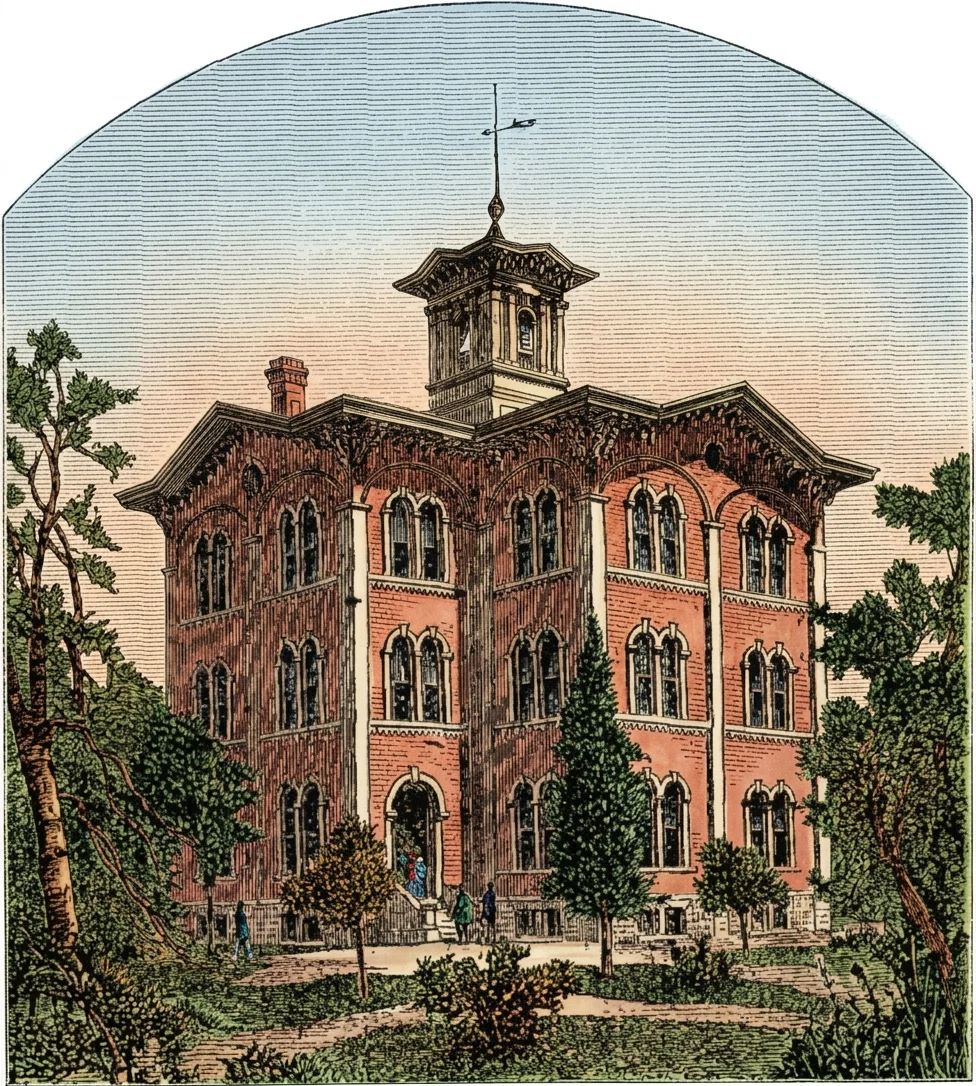
BATTLE CREEK COLLEGE.
A MODEL EDUCATIONAL INSTITUTION, COMPRISING FIVE DEPARTMENTS.
Nearly 500 Students Enrolled Annually, Coming from 32 States and Territories.
DEPARTMENTS.
I. DEPARTMENT OF THE ARTS AND SCIENCES.
This includes a Classical Course of FOUR YEARS and an English Course of three years, each with its Preparatory Course of two years.
II. NORMAL DEPARTMENT.
This includes a Teachers’ Course of FOUR YEARS, and a Model School. The course in this department includes all the branches required for a first-class certificate in any State. Professional instruction in Didactics is also given to those in this department who are expecting to teach.
III. COMMERCIAL DEPARTMENT.
This includes instruction in the following topics: Book-keeping, Business Correspondence, Business Forms, Business Penmanship, Commercial Law, Banking, and Telegraphy. The common branches are also pursued in connection with the topics given above; also, French and German.
There are two sessions daily—afternoon and evening.
The courses in this department are of varying length, and the tuition ranges from $5.00 to $30.00.
Superior advantages for those desiring to prepare themselves for Tract and Missionary Secretaries and Librarians. (Send for special circular.)
IV. DEPARTMENT OF THEOLOGY.
This department has a course of three years, which includes, besides the usual common branches, Geology and Greek.
V. DEPARTMENT OF HYGIENE.
This department has a course of one year. It is designed for those who desire to obtain accurate and scientific information on all subjects pertaining to the preservation of health, together with a fundamental knowledge of anatomy and physiology, and a practical acquaintance with the nature and ordinary treatment of common diseases.
THE FACULTY
numbers fourteen members. They are all men and women of experience and critical scholarship.
The majority of the students are young men and women of true moral worth. Their influence over the unstable is highly restrictive and salutary, making it comparatively easy to maintain the most rigid discipline.
EXPENSES.
Probably there is no other College in the United States where a thorough education can be obtained at so small an expense. A system of clubbing, which has become very popular among students, enables them to secure excellent board at $1.10 a week, exclusive of lodging, which costs 50 cents to $1.00 more. The annual expenses of each student, including all but traveling expenses and clothing, need not exceed $113.00. A full descriptive Catalogue will be sent free, upon application.
Address BATTLE CREEK COLLEGE, Battle Creek, Mich.
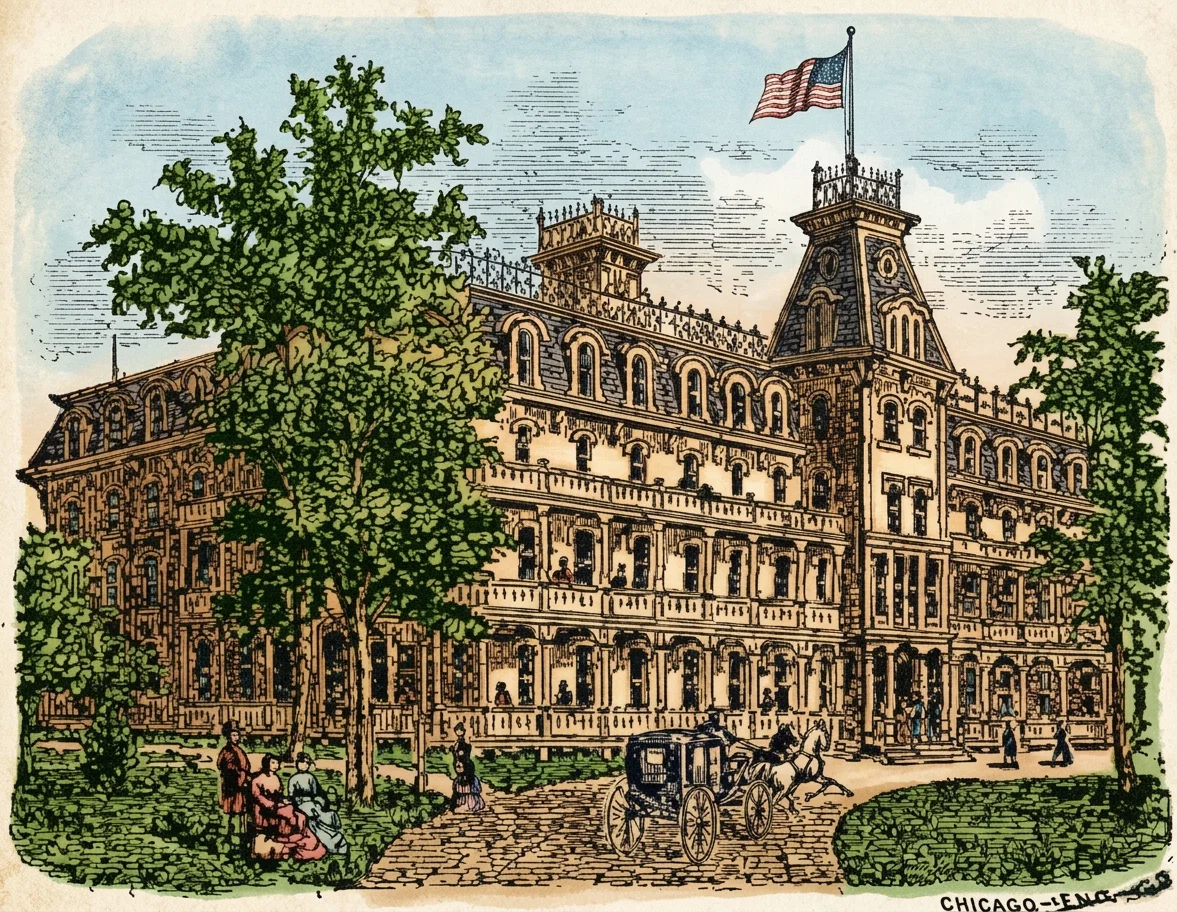
MEDICAL AND SURGICAL SANITARIUM,
By John Harvey Kellogg
Battle Creek, Michigan.
This institution, beautifully located in one of the most healthful cities of Michigan, is everywhere recognized as the
GREAT SANITARIUM OF THE WEST.
More than 4,000 patients successfully treated. The erection of new buildings and the addition of all the most approved remedial appliances known to the profession, have made it The Most Complete Institution of the Kind in America. All modern hotel conveniences furnished. Terms very reasonable.
J. H. KELLOGG, M. D., Medical Superintendent.
Address,_SANITARIUM, Battle Creek, Mich._
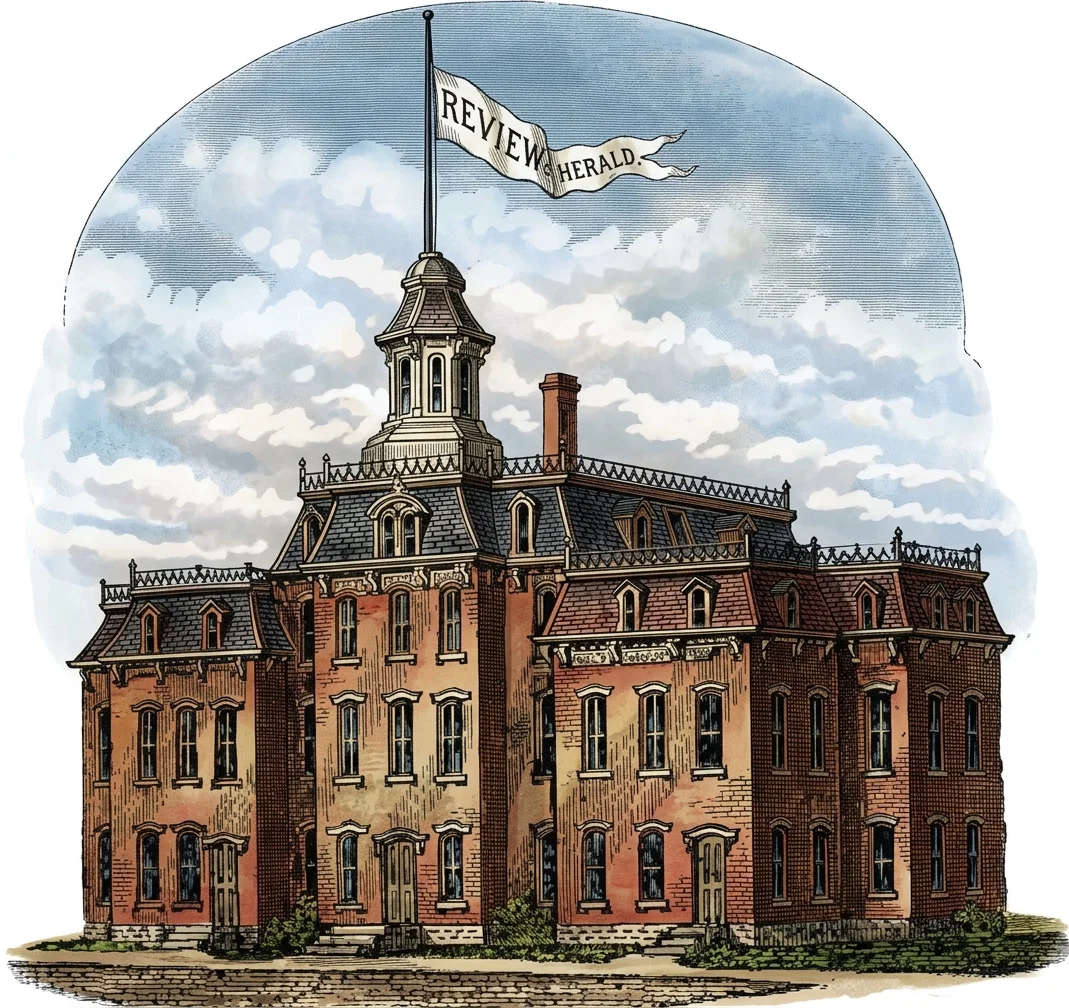
REVIEW AND HERALD PUBLISHING HOUSE.
BOOK AND JOB PRINTING, BOOK BINDING,
Electrotyping, Stereotyping, Paper Ruling, Blank Book Manufacturing, Etc.
The largest and best equipped printing office in the State.