The Youth's Instructor, Vol. LI, No. 24

The World's Metropolis—III

The Youth's Instructor

June 18, 1903

Review and Herald Publishing Company · Battle Creek, Michigan · June 18, 1903

The World's Metropolis—III

Parks

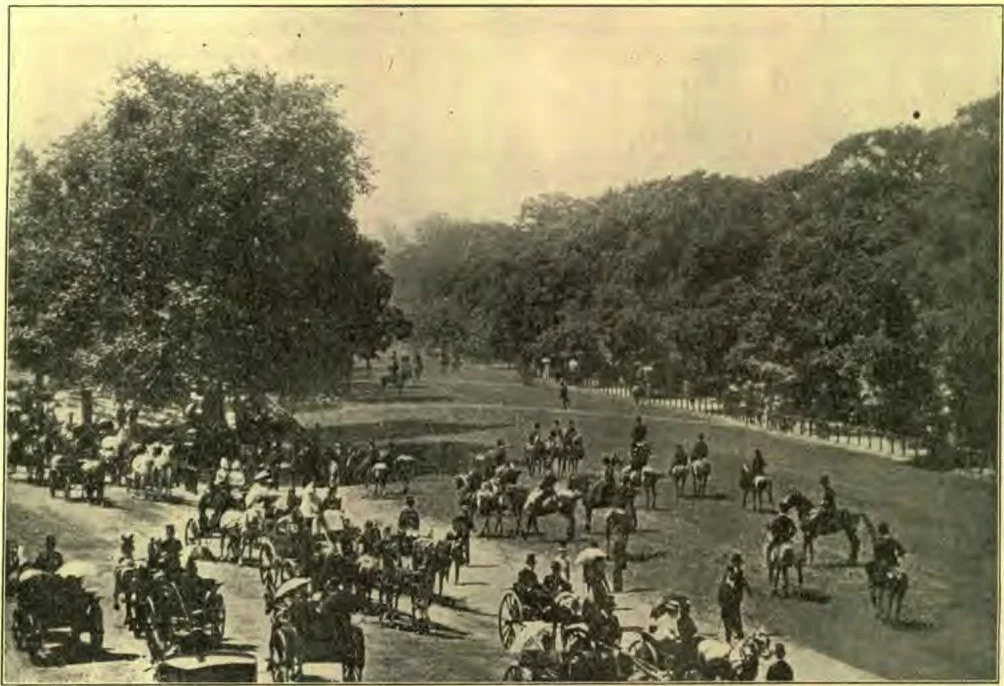
Although London is a great city, it is not so crowded as many smaller cities are. The Englishman prefers the country. He wants plenty of air and wide breathing-spaces. He lives in cities only from necessity, in order to be near his business. This natural love for the country, for the green grass and trees, has led to the wise provision of scores, yes, even hundreds, of well-kept parks within the city limits. Prominent among these are Regent's Park, Hyde Park, Richmond Park, Kew Gardens, and Hampstead Heath. Many of these “people's playgrounds” are open to the public night and day. They are well kept, and are preserved as nearly as possible like the natural fields and woodlands, thus enabling the poor, who can not take trips to the country, a little glimpse of country beauties, and a breath of country air.

The Zoological Gardens

The London Zoo, located in Regent's Park, enjoys world-wide fame; and is probably the most popular resort in London. There are over sixty houses and yards where different varieties of animals from all parts of the world are kept. Many of these animals are very rare and valuable specimens indeed. The white polar bear and the two grizzly bears are the best I have ever seen. There is an excellent collection, also, of kangaroos and wallabies from Australia. The giraffe is a beauty. I had previously thought that the pictures must have overdrawn the matter considerably in representing the giraffe as able to eat the leaves and fruit comfortably from an ordinary banana tree. When standing in a natural position, however, the head of this animal is fully thirty feet from the ground, and his forelegs measure no less than ten feet. The crib from which he eats his hay and straw is up in the corner near the roof, about twenty-five feet from the floor. When you visit London, do not fail to spend one day at the Zoo. Thousands of animals from every land and clime, and varying in size from the little field-mouse to the elephant are gathered there.

English Restaurants

The restaurants of England are good, bad, and indifferent. It took us some time to find any but the latter. The first one we visited seemed to be a very respectable place, patronized by clerks and shop-keepers; but on entering we found the gentlemen nearly all sitting at the tables with their hats on, and either smoking or reading the papers between the courses. The room was extremely unpleasant to a non-smoker, although the food was excellent and well cooked.
The second place we visited was near the London Zoo. We were ravenously hungry; for we had just spent a half-day traveling through the gardens. There were twenty-five of us, I believe, all in one group; and we marched into a restaurant and took possession of every seat.
ROTTEN ROW, HYDE PARK
We asked the proprietor if he could provide us with dinner; and he answered, “Certainly, sir. Take a seat, sir.” We sat down, and gave in our orders for a good vegetarian dinner. The proprietor took the orders in as matter-of-fact a way as if he would be able to bring on the dinners in two minutes; but, instead of that, he turned the orders over to the cook, who went deliberately to work and cooked our dinner for us. We were served just thirty minutes after we had passed in the order. These two experiences did not give us a favorable opinion of English restaurants; but later on, when we found the fine lunch-rooms of the Hovis Bread Company, and several other good systems of restaurants, together with a half-dozen well-equipped vegetarian lunch-rooms, our opinion was quite reversed; and we had one more little evidence of the truth that many unfavorable impressions of countries and people are derived from forming an opinion prematurely, and, therefore, ignorantly.

The Wax Works

No one should visit London without spending an evening at Madame Tussaud's Wax Works, situated in Baker Street, near Baker Street Station. Here one can stand face to face with life-like representations of the great men of all nations. The figures are life-size, and dressed as they were most commonly seen in life. There are the kings and queens of England, surrounded by their most intimate advisors. There are the great Reformers,—Luther, Knox, Melanchthon, and Calvin. In a prominent position is a group of United States presidents, among whom are Washington, Lincoln, Garfield, Harrison, and Grover Cleveland; and beneath a great black awning, draped with fitting symbols of mourning, sits our late president, William McKinley. There is Disraeli, surrounded by the stern, sober-faced men of his cabinet. There also are Gladstone and Lord Salisbury, with their advisors, whose names are quite familiar to us.
I can best illustrate the striking lifelike appearance of these figures by giving one or two rather amusing incidents. Before visiting the rooms, we had been told by our friends that we would find ourselves talking to wax figures before we got away; and as to be forewarned is to be forearmed, we were quite positive that we should be able to tell wax figures from human beings. One of our delegates, who is surely a wide-awake gentleman, made a tour of the first room, and got on very nicely; then he wished to make an inquiry concerning the Napoleon Chamber. This was his danger; for it is not very safe to try to make inquiries in the exhibition rooms; but the delegate, without a suspicion, went up to a lady attendant who sat near the door reading the Wax Works' Guide Book. He said: “Madame, will you kindly direct me to the Napoleon Room?” She made no reply. (Louder) “Please, Madame, will you kindly direct me to the Napoleon Room?” No reply. The delegate became anxious; and, according to his own testimony, he felt the perspiration start upon his forehead as he realized that he was trying to obtain information from a wax woman.
A young friend, who has studied painting and molding considerably, and is known to be somewhat an expert in the study of faces, visited the Wax Works one day; and almost immediately endeavored to secure information from the dignified wax policeman that guards the entrance. She was quite chagrined when she entirely failed to secure information from him. A little later, when going through another room, she came across another policeman, and said, “O, mother! do look at this policeman. He looks as lifelike as the other one,” and she went up close and looked in his eyes, and even pointed her finger at his eyes, to see if he wasn't sufficiently living to wink. He did wink, and almost frightened her out of her wits by jumping at her. He was posing on purpose to permit people to mistake him for a wax figure.
The Napoleon Chamber, the Tableau Chamber, and the Chamber of Horrors, are also very interesting.

Crooked Lanes

One of the most striking features of London is its short and very crooked lanes and streets. True, there are a few long streets running partially across the city; but they can be counted on one's fingers. It was a constant puzzle to me to account for some of the crooks. There were little lanes so narrow that the walls on each side could be touched at once by one's extended hands; and yet great blocks of buildings have been built with a serpentine front on just such narrow lanes. Why was the path not straightened or closed up altogether? In other places where it was necessary for a building to be built across a path, the building was arched over the pathway; but the pathway itself was not moved. I became more and more curious, and made many inquiries; and finally was told, what is probably true, that for centuries it has been a sacred law in Great Britain that no footpath or right of way can be changed or closed up after being used by the people for fifteen years. Thus the whole city of London, and, in fact, all the cities of England, have been built so as to conform to this peculiar law, which has protected as sacred all the old footpaths of the people.

Miscellaneous

After seeing some of the principal features of London, do not fail to take a trip through some of the oldest portions, just to see what you can run across accidentally. It is a delightful experience to rummage through the little old streets and crooked lanes in such crowded quarters as that section of the city lying between Holborn and the Strand.
One day when we were walking down Holborn Street, we noticed a little street called Chancery Lane, just wide enough for two vehicles to pass each other. As we had read in various books many times about this Lane, we decided to follow it up, and see what we could find on our own account. From here we strayed into Lincoln Inn Fields, mentioned so often by Charles Dickens. Here we found the old Inn, the offices occupied by Charles Dickens; and only a few steps from the square the old Curiosity Shop immortalized by Dickens in his book by that name. We also found Chancery Court, where so many cases have been tried year after year for several generations; and, near it, the famous old chapel, which is still attended by many of the legal profession. Of course it is interesting to have a guide, and have these old places distinctly pointed out and described; but that experience does not compare with the delight one feels in discovering, for himself, places which have long been held in the imagination, and have become somewhat sacred to memory by being associated with the books and histories of our childhood days.
It is interesting, also, to stand about on the street corners, and watch the ever-shifting tide of humanity constantly flowing by. One evening about eight o'clock I was strolling through one of the narrow lanes near the Strand when I came across the most wretched appearing little creature I have ever seen,—a little girl about ten years of age, and apparently cruelly deformed. Her head was drawn down upon her breast. One arm was crooked and twisted up behind her back, and the other was as badly twisted in front. Her right leg was so deformed that she actually walked on the left side with her right foot. I watched her for some time as she moved along with slow, painful steps, and wondered what I could do for the poor child. Soon she turned a corner into a quiet, secluded lane; and, presto! she lifted up her head, shook out her arms and legs, and went running up the street for home, happy, probably, with the good earnings of a day's begging on the streets. Such queer characters are seen in London more often than anywhere else; and it is a fascinating study to observe the people, and the various means by which both the poor and the wicked endeavor to battle for a livelihood with the cruel, relentless conditions which they must meet in a great city like London.
E. R. PALMER.

The Blue Room

ONCE in a while one finds in his reading some happy thought so happily expressed that he wishes at once to share its joy with all his friends. Such is the following beautiful suggestion, from Home and Flowers:—
“What an exquisite sunset!” some one exclaimed.
“Yes,” said a lady who was watching it with an expression of intense enjoyment, “it is too beautiful to lose; I shall put it in my Blue Room.”
“Your Blue Room!” we echoed, in astonishment.
“Yes, in my Blue Room,” she answered, smiling more at the sunset than at us.
We asked her to explain.
“Well, you see, there are many lovely scenes and happy hours too precious to lose, and it isn’t safe to trust them to the mere accidents of memory. So I have made a room for them in my inner consciousness, which I call my Blue Room.”
“It must be very large to take in the sunset,” said one.
“No,” replied the lady, “it is only an ordinary room in size, yet it will take in a whole landscape.” Seeing that we were mystified, she explained.
“This sunset, for example, I shall frame and hang over the mantelpiece. In the room it will be only an ordinary picture, until I look at it, then instantly it will become a sunset again.”
“But what will you frame it with?” we asked.
“With the faces of you, my friends.”
“Have you much furniture in your room now?” one asked.
“Yes, a great deal. Only the most perfect scenes and happiest moments find a place in it, yet one is surprised to know how many of these will be gathered in just a few years. However, my room is not nearly full—I think it never will be full.”
“What are some of the things in it?” I asked, curiously.
“Once, when a little girl, I ran along a forest path just after the leaves had fallen; green, and red, and gold, they lay thick over my pathway; and with the beauty of those leaves the mysterious joy of the woods entered into my child soul. Those leaves carpet part of the room. When I’m restless, or stifled, or weary of brick walls, I take a run over my carpet, and then I’m a child again.
“Once, in an hour of despair, I sat by my west window in the gathering darkness. Life, I thought, was dead to me. My heartache was too deep for tears. My father came in, laid his hand gently upon my shoulder, and stood beside me without a word for a long time. That silent sympathy is the center table; and I lean upon it very often. I caught a look of gratitude in the eyes of a child to whom I had been kind. That is the latch on one of the doors. While drifting in a boat down a placid stream in the stillness of gathering dusk, one summer evening, such a sense of rest and peace came over me that I made of it a couch for my Blue Room. When, weary or vexed, I lie down upon it for a few minutes, I’m again floating and dreaming down that stream of perfect rest and contentment.
“There are many pictures. Most of them are rare expressions which I have seen on the faces of those I love. There are bouquets of flowers which never fade—some made from a bird’s song, some a child’s laughter, others from some delightful breeze laden with the perfume of spring. The sweetest song I ever heard, the song that reached my heart, I turned into a bird with rare plumage. Whenever I call to it, I hear that song again. The happiest day of all my life, the day when every fiber of my being thrilled with ecstatic joy, is the organ, and every hour that sets my heart strings thrilling is a new piece of music for my organ.”
“You must be very happy,” some one said.
“Indeed I am,” she replied with a smile. “Why shouldn’t I be? Whenever the surroundings are not pleasant, I take a peep into my Blue Room at the beauty there. When friends are cross, I go in and take up some remembrance of past kindnesses which I got from them. No matter how much awry the present, I can always be happy with so many treasures in my Blue Room.”

Exodus Thirty-three, Fourteen

The Calvary road was so steep as he climbed; But the height was illumined by the light of God's love; And the sunlight of heaven o'er the rough pathway streamed, Though the low, angry clouds hung dark from above.
The waters so wild in the Red Sea were piled, But they parted and rolled as one stepped in the brink; And Marah so bitter was turned into sweet, As he came all athirst of its waters to drink.
The bush that he saw was not burned, though aflame, And he paused as he passed at the sight and the sound. A voice said, Take shoes from thy earth soiled feet, For the place where thou standest is my holy ground.
In the furnace of fire three walked up and down, They feared not the false, and they loved the true God; What is it appears but the form of the Fourth, Who the wine-press alone in his anguish hath trod?
It matters not when, and it matters not where, Whether glad in our gain or unfruitful our quest,— In the time of our need, we may know He is there, And His Presence it is that shall give to us rest.
MARY MARTIN MORSE.

Guard the Treasure

“Guard the treasure!” was Paul’s command to Timothy (Conybeare and Howson, 1 Tim. 6: 20),—this treasure that we have “in earthen vessels, that the excellency of the power may be of God, and not of us,”—this “light of the glorious gospel of Christ,” that “hath shined in our hearts.”
“Guard the treasure!” Adown the ages comes that same command to the young Timothys of to-day. We “have renounced the hidden things of dishonesty.” We are not to walk “in craftiness” now, nor “handling the Word of God deceitfully; but by manifestation of the truth commending ourselves to every man’s conscience in the sight of God.” We are not to preach ourselves, “but Christ Jesus the Lord.”
“Guard the treasure!” Preach a pure gospel. Be fearless of man. Speak only because you believe. “Knowing therefore the terror of the Lord, we persuade men.”
S. Roxana Wince.

A Song of June

There’s folks that set an’ grumble ’bout the endless cold an’ snow, An’ folks that seem to keep account of all the winds that blow. There’s storms an’ winds a plenty, ef you want a dismal tune— But when you talk of weather, don’t forget to count in June.
Think of all the clover blossoms a-nodding everywhere, An’ the buttercups an’ daisies, an’ the roses—I declare Makes you sort o’ gasp to think how reg’lar every year Happiness jes’ lays round loose as soon as June gets here!
All the birds a-piping up makes you stand an’ laff— Trills an’ squeaks an’ calls an’ cooes a-flying thick as chaff. Don’t make any odds which ones has an ear for tune— Seem to think they all can sing, when it gets to June.
Makes you feel all happy like there wa’n’t no sin and pain; All the child there is in you comes leaping up again; Seem to love each livin’ thing an’— well — perhaps it’s queer, But heaven seems jes’ acrost the road, after June gets here.
There’s folks that frown an’ grumble ’bout the endless cold an’ snow, An’ folks that seem to keep account of all the winds that blow. There’s storms an’ winds a plenty ef you want a dismal tune; But, when you talk of weather, don’t forget to count in June.
— Mabel Nelson Thurston.

A Wise Choice

A True Story

One bright morning I took the train for New York City to visit a home for orphan children. I wished to find a boy to adopt as a son,—a boy with blue eyes, light complexion, good form, strong and healthy, and of a sweet disposition. My husband was willing to leave the matter entirely to me, but seemed to doubt my ability to find a child that I would accept. Being a Christian woman, as I supposed, I was about to open my home simply for charity’s sake. But how little I knew my own heart!
Arriving at the home, I was shown into a large room, and soon fifteen or twenty boys, from six to twelve years of age, came in. There was only one that I could think of choosing, and he was older than I wished. While talking with them, I noticed a boy, badly crippled in his feet, eyeing me intently. The look he gave me was so full of earnest longing, and the expression on his face was so sad, that my attention was drawn to him in spite of myself. But as he was a cripple, he would never do for a farmer’s boy.
Still his large, sad eyes watched me so wistfully that before leaving the room, I questioned the matron about him. Taking me to one side, she told me that his name was Harry, that he was ten years old, and by far the brightest and best-disposed child that had ever been at the home. She loved him dearly, and felt sorry for him because he was so anxious to get away from the city and live in the country. He had insisted on coming in with the other boys, hoping I might want him. The matron thought that Harry would never become helpless, but that no one would think of adopting a cripple.
As I reached the door, I turned to take a last look at the boys, and saw the tears in Harry’s eyes.
I called him, and he came eagerly, his face all aglow with hope. I put my hand into my pocket, and was about to give him a piece of money, when those great brown eyes looked into mine so reproachfully that I said, without thinking of committing myself, “My child, would you like to live in the country, where there are horses and cattle and flowers and fruit, and where you can hear the birds sing?”
The small, trembling hand crept into mine, as, choking with emotion, he replied: “Truly, are you going to take me with you?”
“Yes, Harry, if you will let me,” I heard myself saying, and sealed the promise with a mother’s kiss. The matron, greatly surprised, called the manager, the papers were made out, and Harry was my boy.
I told him we would take the first train for home, but he said that if we did so, he would not have time to see Esther, his nine-year-old sister, who had a temporary home with a lady in the city. I called a carriage, and we soon found Esther. As Harry told her that he was going to Ohio to live with me, and had come to say good-by, tears streamed down her cheeks. I tried to comfort her by telling her of my home, of how happy Harry would be, that perhaps sometime she could come to visit him, and of the good times they would have together. Hastily brushing away the tears, she said, “O, yes, I am glad he is going away from those bad boys, who torment him, and that he is to have a home with you.”
When told that we must go, I saw that a real struggle was going on in the childish hearts, and that it was wrong for me to separate the brother and sister. So I said, “I will never separate those children. Esther shall go, too.”
The long trip home was full of constantly changing delights for the children, and they enjoyed it wonderfully. As for me, nervousness had put pleasure to flight; for I thought of how differently I had done than I had intended, and I wondered what my husband would say.
As I left the train with the children, I saw him standing at a distance, looking closely at them. He came hastily toward us, and greeting the children kindly, helped them into the carriage. I drew a long breath of relief when, a little later, I heard him and Esther chatting freely with each other, as she sat by his side during the ride to the farm. It was nearly bedtime when we reached home, and after a light supper, the tired children were tucked away in their cozy beds for the night.
My husband still sat by the table, and after some hesitation, I said, “I will not attempt to tell you to-night how I came to take those two children. I do not understand it myself; some influence over which I seemed to have no control led me, I frankly confess; but I think that when you come to know them, you will be convinced that the choice was a wise one. Under the circumstances I am sure you would have done the same.”
He replied, “It is noble and good of you to take those children into our home, and give them your priceless care; but I had expected a boy who was strong, and who would be a help to me in the work on the farm. However, we must make the best of the situation.”
Late next morning Esther came down-stairs, washed and dressed, her brown hair neatly combed, and her face beaming with smiles. As she entered the room, she stepped to the side of my husband, and taking his hand in hers, looked earnestly into his face, and said, “Are you to be Harry’s and my papa, and are you always going to love us just as if we were your own?”
For a few seconds he did not speak; then he caught her up, and seated her in his lap. Despite his efforts, his eyes were wet with tears. For a few moments he remained silent. The directness of Esther’s questions gave him no chance of evasion. At length he said, “So you think you would like to be my little girl, and live on a farm, and have me for your father? Maybe you will not be so well pleased with your home when you see it in daylight.”
“O yes,” she said. “I had such a funny dream last night about my new home, and I could hardly wait till morning to see if it was anything like what I dreamed. But I want to know if we are really to be your own children,” she pleaded, with both arms about his neck.
“Yes,” he replied, “you are to be my own little daughter, and I will do my best to make your new home a happy one.”
“But, papa, there is some one besides me,—my own dear brother Harry. He is such a good boy, and has been so kind to me. He has never had any home, and he’ll be so glad to live on a farm, where he can have horses and cattle to care for and to pet. If only he is happy, it does not matter so much about me. If I can live where I can see him every day, I shall be very happy.”
There was a struggle going on in his heart as he listened to Esther’s pleading for Harry; but when he had gained his usual composure, he said, “Harry and you shall never want for a home as long as I have one for myself. But run now, and see if the place is anything like your dream.” There was no need now to explain to him how I came to bring those children home, as it was evident that the same gentle influence was winning his heart. It hardly seemed possible that Esther was only nine years old. Her manner of speaking suggested a girl of fifteen.
As the days went by, and the children continued happy and became very helpful, an air of peace and restfulness filled our home. They no longer bear on their faces any evidence of their former sadness. The weary, exhausted look on Harry’s face has passed away, and there is in its place an expression of peace and comfort. His physical condition has steadily improved, and Esther finds the birds, the flowers, the trees, the fields, and the hills a constant source of delight.
(Concluded next week)

A Floral Boat

THE idea came to me when wondering what to do with an old skiff, or small boat. A bed was spaded deep, and filled with well-rotted sods, sand, and fresh manure from the stable, the latter used sparingly, as none better was at hand. This bed was round, twenty feet in diameter, but any other shape would have done as well. The boat was partly sunk in the ground in the middle of the bed, so that the edge stood only about ten inches above the top of the soil, and afterward filled to within an inch of its brim. A mast was fastened in the stern, and strings were stretched to the bow to form a sail.
White morning-glories were planted to run up the mast. Cypress-vines were chosen for the strings, both for their cheapness and for their habit of clinging closely to their support. “Daylight Dolichos” would have been prettier for both strings and mast. The dainty white trailing alyssum was planted in the boat, one row at the edge, so the sprays would hang over. The bed itself was set with the pretty dwarf blue ageratum. Only slight pruning was required; and when in bloom, the effect for three months can better be imagined than described.
Floyd B. Bralliar.

I Am His, and He Is Mine

Loved with everlasting love, led by grace that love to know; Spirit, breathing from above, thou hast taught me it is so! O, this full and perfect peace! O, this transport all divine! In a love, which can not cease, I am his, and he is mine.
Heaven above is softer blue, earth around is sweeter green! Something lives in every hue Christless eyes have never seen: Birds with gladder songs o'erflow, flowers with deeper beauties shine, Since I know, as now I know, I am his, and he is mine.
His forever, only his! Who the Lord and me shall part? Ah, with what a rest of bliss Christ can fill the loving heart! Heaven and earth may fade and flee, first-born light in gloom decline; But, while God and I shall be, I am his, and he is mine
— Rev. Wade Robinson.

The Youths' Society at Oakland

During the General Conference I had the privilege of meeting with the Youths' Missionary Society at Oakland, California. The office chapel, the place of meeting, was well filled with youth and children, and the interest and enthusiasm in their work were a real inspiration. After brief talks by some of the General Conference workers, an opportunity was given for the members of the Society to speak of their experiences and desires. The social service was one of unusual interest to me. Surely it must have been pleasing to the unseen watchers, as well as to the visitors and workers, to see the earnestness of these youthful members of the great body of Christ. The humbleness, the simplicity, and the directness of these testimonies touched all hearts.
This is a working society in fact and not merely in name. The leader, Mrs. E. A. Chapman, has carefully planned the work, and so divided the responsibilities that each member may give intelligent proof of his zeal in the service of God. I was favored in having the privilege of looking over the record books in which the work to be done, and the workers assigned to it, are kept in detail. I could not but wish that each Society would carry out the same method of systematizing their plans, so that a definite work might be placed before each member.
As a help to the members of this Society they have had cards neatly printed, giving very practical instruction in Christian experience. Believing that what is of value to them will be helpful to others, we give here a reproduction of the card:—

EIGHT SHORT RULES

For Young Christians
1. Never neglect Daily Private Prayer. And when you pray, remember that God is present, and that He hears your prayers. (Heb. 11:6.) Never ask God for anything you do not want. Tell Him the truth about yourself, however bad it makes you; and then ask Him, for Christ's sake, to forgive you what you are, and to make you what you ought to be. (John 4:24.)
2. Never neglect Daily Private Bible Reading. And when you read, remember that God is speaking to you and that you are to believe and act upon what He says. I believe all backsliding begins with neglect of these two rules. (John 5:39.)
3. Never let a day pass without trying to do something for Christ. Every night reflect on what Jesus has done for you, and then ask yourself, “What am I doing for Him?” (Matt. 5:13-16.)
4. If ever you are in doubt as to a thing being right or wrong, go to your room and kneel down and ask God's blessing upon it. (Col. 3:17.) If you can not do this, it is wrong. (Rom. 14:23.)
5. Never take your Christianity from Christians, or argue that because such and such people do so and so, therefore you may. (2 Cor. 10:12.) You are to ask yourself, “How would Christ act in my place?” and strive to follow Him. (John 10:27.)
6. Never believe what you feel if it contradicts God's Word. Ask yourself, “Can what I feel be true, if God's Word is true?” and if both can not be true, believe God and make your own heart the liar. (Rom. 3:4; I John 5:10, 11.)
7. As you wake morning by morning, let your first thought be of God.
8. Never leave your room without knowing you are on God's side.
Most heartily do I bid the members of the Oakland Youths' Missionary Society Godspeed. It is by doing with your might the work that is given into your hands that you will develop talents and experience for a larger work. May it be that erelong many companies of youth shall be doing the same work and sharing in the same blessed experiences.
Mrs. L. Flora Plummer.

In the Upper Columbia Conference

WHILE there have been young people in our Conference ever since it has been a Conference, yet, until the present year, there has been no systematic effort made to enlist their energies in the Lord’s work. But at the last camp-meeting a department was established known as the Educational Department, and it was planned that the Young People’s work should be one branch of this department.
Like all new enterprises, the work started slowly, but we are thankful to report progress. The desire on the part of the young people in the various parts of the Conference to engage in some branch of the Lord’s work, we believe is increasing; and as a result many of them are turning their attention toward the college. Many are consecrating themselves to service for the Master right where they are. A new interest is springing up in the study of God’s word, a number having decided to set apart a definite time for study daily; while some are earnestly inquiring, “What must I do to be saved?”
At the time of the last camp-meeting, there were only two organized Young People’s Societies in the Conference,— one at College Place, and the other at Spokane. We now have six,—the Boise, Wilcox, Milton, and Natchez Societies having been organized since that time. Of course we realize that it is not the number of Societies, but the actual work accomplished, that indicates the degree of progress.
In this particular, I will speak of one enterprise which has succeeded even beyond our expectations. There was a call made for thirty-five dollars to support a native worker in the Fiji Islands for one year. This call was passed on to the young people of the Conference, and they have responded by sending $48.81. This shows how the Lord is reaching the hearts, and inspiring a spirit of sacrifice for the work.
The Lord says the young people are to be his helping hand in ministering to the needs of suffering humanity. How we long to see those of this Conference together with many others, going forward as a united company to carry the advent message to all the world in this generation!—Mrs. J. L. Kay, in The Reaper.

Young People's Society at Elk Point Industrial School

In an April issue of the Dakota Worker we noticed an article concerning the organization of a Young People's Society at the Elk Point Industrial School. Let us hear from this student band again.

Spokane Church Meetings and Missionary Field Reports

At Spokane, Washington, the regular attendance is about twenty. The different missionary fields have been considered, also a variety of Bible topics. Some of the members have been engaged in Life Boat work. The secretary reports, “All seem of good courage, and take an interest in the meetings.”

Each Member a Candle: Young People's Society Light

IN early days, when meetings were held at night in log school-houses, each person attending brought a tallow candle. The first man to arrive would light his candle and place it on the desk. It would not make the room very light, but it was better than none. When the next man lighted his candle, the power of the light was doubled. By the time the house was full, there was plenty of light. If each member of a Young People's Society will contribute his share of “shine,” the glow and the warmth will be sufficient to attract somebody. Mr. Moody says, “If we can not be a lighthouse, we can be a tallow candle.”

THE WEEKLY STUDY

The Test of the True

(June 21-27)
It would not be at all appropriate to attempt to suggest here the special topic for the prayer season every week. Only bear in mind the call for definite and specific aim in prayer. When the directors of the China Inland Mission, in its early and most apostolic days, saw the need for seventy new missionaries to enter definite openings, they prayed specifically for that number, and for the means to support them. Within three years the Lord gave them seventy-six new workers and the means of their support. Each society has its local interests, and will know of State meetings and special subjects for prayer. But as we watch the missionary reports, let our sympathies direct us round the circle of our worldwide missions, and let us be helpers together with our workers in the lands afar by specific prayer unto God for them. And the short, sharp prayer season, of sentence-prayers, in which all can join within a few minutes, is a matter to be borne in mind. Let us not allow the opening of our meetings with prayer to become a mere form.
The study for this week is based on Chapter XVII of “Rise and Progress.”
First, study the Scripture rules given for the testing of the true manifestations of the gifts of the Spirit, and note incidents given in the experience of Sister White, as narrated in this chapter. Note how the aim was constantly to build up the little flock, scattered abroad, whether the message was of reproof or encouragement. Other scriptures than those given may occur to the leader of this study. A moral in this matter of the difference between the messages of the Lord’s prophets and those of false prophets is pointed out in 2 Chron. 18. It also rolls back the curtain, and gives us a view of the controversy that is raging between good and evil influences in this world.
Second, sketch the advance of the truth into the West, with trials and experiences, as narrated in the chapter of “Rise and Progress” before us. Note the method of meeting opposition referred to on page 190, and refer to the Bible principles on which that method is based, as Matt. 5:11; 2 Cor. 6:7, 8; 2 Tim. 2:15, 16; 3:14-17; Phil. 2:14-16; Eph. 5:13; Jude 9-11, etc. We must not spend our time chasing error.
Selection, suggested for reading: “God’s Love for His People,” “Early Writings,” page 31.
W. A. S.

Enduring Faith in the Heavenly Race

It is not enough simply to begin well in the heavenly race, neither is the prize to be won by those who run well “for a season.” More than a “fair start,” above and beyond a brilliant spurt of earnestness and devotion, is the steady faith and unswerving purpose that endures. Only to those who endure “to the end,” will the reward be given.

Raising Corn for Missions

Once a wee little girl, with two round, dimpled cheeks, And with eyes like a dove’s, soft and fair, Held her kerchief at once, for the kernels of corn, Which her teacher placed in it with care.
Then the kind lady said, and in tones full of love, “Plant this corn for the Lord, whom you know, Then water it, tend it, and shield it from harm, And the Lord will himself make it grow.”
Then the wee little girl with her treasure went home, And quite snug ’neath her pillow ’twas laid; The next morn, ’ere the sun had sipped up all the dew, Her neat little garden was made.
And at night she thus prayed, as she knelt by her bed, “Bless dear papa, and mama, and Joe, Please, God, bless my corn, and just where it is sown, Please don’t let the mocking-birds know.”
So with watching and praying and tenderest care, The young blade soon appeared through the sod, And erelong as it grew, and the wind through it blew, To the wee little girl it did nod.
Then in time there appeared silken tassels on high, And bright plumes such as warriors wear; And the bright golden corn in its cradle so soft, The wee little girl watched with care.
But when it was ripe, and then garnered and sold, The wee little girl danced with joy, As ten bright silver dimes lay right in her hand, And naught could such pleasure destroy.
Now, dear children, go thou and do likewise, and see, If the half of her joy I have told; Plant your corn for the Lord, scatter broadcast the truth; He’ll reward you a full hundredfold.
— Selected.
Continue reading: A Letter from India