"THE above is the official designation of a great conference held in Carnegie Hall, New York City, Nov. 15-21, 1905. It originated in a meeting of what seems to have been the ministers of the Protestant denominations in New York City, in the winter of 1900.
At that meeting there was organized what was called the "National Federation of Churches." This organization directed its efforts first to the formation of state and local federations throughout the country. In its annual session for the year 1902, held in Washington, D. C., that body appointed a Committee of Correspondence. This committee sent to all the leading Protestant denominations in the United States, addressing them on the subject of "The Co-operative Relationship of the Churches of Jesus Christ, in Christian Work."
In this letter the object of the federation was declared, in the following words:
The National Federation of Churches and Christian Workers has for its object to promote the co-operation of churches of various communions through the formation of state and local federations, in order to secure united and effective effort in religious and moral movements vital to the welfare of churches and communities.
The work of the federation in attaining its object is also stated as follows:
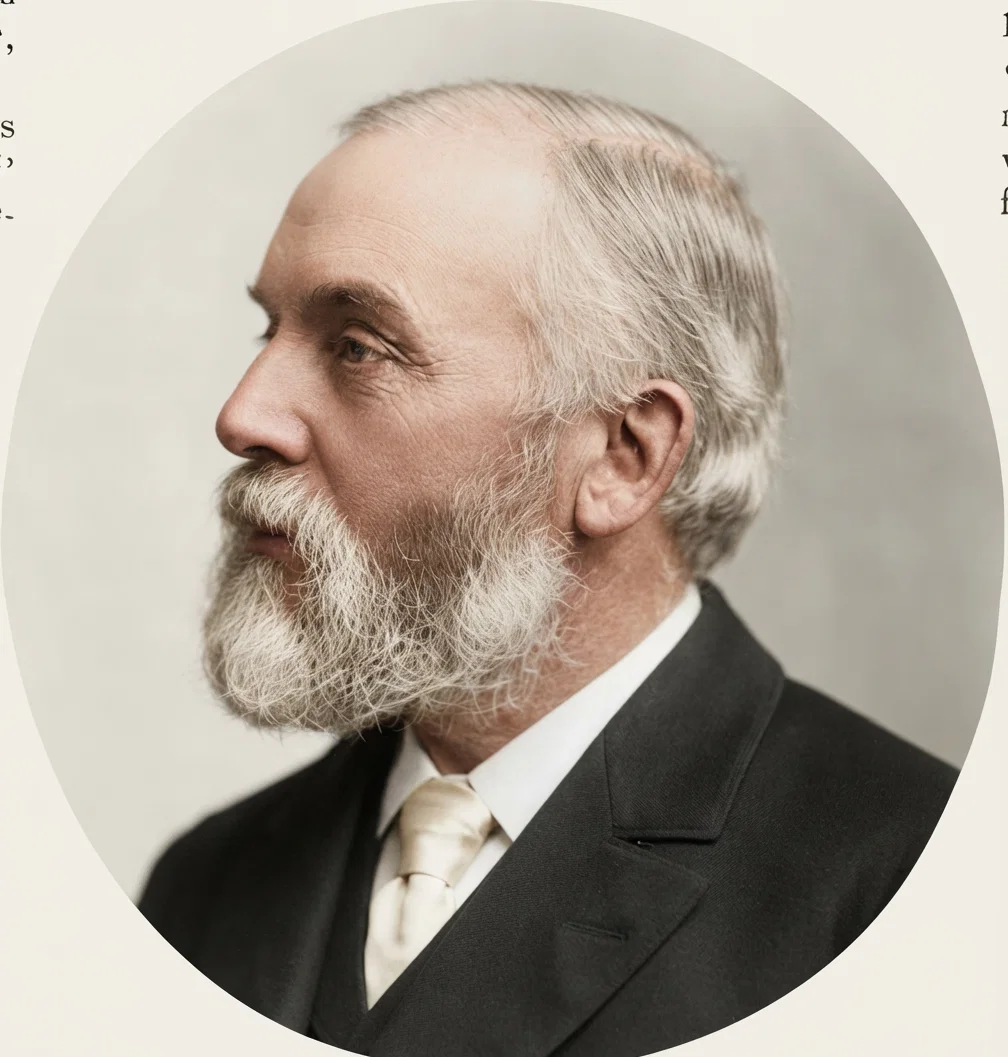
REV. W. H. ROBERTS, D.D., LL.D. (Chairman of the Executive Committee.)
In some cities the work of local federations has been directed to the concentration of effort for the removal of social evils, the cleansing of the centers of vice and corruption, and the promotion of temperance, Sabbath observance, and general morality. The affiliation of the local churches has often proved a beneficent moral force in the administration of civic affairs.
To the churches this letter further said:
In order to secure an effective organization of the various Protestant communions of this country for the practical ends indicated, we would suggest that a conference of representatives accredited by the national bodies of said Protestant denominations meet in New York City, November, 1905, to form such a representative organization as may seem proper to them. It is understood that its basis would not be one of creedal statement or governmental form, but of co-operative work and effort. It is also understood that the organization shall have power only to advise the constituent bodies represented.
The representation was placed by the federation at fifty delegates for each denomination having a membership of five hundred thousand or upwards; ten delegates for those having membership of one hundred thousand and upwards; and five delegates for those numbering less than one hundred thousand. To the latter there responded the Baptists, the Free Baptists, the Disciples, the Congregationalists, the M. E. Church, the M. E. Church, South, the African M. E. Church, the Methodist Protestant Church, the Presbyterian Church, the Cumberland Presbyterian Church, the United Presbyterian Church, the Reformed Church, the African M. E. Zion Church, the Christian Connection, the Evangelical Association, the United Evangelical Church, the Moravian Church, and others, sufficient to justify the announcement in the formal opening of the conference that the assemblage represented "eighteen million communicants." In the opening address it was stated that "twenty-eight denominations" were enlisted.
The conference was opened with the hymn, "Come, Thou Almighty King," and prayer by Bishop Fowler, of the Methodist Church. In the opening address, by the president of the federation, J. Cleveland Cady, a letter was read from President Roosevelt, in which he expressed his "very highest sympathy with the movement," and stated that "it is perfectly possible that the movement may have a very considerable effect in the Christianizing of Japan, which I feel to be retarded by the divisions among ourselves, and by the failure to recognize the fact that the Christian Church in Japan must of course assume essentially a Japanese national form. So you see I have a very real interest in what you are doing."
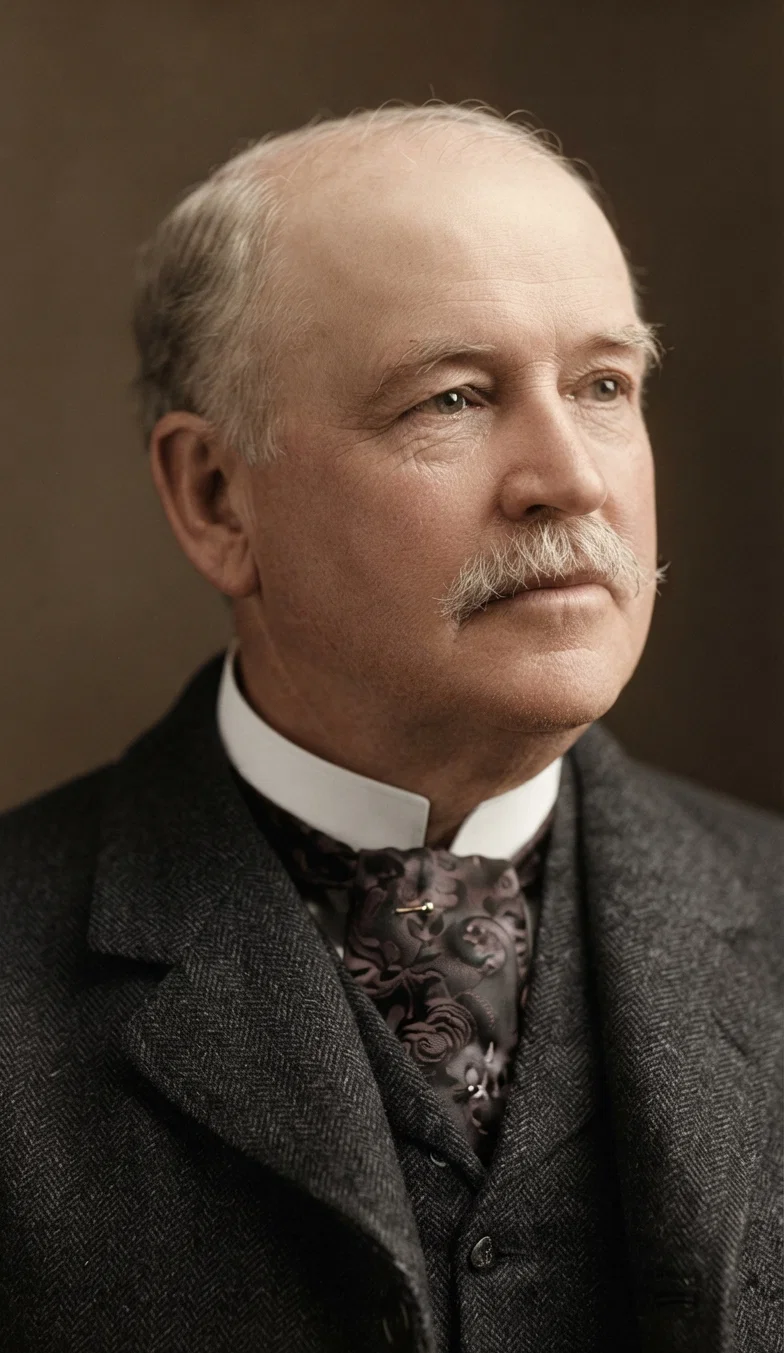
MR. J. CLEVELAND CADY, LL.D. (Chairman National Federation of Churches and Christian Workers.)
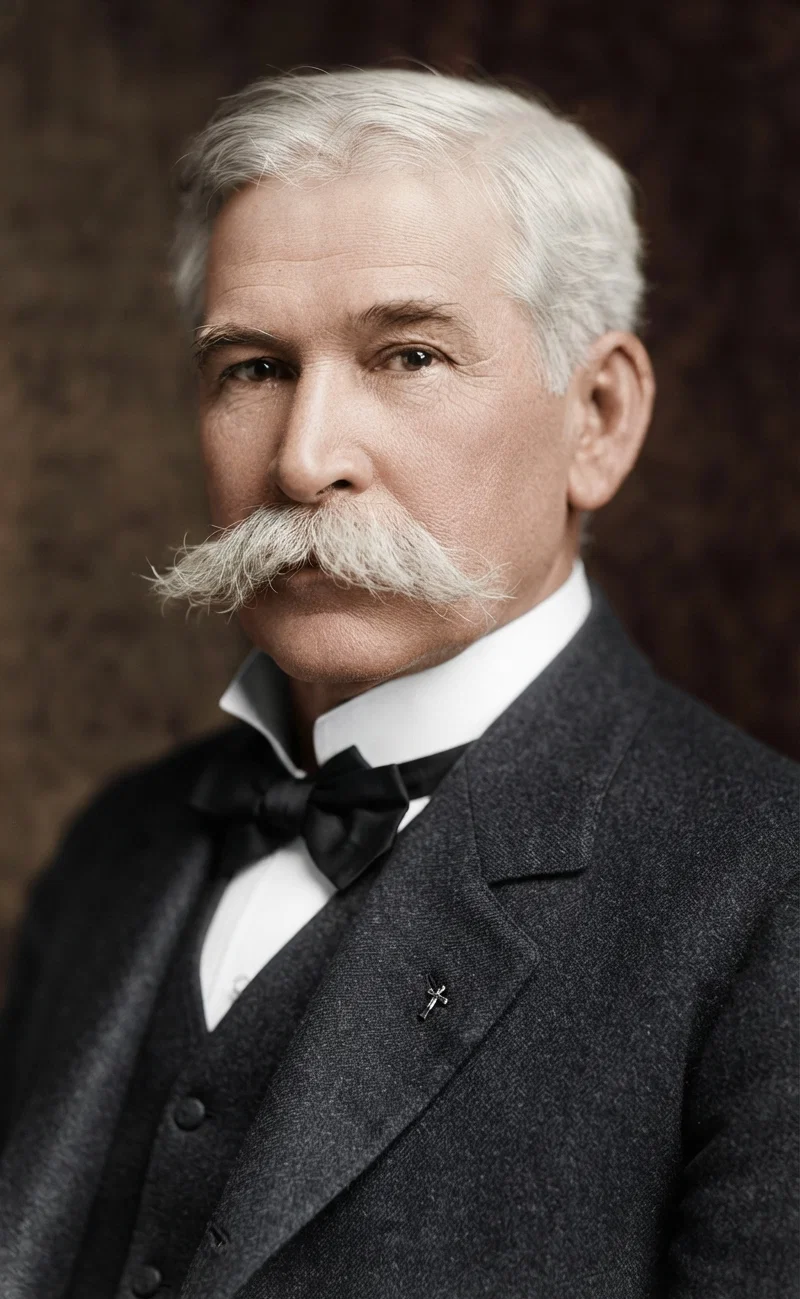
REV. E. B. SANFORD, D.D. (Secretary of the Executive Committee.)
After the opening address, the rest of the evening of November 15 was occupied with addresses of welcome: first by President Littleton, of the Borough of Brooklyn, on behalf of Mayor McClellan; one by Dr. Thompson, of the Presbyterian Board of Missions, on behalf of the Executive Committee of the Federation.
Dr. Thompson said that "Denominationalism has failed to stem the tide that flows out into darkness. If you do not believe it, read the morning papers. The business world, even at mighty peril, is teaching the lesson of concentration. And the value of it is not foreign to the history of the Christian Church. Indeed thus it began its history. When the disciples were together the social mission of the church dawned upon them."
Dr. MacArthur, of Calvary Baptist Church, New York City, was to have given the welcome on behalf of the churches of Greater New York, but when introduced and called upon had not arrived; and the meeting adjourned. As the closing hymn was being sung Dr. MacArthur stepped to the platform, but was too late to be heard.
THE SECOND DAY'S PROCEEDINGS.
By Alonzo T. Jones
THURSDAY morning session was opened by Dr. R. S. MacArthur, Baptist, with the speech of welcome that he missed the night before. He declared that this conference means more to America and the world than any other that has ever been held. The next item was the reading of the report of the executive committee. Following this was the calling of the roll of the delegates; the number is about five hundred, and nearly all were present.
Dr. Washington Gladden presented a paper of greeting to the "Christian Rulers and Christian People of Russia," asking them to stop massacring the Jews.
Dr. Wm. Hayes Ward, editor of the Independent, presented a paper on "The General Movement of the Christian Churches towards Closer Fellowship." He began with the council at Jerusalem, of Acts 15. He said that the liberty recognized by that council in its discussion and its final action was "amazing." But after the apostles had passed away, episcopal domination began, and church history is the record of domination, division, exclusion, and persecution.
Protestantism again asserted religious liberty, but soon turned to sectarian exclusiveness and division. We are now come again to the days of evangelism and union; the aim, to convert the world; and to come together, that we may convert the world. We propose union on the basis of universal liberty, as in the council at Jerusalem.
The secretary of the executive committee of the federation presented a paper on "Preparatory Work of Recent Years in Advancing This Movement in the United States." The substance of this paper was given in the first number of this report.
Bishop McVicker, of the Episcopal Church, spoke on "The Open Door before the Christian Churches." He agreed that this conference is the most important and momentous meeting in the history of the church. We are met to deliberate on a theme as old as Christianity. Fifty years ago such a meeting as this would have been impossible, if not inconceivable. But now there is a drawing together. We no longer feel it necessary to protect our views by discountenancing others. With all that the church has done, and she has done wonders, the world is even yet far from the kingdom. It must be granted that we have a Christian civilization; but the kingdoms of this world have not become the kingdoms of our Lord and His Christ. In the days when they burnt here-7tics, the heretics were not burnt by those who were sure of their own faith; but by those who were not sure of their own faith, and burnt their own heresy in the burning of the one held to be heretic. A new day has dawned. Co-operation is in the air—in business, in politics, and among the churches. Hail, happy day! If we are not ready for organic unity yet, let us all welcome that unity of sentiment and wish for that grand unity of the Spirit in the bond of peace.
Dr. O. W. Powers, Columbus, Ohio, of the Christian Convention: There has come a critical time for the kingdom of God. The whole world is now open to the kingdom of Christ. The last hermit kingdom has been pried open, even by the arms of the heathen, at the "roof of the world." This movement means not the control of the forces within, but the alliance of all these forces for the conquest of the world that is without.
Dr. Black, of the Cumberland Presbyterian Church: The open door for this movement is so wide open as almost to convince that there is no door. Inviting the energies of such federations, he named:
Civic righteousness.
Marriage and divorce.
Temperance.
Corporation honor, wielding the influence of capital in the fear of God.
Prison reform.
Public charities.
To repel and repress social evils.
To prevent Sabbath desecration.
To prevent child labor.
International conflicts.
To correct the epidemic of gambling.
To correct amusements so they shall be in harmony with righteousness.
To correct the evils connected with immigration.
To prevent the influences of Mormonism from having any place in the affairs or the recognition of the nation.
To unite all forces of the church for the accomplishment of these ends.
And, most of all, for the return of the Bible to the public schools. (Loud and continued applause.)
That we may aid in the relief of the downtrodden and the persecuted wherever they may be.
Dr. Carson, Presbyterian: The signs of the open door are: (1) New emphasis men are putting on spirituality. Materialism is out of date to-day. This opens the door for conservative aggressiveness of the church. (2) New and wide ethical awakening. A great wave of reform has swept over our commercial, social, and political life. In Minneapolis this reform put into the office of mayor a man who was pledged to close the saloons on the sabbath, and the past three sabbaths every saloon in Minneapolis has been closed tight. This uprising of the common people of America finds its counterpart in the other nations, even in far-off Russia. This uprising of the people is an open door for the church to enter with the elements of order, to prevent the rule of mobocracy. This will be the introduction of that brotherhood that has been lost, and which shall culminate in the New Jerusalem let down from heaven.
Dr. Washington Gladden: We have been able to see this morning that there are some things that we can do. I hope we shall select the things that we can do, and center our energies on these. One of these things that has not yet been mentioned, is that the poor of our cities can be cared for by the churches of those cities. This ought to be done for the church's sake, and for the sake of the poor. We can now and again say things. When nineteen million people send forth their utterance for justice and righteousness, that voice will be heard and listened to.
TROUBLE AND DISTRESS.
By Editor
The New York World of a few weeks ago tells us that on the first of next April one-half million men will be forced into idleness in the plan for the combined strike and lock-out of all the coal mines of Pennsylvania, Ohio, West Virginia, Indiana, Illinois, and part of Kentucky. Existing wage schedules expire at that time. Then the great operators of the two kinds of mines, anthracite and bituminous, will meet together for their common weal for the first time, when it is proposed to combine all the forces to strike down the united mine workers of America. Coal is already being piled up with that in view, and then we will have, not simply the suffering of the families who will be out in strike or shut out, but the suffering of thousands of others who are deprived of fuel.
MORMONISM ON TRIAL.
MORMONISM can be eradicated in only one way. The strong arm of the law must smite it dead. It is a wicked, beastly form of socialism, and will spread throughout the social fabric, the political organization of the country, until it passes beyond the control of the government. We predict that unless the government of the United States takes Mormonism seriously and crushes out polygamy, the black plague of concubinage will be a factor in American social life in less than a score of years. Every year this polygamy is allowed to go on, the difficulty of controlling it is multiplied by ten. It is a curious problem. Even people of ordinary good sense on other subjects have an apology for this form of social bestiality. One would imagine that the women of Utah would rise up against such a monster, but they do not. The most dreadful of all curses over Western Asia is polygamy. The tenacity of Mohammedanism is traceable to polygamy. The American people may strut about in a fancied security; but they should look with calm, level vision at the growth of this withering curse in Utah, in Wyoming, in Idaho, in Arizona, in New Mexico, and in nearly every great city in the East. It is not contended that these newly converted Mormons practice polygamy. They are content to establish a hierarchy which is based upon polygamy. It is an esoteric doctrine at first, but gradually comes to the surface. We favor a constitutional amendment invalidating every polygamist, denying him the right of franchise and the right to hold any sort of office.—California Christian Advocate.
COFFEE AND TOBACCO.
It is a sad fact that the people of America, according to government reports, are consuming per capita an average of 5.03 pounds of tobacco a year, man, woman, and child. Only one land in the world, Belgium, exceeds this with 6.20 pounds per capita. This, of course, is based on revenue returns. There are a good many who raise and cure their own tobacco. Think of the vast amount of money which men burn out, bringing absolutely no good to any one, and a curse to the health of the users and others who come into contact with them.
Then think of coffee, another drug which humanity in no wise needs. The people of this country use an average of ten pounds per capita. Holland and Belgium lead, Great Britain uses hardly any at all, only about two-thirds of a pound per head. America drinks two-fifths of all that the world produces. Add to this all the other narcotics and stimulants eaten and drunk by the people of this country, and it is simply appalling. What a vast amount of poverty might be relieved by using the money spent in this way for that purpose! and what a vast amount of poverty is caused by money spent in this way!
THE EQUILIBRIUM OF EUROPE.
By Editor
In an editorial on this subject, the Springfield Republican says that
Peace in Asia has brought conditions which are favorable to endless rumors and even alarms in the field of diplomacy. It is not the same Europe that we knew prior to the Russo-Japanese war, or even to the battle of Mukden. The old order that prevailed for some fifteen years after the triple and dual alliance had been formed has lost its equilibrium, and Europe, in a diplomatic sense, has not found itself again.
And after reviewing the present condition, the growing friendliness between France and England, the growing distance between Russia and France, and the strained relations between Germany and Great Britain, also the grave situation in Austria-Hungary, it says:
What, then, is to be the exact basis of the new balance of power in Europe? The uncertainty that now obscures the question is the real cause of the continued liveliness of European discussion and the occasional alarmist nature of prevalent speculation. The most important query to be raised is the one that nobody likes even to hint at—that is, Can a new and permanent adjustment be found without another war? All observers must agree that no more important task now confronts European statesmen than the steadying of the international equilibrium by the methods of peace and friendship.
Surely these are troublous times, and the old earth will never know peace again until that time shall come when Christ the Lord shall reign, and all self-seeking wickedness forever be destroyed.
PROHIBITION IN TEXAS.
THE National Prohibition Committee sends out the following, under date of Waco, Texas, November 11:
The college prohibition movement in this state is growing wonderfully. Mr. John W. Milton, the hustling State President, and a prominent student of Baylor University, this city, has completed a two weeks' tour among the colleges and universities of the state. He reports the students of the state as anxious to do two things: first, study seriously the Prohibition question so as to be able leaders for the cause when they leave college; and, second, get into some kind of local prohibition or local option work for training while in college.
Four hundred of the strongest college men and women of the state, Mr. Milton shows, are now members of the leagues and at work on one or more of the lines of work laid down by the Intercollegiate Prohibition Association. There are nine leagues, with an average membership of 40 or more in the state, representing, with the exception of the State University, all the larger universities and colleges of the state; two new ones were recently organized by Mr. Walter C. Swengel, field secretary of the state committee. The work was first started in Texas a little less than a year ago, by Alfred C. Millican of the National Association, and since that time it has become thoroughly established and is growing at a most remarkable rate. The state convention and oratorical contest will be held at Polytechnic University, Fort Worth, on the first Friday of April next,—all the leagues participating.
NOT AN AUSPICIOUS VIEW.
According to Senator Patterson of Colorado, who has recently made a visit to the Philippines, there is no great promise of a bright future. The Filipinos long for independence, and for hundreds of years they have fought for it. And while the hand of the United States is gentle and tender compared to that of Spain, they prefer to rule themselves, a course which many wise men have advocated. He declares:
The Filipinos, the more you know of them, the more serious appears the problem. I am convinced that in this government we are getting farther and farther away from Secretary Taft's patriotic and humane policy—the Philippines for the Filipinos and ultimate independence. The gulf between the native and the American is widening. I fear the Philippines are a smouldering volcano.
Words of Truth and Courage
By Editor
Words of Truth and Courage.—In referring to the destruction of unborn children Cardinal Gibbons has said:
The religion of Christ sets her face against ante-natal as well as postnatal infanticide. She denounces such a crime as the murder of the innocent, whether it is committed by the mother to hide her shame, and to escape the cares and responsibilities of motherhood, or committed by one who prostitutes the noble profession of physician for his own selfish ends. She regards such a homicide more unjustifiable than the murder of a man in mortal combat, because the innocent victim can not defend himself.
Wo to the country and state which systematically encourages childless families. It is a land without joy, bereft of the dews of heavenly benediction. Happy is the land which fosters the growth of children. The royal psalmist thus addresses the God-fearing man, surrounded by a wife and little ones:
"Thy wife shall be as a fruitful vine by the sides of thine house; thy children like olive plants round about thy table."
Yet we can not help feeling that the doctrine of celibacy taught by that church, of which the cardinal is a conspicuous star, has not in any way helped the matter. Yet apart from all this the people of this country may well take home to heart the solemn facts to which he has given utterance.
MINISTERING SPIRITS.
By Ellen G. White
By Mrs. E. G. White.
THERE are many passages of Scripture which, in their tender adaptation to the needs of men, are God's own messages of comfort to His trusting children. A beautiful illustration of this occurs in the history of the apostle Peter. Peter was in prison, expecting to be brought forth the next day to death; he was sleeping at night "between two soldiers, bound with two chains; and the keepers before the door kept the prison. And, behold, the angel of the Lord came upon him, and a light shined in the prison, and he smote Peter on the side, and raised him up, saying, Arise up quickly. And his chains fell off from his hands."
Peter, suddenly awakening, was amazed at the brightness that flooded his dungeon, and the celestial beauty of the heavenly messenger. He understood not the scene, but he knew that he was free, and in his bewilderment and joy he would have gone forth from the prison unprotected from the cold night air. The angel of God, noting all the circumstances, said, with tender care for the apostle's needs, "Gird thyself, and bind on thy sandals." Peter mechanically obeyed; but so entranced was he with the revelation of the glory of heaven, that he did not think to take his cloak. Then the angel bade him, "Cast thy garment about thee, and follow me."
And he went out, and followed him; and wist not that it was true which was done by the angel; but thought he saw a vision. When they were past the first and the second ward, they came unto the iron gate which leadeth into the city; which opened to them of his own accord. And they went out, and passed through one street; and forthwith the angel departed from him." The apostle found himself in the streets of Jerusalem alone. "And when Peter was come to himself, he said, 'Now I know of a surety that the Lord hath sent His angel, and hath delivered me out of the hand of Herod, and from all the expectation of the people of the Jews.'"
Skeptics may sneer at the thought that a glorious angel from heaven should give attention to a matter so commonplace as caring for simple human needs, and may question the inspiration of the narrative. But in the wisdom of God these things are recorded in sacred history for the benefit, not of angels, but of men, that as they should be brought into trying places, they might find comfort in the thought that Heaven knows it all. Jesus declared to His disciples that not a sparrow falls to the ground without the notice of the heavenly Father, and if God keeps in mind the little birds, how much more will He care for those who through faith in Him may become heirs of eternal life.
O, if the human mind were to comprehend—in such a measure as the plan of redemption can be comprehended by human minds—the work of Jesus in taking upon Himself our nature, and what is to be accomplished for us by this marvelous condescension, the hearts of men and women would be melted with gratitude at the thought of God's great love, and in humility they would adore the divine wisdom that devised the mystery of grace.
To-day angels of heaven are sent forth to minister to those who shall be heirs of salvation. We know not now who they are; it is not yet made manifest who shall overcome and share the inheritance of the saints in light; but angels of heaven are passing throughout the length and breadth of the earth, seeking to comfort the sorrowing, to protect the imperilled, to win the hearts of men to Christ. Not one is neglected or passed by. God is no respecter of persons, and He has an equal care for all the souls He has created.
Heaven and earth are no wider apart to-day than when shepherds listened to the angels' song. Humanity is still as much the object of Heaven's solicitude as when common men of common occupations met angels at noonday, and talked with the heavenly messengers in the vineyards and fields. To us in the common walks of life, heaven may be very near. Angels from the courts above will attend the steps of those who come and go at God's command.
CEREMONIAL AND MORAL LAW DISTINGUISHED.
By W. A. Gosmer
THE Lord Jesus came into the world to suffer and die for the sins of men. John the Baptist, seeing Him, cried out, "Behold the Lamb of God, which taketh away the sin of the world." Since the time of Adam's transgression the people of God had looked forward by faith to His coming, that through the shedding of His blood they might be "saved from wrath through Him."
His coming was prefigured, or foreshadowed, by the sacrificial system, which consisted in the shedding of blood by the slaying of innocent beasts, and offering of their bodies in burnt sacrifice upon the altar. In this way, the children of God manifested their faith in the sacrifice of the coming Saviour, "as of a lamb without blemish and without spot." Thus, "by faith, Abel offered unto God a more excellent sacrifice," when he slew the innocent lamb. He thereby confessed to all about him that he believed the blood of the Son of God was to be shed for his sins. So with Abraham as he built his altar wherever he went; and so with his descendants, the Israelites, to whom God gave minute and specific instruction regarding the ceremonial sacrificial system.
There was virtue in this system only as "a shadow of things to come;" for, "it is not possible that the blood of bulls and of goats should take away sins." Therefore, the one great object of this system of types and shadows was to point forward to the Lamb of God, "in whom we have redemption through His blood, even the forgiveness of sins." When, therefore, the Lamb of God had "made peace through the blood of His cross" ; when in His expiring agony He cried, "It is finished,"—type had met antitype; shadow had met substance. Henceforth the sacrificial ordinances and ceremonies of the temple were at an end; for at the death of Jesus, "the veil of the temple was rent in twain from the top to the bottom."
The great Sacrifice had been offered. The Remedy for sin had come. He had been "brought as a lamb to the slaughter" , and because of this, the ceremonies and rites which had so long pointed forward to this great event, being no longer needed, in the nature of things, ceased to exist. Paul speaks of this ritual system as "the law of commandments contained in ordinances," which Christ "abolished in his flesh." In the ninth chapter of Hebrews it is spoken of as follows: "Which (temple or sanctuary) was a figure for the time then present, in which were offered both gifts and sacrifices, that could not make him that did the service perfect, as pertaining to the conscience, which stood only in meats and drinks, and divers washings, and carnal ordinances [rites, or ceremonies, margin], imposed on them until the time of reformation."
The Ceremonial Law.
This law of commandments contained in ordinances; this law which stood only in meats and drinks, and divers washings, and carnal ordinances, together with all other Mosaic rites and ceremonies, is known to Bible students as the "ceremonial law." It was written by Moses in a book, as we shall see later, and had to do exclusively with the sacrifices and services of the temple; with divers washings, meats and drinks, feast days and holy days, with days of the new moon, etc.; together with the ceremonial sabbath days, spoken of in Leviticus 23 and other scriptures, as follows: "In the seventh month, in the first day of the month, shall ye have a sabbath, a memorial of blowing of trumpets, an holy convocation. Ye shall do no servile work therein; but ye shall offer an offering made by fire unto the Lord."
"Also on the tenth day of this seventh month there shall be a day of atonement; it shall be an holy convocation unto you; and ye shall afflict your souls, and offer an offering made by fire unto the Lord. And ye shall do no work in that same day; for it is a day of atonement, to make an atonement for you before the Lord your God. For whatsoever soul it be that shall not be afflicted in that same day, he shall be cut off from among his people. And whatsoever soul it be that doeth any work in that same day, the same soul will I destroy from among his people. . . . It shall be unto you a sabbath of rest, and ye shall afflict your souls."
These ceremonial sabbath days were entirely distinct from the weekly sabbath of the fourth commandment. Their count had nothing whatever to do with the days of the week, as they were yearly sabbaths, and came on the first day of the seventh month, and on the tenth day of the seventh month, etc., without regard to the day of the week.
The prime object of these typical sabbaths was to point forward to Christ. For on those days, the priests were instructed to "offer an offering made by fire unto the Lord;" thus typifying Him who made "His soul an offering for sin." The tenth day of the seventh month was the annual day of atonement, in which all were to afflict their souls, and confess their sins.
And those of the people who had a true sense of the meaning of the sacrifices and offerings of that day, understood that the blood of the victims could not atone for their sins, but simply pointed their faith to the Lamb of God who was to shed His blood on their behalf.9After the death of Christ, many of the Jewish converts to Christianity were slow to discern that these days which had foreshadowed the death of Christ had passed away in His death, and that the law of commandments contained in ordinances had been abolished. They still argued in favor of circumcision, and the ceremonial days of the old dispensation under the Mosaic law. And often, disputes arose between the Jewish and the Gentile Christians, and uncharitable judgment was pronounced owing to the conflicting opinions in this matter. The Jewish Christians argued that their Gentile brethren could not be saved unless they observed the rite of circumcision, and the holy days and ceremonial sabbaths of the Jewish system. The Gentiles, on the other hand, took the Jewish Christians to task for still observing the days and ceremonies which had been abolished.
Owing to this controversy, Paul wrote to the Roman Christians: "Who art thou that judgest another man's servant? . . . One man esteemeth one day above another; another esteemeth every day alike. Let every man be fully persuaded in his own mind. He that regardeth the day, regardeth it unto the Lord; and he that regardeth not the day, to the Lord, he doth not regard it." Rom. 14:4-6.
Here is a true setting forth of the matter as it stood at that time. To illustrate: Some of the Jewish converts esteemed the tenth day of the seventh month above common days, and regarded it to the Lord. Whereas the Gentile converts did not regard the day as sacred. Paul showed them that it was no sin either to regard the day, or not to regard it, as the day had lost its former significance. He said, "Let every man be fully persuaded in his own mind." And now, if a Jewish Christian still wished to regard it as holy, it would be no sin for him to do so. And if the Gentile Christian disregarded the day (which he had a right to do), his Jewish brother had no authority to sit in judgment upon him for so doing. On the contrary, the Gentile must not condemn his Jewish brother for keeping the day if he chose.
Concerning this same matter, Paul wrote to the Colossians: "Blotting out the handwriting of ordinances that was against us, which was contrary to us, and took it out of the way, nailing it to his cross. . . . Let no man therefore judge you in meat, or in drink, or in respect of an holy day, or of the new moon, or of the sabbath days; which are a shadow of things to come; but the body is of Christ." Col. 2:14-17.
The "sabbath days" here brought to view as a part of the typical system, are the very ones mentioned in Leviticus 23; for they are said to be "a shadow of things to come." And such indeed, in their prime significance, and exclusively such, were the typical sabbath days of the ceremonial system. This being true, the Sabbath of the fourth commandment cannot possibly be placed in the same category with these shadowy "sabbath days" of the ceremonial law; for, first of all, the Sabbath day of Jehovah belongs to the moral law of Ten Commandments, an eternal and unchangeable code, as we shall see; and besides, the term "sabbath days" is in the plural, denoting the different typical sabbath days, such as the first day of the seventh month, and the tenth day of the seventh month, etc. While God's seventh-day sabbath is spoken of in the Bible as the sabbath day, singular number.
(Continued next week.)
BE STRONG.
By Adelaide Proctor
Be strong to hope, O heart!
Tho day is bright,
The stars can only shine
In the dark night.
Be strong, O Heart of mine,
Look toward the light!
Be strong to bear, O Heart,
Nothing is vain;
Strive not, for life is care,
And God sends pain;
Heaven is above, and there
Rest will remain.
—Adelaide Proctor.