GOD's law is his great standard of righteousness. This law is perfect in all its requirements; and God calls upon us to obey it; for by it our cases will be decided in that day when the books of heaven are opened, and the deeds of all come up in review before the Judge of the universe. But there are, and ever have been, two classes in this world; and the question, What constitutes the difference between these two classes? is grave and important. One class love and fear God; the other do not wish to retain him in their knowledge. One class render obedience to his law; the other disregard and disobey his requirements.
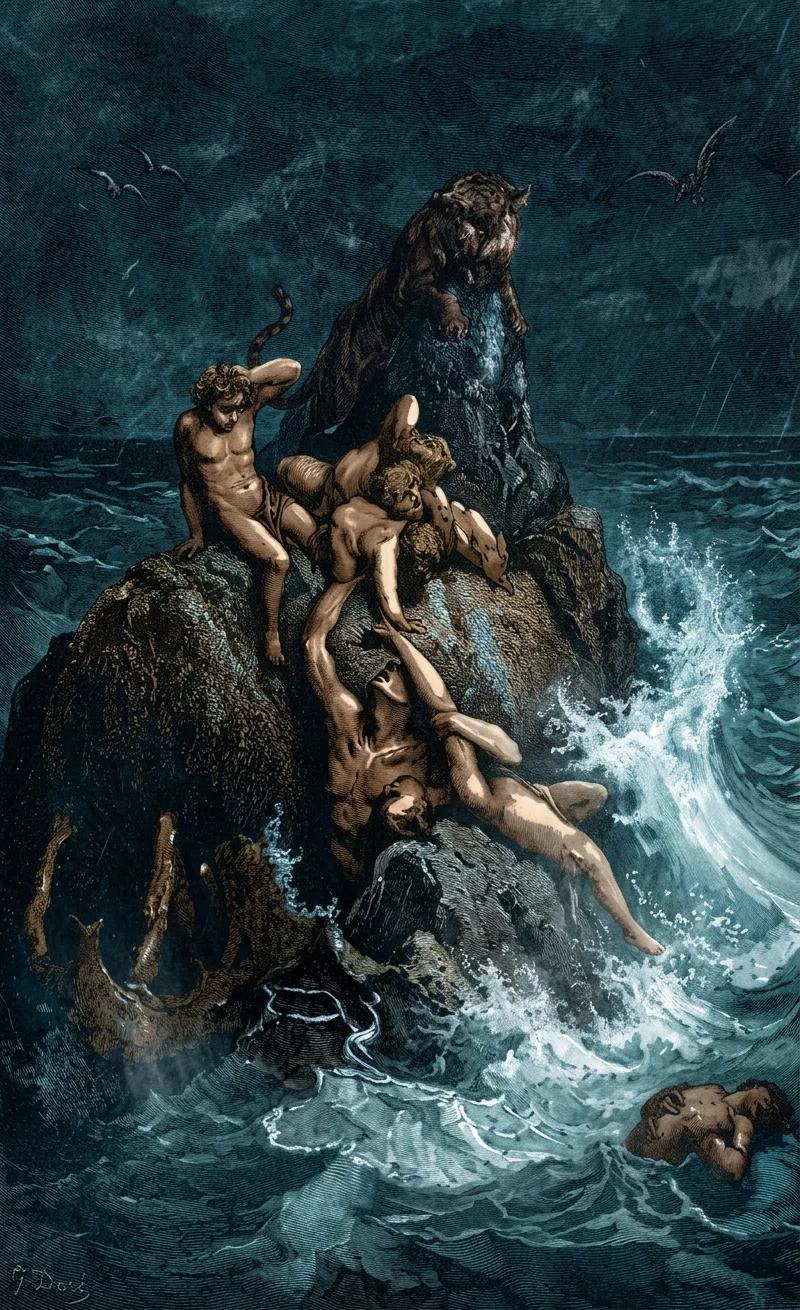
“And God saw that the wickedness of man was great in the earth.” “The earth also was corrupt before God, and the earth was filled with violence.” “I do bring a flood of waters upon the earth, to destroy all flesh.” “As the days of Noah were, so shall also the coming of the Son of man be.”
Those who are unwilling to obey God's law declare that it is done away, that God has abolished it. But if this law is perfect, why should God abolish or change it? That which is perfect can not be improved by any change. An attempt to remodel a perfect enactment only causes imperfection. God has neither abolished nor changed his law. It is the foundation of his government; and it will stand forever, the immutable, unalterable standard which all must reach would they be saved. “Till heaven and earth pass,” declared Christ, “one jot or one tittle shall in nowise pass from the law, till all be fulfilled.”
“The law of the Lord is perfect,” writes the psalmist, “converting the soul; the testimony of the Lord is sure, making wise the simple. The statutes of the Lord are right, rejoicing the heart; the commandment of the Lord is pure, enlightening the eyes. . . . Moreover by them is thy servant warned, and in keeping of them there is great reward.” How then does the God of heaven look upon those who pour contempt upon his law? Let not the words spoken against the law of God by those who refuse to obey it, be regarded as wise; for God has said, “The wise in heart will receive commandments; but a prating fool shall fall.”
After Adam lost Eden by disobedience, and sin entered the world, men became more and more disobedient. The entire world, with a few exceptions, were given up to depravity and corruption. “God saw that the wickedness of man was great in the earth, and that every imagination of the thoughts of his heart was only evil continually. And it repented the Lord that he had made man on the earth, and it grieved him at his heart. And the Lord said, I will destroy man whom I have created from the face of the earth; both man, and beast, and the creeping thing, and the fowls of the air; for it repenteth me that I have made them.” And by a flood the Lord swept the earth of its moral corruption.
But even in that age the Lord had his representatives. These men loved God; they obeyed him; and he gave them light and truth. Christ walked with them, giving them moral power to obey him, and opening before them the future of this earth's history, and the scene of his second coming. “Enoch walked with God; and he was not; for God took him.” Of him Jude writes, “Enoch also, the seventh from Adam, prophesied of these, saying, Behold, the Lord cometh with ten thousand of his saints, to execute judgment upon all, and to convince all that are ungodly among them of all their ungodly deeds which they have ungodly committed, and of all their hard speeches which ungodly sinners have spoken against him.”
Noah, too, witnessed for God in that age of wickedness. “These are the generations of Noah: Noah was a just man and perfect in his generations, and Noah walked with God.” When God was about to destroy the inhabitants of the earth with a flood, he said to Noah, “Come thou and all thy house into the ark; for thee have I seen righteous before me in this generation.”
What constituted the difference between Enoch and Noah, and those who were destroyed by the flood? Enoch and Noah were obedient to the law of God; the others walked in the imagination of their own hearts, and corrupted their ways before the Lord, disregarding all his requirements. By their disobedience they separated themselves from him, and provoked him to destroy them. Enoch and Noah were found righteous when tested by the law of God. Had the antediluvians kept the way of God, had they obeyed his commandments, they too would have been found righteous, and would have received the Lord's commendation.
In his letter to the Romans Paul writes of the obedient and the disobedient: “I am not ashamed of the gospel of Christ,” he says; “for it is the power of God unto salvation to every one that believeth; to the Jew first, and also to the Greek. For therein is the righteousness of God revealed from faith to faith; as it is written, The just shall live by faith.” These are the obedient. As faith in God increases, the more distinctly we endure the seeing of him who is invisible, and we are strengthened to obey him.
The apostle then presents the great army of the disobedient, those who do not love to retain God in their knowledge, but choose their own disloyal ways, and follow the imagination of their own hearts: “The wrath of God is revealed from heaven against all ungodliness and unrighteousness of men, who hold the truth in unrighteousness; because that which may be known of God is manifest in them; for God hath showed it unto them. For the invisible things of him from the creation of the world are clearly seen, being understood by the things that are made, even his eternal power and Godhead; so that they are without excuse; because that, when they knew God, they glorified him not as God, neither were thankful; but became vain in their imaginations, and their foolish heart was darkened. Professing themselves to be wise, they became fools, and changed the glory of the incorruptible God into an image made like to corruptible man, and to birds, and four-footed beasts, and creeping things.”
Peter also outlines two classes, one approved of God, because obedient to all his commandments; the other disloyal to him, sinning86against him because transgressing his law; for “sin is the transgression of the law.” “There were false prophets also among the people,” he writes, “even as there shall be false teachers among you, who privily shall bring in damnable heresies, even denying the Lord that bought them, and bring upon themselves swift destruction. And many shall follow their pernicious ways; by reason of whom the way of truth shall be evil spoken of. And through covetousness shall they with feigned words make merchandise of you.” But he says, “the Lord knoweth how to deliver the godly out of temptation, and to reserve the unjust unto the day of judgment to be punished.”
“As it was in the days of Noe, so shall it be also in the days of the Son of man.” Now, as then, the servants of mammon, careless, indifferent, and disobedient, go on and on, neglecting the great salvation so freely offered to them, failing to recognize God, or to offer him thanksgiving and praise. The Lord has manifested himself in his works, which the eye can see and the senses discern; in terms too plain to be misunderstood, he has declared his will in his word. But the disobedient do not see God in the manifold works of creation; they do not hear his voice speaking to them out of his word. The light of truth is offered to them, but they choose sin. They follow their own imaginations, as did the inhabitants of the Noatic world, placing their desires and ambitions above all else.
It is a marvel to the heavenly host that God bears so long with the transgressors of his law. But God is long-suffering, and abundant in mercy. His sun shines upon the evil and upon the good, upon those who are so blinded by the deceiving power of Satan that they deny the existence of Omnipotence, and upon those who strive earnestly to do his will. He gives men richly “all things to enjoy,” and tho all do not acknowledge him as worthy of their praise or service, yet he bears patiently with them, and his voice of entreaty is still heard: “Turn ye, turn ye from your evil ways; for why will ye die?” He would have “all men to be saved, and to come unto the knowledge of the truth.”
God ever commends obedience. For their obedience Enoch was translated to heaven, and Noah was saved from the flood that deluged the earth. “Behold,” writes the psalmist, “the eye of the Lord is upon them that fear him, upon them that hope in his mercy; to deliver their soul from death, and to keep them alive in famine.” “I have seen the wicked in great power, and spreading himself like a green bay tree. Yet he passed away, and, lo, he was not; yea, I sought him, but he could not be found. Mark the perfect man, and behold the upright; for the end of that man is peace. But the transgressors shall be destroyed together; the end of the wicked shall be cut off.”
Weakened through sin, we can not of ourselves keep the law of God. But Christ came to our world to restore the moral image of God in men, and to bring them back from the path of disobedience to a path of obedience. His mission to the world was to reveal the character of God by living the law, which is the foundation of his government; and those who will accept him as their personal Saviour will grow in grace, and in his strength will be enabled to obey the law of God.
When Christ comes in the clouds of heaven, only two classes, the obedient and the disobedient, will meet him. And only those who, having had the light upon God's requirements, have been obedient to him, can meet him with joy. Those who have persisted in a course of disobedience, will flee in terror, hiding in the dens of the mountains, and saying to the rocks and the mountains, “Fall on us, and hide us from the face of him that sitteth on the throne, and from the wrath of the Lamb.” But those who have honored God by their obedience, will look up, and say, “Lo, this is our God; we have waited for him, and he will save us; this is the Lord, we have waited for him; we will be glad and rejoice in his salvation.”
MRS. E. G. WHITE.
CAN A STATE BE BORN AGAIN?
By M. E. K.
A paper devoted to Christian citizenship and national reform ideas displays as one of the mottoes on its cover this sentence: “Except the State be born again, it can not see the kingdom of God.” These words sound familiar. They are somewhat like scripture. But they are not the words of God, tho couched in scriptural phraseology; and the name of the author attached to these words is not the name of one of the inspired writers of sacred writ. It is a bungling counterfeit, at the best. Dr. Young makes mention of a man “who stole the livery of the court of heaven to serve the devil in,” and to steal the sacred terms of the Scriptures to serve a purpose for which the Scriptures give no warrant, seems to us to be an example of a similar work.
If it was in the order of God for nations to be saved in the aggregate, then, of course, nations might be born again as nations. There is one expression in the Scriptures about a nation being born in a day (Isa. 66:8); but it is Zion, or the church, not the State, which brings them forth. Nor does this text prove the idea that all the people of one earthly nation were so born, but rather that, as on the day of Pentecost, thousands of individuals are converted from many nations, and they altogether make up a nation, a body, of believers who would serve the Lord. Thus those who are finally redeemed are described by the Revelator as those who have been gathered out of many nations. Rev. 5:9; 7:9.
We must also distinguish between the meaning of the words “nation” and “state.” The word “nation” may sometimes apply to the people in their several capacity, while the word “State” always refers to the people in their organized capacity as a civil government. Nations can be called upon to repent; can repent, by repenting individually. As an organized body, the State can not repent. The State, in its organized capacity, acts for the people in civil affairs, but it can not act for them in religious affairs. For instance, the people of a State can empower their civil officers to do those things which are for the advantage of the people of the State as a whole—as pertaining to the affairs of this world; but they can not authorize the representatives of the State to repent and be converted or be baptized for the State, or for all the people of the State.
State officers can only act in those things which are delegated to them. They may repent of their own sins and turn to God with all their hearts; they may exert an influence for good upon others; but, after all, they can only act for themselves. A President of the United States can not act for the nation in those things which pertain to individual relations to God. He is not elected for that purpose. If he repents of his own sins, lives a godly life, and rules in the fear of God, that is all that God requires of him, and is much more than many civil rulers ever have done or ever will do. If we wait for salvation to come to the people through the State,—an organization for civil purposes,—salvation will be long delayed.
Neither Jesus nor his apostles preached to States nor laid down any rules for the government of States. They appealed to individuals. “Repent, and believe the Gospel,” was the message borne to the world. Not what country, State, or nation, but “whosoever will, let him take the water of life freely.”
Finally, no State, as a State, can see the kingdom of God; for the kingdom of God is not set up until all the kingdoms of men, represented in Daniel’s prophecy by the image of gold, silver, brass, and iron, “shall be broken to pieces together,” becoming like the chaff which the wind carries away; and then the stone which smites the image, representative of the kingdom of God, fills the whole earth. Dan. 2:44. The same ending of earthly kingdoms and States prior to the setting up of God’s kingdom is described in Revelation 11. Under the sounding of the seventh angel, the kingdoms of this world become the kingdoms of Christ, but not by conversion. The nations, as states, are not born again. This may be seen from the statement made in the same connection, that the “nations were angry” (Rev. 11:18), and God’s wrath falls upon them. A state of anger does not represent the condition of a converted person, nor a preparation for that experience; nor does God’s wrath fall upon men for their conversion, but for their destruction.
To make the whole matter treated in this article very simple, we may lay down two propositions: The State can not be born again, hence it can not, as a State, see the kingdom of God; but it must pass away at the coming of Christ, “who shall judge the quick and the dead at his appearing and his kingdom.” 2 Tim. 4:1. Individuals can be born again. They can feel conviction for sin, repent, be converted, receive baptism, be admitted to the church, grow in grace, develop a Christian character, receive by spiritual faith the righteousness of Christ, grow up into him, and live in him. Thus they enter his kingdom of grace, which prepares them for entrance into the everlasting kingdom of glory which shall be established when Christ shall come, to separate the wheat from the tares, the goats from the sheep, and to reign henceforth over his people forever. M. E. K.
LOST TRIBES.
By Robert Ellis Thompson
THE day of Pentecost brings into view the Jewish dispersion (or diaspora), out of which the apostles were to gather the church of the first generation. It embraced the people of all “the twelve tribes which are of the dispersion” (James 1:1) and not two only. The figment of the loss of ten from the number never was heard of until the middle ages. It is true that the parties which returned from captivity under Ezra and Nehemiah were of the Judean tribes, but a multitude of the Israelitic tribes had remained in the land of their fathers (Eze. 33:24) after it had been laid waste by the Assyrian, and those who had been taken captive for the most part neither lost their identity as Israelites nor wandered beyond the geographical area known to their brethren. This is everywhere assumed in the New Testament (Matt. 19:28; Acts 26:7; James 1:1; Rev. 7:4) and is indicated in the number of the apostles and in their commission (Matt. 10:5) and in the symbolical numbers of the Apocalypse (Rev. 12:1; 21:12, 14, 21; 22:2). There is not a solitary reference to this supposed loss of the ten tribes, altho the fact would have had a pathetic interest for our Lord and his disciples.—Robert Ellis Thompson, S. T. D., in S. S. Times.
JEWISH CUSTOMS AND TRADITIONS.
By An Israelite
(By an Israelite.)
The Talmud and Its Formation.
It may seem somewhat surprising to the reader to know that a learned Jew has a means whereby he can translate the Bible in thirty-two different ways. This was the invention of one Jose the Galilean. From this it will be clearly seen that the Jew has many loopholes for escape, if one interpretation of the Scripture does not please him. This is used among them at the present day to quite an extent, when the Messianic prophecies are shown to have been fulfilled in the Saviour of Nazareth. In this way they make the Word of God of none effect by their traditions, placing upon it every kind of construction pleasing to themselves. For several centuries these traditions and superstitions increased with great rapidity, and yet scarcely any of them were recorded in writing. They were handed from school to school, from rabbi to rabbi. It was their rule that whatever had been delivered orally, should be retained only in the memory.
Toward the second century, the interpretations, decisions, and precedents rendered by such a number of different schools for so long, had become so numerous that one of the greatest rabbis had to acknowledge the impossibility of containing them all. So this rabbi, called “the Holy” and “the Prince,” collected all he possibly could secure from his contemporaries, and for the first time the “oral law” was committed to writing. Its contents are well stated by another in the following:—
It, the Mishna, summed up the labors of four centuries. The oral law had become important in the days of the Maccabees; had been supported by Pharisaism; narrowed by the school of Shammai; codified by the school of Hillel; systemized by Rabbi Aqiba; placed on a logical basis by Rabbi Ishmael; and constantly enriched by successive rabbis and their schools. Rabbi put the coping stone to the immense structure. Thenceforth the Mishna molded the entire theology and philosophy of Judaism. . . . It became the bond of Jewish nationality. . . . It completed the “hedge about the law,” which henceforth neither persecution nor dispersion could destroy, and through which neither Hellenism, nor Sadduceeism, nor Alexandrianism, nor Gnosticism, nor Christianity, nor the Renaissance, nor the Reformation, nor modern skepticism, down to the days of Moses Mendelssohn, could break their way. This strange collection of completed and dead decisions being treated as of divine authority, superceded, all but entirely, the Scriptures upon which they professed to have been based.
The term “Mishna,” which was given to this work, means learning or repetition; for such it was, especially the latter. It was the groundwork for an understanding of the Pentateuch especially, as well as some other parts of the Old Testament. It was divided into six portions, which treated upon every phase of Jewish life in the home, in society, in religious devotions, and in even the smallest minutia of business.
The following are the names of the orders and their contents:—
Zeraim, or seeds, which refers to the productions of the earth, and their relation to man for his sustenance.
This one treats of the festivals, times, and seasons of the year, including the Jewish feasts, and the new moons, and is called Moed.
Nashim, or women, treats upon the intent of the marriage institution.
Nezikin, or injuries, discusses the rights and liberties of individuals, also the rights which belong to society.
Kodashim, or holies, treats upon the worship and service of God, especially with regard to the Levitical work as carried on in the temple.
This order is akin to the preceding one, and is called Tohoroth, or purifications, discussing the meaning of the Levitical laws.
This work is certainly a mammoth one, being divided into 63 tractates, which have 526 subdivisions, each chapter having from 5 to 150 sections. With other notes, of which we shall speak presently, the complete set of the Mishna involves 48 volumes. And be it remembered, too, that there are no points nor punctuation marks of any kind in these works. If this work entire were translated into the English language, it would require from 100 to 120 volumes, printed in long primer type, from 400 to 500 pages each, the face of about the size of an ordinary school geography. And according to the rabbis’ teaching, no man can be saved, especially of the Jews, who does not obey all these teachings to the very letter.
We need not wonder, then, at the Master’s attitude toward these people when on earth. They are indeed heavy burdens, which it is absolutely impossible for any one to bear. And let us not forget that it is necessary for every pious orthodox Jew to be fully acquainted with all the traditions, in order that his salvation may be secured.
When the Mishna was completed, as mentioned above, there were many sayings therein which were very difficult for the laity to comprehend, because of the indirectness of their meaning. Consequently it was found necessary for the scholasts to simplify these teachings to the people, that they might be comprehensive to all. So the Babel structure of oral law kept growing, till it reached a monstrous chaotic mass, which was finally given the name “Gemarra,” meaning completion, hence termed the “Complement.” This work, together with the Mishna, formed the Talmud, the former as the text, the latter as its elucidation. The meaning of the Scriptures was now a clear revelation (?). All that was necessary was to compile them all together, and seal it hermetically, which was done toward the latter part of the fifth century. Since that time there have been a few writers who have added short notes and marginal readings, but the body has remained the same till this day.
The question naturally arose how much time would be required for the people to spend upon this stupendous work, containing so much necessary to life and salvation (?), besides giving some attention to the law of God, which was also considered essential. So the following rule was made, which the pious in European countries follow till this day:—
Every one is bound to divide the time of his study into three parts: One-third to be devoted to the written law; one-third to Mishna; one-third to Gemarra.
Thus the oral law is given double the amount of time devoted to the law of God, from the fact that there are two explanations to the original text. This statement is bad enough on its surface; but its real meaning will show how wicked it is, and will, possibly, enable us to better understand what the Saviour meant when he said, “Ye make null the law of God by your tradition!” The following is its meaning as given by themselves:—
What has been said, referring to the previous statement, refers only to the beginning of a man’s learning; but as soon as he becomes great in wisdom, and has no need of learning the written law, or of laboring constantly in the Mishna, let him at fixed times read them, that he may not forget any of the judgments of the law; but let him devote all his time to the Gemarra.
Thus they have laid aside the Word of God for their own tradition. In comparing this latter work with the Bible, it is said that the Bible is like water, while the Gemarra is as the spiced wine. In one sense this is certainly true. The Word of God is surely “the water of life,” which all thirsty souls love to drink, and are satisfied; while the oral law is as hippocras, or mixed wine, which does not require much to make people drunk. And how much has this world been filled with the wine of such false doctrines, and thousands of souls been drunken with it!
But it is truly blessed that the pure and ever-flowing stream of God’s Word has always had some who have thirsted after its refreshing draughts, and drank therefrom freely, as well as inviting others to freely partake. Even some of these men realized the need of something better than they could furnish to the longing soul; and occasionally we find scattered through the pages pearls of light, which are as gleams of light from the morning-star, portending the dawning of the day. And these have led many a soul to study God’s Word for themselves, and enabled such to find him, the true and living Teacher, who fills the soul with all light, for in him is no darkness at all. F. C. GILBERT.
A Turn in the Tide
By Chas. Morris
**CHAPTERS IN THE UNITED STATES HISTORY. NO. 12.**
BY PROF. CHAS. MORRIS.
A Turn in the Tide.
Change of Feeling between July and December, 1776—Depression in America, Elation in England—Positions and Strength of the Armies—Washington’s Plan—Failure to Combine—The Delaware Crossed—March on Trenton—Surprise and Defeat of the Hessians—March of Cornwallis—Washington’s Countermarch—Victory at Princeton—The Result of the Campaign—Its Influence in America and Europe.
On the Fourth of July, 1776, the day on which the Declaration of Independence was signed, the daring signers had excellent reason for the boldness of their act. The outlook of events was at that time promising for the revolted colonies. On that day it is probable there was not a British soldier on American soil, not a British ship of war in an American port. Washington, by seizing an eminence that commanded the harbor of Boston, had forced the British fleet to carry the British army in haste from that beleaguered town. An attempt had afterward been made to take Charleston, but it had been repulsed by the gallant defenders of Fort Sullivan, and since then the dogs of war had slept. The British fleet hovered off New York, ready to land troops on Staten Island, a process which began just about the time the Declaration was being signed.
But the dogs of war were soon to awaken again. Had the Declaration been proposed in December of that year, five months afterwards, there would probably have been a very different tale to tell, and it may be that not enough signatures would have been obtained to carry the act of revolution. For despondency had taken the place of hope; the American cause had sunk to its lowest ebb, and it looked as if the revolt was near its end, and George III. was about to come to what he considered his own again.
The British army had landed at Long Island, defeated and forced Washington to retreat, taken possession of Forts Lee and Washington, and driven the Continental army, almost in despair, across New Jersey. Only the celerity of Washington’s movements saved him. Marching rapidly, breaking down bridges behind him, he managed to keep beyond reach8of his foe. The 2d of December saw him at Princeton, with about 3,000 ragged and hopeless soldiers. Soon after he placed the Delaware between himself and his pursuers, and brought the pursuit to an end by seizing all the boats on that stream.
General Howe had the best of reasons to imagine that the resistance of the Colonies was near its end. He had under him 25,000 well-trained soldiers, whom he had posted in strong detachments at various places in New Jersey, while he returned to spend the winter in New York. The American army, on the contrary, seemed on the point of dissolution. No reenforcements were joining it. The people were in a state of depression that robbed them of patriotism and hope. Of those now in the ranks, many would leave for their homes on the termination of their term of service at the end of the year. Congress, which in July had declared independence of Great Britain, in December was a fugitive body, having hastened from the perilous vicinity of the British forces.
It is not surprising that the feeling in America was reflected in Europe, and that there was a general expectation that the American rebellion was near its collapse. The despatches of General Howe had given that impression in England, and the feeling of joyful expectation excited there, influenced the opinion of the Continental nations, and spread widely the conviction that the fetters broken by America were soon to be riveted upon her free limbs again.
Perhaps there were many Americans who did not share this conviction. Certainly there was one. In the darkest hour Washington did not despair. He appealed earnestly for troops. He implored Congress to take decided action. He worked indefatigably to make the best of a bad situation. Yet, despite all he could do, the gloom deepened, the condition of affairs grew more desperate, and it seemed evident that unless there should be a turn in the tide all was lost.
It needed the genius of a Washington to bring about this turn in the tide. Something must be done, and at once. Some blow must be struck, and that before the new year entered, lest that should weaken his force hopelessly.
In this strait he laid his plans. He must attack the foe and successfully. His only hope was, by courage, skill, and activity, to snatch victory out of the jaws of defeat. The British troops lay here and there in detachments, spending the winter in comfortable ease, of which the ragged Continentals were badly in need, and dreaming of nothing less than of disturbance from the fugitive foe. It was this state of affairs that inspired Washington. To the careless self-assurance of the enemy he trusted for success.
The odds against him were great. There were under his command some 6,000 men in all, the remnant of the enthusiastic host which had assailed Boston the year before. Even these were scattered at various points along the stream, from Philadelphia northward. Yet by falling upon the British detachments, and attacking them suddenly and unexpectedly, he might win victory even with this small force. Quiet, then, he laid his plans, and courageously he prepared to carry them into execution.
At Trenton lay a detachment of Hessians, hireling foreigners who were particularly hated by the Americans. Here Washington determined to strike his first blow, and that on Christmas day, when they would be least expecting, and probably in poorest condition, to receive a foe. His plans were carefully worked out. Unhappily only one of them was properly carried into effect. Each division of the scattered army had its part to play in the drama. Gates was to march from Bristol with the 2,000 men under his command. Ewing was to cross the Delaware at Trenton. Putnam was to come up from Philadelphia. Griffin was to make a diversion against Donop.
As it turned out, not one of them did his part. Gates, who did not like the plan, was on his way with complaints to Congress; Ewing made no effort to cross; Putnam remained in Philadelphia; Griffin made haste to escape from the vicinity of Donop; Cadwallader, who was at Bristol, took a look at the floating ice in the river, and concluded that a crossing was too desperate to undertake. Washington, with the main body of the army, was left without the support which he had so reasonably counted upon.
Yet it was do or die. He let nothing check him in his design, neither the river, the ice, the weakness of his force, or the strength of the foe. On Christmas eve his march began. It was an evening of festivity and hilarity with the British foe, ensconced in their comfortable quarters. It was one of hardship and suffering to the Americans, marching through the biting chill.
The place of crossing—now the village of Washington’s Crossing—was about nine miles above Trenton. The river was filled with floating ice, the night bleak, the surroundings inhospitable, yet the 2,400 men, which formed the army of invasion, were carried successfully across. The sturdy fishermen of Marblehead in Glover’s regiment rowed the boats. Washington, if we may accept as fact the historic painting, stood erect in the prow of the foremost boat, facing the bitter wind, and his face cut by the sleet and snow of that inclement night, as he looked ahead with eyes hopeful of victory.
The men safely landed, the march down the river began. Those nine miles of onward trudging were severe ones. The men were but half clad and shod. Steadily fell the cutting sleet upon their exposed faces. Sullivan, whose route lay beside the river, sent a messenger to Washington with the complaint that the arms of his soldiers were wet.
“Then tell your general to use the bayonet,” was the commander’s stern reply. “The town must be taken.”
The crossing, the march, had consumed much valuable time. Day dawned while Trenton was still at a distance. Yet the Hessians, heavy from their Christmas eve revels, and resting at ease in their comfortable quarters, were taken utterly by surprise, and driven almost unresistingly before the onrushing foe.
Washington, in command of the right, swept down the Pennington road, and drove the Hessian pickets into the streets of the town. As he did so he heard from the left the shout of Sullivan’s men, led by Stark in the van, and charging in at bayonet’s point as ordered by their chief.
In a moment, almost, the affair was at an end. There was some fighting in the streets, but so sudden and well managed had been the attack, that resistance was soon at an end. A company of jaegers and light dragoons slipped in panic haste away. The bulk of the force was surrounded and taken prisoner. Colonel Rahl, the British officer in command, roused suddenly from his revels, rushed wildly out to rally his men, and fell dead, slain by a Continental bullet. In almost less time than it takes to tell it, the affair was at an end, and a thousand prisoners had fallen into Washington’s hands. Thus had an important detachment of the enemy been cut off and destroyed, and the British roused out of their complacent self-satisfaction as by a lightning stroke.