The Youth’s Instructor, Vol. 35, No. 28.

THE FRESH-AIR FUND

The Youth’s Instructor

Jul 13, 1887

S. D. A. Publishing Association · Battle Creek, Mich. · Jul 13, 1887

THE FRESH-AIR FUND.
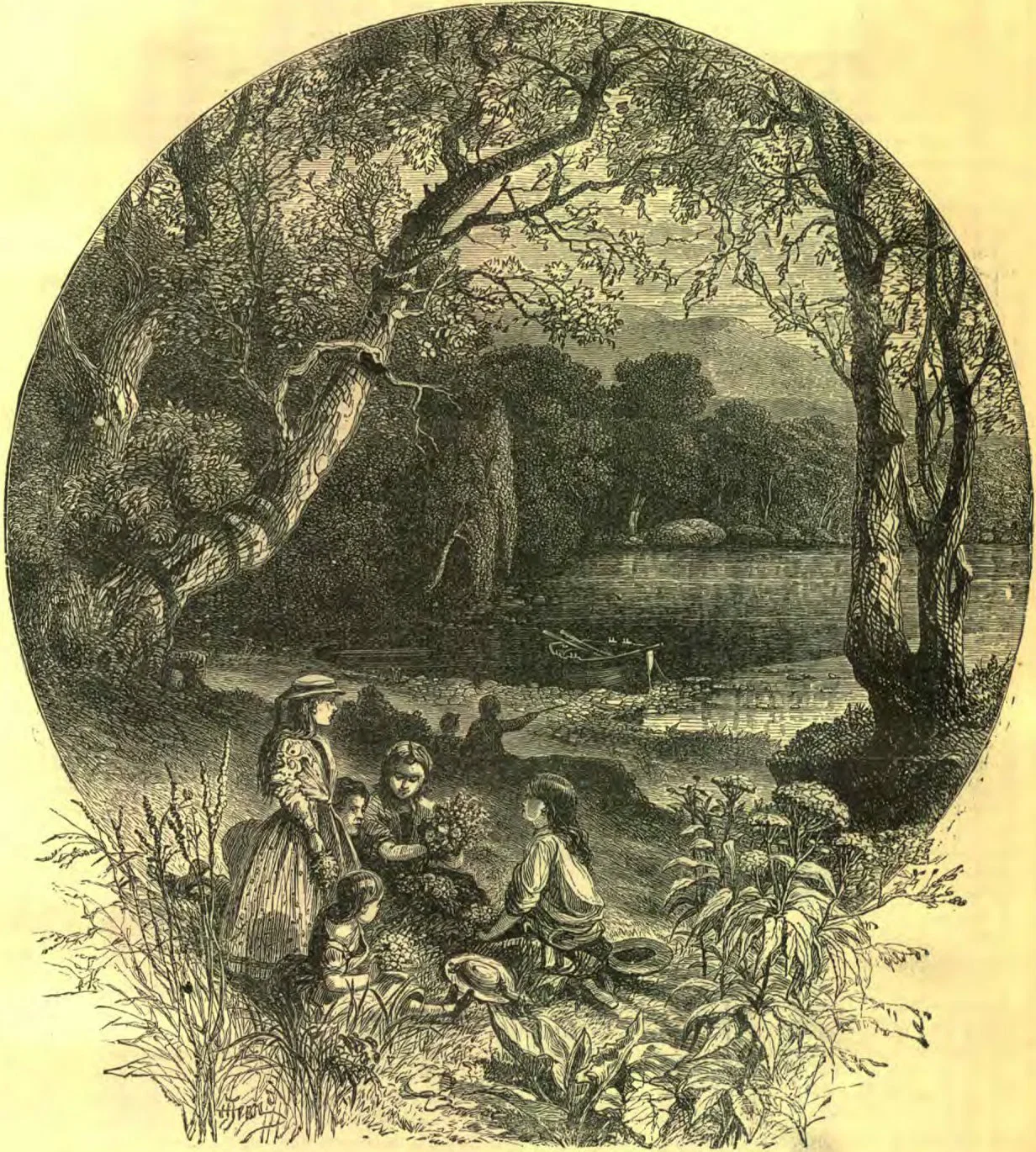
As the heat of summer approaches, the rich and prosperous of the Metropolis hasten to the mountains, the seaside, or their villa-farms, which are so situated in the valleys or on the hills as to capture every cool breeze astray. But before these favored ones leave for their cool retreats, they are cordially invited by the daily journals of the city to contribute to the Tribune’s fresh-air fund. And most of them, in anticipation of their own recreation, so cheerfully and liberally respond that there is always enough and to spare, for the purpose for which it was designed.
This plan for the health and pleasure of the poor children of New York, was inaugurated a few years ago by the Tribune, and it has been so well received by the good citizens, that from small beginnings it has developed into a great enterprise. More than thirty-four hundred children were last summer given a free railroad ride far out into the country, and a week’s board at some farm-house. The children are gathered from the streets and alleys of this great city. Some of them live in huge tenement houses, eight or ten stories high. There are from fifty to sixty families in a house, each family occupying from one to three rooms, where they cook, eat, and all lodge, be the family large or small.
After sunset, their only chance for more air is on the flat roof, where one may see hundreds of people fairly swarming, on a summer evening, till midnight and after, seeking relief from the stifling atmosphere of the house, with its scores of cook stoves.
Others of these children have no parents, and no home of any kind. Through the day they sell papers, run errands, or do similar things, and at night sleep in empty wagons, under stoops of houses, on the park benches, or in any place they can find out of sight of a police officer. They awake unrefreshed next morning, and unwashed and uncombed commence another day with the feeling, “I care for nobody, no, not I, for nobody cares for me.”
All of these homeless ones may share in this great treat, by reporting to the committee. All are given a chance to leave this jungle of brick and mortar and blistering pavements, to fill their lungs with the sweet fresh air of the country, and their stomachs with wholesome food for, perhaps, the first time in their comfortless lives; to engage in the breathless chase for the bumble-bee, and the butterflies; to hunt the hens’ nests in the fragrant haymow; to inhale the nutty smell of the newly gathered grain; to find out the mystery of butter-making; to see real milk with cream on the top of it; and to learn about the growing fruit. A world of knowledge is opened to their eager eyes and minds in the few days of their stay.
Everything is a novelty; for though these street children may be painfully precocious in “the ways of the world,” they are far behind country children in learning the book of nature. It has always been a sealed volume to them. The names of different trees, of different species of birds and insects, are as foreign to them as if they were visitors to another planet. One little inmate of a tall tenement house, on being presented with a potted plant, by the flower mission, was lost in wonder and admiration. She had never seen a flower before!
Some of the children are taken for a week to the seashore, to play on the white sands, where the breakers roar and dash, and send up a great white spray of foam continually; but the great majority are sent out to the farms and hamlets, two or three hundred miles from New York. Often they find permanent homes with their entertainers.
The ride and the visit are food for reflection and comfort to many through the cheerless nights and days that must intervene before they can experience it again. A little girl, the child of besotted parents, dying, told her Sunday-school teacher that her week in the country was the only happy week of her life.
God bless the children! and the kind heart that first instituted this recreation for them, the one hopeful feature in their discouraging lot.
Let us pray, that many of these children who so enjoy the country, may be taught the way of truth, and so obtain an inheritance in the new and beautiful Earth. L. E. ORTON.

A VOICE FROM THE HOSPITAL WARDS.

TO THE WORKERS IN THE FLOWER MISSION.

Oh, ye sweet-smelling, beautiful flowers, Ye bring me memories of country showers, And sweet, bright visions of rose-twined bowers, That comfort my heart through the weary hours, As I toss on my couch of pain.
A dream comes up of a sunny glade, Where four little children laughed and played, And basked in the sunshine or danced in the shade, To the wild, free music their glad hearts made, Ere they knew of care or pain.
And another dream of an open door, Where the sunbeams entered and flecked the floor, Where a mother stood lovingly watching her four, And pictured life's steps that might lie before These merrily prancing feet.
Ah, little she recked of the devious ways, Through the fearful nights and the feverish days, They should tread in the dusty crowded maze, Or lie where the sun sent no gladdening rays, In that pent-up city street.
No wonder “beholding the city” He wept, That His prayer pierced the air as “the city” slept, That His heart of love its brave vows kept, And through sorrow, and suffering, and shame, He stept, Till He poured out blood to death.
And His heart of tenderness still o'erflows, As He looks on the city with all its woes, With its restless heavings in sin's dark throes, Oh, breathe on it Sharon's living Rose, With healing in thy breath!
As I gaze on you, flowers, I praise His name, That I trailed not my robes through the mud of shame! But through sorrow on sorrow alone I came, To lie here and find that He's ever the same, And can soften this bed of pain.
Oh, ye sweet-smelling, beautiful flowers, With your memories of life-giving showers, And your sweet, bright visions of childhood's hours, Ye have brought me a glimpse of the heavenly bowers, Ye have not been sent in vain. May the Spirit come down with gracious dowers, And bless all the givers again.
—The Christian.

A PEEP AT AFRICA.—NO 3.

THE PYRAMIDS OF EGYPT.

Among the wonderful things of this ancient land are the pyramids, which were built thousands of years ago. Greece and Rome reckoned them among the seven wonders of the world. In all ages, travelers have expressed the warmest admiration for them. When Napoleon led his army through Egypt, in sight of these grand old monuments, he exclaimed, “Soldiers, forty centuries look down upon you from the top of the pyramids!”
History informs us that there are from sixty to seventy pyramids, chiefly in the neighborhood of Memphis. It is quite probable that many of these were built before the time of Moses, even before the sons of Jacob went down to Egypt to buy corn; and yet some of them are nearly perfect to-day, after about four thousand years have passed away. Two of these pyramids greatly exceed all the others in their dimensions, and are appropriately designated as “the Great Pyramid” and the “Second Pyramid.” Another in their immediate vicinity, though of inferior size, is designated as the “Third Pyramid.”
The smallest of the three was originally a square of three hundred and fifty-four feet each way, and had a height of two hundred and eighteen feet. It covered an area of nearly three acres. The cubic contents of this immense pile of solid masonry amounted to over nine million feet, and it is thought that the whole would weigh 702,460 tons.
The “Second Pyramid” stands about two hundred and seventy yards north-east of the Third. It was a square of seven hundred and seven feet each way. It covered an area of over eleven acres. It rose to a height of four hundred and fifty-four feet. To illustrate the size of this structure and the amount of material used in its construction, one writer says: “Suppose, then, a solidly built stone house, with walls a foot thick, twenty feet of frontage, and thirty feet from front to back; let the walls be twenty-four feet high, and have a foundation of six feet; throw in party walls to one-third the extent of the main walls, and the result will be a building containing four thousand cubic feet of masonry. Let there be a town of eighteen thousand such houses, suited to be the abode of a hundred thousand inhabitants, then pull these houses to pieces, and pile them up into a heap to a height exceeding that of the spire of the Cathedral of Vienna, and you will have a rough representation of the ‘Second Pyramid of Ghizeh.’ Or lay down the contents of the structure in a line a foot in breadth and depth, the line would be above 13,500 miles long, and would reach more than half way round the earth at the equator.”
The first, or “Great Pyramid,” says Lenormant, is “the most prodigious of all human constructions.” It is situated north-east of the “Second Pyramid,” about two hundred yards distant. At its base it covered a plot of ground seven hundred and sixty-four feet square, making an area of more than thirteen acres. Its original height was something over four hundred and eighty feet, and the weight of its mass nearly seven million tons. It was six feet higher than the Strasbourg Cathedral, thirty feet higher than St. Peter’s at Rome, and it exceeded St. Stephen’s at Vienna by fifty feet, St. Paul’s at London, by a hundred and twenty feet, and the Capital at Washington by nearly two hundred feet. The Washington Monument exceeds it by only seventy-five feet. Herodotus says that its construction required the continuous labor of a hundred thousand men for the space of twenty years.
These pyramids contain large rooms, some of which are nearly the size of an ordinary church. From these chambers, ventilating shafts, or air-passages, are carried up through the pyramid, and open on its outer surface. These passages are nearly square, and have a diameter varying from six to nine inches; they give a continual supply of pure air, keeping it dry at all seasons. The most probable supposition is, that these pyramids were erected as tombs, by the early Egyptian kings. One chamber, at the time of discovery, held within it a sarcophagus inclosing a coffin. Upon the coffin was an inscription showing that it had once contained the body of a king.
We will not close this article without speaking of the famous Labyrinth, a novel building erected by one of the Egyptian kings. It is in some respects more wonderful than the work of the pyramid-builders. Herodotus says: “I visited the place, and found it to surpass description; for if all the walls and other great works of the Greeks could be put together into one, they would not equal, either for labor or expense, this Labyrinth. The pyramids surpass description, and are severally equal to a number of the greatest works of the Greeks; but the Labyrinth surpasses the pyramids. It has twelve courts, all of them roofed, with gates exactly opposite one another, six looking to the north and six to the south. A single wall surrounds the whole building. It contains two different sorts of chambers, half of them under ground and half above ground, the latter built upon the former; the whole number is three thousand, of each kind fifteen hundred. The upper chambers I myself passed through, and saw, and what I say of them is from my own observation; of the underground chambers I can only speak from report, for the keepers of the building could not be induced to show them, since they contained [they said] the sepulchres of the kings who built the Labyrinth, and also those of the sacred crocodiles. The upper chambers I saw with my own eyes, and found them to excel all other human productions; for the passages through the houses, and the varied windings of the paths across the courts, excited in me infinite admiration, as I passed from the courts into the chambers, and from the chambers into colonnades, and from the colonnades into fresh houses, and again from these into courts unseen before. The roof was, throughout, of stone, like the walls; and the walls were carved all over with figures; every court was surrounded with a colonnade, which was built of white stones, exquisitely fitted together. At the corner of the Labyrinth stands a pyramid, forty fathoms high, with large figures engraved upon it, which is entered by a subterranean passage.” The nation of Egypt once so prominent in the arts and science has terribly fallen, so that we see fulfilled in her case the words of the prophet who declared, “It shall be the basest of the kingdoms; neither shall it exalt itself any more above the nations; for I will diminish them, that they shall no more rule over the nations.” D. A. Robinson.

CHINESE VIEWS OF DEATH

TCHOUNG-KOUO.—NO. 7.

CHINESE VIEWS OF DEATH.

The Chinese have no thought beyond the present, neither, if we except a few of the women who are grouped together as abstainers, have they any religion to call to mind a future state. Their worship of idols is simply a concession to the “rites” or customs of their ancestors. They continue the practice because their forefathers did so; but they have no belief whatever in these gods, notwithstanding the current impression to the contrary. They perform very curious ceremonies before the images, simply because they have been so taught. When the whim takes them, they will dethrone the same god without scruple, condemn him to ignominy, and place another in his stead.
The highest aim of a Chinese is to procure a beautiful coffin, and to prepare for a gorgeous funeral after death. In all large towns coffins are for sale, beautifully painted and gilded, and made as attractive as possible. No well-ordered home is complete without its coffins. No more dutiful act can be performed by children, or one that is more highly appreciated, than the purchase of coffins for their parents. In villages it is difficult to procure coffins; and in such places, when a person is seriously ill, the village carpenter is sent for, who measures the sick one, and makes the coffin as speedily as possible, that the dying may have the pleasure of beholding it before his eyes close in death. At such times the coffin is placed close by the side of the bed, that the sick may not only look upon it, but caress it. The emotions incident to death-bed scenes with which we are familiar, are not seen at the bedside of a dying Chinese. He expires without a sign or a sigh. In fact, often the only way it is possible to know that the end is near is when the sick man no longer asks for his pipe. “The sick man does not smoke any more,” is the Chinese way of saying the man is dying.
The Chinese believe in the immortality of the soul, but with this peculiarity: they claim that a human being has three houen, or souls. One of these enters, at death, into some other body; the second remains with the family, taking up its abode with the tablet of ancestors in the little family sanctuary; while the third very kindly consents to accompany the body to the tomb. When a grown person dies, sticks of perfume are burned and funeral meats offered to the house houen, and bits of colored paper are burned over the grave to appease the soul confined there; then the family consider themselves safe from any malicious attacks of their spirit relatives.
But when a child dies, the case is far different. The child's souls, not having attained full growth, cannot be honored by any ceremony; yet although incomplete, these souls still exist, and as they have not lived long enough to become discreet and well-behaved houens, their anger is very much dreaded. What, then, do you suppose the Chinese often do? Only they would ever think of such a thing. They throw the child into a river, hoping to drown the houens before they can escape from the body. Of course, if they were grown houens, they could swim and save themselves; but baby houens are not supposed to have such power.
When a grown person is in danger of dying, an attempt is made to coax the houens not to leave the body. Every pain the dying one experiences is supposed to be due to the temporary absences of the houens. Relatives therefore start after them, and try by prayers and supplications to coax them back. When the sick one becomes quiet, they suppose the souls have yielded, and established themselves again in the body. They therefore return to the bedside, only to rush off again at the next spasm in pursuit of the incorrigible spirits. “Come back! come back! What have we done to you? Why do you want to leave? Come back! come back!” is the cry frequently heard at such times. While these friends are searching outdoors for the houens, others stretch out their hands, and in various ways bar all the passages, to prevent their escape, while still others let off fireworks in every direction they think it possible the souls may have taken, to frighten them back again into the body. Frequently one of the seekers, more under the influence of opium than the others are, perhaps, fancies he sees the houens. “Here they are! here they are!” he cries, when all rush toward him, and locking hands, form a cordon around the spot, and with cries, groans, tears, and noises of every character, including firecrackers, they press slowly towards the house, pretending to coax and push the bewildered houens before them. Whether this occurs in the night or in the day, some run ahead with lanterns to light the way home for the souls, so they cannot have even the want of light as an excuse for not returning.
The Chinese never say a person dies. There are forms of expression ascribed by the “rites” according to the rank of the person deceased, and these are seldom departed from. Some of these are: “He has saluted the age;” “He has thanked the world;” “He has ascended to the sky.” When an emperor dies, the expression is, he has “fallen, or given away,” it being so terrible a calamity for the whole people that it is compared to the giving away of a mountain.
W. S. C.

A MIGHTY MYTH.

Some time since a woman delivered a lecture in Lancashire against Christianity, in which she declared that the gospel narrative of the life of Christ is a myth or fable. One of the mill-hands who listened to her obtained leave to ask a question. “The question,” said he, “I want to ask the lady is this: Thirty years ago I was a curse to this town, and everybody shrank from me that had any respect for himself. I often tried to do better, but could not succeed. The teetotalers got hold of me, but I broke the pledge so often that they said it was no use to try me any longer; then the police got hold of me, and I was taken before the magistrates, and they tried; and next I was sent to prison, and the wardens tried what they could do; but though they all tried, I was nothing better, but rather worse. Now you say that Christ is a myth! But when I tried, and the teetotalers, and the police, and the magistrates, and the wardens of the prisons all tried in vain, then Christ took hold of me, touched my heart, and made me a new man. And now I am a member of the church, a class-leader, a superintendent of the Sabbath-school; and I ask, If Christ is a myth, how comes it to pass that that myth is stronger than all the others put together?” The lady was silent. “Nay,” said he, “say what you will, the gospel is the power of God unto salvation.”—Sel.

Narrow-Minded Vision and the Snail's Shell

Narrow-minded people have not a thought beyond the little sphere of their own vision. “The snail,” say the Hindoos, “sees nothing but his own shell, and thinks it is the grandest place in the universe.”

WORK WHILE ’TIS DAY.

“SLEEP on awhile,” Sloth said; “thou art Aweary—rest till noon.” “Nay, nay,” the Voice cried; “while ’tis day Rise, work, for night comes soon.”

SWORDS OF EXECUTIONERS.

The Markisches (Berlin) Museum attracts many visitors by its curious collection of executioners’ swords, the most of which have a singular inscription engraved upon them, which a late exchange thus notices:—
“In old times it was customary for these implements of punishment to bear inscriptions, and most of the swords in the museum are inscribed. The oldest is 94 centimeters (37 inches) long and 6 centimeters (2½ inches) wide, and bears the inscription: ‘If thou act in the service of virtue, this sword shall not strike thee.’ The date is 1324. A second sword, rather smaller, is inscribed ‘Soli Deo gloria.’ A sword ornamented with arabesques, bears on each side the inscription: ‘Vivi la Justice, 1721, G. Z.’ Another sword is inscribed: ‘Fide sed cui vide soli de gloria.’ Upon one side of an ancient sword appears the inscription: ‘When I raise the sword, I wish the poor sinner eternal life,’ while upon the other runs the injunction: ‘Keep from evil-doing if thou wouldst escape this judge.’ The museum has preserved the sword believed to have put an end to the life of the unfortunate friend of Frederick the Great, Von Kalte. On both sides runs the inscription: ‘When I raise my sword on high, may God give the poor sinner eternal life.’”

TESTING THE SCHOLAR'S KNOWLEDGE.

Examinations are counted essential in all schools but the Sabbath-school. It is universally understood that a scholar can, in one way and another, pass the ordinary class recitations fairly well, without being a master of the lessons gone over; and the examinations at the close of a week, or a month, or a year, are relied on for the testing of the real attainment made by the scholars in any branch of study—except Bible study. But Bible knowledge is to be secured through the same mental processes as any other knowledge, and the testing of the knowledge gained by a scholar in the study of the Bible must be by the same method as his testing in any other department of knowledge. Hence the examination of a scholar by some method of reviewing is essential to the testing—to the ascertaining—of that scholar's knowledge in the line of his Bible lessons thus far. . . .
Most teachers would be surprised at finding, by any fair testing of their work, how little, comparatively, has been gained by their scholars, or rather how much which they supposed they had made clear has been missed by their scholars, in any lesson, or in any series of lessons of their teaching. And here is one of the real advantages of the testing nature of review methods in the teaching-process. . . .
A few testing-questions might well be asked at the close of every lesson, and again at the beginning of every subsequent one. In shaping these questions, a teacher ought to have clearly in his mind just that portion of the truth he has endeavored to teach, which he deems it most important for his scholar to know and remember. The absence of this knowledge in the teacher's mind is the chief difficulty in the way of review-questions for testing purposes by the average teacher. . . .
Ever bear in mind this truth, as both an incentive and a guide in your test-questioning: The true measure of your scholar's knowledge on any subject of study, is not what you have declared to him, not what he seemed to understand of your teaching, but what he can re-state to you in his own language as you and he go over it again together. It is a very common thing for us to say, when we are asked about one thing or another—about something that we have often had in our minds—that we know all about it, but cannot express our knowledge in words. As a rule, this is not a true statement of the case. If we have definite knowledge on a given subject of inquiry, we can express that knowledge in words; and just to the extent of our inability to so express ourselves, are we lacking in definiteness of knowledge. The truth is, that we have a good many vague ideas on many a subject, which we confound with real knowledge of that subject. And so it is with our scholars.
Test-questioning is a test of the teacher's success quite as fully as it is of the scholar's attainment. It is alike important and valuable to the teacher and to the scholar.—H. C. Trumbull.

HOW GOLD IS EXPORTED.

The shipment of the precious metals one would think would require more attention than does the transfer of goods of less value; but it is said that gold requires no special attention. No doubt some of the INSTRUCTOR boys and girls take an interest in how such things are done. The Boston Commercial Bulletin gives the following as the process of shipping gold across the Atlantic Ocean:—
“It is from the ‘Bank of America,’ New York, that most of the gold is shipped from that city. The foreign steamships sailing from this city now carry little or no gold, although the reverse was the case years ago.
“Gold is packed in kegs, ‘specie kegs,’ as they are called. These are made of extra hard wood, and must have an extra hoop. Each keg contains $50,000 in clear gold. Specie is not thrown loosely into a keg, nor, upon the other hand, is it carefully wrapped in tissue paper, and piled up one coin upon another. The kegs serve only as a protection for canvas bags, into which the gold is placed in the ordinary hit-and-miss fashion of pennies in a man's pocket. Into each bag go $5,000, and ten bags fill a keg.
“In the interests of security each bag is treated to what is technically known among the shippers as the ‘red-taping’ process. At each end of the keg, in the projecting rim of the staves above the head, are bored four holes at equi-distant intervals. A piece of red tape is run through these holes, crossing on the head of the keg, and the ends firmly meet in the center. At the point of meeting, the tape is sealed to the keg's head by wax bearing the stamp of the shipper.
“Gold crosses the ocean very much as does every other kind of freight, without any special looking after. The average rate of insurance is about $2,000 on a shipment of $1,000,000. There are shippers who do not insure. Having to ship $1,000,000, they give it in equal parts to half a dozen different vessels. It is a strict rule with some firms never to trust more than $250,000 at a time on any one ship.
“A certain party furnishes all the kegs for gold, and packs them. The man who does this is a monopolist in his way. Shippers of large amounts always lose a few dollars by abrasion, but not exceeding sixteen ounces on a million-dollar shipment. The only protection to be found against abrasion lies in the shipment of gold in bars instead of coin. Gold bars are not readily obtained.”

SANCTIFICATION

LESSON 2.—THE MEANS BY WHICH IT IS OBTAINED.

1. WHAT is the condition of man in his fallen state? Rom. 3:19; Eph. 2:12, last clause.
2. What is made necessary by this condition?—The change called sanctification.
3. Who have the promise of seeing God? Matt. 5:8.
4. What scripture shows that unholy men will never be admitted into the presence of God? Heb. 12:14.
5. Is holiness attained by an inward work of God's grace or by works of righteousness? Ps. 51:6, 7; Tit. 3:5.
6. How may it be shown that faith is a prerequisite to justification and sanctification? Acts 10:43; Rom. 5:1.
7. How may it be proved that obedience is also necessary? Heb. 5:9.
8. From what scriptures does it appear that the Holy Spirit is an agency in the work of sanctification? Rom. 15:16, last clause; 2 Thess. 2:13.
9. What else is necessary to salvation? 2 Thess. 2:13, last part.
10. Through what agency did Christ pray that his followers might be sanctified? John 17:17.
11. What does Peter testify on this point? 1 Pet. 1:22.
12. How does David speak of the word of God? Ps. 119:105.
13. How does he say the young may cleanse their way? Ps. 119:9.
14. From what do all need to be cleansed?—From sin.
15. What is sin? 1 John 3:4.
16. Where is the law—the commandments of God,—called the truth? Ps. 119:142, 151.
17. Can one have a true view of the character of sin who disregards the law of God? Rom. 7:7; 3:20.
18. What does James say about this law of liberty? James 1:25; 2:12.
19. What did Dr. Adam Clarke say on this point?—“Man cannot have a true notion of sin but by means of the law of God.”

A REMARKABLE BRIDGE.

Some time ago there appeared in the INSTRUCTOR an account of a remarkable bridge at Foochow. Another, equally remarkable and more marvelous in construction, spans the river Lou, at Lou-ting-khaio. It is 192 feet long, and only 10 feet wide, built of nine enormous chains over which a board walk is constructed. The current of the river is so very rapid here, that it was impossible to construct a bridge in the ordinary way, so this plan was adopted. A railing runs the entire length of this novel bridge, to which it is necessary to cling, and to walk very slowly indeed, as the bridge is not braced, and swings in response to every movement, while the planks of the floor are all moveable although secure, and give way under the feet.
W. S. C.

BREAD-MAKING IN NINEVEH.

From the chiseled records of the tablets found in the excavations of Babylon and Nineveh, we learn that bread was mixed and kneaded and baked in much the same manner as at present. S. S. Marvin, of Pittsburg, who has devoted as much study to the subject of bread-making, probably, as any other man in the country, says that the best bread-making ovens of the day differ only in material from those used by the Egyptians before the human race had attained its majority. The little pile of stones which they heaped together for an oven was made with exactly the same general outline as the brick or stone “bake ovens” seen standing by the kitchen doors of so many country houses of the present day. These are generally called “Dutch ovens” in this State, owing to their general use among the “Pennsylvania Dutch” farmers.—Cottage Hearth.

MAKING A DICTIONARY.

The American gives the following novel method of preserving book manuscript as the one adopted for preserving the sheets of the “Century Dictionary.” It is as follows:—
“Over 25,000 sheets of ‘copy’ are already prepared for the ‘Century Dictionary,’ and their preservation has been a serious problem. It is necessary to keep this large mass of manuscript in the printing-office for frequent consultation in regard to cross-references and the like. But if the manuscript were destroyed, the loss would be irreparable; for death or other reasons might make it impossible to consult again some of the experts whose opinions were embodied. It was proposed to insure the ‘copy’ for $150,000, but the insurance money would not replace the loss. Finally photography was suggested, and the idea has been successfully carried out. Each sheet of ‘copy,’ which is of brown paper, is eight inches by twelve, and bears printed extracts with corrections, interlineations, and additions, as well as written paragraphs. Each has been photographed and reduced to a size measuring only two inches by two. All the words upon the positives of this size can be read with a magnifying glass, for every detail is, of course, accurately reproduced. The reduction is for convenience in storing and handling. The negatives are preserved, and the entire 25,000 would hardly more than fill a large bureau-drawer. These negatives can be enlarged to any size which may be convenient. Should the manuscript now come to grief, these negatives would furnish a ready means of reproducing it in a very short time, and the cost for the whole 25,000 will not exceed $400. The idea was suggested by a remembrance of the photography and reduction of letters to be taken out of Paris by carrier-pigeons during the siege; but this is believed to be the first time that book manuscript has been treated in this manner.”

SNAKES IN MEXICO.

Some of the islands bordering on Mexico are absolutely unexplorable, because of the inconceivable number and variety of the serpents that infest them. No wonder those early Indians considered a skirt of woven snakes the most appropriate garment for the Goddess of the Earth! Centuries before the coming of the Aztecs, the poetical people who inhabited these Western shores, contemplating the azure Pacific, named the Goddess of Water Chalchiuhtlicue—“she of the skirts of blue;” and no less appropriately the tribes of this section called the earth’s goddess Chihuacoatl—“she of the skirt of snakes.” Other tribes called her Coatlicue—“the woman serpent”—the Aztec Eve, whose head is a serpent’s, with the breast and limbs of a woman, and whose gown is a web of snakes adorned with tassels and feathers. In attempting to explore some of the islands of Lake Chapala it seemed as if the earth literally wore a “skirt of serpents.” The ground swarmed with them, swaying and writhing from every bush, hissing and squirming on every fallen tree, and rippling the water in all directions. It was a question as to which were more numerous, the birds above or the snakes below. They tell us that as soon as the spring birds reappear, there is a great gathering of snakes below and hawks above. The latter literally cover the trees; and whenever hunger dictates, they make a dash at the tired little creatures who have settled upon the islands after their annual return from some unknown region. If a bird escape the hawks, and seeks to refresh himself with a drink, in the twinkling of an eye he is swallowed by one of the greedy serpents that lie in wait for him at the water’s edge.—Philadelphia Record.
Continue reading: TRUE GENTLEMANLINESS