The Youth’s Instructor, Vol. 38, No. 2.

PRAYER

The Youth’s Instructor

Jan 8, 1890

S. D. A. Publishing Association · Battle Creek, Mich. · Jan 8, 1890

PRAYER

If, when I kneel to pray, With eager lips, I say: "Lord, give me all the things that I desire, Health, wealth, fame, friends, brave heart, religious fire, And strength for mighty works to banish ill," In such a prayer as this, The blessing I must miss.
Or if I only dare To raise this fainting prayer: "Thou seest, Lord, that I am poor and weak, And cannot tell what things I ought to seek; I therefore do not ask at all, but still I trust thy bounty all my wants to fill," My lips shall thus grow dumb; How shall the blessing come?
But if I lowly fall, And thus in faith I call: "Through Christ, O Lord, I pray thee give to me Not what I would, but what seems best to thee, Of life, of health, of service, and of strength, Until to thy full joy I come at length," My prayer shall then avail; The blessing shall not fail.
Being perplexed, I say: "Lord, make it right! Night is as day to thee, Darkness as light. I am afraid to touch Things that involve so much; My trembling hand may shake, My skillful hand may break; Thine can make no mistake."
Being in doubt, I say: "Lord, make it plain Which is the true, safe way, Which would be vain; I am not wise to know, Nor sure of foot to go; My blind eyes cannot see What is so plain to thee— Lord, make it clear to me."
—Selected.

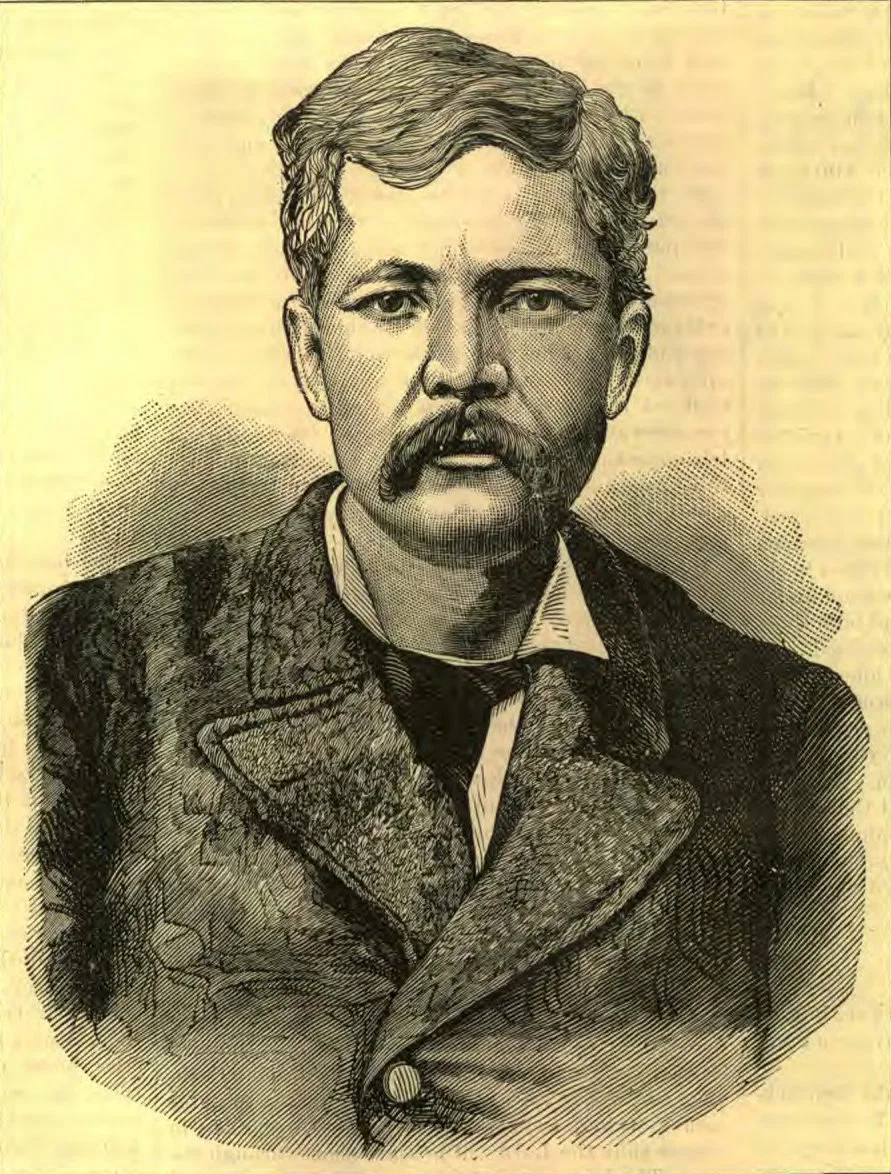
STANLEY

The following article, taken from the Gospel in All Lands, will prove interesting to our youthful readers as giving in brief form the history of this intrepid explorer’s adventures in the Dark Continent Mr. Stanley has but just returned to England, from a long and difficult journey into the heart of Africa, and all await with interest his account of the undertaking, and its effect in helping to solve the problem of the civilization of the African races.
The name of Stanley is a proud one in English history. And when this name is mentioned to-day, all minds turn to him to whom God has, through strange leadings, assigned so prominent a part in the deliverance of Africa from its thraldom.
It is now well known that his original name was John Rowlands, and that his parents had so little means that he was sent when three years old to the poor-house at St. Asaph to be brought up, whence at the age of thirteen he was turned loose on the world to shift for himself. He was born near Denbigh, Wales, in 1840, the very year that Livingstone, aged twenty-three, first entered Africa as a missionary.
When about fourteen, he found his way to New Orleans from Liverpool as cabin boy of a sailing vessel, and there a kind merchant named Stanley, little knowing what he did, adopted him. But Mr. Stanley died before Henry came of age, leaving no will, and the lad was again thrown on his own resources. On the breaking out of the rebellion in the United States in 1861, young Stanley went into the Confederate army. He was taken prisoner by the Federal forces, and, being allowed his liberty, he volunteered in the Federal navy, being already fond of seafaring and adventure. In course of time he was promoted to be acting ensign on the ironclad Ticonderoga. When the war was over, his love of adventure led him to travel, and he went to Asia Minor, saw many strange countries, wrote letters to the American newspapers, and even then was making for himself a name and fame. Returning to the United States, he was sent by Mr. Bennett, of the New York Herald, to Abyssinia in 1868, a war having broken out between the British and the king of that country. There Stanley got his first taste of African adventure.
In the autumn of 1869, the world was beginning to wonder whether Dr. Livingstone, the devoted Christian missionary and African explorer, was alive or dead. More than twenty months had passed since his last letter was written, and the world began to believe he had died in the heart of the Dark Continent. James Gordon Bennett, the editor of the New York Herald, was at this time in Paris, and telegraphed Stanley to meet him there, which, with his customary promptitude, he immediately did. On his arrival, he was confronted with the startling and wholly unexpected question, “Will you go to Africa and find Livingstone?” After a moment’s reflection he answered “I will,” and the agreement was at once concluded.
The 21st of March, 1871, found Stanley at Zanzibar, with a caravan of 192 followers, ready for the great expedition. On the 24th of October at Ujiji, on the shores of Lake Tanganyika, he first met the famous missionary who was so powerful to influence all of his after life. They remained together till March 14, 1872, the younger man drinking in the spirit of the elder, and becoming, as he often declares, converted by him. The Rev. David Charters, of the Congo Mission, reported Stanley saying, “If Dr. Livingstone were alive to-day, I would take all the honors, all the praise that men have showered upon me, I would lay them at his feet and say, ‘Here you are, old man; they are all yours!’”
Two years later, in the spring of 1874, when the remains of Livingstone were carried back to England in one of the Queen’s ships, for burial in Westminster Abbey, Stanley was one of those who bore him to his grave. It was then, he tells us, that he vowed he would clear up the mystery of the Dark Continent, find the real course of the great river, or, if God should so will, be the next martyr to the cause of geographical science.
The outlet of Lake Tanganyika was as yet undiscovered; the secret sources of the Nile were unknown, and even the then famous Victoria Nyanza was only imperfectly sketched on the maps. Discussing such matters one day with the editor of the London Daily Telegraph, Stanley was asked whether he could settle these questions if commissioned to go to Africa. He said, “While I live, there will be something done. If I survive the time required to perform the work, all shall be done.” The proprietor of the Telegraph cabled Bennett, asking if he would join the new expedition. “Yes, Bennett” was the answer speedily flashed back under the sea, and the thing was determined. Stanley left England in August, 1874, attended by only three white men, and at Zanzibar the party was increased by porters and others, mostly Arabs and blacks, to the number of 224 persons, some of the men taking their wives with them; and on the 13th of November the column boldly advanced into the heart of the Dark Continent, having for its twofold object to explore the great Nile lakes, and, striking the great Lualaba where Livingstone left it, to follow wherever it might lead. It has been rightly called “an undertaking which, for grandeur of conception, and for sagacity, vigor, and completeness of execution, must ever rank among the marches of the greatest generals, and the triumphs of the greatest discoverers of history.” August 9, 1887, Stanley emerged at the Congo’s mouth, and “a new world had been discovered by a new Columbus in a canoe.” On his return to England, he found an embassy
from the king of the Belgians, who had been planning an expedition to open up the Congo country to trade, and who wanted Stanley to take command. With great reluctance he undertook the management of the International Association, as the new organization was called, and returned to Africa in 1879, where he remained nearly six years, hard at work, doing more than any other man to found the Congo Free State south of the great bend of the Congo River, having an area of 1,508,000 square miles, and a population of probably fifty millions. In obtaining the concessions of over 400 native chiefs, not one shot was fired. It was a grand victory over barbarism without the guilt of bloodshed that too often has stained such triumphs.
While Stanley was in this country, during the winter of 1886-7, he was called back to Europe once more to take command of an African expedition, the one for the rescue of Emin Pasha. June 28, with 389 officers and men, Stanley left Yambungo, below Falls Station, not far from the mouth of the Aruwimi, and marched east at the rate of ten or twelve miles a day, amid great opposition from the natives and terrible sufferings due to the nature of the country, which consisted of gloomy and almost impenetrable forests. When they reached Ibiwiri, 126 miles from the Albert Nyanza, November 12, the party had become reduced, by desertion and death, to 174, and the most of those that survived were mere skeletons. Here, finding food and rest, they started on again November 24, and in another week had emerged from the deadly forest which came so near swallowing them up. December 13 they sighted the Nyanza, and soon were encamped upon its banks; but Emin was not there, as they had hoped he might be. They were too weak to march to Wadelai, its capital, far to the north; the natives would not let them have a boat; Stanley’s conscience would not permit him to seize one by force; there were no trees of sufficient size to make one, and his own boat had been left 190 miles in the rear, at Kilinga Longa, through the inability of the men to bring it. So there was nothing to do but go back for the boat. This was done, and in spite of Stanley’s severe illness, which required a month’s careful nursing, the force, or what was left of it, was back again in the vicinity of the lake by the last of April. Here they were rejoiced to find a note awaiting them from Emin, to whom rumors of their arrival had penetrated, and who begged them to tarry till he could make further communications. April 29, Emin himself arrived in his steamer, and great was the rejoicing. The two heroes remained together until May 25, when Stanley, rested and re-inforced, started back to Fort Bodo, where he had left men and supplies. From this he pushed still farther back, hoping to meet the other half of the expedition under Major Bartelott. But alas, the Major had been shot, and the rear column, thoroughly demoralized, had gone to pieces, believing that Stanley himself was dead, as had been reported. Stanley, though sorely disappointed and crippled by these untoward events, determined to go back again to the Nyanza by a shorter route and again unite with Emin. And now the news comes to the waiting world that the two heroes are returning in company to the realms of civilization. And soon the wonderful story, some premonitions of which have already reached us, will be unfolded.

AN ARGUMENT.

There were three boys on the street-car, bright, handsome fellows, chatting together, having a good time.
The conductor halted before them to take their tickets, and twang his bell-punch for each. Two of them had passed up their tickets, when the watchful eye of the conductor saw a man running and motioning; and pulling the bell to stop the car, he went to help the man, and his wife, and a little girl, and a baby, and three bundles, to get on.
When all were settled, he went back to his punching. “Did I take up your tickets,” he said to the boys, looking sharply at them.
“Yes, sir,” said two of the boys in a breath; the other said not a word. The conductor eyed them thoughtfully for a moment, then passed on.
The silent boy nudged the one next him, slyly held up his ticket, covering it with the other hand, and chuckled, “See that? I’ll get a free ride one of these days.”
“That’s stealing,” said the boy, gravely.
“It isn’t stealing, either. Isn’t the ticket mine?”
“No, it’s his; you’ve had your ride, and that ought to be given up to pay for it.”
“Why didn’t he take it, then? I didn’t ask him to go on and let me keep it?”
“That’s lying,” said the third boy, gravely.
“No it isn’t lying. I didn’t open my lips. He didn’t ask me a question; he looked right at you.”
“Oh, pshaw!” said the second boy.
“Fudge!” said the third boy.
Then they all kept quiet. After a little the second and third boys began to talk together in low tones; but the first boy had nothing to say; all the pleasure had gone out of his face. His ride seemed to be spoiled. What do you suppose spoiled it?—Pansy.

ROUND THE WORLD.—2.

A VISIT TO THE EMERALD ISLE.

EVERYTHING in Ireland has a free and easy style about it. The inhabitants are for the most part as poor as church mice; yet there seems to be more contentment among them than will usually be found in the palace of a New York nabob. We were surrounded on the jetty at our arrival by a host of good men and women inviting us to come and stop at their hotels; but we were bound for the metropolis, and could not stay. At this they would express great regret, saying they had such “purty” (pretty) rooms, that they knew “our honors” would be pleased.
A special train was waiting to take the mails, and we were soon comfortably ensconced in one of the curious little compartments, and were whirling along at the rate of sixty miles an hour, toward the city of Dublin. Our journey was almost half completed, and we were congratulating ourselves that our travels for awhile would soon be over, when at a wayside depot the engineer and fireman declared themselves too tired to run any further, and alighting from their engine, went to their respective homes, and no doubt were soon lost in slumber. There we stood on the track in the darkness, with an Irish rain drizzling down to help enliven the scene. After more than an hour’s delay, other officials were secured, and once more a start was made.
As the morning began to dawn, there was good opportunity to view the country through which we were passing. The land is undulating, and covered with a most verdant growth of grass. There are beautiful trees and hedgerows, with quaint little straw-thatched cottages, at the doors of which the characteristic Irish pig and her young were besporting themselves. We afterwards learned that these quadrupeds are not confined to the outside of a peasant’s domain, but are generally admitted to the parlor itself. To an Irishman there is more money in a pig than in anything else, and he reasons, with native wit, “Who has a better roight to the parlor than the gintleman that pays the rint?”
Dublin City is not a very inviting-looking place; the streets are narrow and dirty, and business seems to be paralyzed. There are some fine public buildings, but all of them are on a small scale, a feature which immediately attracts the attention of an American. In the aristocratic part of the city there are beautiful gardens, where lovely flowers bloom during the greater part of the year.
We did not spend a long time at the metropolis, but took a trip into the interior. Here the people are nearly all of the Roman Catholic creed, and are kept in a dire state of ignorance by the priests, who are opposed to education in any form, unless it be the dogmas of the church. One morning about nine o’clock we had occasion to enter a large clothier’s establishment, and while there, were surprised to see them closing the doors, and drawing the curtains in the windows. At first we did not know but that we were going to be made prisoners; but on inquiry learned that it is a custom among the Roman Catholics to close up their establishments for ten minutes each morning, while all their employees engage in prayer that the Lord will prosper them through the day. The Irish are certainly a religious people, and there is a frank cordiality among them which the stranger finds very pleasant.
The conveyances in the country are curious and primitive, chief among them being the “Jaunting Car.” This is a two-wheeled vehicle, with seats for four. These seats are so arranged that their occupants are placed back to back, with their faces looking towards the side of the road, while the feet hang out over the wheels, and rest on a board for that purpose. Little donkeys do most of the farm work; modern machinery is almost unknown, the greater part of the labor being performed by hand.
The country residences of the landlords are jovial homes; every one appears happy and abounding in health and spirits, the utmost good-nature prevails, and the main object of all seems to be to get all the good out of this life that is possible. An Irishman loves his horses and hounds almost as dearly as his nearest relatives; and riding, hunting, and many other manly and health-giving sports are indulged in to a great extent. As a rule, the Irelander detests the yoke of England, and longs for the day when he will be master of his own soil; they are a very patriotic people, and have an intense love for their fatherland. For the past eight years there has been an active agitation in the British Parliament on the part of the Irish members to obtain a separation, and it is thought probable that in time they will carry their point.
P. T. M.

A LITTLE GIRL'S COMPLIMENT.

THE accuracy with which children judge character is well illustrated in the following anecdote from the Christian:—
One wet, foggy, muddy day a little girl was standing on one side of the street in London, waiting for an opportunity to cross over. Those who have seen London streets on such a day, with their wet and mud, and have watched the rush of cabs, hansoms, omnibuses, and carriages, will not wonder that a little girl should be afraid to try to make her way through such a Babel as that. So she walked up and down, and looked into the faces of those who passed by. Some looked careless, some harsh, some were in haste; and she did not find the one she sought until at length an aged man, rather tall and spare, and of grave yet kindly aspect, came walking down the street. Looking in his face, she seemed to see in him the one for whom she had been waiting, and she went up to him and whispered timidly, “Please, sir, will you help me over?”
The old man saw the little girl safely across the street; and when he afterward told the story, he said: “That little girl's trust is the greatest compliment I ever had in my life.”
That man was Lord Shaftesbury. He received honors at the hands of a mighty nation; he was complimented with the freedom of the greatest city on the globe; he received honors conferred by royalty; but the greatest compliment he ever had in his life was when that little unknown girl singled him out in the jostling crowd of a London street, and dared to trust him, stranger though he was, to protect and assist her.

THE LION'S RIDE.

THE following incident is one which, African huntsmen tell us, frequently occurs. Toward evening, the king of the desert, wandering through his wide domain, comes to a dark lagoon, where he lies in ambush among the rushes, knowing that at this hour gazelles and giraffes are in the habit of coming to drink.
The lion has not long to wait. Soon a stately giraffe comes through the desert to cool her hot, dry tongue in the brackish waters of the lagoon. Kneeling down, she stretches out her long neck toward the dark, shallow pond. Suddenly there is a stir among the reeds and rushes; with a loud roar the lion springs upon the neck of his victim.
Here is a horse to ride upon! Not more splendid steeds are to be seen in royal stables than that which the king of beasts now bestrides. He greedily fixes his teeth in the muscles of the poor giraffe's neck; his yellow mane waves round her shoulders; with a sharp cry of pain she springs up, and rushes onward in agony; with light steps she passes over the moonlit plain; her eyes look as if they would start from their sockets; dark drops of blood flow down her beautiful spotted neck.
In their track they leave a yellow cloud of sand; the vultures arouse from their nests, and, with shrill cries, hover over them in the air; hyenas and panthers, leaving their lairs, follow the blood-stained path of their king. They see their ruler sitting upon a living throne, which he is tearing with his sharp claws. Ever onward, till strength fails her, the giraffe must carry him; no rearing or kicking can rid her of such a rider. At last, on the outskirts of the desert, she falls down and expires, and then is devoured by the ruthless rider.—Young Reaper.

DO YOUR DUTY.

ALL you have to do is simply your duty. I stood in a factory a short time ago, and learned a deep lesson. As I entered, all seemed confusion—the buzz of machinery, the whirl of everything, dazed me. But I soon saw that all was right, and that each one was doing the task assigned to her. I stood and looked at a young girl whose work was to untie knots in the threads as they were passing over the wheel. All day long she simply untied knots. Now if she had said, “This is such a little thing to do, and I get so tired of it, I think I will try to do what the girl next to me is doing,” she would have damaged the whole work. The simple thing of untying the knots had to do with the beauty and finish of this whole design.—Sel.

A LESSON FOR THE BOYS.

“Can’t we have the boat to-day, papa?” asked Harry.
“No; the boat is not ready. The paint is not dry.”
“Can we to-day?” he asked the next day.
“No, not for several days, I think.”
“Dear me,” said Tom. “It’s dreadfully hard to wait so long.”
“You have the whole summer before you for boating,” said papa.
“Yes; but I want to go now. Can we go to-morrow?”
“No; I will let you know when you can go. These spring winds are too high. The lake gets very rough.”
“Where’s papa?” the boys asked the next evening, when he did not come out to the lakeside cottage at the usual time.
“I have just had a message from him,” said mamma. “He has been called away from home for a few days.”
“How provoking,” said Tom, as the two went down to the boat-house.
“See,” said Harry, “the paint’s as dry as an old bone. We might take her out just as well as not.”
The boys had been allowed to row about near home by themselves last summer. They looked longingly at the boat as she now lay in the water in the boat-house.
“Don’t she look like a daisy in her new paint?”
“Splendid. Here are the oars.”
“I don’t believe ’t would be a bit of harm just to go out for a little while, do you?”
“Not a bit,” said Tom. “The lake’s as smooth as glass.”
“If papa were here, I’m sure he’d let us.”
“’Course he would.”
“He didn’t tell us we mustn’t go till he came home.”
“No; he only said wait till the paint is dry.”
Into the boat they got, and had soon shoved it out of the small building. How delightfully she glided over the smooth water! The year before, the boys had laughed and shouted as they pushed out into the glow of the sunset for their first row. But they were still now until Tom said,—
“It’s jolly, isn’t it?”
“Ever so jolly,” said Harry.
But they did not row up in the direction of the house, calling mamma to look at them, as they remembered doing last year. They rowed about below the boat-house until a dark cloud covered the sun.
“Feel these little puffs of wind,” said Tom.
“Yes, and they’re getting larger. Let’s go back.”
“’Course we will. We’re always as careful as we can be.”
The puffs of wind grew fresher as they pulled toward the boat-house.
“See, the door’s blown shut,” said Harry.
“I don’t believe we can open it,” said Tom. “It’s stuck tight. What shall we do?”
“Why can’t we tie the boat at the dock, just as we always did last summer?”
“To be sure,” said Tom.
They drew the boat well up and left it, feeling quite sure everything was safe.
“No harm done in our coming out,” said Tom.
“No,” said Harry. “But somehow I don’t think boating’s quite so nice as it was last summer.”
“Ho! papa’s come home,” cried Tom, as he looked out of the window the next morning. “He’s down at the dock.”
The boys went out as soon as they were dressed.
“It wasn’t any harm, our taking out the boat, was it, papa?” asked Tom, looking a little doubtfully at his father’s grave face. “Nothing happened to us, you see.”
“I see,” said his father.
Old Jimmy Wright, who built and mended boats, came up at this moment.
“Didn’t have your boat out such a night as last night, did you, sir?” he asked, looking at it; “why, it blew a hurricane ever since dark.”
“Yes, the boat has been out,” said their father.
The pretty lake was still showing plenty of “white caps” in the strong wind, and as he spoke, the boat gave a little dash on the shore, and Tom and Harry saw that she was half full of water.
“If she’s been dashing and grinding on them rocks all night, I would not give much for her,” said Jimmy.
The two men drew the boat on shore and turned her over. Then the boys stared in dismay at the cracks and splinters and bruises made by the rough stones.
“We used to tie her here last summer,” said Harry, dolefully. “Why didn’t it break her then?”
“The lake is much higher this season,” said his father. “I was intending to have the dock fixed before the boat was taken out.”
“She’s too badly stove up to do anything with,” said Jimmy, after examining the abused boat.
Harry and Tom stole quietly away, wishing with all their hearts that they had obeyed in the spirit and letter also. A few days later they went to their father with very meek faces.
“What are we to do about a boat, papa?” said Tom.
“We’re very sorry we disobeyed,” said Harry.
“I’m sorry, too, on more accounts than one,” said the father. “Sorry that I cannot trust you, and sorry that you will lose so much of your summer’s pleasure.”
“How, papa?” asked Tom.
“It will be a month or more before Jimmy Wright can have a new boat ready for you.”
“Can’t any one else make one?”
“Yes; but he does very safe, good work, and I prefer to let him do it.”
Whether or not the father thought the waiting would be a good lesson for the boys, they never knew, but certain it is that they had a good chance of learning that straightforward, unquestioning obedience is much the best for all boys.—Sydney Dayre.

THE CHILD AND THE YEAR.

Said the child to the youthful year: “What hast thou in store for me? O giver of beautiful gifts, what cheer, What joy, dost thou bring with thee?”
“My seasons four shall bring Their treasures: the winter's snows, The autumn's store, and the flowers of spring, And the summer's perfect rose.
“All these and more shall be thine, Dear child,—but the last and best Thyself must earn by a strife divine, If thou wouldst be truly blest.
“Wouldst know this last, best gift? 'Tis a conscience clear and bright, A peace of mind which the soul can lift To an infinite delight.
“Truth, patience, courage, and love If thou unto me canst bring, I will set thee all earth's ills above, O child, and crown thee a king!”
—St. Nicholas.

ANNIE'S PONY.

When Annie's mamma died, Annie went to live with her grandpa on his large farm. She had nobody to play with, and she missed her mamma very much.
Grandpa felt sorry for his little girl, and he gave her some pets to take care of. She had four old hens for her very own, and twelve little chickens. Annie took such good care of them that the chickens grew sleek and fat, and would follow her all around the yard.
Then there was a little wee lamb, which grandpa brought up to the house one cold spring day, because it was too weak and sick to stay with the rest of the flock. With grandma's help, Annie wrapped it in warm blankets, and put it by the fire. She fed it warm milk with a spoon. It was a great deal of work for Annie to feed the lamb, and she soon forgot to be homesick. The lamb was grateful for Annie's kindness, and soon learned to follow her about, and come when she called its name.
Annie has another pet that she loves better than any other. It is a pretty little brown and white pony, which she calls Ned. He is a knowing little pony, and has learned several tricks.
When he was a little colt, grandpa came to the house one day, and said, “I think I shall have to shoot the colt.”
“Why,” exclaimed grandma, “what is the matter with it?”
“It's ankles are badly hurt,” said grandpa, “and I do not think it will ever walk.”
“Oh, it's too bad to put such a pretty creature to death. Let us see if we cannot do something more for it,” she replied. So she went with grandpa down to the barn. The little colt looked at them so wistfully that grandpa felt sorry he had thought of killing it.
“I believe we can save him,” grandma said; and they all at once began to doctor him. Grandpa had to lift him in his arms like a baby. The colt seemed to know what grandpa was doing for it, and tried his best to get well. After a time he could stand on his feet, and soon all signs of lameness had disappeared.
He was so grateful for grandpa's care that he would follow him all over the farm like a dog. Even at dinner-time he would come up to the door, and wait around outside until grandpa was done eating.
One day Ned walked into the woodshed, where grandpa was washing his hands and face for dinner. Ned looked interested in the proceedings, and for fun grandpa washed Ned's face, and wiped it on an old towel.
Ned seemed to enjoy the joke as much as any one. The next day grandpa played the joke over again; and almost every day after that, Ned would walk into the woodshed at dinner-time to have his face washed.
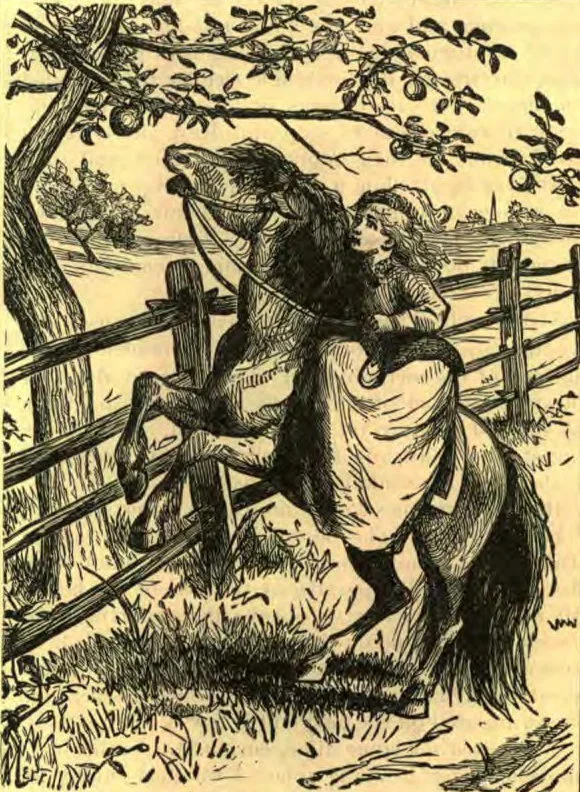
He is very fond of apples, and has learned to put his nose up the sleeve of Annie's jacket to find the apples she gives him when he has been good.
Annie takes long rides on Ned's back. He is very gentle with his little friend. He acts as if he tried to be grateful for the kindness shown to him.
W. E. L.

Known by Our Doings

Even a child is known by his doings, whether his work be pure, and whether it be right.

On Choosing a Good Name Over Riches

A GOOD name is rather to be chosen than great riches, and loving favor rather than silver and gold.

TOMMY AND THE DOG-CHURN.

Tommy was spending a month at grandpa’s farm.
One day the family went to a funeral. Billy, the boy who did the chores, was staying at home with Tommy. Billy was mending a fence.
“I declare,” said Billy, “I can’t finish this fence without more nails. Will you watch the calf, while I ride old Sam to the village and get some?”
“Yes, I will,” said Tommy.
“Be sure you don’t let him get through this hole in the fence to the missus’s flowers.”
“No, I won’t,” said Tommy.
So Billy led out old Sam, and trotted away to the village.
Tommy watched very well for a while. Every time the calf even turned his face toward the hole, he would chase him to the further corner of the back yard. But before long he grew tired. He had never been left alone before.
The dog-churn was standing in the back porch. Tommy wished Carlo was there to churn in it. He always thought it very funny to see him walking and walking without ever getting any farther.
He stood by it, and tried to make it go, but it was fastened. He ran and drove the calf away from the hole, and then came back to the churn.
Grandpa always said, “Don’t touch the churn, Tommy!” But he was so tired waiting for Billy that he thought he would just step in where Carlo always stood. The rope which went around Carlo’s neck was there. He put it around his own neck, and went tramp, tramp, tramp, just as Carlo did.
Click! Tommy had to tramp, tramp, tramp, in good earnest. Something had become unfastened, and the churn was moving.
“Oh, my!” said Tommy. “I guess I’d better get out, ’cause grandpa don’t want me in the churn.”
Continue reading: Tommy, the Churn, and the Calf