Review and Herald, Vol. 7, No. 11.

THE RESURRECTION
Earlier text: The Fourth Commandment and Sunday-Keepers

"Be ye Angry and Sin not." Eph. iv, 26.

By a misapprehension of the true meaning of the above Scripture, and also of some others of a similarly received import, some have doubtless been led if not into a fatal error, at least into a very injurious practice.
It may be proper here to examine some of that class of Scriptures, referred to above, in order to ascertain their true meaning. The Lord says, [Matt. v, 22.] But I say unto you, that whosoever is angry with his brother, without a cause, shall be in danger of the judgement. But the inquiry is made, What if he has a cause? The inferential reply is, anger in this case would be admissible. This however is not according to truth. There is satisfactory proof from numerous other passages of Scripture, that no such inference should here be drawn. It is true, the first careless thought, without thinking of other Scriptures, might lead us to infer as above; but we should be careful not to draw an inference, till we know there is no positive declaration of Scripture to contradict it.
Here the critical will inquire, if the phrase, "without a cause," in the above quotation, is to be left without any meaning. I answer, It shall have its true and full meaning. It is admitted that the conduct of a brother may be such that there is cause for anger; or else the phrase would be without meaning. But the only question on this point now is, Who has a right to execute, or even exercise that anger? Truly none but the Lord has any right to execute it; since it is written, Vengeance is mine, I will repay, saith the Lord. Rom. xii, 19. And none but the Lord has any right to exercise it; for again it is written, "Let all bitterness, and wrath, and anger be put away from you."
Again, [Mark iii, 5,] it is said that Jesus looked round about on them with anger. This passage is sometimes adduced to show that Christ himself indulged in this passion; and of course it would not be improper for us, his followers, when there was sufficient provocation, to imitate his example in this as well as in other respects. If this were correct reasoning, then we might as well assume the prerogative of judging; this being also the Master's prerogative; for he expressly says, [John v, 22,] that the Father judgeth no man, but hath committed all judgment unto the Son.
Should we follow him in this respect also? Most certainly not; for he expressly commands us not to judge. Judge not that ye be not judged. For with what judgment ye judge, ye shall be judged. We understand by this, that in this imperfect mortal state, we are wanting in capabilities to judge rightly. Hence by making one unjust decision, we expose ourselves to God's judgment for that wrong, though the guilt of no other sin lay upon us.
Although Christ has not, in so many words, given us, with his own mouth, an express command not to indulge in anger, yet inspiration has given explicitly, this command by Paul and David. Hence it is no more our privilege or right to be angry at our fellows, than it is to judge them. We have the same authority respecting one that we have respecting the other.
The important inquiry now is, What is the true meaning of the Scriptures above quoted from Matt. v, and Mark iii? Respecting the first: Jesus was commenting on the instructions of Jewish teachers. They had taught that whosoever should kill, would be in danger of the judgment. But he informed them, that only to be angry with a brother, without a cause, would expose them to that. If there were a cause, no doubt the sin would be mitigated, and if they had no more light, on this subject, than this Scripture imparts, it might possibly be commuted to a sin of ignorance; so that if they lived up to their best light; and lived previous to the time of cleansing the heavenly Sanctuary, and the blotting out of the sins and errors of God's people, they might perhaps possibly escape the judgment of God, by having this sin of ignorance blotted out, "when the times of refreshing shall come from the presence of the Lord."
As to the second in Mark iii, The inquisitive will doubtless inquire, Why are we not allowed to imitate Jesus in the exercise of anger? The question might as well be asked, Why are we not allowed to execute anger? or why are we not allowed to judge? The reasons are obvious.
First, to have our minds subject to the exercise of that passion would be a source of continual disturbance to us, and could effect no possible good to ourselves or others; but rather be a perpetual source of evil to all concerned.
Second, in either case we expose ourselves to the judgment of God. Our ignorance and imperfections wholly disqualify us to act in these capacities. Nor do I apprehend we have a very clear perception of what that anger was, which Christ exercised; for, after mention was made, that, "he looked round about on them with anger," it is added, "being grieved for the hardness of their hearts." From this, it is reasonable to conclude that the word, anger, does not exactly express the emotion, which at that time exercised the mind of Jesus. Wherefore this qualifying phrase was thrown in to modify the sense of that expression. The paucity of language was unquestionably the cause of this. To be grieved at the hardness of men's hearts, would be nothing wrong in us; but to indulge in anger, according to the common acceptance of the word is contrary to divine requirement.
It is reasonable to our understanding, that the Master of the house has duties and prerogatives peculiarly his own. And though his servants and children are required, on general principles to imitate his excellent example, and have many privileges and duties in common with him; yet whenever his acts are disciplinary; or are used in the administration of justice; in these he stands unique and alone. "The government shall be upon his shoulder." "One is your Master, even Christ; and all ye are brethren." He is the great Teacher, we are the learners.
It is objected that "Jesus was made under the Law," and "knew no sin." And whatever would be erroneous or sinful for us, would have been so for him, while he was here as our example. It has already been shown that our extreme ignorance disqualifies us to have anything to do with that which pertains, absolutely, in any way, to discipline or government. On the other hand his immensely superior knowledge and understanding, perfectly qualified him to perform all that pertains to both of these. Hence, as he "knew what was in man;" rather as he "knoweth all things;" he knew, when, for what reason, and in what sense, kind and degree, to be angry, on the principles of perfect justice and righteousness. Was there any sin in this? None. He knew full well how to exercise a just and holy anger. We know not how to exercise anger without its being mixed with sinful passions. Therefore this indulgence is forbidden us by strict commands, but was perfectly fit and right for him, on the principle, that it is perfectly right and just for a teacher of a school to administer salutary discipline and government, even though it be mixed with corporeal punishment. But has any scholar in the school, a right to do this? Certainly he has not. We know not how to do the thing right: He does; therefore it will do for Him, but not for us.
It is said by some, that anger has very little to do with the spirit of love, meekness, gentleness, quietness and forbearance. We understand that it has nothing to do with it. It is their complete opposite. They continue, and say, "But when manifested, it should be against sin or wickedness with which it has no fellowship." I think that anger has some fellowship with sin and wickedness: it being part and parcel of the same. But if the pronoun it which next precedes the word fellowship, represents the word spirit, the remaining sentiment is then correct; for the spirit of love and meekness, &c., truly has no fellowship with sin, or wickedness.
The same subject is continued, and it is said "In this view of the subject anger is no sin, but a virtue." The above quotations were adduced from the fact that Jesus was said to look round with anger; and that God is angry with the wicked every day; and the argument is, that it is a virtue to imitate the example of these divine personages. But who has ever assumed the privilege of imitating the example of Christ in making the scourge of small cords, and using it in the manner he did? John ii, 15. And who would argue from hence, that following this example was a mark of deep piety, or unusual virtue? This, in the Master of the house, who had power to command and enforce, and whose peculiar right it is to punish all offenders, is perfectly fit and right; but in us, his dependent subordinates, it would be an assumption of power, not at all justifiable.
The idea that we should not imitate him in all his prerogatives, may be new to some; it is a thought quite modern to the writer; but the Spirit and Word have reproved respecting the subject, until it was thought best to investigate more fully, the word of truth respecting it. As some may inquire to know wherein we should, and wherein we should not imitate the Master, the proper reply is, We should imitate him in all things which the Bible enjoins; and we should not imitate him in any thing which the Bible prohibits.
Some may object to the sentiment just expressed from an expression in Rev. xiv, 4. "These are they which follow the Lamb whithersoever he goeth." This passage has been understood by some, to mean that the class of men referred to, would imitate the example of the Lamb in all his acts, and that to perfection. That they will follow him thus in all his imitable example may be inferred; but it is not expressed. If we look at the meaning of the word whithersoever, which Webster defines,—to whatsoever place; then this objection at once vanishes. The passage will then read, These are they which follow the Lamb to whatsoever place he goeth. Thus we see, this passage has reference more particularly to localities, to which they follow him, than to example, in which they imitate him.
Here the inquiry is made, What localities? It can be made to appear that the class of men spoken of in Rev. xiv, 4, is the last generation of saints, the remnant of Israel. Zeph. iii, 13. Therefore they live at a time, when having an understanding of truth pertaining to the heavenly Sanctuary, they will by faith or belief in this truth, follow the Lamb to whatsoever apartment of the same, it may be necessary for the Great High Priest to go, in his work of cleansing it. From thence, out to bless his people. From thence to his location on the white cloud, when the cry will be made, Thrust in thy sickle and reap; for the time is come for thee to reap, for the harvest of the earth is ripe.
We now return to a more particular examination of the Scripture which heads this article. Perhaps the commonly received opinion, from the construction of the language is, that we have permission to be angry, but are forbidden to sin. If the language expresses this, it expresses more; yea it even expresses an injunction or command that we should be angry. Do we believe this? I trust not one of us; for God has given in his word, commands, precisely opposite to this. Ps. xxxvii, 8. "Cease from anger, and forsake wrath." Why cease from anger if God enjoins it? or even permits us to indulge in it? Why forsake wrath if it be justifiable? Such ideas are absurd.
Again Col. iii, 8. "But now ye also put off all these: anger, wrath, malice, &c." In the above Scriptures we have express commands, to put off, to cease from, to forsake, anger, wrath, &c. Still the language of the text is, "Be ye angry and sin not."
Here says the sceptic, the Bible contradicts itself. But we say it certainly does not. Such a thought would be the most distressing to a believer. There is doubtless some error either in the translation, or punctuation of the common version.
Professor Whiting gives the following translation: "Do not sin by being angry." By this translation, we have almost a complete change in the meaning of the passage. It shows that being angry is sin; and it commands not to sin thus. In his margin it is expressed interrogatively, as follows: Will ye be angry and not sin? As if he asked, if it were possible to be angry, and not sin by being thus. Here we see by comparing the punctuation of the text and the margin of this learned man's translation, he understands that inspiration had nothing to do with the punctuation of the Bible.
Professor Goodrich in his Greek Grammar, fifth edition, page 2, says: "Greek was originally written in capitals, without any spaces between the words." Of course there was no room for the marks of punctuation. He then gives us the first verse of the first chapter of John's Gospel, except the last simple sentence, as an example, in capitals, without punctuation. He then gives an example of the same in smaller Greek characters with punctuation. He then says, the smaller characters were formed from the larger ones between the seventh and ninth centuries, for convenience in writing.
But we rely not on human testimony, alone, to show forth the truth, relative to this passage. We will introduce the 31st verse of Eph. iv. Let all bitterness, and wrath, and anger, &c., be put away from you. Do we believe that Paul in writing five verses contradicted himself? If he were uninspired and altogether reckless of his reputation, with his powers of mind, it would scarcely be deemed possible. But these were not the conditions under which Paul wrote. He was inspired; and the word of the Lord is not yea and nay, but yea and amen.
The peculiar structure of language is such in some passages, that a slight variation in the punctuation materially alters the sense: in others, their structure is so simple, and their meaning so obvious, that to give them the right punctuation, would result as a natural consequence, and the true sense of the original be intuitively known. Thus of the passage under consideration, by changing the period point at the close, to an interrogation, the sense is nearly reversed. So it is then reconcilable with other Scriptures, which at first would seem to be contradictory.
One more Scripture will be used in the close of this argument. In Gal. v. 19-21, Paul gives us a catalogue of sins which he there calls the works of the flesh. Here we see that wrath, which is defined, violent anger, belongs to that dark catalogue, the doing of which will for ever exclude the doers thereof, from the inheritance of the kingdom of God. The writer's belief for a long time differed from the sentiments here expressed; but with sorrow now he sees, in this respect, the error of his former years. A man's practice will be likely to correspond, somewhat with his honest belief.
It is said that "Anger resteth in the bosom of God." To this class I find no promise in all the Bible; but to the opposite character, the meek, there are many great, and precious promises. The meek shall eat and be satisfied. Ps. xxii, 26. The meek will be guide in judgment. Chap. xxv, 9. The meek shall inherit the earth. Chap. xxxvii, 11. The earth feared and was still, when God arose to judgment, to save all the meek of the earth. Chap. lxxvi, 8-9. The Lord lifteth up the meek. Chap. cxviii, 6. The Lord taketh pleasure in his people, he will beautify the meek with salvation. Chap. cxliv, 4. The meek shall also increase their joy in the Lord. Isaiah xxiv, 19. Preach good tidings to the meek. Chap. lxi, 1. Blessed are the meek. Matt. v, 5.
It was in view of the momentous period of time which has now overtaken us—"before the decree bring forth, before the day pass as the chaff, before the fierce anger of the Lord come"—that the Prophet exclaimed, Seek ye the Lord all ye meek of the earth, which have wrought his judgment; seek righteousness, seek meekness: it may be ye shall be hid in the day of the Lord's anger."
Dear brethren, will we give heed to these solemn truths? Will we cherish a disposition of carefulness to investigate truth and resolve to practice it as soon as the mind is understandingly convinced in regard to it? Such and such only have any claim to the promises.
STEPHEN PIERCE.
Roxbury, Vt.

A Brother’s Hope in the Advent Message

Brother Wm. C. Peck, from Will Co., Ill., writes:
"I wish to say through the Review that I rejoice with the remnant, knowing that my redemption draweth nigh. I feel to praise the Most High that I ever heard this last message of mercy; for I find great peace and joy in loving God's law.
I long to see my Saviour in his beauty and walk the plains of the New Earth. I would with Mary choose that part that shall never be taken away, and put my trust in the arm that bringeth salvation. I want to see Zion arise and put on her beautiful garments. I want to be where I shall no more hear it said, I am sick, I am weary of my life; but where the wicked will cease from troubling and the weary be at rest.
I feel truly, like a pilgrim here, and want to meet my heavenly Father's family upon mount Zion, and swell the loud anthem to God and the Lamb. I feel anxious to do what I can to forward the last message of mercy to man and thus improve upon my one talent till the nobleman returns from the far country. I bless God that I am living in these last days, these days the prophets longed to see, but they have died without the sight. I cannot express the love I have for that brother or sister that is looking for my Saviour. Truly we are living in a grand and awful time.
It has been about one year since I came into the Sabbath truth. I long to dwell with my Saviour and that heavenly company on mount Zion to walk the golden streets of the New Jerusalem.
Illinois is a wide field for labor. The harvest is great, but the laborers are few. I pray the Lord to send more laborers into Illinois. The Third Angel's message, I believe, is a compelling power. Go into the highways and hedges and there you will find some of the jewels. I should be glad if we could have the Review weekly."
Bro. Henry Brown writes us from Otsego Co., N. Y., Nov. 9th, 1855. After ordering a quantity of books on the present truth, he says:—
"I am alone on the present truth, and very much feel the need of these faithful counselors to help me to bring out the great truths of the Bible. I can have the privilege of hearing Babylon's teachers expound the Scriptures; but this I find to be poor food for a hungry soul, and I find that while for the time they ought to be teachers, they have need that some one teach them what are the first principles of salvation. But by their fruits ye shall know them; and one need not look long to see that "Babylon is fallen;" for where are the revivals, the family altars, and also the soul-stirring reforms of the churches which were seen a few years ago? Echo answers, Where? and we look in vain for a living answer. They are all dead. They are all conformed to the fashion of this world, and are crying, Peace."

COMMUNICATIONS.

From Bro. Ederton.
DEAR BRO. WHITE:—Through the mercy of God I am again able to address you after a long and tedious blindness, caused by inflammation of my eyes. I have not been able to do anything of business, or labor, since the first of June, till the last of October. I have therefore been prevented making any communication or remittance to you before this. It has been a season of trial and of blessings to us since January last, for proclaiming the Advent near, and immortality and eternal life through Christ alone, and for maintaining the validity of the Lord's Sabbath.
The Baptist Church with which we have been connected over twenty years, and with whom we have walked in the ordinances of the gospel, we have been excluded from, without their giving us an opportunity of answering for ourselves or taking one step of gospel labor. This was done by changing the time of the meeting from its regular appointment. I went to the place of meeting at the usual hour and found they had met in the forenoon. But we rejoice that we are counted worthy to suffer reproach for Christ's sake, and that this truth they cannot take from us.
We love the Review and Herald as it comes to us with stores of gospel truth, and we sympathize with you in your labors of love.
I should be glad if some of our ministering brethren would call here as they are traveling east or west. I live in the town of Parma, ten miles south of Cleveland.
While some around us are saying we are led away with Lo heres, and Lo theres, we feel to rejoice that the truth will triumph. May the Lord help each and all of us to realize the time in which we live and enable us to do those things which are pleasing in his sight.
Yours in the fellowship of the gospel. J. EDERTON.

The Gathering Call.

Long upon the mountains, weary, Have the scattered flock been torn; Dark the desert paths, and dreary, Grievous trials have they borne. Now the gathering call is sounding, Solemn in its warning voice; Union, faith and love abounding, Bid the little flock rejoice.
Now the light of truth they're seeking, In its onward track pursue; All the ten commandments keeping, They are holy, just and true. On the words of life they're feeding, Precious to their taste so sweet; All their Master's precepts heeding, Bowing humbly at his feet.
In that world of light and beauty, In that golden city fair, Soon its pearly gates they'll enter, And of all its glories share. There divine the soul's expansions; Free from sin, and death, and pain; Tears will never dim those mansions Where the saints immortal reign.
Soon, He comes! with clouds descending; All his saints, entombed, arise; The redeemed in anthems blending, Shouts of victory through the skies. O we long for thine appearing, Come, O Saviour! quickly come! Blessed hope! our spirits cheering, Take thy ransomed children home.

Spiritualism.

We intend to furnish our readers from time to time with such facts as will show the progress of this doctrine in the land. We have reliable sources of information on this subject from the Christian Spiritualist, published at 553, and the Spiritual Telegraph, published at 342, Broadway, New York.
We are not credulous enough to deny that there is reality in the manifestations. There are agencies at work which are not of earth; but what are those agencies? They claim to be the spirits of the departed; and the only way in which these claims can be met and disproved, as we have often repeated, is to take a scriptural view of the state of man in death. When we read that they "sleep," and shall not "be raised out of their sleep till the heavens be no more," the false pretentions of these spirits recoil upon their own heads. It at once reveals their true character, and shows us that they are spirits, not of our departed friends, but of fallen angels.
We can all but feel deeply interested in the progress of the struggle between this new theory and the teachings of the common theology of the present day. We say frankly that the popular church is inconsistent in denying the claims of spiritualism. She has paved the way for this very work, and yet refuses to acknowledge it as the legitimate result of her teachings. She has furnished the cause, and refuses to recognize the effect. As long as she clings to her favorite dogma, that man has a spirit that is conscious and active and intelligent after death, she has no barrier to present against this strong delusion: she must be entangled in her own net: she must fall into the pit her own hands have digged.
Though the manifestations have become so frequent as to lose much of their novelty, and less excitement is occasioned on this particular, the doctrine is no less rapidly spreading and counting its proselytes by hundreds and tens of hundreds. The way is preparing for that time brought to view in Rev. xvi, 13, 14, when they shall go forth to the kings of the earth, and of the whole world to gather them to the battle of that great day. We clip the following from the Christian Spiritualist of Nov. 17th, 1855, which gives the number of believers in Troy alone at 1200, and states, which is doubtless true, that spiritualism is becoming the faith of the masses.

Waiting for Our Lord’s Returning

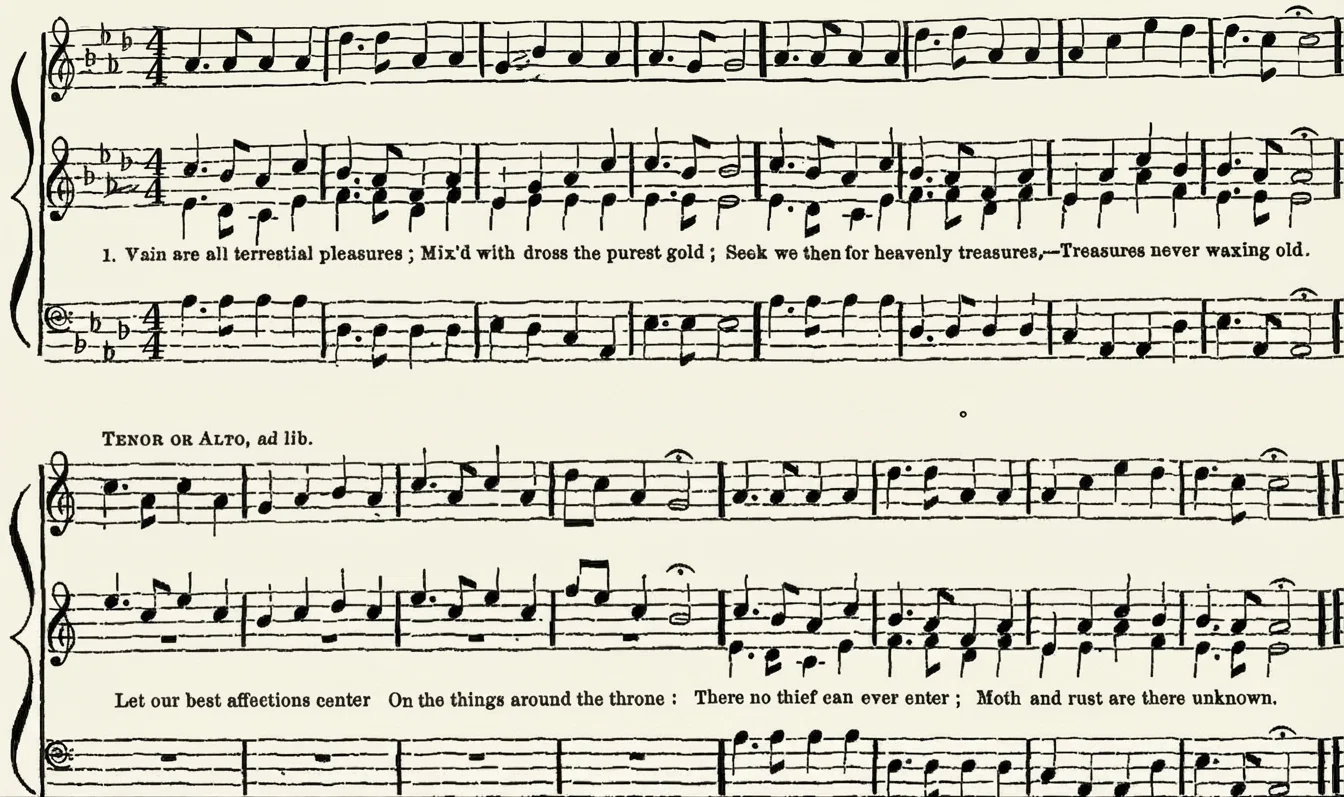
1. Vain are all terrestial pleasures; Mix'd with dross the purest gold; Seek we then for heavenly treasures,--Treasures never waxing old.
2 Earthly joys no longer please us; Here would we renounce them all; Seek our only rest in Jesus,— Him our Lord and Master call. Faith, our languid spirits cheering, Points to brighter worlds above; Bids us look for his appearing; Bids us triumph in his love.
3 May our light be always burning, And our loins be girded round, Waiting for our Lord's returning,— Longing for the welcome sound. Thus the Christian life adorning, Never need we be afraid, Should he come at night or morning, Early dawn or evening shade,

Tent Meetings.

Since the last report of our Tent-meetings in Vt, we have entered some new fields, where but little was known respecting our faith; and we feel confident that the blessing of the Lord has attended our labors.
After leaving Richford we met at Compton, C. E. Where we pitched the Tent, two miles from Bro. Hool's, the only Bro. in that vicinity keeping the Bible Sabbath. Our hand-bills which we had sent by mail, were not received in time for but few days' notice to be given of the meeting. Consequently there were not as many present to hear as probably would otherwise have been. But yet some of the few present were much interested in the word spoken. And we think the meeting was one of profit to the brethren and sisters present.
From here we next went to Walden, Vt. In this place there is but one family who are believers in the message of the third angel. But little was known respecting the faith of commandment-keepers, except by report: which of course had but little truth connected with it. The meeting commenced Sabbath evening. A goodly number were present in the evening, and on Sabbath-day, also the evening after the Sabbath. On First-day our congregation was large and quite attentive to the word which was spoken with great freedom. Our dear friends seemed to be astonished to learn that the Bible and the Bible alone was presented as the foundation of our faith; and that the evidences for the position which we occupy blaze so brightly from its sacred pages. We learn that some have said they could hardly believe they had attended a meeting with Sabbath-keepers, so different was the preaching from former reports. We have also learned that some more have there decided to keep the Sabbath.
Our next meeting was at Chelsea, on the farm of Bro. W. Camp. Here we met with a number of dear brethren and sisters, who seemed to feel the need of struggling for a deeper work of grace. Some spirited exhortations were given, and a good degree of freedom felt in proclaiming the last solemn truths to this wicked world. Conviction seemed to force itself upon the minds of some present that we have the truth.
We were made glad by meeting with dear Bro. Barr at this meeting.
At Warren, we held our next-meeting. At this time the weather was rainy and unpleasant, but a number of friends came out to hear, and we trust the result of our labors here will be good. Bro. Lockwood and his family still manifest a deep and continued anxiety for the spread of the truth.
From this place we went to Morristown, where the Tent was pitched near Bro. Bingham's house. At this time the weather was quite rainy, especially on Sabbath, yet we were favored with the privilege of meeting with a number of the tried friends of the cause. On Sabbath there were many very spirited exhortations given which rendered the meeting one of deep interest.
On First-day a glorious victory was obtained in the meeting and we feel confident that much prejudice was removed and good accomplished. The Lord grant wisdom and a willing mind to live out the truth spoken.
A. S. HUTCHINS. C. W. SPERRY.

The Two-Horned Beast Available

Seventy-three copies of "The Two-horned Beast," by J. N. Loughborough, have just fallen into our hands from one of our agents in this State. Many brethren have sent in for this work when we could not supply them. If any wish to obtain a few copies now they can do so by ordering immediately. J. W.

APPOINTMENT.

Providence permitting, there will be a Conference of the churches in Central New York, held in Oswego, commencing Sixth-day, Dec 14th, at 10½ A. M. It will continue over Sabbath. It is hoped there will be a general attendance of the Brn. in Oswego county, and at least one or two Brn. from each of the churches in the adjoining counties. We shall attend to the business affairs of the Conference, Sixth-day, and would be glad to have a general attendance of Brn. at the hour appointed.
J. N. LOUGHBOROUGH.

SPIRITUALISM IN TROY.

The hostile antagonistic opposition which at one time characterized the feelings of many of the Trojans towards Spiritualism, seems to have given way, if the following from the Troy Whig is a fair statement of fact. Its editor says: 'We do not believe the greater portion of our citizens have any idea of the number of votaries the Spiritualist theory has in our midst. A gentleman whose word we regard as sufficient authority, for the assertion, estimates the number of sincere believers at 1,200. These embrace many of our leading citizens—men of worth and intellect, who deduct their belief from philosophical and liberal reasoning, and are by no means to be identified with the fanatics who are always ready to embrace some new theory.'
The editor of the Saratoga Daily Republican, in his issue of November 9th, makes the following comment on the above. He says: 'No one need be surprised in regard to the facts stated above. 'Men of worth and intellect,' have but to investigate the 'Spiritual theory,' to become convinced of the Spirit intercourse. In New York, Albany, Troy, Syracuse, Buffalo, and almost in every portion of this State as well as throughout the Union, Spiritualism is becoming the faith of the masses, and as a consequence, mankind are becoming better and happier.'

Books for Eastern Brethren

For the convenience of Eastern Brethren we left with Eld. J. N. Loughborough of Rochester, N. Y., a full assortment of Books. Those who wish a quantity can obtain them of him. J. W.

Receipts

Receipts.
L. L. Glover, I. S. Chaffee, J. Authouse, J. Francisco, K. Whitcomb, each $1, M. Philips, (for Wm. Stephenson,) $0,50.
To PAY ARREARS ON VOL. VI.—A. Voke, $1.
To MOVE OFFICE.—M. Philips, S. B. Warren, each $5. M. A. Eaton, $1.

Business.

John Butchart:—We have sent the hooks. There remains your due, $1,62.
C. Bigelow:—Your letter and money were received in Rochester just as we were moving. That caused the delay in attending to your business.
M. A. Eaton:—The INSTRUCTOR is sent to Miss M. Bates, N. Y., to the town named.
R. Davis:—Your money was received the first of Oct. last, and the money receipted in REVIEW, which we have sent you since then to Mt. Vernon.

You have reached the end of this edition.

Review and Herald · Dec 11, 1855