MANKIND is greatly blessed of God despite the curse of sin which rests upon the earth.
It is now true as in the days of the psalmist:—
"Thou makest the outgoings of the morning and evening to rejoice.
Thou visitest the earth, and waterest it,
Thou greatly enrichest it; the river of God is full of water;
Thou providest them grain, when thou hast so prepared the earth.
Thou waterest its furrows abundantly; Thou settest the ridges thereof;
Thou makest it soft with showers; Thou blessest the springing thereof.
Thou crownest the year with Thy goodness; and Thy paths drop fatness.
They drop upon the pastures of the wilderness;
And the hills are girded with joy. The pastures are clothed with flocks;
The valleys also are covered over with grain; they shout for joy, they also sing."
God thus bestows His bounties despite of sin, that man may learn the same lessons of generosity and benevolence toward his fellows; that freely as he has received so freely may he give to the poor and needy on every side. But selfish man regards not God or His gifts. He takes them as a matter of course, and seeks to possess even those which come to his fellows.
There is plenty in this world to-day for all its needs—plenty of land upon which to live and to furnish food for earth's teeming millions, plenty of food to feed her hungry children, plenty of linen and cotton and wool and leather to clothe them, plenty of building materials to properly house, plenty of all things that men may eat and drink and praise God for His bounties. Barns and granaries and storehouses are bursting with grain, fruit crops are abundant, and there are mighty fortunes uncounted, doing even their possessors no good.
Existing Poverty.
And yet there is poverty, dire poverty. In one block in New York City more than 30,000 human beings hive and swelter and stew, and barely exist in their wretched tenements. In Chicago the same shameful thing is repeated; and there are many more districts in both cities as bad or worse. In London, "the most Christian city" of the world, two and three and four families have been found in one room, living under such conditions that the commonest decency is impossible, conditions in which the wealthy would not keep his horses, cattle, or hogs. There is room for fifty George Peabodys in the great city, the center of the wealth of the world, its supremacy disputed only by New York. Sweat-shops exist in abundance, and men and women and children grind out their lives under unsanitary conditions as parts of ceaseless, soulless machines, under soulless corporations and heartless employers. Men are often crowded out of work by female and child labor. Good food is plenty, but it can not be obtained for wife and children, whose faces grow pinched and wan. Clothing is loading the shelves of stores, oftentimes made cheap by a system that wrings the very life-blood from the toiler, but the poor can not buy it. His rich neighbor—his equal playmate when a boy—revels now in luxury a few blocks away in a brownstone mansion, while he starves in a hut. This and much more is not a fancy picture; it is "repeated o'er and o'er" in every large city of our land, in greater number still among the crowded masses of the Old World. As a result of it, Socialism, Nihilism, and Anarchy flourish, and rulers tremble on their thrones. And the Huns, predicted by Macaulay, are sweeping down upon this land.
Manly, Generous Employers.
We are glad that there are thousands of corporations and firms and employers who are not oppressing their employees, who are paying good wages to men working under as clean, sanitary conditions as the work they are doing will permit. We know that in this "era of prosperity" there has been work in abundance, and wages have been constantly rising in many lines of business. We know also that many can find little to do, many small dealers are constantly going to the wall, and the individual is sacrificed to the exigencies of trade.
It is not the great middle classes which cause the trouble and unrest. There are thousands of firms which carry on their business on extremely close margins, paying all the wages the business can possibly bear. It is the extremes which arouse enmity between class and class. It is the difference between the wretched hovel and tenement of the East Side and the grand mansion of the West End. It is even more than this the lack of all feeling on the part of the rich for the miseries of the poor. If helped at all it is in a patronizing way that demeans the manhood of the afflicted, that he may be made to feel the great gulf which divides them in the social scale. And yet the poor man knows in his own heart that his hopes, his aspirations, his enjoyment of the beautiful and good are as high, as noble, as keen, as appreciative, as those of his patronizing benefactor, a benefactor often by wealth ill-gotten or inherited. There beat as noble hearts, as refined feelings, as true souls, as keenly sensitive minds underneath the fustian or denim as on the inner side of the satin or broadcloth. It is actual suffering and injustice in many cases, it is the flaunting of untold wealth and vulgar display in the faces of the toilers in many more; it is the treatment of men as things, as mere parts of machines, in many other cases, which harden the hearts of men and develop class hatred.
One Incident of Many.
An incident of less than a score of years ago may serve to illustrate this. It was the year 1885 in beautiful England, rich with memories and incidents of all the opposites of life. The writer was walking in one of its fine, smooth, country roads in one of the best agricultural shires of the island. He had as his companion a gentleman of culture, of largeness of heart, of breadth of mind, of noble instincts, of liberty-loving principles, of pity for the poor and oppressed, of strong faith in God, of keen observation, and one who had had, even for a public man, more than ordinary opportunities for observation among the common people of two continents. How sweet was the balmy air on that early summer day, redolent with the perfume of the fragrant hawthorn! How inviting looked the fields and groves of "Merrie England!" And yet at the entrance to every forest and grove and field, with their cooling shade and soft green carpet, was the legend-warning to poachers or trespassers to beware. The whole of the surrounding country so far as could be seen belonged to the Earl of—. The income of one large farm of the estate went to feed his lordship's kennel of dogs, much better kept than many of his tenants. Right there were the extremes of luxurious wealth and dire poverty, so manifest in England then and since.
We talked of the wretched inequality existing; of how good tradesmen and artificers were then walking the streets of the great cities aweary and despairing, seeking rest in labor to earn even a mere pittance, their wives and children hungry and starving, crowded into rooms and wretched tenements unworthy the name house, not to say home. We talked of the wealth squandered in races, in sport, in gambling, in drunkenness; of the fertile land given up to a few hares to minister to the pleasure of a few "titled" men; of the poor who were dying of want under the shadow of the mansions of those who were rolling in wealth, oftentimes wrung from the underfed muscles and nerves of the poor; of classes of workmen represented by the match-box makers of Europe, who work for so small a pittance, and in such a condition of perennial starvation that their employers could not furnish them the wretched paste lest the hungry steal it for his needs. Of the tyranny and sordidness and heartlessness, of the love of money we talked, till the righteous indignation of our friend could no longer be suppressed, and burst forth: "I tell you, M—, if I were not a Christian, I would be a nihilist." And thousands of others who know somewhat of justice, but who have no hope in Eternal Justice, think the same way without the "if." And it is upon these feelings, engendered by the unjust extremes of life, that skillful agitators play their
Marseillaises of discontent and revolution. It is the Spirit of God, the fear of God, that restrains men from what must eventually come upon all the world, —a repetition, in different forms, of the revolution in France, unless there is some change in the attitude of the two classes. God knows we do not ask nor wish for such a condition of things. We plead against it; but its coming is predicted by the "more sure Word of Prophecy."
That to which we point the reader is the Gospel of Christ, and His coming eternal reign. Amid all the strife of war and bloodshed, amid all the injustice of trade and commerce and law, amid all the persecution and misery and death, will be heard, by him who listens, God's voice to the oppressed of earth, "Come." Jesus says, "Come unto Me, all ye that labor and are heavy laden, and I will give you rest." "And the Spirit and the bride say, Come; . . . and whosoever will, let him take of the water of life freely." At the best, reader, this life, this world of sin, is disappointing. It is but the fitting-up place for the one eternal world to come. It is open to all who will come by Christ. No warning to poachers will meet the weary-footed traveler who comes in the name of King Jesus. No gate is barred to the poor of earth. The exceeding riches of God's grace and glory are free, free to all who will come to Him and submit to His eternally beneficent and joyous rule. O poor of earth, why lose this world and the better one to come? Why not make the Lord your God by yielding to Him now, and placing your cause in His hands? We know that one will sneer, and another laugh, but those that put their trust in God "shall not be ashamed nor confounded world without end." Isa. 45:17; 50:7.
THE GREAT STRIFE FOR POWER, AND THE CHRISTIAN'S TRUE ATTITUDE.
THE most terrible and far-reaching controversy that ever has arisen, that ever can arise, between man and man, is the issue between the capitalist class and the laboring class. It is not only terrible in the light of present conditions, but it is fearfully so—even beyond present comprehension—in the light of the "more sure word of prophecy." The condition described in James 5:1-6 is sure to be realized. No prophecy of evil ever can be averted except by repentance toward God, and there is no indication that the capital and labor issue ever will be settled in that way. So far, all efforts to settle the controversy have been from the standpoint of human conflict to the bitter end. Faith in Christ and the Golden Rule have no place in any of the so-called peace conferences between the contending parties. So far every agreement has been simply a temporary compromise, each party resting on arms in waiting for the opportunity to renew the conflict under more favorable circumstances. Every semblance of peace has been an acknowledged cessation in view of gaining greater advantage in the near future.
That the capitalists have had the advantage in the past, and have made a selfish use of it, can not be questioned; in fact, this is not denied, for they claim the ascendancy as a right, and that labor is rather under obligation for the boon of employment. On the other hand, "organized labor" is admittedly contending not merely for equality in the benefits of production, but for a complete reversal of conditions—for the same control of capital that capital now exercises over labor. As an "appeal to reason," a certain "labor" organ advocates "taking over the industries, which will be given into the complete control of the workers in such industries." And this consummation is admittedly possible only through political power.
Now history furnishes no evidence, the nature of man furnishes no evidence, that one class of men in absolute control of their fellows is any less selfish than any other class would be if possessed of like advantage. The very desire for absolute control of another's property or service is of itself the evidence of human selfishness. So the whole controversy between capital and labor is a strife for control, for the power of man to dictate terms to his fellow-man.
That the people of God can have no legitimate part in such a strife as is sure to come, a strife that is sure to end in anarchy, is shown by the inspired counsel given to them in connection with the prophecy to15which we have referred in James 5. That counsel is: "Be patient therefore, brethren, unto the coming of the Lord. Behold, the husbandman waiteth for the precious fruit of the earth, and hath long patience for it, until he receive the early and the latter rain. Be ye also patient; stablish your hearts; for the coming of the Lord draweth nigh."
Now many of the "brethren" will be sufferers from the oppressions of the capitalists; perhaps a goodly number of them are already sufferers from that cause. What, then, are they to do? band together for reprisal in kind? Are they to strive for a position where they will be able to retaliate in like manner?—No; "Vengeance is Mine, I will repay, saith the Lord." What, then, shall the "brethren" do under oppression?—The Spirit says, "Be patient." How long?—"Unto the coming of the Lord." What did Jesus do when He was unjustly oppressed?—He was patient. "When He was reviled, reviled not again; when He suffered, He threatened not; but committed Himself to Him that judgeth righteously." The servant is not to expect any better things than his Master had in this world of sin. It is enough that he be as his Master, and that he endure all things in the same humble spirit.
The time is at hand when the "brethren" will also have to suffer oppression from "organized labor," which is manifesting the same spirit that is shown by the capitalists—wherever the power has been acquired. It must be remembered that "organized labor" means the control of "organized labor" by the "labor leaders." Some of the "brethren" have already felt the oppressive hand of "organized labor," and as that element gathers power, which will be wielded absolutely by a few leaders, the oppression from that source will be felt more and more keenly. Then what are the oppressed "brethren" to do? are they to resent the oppression? are they to unite with the capitalistic class to keep down the laborer?—Not at all; they are just to "be patient, unto the coming of the Lord." Are they to place themselves at the beck and call of "labor leaders," to be told when to work and when not to work, for whom to work and for whom not to work, to be fined if they do not march in a parade, or even to destroy the business or property of men who do not choose to join the union?—No; the child of God can not sell himself in any such manner. When oppressed by the labor class, or any other class, he is simply to "be patient, unto the coming of the Lord." All the wrongs that true Christians suffer patiently will be righted in that glad morning.
The "brethren" are to have no more to do with the controversy between capital and labor than they have with the issues between other political parties. The capital and labor question is now a mere political conflict, and that means, "To the victors belong the spoils." But it will be a brief, tho bitter, contest, for "the coming of the Lord draweth nigh."
UNION LABOR DANGERS.
Under the heading of "The Scylla and Charybdis of Trade Unionism," Herbert N. Casson, in the New York Independent, notes the two principal difficulties with which labor unionism has to contend. One is the always unreasoning clamor of the crowd, and the other is the revolutionary optimism of political Socialism. He says, "The rank and file in almost every trade can see no farther than the next pay envelope." Again, in illustrating the difficulties of the conservative labor leader, he says: "It is the frequent boast of a well-known retired labor leader, that in his long career he had never ordered a strike. The recent coal strike, as may be remembered, was demanded by the rank and file of the miners, and in spite of the strenuous opposition of John Mitchell."
"The point of the article is that when business is good, and laborers are well employed, the crowd claims that then is the time to strike, because it is the time when their labor is in demand. They say, 'We have the power, and now is our opportunity.' The leader may know that it is not opportune for various reasons, but 'a crowd loves extreme measures.' This develops the imperial labor leader, who arouses antagonism."
"On the other hand," says Mr. Casson, "when business is bad, and a large proportion of the union members are out of work, the task of the leader is quite different, tho equally arduous. This is the time when the revolutionary Socialist appears, with his endeavors to disintegrate the union, and swing all its members into a fanatical and turbulent political movement. The weak points of unionism are pointed out—its inability to provide work for its members, its failure to maintain wages at their former level, its helplessness in the face of a united millionarism, and a capitalistic government."
"As against the slow and unsure methods of unionism, the 'presto, change' plan of labor politics is advocated with a fierce emphasis that wins converts easily among the members employed, and disheartened workers. . . . Their propaganda has double force if an election is at hand. . . . Scores of unions have been broken up by such defections, while all are weakened and discouraged to a large extent."
A LOGICAL RESULT—A FEARFUL SOWING.
By Editor
RULESHIP even in a trade union fosters imperialism. Imperialism fosters disregard of the rights of others. Disregard of the rights of others leads to injustice and cruelty.
This is one of the sad things which have been developed among labor unions. Many of them have been organized with the one thought of promoting good fellowship, elevating the working man, and making him more efficient in his work. But many others have been organized, not for the purpose of making manhood, but to get the most possible money for the least possible work; and the thing exalted has been the union, not the man. Every one in opposition to this, or in seeming opposition, has been counted an enemy. This awful spirit is manifest in the following from the above noted article in McClure's Magazine for September, by Mr. Baker:—
I asked Milton Booth, secretary of the Coal Teamsters' Union of Chicago, if there were any non-union workmen in the industry which he represents. "No," he replied, "unless they are in the hospitals."
After this introduction we are not surprised to read in the same article that employee combined with employer in forcing up the price of coal, the chief sufferers of which were the poor:
That men were not allowed to control their own premises, and warm them partly with some other kind of fuel;
That men would no longer, even at high prices, deliver coal in bags but dump it on the sidewalks, and that even then a man must not carry it in himself, but must hire another kind of union man to do it;
That milk delivery was made but once a day, contrary to entreaties of parents of little ones and warnings of physicians, and as a consequence the death-rate among infants increased forty per cent, and convulsions, and acute intestinal diseases increased ninety per cent, but this did not affect the heartless union;
That a teamster was stopped by a stranger who demanded to know if the teamster was a union man, and, upon a reply in the negative, the teamster was struck a blow in the face, fracturing his jaw, while his unprovoked assailant escaped;
That a commission merchant who attempted to haul in his own conveyance his own perishable freight, was struck in the jaw and killed by a union teamster.
The very spirit crushes out all humanity from the heart. Men may be bitterly opposed in politics and yet be good neighbors. The non-union man, conscientiously non-union, has nothing against his brethren in the union; but the spirit of unionism generally arouses a deadly hatred against all who may not be in sympathy with the thing, tho they may be friendly to the men.
Such a spirit is born of Satan and bodes ill for the whole world. We are sorry for the men who cherish it. While it may work damage to their opponents, it will work far greater evil to themselves, their families, and all who imbibe it. "For whatsoever a man soweth, that shall he also reap." Some day those who cherish such hatred will meet with the overpowering glory of God; how then will they stand?
COMBINATION OF CAPITAL AND LABOR.
WHEN organized labor forces up the wages, producing corporations must put up the prices of their products. Little or nothing is gained by even organized labor, for while the wage is increased, the purchasing power of the wage is diminished. But the larger number of workers can not combine. Some of them conscientiously will not; many can not. Of this class Mr. Baker, in his article "Capital and Labor Hunt Together," in McClure's Magazine, for September, 1903, well asks:—
But the unorganized public, where will it come in? The professional man, the lecturer, the writer, the artist, the farmer, the salaried government employee, and all the host of men who are not engaged in the actual production or delivery of necessary material things, how will they fare?
No one can deny that already the great public has had the worst of the labor dispute and the labor combination. The public put its hand down in its pocket and paid the price for an agreement in the anthracite coal fields—is paying to-day, will pay to-morrow. Now, is there any doubt that the income of organized labor and the profits of organized capital have gone up enormously, while the man-on-salary and most of the great middle class, paying much more for the necessaries of life, have had no adequate increase in earnings?
We have been sighing for labor and capital to get together; we have been telling them that they are brothers, that the interest of the one is the interest of the other. Here they are together; are we any better off?
What will be the effect? Simply this: It will help to prepare the world for that awful battle of Armageddon, in which all governments and organizations of earth will sink to utter destruction; "For the day of the Lord of Hosts shall be upon every one that is proud and lofty, and upon every one that is lifted up, and he shall be brought low. . . . And the loftiness of man shall be bowed down, and the haughtiness of men shall be made low; and Jehovah alone shall be exalted in that day."
Rich Toward God
“Rich Toward God.”—It is not a crime to produce or acquire wealth as long as it is done justly, manfully, righteously, with due regard to the rights of every one engaged in it. The ability to acquire wealth is one of the precious gifts of God, that He may be better served thereby. “Thou shalt remember the Lord thy God; for it is He that giveth thee power to get wealth.” See Deut. 8:11-19. The use to put these riches to is thus set forth: “Charge them that are rich in this world, that they be not highminded, nor trust in uncertain riches, but in the living God, who giveth us richly all things to enjoy; that they do good, that they be rich in good works, ready to distribute, willing to communicate [ready to sympathize, margin, R. V.]; laying up in store for themselves a good foundation against the time to come, that they may lay hold on eternal life.” This is the duty, as it is the salvation, of the men whom God has given ability to make money. Let them do good with it, be rich in good works, ready to distribute; let them see Christ in the suffering needy all around them. Let them not lay up treasure for themselves, but be “rich toward God.” In ministering to the poor, in giving liberally to God’s cause, in helping the worthy, oftentimes at a loss here, they lay up a better foundation than this earth affords; they deposit in a bank that will never fail or be looted or robbed. Let the poor use the gifts that God has given him; mourning not to be rich, envying not. Let God be glorified in all. If thus we do, all may be rich with the exceeding riches of God’s grace, and in the eternal inheritance and joy of souls saved to all eternity.
A Recognized Principle.
One of the contentions of capital, incidentally conceded by non-union laborers, was stated in the following words by an attorney in the late arbitration proceedings before the Anthracite Coal Strike Commission: "There can be no such thing as the majority rule among fellow-workmen in a common employment. It is the admitted right of a majority of stockholders in a corporation to dictate the policy of the company, even tho contrary to the wishes of some stockholders who might thereby suffer loss. But all the servants of one master remain individuals under our law and yield nothing of their rights to a majority of their co-employees."
CHRISTIAN UNION VERSUS HUMAN UNIONS
By Charles Miles Snow
CHRISTIAN UNION VERSUS HUMAN UNIONS.
In union there is strength. In the right kind of union there is increased power for good; in the wrong kind of union there is increased power for mischief. It is worth everything to know whether we are working with the one or being worked by the other.
There are unions and unions. There is the ideal union in which the leader is working for the good of all, and every member is working for the good of all men, and consequently for the glory of that leader. That is the perfect union—one working for all, and all working for that one, and for all others. That is not of human origin. That is the union which Jesus Christ came into this world to institute among men for their eternal good and for the glory of God.
In the true Christian union there is an eternal principle which the mind of the worldly man can not comprehend. He clings to and works for self and its interests; gains his ends by himself if he can, or else by confederacies with others against those who oppose; but in true Christian union there must be the surrender of self and selfishness. In such a move the worldly man sees only ruin; but in it the Christian finds eternal gain, everlasting riches.
Human Unions.
There are unions in which men bind themselves together under oaths and abjurations, with cruel penalties, to keep hid from the rest of mankind the secrets held in that union and the workings of that union; to keep among themselves and wholly restricted to themselves all benefits which it is in the power of that union to bestow. Such a union is of human origin. Christ had no secrets to hide from the people. The good works that He did were done for whomsoever was in need—the wealthy Zaccheus, the military official, the "teacher in Israel," the impotent, the beggar, the maniac, or the loathsome leper. "In secret," He declares that He "said nothing." Every word of the glorious Gospel He brought was as free to one as to another. The greatest boon that Divinity could bestow upon humanity—eternal life—Christ declared was free to all that would come to Him. So these oath-bound and benefit-restricted unions are not of Him, and are not doing His work.
There are unions in which men band together to bring under their control the industries of the land, forcing out of business all but a favored few who must stand with them in the work they do. Thus they bring into their coffers the entire profits of the handling of that industry, and divide it among themselves without regard to the welfare, the needs, or the wishes of others. When that industry is thus brought under the control of these few, the price of the commodity controlled is forced far above the normal price, and no matter what the needs of the people who require that product, the price must be paid. They may be in the depths of poverty; but this union knows no pity. Therefore it is not of Christ; for He said, "Whatsoever ye would that men should do unto you, do ye even so to them." No member of this union can follow that rule. "Whoso hath the world's goods, and beholdeth his brother in need, and shutteth up his compassion from him, how doth the love of God abide in him?" It does not; therefore this union is not of God. Again: "We ought to lay down our lives for the brethren;" but the members of this union can not even lay down a moity of the inflated price to ease the hardships of the needy brother. God declares Himself the helper of the widow and the Father of the fatherless. This union is the oppressor of both. It can not be—nay, it is not—of God.
There is the union in which men and women covenant with one another to use every means at their disposal to accomplish the financial ruin of some one man or woman or firm—the boycott. In that we have exemplified the cruel extent to which unbridled selfishness and disregard of commonest justice can drive a human being. It is not necessary to say it is not Christian; it violates every principle of Christian treatment. Instead of helping the oppressed, this union lives on its power to oppress, has no aim but the oppression and persecution of the object of its dislike. Reproach is its weapon, and it uses it unsparingly to hound its victim to his ruin. Those who are approved in the sight of God can not indulge in such things. Here are some of the characteristics of such: "He that slandereth not with his tongue, nor doeth evil to his friend, nor taketh up a reproach against his neighbor." Such, He says, shall dwell in His holy hill; but they who do the thing condemned can not be there. Christ's command is, "Love your enemies, bless them that curse you, do good to them that hate you, pray for them who despitefully use you, and persecute you." The boycott is contrary to these principles in toto. The boycotter can not carry out these requirements. The one who is striving to carry out these principles can not be a boycotter. Christianity and the boycott are diametrically opposed to each other; they can not dwell together in the same heart. While one is self-sacrifice, the other is selfishness; while one helps a neighbor, the other crushes him; while one lifts neighbor above self, the other would sacrifice neighbor on the altar of self, and elevate self above all its surroundings. It is anti-Christian on every count.
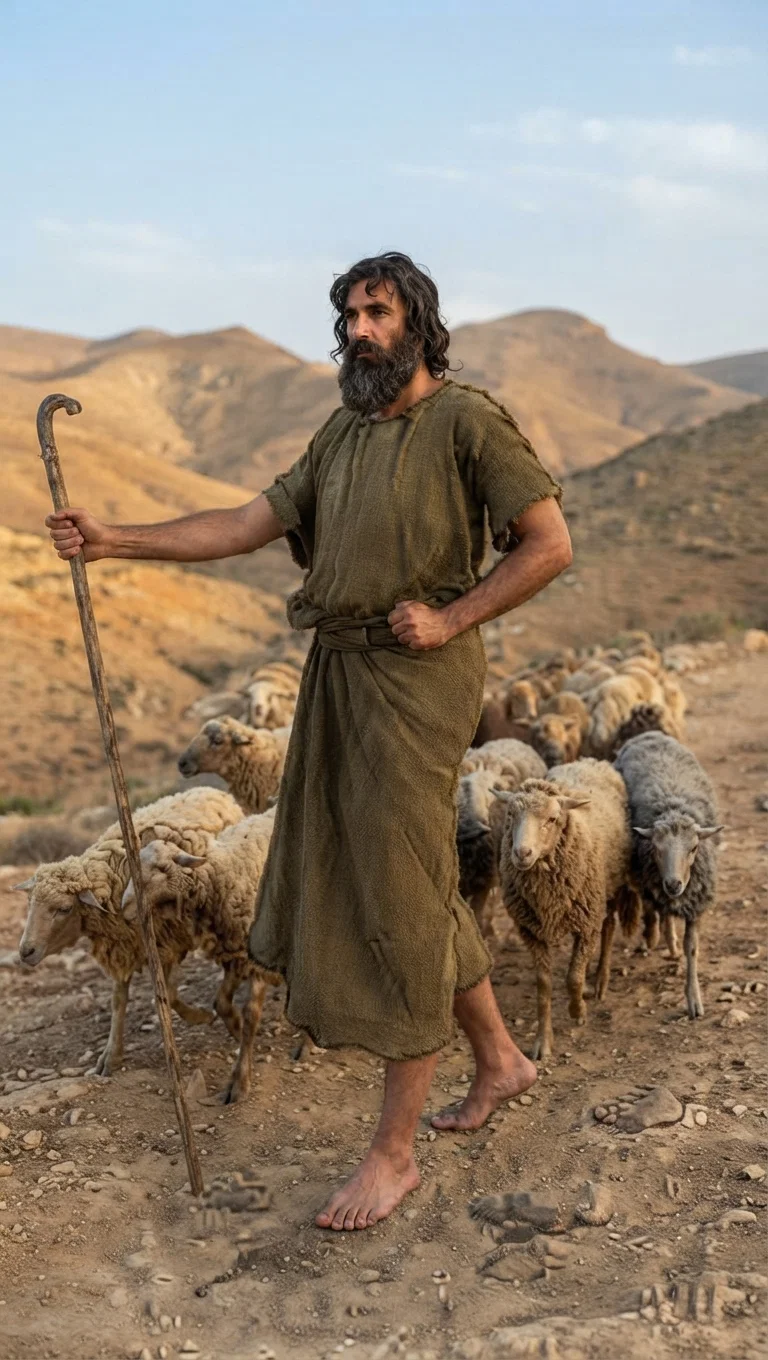
MOSES, a Shepherd. Exodus 3:1.
And then there is that other union—the labor union—in which men band themselves, under pains and penalties, to let no consideration interfere with their own grasping of every pecuniary advantage which they can secure; to drive to the wall every business which they can not control; to prevent every man, woman, or child from obtaining employment who will not, or can not consistently, yield to the control of that combination. It matters not to what extremity the wives or children of its proscribed victims may be driven through the inability of the father and husband to obtain the necessaries of life for those whom he had covenanted to shelter, protect, and provide for. It matters not what institution's hands are tied, what wheels of industry cease, or what homes are disrupted, if the heads of those homes do not wear the badge of the union. If you are a member of that union, strike when the union strikes, boycott whomsoever the union declares "unfair," jeer at the independent worker and do all you can to force him either under your control or out of his job, pay your fine when you patronize an independent firm or an independent laborer, refuse to associate with non-union men, or attend their funerals when they die, obeying this union no matter with what laws of heaven or earth it may conflict,—then you are entitled to all the "benefits" it has to bestow. If you do not choose to do this, its "benefits" are not for you, and all its machinery will be set in motion against you.
This union also is of men; for it opposes the principles of the government of God. He declares, "Thou shalt love the Lord thy God with all thy heart; . . . and thy neighbor as thyself;" but the one who is ruled by the principles of the union can not do this. To do so and act upon it would mean expulsion from the union. The union man must oppose his neighbor who refuses to join; he must refuse to work by his side; he must do his best to keep him from obtaining employment; he must not favor him in any way. The rule of God's government is, "Relieve the oppressed;" and He declares that He will be a "refuge for the oppressed," and a "swift witness" against the oppressor—the laborer who oppresses his neighbor as well as the rich who oppress the poor.
Thus we find in all these human unions, these bandings-together of men, principles that are diametrically opposed to the government of God. In them Self is god, unionism the mode of worship, and all their votaries must kneel before that altar, even though they kneel on the neck of the dearest friend or nearest relative.
Life-Union.
The union which Christ taught is comprehended in the one word, Love. Humanity had severed the cord that should have held it to the Heart of the universe, and infinite Love came down to join again the broken band. God was holding it forth to a world turning its back upon Him, and He holds it forth still. There is infinite harmony in that union. Christ declares: "I and My Father are One;" and again: "That they all may be one; as Thou, Father, art in Me, and I in Thee, that they also may be one in us." "All Mine are Thine, and Thine are Mine; and I am glorified in them." In that union with God through Christ there is no bitterness, no oppression, no envy, no malice, toward any.
Christ illustrates that union by the vine and its branches. "I am the vine, ye are the branches; he that abideth in Me, and I in him, the same bringeth forth much fruit." In that union there is life. It flows from the vine to the branches, and they bring forth fruit as a result of that life union. Separated from Him, the channel of that life stream is cut off; the branch withers, the fruit decays, and the keeper of the vineyard finds nothing but fuel for the flames where there might have been glorious fruit. In that illustration is the story of the Gospel work and its results. There are the two classes: one in union with God, bearing fruit to His glory; one cut off from that union, withering into self and perishing. The union of the human is for a fragment of time, and the birthright of eternity is sold for its mess of pottage. It struggles for self, fights for self, exalts self to be its god, and lies down in the ashes of its idol to wake no more forever. How insignificant, how worthless, how transient, are the fruits of such unions! In the working out, class
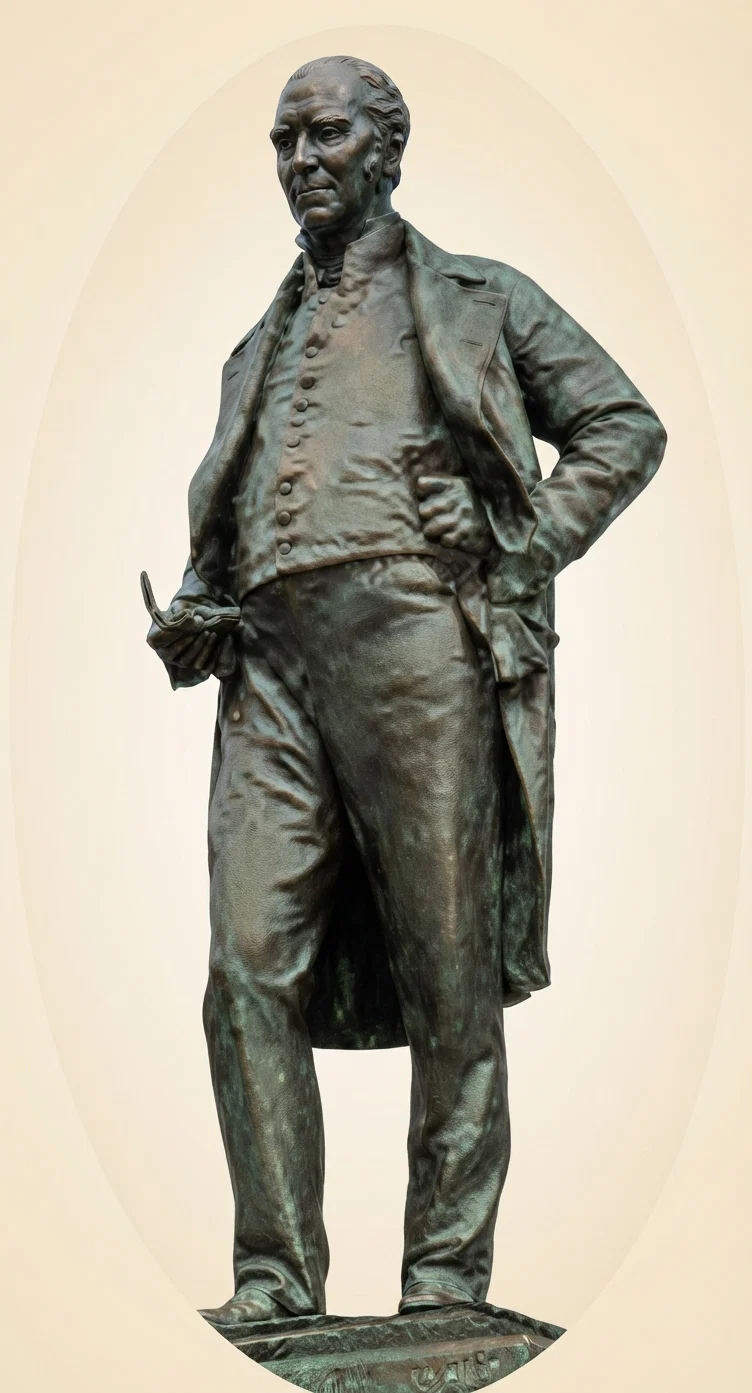
Born in Bordeaux, France, May 24, 1750; died, Philadelphia, Penn., December 26, 1831. Limited education, a sailor, captain, ship-owner, merchant and banker. Left $9,000,000 mostly to charitable purposes. He was miserly in private deal, open-handed in public matters. Nursed yellow-fever sufferers in 1793; bequeathed to hospitals and schools $110,000; to public improvements, $800,000. His principal bequest was for the erection and support of a college for orphans costing about $2,000,000, into which no ecclesiastic or Bible teacher should ever enter.