Your ShelfYour Projects

Signs of the Times, Vol. 29, No. 50.

Books with a Mission
Earlier text: WEALTH AND OPPRESSION IN THE LIGHT OF HISTORY

WEALTH AND OPPRESSION IN THE LIGHT OF PROPHECY

GOD'S WARNING TO THE RICH.

IT is not the purpose of this article or this paper to discuss political aspects or remedies growing out of or suggested by the ever-increasing wealth in the hands of the few. All these are but incidental and temporary, and all such remedies ultimately ineffective. Outward law reforms no one. All true reforms begin in the individual heart. The object of this writing is to show that all these present conditions and their sad outcome are noted in the "more sure word of prophecy;" that even by this means men might learn that Jehovah is God, "declaring the end from the beginning, and from ancient times things that are not yet done."
God's prophets of old bore their messages to the generations in which they lived, declaring, in all likelihood, much more than is recorded. Under this guidance they wrote out for future generations that instruction which would be applicable to them. The prophets spoke for their day; they wrote for the future. Viewed in this light we may often see double predictions and applications, a part referring to the prophet's own time and people, and a part to the far future. The former is a type of the latter. Conditions among the ancient people of God are similar to conditions arising later. Judgments upon Israel of old are prototypes of judgments upon modern Israel. The selfish, the rich, the tyrannical, the oppressive, then, are typical of the same characters now. The records which they left contain instruction, warning, and comfort for us now.
All this is especially true of "the last days." Inspiration assures us that Satan will then work with all power and signs and lying wonders, and with all deceivableness of unrighteousness to destroy souls. Every device which the arch-enemy has used to deceive souls he will use again. Every means that he has used to enslave souls he will employ again. But as his devices were met by the word of the prophet, so God gives us that sure word of the past to instruct us in similar conditions now.
God would have us know— That there is a Power above that of the Invisible Empire of wealth, even the Ruler of the Universe. That He foresaw the intense selfishness and greed of men to enrich themselves at the expense of their fellows; That He foresaw the skill and craft which would be employed in the mad ambition to use men as things, and so grasp the wealth of the world; That He foresaw that this ambition would be, humanly speaking, successful, and that riches would be "heaped together" "in the last days;" That He foresaw that this disregard of the poor and lowly of earth would arouse their hatred of the rich and lead to violence and crime; and, therefore, That He warns the rich of the evil which will come unless the power of wealth shall stay its hand and the rich man shall regard the poor as himself, and assist him as a brother man; That He foresaw that this warning will not be heeded, that rapine and bloodshed will certainly follow, and that the rich will be left desolate. And yet God does not sanction violence, but appeals to His suffering and oppressed children to be patient to the coming of the Lord Jesus Christ, who will right all wrongs.

A New Testament Prophecy.

All this and more is told by the "more sure Word of Prophecy." We have space for only three quotations, and shall be as brief as possible, commenting at times in brackets. The first prophecy is from the Epistle of James:— "Go to now, ye rich, weep and howl for your miseries that are coming upon you. Your riches are corrupted, and your garments are moth-eaten. Your gold and your silver are rusted; and their rust shall be for a testimony against you, and shall eat your flesh as fire. Ye have laid up ["heaped together," Common Version] your treasure in the last days. Behold, the hire of the laborers who mowed your
fields [a class representing all laborers], which is of you kept back by fraud, crieth out; and the cries of them that reaped have entered into the ears of the Lord of Sabaoth. Ye have lived delicately on the earth, and taken your pleasure; ye have nourished your hearts in a day of slaughter [of war, of misery, of want, on the part of many]. Ye have condemned, ye have killed the righteous one [by oppressive laws, by force of circumstances]; he doth not resist you. Be patient therefore, brethren, until the coming of the Lord." James 5:1-7, R. V.
Note the specifications of the prophecy:—
  1. There are great "miseries" coming upon the rich, and God forewarns them.
  2. He tells them the causes, the seed sowing of this harvest of miseries. They have in the face of the direst needs, the most abject poverty, gathered such an abundance of clothing and riches and gold and silver that their garments are moth-eaten, their riches corrupted, their gold and silver actually corrode and rust and canker in their locked vaults and treasure-houses.
More than this, they have gotten some of this wealth by fraud, some by oppression in wages rightly belonging to their employees. They have been indifferent to human needs. While the poor have wept and cried out in their distress, the rich have feasted and taken their pleasure, even as a warrior who has slaughtered his enemy and finds rich spoil in the banquet room of his foe.
In all this oppression, in the utterly thoughtless selfishness, in various forms, they have condemned and killed anew the Righteous One, Christ Jesus, who identifies Himself with all the sufferings of humanity; and all this that they might heap together treasure "for [or as the R. V., in] the last days," when, above all other times, it would be folly to store it, and most of all it would be needed for the poor, the unfortunate, the famine-stricken.
And every one of these specifications is now manifestly and increasingly true, tho they were not a few years ago. The gold and silver does not necessarily mean coin; and yet it is true of coin and bullion held in treasury-vaults at the demand or option of wealthy bond-holders till it becomes rusted or cankered. Think of the moth-eaten garments which might have blessed the poor and ragged and naked.
3. The one class of laborers are not here mentioned because they are exclusively sufferers; that one class is typical of all others. The prophet used the most numerous class in his day. The miner and the factory operator of every sort are, in the spirit of the prophecy, included.
Whence come "the miseries"? From the rising-up of oppressed and outraged humanity, as another prophet declares, and as we will show later.
4. And yet, he who rises up against such oppression is fighting his own battle alone, and can hope only for temporary success. The prophet says: Leave the case in God's hands. "Be patient therefore, brethren, unto the coming of the Lord." The righteous King is coming, whose dominion shall be from sea to sea, and from the river unto the ends of the earth;" and "He shall judge the poor of the people, He shall save the children of the needy." Ps. 72:8, 4.

"Shall They Not Rise Up Suddenly?"

Here is another divine prediction, fulfilled in no other age of the world as now:— "Thou that art of purer eyes than to behold evil, and that canst not look on perverseness [that is, to approve it], wherefore lookest Thou upon them that deal treacherously, and holdest Thy peace when the wicked swalloweth up the man that is more righteous than he; and makest men [God's children] as the fishes of the sea, as the creeping things, that have no ruler over them? He taketh up all of them with the angle, he catcheth them in his net, and gathereth them in his drag [wily schemes, by which men are controlled]; therefore he rejoiceth and is
glad. Therefore he sacrificeth unto his net, and burneth incense unto his drag [glorifies and exalts his schemes]; because by them his portion is fat, and his meat plenteous. Shall he therefore empty his net, and not spare to slay the nations continually?" "Behold, his soul is puffed up, it is not upright in him; . . . a treacherous dealer, a haughty man, and that keepeth not at home; who enlargeth his desire as hell [sheol, the grave], and he is as death, and can not be satisfied, but gathereth unto him all nations [witness to-day the trusts and world-wide confederations], and heapeth unto him all peoples. Shall not all these take up a parable against him, and a taunting proverb against him, and say, Wo to him that increaseth that which is not his! how long? and that ladeth himself with pledges [bonds, stocks, deeds, mortgages]! Shall they not rise up suddenly that shall bite thee, and awake that shall vex thee, and thou shalt be for booties unto them? Because thou hast spoiled many nations, all the remnant of the peoples shall spoil thee; because of men's blood, and for the violence done to the land, to the city and to all that dwell therein." "Wo to him that getteth an evil gain for his house, that he may set his nest on high, that he may be delivered from the hand of evil! Thou hast consulted shame to thy house, by cutting off many peoples, and hast sinned against thy soul. For the stone shall cry out of the wall, and the beam out of the timber shall answer it. Wo to him that buildeth a town with blood, and establisheth a city by iniquity!" Hab. 1:13-17; 2:4-12, R. V.
Note again the particulars of this prophecy:— 1. The cry of the Spirit is of God in oppressed humanity against man swallowing up his fellow; against man counting men as the fishes of the sea, as the creeping things of earth, that he might gather by his various schemes, and use them as parts of a machine, as tho justice did not exist, and the rule of God was at an end. It is not of God that the product of the people should be all consumed.
2. The cause of such inhuman oppression is the crushing, the deadening of human sensibility. The oppressor is puffed up. Wine has perverted his wisdom; not necessarily or alone of the bottle or the flask, but of ambition, of unholy greed, "the wine of Babylon,"—affecting him as it affected Lucifer, the king of Babylon, who proposed to reign, even to the dethroning of God. Isa. 14:4, 10-14.
3. Thus intoxicated, he is not willing to live and let live. He leaves his field of operation and covets his neighbor's; he keeps not at home; his ambitions enlarge as Sheol, and he can be satisfied with nothing less than the nations; he must exploit them all. Neither civilized heathen nor distant tribes and peoples are beyond his insatiate appetite for power.
4. Building cities by blood does not always mean war or violence. Blood is not shed in that way alone. The life-current may be tapped and its vitality diminished by other means. Insufficient food and drink, unsanitary surroundings, excess in charges for the necessities of life, are all sapping the life-blood of millions. But what does wealth have to do with these?—Simply this: Capitalists and wealthy corporations control these things. In the great teeming cities the power of wealth controls dwellings, fuel, provision, and even affects the air we breathe. In the country the great railways often swallow up all profit from the produce of the land, in excessive rates.

Not the Purpose to Oppress.

And yet the thought of the rich man is not to oppress; it is simply to advance his own interests. The oppression is not meant; it is incidental, not objective to his plan. He regards it with indifference, or as something deplorable, but which can not be helped. But "Hast Thou not said that what is done Unto Thy least and humblest one Is even done to Thee?" God regards it, and will remember His children and the injustice done them. And God desires the rich to remember, to regard the individual poor man.
5. But at last the sad awakening comes. Oppression reaps its fruit in like kind of spirit. Brain force is met by brute force. Money's power is met in deadly conflict by Poverty and Idleness and Hunger and Want. The prophet declares that the oppressed peoples and nations shall take up a taunting proverb. They shall say, "Wo to him that increaseth that which is not his! how long? and that ladeth himself with pledges,"—unfulfilled promises, bonds, and the like. The rising up will come suddenly and unexpectedly. The cowering "cur" will turn, and the erstwhile master will be bitten and vexed, and his riches will be "for booties," for a prey. The spoiler of nations will be spoiled, and the wages and means of life wrung from the blood of men, will be paid in blood. Another prophet, speaking of the same oppression and robbery in order to get gain, and the cry of the poor and the needy, thus warns the rich against the consequent uprising: "And the songs of the palace shall be howlings in that day, saith the Lord God; the dead bodies shall be many; in every place shall they cast them forth with silence. Hear this, O ye that would swallow up the needy [not the worthy alone], and cause the poor of the land to fail." Amos 8:3, 4.
Great opportunities and great power involve great and grave responsibilities. He who discharges them aright, who deals justly and loves mercy, will be blessed, and will prove a blessing. But he who violates the principles of justice, who lightly passes over the needs of his fellow-men, while he partakes continually of God's goodness; who oppresses, or even despises the poor and the needy, while he revels in luxury and rolls in wealth, shall reap, sooner or later, the fruit of his sowing. "That which a man soweth shall he also reap." This law is as eternal as justice; and the Judge can not be purchased by wealth or intimidated by power. When from mine and mill, from factory and sweatshop, from tenement and slum, the lean, the hungry, the hunted, the driven, the despairing, shall come forth together and rise up against the men of wealth whose hearts have been hardened by gold, when these masses shall be joined by the armies which have been enlisted or conscripted from among them to exploit the nations or protect plutocracy, then will God's Word be fulfilled in violated law, and men will realize in literal life the words of Inspiration: "Go to now, ye rich men, weep and howl for your miseries that shall come upon you."

The Rich Man's Duty and Refuge.

But, thank God, all the men who hold and control wealth are not grasping, unfeeling, or indifferent. All employers are not cruel or oppressive. The Spirit of God would make the application to each individual heart. God gives these predictions and merciful forewarnings that the rich may be saved and that he may help save the poor. His duty and refuge are thus set forth:— "Charge them that are rich in this world, that they be not high-minded, nor trust in uncertain riches, but in the living God, who giveth us richly all things to enjoy; that they do good, that they be rich in good works, ready to distribute, willing to communicate; laying up in store for themselves a good foundation against the time to come, that they may lay hold on eternal life." 1 Tim. 6:17-19. See also Luke 12:15-21; Matt. 6:19-21.
Failure to heed the divine law will bring upon the world all the calamities predicted in the prophecies above recorded.

God's Message to His Poor.

God's message to the poor, even the oppressed and afflicted, is, "Be patient therefore, brethren, unto the coming of the Lord." James 5:7. Do not yield to the clamor of those who know not God. Neither anarchy nor rebellion, neither mob law nor violence, neither boycott nor blacklist, is the remedy of the Christian. These may destroy and despoil the rich, but they will not heal the disease nor help the destroyer. Man's hope is in God.

The Last Days.

The very condition of things as regards capital and labor, monopoly and industrial slavery, is a strong, clear evidence that we are "in the last days," and that Christ's coming is near. The Christian knows that human or satanic rule is brief at best, and that God is just, loving, all-wise, eternal; and will leave his case in God's hands, rather than resort to violent measures.
Reader, in what is your hope? Is it in vain riches, which fly away, or which, at the longest, you must soon leave, e'en tho you heap them to the heavens? Is it in anarchy, nihilism, violence, politics, to overthrow the power of wealth? You may destroy men or systems; but you will not heal the wrong.
Or, better, eternally, heaven-higher better, is your trust in the power and life and light of the love of Christ? There you are safe; for those who put their trust in Him "shall not be ashamed nor confounded world without end."

GOD'S TWOFOLD WARNING TO HIS PEOPLE.

IN Isa. 8:9 to 9:7 is a prophecy which, borrowing figures and force from events in the reign of King Ahaz, presents striking predictions of last-day conditions, with solemn warnings to those who believe God and who hope in Him. (Where the text differs from the common version it is the American Standard Revision). That the prophecy has especial reference to the Christian will be seen by comparing verse 14 with Rom. 9:33, and 1 Peter 2:8; verse 17 with 1 Thess. 1:10, and Heb. 9:28; verse 18 with Heb. 2:13. Note, also, the expression "My disciples," a term expressive of Christ's followers. The "latter time," "the harvest," and the establishment of the kingdom of Christ all point to the last days. Matt. 13:39; Rev. 14:14; 2 Tim. 4:1.

The Prototype.

The position of Israel, and later Judah, was that of a buffer between the great powers on the northeast in Asia and southeast in Africa. Her riches were a constant temptation to the cupidity of the kingdoms and tribes on either side. And Judah's temptation was in case of disagreement or attack by the powers on one side to ally herself with the powers on the other. Hence she turned from Assyria to Egypt and from Egypt to Babylon and from Babylon to Egypt; and in all cases it proved her weakness and loss. Almost invariably they left her stripped and bare. To meet Judah's strength other nations united. In the days of Ahaz it was Rezin, king of Syria, and Pekah, king of the Ten Tribes, then utterly apostate.
God would comfort His people now as He did then in telling them that no power could combine to overthrow those who in righteousness trusted in Him. Now capitalists are combining to exploit government and people. The working men feel that they must combine to meet the forces of capital; and those who feel that evil times are coming are solicited and tempted to join with the forces on one side or the other of the conflict.

God's Warning.

Here is the word of God's prophet to those who in association would crush the righteous:—
"Associate yourselves, O ye people, and ye shall be broken in pieces; and give ear, all ye of far countries; gird yourselves, and ye shall be broken in pieces; gird yourselves, and ye shall be broken in pieces. Take counsel together, and it shall come to nought; speak the word, and it shall not stand; for God is with us."
Here is God's advice to His people concerning these combinations:—
"For the Lord spake thus to me with a strong hand, and instructed me that I should not walk in the way of this people, saying, Say ye not, A confederacy, to all them to whom this people shall say, A confederacy; neither fear ye their fear, nor be afraid."
When God speaks to His people "with a strong hand," His own mighty support is assured, as the hand is a symbol of power. The people who associate together "make an uproar" (R. V.), but God speaks in mighty power. Keep aloof from all combinations that in any way put themselves in the place of God, or that do injustice. God thus sets before us

Our Duty.

"Sanctify Jehovah of Hosts Himself; and let Him be your fear, and let Him be your dread. And He shall be for a sanctuary [a safe place]; but for a stone of stumbling and for a rock of offense [to the disobedient, 1 Peter 2:8] to both the houses of Israel, for a gin and for a snare to the inhabitants of Jerusalem. And many among them shall stumble, and fall, and be broken, and be snared, and be taken.
"Bind up the testimony, seal the law among My disciples. And I will wait upon the Lord, that hideth His face from the house of Jacob, and I will look for Him. Behold, I and the children whom the Lord hath given me are for signs and for wonders in Israel from the Lord of Hosts, which dwelleth in Mount Zion."
Not to men are we to look in these fearful times of trouble, not to schemes of men to solve the unsolvable problems; but to Jehovah of Hosts who is able to save. Set Him up as your King, your Ruler. Love Him with all the heart, mind, soul, and might. Bind up as a precious treasure in your life the witness of His Spirit, and let that Spirit seal His law in its every precept upon your heart. Men have trampled upon it, have sought to tear from the perfect code the very precept which reveals our God as the Creator of heaven and earth, have put in the place of the Sabbath it enjoins a spurious counterfeit, upheld by the combination of tradition and civil law. Make God's law your rule of action, seal it among His disciples, wait upon Christ for strength, and look for His coming; and God's "strong hand" will make His trusting ones "signs and wonders" of character which are kept in the midst of corruption.

Another Danger Spiritually.

From the spiritual side a danger confronts humanity. Ignorant of His law, repudiating His Word, magnifying the old falsehood of Satan, "Ye shall not surely die;" "Ye shall be as God," the great religious world stands where it is open to "the working of Satan with all power and signs and lying wonders, and with all deceivableness of unrighteousness in them that perish; because they receive not the love of the truth that they might be saved." 2 Thess. 2:9, 10.
Chief among these workings of Satan stand all these occult sciences based on the inherent immortality of man, led in the ancient world by Necromancy, and in the modern world by Spiritism. The strongest, most familiar, of the delusions which turn men from God and center faith upon poor self is used by the prophet as a type of all the rest. Here is the warning against yielding to any or all, the divine rule by which they are to be tested, and the sad consequences to those who reject God and place their hope in the deceptions of Satan:—
"And when they shall say unto you, Seek unto them that have familiar spirits and unto wizards, that chirp and that mutter: should not a people seek unto their God? on behalf of the living should they seek unto the dead? To the law and to the testimony; if they speak not according to this word, it is because there is no light in them. And they shall pass through it, sore distressed and hungry [Amos 8: 11]; and it shall come to pass that, when they shall be hungry, they shall fret themselves, and curse by their king and by their God, and turn their faces upward; and they shall look unto the earth, and, behold, distress and darkness, the gloom of anguish; and into thick darkness they shall be driven away."
God's true church suffers during the time when men turn from their only hope of salvation. Then she weeps and they rejoice (Isa. 22: 12, 13); but in that day, when her triumph is assured, they will mourn over their blasted hopes while she will rejoice in her God (Isa. 65: 11-16). And so the prophet continues to portray the future of the two classes, those who are loyal to the government of God and hence to all men, and those who reject God, associate together, and follow the devices of Satan:—
"But there shall be no gloom to her that was in anguish. In the former time He brought into contempt the land of Zebulun and the land of Naphtali [when the tribes were carried captive]; but in the latter time hath He made it glorious, by the way of the sea, beyond Jordan, Galilee of the nations. [The partial fulfilment at the first advent was a prophecy of "the everlasting Gospel" to all the nations. Rev. 14: 6.] The people that walked in darkness have seen a great light; they that dwelt in the land of the shadow of death, upon them hath the light shined. [Isa. 60: 1, 2; Rev. 18: 1, 2.] Thou hast multiplied the nation, Thou hast increased their joy; they joy before thee according to the joy in harvest, as men rejoice when they divide the spoil. For the yoke of his burden, and the staff of his shoulder, the rod of his oppressor, Thou hast broken as in the day of Midian [when God fought for Gideon and his faithful three hundred; they needed to wield no sword, only to break their pitchers, hold aloft their torches, and shout for God Judges 6: 33 to 7: 22]. For all the armor of the armed men in the tumult, and the garments rolled in blood, shall be for burning, for fuel of fire."
The triumph of all who truly triumph in the fearful struggles of these evil times rests in Christ Jesus, the King of Righteousness, the King of Peace. Those who trust Him will share His kingdom. They shall win it, not because of their plans, or combinations, or alliances, or confederations; not because of human laws, or votes, or politics; the zeal and power of Christ Jesus alone will accomplish it. Thus it is written: "For unto us a Child is born, unto us a Son is given; and the government shall be upon His shoulder; and His name shall be called Wonderful, Counsellor, The Mighty God, the Everlasting Father, The Prince of Peace. Of the increase of His government and peace there shall be no end, upon the throne of David, and upon his kingdom, to order it, and to establish it with judgment and with justice from henceforth even for ever. The zeal of the Lord of Hosts will perform this." Reader, to His salvation, His truth, His hope, His everlasting kingdom, which knows neither injustice nor suffering, we invite you.
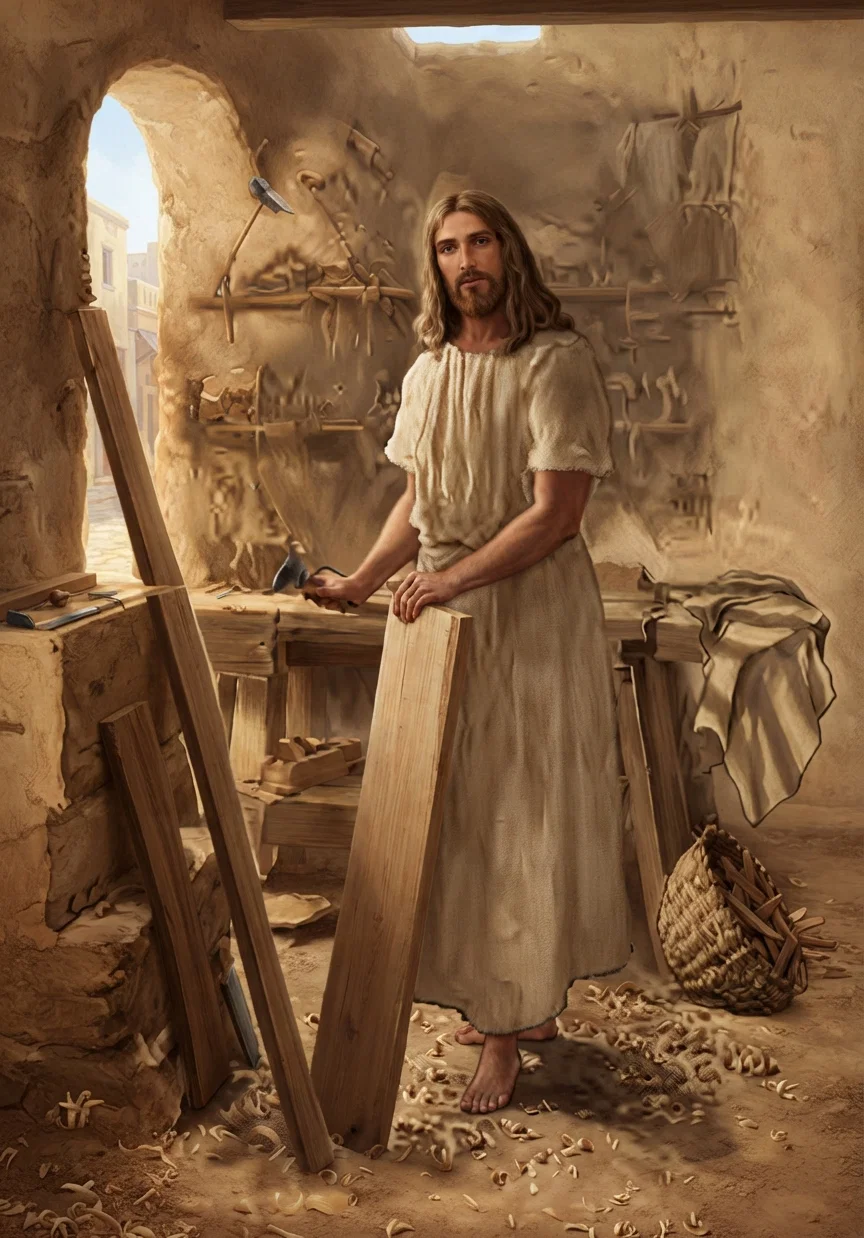
A Bible Carpenter. Mark 6:3.

THE BOYCOTT AND THE BLACKLIST.

[The same principle is involved in the boycott and in the blacklist. They are employed for the same purpose. The boycott has come to be a special weapon of union labor, while the blacklist is a punishment especially used against offending employees by great corporate employers. The Anthracite Coal Strike Commission expressed an emphatic opinion against both. We copy brief extracts, as follows:—]
The right and liberty to pursue a lawful calling and to lead a peaceable life, free from molestation or attack, concerns the comfort and happiness of all men, and the denial of them means destruction of one of the greatest, if not the greatest, of the benefits which the social organization confers. What is popularly known as the boycott (a word of evil omen and unhappy origin) is a form of coercion by which a combination of many persons seek to work their will upon a single person, or upon a few persons, by compelling others to abstain from social or beneficial business intercourse with such person or persons. Carried to the extent sometimes practised in aid of a strike, and as was in some instances practised in connection with the late anthracite strike, it is a cruel weapon of aggression, and its use immoral and antisocial.
To say this is not to deny the legal right of any man or set of men voluntarily to refrain from social intercourse or business relations with any persons whom he or they, with or without good reason, dislike. This may sometimes be unchristian, but it is not illegal. But when it is a concerted purpose of a number of persons not only to abstain themselves from such intercourse, but to render the life of their victim miserable by persuading and intimidating others so to refrain, such purpose is a malicious one, and the concerted attempt to accomplish it is a conspiracy at common law, and merits and should receive the punishment due to such a crime.
Examples of such "secondary boycotts" are not wanting in the record of the case before the commission. A young schoolmistress, of intelligence, character, and attainments, was so boycotted, and her dismissal from employment compelled for no other reason than that a brother, not living in her immediate family, chose to work contrary to the wishes and will of the striking miners. A lad, about fifteen years old, employed in a drug store, was discharged, owing to threats made to his employer by a delegation of the strikers, on behalf of their organization, for the reason that his father had chosen to return to work before the strike was ended. In several instances tradesmen were threatened with a boycott—that is, that all connected with the strikers would withhold from them their custom, and persuade others to do so—if they continued to furnish the necessaries of life to the families of certain workmen who had come under the ban of the displeasure of the striking organizations. This was carrying the boycott to an extent which was condemned by Mr. Mitchell, president of the United Mine Workers of America, in his testimony before the commission, and which certainly deserves the reprobation of all thoughtful and law-abiding citizens. Many other instances of boycott are disclosed in the record of this case.
In social disturbances of the kind with which we are dealing, the temptation to resort to this weapon oftentimes becomes strong, but is none the less to be resisted. It is an attempt of many, by concerted action, to work their will upon another who has exercised his legal right to differ with them in opinion and in conduct. It is tyranny, pure and simple, and as such is hateful, no matter whether attempted to be exercised by few or by many, by operators or by workmen, and no society that tolerates or condones it can justly call itself free.
Closely allied to the boycott is the blacklist, by which employers of labor sometimes prevent the employment by others of men whom they have discharged. In other words, it is a combination among employers not to employ workmen discharged by any of the members of said combination. This system is as reprehensible and as cruel as the boycott, and should be frowned down by all humane men. Happily there was little evidence of its existence among the operators in the anthracite region, one case only having been distinctly proved, and in that the refusal to employ the tabooed men continued but for a short time. Wherever it is practised to the extent of being founded upon an agreement or concerted action, it, too, comes within the definition of the crime of conspiracy, and as such should be punished. There is also a civil remedy open to one who suffers from having been blacklisted, in an action against those who are a party to it, to recover damages compensatory of the injury received.

GOD'S LOVE FOR THE INDIVIDUAL.

BY MRS. E. G. WHITE.
IN the parable of the Lost Sheep the shepherd goes out to search for one sheep,—the very least that can be numbered. So if there had been but one lost soul, Christ would have died for that one.
The sheep that has strayed from the fold is the most helpless of all creatures. It must be sought for by the shepherd, for it can not find its way back. So with the soul that has wandered away from God; he is as helpless as the lost sheep, and unless divine love had come to his rescue, he could never find his way to God.
The shepherd who discovers that one of his sheep is missing, does not look carelessly upon the flock that is safely housed, and say, 'I have ninety and nine, and it will cost me too much trouble to go in search of the straying one. Let him come back, and I will open the door of the sheepfold, and let him in.' No; no sooner does the sheep go astray than the shepherd is filled with grief and anxiety. He counts and recounts the flock. When he is sure that one sheep is lost, he slumbers not. He leaves the ninety and nine within the fold, and goes in search of the straying sheep. The darker and more tempestuous the night, and the more perilous the way, the greater is the shepherd's anxiety, and the more earnest his search. He makes every effort to find that one lost sheep.
With what relief he hears in the distance its first faint cry. Following the sound, he climbs the steepest heights; he goes to the very edge of the precipice, at the risk of his own life. Thus he searches, while the cry, growing fainter, tells him that his sheep is ready to die. At last his effort is rewarded; the lost is found. Then he does not scold it because it has caused him so much trouble. He does not drive it with a whip. He does not even try to lead it home. In his joy he takes the trembling creature upon his shoulders; if it is bruised and wounded, he gathers it in his arms, pressing it close to his bosom, that the warmth of his own heart may give it life. With gratitude that his search has not been in vain, he bears it back to the fold.
Thank God, He has presented to our imagination no picture of a sorrowful shepherd returning without the sheep. The parable does not speak of failure, but of success, and joy in the recovery. Here is the divine guarantee that not even one of the straying sheep of God's fold is overlooked, not one is left unsuccored. Every one that will submit to be ransomed, Christ will rescue from the pit of corruption, and from the briers of sin.
Desponding soul, take courage, even tho you have done wickedly. Do not think that perhaps God will pardon your transgressions, and permit you to come into His presence. God has made the first advance. While you were in rebellion against Him, he went forth to seek you. With the tender heart of the shepherd He left the ninety and nine, and went out into the wilderness to find that which was lost. The soul, bruised and wounded, and ready to perish, He encircles in His arms of love, and joyfully bears it to the fold of safety.
When the straying sheep is at last brought home, the shepherd's gratitude finds expression in melodious songs of rejoicing. He calls upon His friends and neighbors, saying unto them, 'Rejoice with me; for I have found my sheep which was lost.' So when a wanderer is found by the great Shepherd of the sheep, heaven and earth unite in thanksgiving and rejoicing.

THE CRISIS.

(Whittier.)
The crisis presses on us; face to face with us it stands, With solemn lips of question, like the Sphinx in Egypt's sands! This day we fashion destiny, our web of fate we spin; This day for all hereafter choose we holiness or sin; Even now from starry Gerizim, or Ebal's cloudy crown, We call the dews of blessing or the bolts of cursing down! By all for which the martyrs bore their agony and shame; By all the warning words of truth with which the prophet came; By the future which awaits us; by all the hopes which cast Their faint and trembling beams across the blackness of the past; And by the blessed thought of Him who for earth's freedom died, O my people! O my brothers! let us choose the righteous side.

THE RIGHTS OF THE WORKINGMAN.

(The Supreme Court of Pennsylvania, October, 1903.)
The right to the free use of his hands is the workman's property as much as the rich man's right to the undisturbed income from his factory, houses, and lands; by his work he earns present subsistence for himself and family; his savings may result in accumulations which will make him as rich in houses and lands as his employer. This right of acquiring property is an inherent, indefensible right of the workman; to exercise it, he must have the unrestricted privilege of working for such employer as he chooses, at such wages as he chooses to accept. This is one of the rights guaranteed him by our "Declaration of Rights;" it is a right of which the Legislature can not deprive him, one of which the law of no trade union can take from him, and one which it is the bounden duty of the courts to protect. The one most concerned in jealously maintaining this freedom is the workman himself.

PROFIT-SHARING A KEY.

William T. Stead, the noted English publicist, and editor English "Review of Reviews," believes that the mutuality of interest between employer and employed would be made more effective by "profit-sharing plus co-partnership," and that this is recognized "more and more by the longest-headed, most wide-awake employers in Great Britain as the key to the solution of the question."
Continue reading: What Eminent Men Have Said on the Principles Involved