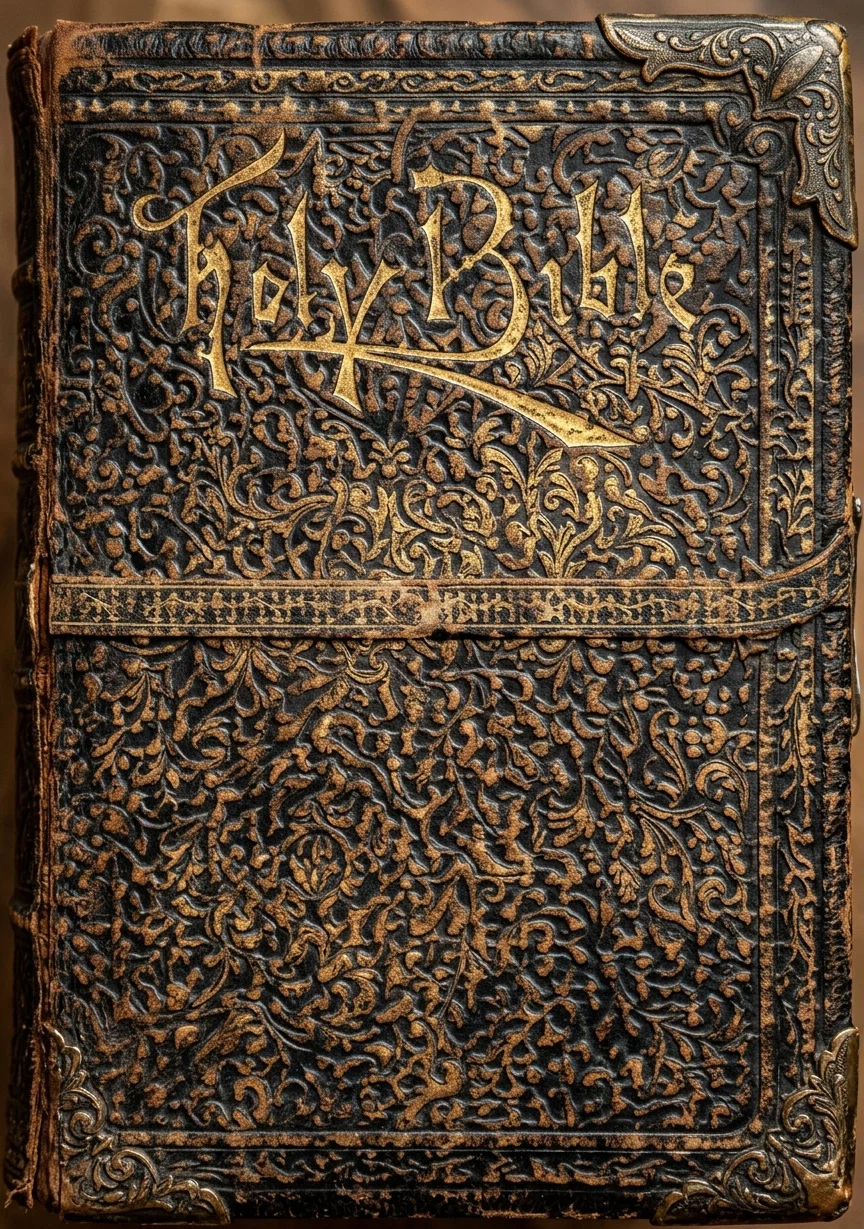
To TRULY know God’s word, we must know the power of that word, for it is through his word that God manifests his power. This is shown us in the one great illustration of God’s power which is ever before us, namely, the creation of the heavens and the earth. This creation was wrought, David tells us in the thirty-third psalm, through the word of God. “He spake, and it was.” “By the word of the Lord were the heavens made; and all the host of them by the breath of his mouth.”
The Being through whom the Godhead created the worlds, the word of whose power upholds them, is our Lord Jesus Christ. Says the apostle Paul, in speaking of Christ (Col. 1:16, 17): “For in him [Christ] were all things created, in the heavens and upon the earth, things visible and things invisible, whether thrones, or dominions, or principalities, or powers; all things have been created through him, and unto him; and in him all things hold together” (Revised Version, margin). This gives us, so far as we can understand, the measure of the power of the word of God, the word of truth, in Christ Jesus. God presents this evidence before us to inspire our faith in his power, to help us as individuals. How great power has he?—Power to create from naught by his word the heavens and the earth. So has he power to create us anew in Christ Jesus (Eph. 2:10), to make of us new creatures (2 Cor. 5:17), which hate sin and love righteousness.
Christ’s power to cleanse from sin is declared in John 15:3. The disciples of Christ were men even as others, carnal by nature, and hating God’s law, vile and corrupted by sin. But Jesus spoke the cleansing word, and, lo, they were cleansed. So he declares, “Now ye are clean through the word which I have spoken unto you.” The sin was driven out, the new heart was created within, guilt was all cleansed away.
Illustrations of this power in Christ’s words are given over and over in the record of his ministry. He makes plain by things which our senses can comprehend just what his power will do for us spiritually if we will yield to him. An instance of this kind is mentioned in Matt. 8:1–3: “When he [Jesus] was come down from the mountain, great multitudes followed him. And, behold, there came a leper and worshiped him, saying, Lord, if thou wilt, thou canst make me clean. And Jesus put forth his hand, and touched9him, saying, I will; be thou clean. And immediately his leprosy was cleansed.”
We can faintly imagine the scene,—the multitude thronging the Master, talking of his wonderful teachings, leaning on the words of his lips, while those who had been healed were leaping for joy and shouting his praises. To the poor leper tidings had doubtless before this come that a great prophet had risen. The earnest longing had awakened in his heart that even he might be free. He feels that the opportunity of his life had come. He presses forward toward Jesus. He forgets to cry, “Unclean, unclean;” he loses sight of the people; he forgets everything but his fearful malady and the One who can save him. The crowd quickly separate, so as not to even touch his garment. The disciples fall back in fear. Jesus alone is calm. The pleading, broken voice of the leper is heard, “Lord, if thou wilt, thou canst make me clean.” Jesus does not flee, does not shrink back. He reaches forth that hand which never shrank from woe or pain for the sake of humanity. The people wonder if he will dare touch the leper. Immediately his voice is heard, and no sweeter words ever fell on a sufferer’s ears than the calm tones of Jesus, the Prince of Life, “I will; be thou clean.”
It was on a later occasion, when teaching deeper spiritual truths, that Jesus declared, “The words that I speak unto you, they are spirit, and they are life;” but here those truths were demonstrated. The word thrilled through the frame of the leper, drove out the disease, and created anew wasted muscle, shrunken sinew, and blasted nerve. The leprosy was cleansed, even as the leprosy of sin was cleansed from his disciples by his word. And it is even thus that Jesus the Christ will cleanse you, sinner, if you will but come to him. He loved you so that he gave his life; and his power can accomplish all his love.
Such is the word of the living God. Learned men may rear against it their greatest fortresses, may train against it their mightiest guns, but the fortresses are as chaff and the guns as the merest toys to the mighty granite compared with the mighty rock of the word of God. “For all flesh is as grass, and all the glory of men as the flower of grass. The grass withereth, and the flower thereof falleth away; but the word of the Lord endureth forever. And this is the word which by the Gospel is preached unto you.” 1 Peter 1:24, 25. Blessed is the man whose trust is in such a word. M. C. W.
THE WORD IN US—LIVING EPISTLES.
By Roderick S. Owen
BY RODERICK S. OWEN.
The word of God is the word of life. By it, in the person of Jesus, was all life given; and by the same means is all life sustained. It speaks of those things which are not as though they were, and thus causes them to be.
This word was incarnate in Jesus of Nazareth. He was the Word. Contact with him as such meant sight to the blind, leaping to the lame, shouting to the dumb, health to the sick. That Word walked upon the foaming Sea of Galilee; it abode in the storm-tossed bark; but when it spoke, suddenly the waves were stilled. It was heard at the grave of Lazarus, and, lo! the dead came to life. Its kindly, cheering tones reached the ear of the sin-burdened soul, and a new life went coursing through the veins, and new hopes crowded thick upon the brain, finding expression in an animated face.
Jesus said, “I am the light of the world.” John 8:12. And this “light of men” was also the life. John 1:4. But God did not design that this light, which in Jesus flashed like a brilliant meteor across the darkness of this world, should like a meteor be suddenly eclipsed. Ah, no! He intended that the same glorious rays of light and life manifested in him should abide in the world in the persons of his followers. “Ye are the light of the world. A city that is set on an hill can not be hid. . . . Let your light so shine before men, that they may see your good works, and glorify your Father which is in heaven.” Matt. 5:14-16. “That ye may be blameless and harmless, the sons of God, without rebuke, in the midst of a crooked and perverse nation, among whom ye shine as lights in the world.” Phil. 2:15.
But this light, or life, is in the word. “The words that I speak unto you, they are spirit, and they are life.” John 6:63. “The entrance of Thy words giveth light.” Ps. 119:130. “If ye abide in Me, and My words abide in you; ye shall ask what ye will, and it shall be done unto you.” John 15:7. “Let the word of Christ dwell in you richly in all wisdom; teaching and admonishing one another in psalms and hymns and spiritual songs, singing with grace in your hearts to the Lord.” Col. 3:16.
This word applied to the sinner is as a “fire, saith the Lord; and like a hammer that breaketh the rock in pieces.” Jer. 23:29. This word received will awaken those who are dead in trespasses and sins to a new life. This word believed becomes the exceeding great and precious promises whereby we are made partakers of the divine nature, having escaped the corruption which is in the world through lust. 2 Peter 1:1, 4. This word going with us becomes a lamp unto our feet and a light unto our path. Ps. 119:105. It is a detector of all sin, a revealer of all the snares of the enemy. Heb. 4:12; Ps. 17:4. By this word of truth we are sanctified. “Now are ye clean through the word which I have spoken unto you.” John 15:3. Keeping this word of his patience, we shall be kept “from the hour of temptation, which shall come upon all the world, to try them that dwell upon the earth.” Rev. 3:10.
But, that these things may be accomplished, the word must be received in faith as the word of God. “For this cause also thank we God without ceasing; because, when ye received the word of God which ye heard of us, ye received it not as the word of men, but as it is in truth, the word of God, which effectually worketh also in you that believe.” 1 Thess. 2:13. It is effectual because when thus received Christ is found in it. “If a man love me, he will keep my words; and my Father will love him, and we [the Father and Son] will come unto him, and make our abode with him.” John 4:23. “His name is called The Word of God.” Rev. 19:13. “And the Word was made flesh, and dwelt among us (and we beheld his glory, the glory as of the only begotten of the Father), full of grace and truth.” John 1:14. “For God, who commanded the light to shine out of darkness [by the word], hath shined in our hearts [by the same word], to give the light of the knowledge of the glory of God in the face of Jesus Christ. But we have this treasure in earthen vessels, that the excellency of the power may be of God, and not of us.” 2 Cor. 4:6, 7. We are “changed into the same image from glory to glory.” 2 Cor. 3:18. “Being born again, not of corruptible seed, but of incorruptible, by the word of God, which liveth and abideth forever.” 1 Peter 1:23. By feeding on that word we grow. 1 Peter 2:1, 2. “That he would grant you, according to the riches of his glory, to be strengthened with might by his Spirit in the inner man; that Christ may dwell in your hearts by faith.” Eph. 3:16, 17.
Yes, dear reader, God hath called us by his grace that he might reveal his Son in us (Gal. 1:15, 16), and we are to put “on the Lord Jesus Christ [so that others will see him, when they see us], and make not provision for the flesh, to fulfill the lusts thereof” (Rom. 13:14). Then are we crucified with Christ; nevertheless we live; yet not we, but it is Christ who liveth in us, and the life we now live in the flesh, we live by the faith of the Son of God, who loved us and gave himself for us. Gal. 2:20. O, what a privilege to have the Majesty of heaven, the One to whom all power in heaven and earth is given, abiding in us to will and to do of his own good pleasure! In this condition we show forth the praises of Him who hath called us to glory and virtue. This is lifting up Christ so as to draw all men unto him. Then are we living epistles known and read of all men, reproducing the life of Christ, walking in harmony with the word, delighting to do the will of God. Dear reader, is the living Word in you? Is Christ manifest in your flesh?
THE TESTIMONY OF THE BIBLE TO ITSELF
By Ellet Joseph Waggoner
Some persons object that what the Scriptures say as regards their inspiration is not proper evidence—that we ought rather to have outside testimony concerning the Scriptures. It is true that, ordinarily, in the case of a man, his own testimony concerning himself is not conclusive; but it is not so in the case of the Bible. We must either take its testimony concerning its own inspiration, or else reject it entirely. He who doubts its testimony on this point will doubt it upon every point. Accepting the Bible as a book10of truth, we must necessarily accept all that it says of itself.
We know that it speaks the truth when it tells us about ourselves, therefore we accept its testimony as true when it speaks of itself. The woman of Samaria said, “Come, see a man, which told me all things that ever I did; is not this the Christ?” So we know that the testimony of the Bible is the testimony of that same one.
The Pharisees found fault with Christ because he said, “I am the light of the world.” They said: “Thou bearest record of thyself; thy record is not true. Jesus answered and said unto them; though I bear record of myself, yet my record is true; for I know whence I came, and whither I go; but ye can not tell whence I come, and whither I go. . . . It is also written in your law, that the testimony of two men is true. I am one that bear witness of myself, and the Father that sent me beareth witness of me.” John 8: 13-18.
The Pharisees could not see the Father, and therefore they would not accept Christ’s testimony concerning himself. If they had believed Jesus, they would have known that his testimony was true. It is by faith that we understand. He who believes has evidence of the strongest kind. He who believes God’s word, accepting it not as the word of man, but as it is indeed, the word of God, knows that the Spirit of God is witnessing through it.
There is sufficient evidence to enable anybody to accept the Bible as the word of God; but the strongest evidence of all comes to the man after he has believed. This evidence can never be exhausted or measured, but becomes stronger the longer it is considered.
E. J. W.
The Bible Only: Protestantism Versus Tradition and Popery
The Bible, I say, the Bible only, is the religion of the Protestants. Nor is it of any account in the estimation of the genuine Protestant, how early a doctrine originated, if it is not found in the Bible. . . . He who receives a single doctrine upon the mere authority of tradition, let him be called by what name he will, by so doing steps down from the Protestant rock, passes over the line which separates Protestantism from popery, and can give no valid reason why he should not receive all the earlier doctrines and ceremonies of Romanism upon the same authority.—Dowling’s History of Romanism, book 2, chap. 1.
Against Appeals to Antiquity in Religious Error
To HAVE been a thousand years wrong, will not make us right for one single hour! or else the pagans should have kept to their creed.—D’Aubigne’s Reformation, book 8, chap. 14, par. 14.
BIBLE STUDY.
By Ellen G. White
BY MRS. E. G. WHITE.
“Given by inspiration of God,” “able to make us wise unto salvation,” rendering “the man of God perfect, thoroughly furnished unto all good works”—the Book of books has the highest claims to our reverent attention. Superficial study of the word of God can not meet the claims it has upon us, nor furnish us with the benefit that is promised. We should seek to learn the full meaning of the words of truth, and to drink deep the spirit of the holy oracles. To read daily a certain number of chapters, or to commit to memory a stipulated amount of Scripture, without careful thought as to the meaning of the text, will profit but little. To study one passage until its significance is clear to the mind, and its relation to the plan of salvation is evident, is of more value than the perusal of many chapters with no definite purpose in view and no positive instruction gained. We can not obtain wisdom from the word of God without giving earnest and prayerful attention to its study. It is true that some portions of Scripture are, indeed, too plain to be misunderstood; but there are many portions whose meaning can not be seen at a glance; for the truth does not lie upon the surface. In order to understand the meaning of such passages, scripture must be compared with scripture; there must be careful research and prayerful reflection. Such study will be richly repaid. As the miner discovers precious veins of metal concealed beneath the surface of the earth, so will he who perseveringly searches the word of God as for hid treasure find truths of the greatest value which are concealed from the careless seeker.
You must dig in the mine of truth till you find its greatest treasure, and by comparing scripture with scripture you may find the true meaning of the text. But if you do not make the sacred teachings of God’s word the rule and guide of your life, the truth will be nothing to you. Truth is efficient only as it is carried out in practical life. If the word of God condemns some habit you have indulged, a feeling you have cherished, a spirit you have manifested, turn not from the word of God, but turn away from the evil of your doings, and let Jesus cleanse and sanctify your heart. Confess your faults, and forsake them wholly and determinedly, believing the promises of God, and showing your faith by your works. If the truths of the Bible are woven into practical life, they will bring the mind up from earthliness and debasement. Those who are conversant with the Scriptures will be men and women who exert an elevating influence.
In searching for Heaven-revealed truths, the Spirit of God is brought into close connection with the sincere searcher of the Scriptures. An understanding of the revealed will of God enlarges the mind, expands, elevates, and endows it with new vigor, by bringing its faculties into contact with stupendous truth. No study is better to give energy to the mind, to strengthen the intellect, than the study of the word of God. No other book is so potent in elevating the thoughts, in giving vigor to the faculties, as is the Bible, which contains the most ennobling truths. If God’s word were studied as it should be, we would see breadth of mind, stability of purpose, nobility of character, such as are rarely seen in these times.
HOW FRITZ FOUND THE PURSE.
There was always something the matter with Fritz, though no one knew exactly what it was. His eyes were dull and heavy, his face was pale, and his head ached. His shoulders were bent, his muscles weak and flabby, he had no appetite, and did not sleep well. His mother petted him and coaxed him to eat, and would not let him do any work, for, she said, “Fritz is too delicate to work; work never did agree with him.” The neighbors sent in every kind of delicacy they could think of, but, though he tried everything, he grew no better. Then they all shook their heads and sighed, wishing they could know the real name of his trouble. At last his mother, worn out with hard work and anxiety, died, murmuring with her last breath, “Ah me! what will become of my poor Fritz?”
She left a small but cozy cottage, a large garden, and an orchard, with a long lease and low rental. But everything was ill kept, poorly cultivated, forlorn, and neglected.
“Good-evening to you, Fritz,” said a voice as Fritz sat by himself, wondering, as his mother and all the neighbors had wondered, how he was to live in this hard-working world. It was the old, very old schoolmaster, who came up the little walk to the cottage door. Fritz made room for the old man.
“I taught you to read, Fritz,” he said, “and your father, and his father before him. I’m an old, old man, you see. And I’ve come to tell you something you ought to know. There’s a heavy purse of gold buried on this place of yours.”
“A purse of gold!” exclaimed Fritz in astonishment. “Whereabouts? Show me, so that I can dig it up.”
“No one can show it to you,” said the master; “I only know that it is somewhere within those boundary lines, and that whoever seeks it faithfully is sure to find it.”
“But I am not strong,” said Fritz mournfully. “I never could dig.”
“That’s true, poor lad,” said the master compassionately. “How could I forget that?11Ah, well, you are a good boy, Fritz, and will be able to rejoice in thinking that whoever comes after you here will find it! A lucky fellow he will be! I shall have to tell him what it is hardly worth while telling you, that there is a kind of charm about it. No one will find it who leaves any slack work behind him. The garden must be well cared for and well planted as he goes, and if a single tree in the orchard is injured, the charm will fail.”
After a little more chat he went on, leaving Fritz full of thought over the wonderful thing he had told him. He would have doubted the story if it had come from any one else, but no one ever knew the old schoolmaster to tell an untruth.
He thought and thought of it as he tossed on his bed that night, wondering in what part of the garden or orchard the purse might lie, and thinking it very hard and cruel that a poor, weak fellow like himself could not be shown the spot at once. He would be willing to dig one hole, but he could not dig over the whole place. But the more he thought over it, the less was he inclined to rejoice in the idea of some one else finding the gold. Perhaps there were others who knew of it. Perhaps already greedy eyes were turning in that direction and wondering how soon he might die and be out of the way.
Full of indignation at the thought, he sprang out of bed the next morning with the first peep of day, mended an old spade, and began to dig. In the very farthest corner of the garden he began, digging deep and carefully pulverizing every inch of soil. The cool, moist earth looked so inviting as he went on that it seemed no hardship to carry out the old man’s caution by stopping to plant in the neatly prepared beds the seeds his poor mother had stored. His limbs ached and his back was stiff when he stopped work to get something to eat.
“If this kills me,” he said to himself, “it will be the master’s fault. My mother always told him I was not fit for work.”
But he was amazed at finding how good his bread and water tasted, and he made up his mind that it was the first loaf of really good bread that the rascally baker had ever furnished.
His pains and aches gradually disappeared as his work went on, and he sometimes found himself almost forgetting the purse of gold in the interest he began to take in his garden. He was surprised that he had never before discovered the delight of watching the growth of beautiful things, forgetting that the secret lay mainly in the fact of his own hands having planted and cared for them. The bounteous earth seemed ready to cast back to him a hundred-fold return for all he intrusted to her, and the sunshine, the soft wind, and the gentle rains coöperated lovingly with her. He scarcely had time to turn from one finished section of his garden plot to attack vigorously another before the tender green leaves seemed to start out of the ground and smile up at him with a: “Ho, Fritz! All this in return for the little brown seeds you hid!”
And before many weeks had passed, the neighbors raised their hands and eyes at beholding Fritz carrying his baskets of green vegetables to market.
“What can have cured him?” they asked. “And what could have been the real name of that terrible disease he had?”
“Found the purse?” asked the old schoolmaster leaning over the fence one day in late autumn to speak to Fritz, who was banking up with his spade a fine crop of cabbages.
“Not yet, master,” said Fritz. “In truth I’ve been too busy lately to look very sharply after it. I’ve spent all my time on the garden this season, you see, but there’s the old orchard yet. I shall begin early next spring and go carefully over that.”
“You’ll find it,” said the old man very positively. “How is your health?”
“My health, master? Why, bless your heart, I haven’t had much time to think of that either.”
He slept as sound as a top, and ate with the appetite of an honest laborer, and the good gossips were no longer obliged to distress themselves as to what was to become of him, for he had a good provision ahead of him. At the end of the second summer the old schoolmaster went in at Fritz’ gate, taking quiet note of the evidences of care and pains bestowed upon every corner of the premises. The neatly-trimmed vines over the door were laden with ripe fruit, and he smiled to himself, as he walked between the borders of bright-colored flowers, remembering a whisper he had heard, that the pretty little maid at the mill was coming before long to help Fritz keep house. He opened the door without knocking, and Fritz looked up from his seat at a table, upon which he was counting some money, to welcome him.
“You have found it at last?” asked the visitor.
“Found what, master?”
“The purse of gold.”
“Ah, I remember! No, master, I haven’t. Somebody else must look for your purse if they want it, for I have no time to look for gold. My garden and my orchard give all the work I can do.”
“Then what is all this?” The master laid his forefinger on some of the gold pieces.
“This is the price of my crop of fruit,” replied Fritz. “You must have noticed how my trees have been laden and borne almost to the ground. They have produced as never before.”
His eyes were bright, and his cheeks ruddy with the glow of health; his form was straight, and every limb was round and strong. The master looked keenly at him, and laughed—a laugh so full of thorough, hearty, genial enjoyment that Fritz could not forebear laughing with him.
“Ah, friend Fritz,” he at length said, “I promised you only one purse, but if I had promised you a dozen, or perhaps a hundred, I should have been the nearer right!”
Fritz stared at him with something of the perception of his true meaning dawning upon him.
“Then you were jesting with me!” he cried.
“No,” said the old man, “it was every word true.”
And Fritz took his honest old hand in a tight clasp. “Surely, master, if it was a jest, it was the best jest ever played.”
And to this day the neighbors never learned the real name of the disorder which came so near being fatal to Fritz in his younger days.—Christian Freeman.
Transgressing the Commandment of God by Tradition
“Why do ye also transgress the commandment of God by your tradition?” Matt. 15: 3.
Making the Commandment of God of None Effect
“Thus have ye made the commandment of God of none effect by your tradition.” Matt. 15:6.
Veneration and Attention Owed to the Scriptures
WELL may it be styled the Book of books. No veneration of it can be too high, no attachment to it too deep, no attention to it too extensive.—Pulpit Cyclopedia, p.16, ed. of 1872.
Scripture as the Foundation of Doctrine and Duty
By Dr. Adam Clarke
FROM this word all doctrines must be derived and proved; and from it every man must learn his duty to God, to his neighbor, and to himself.—Dr. Adam Clarke, in “Clavis Biblica.”
Truth Versus Error and the Authority of Men
An error is not the better for being common, nor truth the worse for having lain neglected; and if it were put to vote anywhere in the world, I doubt, as things are managed, whether truth would have the majority, at least while the authority of men, and not the examination of things, must be its measure.—Locke's Essay on Human Understanding, book 4, chap. 3, sec. 6, note. (Appendix No. IX.)
Luther on the Fathers and God's Word
WHEN God's word is by the fathers expounded, construed, and glossed, then, in my judgment, it is even as when one strains milk through a coal sack, which must needs spoil and make the milk black. God's word of itself is pure, clean, bright, and clear; but through the doctrines, books, and writings of the fathers, it is darkened, falsified, and spoiled.—Martin Luther, “Table Talk,” p. 228.
THE BIBLE.
STUDY it carefully,
Think of it prayerfully;
Deep in thy heart let its pure precepts dwell.
Slight not its history,
Ponder its mystery;
None can e’er prize it too fondly or well.
Accept the glad tidings,
The warnings and chidings,
Found in this volume of heavenly love;
With faith that’s unfailing
And love all-prevailing,
Trust in its promise of life evermore.
With fervent devotion
And thankful emotion,
Hear the blest welcome, respond to its call;
Life’s purest oblation,
The heart’s adoration,
Give to the Saviour, who died for us all.
May this message of love
From the Tribune above,
To all nations and kindreds be given,
Till the ransomed shall raise
Joyous anthems of praise—
Hallelujah! on earth and in heaven.
KOREAN MANNERS.
THE girl in Korea is not thought worth educating. She is welcome to such knowledge of the native script, The Unmun, as she may be able to pick up from her mother.
Before he has attained the age of six, the boy is put into “The Thousand Character,” or A, B, C book. Some never get through their alphabet. The first reader is called “The Smaller Learning,” and the first part of this book is devoted to the duties of children to their parents and elders.
It is good manners, in Korea at least, for the girl to get up first in the morning, sweep the room, roll up the bed (a mattress spread on the floor), and then begin the preparation for breakfast, which is not served until ten o’clock.
It is proper for the boy to rise early enough to go around to his father’s apartment and greet him with, “Have you had peace in your sleep?” The boy is expected to busy himself around the front of the house, putting the parlor (which, by the way, belongs to the male part of the family) in order, sweep the yard or see that it is swept, and then go to12his studies. He goes to school before breakfast.
Children stand in the presence of parents and superiors with eyes cast down, hands folded reverently, and for the rest they are supposed “to be seen and not heard,” unless spoken to. When anything is handed a child, he receives it with both hands. He does not say, “Thanks,” or “Thank you,” but, “I shall enjoy eating this,” or “I shall make good use of what you have given me.”
Insa hao, “making the bow,” is a part of every child’s training. It is the greeting in the morning and farewell at night. I had a servant who thought he could not begin his day’s work until he had made his morning bow to me. As a natural result of all this the children are well behaved. A more orderly school than the one I taught for five years while in Korea I never saw.—Over Sea and Land.
THE ART OF LEAVING.
AMONG the minor arts that add much to the happiness of life is that of leaving gracefully after you have paid a visit. It may seem a small thing, but it is really a large one. Who does not know the individual who rises to go and then stands talking for an hour? And the host and hostess feel that they must stand, even if they almost drop with fatigue, and when the visitor is finally gone, they give a sigh of relief and sink into their chairs. Pay your visit, say what you have to say, and when you get up to go, do not linger by the way. Do not stand and talk and keep your hostess standing. You have enjoyed your visit, and so, probably, has she; go, then, while the enjoyment lasts, and do not linger until it departs and she wishes you would do the same. Some wise man has said that it is better to leave behind you a wish for your company than a satiety, or words to that effect.—Sel.
The Macedonian Cry.
The heathen are perishing; onward they go,
Fast as the clock ticks, downward to woe;
You who have money, O will you not give,
That the souls of the perishing heathen may live?
The Lord can convert them without you, ’tis true—
Or your perishing wealth—for all things he can do;
But yet this great honor is part of his plan,
That he will accept the poor service of man.
O, wonderful honor and ecstatic bliss
For those who’re engaged in a service like this!
The wealth of the world is like bubbles that break
Unless it be used for the dear Master’s sake.
—Gospel in All Lands.
MISSIONARY EXPERIENCES.
THERE is a singular diversity in the experience of missionaries in different parts of Turkey in the restrictions put upon their work. Much seems to depend upon the attitude of the local officials. In one place a church is wholly unable to obtain a permit for rebuilding its edifice, although the church has a firman. In another case a church that has never had a firman is permitted to rebuild. In certain sections unusual quiet is reported, the missionaries being in high favor; in other places they are annoyed almost beyond measure by the petty inconveniences and suspicions which they are compelled to endure. Miss Shattuck reports a better state of things at Oorfa than in most cities about them. “Rude boys, Moslem and Christian, have annoyed us on the streets more or less always, and the thing being on the increase I complained direct to the pasha last week (I had called and established a pleasant acquaintance with his wife long ago). He took the matter energetically in hand and sent a crier about the streets of the region where I was most troubled, proclaiming that boys and fathers would be imprisoned if the lads were not restrained. I hear that three boys were imprisoned for a few days, whom I was able to identify as those who had pulled my garments violently, poked my hat over my face, etc. I simply mention this that you may know the officials seem inclined here to protect us.”—Missionary Herald.
THE SEMIANNUAL COLLECTION FOR THE HASKELL ORPHANS' HOME.
October 5, the first Sabbath in the month, has been designated by the General Conference as the time when a general collection shall be made in all the Seventh-day Adventist Churches for the benefit of the Haskell Home for Orphans, located at Battle Creek. The Home, at the present time, including the James White Memorial Home and the Widows' and Orphans' Home, which are under the same management and supervision, contains 110 inmates. All of these persons are most worthy cases; not one case has been received without the most careful scrutiny and inquiry.
The maintenance fund is empty, and here are more than a hundred hungry mouths to be fed. The children are doing all they can to help themselves. They are putting into practical use the instruction which they have received. Little girls of twelve to fourteen years help about the cooking. The children do most of the housework, and they also assist in washing and cooking. During the summer the boys of ten to twelve years of age have rendered valuable service on the farm in hoeing and cultivating potatoes and corn, helping to care for the cows, and in every way endeavoring to lighten the burden of their support. The girls, also, as well as the boys, even including the smallest child, have helped in the berry picking, in the preparation of fruit for canning, etc. The aged inmates of the James White Home have most of them shown a commendable willingness to help as far as their strength would admit.
We hope the friends of the cause everywhere will remember the Haskell Home in the donations October 5. Any sum will be very much appreciated, but $1.00 and $10 bills are very much needed in the work just now. “Blessed is he that considereth the poor.” Please keep this matter in mind, and bring it before friends who are likely to be interested in the cause, and see that the matter is not forgotten on the date appointed for the special collection.
BIBLES! BIBLES!!
In All Styles and at All Prices.
WE SELL a fine silk-sewed, leather-lined BIBLE in pearl type at $1.00. Have them in other sizes of type as low as 30 c, and as high as $19.
TEACHERS' BIBLES
REFERENCE BIBLES
TEXT BIBLES
All Bindings, All Sizes of Type.
Send for our new 20-page catalogue.
PACIFIC PRESS PUBLISHING CO., Oakland, Cal.
18 W. 5th St., Kansas City, Mo. 43 Bond St., New York City.
Gospel Barred from China: Early Missionary Restrictions
NINETY years ago the empire of China was barred against the introduction of the Gospel. The only missionary in Canton was obliged to live in seclusion, and was forbidden to utter a word in public. Forty years later the American Board opened a mission in the suburbs of Foochow, with a single missionary.