The Youth’s Instructor, Vol. 47, No. 40.

HER MAJESTY'S COLONIES

The Youth’s Instructor

Oct 12, 1899

Review and Herald Publishing Company · Battle Creek, Mich. · Oct 12, 1899
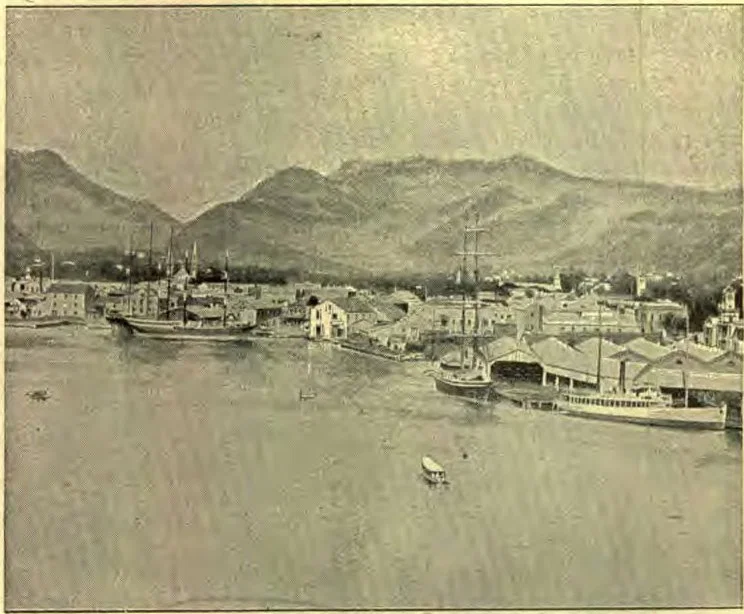
HONOLULU HARBOR.
HONOLULU HARBOR.

HER MAJESTY'S COLONIES

What North America was to England and Europe a century and a half ago, Australasia is in a measure to these countries to-day. These large islands, with their vast areas of lands suited for grazing, fruit-growing, and agriculture; with mountain ranges rich in mineral wealth; and with a semitropical climate, beautiful harbors, and charming scenery, have attracted large numbers of immigrants to their shores, which are rapidly being peopled by an energetic, advancing race.
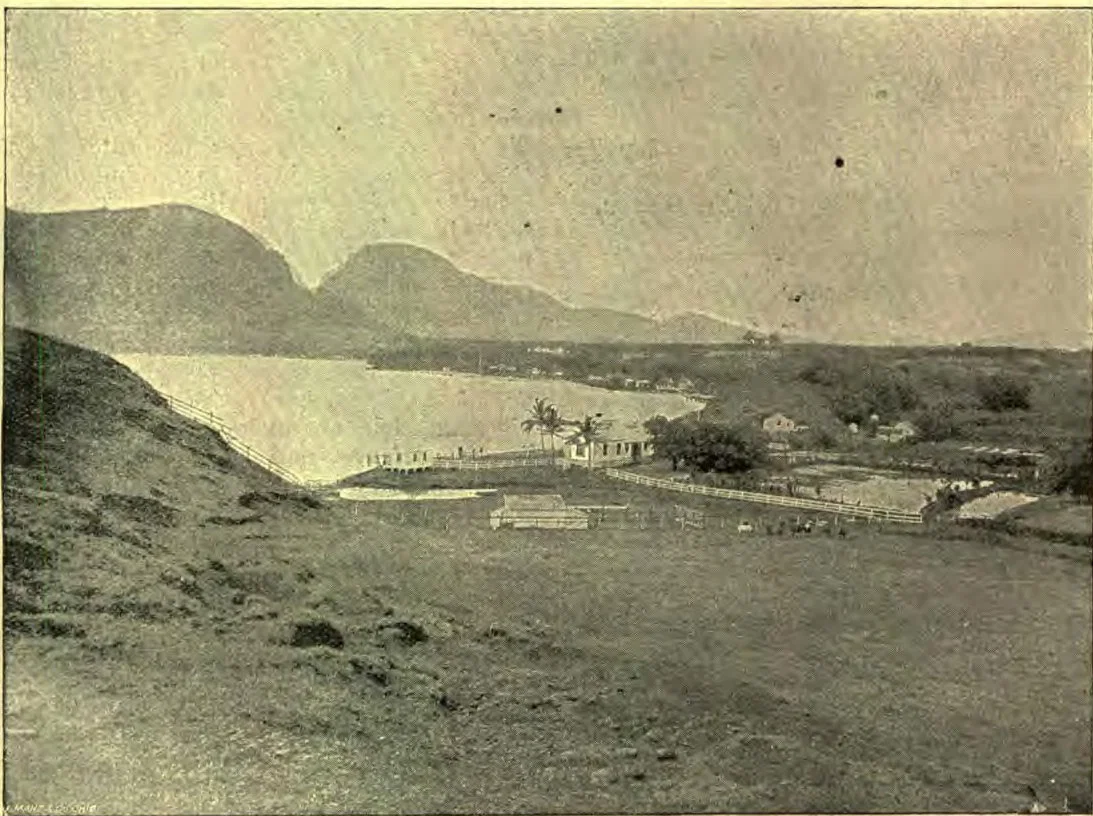
NAVILIVILI, SANDWICH GROUP.
Their cities are built after the manner of the best and most beautiful in older countries; and their railways, tram-lines, steam ferries, coast steamers, hotels, and other public conveniences are all patterned after the latest and best; so much so, that the traveler is surprised and delighted, as he proceeds from city to city, at the beauty and convenience with which he everywhere finds himself surrounded.
The voyage of twenty-eight days from the “Golden Gate” of San Francisco harbor to the “Heads” at Sydney harbor is a pleasant one, even to a moderately good sailor. It is broken by three pleasant stops. The first land sighted is the beautiful “Diamond Heads” at Honolulu, the capital of the Hawaiian Islands. No land ever appeared more lovely than does this to him who is on his first ocean voyage. Water, water, WATER, has been the program for seven days, —water three miles deep, and stretching out on every side as far as the eye can reach. The traveler remembers that in his first lessons in geography he learned that two thirds of the earth’s surface is covered with water; now he knows it, sees it, and is overwhelmed with its vastness. He is delighted to set foot again on land, especially in so beautiful a city as Honolulu. The day is all too short, and every moment is needed. Horses are speedily engaged for those who enjoy horseback-riding, and carriages hired for the others; and away we go to see the “Punch Bowl”—an extinct volcano overlooking the city.
On the way we pass the white, imposing government buildings, and are surprised and delighted with the sights on every hand. Beautiful palm groves, driveways of royal palms, date-palms, and cocoanut-palms, with flowering trees and banana fields, delight the eye on every side; while miles of telegraph and telephone lines inform us that although in the Sandwich Islands, once barbarous and even cannibalistic, we are now in the midst of an advanced civilization.
After a view of the crater, with its great natural amphitheater, capable of seating more than twenty thousand persons, we are invited to visit the “Pala,” three or four miles distant, over beautiful roads, along and up the mountainside. On this ride the more timid of the ladies improvise double skirts, and try the native style of riding, with the emphatic decision that it is much the best way, as they can gallop away without fear of turning in the saddle. The “Pala” is the name given the fine heights overlooking the sea and miles of sugar farms. Here, standing two thousand feet above sea-level, a scene of great beauty stretches away on every side. In years gone by, decisive battles were here won and lost by native tribes.
After dining with some old friends, we were treated to a moonlight drive past the cocoanut groves. As the moon shone full through the silvery leaves of the palms, they looked like great ostrich plumes against the blue sky, making a picture long to be remembered. At the wharf we were treated to some fine music by the native band, which seldom misses a steamer. Hawaiian music is very sweet; and as we passed along the streets, we often heard the sound of sweetly blended voices accompanied by the soft strains of the zither.
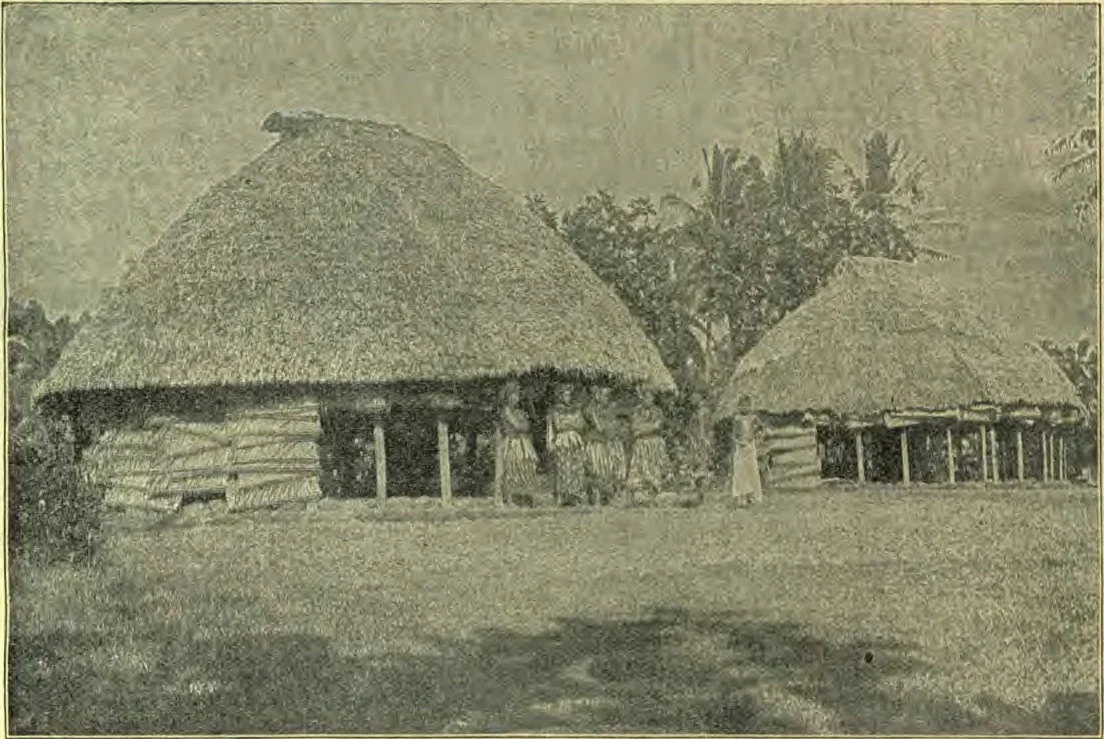
At Apia, Samoa, after another seven days of water, water, water, we enjoy an exciting ride over the surf. Leaving the steamer at anchor, we are conveyed to the distant shore in a canoe rowed by natives. The five hours spent on land is another agreeable change. We drink cocoanut-milk instead of water, as it is cooler and better, and have a fine run along the shore to the American minister’s house, where the familiar “stars and stripes” are waving. Along the way we see many native houses; the natives themselves in native dress, or rather undress; and beautiful half-caste boys and girls of good promise, clad in garments approaching civilized costume.
G. B. STARR.
(To be continued.)

“IN THE DAY THOU SEEKEST

’T is wonderful how He leads us, When we turn to him to be led! ’T is wonderful how he feeds us, When we come to him to be fed! About us the desert whiteness, And failing the scanty fare,— Lo! palms, and fountains, and brightness, And bread enough and to spare!
’T is wonderful how he cheers us, When we come to him in our grief! ’T is wonderful how he hears us, And hastens to our relief! He is never afar on a journey, Nor his eyelids heavy with sleep; From our real or our fancied perils How ready is he to keep!
’T is wonderful how he takes us, Like children, close to his breast! ’T is wonderful how he makes us Anew with his healing rest! But the sheep must come to the sheepfold, The bird to its covert flee; O thou, with thy whole heart seek him, That he may be found of thee!
— Young People’s Weekly.

“WE HAVE SEEN HIS STAR”

II
From various sources the magi of the East had learned of the expectation that One was to be born who should be King of the Jews. God was flashing his light upon those who were searching for truth; and while the priests and rulers of the Jewish nation, knowing not the time or manner of the Messiah’s coming, though prophecy had plainly revealed this, were living in expectation of welcoming a king who would bring to their nation riches, honor, and power, there were those far less highly privileged, who were diligently searching for a knowledge of the great events that were to take place. Many were praying for light in regard to the Deliverer, who, they had been told, was to come as a warrior, subduing the world to himself by his power. Their faith in their religious customs did not satisfy the wants of the soul. They were hungering and thirsting for a knowledge of the God of whom they knew so little. They remembered the words spoken by Balaam when he was urged to curse Israel.
Balaam had a knowledge of the true God, and he claimed to be converted. But his education and experience in magic held a bewitching power over him; and when solicited by Balak to curse Israel, he was urged by his infatuation to do so. He longed to obtain riches and renown by cursing Israel, but the Lord told him he would not allow him to practise his incantations and sorceries against his people. And when Balaam rose up to do as the king of Moab had requested him to, his lips uttered words very different from the words the king hoped to hear spoken. “And Balak said unto Balaam, What hast thou done unto me? I took thee to curse mine enemies, and, behold, thou hast blessed them altogether.”
In answer to the king’s remonstrance, Balaam said: “Behold, I have received commandment to bless: and he hath blessed; and I can not reverse it. He hath not beheld iniquity in Jacob, neither hath he seen perverseness in Israel; the Lord his God is with him, and the shout of a king is among them. God brought them out of Egypt; he hath as it were the strength of a unicorn. Surely there is no enchantment against Jacob, neither is there any divination against Israel: according to this time it shall be said of Jacob and of Israel, What hath God wrought!”
Again the controlling power of God came upon Balaam, and once more he uttered words entirely contrary to his inclinations. As he saw Israel abiding in their tents according to their tribes, the veil of the future was removed, and he saw the prosperity that would attend them. He knew that One whom Satan and all his host could not overcome was standing in Israel’s defense, and he exclaimed: “How goodly are thy tents, O Jacob, and thy tabernacles, O Israel! As the valleys they are spread forth, as gardens by the river’s side, as the trees of lign aloes which the Lord hath planted, and as cedar-trees beside the waters. “I shall see him, but not now; I shall behold him, but not nigh: there shall come a Star out of Jacob, and a Scepter shall rise out of Israel, and shall smite the corners of Moab, and destroy all the children of Sheth.”
These prophecies in regard to Christ’s advent had been impressed upon minds from century to century. Devout men were waiting in anxious expectancy for a deliverer to appear. They were seeking earnestly for truth, praying for a clearer knowledge of the God whom as yet they but dimly comprehended. Truth was being revealed to them, it was sweeping away the dark clouds of idolatry; for God ever reveals himself to the humble seeker for light.
MRS. E. G. WHITE.

HARVEST IN THE SOUTH SEA ISLANDS

“Do WHEAT, oats, barley, and other small grains raised in this country grow in the South Sea Islands?” is a question often asked by those who are unfamiliar with the climatic conditions of those far-away lands. But though these cereals, upon which the inhabitants of cooler latitudes depend so largely for food, are not raised there, an almost endless variety of tropical fruits delights the eye and gratifies the palate the year round.
NATIVE HOUSES AT APIA, SAMOA.
Many who have never been in the tropics have an idea that the bananas that reach us here in the Central States do not taste so good as those picked from the tree after they reach maturity. This is an incorrect idea. Bananas that are allowed to ripen on the trees are tough; and for this reason the bunches are cut down as soon as they attain full growth, and while yet green. When picked, the entire tree is cut down, but the roots send out around the stump a number of shoots, each of which, when full-grown, a year later, will produce fruit. Bananas ripen all the year round; therefore there is no special season in which they are harvested.
Pineapples grow on plants close to the ground. One plant produces one apple, but that same plant will produce more fruit the next year, besides sending out shoots, each of which, when properly transplanted, will produce one apple. There are many varieties of pineapples; but the same variety tastes the same in Chicago as it does in the Society Islands.
Oranges grow spontaneously in these islands, and no one thinks of cultivating them. Whole ship-loads go to waste on the ground. Island oranges are very large and juicy, but none are so sweet as the Jaffa, which grows in Florida.
Cocoanuts are harvested by the white planters nearly every day in the year, but the islander who may possess enough ambition to harvest them at all waits until the rainy season has passed. Then he climbs the trees, and knocks down all the old nuts. These, with those that may have fallen to the ground during the year, are gathered into small heaps. They are then tied together, two and two, with a strip of the outer husk, and carried to an open spot, split open with an ax, and thrown over a pole supported by crotched sticks, where they remain at least forty-eight hours. To spread the split nuts on the ground would do just as well so far as the drying is concerned; but the owner's pigs, or those of his neighbor, might happen that way, and havoc would be the result. After the cocoanut meat is dry, it is turned out of the shell, and cut into small pieces preparatory for the market. This dried product is known as “copra.” The cocoanut also furnishes milk for the table as well as for culinary uses to nearly every one in the islands. The milk is squeezed from the grated meat after a little water has been poured over it. Young cocoanuts are full of a very sweet water.
Vanilla grows on vines, which run up the trunks of trees, the vine obtaining most of its nourishment from the tree. During the blossoming season, the flowers must be fertilized by hand, a very tedious task. As soon as the pods show the least sign of yellowness, they are picked, and dried in the sun for several weeks. The work of drying the beans requires close attention; for a few drops of rain might spoil thousands of dollars’ worth. When fully dry, the pods are tied in little round bundles weighing about half a pound each, and sold.
JOSEPH GREEN.

Thy Gift

God is not so deceived with selfish thrift As to forget that sacrifice alone Is proof of love: the Master made the test The all-ness, not the small-ness, of the gift. —Robert Whitaker.

“UNSPOTTED FROM THE WORLD”

WHILE traveling in a coal-mine district, I noticed how very dingy the town appeared. Coal dust blackened buildings, trees, shrubs—everything. But as a foreman and I were walking near the mines, I noticed a beautiful white flower. Its petals were as pure as if it were blooming in a daisy field.
“What care the owner of this plant must take of it,” said I, “to keep it so free from dust and dirt.”
“See here,” said the foreman; and taking up a handful of coal dust, he threw it over the flower. It immediately fell off, and left the flower as stainless as before.
“It has an enamel,” the foreman explained, “which prevents any dust from clinging to it. I think it must have been created for just such a place.”—Theodore L. Cuyler, D. D.

WHAT ARE THE CHILDREN SAYING?

I hear the voices of children Calling from over the seas; The wail of their pleading accents Comes borne upon every breeze.
And what are the children saying, Away in those heathen lands, As they plaintively lift their voices, And eagerly stretch their hands?
“Oh, Buddha is cold and distant; He does not regard our tears; We pray, but he never answers; We call, but he never hears!
“Oh, Brahma in all the shasters No comforting word has given, No help in our earthly journey, No promise nor hope for heaven!
“Oh, vain is the Moslem prophet, And bitter his creed of 'fate;' It lightens no ill to tell us That Allah is only great!
“We have heard of a God whose mercy Is tenderer far than these; We are told of a kinder Saviour, By sahibs from over the seas.
“They tell us that when you offer Your worship, he always hears: Our Brahma is deaf to pleadings, Our Buddha is blind to tears.
“We grope in the midst of darkness, With none who can guide aright. Oh, share with us, Christian children, A spark of your living light!”
This, this, is the plaintive burden Borne hitherward on the breeze; These, these, are the words they are saying, Those children beyond the seas.
—Margaret J. Preston.

MODERN EDUCATION IN GREECE

The oldest of the ancient classical nations, Greece naturally excites our interest. It is about half the size of Peru, with a mild climate and a diversified surface, and has nearly three million inhabitants. The numerous coast indentures furnish advantages for the arts of war; thus the education has always been more or less martial. “During the heroic age, to which belongs the immortal siege of Troy, education possessed but a single character. It was patriarchal. The father trained his sons to physical strength and filial piety; and the mother trained her daughters to household duties and domestic virtues. In the language of Schiller, ‘To throw a spear and honor the gods’ was the end of male education.” During the second and third centuries B. C., when Leonidas defended Thermopylæ, and Miltiades won the field of Marathon, there was a rivalry and marked contrast between the schools of Sparta and those of Athens. But as the readers of the INSTRUCTOR are undoubtedly familiar with ancient education in Greece, we will leave that subject, and turn our attention to modern education in this country.
The most interesting phase of Grecian education, especially to one who has been interested in the language before coming here, is the language itself. It is rather shocking for one who has held the language almost in reverence, not only because it was used by the ancient classical authors, but also because it was the original language of the gospel, to hear the street urchins speak it as readily as those in London use English, and to see it used in advertising the every-day commodities of life, and, of course, even liquors and tobacco.
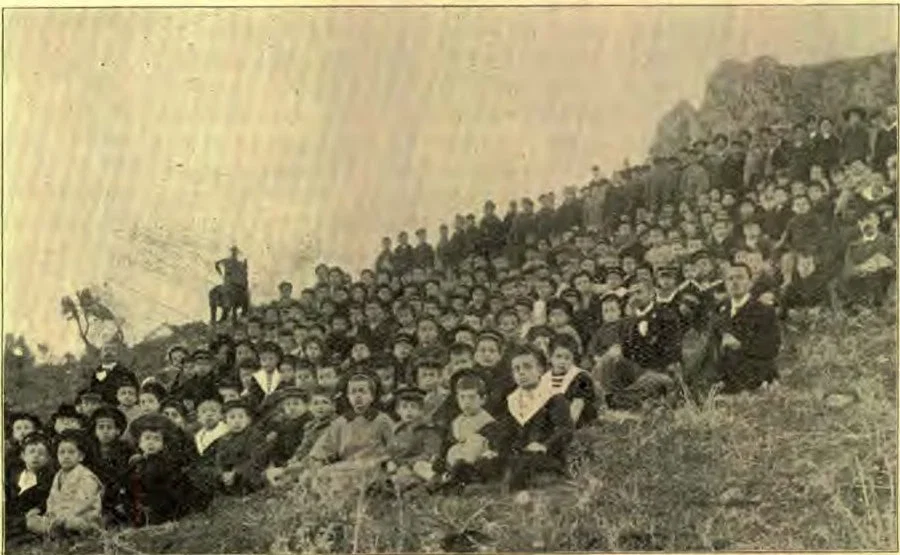
A GROUP OF CHILDREN IN THE PRIMARY SCHOOL, WITH THEIR TEACHERS.
It is often asked by teachers and students of ancient Greek if the modern language can be understood by one acquainted with the ancient. From personal knowledge, and from the testimony of those who have had a similar experience, I can say that when such a person first picks up a modern Greek newspaper, he feels very much as he does when he is confronted by some one whom he has met before, but can not recall, and has to acknowledge, “Your face looks quite familiar, but—but—I can’t recall your name.” As for the spoken language, it baffles the most efficient professor of ancient Greek. In fact, it is a joke among the Greeks that the teachers of Greek in the German, French, and English schools can not speak it. There are three reasons for this: (1) we do not learn the pronunciation; (2) many ancient words are obsolete, new ones have taken their places, and the construction often varies; (3) the puzzling way in which the words are all strung together, sounding like one continuous word, vowels and syllables often being omitted. This is much as Greek was originally written.
At the present time the cities and most of the villages are provided with schools; and as there is a village wherever there is available land, the schools are accessible to all. However, as education is not compulsory, many of the poor and a majority of the country people are unable to read and write. Higher education is here enjoyed almost exclusively by the sons of wealthy parents; while the less fortunate boy must discontinue his studies at an early age,—if, indeed, he has had the privilege of any schooling at all,—and go to work.
At the age of six years the child enters upon his first course of study. This is a four years’ course, and corresponds to our primary school. Here the child studies reading, writing, spelling, arithmetic, geography, vocal music, gymnastics, and the Odyssey and the New Testament in modern Greek.
The second course is of three years’ duration, and corresponds to our intermediate course. Here, besides the regular intermediate studies, the easier ancient authors are read, such as Æsop’s Fables and Xenophon’s Anabasis.
In these first two courses a registration fee of five drachmas is required for each class. (A drachma in silver or gold is worth about twenty cents, but these coins have almost disappeared, paper being used instead. This has so depreciated that it is worth less than fourteen cents.)
Next is the third course, which continues four years. It is called the “gymnasium,” and is something like our high school. A registration fee of ten drachmas is charged for each class. Here, with other advanced studies, the student reads the ancient authors, such as Demosthenes, Plato, Thucydides, etc. He also studies French and Latin, though this last is of late often supplemented by English.
The fourth and last course is in the university at Athens, where the student studies his profession. This university has a world-wide reputation, and we hope sometime to be able to give the INSTRUCTOR a detailed account of its workings.
H. A. HENDERSON.

A MODERN MIRACLE

RECENTLY there have come to my knowledge certain remarkable facts in a woman’s life, worthy of consideration by every earnest Christian. I will state them here briefly, without comment. The case is not one in which any attempt at pathos or argument would be fitting.
In 1884 Mary —, a successful teacher in southern Ohio, felt that she was called to the work of foreign missions. She was sent by the Methodist Church to Cawnpur, in India. She was a woman, I have been told, of great womanly charm, gentle, sincere, cheerful, noted for a certain peculiar purity and delicacy in both thought and person.
After six years of work her health suddenly failed, and she came home for a year’s rest. Her mother was still living, and the old happy home of her childhood was ready to receive her. Her symptoms, however, puzzled the physicians. One day, while alone, she perceived on her skin a curious small white scale over a swelling. Without a word to her family she went to Cincinnati, and consulted eminent physicians there. They all agreed that she had contracted leprosy. She went to a specialist in New York, who had had large experience in the disease. He confirmed their decision.
The girl went home to make ready to depart forever. She kept her dread secret. She told her mother and sisters that she must return to India and take up her work at once. During the few remaining days she treated them with well-acted indifference, not suffering them to come near her or caress her, knowing how contagious is the disease. Even at parting, when her mother would have kissed her, she turned away with a cold neglect that seemed brutal to the lookers-on.
“Why do you go?” her mother cried. “God does not call you to leave me! Indeed, Mary, you are not well.”
But Mary went without a word. Only she knew what she left behind forever, and to what she was going.
There was one gleam of hope. The New York physician sent her to an eminent doctor in London, a specialist in Eastern diseases. He examined her carefully, and pronounced the disease to be Asiatic leprosy of the most malignant type. When she offered him his fee, he turned away with tears in his eyes, saying: “Madam, of what do you think I am made?” Knowing how contagious is this form of the disease, he hastened her on her way.
Let any woman try to understand what that long journey was to this girl. She was forever shut off from her kind. Human beings accursed as she was were bidden to cry out “Unclean!” if any one approached them. To the end of her life she was set apart from friends and love. She had not even her mother’s kiss upon her lips. And at the end waited the death most brutal and horrible known to man. And she a dainty, loving woman!
But she made the journey with her awful secret, quiet, even cheerful. A physician who saw her on her way,—a man who believed in no religion,—said, gravely, “That woman has something about which I know nothing.”
The sect in which she had worked has a station in the Himalayas at Pithagarh, and about two miles distant the Scotch Presbyterians have an asylum for lepers. She went to this house, and began her work among them. There are sixty patients in the house, and over four hundred in the neighborhood.
Here is the singular fact in the case: Mary — had many kinsfolk and friends among the class of Christians who believe that Christ hears prayer now just as he did when he walked the earth, and answers it according to our faith, as he did then. According to her physicians, the disease would make a brief course.
“But,” writes one of her friends, “in all of my life of sixty years I never have known such earnestness, such unanimity, in prayer as has gone up from her friends and fellow workers here and in India for the healing of this woman.” She has been six years at work in the leper colony; and not only has her disease made no advance, but the symptoms have almost disappeared. Her health is good.
A distinguished surgeon of the British army recently made a close examination, and said: “While the virus probably still exists in her system, and might manifest itself, she is practically now a well woman.”—Rebecca Harding Davis, in the Congregationalist.

SEASONABLE HINTS ABOUT FLOWERS

If you are a church-school teacher, you will need plants and flowers for illustration this winter. Ask the school trustees to buy for you a few of some of the more hardy varieties.
A TUBEROSE that has blossomed can not be relied upon to bloom again. The bulbs are so inexpensive that it does not pay to save the old ones. Any that you wish to save must be taken up early, and the stems cut back to about three inches. When the bulbs are dry, pack in sand, and store in a dry, warm place.
STORE all bulbs in tin cans, which can be covered, to protect from mice and rats. If mold or rot appears, wipe the bulbs dry, and store in a dryer place. The appearance of mold or rot does not necessarily mean that the bulbs are ruined. Be sure to label all bulbs when storing, as well as when setting out. Use ink, and paper that will last. An amateur of my acquaintance puts her labels into homeopathic vials. This is a good idea.
GLADIOLI keep as easily as potatoes. Take up in October, and cut back the stems to five inches, being careful to remove all trace of the old bulb. Spread out in the shade, and let them dry for at least a week. It is important that they become thoroughly dry. In the spring remove the little bulblets, and set out in a nursery bed. They will bloom the second year. Pierce the shell before planting. Don't break up the clumps until you are about to replant.
HAVE you ever had a browallia? Try one. The plants are inexpensive, and have a pretty blue flower that springs up from a fine leaf in a very attractive way. They are easy to cultivate, needing only to be kept well watered if the room is dry. Another plant that is easy to grow is the plumbago. Cut each stalk back to three or four inches in length as soon as the bloom fades, and another stalk will soon appear, and give you another flower. The bloom comes on the end of each stalk. Plumbagos are lovely plants when in full bloom.
If you would like a pretty hanging-basket this winter, use one or two plants of asparagus springerii, allowing them to spread and droop. Put nothing else in the basket. Other pretty baskets can be cheaply made with pink oxalis, six bulbs; moneywort; lysimachia; saxifrage; sarmentosa; and sweet alyssum. When hanging-baskets are failures, it is nearly always because of improper watering. Wetting the surface is not enough: the basket should soak in a tub for an hour or two every day, and be well drained before it is brought back to the window.
GET the soil ready now for your winter potted plants. Cut and stack up sod, placing manure between each layer. Build the pile out in the sunshine, with the grass side down. In two weeks chop the pile fine with a sharp spade, and heap up again, moistening slightly. Early in October chop and stir again. Before storing away indoors, add a third part of sand, more well-rotted manure, and some bone-meal. If you can procure leaf-mold from the woods, add a third of that. Also put away some of the soil without these additions, and carry in a good share of clear sand, to make such mixtures as may be found necessary. Provide drainage material and pots.
W. S. CHAPMAN.

SOMETIME

Last night, my darling, as you slept, I thought I heard you sigh; And to your little crib I crept, And watched a space thereby; And then I stooped and kissed your brow, For oh, I love you so! You are too young to know it now, But sometime you will know.
Sometime, when, in a darkened place, Where others come to weep, Your eyes shall look upon a face Calm in eternal sleep, The voiceless lips, the wrinkled brow, The patient smile, will show: You are too young to know it now, But sometime you will know.
Look backward then into the years, And see me here to-night— See, O my darling! how my tears Are falling as I write; And feel once more upon your brow The kiss of long ago: You are too young to know it now, But sometime you will know.
— Eugene Field.

MODES OF SALUTATION

The Arabs say, on meeting, “A fine morning to you!”
The Turk says, with dignified gravity, “God grant you his blessings!”
The Persian salutation is familiar to all the world, from its comic quaintness, “May your shadow never grow less!”
The Egyptian is a practical man. He has to earn his taxes by toil under a burning sun; and accordingly when he meets his fellow, he asks, “How do you sweat?” The reader is probably aware that in those low latitudes all is well with a laborer as long as he perspires freely.
The Chinaman loves his dinner. “How are you digesting?” he kindly inquires, on meeting a friend.
The Greeks, who are keen men of business, close bargainers, ask one another, “How are you getting on?”
The national salutation of Naples was formerly, “Grow in grace!” At present, in all parts of Italy a phrase equivalent to “How are you?” is used.
The Spaniards say, “How are you passing it?”
The French, “How do you carry yourself?”
The Germans, “How does it go?”
The Dutch, “How do you travel?”
The Swedes, “How can you?” meaning, “Are you in good vigor?”
The Russians, “Be well!”
The English-speaking races, in addition to the juvenile and telephonic “Hello!” say, “How are you?” and “How do you do?”
We also take off the hat, shake hands, embrace, bow, and kiss, as, in other climes, persons rub noses, touch foreheads, and take off their shoes.
The American in Italy is surprised to see men embrace and kiss each other, as in Bible lands.
The Italians, in turn, look upon our hand-shaking as cold and ridiculous, the bobbing up and down of the arm having no meaning whatever to them.
The touching of the tips of gloved fingers, if more graceful than hand-shaking, must also appear professional and expressionless to the peoples of the East.
The bow, as a mark of respect, is used by nearly all nations, and had its origin in ancient times.— Selected.

CROWNED QUEEN AFTER DEATH

THERE is no more remarkable page in all history than the one which tells of the crowning of Inez de Castro’s fleshless skull as queen of Portugal. She had been married clandestinely to young Don Pedro, and was murdered three years later by assassins instigated by her father-in-law. When the young don heard of her death, he was beside himself with grief and rage. Two of the assassins fell into his hands, and suffered terrible torture. When Pedro came to the throne, a few years later, he had the bones of Inez taken from the grave, placed upon a magnificent throne, robed in royal purple, and actually crowned queen of Portugal. The court was summoned, and compelled to do her homage, just as if she were a living queen. One fleshless hand held the scepter, and the other the orb of royalty. On the second night of this weird ceremony, the fleshless queen was borne before a grand funeral cortège extending several miles, each person holding a torch. Lying in her rich robes, her crown upon her skull, in a chariot drawn by twenty coal-black mules, Queen Inez, the only queen who never knew her royal station, was driven to the royal abbey of Alcobaca, where her bones were interred with as much pomp as if she had died but yesterday. The monument erected to her is still to be seen in the abbey, standing near that of her loyal husband, “Pedro the Just.”—Exchange.

HOW CAMPHOR IS OBTAINED

CAMPHOR is now exclusively a product of Japan, since the annexation of Formosa to that country. The camphor-tree thrives only in particular localities. It grows at the rate of about one and one-half inches a year, and attains a great size, trees forty feet in circumference being not unusual. The quantity of camphor produced by a tree increases as the tree grows older, and as much as eighty pounds of camphor has been obtained at one time from trees between fifty and one hundred and fifty years old.
Crude camphor is made by steaming the thin chips of the wood in a wooden cask set over an iron pot, the camphor in a gaseous state being conveyed through a bamboo pipe to a set of two rectangular wooden receptacles placed one within the other. In these the steam is condensed and the camphor solidified. The chips are steamed for twenty-four hours, and then replaced by fresh chips, this process continuing for from ten to fifteen days. When the receptacles become thoroughly cooled, the solid camphor deposited in the lower compartment of the upper receptacle is scraped off, and put into a dripping tub, where it is left for three days to separate water and oils from the crude camphor. The cultivation of camphor-trees is considered very profitable in Japan.—Exchange.
Continue reading: Housework as Healthful Exercise for Women