THE whole camp at our summer gatherings should be made attractive to the eye and instructive to campers and visitors.
When Balak called Balaam to curse Israel, the Lord made that which was intended to be an event of condemnation an utterance of beautiful praises. He gave to the king's hired prophet, first a vision of Israel's camp, and caused him to describe the glory of their tasteful order.
In his eulogy he said, “How goodly are thy tents, O Jacob, and thy tabernacles, O Israel! As the valleys are they spread forth, as gardens by the river's side, as the trees of lign aloes which the Lord hath planted, and as cedar trees beside the waters.” Num. 24: 5, 6.
Whether this well-drawn picture included in its prophetic setting the camps of Seventh-day Adventists or not, it certainly does show that a well-organized camp is approved by the Lord, and is pleasing to men. The features thus given of the camp are suggestive of order, of beauty, and of life. And why should not these features be regarded in planning and pitching the camp and in conducting our meetings?
These meetings have become mighty agencies for the proclamation of the third angel's message, and for introducing to the world the people who carry it. Thousands of persons every year attend them who do not go to our churches, and who, at present, judge of us and our work almost wholly from the impressions made upon them at those gatherings. These facts and conditions will probably continue as they now are for some time to come; therefore let us give to this branch of our work the talent and the attention that its importance demands.
The first question to settle is the location. This should be decided with reference to grounds, environment, the people, and the transportation. Select ground that is inviting in appearance, and large enough to accommodate comfortably all who attend. Of course it must be easily reached by the neighboring transportation facilities.
A grove is more beautiful than a shadeless space, but ground with beautiful trees can not always be had in close proximity to the cities. In any case, it is best to make the attendance a chief consideration. In locating get as close to the inhabitants as possible. Sanitary considerations should also be carefully investigated before a tent is pitched or a stake is driven. Those locating a camp-meeting should understand that they are acting for all who will attend, and that in a measure they thereby become responsible for the success and the results of the meeting. This matter should be taken to the Lord by those who know how to find him, and by those, too, who will be sure to get his counsels through the Holy Spirit.
Having decided upon the ground, the next thing in order is the plan of the camp. The meeting tents must be located and pitched with reference both to the congregation and to the speakers. The people desire to see the speaker and to hear what he says, and the minister wishes to speak with ease and to be understood. It is painful for an audience to sit facing a noonday summer's sun while listening to a discourse; and it is also trying on the sight and the nerves of a speaker to receive the brilliant rays of the orb of day in its meridian strength as he delivers the word of life to a listening people. These difficulties for the congregation can in a large measure be avoided by locating the speaker's stand either in the north or in the east side or end of the tent. This being done, then the speaker's stand within the tent should be provided with a wide awning of sky-blue canvas well stretched beneath the tent canopy. This awning should also extend over the platform for the choir. Tents made of colored goods give better protection from the sun's heat than do tents constructed of white goods. High tent walls afford more comfort than low ones, and their appearance is much better.
If for any reason a number of meeting tents are needed in the same camp, to avoid any possible annoyance let these be separated as far apart as the space and divisions of the ground will allow. The usual plan of the camp is to place family tents in rows, with streets between the rows. When this plan is adopted, uniformity in size and height of tents becomes a necessity, in order that the camp may present a symmetrical appearance. Well-pitched tents of uniform color, twelve by fourteen or twelve by sixteen feet, with walls five feet and standards eleven feet, and tents canopied with flies to protect from heat and from rain, make an ideal front for a camp. There will probably be at all times, tents in a variety of sizes, shapes, colors, and conditions used by campers at these meetings. Those planning these cotton cities should know how to give these irregularities such a harmonious blending that the display will be good, and sweet harmony in feeling be maintained. At times it may require the ability of one skilled in landscaping and possessing rare graces in Christian affability and wisdom to do these things well; yet the task is not an impossible one, and surely the end to be obtained is well worth the effort.
Before closing, it may be helpful to refer again to the beauty of the camp picture given in the scripture quoted in this article. Gardens in valleys copiously watered by mountain streams are cited as object-lessons calculated to inspire our committees with a desire for order and neatness in pitching tents for our meetings.
Superior illustrations of this thought may be seen in the many valleys bordering the little tributaries that constitute the sources of the Rhine and the Rhone in Germany and Switzerland. The soil is irrigated with the pure water that flows from the snow and the thousands of springs which come from the Alps and adjacent hills. These valleys are almost wholly devoted to vegetable and fruit gardens that rival in beauty the most lovely landscapes. The skill and the strength of the gardeners are wonderful, and they freely bestow both upon their gardens. They labor hard, working early and late to make them beautiful and productive, and their success is marvelous. They adorn with shrubs, border with walks, and embellish with flowers and trailing vines to the extent of their profession; and thus is given us models for imitation in making our camps beautiful. If we fail to equal the models, we should at least have the satisfaction of knowing that improvement has been made.
Finding Your Place in Service
By Anna Shipton
If there is a place for you, then assuredly if you wait on the Lord, you will find it; and having found it, you will know what the Lord hath need of. The porters in the temple were as numerous as the singers, and the watching of the gates was as needful as the service of their song. Those who stand by night in the house of the Lord are as much in service as the players on musical instruments in the morning. To know the Lord’s will and to do it is service.—Anna Shipton.
The Fruit of Success
THE fruit of success is greater opportunity.—Selected.
The Great Family
By Marianne Farningham
How wonderful it is, dear Lord,
That while I pray to thee,
Millions of others lift their eyes,
Wistful thy face to see.
Nor does it matter where we stay,
For need and longing cleave their way.
We do believe thou hearest all;
But how, through clamors fierce,
The whisper of a little child
Its path to thee may pierce,
We do not know, we can not see:
That secret must be left with thee.
The world is praying unto thee
Through all the day and night;
The very streets are full of prayer
If we could hear aright.
And those who pray—a countless crowd—
Never obtrusive are, nor loud.
Meetly thy gracious answers come,
And do not miss their way.
Thy Father heart does not confuse
The prayers thy children pray;
A thought, a look, a mute request,
Brings what it sought—strength, love,
or rest.
How wonderful it is, dear Lord,
That while I pray to thee,
Millions of others lift their eyes,
Wistful thy face to see.
Thou, Lord, dost answer for Love’s sake,
And Love can never make mistake.
—Marianne Farningham.
Temperance in the Home
By Augusta C. Bainbridge
AUGUSTA C. BAINBRIDGE
“A whip for the horse,” says the Word of God.
“Yes, yes,” says the would-be scientist, “but a whip for a man is better.” And as your confidential physician, he orders a little port wine, just a little, three times a day, in a beaten egg.
Is God right? Does a horse need a whip once in a while? Then why not a man?
“Here, Joe,” says the father as they prepare a load of hay for the weekly trip to town, “don’t forget to put in the whip; we may need it on that rocky hill.” And the whip goes in its place, ready, under the wise direction of the father, to be used when it will be necessary to encourage the horses to move a little faster over a rough road or a dangerous pass.
Comfortably seated beside his father, Joe fell to thinking about the whip.
“You said, father, that horses need a whip. Do we ever need one?”
“Tell me, Joe, is the load any lighter when we whip the horses, and they go faster?”
“Why, no; it’s just the same load. ”
“Are the horses any stronger, or is the wagon any easier to pull?”
“No, not a bit, only the horses move faster.”
“Did you ever notice that when you whip a horse and keep him moving as fast as he can, the time comes when he pays no attention to the whip? Beyond a twitch of his ears, or a flirt of his tail, he pays no heed to it; and if the whipping continues, the horse lies down and does not even try to move.”
“But a whip is good for a horse sometimes.”
“Yes, because a horse is a horse, and not a man; and there may be occasions when man may use a whip on a horse, remembering that it was God who gave him dominion over the horse, and so, in a sense, he is to the horse as a guardian, caring for him, and while using his strength for work, not abusing him.”
“Then what do we have whip-nerves for?”
“Because we at times need to move faster, to think faster, to speak faster, than at other times; and if our whip-nerves (accelerators) are in good order and under proper control, we can at will cause them to act.”
“These whip-nerves are not so sensitive as the brake-nerves, and so they do not so quickly feel the effects of narcotics like alcohol, as the brake-nerves do. But if a man continues to drink any intoxicating liquor after his brake-nerves have been paralyzed, then his whip-nerves feel the effect of it. And when he drinks glass after glass, he finds he can not move faster for it, and all his efforts to speak or see or hear are in vain, and soon, like the overwhipped horse, he lies down, unable to go a step farther.”
“Then he is drunk, like old Soote, is he not?”
“Yes, we generally call it drunk, but I should say ‘poisoned’ or ‘paralyzed’ would be better words, as they would more nearly express his condition.”
“Well, father, I do not see any need of drinking anything that poisons us, or paralyzes any of our nerves.”
“No; there is no use in it, but there is actual harm. ‘At the last it biteth like a serpent, and stingeth like an adder;’ that is, it is an actual poison, and nothing that burns as alcohol does, and as drinks containing alcohol do, can ever quench thirst.”
Experiment
Have three one-ounce bottles just alike. Fill one with alcohol, one with water-white coal-oil, and one with pure water. Have a board about four feet long, and on it three old tin plates in a row. Provide three pieces of white cotton cloth.
Saturate one piece of cloth with the contents of the first bottle, lay the cloth in the first plate on the board, strike a match to it, and watch it burn. Then lay the second bottle with the second piece of cloth on the second tin plate; and the third in its turn. Why does not the last one burn? Why will the contents of the last bottle, and not the contents of the other two, quench thirst? The children need not know what is in the bottles until after the experiment has proved their character.
Mother and Son
On the Boston express the other day I witnessed a scene which I wish I could describe as it impressed me. It was the “four o’clock express,” and an elderly woman, evidently a foreigner, stepped on the train with that peculiar square-rigged, canvas-covered, broad valise so much used in Europe.
Directly behind her was a sturdy young man, who carried the remainder of her luggage on his shoulder. He, too, was evidently a foreigner, whose dress and appearance indicated that he was thoroughly acclimated, and was now a prosperous, adopted American citizen.
With a peculiar motion the little woman shrank from taking a seat in the coach among the finely dressed people. Although I did not understand the conversation, I heard her inquiry as to whether they should go “first class.” The son — for I had gotten that far in conclusion — went toward the center of the car to select a good seat, while the mother had seated herself in one near the door. His bright face beamed as he ushered that little stooped mother to the seat as tenderly as if she were his bride. What happiness was reflected in those faces!
They were seated in front of me, with their luggage carefully stowed away overhead and underneath. Her hands were brown and rough. Her little bonnet was very simple; her gray hair was smoothed down in front, and was twisted into a picturesque Norwegian knot behind; her features were irregular, her face wrinkled, her large nose sharp; and she had no upper teeth — and yet I never saw a more beautiful face when, after the son was seated, this little woman turned and stroked the hair of her son as only a mother can, regardless of the curious eyes in the coach, and then, unable longer to repress the joy of a mother’s heart, she kissed him. Such tenderness in those eyes glistening with tears — she was with her boy again.
The heads came just above the top of the seat, and how close they were together as they talked over the past! What memories of the old home were awakened in the heart of the young man while the mother recounted, as only a mother can, those things which he was most anxious to know about! When he brought her a drink, when he pulled the shade, every act was devotion. If I could only impress upon sons the priceless heritage they have in their mother! There never13can be but one mother, and every little act of devotion and love will some day be a treasured memory.—National Magazine.
Ceylon
By G. K. OWEN
G. K. OWEN
After having spent about twenty months in Ceylon, I find myself again in India, at the sanitarium, 50 Park St., Calcutta. Believing that many will be interested to hear something more from this new field that has been slightly touched by the message, I have intended to write, but have not been in good writing condition for several months. After spending some time at the general hospital in Colombo, it seemed to take all the strength I had to get back to Calcutta. Here I have been slowly recovering, and have gained twelve pounds in weight. I can not blame the climate of Ceylon for any of the unpleasant experiences that I had there, for I never visited a climate that seemed more nearly perfect. The refreshing sea breezes along the coast seem very favorable to a climate of perpetual summer. Should any weary of the warm weather and desire to cool off, a few hours’ ride on the train will take him to some of the hill stations, where he finds it cool enough.
Elder Armstrong had preceded me to Ceylon several months, and had held many cottage meetings. Those who attended were interested; but the enemy of truth had been early laying his plans to fill the minds of the people with prejudice, to close their minds against the truth, before they had ever caught a glimpse of it. Some First-day Adventists had started a work on the island, and for some reason their work and their printing-press were left in the hands of a man who soon became so involved in debt that his creditors seized the publishing works that he had under his control. We were told that before any real Seventh-day Adventists arrived in the island, this man had assumed their name, and so his creditors began to call on us very soon after our arrival, and to ask us if we could arrange for the settlement of the debts, expecting to hold the entire Seventh-day Adventist denomination responsible for the debts. So the leaven of prejudice had blinded the minds of the people before the first note of the message had reached their ears; and the effect was manifest as soon as invitations began to call the people to come to hear the message.
When the tent arrived, many attractive-looking places seemed to be beckoning to us to come and pitch our tent; but when we talked with the owners of the land, we found no encouragement for a second talk. Finally our first choice was obtained without cost, and the tent was pitched and neatly arranged. We had quite a fair attendance for several evenings. But when the rains began, we found that wherever there were cross-seams, the water came pouring through the roof of the tent; and where the cloth was double, a sack of water soon filled much of the space. Some of the people attended quite regularly, though they had to search carefully for a dry place to sit.
It rained quite steadily for about twenty-one days; and by that time it was decided that we could not expect many to attend under such circumstances, and the tent was taken down. Elder Armstrong’s health failed, and he went to one of the hill stations for a while, and then decided to take the advice of physicians, and return to England. The only way open for continuing the work was by cottage meetings and Bible readings. As several had been convinced of the truth for quite a while but had not decided to obey, I did not feel clear to leave the place without further effort to bring them to a deciding point. Seven finally determined to obey.
Perhaps it may be of interest to mention some other means by which a very friendly interest was secured in a more public way. I made the acquaintance of a leading man among the Buddhists, and he made an appointment for me to deliver a lecture on phonography, before the Shorthand Writers’ Association. The large and appreciative audience assembled in the Library Hall were so interested that they were ready for other lectures on educational subjects. I gave them two lectures on memory, and interested them three other evenings in vocal expression, at the same hall, which was open and free for my further use, had I remained longer in Colombo. In response to very urgent invitations, I gave lectures at the Royal College and at Ananda College. The latter is the principal Buddhist college on the island, and the principal told me that I was the first Christian who had ever been permitted to speak in their college. They were so favorably impressed that I was invited to address the Buddhist Association, and they engaged for the occasion a larger hall than the one they had been using. I gave the scriptures on “What Is Man?” in four discourses. The chairman stated, before the audience, that the Christian religion had been presented in a more consistent light than they had ever heard it before.
Their association seemed to consist largely of highly intelligent people, well educated in the English branches, as well as in the native languages. They manifested their interest by hearty votes of thanks for the lectures. There seemed to be an open door among them, and I had hopes of doing further work among them, if it had been my privilege to remain upon the island. I have not given up all hope of returning to Ceylon sometime with improved health. Prejudice14seemed to have disappeared to such an extent that I had gained the confidence of the educated classes, and formed friendly relations among students and teachers. Some of them seemed quite interested to engage with me in Bible studies. Beating against the waves of prejudice is not good policy. Doing something for the good of the public wins friends.
Does the Invalid Need Beef Tea?
In many of the acute and chronic diseases and digestive disorders, a liquid diet may be necessary for a short time. Usually meat tea, or beef extract, is first thought of and considered just the food needed. That this is a deception will be seen from what W. Gilman Thompson, M. D., in his “Practical Dietetics,” says:—
“Liebig’s extract of meat consists of the flavoring extractive matters, such as kreatin, isolin, decomposable hæmatin, and salts. Some of these substances are excrementitious, and on this account Masterman compares it to urine, although it contains less urea. A pound of mutton is represented by two fifths of an ounce of the extract. It contains no albumin or fibrin, hence its nutritive power is practically nil.”
Any one acquainted with chemistry will at once recognize most of these elements as poisons formed in the body of the animal as the result of breaking down of tissue. All meat extracts are composed of these soluble waste products.
The only part of the meat that has any real value as a food is the insoluble part, or the meat fiber. This part is rendered more wholesome by the removal of the soluble wastes. In fact, the orthodox Jew carefully washed all meats, just as we do dirty garments, to get rid of this organic filth, which is now considered such a delicacy for invalids and on board ship. As far as the nutritive value of beef tea in heat units is concerned when compared with other liquids which are pure, the following table will enlighten us:—
In acute diseases or in fevers the digestive organs are usually out of order. The gastric juice is diminished; digestion is slowed or absent. The foods naturally tend to decay. This accounts for the coated tongue found in fevers. Beef tea is one of the worst things to give in such cases, for it favors the cultivation of germs, and the formation of poisons which feed the fever.
The same may be said of milk. For years I have found it necessary to withhold even milk from fever cases. Fruit juices, on the contrary, destroy germs of disease. Grape juice will destroy typhoid fever germs in a few minutes. Orange juice is known to be destructive to germs of cholera. Where patients are fed on fruit juices, the coating on the tongue is absent, and the breath is not foul. These are, therefore, the best liquid foods to give patients.
In some cases milk may be safely given, but beef tea never.—Australasian Good Health.
G. A. IRWIN
By George A. Irwin
From Zanzibar to Port Said, Africa
G. A. IRWIN
At about 11:30 A. M., April 17, we cast anchor in front of the town of Zanzibar. This place is on an island seventy miles long by thirty wide. Zanzibar proper comprises the islands of Zanzibar, Pemba, and Mafia, on the east coast of Africa. This territory was captured from the Portuguese in 1784 by an Arabian sultan, and became an independent dominion in 1856. It is now a British protectorate, and is practically ruled and controlled by the British government, although the present sultan is permitted to exercise a limited authority over his own people.
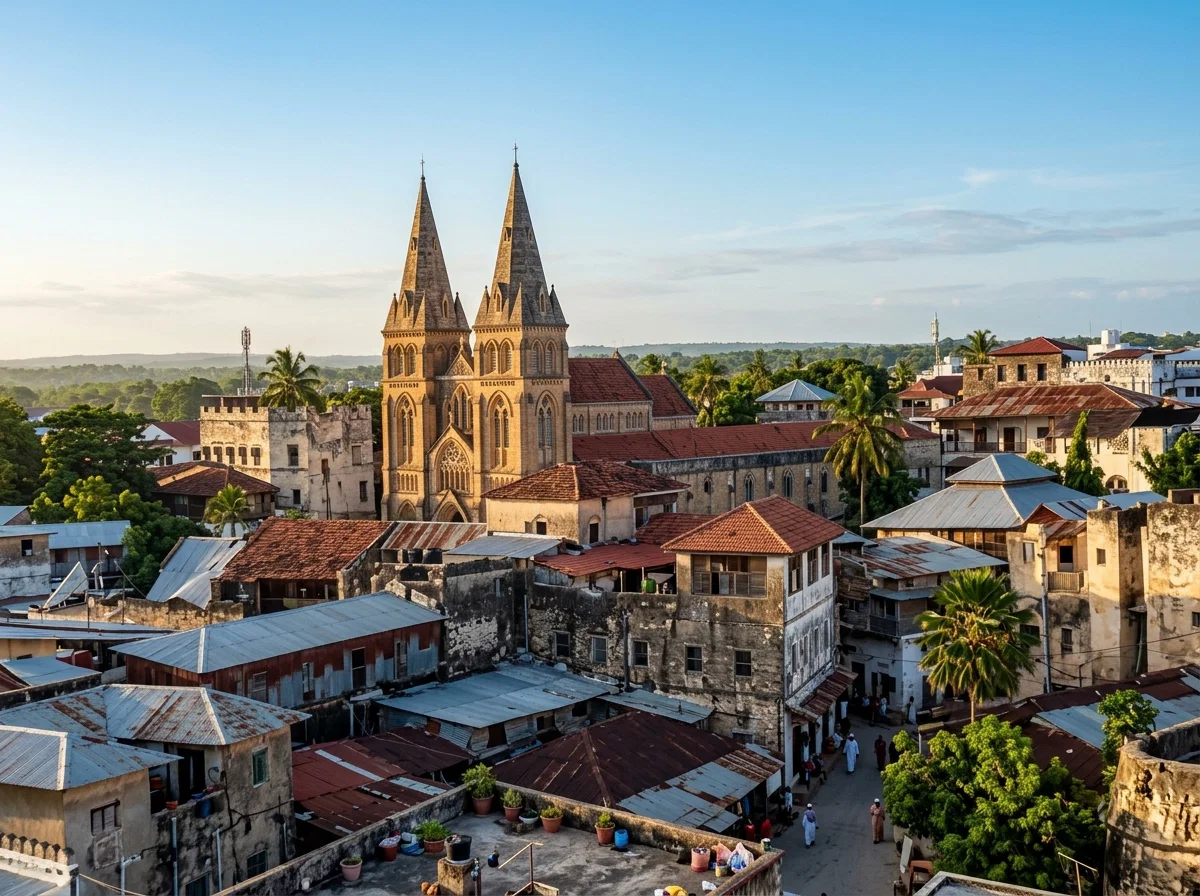
The population of the three islands is estimated at 260,000. Zanzibar has in the past acted a very prominent part in the affairs of Africa. In the early days, it was the center of the extensive slave-trade that was carried on by the Portuguese and Arabs. In the center of the city there was a large pen, or kraal, where the captured natives of Africa were brought and sold as cattle in the market. Later, however, through the influence of European philanthropists, the mind of the sultan “Seyyid Barghash” underwent an entire change, so that he who had been educated to regard the black natives of Africa as the lawful prey of conquest or of lust, and fair objects of barter, suddenly turned round and became one of the most active opponents of the slave-trade, and contributed his share toward bringing this accursed traffic to an end. It is a fact worthy of special note in this connection, that the Universities’ Mission of Central Africa, a Church of England Society, purchased the old slave market of Zanzibar, and built a handsome cathedral on a portion of the ground.
Zanzibar has been the starting-place of nearly all those expeditions into East Africa that have given the world an intelligent knowledge of its geography and inhabitants, and stimulated missionary and commercial enterprises that are rapidly letting light into this hitherto dark and practically unknown continent. Among the expeditions referred to as having started from Zanzibar, and the major part of whose numbers were made up of African natives residing in the place, I call to mind that of Burton and Speke, which was organized and left in the beginning of 1857. The next was that of Speke and Grant, which left in September, 1860. Livingstone’s last expedition sailed from this place March 19, 1866. Stanley’s expedition started from this place in search of Livingstone in 1871, and Stanley’s last expedition to establish the source of the Nile was made up and sailed from here Nov. 24, 1874. The town itself bears the Eastern, or Asiatic stamp, the streets being, in the main, narrow and irregular. It has a mixed population of English, Arabs, Indians, and African natives, most of the latter belonging to the Swahili tribe. The principal product of the island is cocoanuts.
Our next port of call was Dar-es-Salaam, on the mainland forty miles to the west. It is the capital of German East Africa, and is located on a beautiful little bay, with a narrow but very deep inlet. A large amount of money has been expended on buildings, roads, drives, and parks, to beautify the place. The trees and foliage have a decidedly tropical appearance.
Our next stop was at Tanga, where we remained for a day, taking on freight. We left Tanga at 5:30 A. M., and arrived at Mombassa at 11 A. M. Mombassa is on an island about three miles long and one mile wide, and is reached from the landing place by small tram cars that carry six persons, and are pushed by natives. Mombassa is the capital of British East Africa, and the terminus of the Uganda Railroad, which runs from here to Port Florence, on Lake Victoria, a distance of five hundred and eighty-four miles. It requires two days and nights by rail to make this journey, the trains leaving Mombassa three times each week. Traffic over the road is rapidly increasing, since white people are pushing into the country, and opening up farms, and starting other industries.
Mombassa is an old Arab town, and the houses and narrow, crooked streets are typically Eastern, the only exception being an occasional trim stone bungalow built and occupied by some European. The most interesting spot in the town is the old Portuguese fort, built in 1593. It is surrounded by a deep moat on the land side, and guarded by the sea on the other. It was partially destroyed during one of the conflicts between the Arabs and Portuguese for the possession of the town and district, but was rebuilt by the Portuguese in the year 1635.
After our vessel was loaded to the top of the hatchways, a large amount of freight was still left behind. Of the freight taken on board along this route, the following articles made up the bulk: rubber, copra, ground nuts, bark, fiber, ebony wood, hides, and ivory.
Our next port of entry was Aden—giving us a seven days’ sail without a stop. Aden is a fortified town located on a small peninsula of the southern coast of Arabia, on the Gulf of Aden, one hundred and eighteen miles from the entrance of the Red Sea. Perim, an island in the Red Sea, and a small district in the Arabian Peninsula, are under the government of Aden, which is a crown colony of Great Britain, having been purchased and taken possession of by that government in 1839. The latest estimated population of Aden is 41,910,15composed almost entirely of Arabs. Owing partly to the lack of rainfall, the land in and around the town is perfectly bare of trees or vegetation of any kind, which gives it a very uninviting appearance, and makes it dusty and very disagreeable when the wind blows.
THE ZANZIBAR CATHEDRAL, BUILT BY THE CHURCH OF ENGLAND UPON THE SITE OF THE OLD SLAVE MARKET
About eight o’clock of the evening of April 19 we entered the Strait of Bab-el-Mandeb, which connects the Gulf of Aden with the Red Sea. This strait is from two to three miles wide. The Red Sea proper is about thirteen hundred miles long, and has an average width of one hundred and twenty miles. The sea is generally quite calm, and the heat intense. There is no town of any importance or port of call from Aden to the town of Suez, which is situated at the point where the Suez Canal enters the Gulf of Suez.
A Trip in Asia Minor
By Claude D. Ac Moody
CLAUDE D. AC MOODY
SUNDAY morning, April 7, I started on a trip to visit the companies of Sabbath-keepers in the country lying south of the Sea of Marmora. The first place visited was Brusa. The journey was made by steamer from Constantinople, across the Marmora to Moudania, thence by a little narrow-gauge railway to Brusa. It took seven hours. This was my first visit to Brusa. I was met at the little station by a company of our people, who for several weeks had been anxiously looking forward to my coming. I was taken to one of their homes, where, with my interpreter, I was made very comfortable.
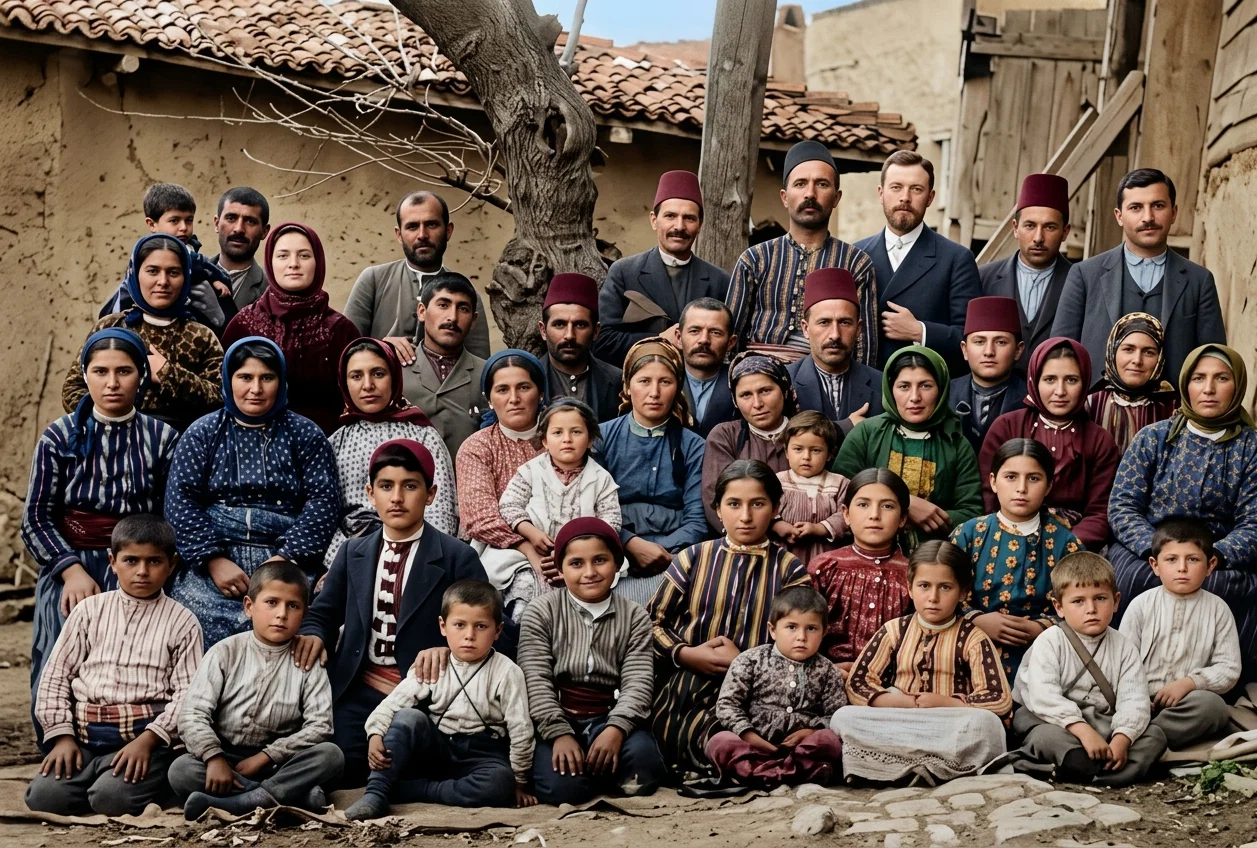
GROUP OF SABBATH-KEEPERS IN ASIA MINOR. ELDER CLAUDE AC MOODY IN BACK ROW
Brusa is an interesting city. It lies at the foot of Mt. Olympus, which towers above the city seven thousand feet. The population is estimated at seventy thousand, half of whom are Turks, and, with the exception of two or three thousand Jews, the rest are Greek and Armenian Christians. The city is chiefly noted for its mineral baths, which are visited much during the summer season by people from Constantinople , European Turkey, and the Balkan States. These mineral baths are also natural thermal baths, as nearly every bath-house is supplied with water from hot mineral springs.
This city was the capital of the Ottoman empire before the Turks captured Constantinople. Ancient Prusa (Brusa) was founded two centuries before Christ, and fell into the hands of the Romans in the year 74 B. C. It then underwent various vicissitudes, until in 1326 A. D. it was taken by the Turks, under Orkhan, and became their capital.
We left Brusa the seventeenth of April. During this time, however, we made a visit to a little village on the opposite side of Mt. Olympus from Brusa, by the wagon road around the mountain, about twenty-five miles distant. In this little village there is an interest to hear the truth. Three days were occupied on this trip. We made the round trip of fifty miles in a Turkish carriage—the araba. Be assured that fifty miles in a Turkish araba is an experience not soon to be forgotten. This is a four-wheeled vehicle, with a body, or box, set high, in which one has to sit Turk fashion, or, if there are not too many occupants, one may recline in a sort of “picnic-dinner” fashion. It is a covered rig, but the top is very low, and unless one sits very humbly, he is likely to receive frequent bumps on the head.
Our stay at that place was interesting. We had not been there more than fifteen minutes when the whole population was apprized of our arrival. We were given very hospitable accommodations, in a village mud house. We held meetings in this house, and were often interrupted by the braying of the owner's asses, which occupied the down-stairs apartment. The people flocked to us from the time we arrived until our departure on the second morning. We had some good services, and the Lord blessed as we answered their simple questions. One soul promised faithfully to keep the Sabbath. This was the first time a Seventh-day Adventist missionary had visited the place.
At Brusa the writer baptized three persons in a rushing stream well back from the city and up in the edge of the mountains. It was a precious occasion, in the stillness of the early evening, just at sunset. The company were left in good courage, and seemed strong in the message we all love.
We were to leave that city two days earlier than we did, but my interpreter had much difficulty with his tezkereh—the Turkish passport. Our brethren in the States, who are privileged to go from one side of the continent to the other at will, can not realize the difficulties to be encountered in moving about in a country like this.
There is an exceptionally good road most of the way from Brusa to Sevleus, our next point. This distance was covered in about eight hours, in an ordinary carriage such as is used in Europe. Excellent meetings were here enjoyed. We remained for a week, and then left for Shakshak, reached by a day and a half of traveling on horseback, over mountain roads and paths, fording creeks, and climbing over rocks. As no other conveyance could be secured, we rode on Turkish pack-saddles. Part of the way the government insisted on sending a mounted soldier for my protection, as I was a foreigner. This offer was, of course, accepted, as it is not best to refuse a soldier guard when the officials insist upon sending one.
Shakshak is a beautiful village, situated upon a mountain overlooking the Sea of Marmora. On a clear day Constantinople can be seen in the distance. There is a goodly number of Sabbath-keepers here, organized into a company, but not as yet into a church. This is also true of the companies at Brusa and Sevleus. The Lord wonderfully blessed in the meetings at this place. Seven were baptized. It is only an hour's distance from the village to the Sea of Marmora, so to the sea we went, and in its waters buried these seven souls in baptism. At Shakshak, as well as at the other places, communion service was held. The accompanying illustration is of this company. All but one of those who were baptized are in the group.
Tuesday morning, April 30, we started for Constantinople. Two-hours' horseback ride brought us to Yalova, a small Marmora seaport, whence we took steamer to Constantinople. The next Sabbath after returning, one person was baptized. Thus eleven souls have received this rite this spring; and there are others to be baptized next month.
The middle of May I visited a company of believers at Ada Bazar. This is the only company that can be reached entirely by rail from Constantinople.
In this Constantinople district of the Turkish Mission there are two organized churches, one of which is in two companies. These, with a few isolated members, have a membership of about one hundred and seventy. This does not include the membership of the16southern part of the Turkish Mission.
The Lord is blessing the work here; but we need more workers, who are willing to dedicate their lives to this great Mohammedan field, and who are able to master the languages of the country. My closing appeal is, Remember Turkey at the throne of grace.