A REMARKABLE testimony to the value of the principles of dietetic reform which constitute an essential part of the reform message borne to the world by Seventh-day Adventists, comes from the theater of military operations in the far East. While many individual proofs of the hygienic importance of an abstemious diet have been given in the history of the health reform movement, it remained for a terrible war to furnish a demonstration of the same thing on a scale which brings this truth at once before the eyes of the whole world. Such an object-lesson is being furnished by the Japanese army. The facts were brought before the Association of Military and Naval Surgeons, in session at St. Louis, October 12, by Major Louis L. Seaman, who went to Japan and thence to Manchuria12in June last to investigate Japanese medical methods in war. From a report of his address which was published in the New York Sun, we take the following:—
“The Japanese soldier has been taught how to treat his intestines; and consequently his intestines are now treating him with equal consideration. His plain, rational diet is digested—metabolized and assimilated. It is not an irritating, indigestible, fermenting mess, acting as a local irritant, and producing gastritis, duodenitis, enteritis, colitis, hepatitis and the long list of inflammatory intestinal processes with which we were all so familiar in the hospital wards at Camp Alger, Chattanooga, Tampa, Cuba, Porto Rico, Montauk Point, etc., in 1898.
“The great hospitals are there, interne, contagious, and infectious departments, their conspicuously empty beds voicing, more eloquently than words, the most important lesson of the war. A few cases of diseases of the respiratory system are found—colds, bronchitis, and an occasional pneumonia, contracted through exposure in fording rivers, exhaustive marches, and bivouacking on wet ground, a few more of typhoid (I saw only three in Manchuria), occasionally one of dysentery, and a number of cases of beri beri, that former scourge of Oriental armies.
“But of all the many thousands gathered in these institutions, there were but a few medical cases, and of these scarcely a baker’s dozen came under the heading of ‘diseases of the digestive system.’ Therein lies one of the greatest secrets of the Japanese success. Napoleon never made a more truthful statement than when he said: ‘An army fights on its belly.’ The Japanese have that belly, and they take good care to keep it in fighting order, not by insulting it three times a day by cramming it with material totally unsuited to the soldier’s necessities, thereby exciting irritations and disease, but by supplying it with a plain, palatable, easily prepared and easily digested ration that can be thoroughly metabolized and converted into the health and energy that make its owner the ideal fighting machine of the world to-day.
“The organization of the medical department of the Japanese army and navy is modeled after that of the Germans, with many added improvements. Too much praise can not be bestowed upon the medical department of the army and navy for their splendid preparatory work in this war. The Japanese are the first to recognize the true value of an army medical corps. The medical officer is omnipresent. You will find him in countless places where in an American or British army he has no place. He is as much at the front as in the rear. He is with the first screen of scouts, with his microscope and chemicals, testing and labeling wells, so the army to follow shall drink no contaminated water. When the scouts reach a town, he immediately institutes a thorough examination of its sanitary condition, and if contagion or infection is found, he quarantines and places a guard around the dangerous district. Notices are posted so the approaching column is warned, and no soldiers are billeted where danger exists. Microscopic blood tests are made in all fever cases; and bacteriological experts, fully equipped, form part of the staff of every divisional headquarters.
“The medical officer is also found in camp, lecturing the men on sanitation, and the hundred and one details of personal hygiene—how to cook, to eat, and when not to drink, to bathe, and even to the direction of the paring and cleansing of the finger nails to prevent danger from bacteria. Up to August 1, 9,862 cases had been received at the reserve hospital at Hiroshima, of whom 6,636 were wounded. Of the entire number up to that time, only thirty-four had died.
“If the testimony of those conversant with the facts can be accepted, supplemented by my own limited observations, the loss from preventable disease in the first six months of this terrible conflict will be but a fraction of one per cent. This, too, in a country notoriously unsanitary. Compare this with the fearful losses of the British from preventable disease in South Africa, or, worse, with our own losses in the Spanish-American War, where, in a campaign the actual hostilities of which lasted six weeks, the mortality from bullets and wounds was 268, while that from disease reached the appalling number of 3,862, or about fourteen to one, or seventy per cent,—1 per cent against seventy per cent.
“Naturally one asks, Were these results anticipated? As an answer, the statement of a distinguished Japanese officer, when discussing with me the subject of Russia’s overwhelming numbers, is pertinent. ‘Yes,’ he said, ‘we are prepared for that. Russia may be able to place two million men in the field. We can furnish five hundred thousand. You know in every war four men die of disease for every one who falls from bullets. That will be the position of Russia in this war. We propose to eliminate disease as a factor. Every man who dies in our army must fall on the field of battle. In this way we shall neutralize the superiority of Russian numbers, and stand on a comparatively equal footing.’”
Two Views
“I’ve only one life here to live,” said a young man flippantly, and “I’m going to make the most of my time.” He was first in every pleasure; he visited every country in search of new delights, and at the age of forty had burned the candle of his life at both ends and drifted out into eternity. Having lived for self, he had few mourners, and ere the grass was green above his last resting-place, he was forgotten.
“I’ve only one life to live here,” said an earnest-faced young man, and his eyes looked out upon the world with all its needs, temptation, and suffering. “Only one life to live, so I must make the most of my time.” Up and down the earth he traveled. The friendless found in him a friend, the sorrowing ones a comforter. The weak and hopeless ones were cheered, the tempted were strengthened, and the degraded lifted up and encouraged to better living.
After fourscore years of kindly, useful deeds, he, one day, with a smile, closed his eyes upon this world’s scenes. His many friends came crowding round to take a last farewell. Through tearful eyes they looked, and saw God’s peace upon the quiet face; the same gentle smile rested upon the lips, and the willing, helpful hands were clasped across the quiet breast. How many loving words those lips had spoken! How many blessed deeds those hands had done!
And now, though many years have passed, his words and deeds are not forgotten, and over his grave fresh flowers bloom, planted by loving hands.
You and I have but one life to live here upon earth. What shall we make of it? The choice lies with us. Shall we live for self or for the Master? — Young People’s Weekly.
Outdoors
By Edwin C. Litsey
You don’t know how I love to be
Outdoors.
There is so much for me to see
Outdoors.
Indoors is good enough for sleep,
To mope or pine, to cry or weep;
But for the rest—please let me keep
Outdoors.
Sunshine can sink into your heart
Outdoors.
The sluggish blood takes a fresh start
Outdoors.
You can fill your lungs with the fresh,
free air,
Forget all trouble and fret and care;
And your life is one sweet, grateful
prayer
Outdoors.
—Edwin C. Litsey, in Farm Journal.
Take Care of Your Health
PEOPLE have no right to be careless concerning their health. First, they have their own duties to do, and they can not do them properly without health. Second, no person can be sick without interfering with the rights and privileges and comforts of others. Probably three fourths of the sickness and disease in the world could be prevented by a little care; and what a shame it is for people who ought to be and might be well and useful in the world, to make themselves ill and dependent and miserable, and so hinder others from their work, and weary them and make them ill, when a little care might have prevented it all.—The Safeguard.
Newspapers for Extra Warmth
“SEVERAL thicknesses of newspapers laid between the bedsprings and mattress are equal in warmth to another mattress. Laid between the blanket and quilt they equal an extra blanket.”
The New Training Headquarters for French-Latin Europe
By W. A. Spicer
W. A. SPICER
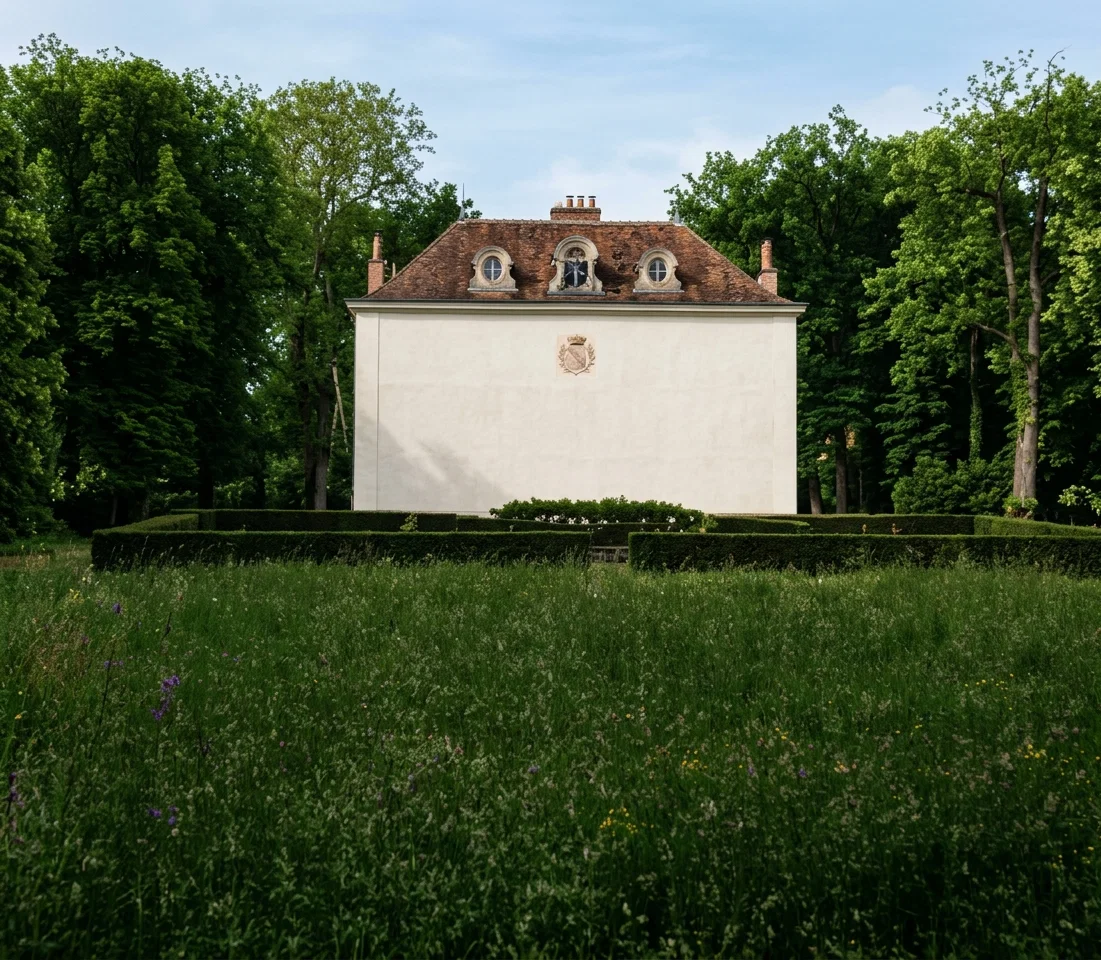
Our brethren in Europe have exchanged the old Basel printing-office property—now used as a sanitarium and food factory—for property in the country, at Gland, on Lake Geneva, between Lausanne and Geneva. This course was decided upon, if practicable, at the summer meeting of the Latin Union Conference; and Elder Conradi, Professor Wilkinson, Elder Tieche, president of the French-Swiss Conference, and others looked over a beautiful country estate, a portion of which, with its buildings, was in the market, and whose owner desired to exchange for city property.
THE GARDEN HOUSE
Now Elder Conradi writes from Gland, November 14:—
THE MANSION
We secured the place, October 20. The next day Brother S. Jasperson [the school manager] moved in, and has had seven or eight students busy about the place. Tomorrow the school begins. Brother John Vuilleumier [teacher] has taken lodgings with the farmer adjoining. We secured about three thousand francs' [six hundred dollars] worth of furniture with the place, and purchased some furnishings and appliances from the owner besides. At our committee meeting yesterday we decided to go ahead immediately with an addition, erecting a building to the left of the “mansion,” giving us a suite of treatment rooms and further rooms for patients, besides business and medical offices. As for food factory, bakery, and laundry, we decided to remodel the barn. It will need no change in the framework nor roof. We will put up cement walls, and divide the interior, giving us a building forty-three by eighty-eight feet, two stories.
In the garden house we shall make but one change, in the basement, so as to secure a good school-room and meeting room. When all is done, we shall have rooms for forty patients, twenty pupils, three dwellings for families, a large food factory and laundry, and besides this a most beautiful place for industrial school work for the French-Latin field.
By the same mail Dr. P. A. DeForest writes from Basel:—
I send you two photographs of the school and sanitarium building at Gland. The property consists of ninety-two acres, over half of which is covered with a beautiful oak forest. We hope to create there an ideal sanitarium, where we can invite the weary and heavy laden for physical and spiritual rest. We will do our best to meet the ideal that the spirit of prophecy has held up in the medical missionary work, so that the institution may not only have a beautiful situation with a splendid view, so far as scenery is concerned,—perhaps as magnificent as can be found in the world, considered from all points of view,—but that it may exert a still more powerful influence in favor of the truth in the new field to which we are moving. We hope to be able to care for about forty or fifty patients next summer, about double the number we would be able to take in at Basel. The school is occupying both buildings at present, but in the spring the white building will be used exclusively for patients, as well as a portion of the other one. This is a great undertaking for us,—like the work in Washington is for you,—but we have the exceeding great and precious promises from a God who has great power and infinite love.
Thus at last the great French-Latin field, with its hundred millions, is to have a training center in French-speaking territory. Besides being in the midst of a city, the Basel institution was in reality in a German-speaking country. The “mansion” on the Gland estate was for a time the home of Voltaire, the great French infidel.
India and Its Needs
By J. L. SHAW
J. L. SHAW
We often wish that our people in the home land could be here in India to see the needs of this field. There is not an hour but the needs are appealing to us, and it is the constant study of the workers here to know how, with our small force and limited means, to accomplish the great work which lies before us. We are constantly reminded that it is “not by might or by power,” but by the Spirit of God. The different lines along which we are working are the educational work, the medical work, the distribution of literature, and house canvassing throughout India, Burma, and Ceylon.
The Canvassing Work
Our force of canvassers is very small. At the present time there are five who are giving their whole time to this work. These five workers have a definite plan laid out for their work throughout the year, and they cover, as far as possible, English-speaking territory in India, Burma, and Ceylon. As soon as their year’s work is finished, they begin the same tour again, going over the territory which they have already canvassed. For instance, Miss Orr and Miss Jewett are laboring in Southern India and Ceylon, retracing the steps they took one year ago. They find that not only the homes that received them last year, but many more, are ready to welcome them. They work Southern India, coming up on the west side, taking in Bombay. During their canvassing tour they travel many hundred miles, visiting large cities, small villages, and isolated families. These sisters do not have the home comforts that many workers enjoy, and many times they are obliged to sleep in railway stations on hard benches, and suffer the inconvenience of a hot tropical summer as they canvass from house to house; but the Lord has strengthened them for this work, and they are in better health than when they began work. They have known what real home comforts are, and what it is to enjoy social life, but they have found true happiness and untold14pleasure in the work to which they feel the Lord has called them.
While these two sisters are in the south, Brother and Sister James are in the northwestern provinces of India, visiting some of the hill stations, and helping Brother Johnstone, who is leaving his government work, to get started in the canvassing work. Brother and Sister James have been here with us in India over a year, and their entire time has been spent in house-to-house canvassing. The Lord has given them many rich experiences, and they have been enabled to carry the truth to many homes.
Brother Watson, who accepted the truth in India about four years ago, has been blessed in selling our literature here in Calcutta, and of late he has received much encouragement by the disposal of our periodicals and tracts in streets and public places. I will quote a little from his report in the last Eastern Tidings:—
“The Spirit of the Lord encouraged me to take up the tract work three or four weeks ago. Truly the experiences are exhilarating. Hundreds of these little messages have been disposed of from week to week, while traveling on the tram car of the city, chiefly on the way to and from my canvassing center, which is now in the heart of the northern portion of Calcutta, the great native residential quarter. As I sit among my dear native brethren, the leaflets are taken out of my pockets, where they are always stored for use, and with a smile, and a word in their own tongue, one is handed to each who is within reach.
“These are willingly accepted, and, as a rule, eagerly read. In two or three instances I have seen some, on alighting from a car, and while awaiting transhipment by another, become so engrossed in reading precious truth as to almost miss their cars. Brethren, the Lord gives courage to his servants. At least two or three have testified that the words they have read have been sweet to their souls.”
These five laborers are giving their entire time to this work. Our other workers are spending as much of their time as possible in distributing and selling our literature. But how many more workers are needed in this work! Where are we to look for recruits? We have at the present time some right here in this field who might be educated to do this work if they had workers of experience to go with them for a time. Are there not those in America who would be willing to come here, even as self-supporting missionaries?
One of our workers who came from Iowa as a self-supporting laborer has had all that she could do, and at the present time is calling loudly for help. Her work has taken her to the best homes in India, and so anxious is she for help that she is laying by a little sum toward helping workers from America. Another, who has been here in India for some years and is connected with our Karmatar school, feels the needs among the native people. In a recent letter she offered one hundred dollars from her salary toward the expenses of a worker from home. I mention these facts that all may see how those who are on the ground and see the needs feel regarding the lack of help.
Educational Work
We have two native schools here in India, Karmatar is the training center for our native work. It was a great disappointment to lose the help of Brother and Sister Burgess in this work. Sister Burgess had succeeded in making the language her own, and they both had hoped to give their life to this work, but ill health made it necessary for Brother Burgess to seek a more invigorating climate. It is at such times as these, brethren and sisters, when our workers are taken away, and we know not where to turn for help, that our Heavenly Father makes manifest his saving and guiding power. At this time a gentleman who has been a teacher in one of the leading schools here, and who has been studying the truth for the last two years, and understands the language and the people, desires to unite with us, and give his life to the training of young people here in India.
The other native school, at Simultala for the Santal boys, is conducted by Brother Barlow. He has, in all, fifteen bright students. I visited this school, and baptized three of the students, one of whom had been recently converted from heathenism. It was very encouraging to see the interest these young men take in learning to read the Word of God, and it was touching to see the sacrifice they make to get a little education. Brother Barlow connects industrial work with the school, and is seeking to encourage the people to work more with the soil, and the Lord is blessing his efforts. As these young men learn to read, using the Bible as their text-book, they will receive the gospel of Christ, and, as they return to their villages, they can teach their own people what they have learned.
In Ceylon Brother Armstrong is just opening the work, and reports encouraging experiences, several, one a young schoolmaster, having decided to observe the Sabbath. This is a very important center, and we need Bible workers at this very time to help in the work there. It is a source of encouragement to be able to have one minister to enter even one of these large cities, but there are many important centers that should be entered at this very time. There will never be a more favorable time to work here than now, but where are we to look for help?
Medical Work
In our medical work the Lord has helped over many difficult places, and, by his help, our sanitarium work will be enabled to extend its borders, and will soon be in its new premises, where there will be comfortable and pleasant accommodation for about twenty in-patients, besides good treatment rooms for other patients, and also healthful rooms for the nurses and workers, which is no small matter of consideration. Just at present, with the change of location, there is considerable expense involved, but the workers are heart and soul in the work, and some of them have placed their own salaries back into the institution to help in the present financial strain. Dr. Ingersoll and his wife, with the staff of trained nurses, has organized a training class, which is in successful operation. At present five young people have dedicated their lives to this work, and are giving valuable help to the institution.
There is no place in the world where medical missionaries are needed more than in India. Wherever we turn, we are met by those who are suffering physically. Wherever we go, we see wretchedness and misery; and the maimed and the blind, and even the poor lepers, are continually appealing to us. Brethren and sisters, picture this great field of India, covering one fifteenth of the area of the habitable globe, and having a population equaling one fifteenth of the world’s inhabitants. Take the entire population of the United States, Canada, Great Britain, Germany, Turkey, and Russia, and you have the population of India. Think of this multitude of people, a company so great that, if joined hand to hand, we are told it would reach three times around the earth! And then picture our little band of workers here, and ask God what part you have to act in carrying present truth to this people.
In all our union conferences in America there are brethren and sisters who have helped young men and women to an education in our schools. I know in my own school experience how I was enabled to finish the college course through the kind assistance of dear Brother Vile, of Iowa. I have many times thanked the Lord for the material help, and may the Lord indeed reward him for his labor of love. There are, scattered as workers throughout America, Europe, South Africa, Australia, and the islands of the sea, many young people as a result of the self-sacrifice of our brethren and sisters; their salvation and the salvation of those who will be won through them will be due to the efforts made by the brethren who have worked faithfully on their farms and at their trades and thus been enabled to assist them. Eternity alone will reveal the good of their self-sacrificing efforts. Are there not some of our brethren and sisters in the home land who can not come to India, but who would like a representative here? The harvest truly is ripe in India, the fields are ready for the sickle, but there are so few to gather the harvest!
Free Bible Transportation
THE Central American republics have a curious clause in their postal regulations. The posts that go by water or railway are required to carry the Bible without charge.
F. H. WESTPHAL
By F. H. Westphal
From England to South America
F. H. WESTPHAL
IN my last report we were one day's journey from Liverpool, England. We remained one day in England, and then took the steamer “Victoria,” bound for South America. The Sunday before we landed in England there was an earthquake. The old island was shaken quite severely in some places. It must remind the people there that even England is not built on an eternal foundation.
After two days' journey we reached La Palisse, France. This was formerly the key to France. The Huguenots at one time occupied it. As we passed city after city, with their thousands and hundreds of thousands of inhabitants, we could not help but think of the weight of responsibility that rests upon our people in these last days.
At Lisbon, Portugal, we went on shore, and visited the cloister Carmo. It is in ruins—one of the remains of the great earthquake of the year 1755. Guides are appointed to conduct visitors about, and to explain the effects of that earthquake. How sad it is that we have not a single representative there to tell the people what the Lord meant by the earthquake of the year 1755. [Since Brother Westphal visited Lisbon, Brother and Sister C. E. Rentfro, of Iowa, have located in that city, and are busy studying the language.] I found the people very careful to do all they could for the stranger, who might come there to see the place.
Our next port after St. Vincent, a Portuguese coaling station, was Rio Janeiro, Brazil. As we entered the haven, it reminded us of our visit there ten years before. Brother W. H. Thurston and his wife were with us then. They remained there to labor, while we sailed on to Buenos Ayres. All will remember Brother and Sister Thurston's early experience in Brazil. We are grateful that a change has come into our ranks since that time.
We visited Brother Stauffer, the secretary of the Brazilian Conference. He is very comfortably located near the city of Rio Janeiro. A part of his house is used for the depository.
There are some changes being made in the city of Rio Janeiro. There is much building in progress. This has brought many workmen to the city, and so the accommodations are crowded, and rents are high. Many of the necessities of life are much more expensive than when we were here before. Formerly one dollar gold brought six mil reis, while now it brings but four; and one mil rei does not buy as much now as it did then.
The work in Brazil is onward, and is growing. There are about eight hundred Sabbath-keepers in that country. When I first visited the place ten years ago, there were a few Sabbath-keepers here and there.
The first of August we reached Buenos Ayres. Brethren Snyder and Grinrod met us at the docks, and conducted us to the office. We appreciated the kind reception that the brethren gave us.
A few days later we came to Diamante, province of Entre Rios, where we are stopping at the home of my brother, J. W. Westphal. He was just concluding a missionary tour in Brazil and Missiones, when we arrived.
We were received with great rejoicing at my brother's home. We had been separated about three years. These meetings give us some idea of the meeting of God's people in his everlasting kingdom. But the message must find its way into all the world before that glad day. Messengers must go into every country. There is room for many workers in South America. They must, however, be prepared for self-denying efforts. The life of Christ must be their pattern. He was a true missionary. He did not consider the comforts of his heavenly home, and leave the field, but he laid down his life for a fallen race. He could not return home without bringing his sheaves with him.
A few evenings after our arrival a reception was held at the school for us. Many warm speeches were made. We were glad to note the progress of the message. Brethren Fulton and Lude are very busy in the school. There are forty pupils enrolled. They are an excellent company of young people, preparing themselves for the work. Many of them will go into the field to canvass, at the close of the school year. We are glad that the missionary spirit is being fostered among the students. The school is true to the purpose for which it was founded. It is out of debt, and making good progress. Arrangements are being perfected to add five more rooms to the building. When these are completed, the original plans will be carried out. They will have enough money on hand to pay one of the teachers and the matron this year. This will leave one teacher for the conference to pay. If there is a good harvest, there will be more students next year. The light harvests of recent years have reduced the number of students considerably.
We saw in the school many articles that were prepared for it by the students of Union College and by the College View church. These things were much appreciated, and were very necessary.
If some one from the States would come to Argentina, and buy the three hundred acres of land bordering on the school ground, and then donate about one hundred acres of it to the school, it would be a great help. He could teach the people here how to farm, and thus be a help to the country as well. Such an individual would be a real missionary, if he held the light of truth before the people in connection with his daily life. And the same ought to be done in Chile when we start our school there.
We have been visiting among the churches here in Entre Rios, doing house-to-house work. The first Sabbath the meeting was held in the school building. There were about one hundred and fifty of the brethren present. The next Sabbath there were two hundred and fifty. The following Sabbath the meeting was held in the old Crespo church, where there were over two hundred present. Last Sabbath we went quite a distance into the woods; and as it had rained, there were not so many present. The roads were very bad. My brother and I did most of the preaching. The message that was borne was that the Lord is now calling his people to repentance. If we disappoint the Lord in this call, it means a great loss to the individual to whom the call is being made, and to the Lord's work. We found the brethren all of good courage, and willing to press onward. They pledged and donated about two hundred and fifty dollars (Argentine money) for the Camorera school during our visit this time, and about two hundred and sixty dollars for the school in Chile. We are glad to see this spirit to help the work onward in other fields as well as in their own. A few hundred dollars will be a great help to us in starting a school in Chile.
My brother and I intend to go to Urdinarrein this week, and from there to the province of Santa Fe, where we will attend the conference and camp-meeting, and then I will go to Chile, my permanent field of labor.
There should be standard-bearers in every city and every village and country place in the whole field of South America. There are but few laborers to carry the message to the millions of people here. Earnestly pray that the Lord will send laborers into the field to work for him. There are about half as many inhabitants in this country as there are in the United States of America, and these are spread over a much greater territory, and it, therefore, requires a greater effort to reach them all. There are but few laborers here to do the work, and these are often crippled for lack of means. I believe that the Lord can help in this matter, and that he will raise up many more workers and provide means if his people are willing that this should be done. To show their willingness they must consecrate themselves and their means to the work of the Master. The message of the coming of the Lord must be everything to us now. There are no other interests that should absorb our attention to such an extent that we shall lose sight of the great work before us. Pray for the work and the workers here.
Chinese Interest in Christian Literature
MEN of the literary class in China are said to have spent last year two hundred and fifty thousand dollars for books and papers that teach the wisdom of Christendom; they wish to keep up with the procession which they have lately discovered. Most of this literature was of missionary origin.
Virginia and West Virginia
By B. F. Purdham
I VISITED my family and friends at Stanleyton, Va., Nov. 14-30, 1904, after an absence of two months in West Virginia.
A few meetings were held at our church near Stanleyton, with good attendance and interest, a number coming forward to seek the Lord.
On my return, I accompanied my daughter to the Washington Training College, and had the privilege of being present at the opening exercises, November 30. I am well pleased with the location and the prospects for an excellent school. May the Lord make this school a great power for good in this grand and closing message.
I am now back in my field of labor at Clarksburg, W. Va., and am of good courage in the Lord. My desire is to press forward to the final victory.
B. F. PURDHAM.
_Wyoming Mission Field_
By E. T. RUSSELL
SEPT. 17, 1904, the nine western counties of Nebraska,—namely, Sheridan, Dawes, Box Butte, Sioux, Deuel, Cheyenne, Scotts Bluff, Banner, and Kimball,—and five counties in southwest South Dakota,—namely, Meade, Fall River, Custer, Pennington, and Lawrence,—belonging to the Nebraska Conference, with the State of Wyoming, were received from the Nebraska Conference by the Central Union Conference, to be operated as a mission field.
This territory has for some time been worked by the Nebraska Conference as part of its territory. It has a population of about one hundred and seventy-five thousand, with seven churches and about one hundred and sixty Sabbath-keepers. Among the early laborers in this field might be mentioned O. S. Ferren, H. Ketring, and Brother Armitage. Brother Ferren is now asleep in Jesus, Brother Ketring is in Chile, South America, and Brother Armitage has for many years been laboring in Africa. This has ever proved a fruitful field for the amount of labor put forth, and, as it is developing in population and financial resources, I see no reason why it could not become a strong conference.
During the month of November, in company with Elder J. H. Wheeler, I visited Hemingford, Neb. At this place there is located a good schoolhouse, and Brother and Sister E. C. Cushman are conducting a successful church-school. From Hemingford we went to Oelrichs, S. D., where we organized a church of about eighteen members. We next visited Custer, S. D., and while there organized a church of about sixteen members. Others will unite with this organization in the near future. Brother R. T. Baer and his wife are conducting a church-school at this place, with which the students and patrons seem well pleased. We then visited Lead and Deadwood, S. D., where we also organized a church of sixteen members.
This organization takes the name of the Deadwood church. At Deadwood there is being conducted quite a successful church-school by Miss Addie Wheeler. The school is held in the home of Brother R. V. Cheney, elder of the church.
These companies which have been organized do not represent new Sabbath-keepers, but are integral parts of what was termed the Black Hills church, which extended over the Black Hills of South Dakota and a portion of Wyoming. In a short time another church will be organized at Sheridan, Wyo., and these churches will include all the Sabbath-keepers in the territory formerly occupied by the Black Hills church.
The tithe from this field will amount to about three thousand five hundred dollars a year. The following-named laborers are in the field: J. H. Wheeler, E. L. Cook, B. M. Garton, G. A. Kirkle, L. B. Porter; church-school teachers, E. C. Cushman, Mrs. E. C. Cushman, R. T. Baer, Mrs. R. T. Baer, Miss Addie Wheeler, and Miss Stella Allred. The officers are as follows: Director, J. H. Wheeler; Executive Committee, J. H. Wheeler, E. T. Russell, G. A. Kirkle, E. L. Cook,; Secretary, Miss Iva Leach; Treasurer, L. B. Hall. The mission office is located at Crawford, Neb. We have every reason to believe that this field will yet develop into one of our best conferences.