The Youth’s Instructor, Vol. 48, No. 14.

DRAWING FROM NATURE

The Youth’s Instructor

Apr 5, 1900

Review and Herald Publishing Company · Battle Creek, Mich. · Apr 5, 1900

DRAWING FROM NATURE

Light and Shade
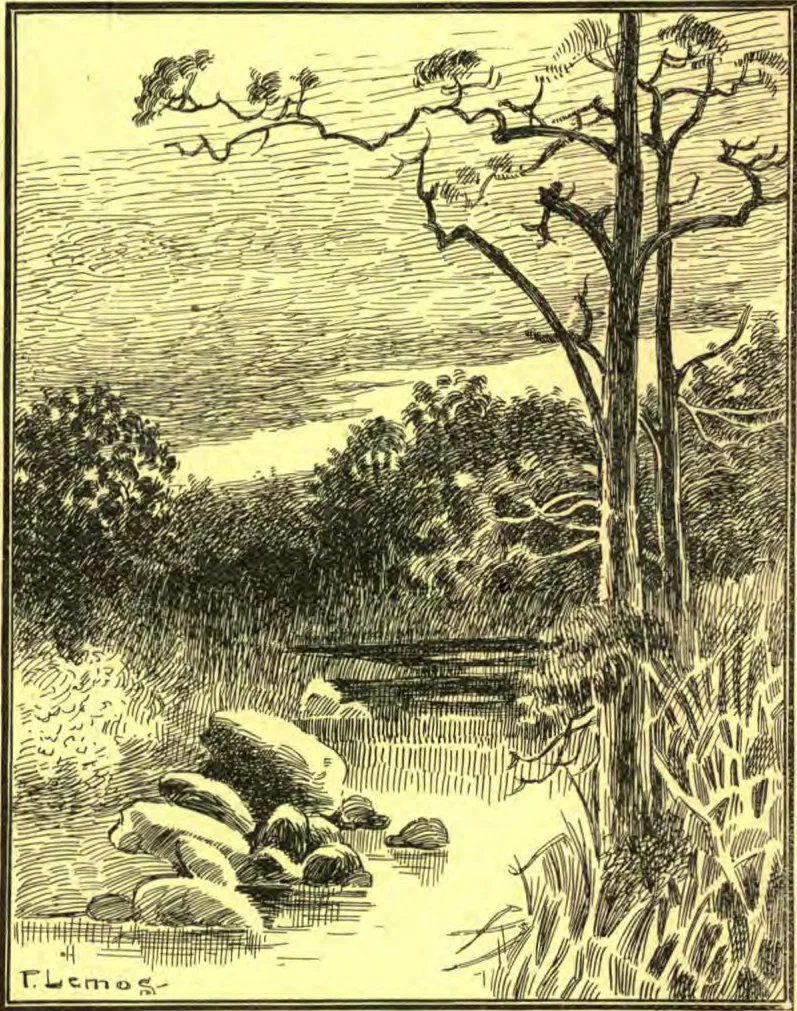
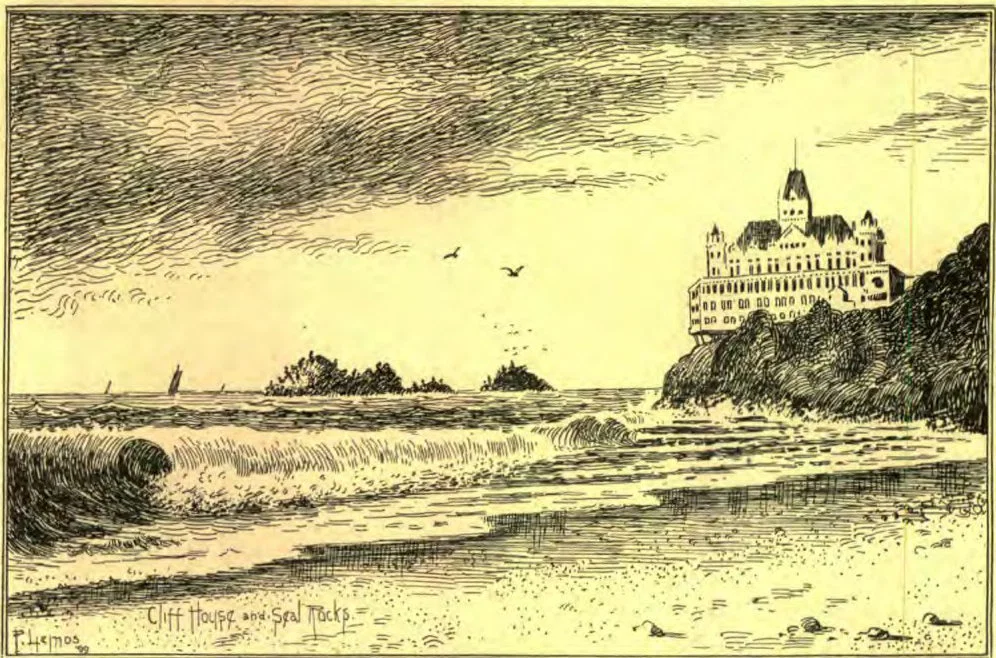
A careful study of the varying aspects of water at different times of the day, and under different conditions, should be made, in order to become familiar with the reflections, and their appearance and disappearance with the slightest breeze. Notice how, in a strong wind, every wave on a river or lake seems made up of innumerable little waves, crossing and recrossing the larger one. These require the most accurate drawing to represent them fairly. Those who live near the seashore have an opportunity for many interesting studies.
Shading in drawing is a finishing touch. It gives solidity and color to the objects in the drawing.
Shades and shadows, being simply the partial absence of light, have no substance; but in drawing they are treated as solid forms. It is not necessary, however, to make the light and shade in a drawing of the same brightness and depth that it is with the real object. This is usually impossible. It is only necessary to keep the relative proportion of light and shade correct. The sun is many times brighter than the whitest paper, and the deepest shades in nature are much darker than the blackest pencil; so we must let the highest light be represented by the whiteness of the paper on which our drawing is to be made, and the lowest, or deepest, shade be represented by the blackest mark we can make with our pencil. These are the two extremes beyond which it is impossible to go; yet both of these extremes may be used to represent our subject truthfully, by keeping the relative proportion of light and shade correct. Between these two extremes all the different shades must be included. Some of the prettiest drawings are made by keeping all the shades and shadows lighter than the extreme black, and all the other shades in proportion.
Always look first for the broad masses of light and shade (these are best seen through the half-closed eyelids, as explained in a previous article); then the shades of the parts will be comparatively easy to manage.
Care must be taken not to mistake color for shade. The two are quite independent of each other, and should not be confounded. Close observation is sufficient to detect both.
There will be a tendency at first to make the shading too light. This fault may be overcome by marking in a part of the deepest shading at first, so that the two extremes of light and shade will be before the eyes, to assist in judging the values of the remaining shades. A shadow is darkest nearest the object that cast it. Care must be taken not to go to the extreme of putting shades in impossible places, or shadows where they do not belong. Nature does not do this, and she is the best guide.
Strictly speaking, there is no outline in nature. That which we commonly call an outline is the dividing line between two shades,—the ending of one shade and the beginning of another. Notice how the fields, hills, woods, etc., are merely patches of shade and color, that end more or less abruptly.
There are three general grades of light in shading,—bright light, half-light, and diffused light.
Bright light is direct from the sun. In bright light the shades are comparatively light, and the shadows dark.
When the sun is partly obscured by haze or light clouds, the light is called “half-light.” In half-lights the shadows and shades are about equal in depth.
Diffused light is the light of an ordinary room, or of a cloudy day. In diffused light the shadows and shades are not defined; they are indefinite, and blend together. A diffused light is usually preferred by artists, for the reason that it does not contain strongly defined lines and edges, or strong contrasts of light and shade; but it is best for the beginner to draw objects in the bright and half-lights, as the shadows and shades then possess a definite form, and can be easily seen.
PEDRO LEMOS.

DAY'S AFTERGLOW

One sees stealing back a faint, rosy reflection That deepens and melts into loveliest blush, As elusive and soft as a sweet recollection That tugs at your heart with its tremulous hush. Be silent and gaze at the great sky, for, lo! God's angels are painting the day's afterglow.
—Margaret E. Sangster.

JOHN THE BELOVED

II

AGAIN the enemies of the truth sought to silence the voice of the faithful witness, and John was banished to the Isle of Patmos. Here, they thought, he could no longer trouble Israel, or the wicked rulers of the world, and he must finally die from hardship and distress. But John made friends and converts even here.
To outward appearance the enemies of truth were triumphing, but God’s hand was moving unseen in the darkness. God permitted his faithful servant to be placed where Christ could give him a more wonderful revelation of himself. He placed him where he could receive the most precious truth for the enlightenment of the churches. He placed him in solitude, that his ear and heart might be more fully sanctified to receive the truth. The Lord was preparing John to endure hatred and scorn for the sake of the word of God and the testimony of Jesus Christ. The man who exiled John was not released from responsibility in the matter. But he became the instrument in the hands of God to carry out his eternal purpose; and the very effort to extinguish light placed the truth in bold relief.
John was deprived of the society of his brethren, but no man could deprive him of the light and revelation of Christ. A great light was to shine from Christ to his servant. The Lord watched over his banished disciple, and gave him a wonderful revelation of himself. Richly favored was this beloved disciple. With the other disciples he had traveled with Jesus, learning of him and feasting on his words. His head had often rested on his Saviour’s bosom. But he must see him also in Patmos. God and Christ and the heavenly host were John’s companions on the lonely isle; and from them he received instruction that he imparted to those separated with him from the world. There he wrote out the visions and revelations he received from God, telling of the things that would take place in the closing scenes of this earth’s history. When his voice could no longer witness to the truth, when he could no longer testify of the One he loved and served, the messages given to him on that rocky, barren coast were to go forth as a lamp that burneth. Every nation, kindred, tongue, and people would learn the sure purpose of the Lord, not concerning the Jewish nation merely, but concerning every nation upon the earth.
The Sabbath, which God had instituted in Eden, was as precious to John on the lonely isle as when he was with his companions in the cities and towns. The precious promises that Christ had given regarding this day he repeated and claimed as his own. It was the sign to him that God was his; for God had declared: “Verily my Sabbaths ye shall keep: for it is a sign between me and you throughout your generations; that ye may know that I am the Lord that doth sanctify you. . . . Wherefore the children of Israel shall keep the Sabbath, to observe the Sabbath throughout their generations, for a perpetual covenant. It is a sign between me and the children of Israel forever.”
On the Sabbath day the risen Saviour made his presence known to John. “I was in the Spirit on the Lord’s day,” he writes, “and heard behind me a great voice, as of a trumpet, saying, I am Alpha and Omega, the first and the last: and, What thou seest, write in a book, and send to the seven churches. . . . And I turned to see the voice that spake with me. And being turned, I saw seven golden candlesticks; and in the midst of the seven candlesticks one like unto the Son of man, clothed with a garment down to the foot, and girt about the paps with a golden girdle. . . . And when I saw him, I fell at his feet as dead. And he laid his right hand upon me, saying unto me, Fear not; I am the first and the last: I am he that liveth, and was dead; and, behold, I am alive forevermore.”
The persecution of John became a means of grace. Patmos was made resplendent with the glory of a risen Saviour. John had seen Christ in human form, with the marks of the nails, which will ever be his glory, in his hands and his feet. Now he was permitted again to behold his risen Lord, clothed with as much glory as a human being could behold, and live. What a Sabbath was that to the lonely exile, always precious in the sight of Christ, but now more than ever exalted! Never had he learned so much of Jesus. Never had he heard such exalted truth.
The appearance of Christ to John should be to all, believers and unbelievers, an evidence that we have a risen Christ. It should give living power to the church. At times dark clouds surround God’s people. It seems as if oppression and persecution would extinguish them. But at such times the most instructive lessons are given. Christ often enters prisons, and reveals himself to his chosen ones. He is in the fire with them at the stake. As in the darkest night the stars shine the brightest, so the most brilliant beams of God’s glory are revealed in the deepest gloom. The darker the sky, the more clear and impressive are the beams of the Sun of Righteousness, the risen Saviour. MRS. E. G. WHITE.

Paper and Toning-Baths

The ordinary print-out paper is coated with either gelatin or collodion. There is probably little choice between the two kinds. Some prefer one, some the other; but perhaps the beginner will have the least difficulty with that coated with gelatin.
There are many different brands of gelatin paper, and you must make your own selection. I have no advice to offer on that point, for I have no favorite. During the last few years I have used very little gelatin paper, as there are other printing processes that give more permanent and artistic results. The reason I advise my readers to use it is because the printing and toning are so simple. When you become familiar with the easier photographic processes, you will have better success with some of those that are more complicated.
There are about as many formulas for toning-baths as for developers. But unlike the developers, they are of two distinct classes,—separate toning, and combined toning and fixing.
With the separate toning-bath the prints are toned and afterward fixed, just as the plates are developed and afterward fixed. But with the combined bath the two processes go on simultaneously. With the separate bath, prints must be washed before toning, after toning, and after fixing. With the combined bath they are immersed without previous washing. This somewhat shortens and simplifies the operation.
Prints toned in the separate bath are said to be more permanent than those toned in the combined bath. I say “said to be” because I consider it an open question. I have photographs that were toned in a combined bath years ago, and they show no signs of fading or discoloration as yet. Again, I have seen prints toned in a similar bath begin to fade in less than a month. The bad reputation of combined baths comes from the fact that after the gold it contains is exhausted, the bath will continue to tone as before, and while the prints toned with gold, and those toned without, will look very much alike when they are finished, the latter will soon begin to discolor and fade. I give here a combined bath that contains no gold. It will yield quite a pretty tone, but it will not be permanent:—
Ingredient Quantity
Hypo. 6 ounces
Sal soda. ¼ ounce
Acetate lead, ½ ounce
Water, 1 quart
Whether combined or separate baths are used, gold is the principal toning agent, and a solution of it should be kept in a separate bottle. This “gold solution” is made by dissolving a fifteen-grain bottle of chloride of gold in fifteen ounces of water. That will give us one grain of gold to every ounce of solution. The bottle may be labeled simply “Gold.” Here I must caution my young friends never to put any of their chemicals on the inside of a bottle without putting a label on the outside. Strict adherence to this rule will save much unnecessary trouble and many mistakes.
Here is a combined bath that works well with any brand of gelatin paper:—
Ingredient Quantity
Water, 80 ounces
Hypo., 16 ounces
Acetate soda, 1 ounce
Sulphate soda, 2 ounces
Powdered alum, 2 ounces
Acetate lead ¼ ounce
Sulphite soda 20 grains
This bath will keep indefinitely. For use add half an ounce of the gold solution to six ounces of bath. No trouble will be experienced in working this bath; but as it is susceptible to abuse, I would advise my readers to use a separate bath.
Though separate baths are somewhat more difficult to work, they are much more simple in compound than the combined. They consist essentially of a weak solution of chloride of gold, with the addition of some alkali to neutralize the acid it contains. The alkali used may be almost any of the many sodas or potashes; but if they are used, the bath should be tested with litmus paper, to make sure that it is slightly alkaline.
Red and blue litmus paper may be bought at any stock house or drug store. The red litmus will turn blue in an alkaline solution; the blue turns red in an acid solution. Only one color of the paper will be needed, as the color may be changed at pleasure by simply immersing it in a solution known to be either alkaline or acid, as the case may demand.
The different alkalies each give a slightly different tone to the prints. Borax and bi-carbonate of soda (baking soda) are more generally used than any others. Either of these chemicals will give very pretty tones, but a bath made with them will not keep. Where only a few prints are toned, at a time, this causes a great waste of gold. For that reason I recommend the use of an acetate bath, made by dissolving one ounce of sodium acetate in sixteen ounces of water. To make a toning-bath, mix one ounce of this solution and one ounce of gold solution with eight ounces of water. This will keep indefinitely, but it should be mixed the day before it is used. When it gets too weak to tone, as it will in ten or twelve minutes, it may be strengthened by adding half an ounce of each solution: thus the old bath need never be thrown away.
After toning, the prints are fixed in the following bath:—
Ingredient Quantity
Water, 16 ounces
Hypo., 3 ounces
Powdered alum, 1 ounce
This bath will keep, and it will be sufficient to fix about three dozen five-by-seven-inch prints.
After a while I will give directions for preparing photographic paper; and then the INSTRUCTOR readers can be independent of the trust that has, in the last two years, so greatly increased the price of paper.
J. EDGAR ROSS.

Life as a Building Rising Day by Day

LIFE is a building. It rises slowly, day by day, through the years. Every new lesson we learn lays a block on the edifice, which is rising silently within us. Every experience, every touch of another life on ours, every influence that impresses us, every book we read, every conversation we have, every act of our commonest days, adds something to the invisible building.—J. R. Miller.

“BEHOLD I STAND AT THE DOOR AND KNOCK”

O Jesus! thou art standing Outside the fast-closed door, In lowly patience waiting To pass the threshold o’er: Shame on us, Christian brothers, His name and sign who bear! Oh, shame, thrice shame upon us, To keep him standing there!
O Jesus! thou art knocking; And lo, that hand is scarred, And thorns thy brow encircle, And tears thy face have marred: O love that passeth knowledge, So patiently to wait! O sin that hath no equal, So fast to bar the gate!
O Jesus! thou art pleading, In accents meek and low: “I died for you, my children, And will you treat me so?” O Lord! with shame and sorrow We open now the door; Dear Saviour, enter, enter, And leave us nevermore.
— William W. Howe.

The Kingdom Within: Verse by Louisa M. Alcott

I do not ask for any crown But that which all may win; Nor try to conquer any world Except the one within. Be Thou my guide until I find, Led by a tender hand, The happy kingdom in myself, And dare to take command. — Louisa M. Alcott.

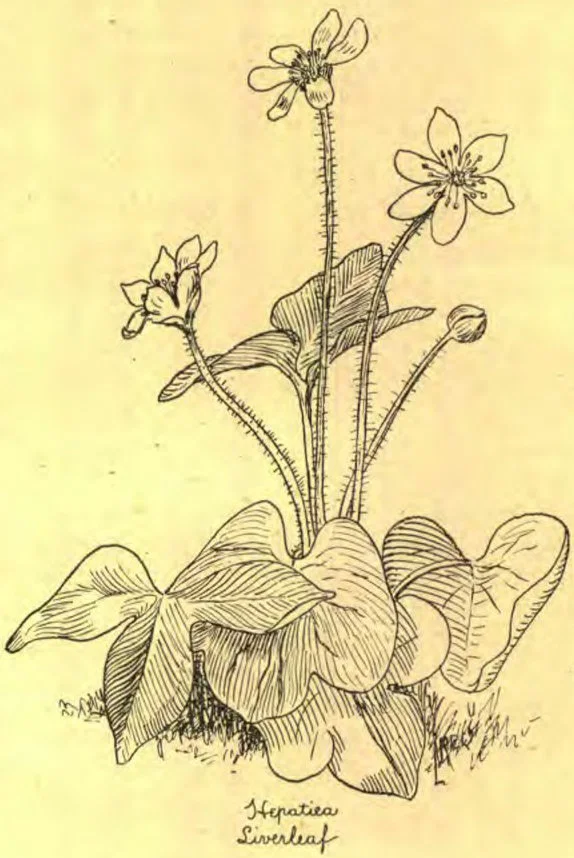
1—Hepatica, or Liverleaf

ONE of the earliest flowers of spring is the hepatica. Its buds and stems are well wrapped in heavy fuzz, which protects them from cold. Thus wrapped in winter clothes, the brave little plant pushes its way up through the dead leaves and even the snow. It may sometimes be found in its haunts by scraping away the snow, having been picked as early as December 9. Last year it was found in the vicinity of Battle Creek during the month of April.
When the fragrant pinkish blue or white flower appears, the only leaves in sight are the rusty leaves of the previous summer. The leaves are rounded, of three lobes, mottled with purple, and from the root. The plant is found chiefly in the woods or on sunny hillsides.
“Hepatica” is a Greek word for liver, and was suggested by the shape of the leaves. The plant has been used to some extent for liver complaint, as men supposed the shape of the leaves was nature’s suggestion of medicinal properties in the plant.

2—Sanguinaria Canadensis, or Bloodroot
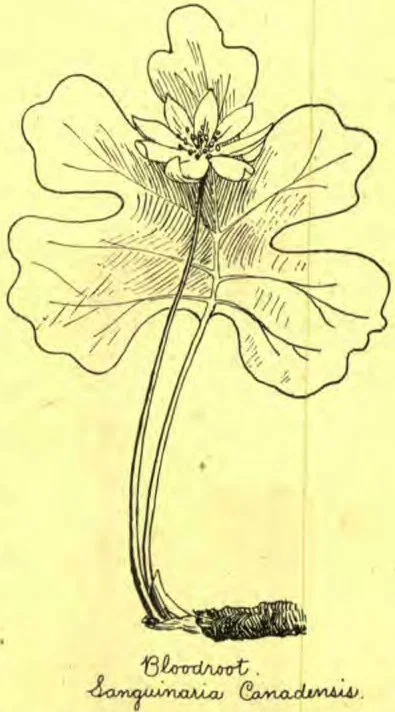
This little plant belongs to the poppy family. It has a beautiful showy flower, which soon perishes. In early April it pushes up the curled tip of its rolled-up leaf, breaking its way through the earth and brown leaves. Inside the leaf, carefully shielded, is the young, erect flower-bud. As soon as the leaf has emerged, it unfolds; and the flower-bud rises above it, and opens its white petals to the sun.
There is but the one leaf, which is quite large and round. Both flower-stem and leaf are from a thick root-stock, which is filled with an orange-red juice capable of producing a deep and lasting stain. The Indians used it for decorating their faces and tomahawks. This juice is a famous remedy for coughs and colds.
If any of our readers wish to make a more careful study of the plants of the northern United States, they will find special help in Mathew’s “Familiar Flowers of Field and Garden,” published by D. Appleton & Co., New York. Price, $1.75. This is an excellent work, with over two hundred original drawings.
A larger work, similarly arranged, but more complete, is published by Harper & Brothers, New York, for $2.50. In it over one thousand flowers, plants, and weeds are described in a plain, simple way, and there are about two hundred realistic and artistic drawings from natural flowers. These were drawn by Mr. Benjamin Lander, the eminent painter-etcher of New York, whose art productions are so well known in this country and Europe. These books have been arranged for those who have no special knowledge of botany or botanical terms. L. A. REED.

Phenolphthalein Sympathetic Ink Revealed by Alkaline Solution

One of the most beautiful of sympathetic, or secret, inks seems to be that lately brought to notice in Germany. Writing done with a weak solution of phenolphthalein in dilute alcohol is scarcely visible, but is brought out in intense red when a piece of cotton soaked in soda or other alkaline solution is passed over it. This ink, however, is not suitable for important documents, as it is readily effaced by acid vapors, and even by the carbonic acid of the air.

STAY NOT

Are there kindly words to say? Oh, say them! Good impulses to obey? Obey them! Are there paths you should pursue? Pursue them! Are there loving deeds to do? Then do them! Lift the sorrows burdensome— Oh, stay not!
Active hands will soon be numb, Speaking lips will soon be dumb, Day is hastening, night will come; Delay not!
—Mrs. Frank A. Breck.

A Lesson in Each Flower

THERE is a lesson in each flower, A story in each stream and bower; In every herb on which you tread, Are written words, which, rightly read, Will lead you from earth’s fragrant soil, To hope and holiness and God. — Allen Cunningham.

EARLY SPRING

Oh, the gentle plash of the warm spring rain, As it wakes the rested earth again, And blurs the window-pane! Oh, the song that the skylark loves to sing, As he cleaves the air on mounting wing, In the early days of spring!
Oh, the dear caress of the soft south wind! Come out, and meet her kisses kind, For winter's left behind. Note the tender green of this mossy log, And the pussy-willows by the bog,— Hark! did you hear that frog?
Ah, a wholesome smell has the fresh, moist clod, Where the gardener turns the yielding sod, And dreams of the garden of God! How the hearts of all rejoice and sing, Whether man, or beast, or bird a-wing, In the early days of spring!
MRS. ELIZABETH ROSSER.

BEREAN LIBRARY STUDY

Dan. 11:32-39: “Thoughts on Daniel,” pages 262-273

NOTES ON LESSON 19

(April 3-14)
1. We Need the Lesson.—Again our study touches upon the persecution of Christians. Hitherto no comment has been made in these notes upon the sufferings of the martyrs; for we shrink from writing of those most horrible scenes. To read the historian’s words makes the heart sick. Yet we need the lesson that the faithfulness of the martyrs of old can teach us; for the image to the beast will do the works of the beast, and the decree will yet be against us that as many as will not worship the image of the beast shall be killed. Rev. 13:15.
2. Martyrs for the Truth’s Sake.—No one knows the number of victims who have been put to death for the gospel faith. The pagan persecutors resorted to every possible device to enhance the cruelty of their tortures. The rulers of Rome, in wreaking vengeance upon the hated Christians, celebrated their festivals by displays of cruelty which could be conceived only in the mind of a fiend. We give but one instance: Nero “gave a great evening festival in his gardens; and to the end that the grounds might be brilliantly illuminated, he ordered the Christians to be wrapped in flax, dipped in pitch, fastened to poles, set up about the promenades and summer houses, and lighted for torches. Then, while the groaning and writhing human candelabra burned to the socket, the emperor and his friends caroused and feasted until the blackened feet of the expiring torches dropped into darkness.” But besides all this, we have the record of the Inquisition, a professedly Christian method of exterminating heretics. Within the short space of thirty years, this weapon of the papacy destroyed, by various tortures, one hundred and fifty thousand men, women, and children.
3. A Tribute to the Power of the Gospel.—For the love of their Master, for the sake of the truth they believed, not only men, but women, frail girls, and even little children, endured these things without flinching, when oftentimes a word indicating a denial of their faith would have saved them.
4. The Harvest of Selfishness.—The French Revolution, culminating in the Reign of Terror, was the blossoming of a seed planted years before. Some of the conditions which led to this uprising of the peasantry against the nobility are worthy of study; for the frequent contests between the rich and the poor in these days make this a live question. In France the people were overwhelmed with taxation. The laws were enacted by those who regarded the common people as born only for the convenient use of the higher classes. Justice could be secured only by bribery or political influence. The peasant had to grind his corn at the lord’s mill, bake his bread in the lord’s oven, press his grapes in the lord’s wine-press, for all of which he paid whatever price his lordship chose to ask. When “my lady” was ill, the peasants must beat the neighboring marshes all night, to prevent the frogs from croaking, and disturbing her rest. The strife between these classes had awakened intense hatred. The crisis finally came, and it ended in a carnival of murder.
5. The Worship of Reason.—The insane worship of Reason, which is so thrillingly described in our text-book, was the outgrowth of the teaching of skepticism and infidelity by the famous writers of that age. Brilliant and fascinating theories of liberty were promulgated. Everything sacred or pertaining to religion was ridiculed. Virtue was mocked and derided, and the absolute abandonment of all restraint encouraged.
6. Why Should We Study All This?—Because we are living in a time similar to that which preceded these historical events. From the chapter, “The Impending Conflict,” in “Great Controversy,” we quote a few sentences, sufficient to give the connecting link between that which we are studying and the perils of these days: “Courts of justice are corrupt. Rulers are actuated by a desire for gain, and love of sensual pleasure. . . . Jurists are perverted, bribed, deluded. Drunkenness and revelry, passion, envy, dishonesty of every sort, are represented among those who administer the laws. ‘Justice standeth afar off; for truth is fallen in the street, and equity can not enter.’” “The religious organizations of the day have refused to listen to unpopular truths plainly brought to view in the Scriptures, and in combating them they have adopted interpretations and taken positions which have sown broadcast the seeds of skepticism.” “The teachings of religious leaders have opened the door to infidelity, to Spiritualism, and to contempt for God’s holy law.” The experience of each thinking person must furnish numerous illustrations of the truth of these statements.

ARAB BOYS AND GIRLS

ALL Arab towns are much alike. They are made up of mud hovels full of half or wholly naked children, yellow dogs, hens; no furniture, but heaps of rags, water-jars, saddle-bags, and some primitive machine for grinding corn. The narrow lanes that serve for streets are always full of dirt heaps, lean donkeys, and buffalo cows.
Arab boys are bright, and lately all are eager to learn English. This is because they can make themselves useful to travelers, and earn far more than they otherwise could. They will come to the missionaries in order to learn the language, and then they learn the Bible. When once they know the truth, they can not fail to see the difference between the pure gospel of Jesus Christ and the bloody teachings of Mohammed.
The little Arab girls are pretty, gentle creatures, with voices as sweet as music until they are about twelve years old. After that they grow coarse and hard-featured. They tattoo their foreheads and hands and chests with ugly blue-black patterns, which they much admire. An Arab woman of thirty often looks like an old woman of sixty or more. They are a poor, forlorn set; for an Arab does not think his wife has any soul worth considering. If she obeys him, she may be saved because she is his wife; but she does not need any religion of her own. How different from the lives of women and girls in our own Christian land!—Annette L. Noble.

APRIL STUDY OF THE FIELD

PART II: OUTLINES OF THE HISTORY OF MEXICO

(April 8-14)
1. Basis of Study.—The article upon which our study is based this week deals with our nearest neighbor, Mexico. Do not fail to make the facts in these studies your own. We would urge those who can do so to study more extensively the history of this land. By one writer it has been represented as a cornucopia, the mouth of whose horn opens widely toward our own country for eighteen hundred miles along the Rio Grande, as if entreating that it may be filled. Is not this a call for those who represent the last closing message? One company of workers has recently been established near Mexico City. Remember to pray for these laborers in this dark land.
2. Hidalgo, the Washington of Mexico.—The first scene in the effort for independence in Mexico is interesting. At midnight in Dolores, the inhabitants are wrapped in calm repose. A glance toward the little church, henceforth to become in verity the Mexican Faneuil Hall and cradle of liberty reveals activity. Here and there men are moving stealthily about in the gloom. They gather at length around a central figure arrayed in priestly garb. This is the patriot Hidalgo, the village priest. For a number of years he has been maturing his plan; and ere the morning sun sheds its first beams on the streets of Dolores, the company has swelled into a formidable army. In less than one year he was the honored victor, the patient prisoner, the humiliated priest, and the martyr of the cause he had so earnestly espoused. Divested of his priestly robes, he was led to his execution. Assuring the guards of his forgiveness, he placed his hand upon his heart as a guide for the aim of the soldiers. A platoon fired, only wounding his hand; but he remained motionless, continuing in prayer. Only after four more volleys had been fired into his breast was life extinguished. The veneration in which he was held, it was supposed, interfered with the accuracy of the aim. Heroic to the last, thus died the father of Mexican independence.
3. The Religion of Mexico.—The majority of the native population are semi-idolaters. They know no other worship than that of forms. Mexican faith is a dead faith. It inspires nothing. The worship of saints and madonnas so absorbs the devotion of the people that there is little time left to think of God.
4. First Gospel Message to Mexico.—The Bible was first carried to Mexico by United States soldiers. A few persons who became convinced that the Bible was the power of God unto salvation began to hold meetings in a little seaside chapel, which they had secured for the purpose. The parish priest, being assured that any killing of Protestants would be winked at, hired a band of Indians to surprise the disciples while engaged in worship. The Indians, filled with Mexican whisky and armed with the terrible double-edged machete, went to the chapel. Watching the opportune moment when the little company were engaged in prayer, the murderers leaped into the chapel, and began to strike right and left. Many were killed, and still others were frightfully wounded. Thus the gospel had its beginning in this land of darkness. But the blood of the martyrs proved to be the seed of the church. Two of the eye-witnesses of the martyrdom became elders of the church that was organized later.

A LETTER

Keene, Tex., March 10, 1900.
Dear Brothers and Sisters of the Instructor Family: After a long time I write again, to tell you how much I thank you for the many packages of choice reading-matter that I receive every week. I have lately sent a quantity to the boys in the reformatory, and hope soon to send them another supply. I wrote them a kind letter, and asked them to reply. If they do, I will send the letter to the INSTRUCTOR, that you may all see it.
I hope you have all read, in the Review, the letters from the poor boys in prison; and that as you have read, you have noticed how much of their misery came about by their disobedience to their parents. Dear boys, if you could know how mother loves you; how often she stands looking down upon your bright faces as you lie asleep, and prays that God will keep you pure in word, thought, and deed, and help you to live a noble, upright life, more of you would try to live in such a way as to fill her heart with happiness.
I have been in the Texas Reformatory, and have had little boys under ten years of age come and lean confidingly against my knee, while I talked to them, and gave them papers. It is to such as these that your INSTRUCTORS and Little Friends will go.
In sending papers, be sure to write plainly upon the wrappers the name and date of those inclosed. Then it will not be necessary to rewrap the packages before sending them to their destination.
Below are several additional names that have been sent in for our Prisoners’ Friend Society. If any who have sent in their names do not see them here, I hope they will forward them to me again:—
Flossie Boman Lena Rider Nellie Bobst Mina Burgett Armilda Boyar Mabel E. Butler Mabel S. Cornog Mattie A. Pease Rettie M. Chapman Olive Shanon Leo Owen Marion E. Paxton M. D. Smith Delia Boman Alian Nowlin Joy Bobst Elsie Leslie Ella E. Butler Myrtie I. Butler Mrs. C. H. Ballard Ola Victor Floyd D. Smith Adaline Thompson Mrs. J. E. Kipp Maud I. Paxton
Do not become discouraged in this work. Sow the seed patiently, and in due time the harvest will come. MRS. IDA CARMICHAEL.

THE CONCEITED COINS

“I'm just as good as silver!” The Nickel proudly cried; “The head of Madam Liberty Is stamped upon my side. I am as white and shining As any dime can be: He needn't put on any airs, I'm twice as thick as he!”
“I'm every bit as good as gold!” The Penny blustered loud; “That tiny, thin gold dollar— He needn't feel so proud; For all his airs and graces I do not give a fig; I'm burnished just as bright as he, And half again as big!”
But when the Cent and Nickel Went out upon their way, Alas! the world still held them cheap, Whatever they might say. The Double Eagle smiled. “You'll find,” He said, “that par is par; It doesn't matter how you boast, But what you really are!” — The Outlook.
Continue reading: TWO WAYS OF LOOKING AT IT