WILL you please explain through the SIGNS what is meant in Rom. 10: 4? In what respect is Christ the end of the law to those that believe? C. F. C.
The text reads: “For Christ is the end of the law for righteousness to every one that believeth.” The word “end” is used in the sense of object, design, see James 5: 11, “the end of the Lord;” 1 Tim. 1: 5, “the end of the commandment;” not that the Lord ceased to be, or the commandment came to an end. So in Rom. 10: 4 read, “Christ is the object [design] of the law for righteousness to every one that believeth.” The law itself can not give righteousness to the sinner; but it leads him to Christ, in whom by faith we obtain the perfect righteousness which is in the law, and to which the law bears witness. Study in connection with this text Gal. 3: 23, 24; Rom. 8: 1-4; 3: 20-22. The serial articles on Romans by E. J. W. will soon reach Romans 10, and will give a fuller explanation of the text than we have space to give here.
PLEASE explain the following passage of Scripture: “There shall be no more thence an infant of days, nor an old man that hath not filled his days; for the child shall die an hundred years old; but the sinner being an hundred years old shall be accursed.” Isa. 65: 20. Does Isaiah in the above scripture have reference to the new earth? J. H. W.
The text is somewhat obscure. It teaches, doubtless, what will be in the new earth. There will be from that time forward no more death in any form, for the reason that all this passes away when God’s judgment against the iniquitous is visited upon them. That will be done in that period of time after the second resurrection ending with the second death. Rev. 20: 7-9. Some persons think that this period of deception and warring against God will be 100 years, at the end of which time sinners, young and old, having demonstrated their hatred of God, will be destroyed.
No. 282. Who Is Taken out of the Way?
PLEASE explain 2 Thess. 2: 6-8. Who is he that now letteth, or is taken out of the way? W. H. G.
The text reads as follows:—
“And now ye know what withholdeth that he might be revealed in his time. For the mystery of iniquity doth already work; only he who now letteth will let, until he be taken out of the way. And then shall that Wicked be revealed, whom the Lord shall consume with the spirit of his mouth, and shall destroy with the brightness of his coming.”
1. When the Bible was translated, the word “let” meant to restrain, or hinder. The Revised Version renders, “restraineth.”
2. To understand the text it will be necessary to consider verses 3 and 4. The “man of sin be revealed, the son of perdition; who opposeth and exalteth himself above all that is called God, or that is worshiped; so that he as God sitteth in the temple of God, showing himself that he is God.” This is the development of the “falling away,” the chief exponent of which is the Papacy.
4. God in Christ dwells in the church by dwelling in the hearts of the individual members by faith. Gal. 2: 20; Eph. 3: 17.
5. Just as long as faith abides in the church, just as long as Christ in his word is held paramount by the church, it must be evident to all that the man of sin could not reign or exalt himself in the church. If Christ is there, there is no room for another. Christ, therefore, must be the one who “withholdeth,” or, as the Revised Version, “restraineth,” the revelation of the man of sin in the temple of God, the church. But when Christ is rejected, when an apostate church tells him to go, then the mystery of iniquity comes in. Or when the church opens the door of her heart to bid the mystery of iniquity to enter, Christ departs as an unwelcome guest. Therefore all that can or that ever did prevent or hinder the man of sin exalting himself in the temple of God, is Christ in the heart by faith.
6. In harmony with this we suggest the following paraphrase of the Revised Version of verses 6 and 7: “And now ye know that which restraineth [the mystery of God, Col. 1: 27], to the end that he [the man of sin] may be revealed in his own season [foretold by the prophets, Dan. 7: 25]. For the mystery of lawlessness doth already work [it had begun to come into the church through unconverted men, 1 Tim. 5: 19, 20; 2 Tim. 2: 17, 18; 1 John 2: 18; Gal. 4: 8-10]; only there is one [Jesus Christ] that restraineth now, until he be taken out of the way [by unbelief]. And then shall be revealed the lawless one [as during the Dark Ages and since], whom the Lord Jesus shall slay [consume] with the breath of his mouth [Rev. 19: 15], and bring to naught by the manifestation [forthshining, brightness] of his coming [personal presence].”
No. 283. Fasting.
Does the word of God still uphold fasting?
That it does uphold fasting see Matt. 9: 15. Jesus there says that his disciples will fast in his absence. Matt. 6: 17, 18 tells us how we should fast. In a prophecy of the last days the Lord clearly shows that his people will proclaim fasts, and will heed them. Joel 2: 12-18. He who continually eats and drinks to satiety becomes gross in mind, and can not keenly discern the great spiritual truths of God. As did Nadab and Abihu of old, they will put no difference between the clean and unclean, the holy and the common. Compare Isa. 56: 10-12 with Eze. 22: 25, 26. As one realizes his weakness and the necessity for physical food in abstention from the same, so fasting should lead him to realize that the spiritual nature must be fed with the bread of life, the word of God. This does not imply fanaticism or buying God’s favor by fasting. It simply should bring us where we may more clearly realize his truth, and our weakness and dependence upon him.
The Obedience of One
“The Obedience of One.”—By the obedience of One shall many be made righteous. Men are not saved through their own obedience, but through the obedience of Christ. Here is where the skeptic cavils, and says that it is not just that one man’s obedience should be counted for another. But the man who rejects the counsel of the Lord does not know anything about justice, and is not qualified to speak in the case. The Bible does not teach us that God calls us righteous simply because Jesus of Nazareth was righteous eighteen hundred years ago. It says that by his obedience we are made righteous. Notice that it is present, actual righteousness. The trouble with those who object to the righteousness of Christ being imputed to believers, is that they do not take into consideration the fact that Jesus lives. He is alive to-day, as much as when he was in Judea. “He ever liveth,” and he is “the same yesterday, and to-day, and forever.” His life is as perfectly in harmony with the law now as it was then. And he lives in the hearts of those who believe on him. Therefore it is Christ’s present obedience in believers that makes them righteous. They can of themselves do nothing, and so God in his love does it in them. Here is the whole story: “I am crucified with Christ; nevertheless I live; yet not I, but Christ liveth in me; and the life which I now live in the flesh I live by the faith of the Son of God, who loved me, and gave himself for me.” Gal. 2: 20.
Why Not All?
By Ellet Joseph Waggoner
The text says that “by the obedience of One shall many be made righteous.” Some one may ask, “Why are not all made righteous by the obedience of One?” The reason is that they do not wish to be. If men were counted righteous simply because One was righteous eighteen hundred years ago, then all would have to be righteous by the same obedience. There would be no justice in counting righteousness to one and not to all, if it were in that way. But we have seen that it is not so. Men are not simply counted righteous, but actually made righteous, by the obedience of Christ, who is as righteous as he ever was, and who lives to-day in those who yield to him. His ability to live in any human being is shown by the fact that he took human flesh eighteen hundred years ago. What God did in the person of the Carpenter of Nazareth, he is willing and anxious to do for every man that now lives. The free gift comes upon all, but all will not accept it, and therefore all are not made righteous by it. Nevertheless, many will be made righteous by his obedience. Who will be one of the many? E. J. W.
GOD'S LAW IMMUTABLE.
By Ellen G. White
BY MRS. E. G. WHITE.
The law of God is the expression of his character. God possesses absolute, invariable, and immutable independence, and his law is without variableness, unalterable, eternal, because it is the transcript of his character. No event can take place that will in any sense make it necessary to declare a law of a contrary nature. “The law of the Lord is perfect, converting the soul.” Any change in the law would mar its perfection. The slightest variance in its precepts would give reason to the hosts of heaven and to unfallen worlds to think that God’s counsels and declarations are not to be relied upon, but need to be remodeled, because they are of a faulty character. Should any change be made in the law of God, Satan would gain that for which he had instituted controversy.
Satan has sought to cast contempt upon the law of God, and to fasten reproach upon God before his created intelligences. He has sought to make men believe that the law must be modified, because it does not meet the needs and possibility of men. But God is truth itself, and in no instance can Satan find a flaw with his will or character. If his law could be changed in one jot or tittle, Satan would have an advantage in the controversy, and would carry the human family with him in fastening reproach upon God; for if one jot or tittle is in need of change, all may be faulty. But in the future the evil one himself will have to confess that his charges against God have been unjust, for with God is no variableness, neither shadow7of turning. He will make this confession before the fallen world, before unfallen worlds, before the hosts of heaven. He will acknowledge that God has spoken immutable, eternal truths, and that he can not alter the thing that has gone out of his lips.
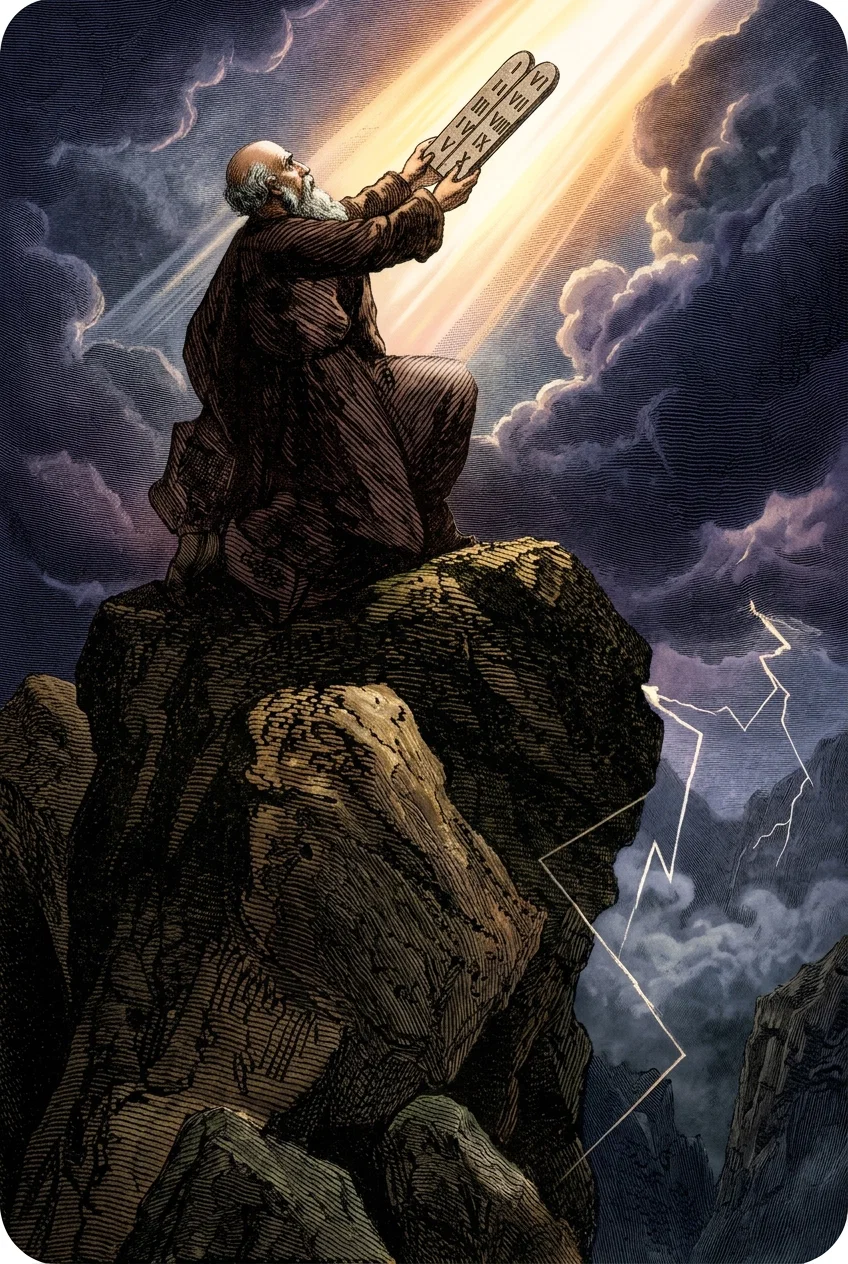
Satan and his confederacy of evil have tempted the world to believe a lie as they tempted Adam and Eve in Eden. It has been the purpose of the enemy to unsettle the whole fabric of truth, and to set the world adrift in the mazes of skepticism; but truth is immutable. A wily foe has perverted the senses of men so that they have chosen falsehood rather than truth. The Christian world has accepted the falsehoods of Satan, and has believed and advocated a change in the fourth commandment, which was given as a commemoration of God’s creative power in making the world. This falsehood has been working out its baleful results in making of no effect the whole law, in placing upon the human mind the impression that God is not invariable, invincible truth. This is the cup of intoxication that the Christian world is drinking, with which the inhabitants of the earth are becoming drunken. Satan is seeking to destroy the force of the Ten Commandments, urging his agents to declare that Christ nailed them to his cross. The cross is an immutable argument of the unchangeable character of the law of God. Christ died in order that a way might be provided for saving the sinner, in meeting the demands of the broken law. The law was written with the finger of God upon tables of stone, and John saw the temple of God open in heaven, and in the temple the ark of his covenant.
In the book of Revelation the prophet describes the scenes of the Gospel age, and he sees in heaven the ark of the testimony. There the holy law of God shines in holy dignity, just as when God wrote it with his own finger on tables of stone. John describes the work that will be done in the last days, when the Protestant churches form a confederacy with the Catholic power, and work against the law of God and against those who keep his commandments. John says, “The dragon was wroth with the woman, and went to make war with the remnant of her seed, which keep the commandments of God, and have the testimony of Jesus Christ.” The Protestant world have cherished an institution of the Papacy,—they have observed Sunday in preference to the Sabbath of the Lord their God,—and in compelling men to keep Sunday, under penalty of law, they are exalting the first day of the week, a spurious sabbath, and casting dishonor upon the Sabbath of the fourth commandment. But the Lord says: “Verily my Sabbaths ye shall keep; for it is a sign between me and you throughout your generations; that ye may know that I am the Lord that doth sanctify you.” “For thou art an holy people unto the Lord thy God; the Lord thy God hath chosen thee to be a special people unto himself, above all people that are upon the face of the earth. The Lord did not set his love upon you, nor choose you, because you were more in number than any people; for you were the fewest of all people; but because the Lord loved you, and because he would keep the oath which he had sworn unto your fathers, hath the Lord brought you out with a mighty hand, and redeemed you out of the house of bondmen, from the hand of Pharaoh king of Egypt. Know therefore that the Lord thy God, he is God, the faithful God, which keepeth covenant and mercy with them that love him and keep his commandments to a thousand generations; and repayeth them that hate him to their face, to destroy them; he will not be slack to him that hateth him, he will repay him to his face. Thou shalt therefore keep the commandments, and the statutes, and the judgments, which I command thee this day, to do them.”
Had the generations in the past given the religion of the Bible a welcome, had they received the message born by Christ and his apostles, we should see a different state in the world than we see to-day. The Gospel would long since have been preached to every family under heaven; but men have not followed on to know the Lord, that they might know that his goings forth are prepared as the morning. It is men that have ceased to make progress. God has been willing to fulfill his word to his people. The promise is, “Ye shall receive power, after that the Holy Ghost is come upon you; and ye shall be witnesses unto me both in Jerusalem, and in all Judea, and in Samaria, and unto the uttermost part of the earth.” Everything was provided whereby men might have become laborers together with God in spreading the knowledge of the truth to those who are nigh, and to those that are afar off. The Gospel has been published to a large part of the human race; but the law of God, the foundation of his government, has been clouded by the superstitions and inventions of men. Even the priests, who should have published the law of God, have presumed to declare that it has no claims upon the human race. At the very time when it is most essential for us to understand the sacred claims of the law, and conform to its claims as the standard of righteousness, so that we might be justified in the judgment, false shepherds are educating the world to make void the law of God through their traditions.
The Lord would have his people take a different course. He says: “Cry aloud, spare not, lift up thy voice like a trumpet, and show my people their transgression, and the house of Jacob their sins. Yet they seek me daily, and delight to know my ways, as a nation that did righteousness, and forsook not the ordinance of their God.” The Lord speaks to his people, saying: “Hearken to me, ye that follow after righteousness, ye that seek the Lord; look unto the rock whence ye are hewn, and to the hole of the pit whence ye are digged. . . . My righteousness is near; my salvation is gone forth, and mine arm shall judge the people; the isles shall wait upon me, and on mine arm shall they trust. Lift up your eyes to the heavens, and look upon the earth beneath; for the heavens shall vanish away like smoke, and the earth shall wax old like a garment, and they that dwell therein shall die in like manner; but my salvation shall be forever, and my righteousness shall not be abolished. Hearken unto me, ye that know righteousness, the people in whose heart is my law; fear ye not the reproach of men, neither be ye afraid of their revilings. For the moth shall eat them up like a garment, and the worm shall eat them like wool; but my righteousness shall be forever, and my salvation from generation to generation.”
COMFORTED BY THE SPIRIT.
By Wm. Covert
BY WM. COVERT.
THAT Christ might impart words of consolation and direct his people to the never-failing source of joy, Christ, just before his crucifixion, gave many sweet promises to the sorrowing disciples. Among them was this: “I will pray the Father, and he shall give you another Comforter, that he may abide with you forever; even the Spirit of truth; whom the world can not receive, because it seeth him not, neither knoweth him; but ye know him; for he dwelleth with you, and shall be in you.” John 14:16, 17.
At the moment when these words were spoken, Christ’s followers were looking into the future with dark forebodings as to any comfort or joy with which to lighten their pathway. In speaking of being separated from the Saviour’s personal presence, they expressed the thought of being left as orphans, with none to comfort them in the world. But Jesus replied, “I will not leave you comfortless; I will come to you.” Still enlarging upon the thought, he declares the Comforter to be “the Holy Ghost,” whom the Father would send in Christ’s name. And yet again Jesus said that he would send the Comforter from the Father to his people. John 15:20. Therefore the Comforter is of both the Father and the Son.
As the disciples had imbibed certain errors which kept the Spirit of God from softening their hearts and enlightening their minds, it was not possible for them in that condition to experience the true consolation which the Comforter gives. It seems that it was partly for this reason that Christ said to them, “It is expedient for you that I go away; for if I go not away, the Comforter will not come unto you; but if I depart, I will send him unto you.” John 16:7.
The Lord is certainly desirous of making his people as happy even now as their needs and condition will justify. To bring about this state of comfort and joy, God imparts something of the happiness of his own nature to them. “For ye have not received the spirit of bondage again to fear; but ye have received the spirit of adoption, whereby we cry, Abba, Father.” Rom. 8:15. God through his Spirit assures us of his love and pleasure in seeing us happy; and for this reason he would make us feel at home and comfortable in his presence. It is not God’s pleasure to have his children dread to approach him, as the slave dreads his master. Instead of this spirit of dread and fear, his effort is to impart to us the spirit of freedom and confidence which is enjoyed by the free child at home. Therefore it is written, “The Spirit itself beareth witness with our spirit, that we are the children of God; and if children, then heirs; heirs of God, and joint heirs with Christ.” The Father desires all his children to share equally in his blessings.
As Jesus, our own Saviour, feels at home in the presence of the Father, so the Father would that we should enjoy a like spirit of freedom in his presence. His Spirit will constantly testify to us that we are his children, and talk to us of his fatherly love. The Lord speaks to us through Paul, saying, “Because ye are sons, God hath sent forth the Spirit of his Son into your hearts, crying, Abba, Father.” God through his Spirit causes us to actually feel that we are his own sons, and that we have a perfect right to call him our Father. Until we receive this spirit of sonship there can be no full assurance of faith, no childlike confidence in our prayers.
But follow this thought to its legitimate conclusion, and there will come into the heart a joy which is unspeakable and full of glory. God intends through the comfort imparted by the Spirit to give consolation to his children, even in the midst of their afflictions just as truly as in the more favored periods of life. That we may be assured of this precious truth the following words are written:—
“Blessed be God, even the Father of our Lord Jesus Christ, the Father of all mercies, and the God of all comfort; who comforteth us in all our tribulation, that we may be able to comfort them which are in any trouble, by the comfort wherewith we ourselves are comforted of God.” 2 Cor. 1:3, 4.
The darkest hours of sorrow may be the richest, filled with the spirit of comfort from God. It is then that the sweetest message of God’s love is most needed. When bereft of friends, the Comforter tells us of a Friend who never forsakes us in any trial. If we are deprived of home, it speaks of a title to a mansion of glory in a clime where flowers never fade. If aged and weary, the Comforter whispers of eternal youth, where weariness does not come, and the strong-drawn tension of nerve shall never give pain.
God has a way, through the comforting Spirit, of making these things so real that they seem to be already in our possession. And truly they are ours; but just now we are away from home by appointment from our Lord. Being comforted with his presence and consoled by his love, we can thereby comfort others with the same comfort by which we are comforted. The blessedness of it is that God through the Holy Spirit brings the very atmosphere of heaven and his own nature into the place where his children walk or abide, and there envelops them in his love. It removes from the one of a timid nature that fear and that dread which would otherwise render life unhappy.
Often converted children are made to rest with perfect confidence in the darkness of night, because of the comforting presence of the Redeemer. And truly they are not alone, for Christ is by their side. This blessed Spirit takes away the lonesome feeling which to some is so tormenting; and, instead of this, they feel that they are in the presence of the dearest and strongest Friend. This sweet comfort will be given for the asking and believing, or the resting and receiving. Above all things else, let faith drink in the promises of God as the thirsty land drinks in the falling rain. With entire confidence in the living word, let its power take full possession of the mind and direct the life in the way of peace.
Burlington, Vt.
THE TWO SEASONS.
By Clyde Scott Chase
BY CLYDE SCOTT CHASE.
With storm-dark visage frowns the sky
O'er mountain, forest, hill, and plain;
And sad our northwest coast appears,
Her bosom wet with blinding tears,
Forced by a cold and cheerless pain.
The season of her grief is nigh.
No more upon her lips she feels
Her lover's warm, life-giving kiss.
Her heart is breaking; and a thread
Once dark, wreathes frosty white her head,
As, thinking of her days of bliss,
Beneath her lonely grief she kneels.
She knows that he, in distant land,
Is wooing now another mate;
Knows that, upon her glossy hair,
A maiden of the tropics fair
Receives the signet of her fate—
The pressure of his loving hand.
Her jealousy finds no relief,
And day and night her tears spring forth.
All mercy from her breast seems gone,
And throbs her heart as pulsing stone,
As o'er the regions of the north
Is poured the fury of her grief.
But lo! as backward from the dead,
One gentle, early springtime day,
Her lover comes again to seek
And bring the roses to her cheek,
And from his burning eye a ray
Falls warm upon her drooping head,
Quickly her face turns to the sky,
While smiles of joy her lips enwreathe.
Forgotten—all her grief and fear,
Forgiven—his long absence drear.
Warm leaps her blood again beneath
The golden love light of his eye.
SIMILE.
Oft this poor soul with darkness strives,
Oft wet these cheeks with bitter tears,
When, in our lonely grief and pain,
The Master bids us hope again;
And on our hearts, corrupt and vile,
We feel the sunlight of his smile.
A light that fades sin's crimson stain,
Tells us that all our fears are vain,
And into hopeful springtime clears
The rainy season of our lives.