Let me place before you two young men: one studious, industrious, ambitious, courteous, with no bad habits, the other a cigarette “fiend,” a frequenter of beer halls and more questionable places—a loafer. Can you estimate the difference in value in the two boys? Do you know that some parents are responsible for the difference in those two boys? And yet the parents of the “fiend” probably do not realize that they could have done anything to make him any better. They may be praying people, the father a minister of the gospel, possibly; and yet he has not been able to bring that gospel home to his own boy.
Have you a boy? Do you know that upon you depends the solution of the question whether that boy shall be a useful member of society or a vagabond? Have you been living in the fond hope that because you are not a vagabond, he will follow in your steps?
Do you know where your boy was last night, who were his companions, what they were doing? Have you noticed on his part a growing disrelish for home life, a disinclination to be free with you in conversation? Have you noticed that he avoids your gaze when he talks to you?
If so, do you know that your boy is already entering a crisis in his life which will take all the study and care you can bestow to prevent disastrous results.
Happy are those parents who can so enter into the sympathies of the young people, and so regulate the home affairs, that it will be to the children a real “home,” where they would rather be than any other place in the world.
The attempt to keep the furniture and carpets in faultless condition will necessarily keep the young folks in such a state of restraint that they will be glad of any excuse to get away. Noticing little faults, “nagging,” seeing the evil rather than the good, having many words of criticism and few of praise,—these are ways in which the young may easily be alienated.
The question is sometimes asked why ministers’ boys are worse than other boys? I think it is for this very reason. Nearly everything the boy does is wrong, and subject to criticism; and so far as the impression given by the correction goes, it is no more wrong to lie or steal than it is to come into the house with muddy boots.
Parents should carefully distinguish between acts which are wrong in themselves and those which, through thoughtlessness on the part of the child, cause more or less inconvenience or annoyance to the parent. The tendency to criticise should be restrained. The child should be taught the difference between right and wrong, and should be encouraged to choose the right from principle.
The matter of noise and mud may be disregarded. It may cause a little more work perhaps; and the lesson of thoughtfulness for others should be inculcated. But it should be done rather in an indirect way, and not while the parent is irritated at the thoughtlessness of the boy.
The boy has friends. Invite them to the house. Make it pleasant for all of them. Let them feel that they are more than welcome. They are much less likely to be engaged in questionable amusements while in your home than when away. As far as possible, enter into their amusements with them.
You say this costs too much time and trouble? What are the time and trouble as compared with the loss of a boy? Are they comparable?
Your boy is interested in tops, or kites, or in making an electric motor. By all means help him in his occupations as far as you can. You may not be able to cook so many “extras,” desserts, etc., as you would otherwise, but your stomach will be the better for it, so you will have more patience with your boy; and his stomach will be better, so he will not be so cross and unreasonable.
Have you ever wondered why sometimes your boy seems possessed of Satan himself, why his very nature seems changed, and he is utterly unreasonable? Have you noticed that just at the same time it is especially hard for you to bear the boy’s unreasonableness? Have you traced the boy’s surly disposition and your impatience to that mince pie you had last night? If you have never noticed the connection between rich food and hot tempers, just observe for a while; cook more plainly and healthfully, and make use of the time thus saved in getting better acquainted with your boy. You will never regret it.
Family Worship
THE family is the germ of the life of the nation and the church, because both are made up of families. The prevailing condition of the families of a country indicates the position of that country in the scale of civilization and social progress. The component parts make up the whole. If the families of a nation are distinguished for intelligence, industry, and virtue, that nation is in the van of progress. The family home is the most potent training-school for the arena of active life. There an influence is exerted that stamps itself upon the character and habits. The habits, principles, and spirit of the parents commonly reappear in the life of the children. If it is a matter of importance that the home be a place where knowledge, industry, and affection nestle, much more is it important that religious principle, integrity, and piety should be real and molding forces there. But piety can not flourish without a recognition of God, and communion with him who is the author and source of all good.
A prayerless home in which there is no family recognition of the claims of God to reverence, worship, and loving obedience, is poor soil in which to raise plants of righteousness for the garden of the Lord. On the other hand, there are peculiar beauty and appropriateness in the members of a family who are bound together by mutual love and common interests, cares, and hopes, bowing together at the throne of grace, to present their common thanks, confessions, and petitions to the great Father, in whom they live and move and have their being. Many nominally Christian families have no family worship. In the evening there are no united thanks for the mercies of the closing day. In the morning there are no petitions for help and protection in the duties and temptations of the day. In such cases the parents practically deny that there is a great and holy Being whom they should acknowledge in all their ways. The children are likely to think that the faith of their parents is nominal and unreal.
It should not be forgotten that the influence of family worship upon the minds of children depends largely upon the spirit and manner of conducting it. Long, formal prayers beget prejudice and aversion, instead of awakening religious interest. Family prayers should be simple and pointed, fervent and brief.12Every Christian household should have its family altar, on which the fires of devotion should burn continually. If there are any of our readers whom God has placed at the head of a family, who neglect this duty, we would say, do not do so any longer. Gather your little ones together in prayer, and let your acts show them that you believe that every good and perfect gift cometh down from the Father of light.—Selected.
Four T’s
THERE are four T’s too apt to run,
’Tis best to set a watch upon:
OUR THOUGHTS
Oft when alone they take them wings,
And light upon forbidden things.
OUR TEMPER
Who in the family guards it best,
Soon has control of all the rest.
OUR TONGUE
Know when to speak, yet be content
When silence is most eloquent.
OUR TIME
Once lost, ne’er found; for who can say
He’s overtaken yesterday?
—Selected.
The Refrigerator
A TRAP for the thoughtless housewife at this season is the refrigerator. Always a menace because of the habit too often formed of keeping food too long, its dangers increase with the hot, humid, sultry days. Once a week at least, take everything out; make a strong suds of boiling water and soda and ammonia and go over every inch of the inside surface. Have a pan of clean hot water with a few drops of some odorless but powerful disinfectant and go over the whole with this; see that the drain has a cloth pushed through it, with clear, hot water, dry thoroughly, and set a saucer of crushed charcoal on the shelf. Charcoal is a perfect absorbent, and a refrigerator can be kept sweet and fresh if these few precautions are observed. Never put anything in hot; never leave anything decayed; always wash the ice.—Selected.
The Joy of Giving
By George Henry Hubbard
Who little gives, knows not the joy of
living;
His shrunken soul the bliss of heaven
foregoes
For earthly gain; and daily harder
grows
His task—the task of little giving.
Who gives his all, and gives with spirit
willing—
Yea, gives himself, and mourns “a
gift so slight”—
Shall find in sacrifice supreme delight,
A heavenly joy the emptied vessel filling.
—George Henry Hubbard.
As Unto Thee, O Lord
By Susan M. Day
As unto thee, O Lord,
May all our work be done,
From early morning light
To setting of the sun.
As unto thee, O Lord,
With all our heart and might,
So may each task afford
Content and sweet delight.
— Susan M. Day.
Why Not Speak to Them?
A YOUNG lady called to see a friend who was ill, and on leaving, one of the children, a sweet, intelligent girl, took her down-stairs. She was her own especial favorite and pet, and yet, being naturally of an extremely reserved disposition, she had never spoken one word to her on the subject of religion. Looking down, into the thoughtful, loving eyes, under a sudden impulse she asked the question: “Maude, my darling, do you love Jesus?”
To her astonishment the child stopped abruptly, and drawing her into a room which they were passing, burst into a flood of tears. Looking up at last with a glad, happy face, she said: “Miss Alice, I have been praying for six months that you would speak to me of Jesus, and now you have! Every time I went to your house, I hoped you would say something, and I was beginning to think you never would.”
It was a keen reproach to her friend, and one that she never forgot.
Little Maude is now an earnest young soldier in Christ’s army. No one who knows her doubts the reality of her religion, and it certainly gives her character an attractive grace which nothing else could give.
How many poor, sad, seeking souls, like little Maude, wonder why Christians never speak to them of the things nearest their hearts! O Christian, why do you neglect to let your light shine, and guide these weary wanderers home to God?—Selected.
Don't Worry—Try It This Week
LET no day pass without personal, secret communication with God.
Begin each day by taking counsel from the Word of God, if but one verse while you are dressing.
Put away all bitter feelings and broodings over slights or wrongs, no matter from whom received.
Have on your heart some person or cause for which you are pleading God's blessings each day.
Let no opportunity pass to say a kind word, or do some kind deed, or at least smile upon those you meet. Do this, not affectedly, but sincerely, as unto the Lord.
Guard well the door of your lips, that no unchaste word, jest, or story, no slander or cutting remarks, no irreverent or untruthful statement, shall pass out.
Remember each day that Christ will surely come, suddenly come, quickly come; and, it may be, this day will determine how his coming will find us, as it must find thousands.—Way of Faith.
The Peace of Humility
To have a lowly opinion of ourselves is a good way to enjoy peace and quietness. We are then free of envy of others, of jealousy of their successes, of dislike of their praise. We may live in happy comfort and gladness, quarreling with no one, restless for no preferment, content to fill a little place for God.— Sel.
Twenty Commandments for Women
A CONTINENTAL periodical for women—a ‘sort of German “Ladies’ Home Journal”—has had its readers competing for prizes for the best ten points of conduct, or “Ten Commandments,” for women in the various relations of life. The tables which follow won prizes, and will serve at least to show American women some German domestic ideals:—
Ten Commandments for the Mother
1. Be healthy.
2. Be joyful.
3. Be beautiful.
4. Be gentle and placid.
5. Be firm and without severity.
6. Do not stint with your mother love. Tenderness is not effeminacy. And just because life often is cold and hard and cruel, a sunny, bright, glad childhood is a blessing for the whole life.
7. Discipline as life disciplines. It does not scold, it does not plead, it does not fly into a passion. It simply teaches that every deed has its adequate effect.
8. Do not laugh at the little sorrows and pains of child life. Nothing wounds a child more than to find ridicule where it looked for sympathy.
9. In illness and danger protect, nurse, cherish, and cheer as much as in your power. And do not weaken your vitality by giving way to anguish and sorrowing. What can be done must be done as well as possible.
10. Do not forget that the happiness of having a child includes the duty of smoothing his way in the world—of endowing him with health, gladness, courage, vigor; of finally letting him live his own life freely and in his own way. Your pay you have had in advance, for your sorrowing was happiness, and your sacrificing joy.
Ten Commandments for the Homemaker
1. Make your household one harmonious whole, no matter how small the scale.
2. Use only what you can comfortably afford in good quality and ample quantity.
3. Let your home appear bright and sunny. It is not easy to be unpleasant in a cheerful room.
4. Treat your servants wisely and kindly, and it will be impossible for them to either impose or oppose.
5. Have time for everything, and be never in a hurry.
6. A certain formality is necessary to save every-day life from triviality, and freedom from looseness.
7. Do not forget that “society” is the death of home life; hospitality its flower.
8. Know how to talk and how to listen, how to entertain and how to amuse.
9. Have many interests and no studies.
10. Do not forget that your home should not only be a well-conducted dormitory and boarding place, but truly a home, the center and focus of all interest, pleasure, and happiness for everybody connected with it.
Brazil Conference
By F. W. Spies
F. W. SPIES
The second session of the Brazil Conference of Seventh-day Adventists convened at Joinville, April 23-30. Aside from the laborers of Brazil, who were nearly all present, we also had with us Elder J. W. Westphal, superintendent of the South American Mission Field. Owing to the vastness of the territory of our conference, and the slow and expensive means of travel, but a small representation, comparatively, was present to participate in the business of the conference. The weather, however, was excellent, and the greatest harmony and unity prevailed in all the transactions of the conference.
At the opening of the conference, the former president, Elder H. F. Graf, was elected to preside during the conference, and then a committee of fifteen was nominated and elected by the conference, and this committee in turn appointed the other committees. Thus the business of the conference in all its details was placed in the hands of the brethren, and they all seemed to realize that the work belonged to them as much as to the laborers, as shown by the readiness with which they entered into the discussions and the carrying out of the measures brought before the conference.
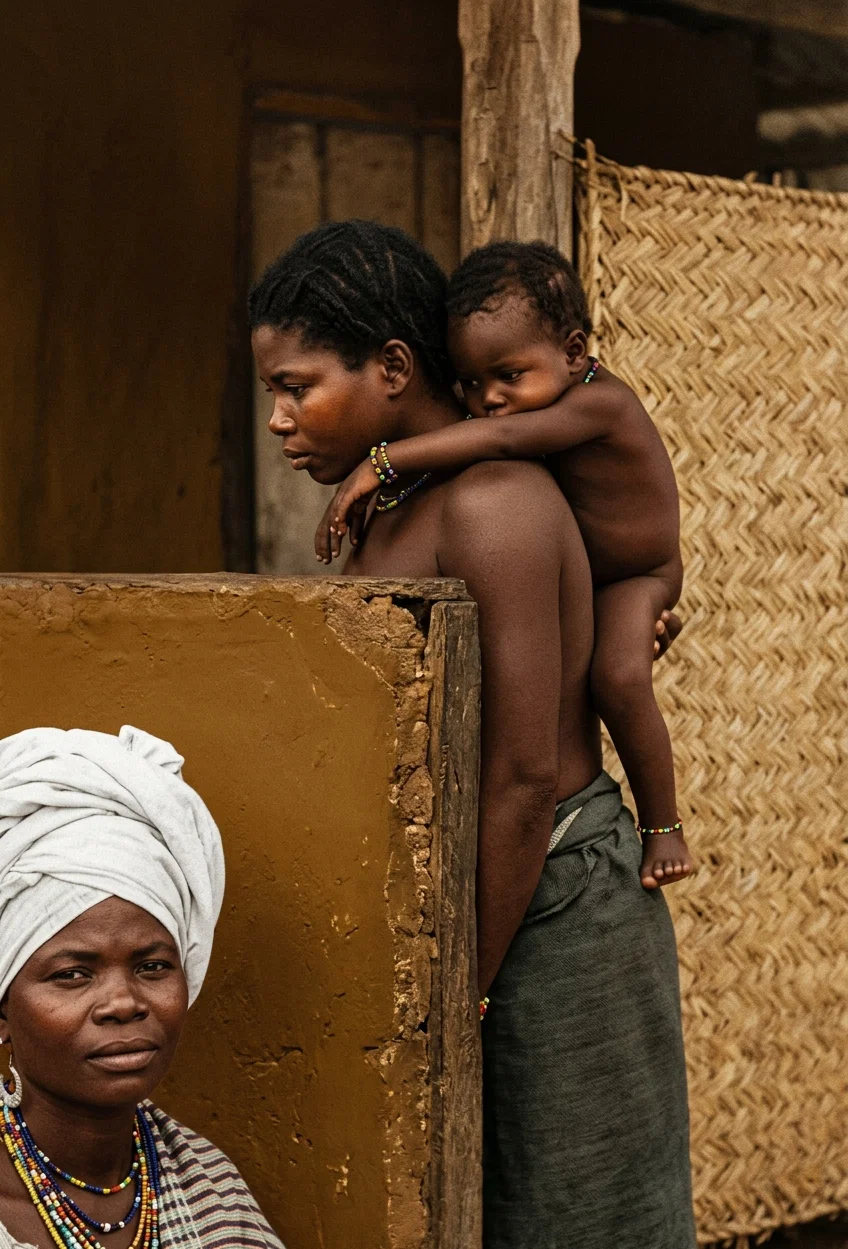
NEGRESS, AND INDIAN MOTHER, BRAZIL
As previously reported, several weeks before the conference began, we brought a force of eight canvassers into the Joinville district, and thoroughly canvassed the surrounding country, as also the town which contains perhaps between three and four thousand inhabitants. This created considerable interest, and during the conference our evening meetings were well attended. But the Lutheran pastor of the place, a man of very winning manners, did all he could, both in public and by visiting from house to house, to keep the people away from our meetings, and the last evening of the conference we noticed a marked falling off in the attendance, which continued until four evenings later when we closed our meetings, having scarcely any attendance from the outside. This experience reminded us of the saying of the spirit of prophecy, that the pastors would make almost superhuman efforts to shut the light away from their flocks. It was done here, and may the one who was instrumental in doing it see, ere it is too late, where he is drifting.
Besides an expression of thanks to God for his blessing bestowed upon the work during the past two years, and a similar expression to our brethren in the home field for the assistance they rendered in advancing the Lord's work in this field, several other resolutions were adopted by the conference. Among these were pledges to greater faithfulness in rendering to the Lord his own in the matter of tithes and offerings. The first-day offerings and the missionary acre fund received special attention. A resolution to raise five thousand milreis ($1,250) for the publication of Portuguese literature was also adopted, and about one fourth of this amount was secured in cash and pledges at this conference. Another resolution to the effect that we pay a tithe of our tithe to the South American Mission was adopted; still another to make renewed efforts to dispose of the “Christ’s Object Lessons” still on hand, so that our schools can have the means to push their work. The conference also expressed its readiness to turn over to the South American Mission its German church paper, the Mission Arbeiter, so that it could become the organ of all our German churches in South America. The periodical work, and especially the circulation of the Portuguese paper, received attention.
The committee on nominations brought in the following report: President, H. F. Graf; Vice-president, F. W. Spies; Secretary and Treasurer, A. B. Stauffer; Secretary of Sabbath-school Department, Mrs. Mary Ehlers; Conference Committee, H. F. Graf, F. W. Spies, Dr. A. Gregory, Emil Schenk, George Wischral, John Lipke, and August Anniess.
The committee on credentials and licenses recommended that credentials be given to H. F. Graf, F. W. Spies, and W. Ehlers; ministerial licenses to W. Stein, John Lipke, and Emil Holzle; missionary licenses to A. B. Stauffer, Dr. A. Gregory, and Emil Schenk. The colporteurs are A. Berger and A. Brack. Other names were referred to the conference committee.
The conference was a season of great blessing, and many consecrated themselves anew to the Lord and his service. May the same Spirit that presided at all the deliberations of the conference assist us in carrying out faithfully all that has been decided, and may the Lord’s work make greater progress during the coming conference term than ever before, is my prayer.
Claremont Union College
By Ellen I. Burrill
ELLEN I. BURRILL
The first half-year of our school work is just closing. It has been a prosperous year. We have had no sickness, and are seeing steady improvement in our students. We now have about one hundred students, thirty-three of whom are boarders. A large number are not Sabbath-keepers, but they study our Bible lessons. We feel that this is a grand branch of missionary work, for these children carry the truth to their homes.
The fact that we are vegetarians attracts much attention. Some time ago one of our patrons took his little girl to one of the Cape's leading physicians. She was very thin, and her father thought it was because of her vegetarian diet. The doctor said that he did not care for vegetarian principles, but when he saw the Union College students, he could say nothing against it, for they were the healthiest, strongest, and happiest looking girls in the colony.14
We welcome Dr. Thomason. We have waited long for the medical work to be started again. Last Sunday a reception was held in the college gymnasium to welcome him. About seventy were present, and Dr. Thomason's heart was encouraged as he listened to the promises of support from our leading brethren. We also rejoice to see Brother Albert White, one of our former students, who has just returned from Australia, ready to enter the native work. He is to go to the Buluwayo Mission farm. He is the second of our college students to enter that work. Others are preparing for it.
The work is onward here. There are difficulties, but God is strong, and in him they can be surmounted.
A Visit to Our Mission at Simultala, India
By John L. Shaw
J. L. SHAW
I REACHED Simultala, where our Santal Mission is located, one hour before the Sabbath, and found Brother Barlow at the railway station with his horse and cart to take me to the mission, which is about one mile distant. Simultala is a very pleasant place, about two hundred miles north of Calcutta, and quite a number of well-to-do native people have built houses here, as the climate is more healthful than in Calcutta.
Brother Barlow, who is carrying on the work at our mission at Simultala, has been working among the Santal people for many years, and is now conducting a school for Santal boys, which has been in progress for about a year. When we arrived at the mission, all the students met us at the gate. They are all strong, well-built young men. The Santals are said to be among the strongest and most reliable people of India. And those who become Christians seem to have a good reputation among the people. There are at present about fifteen of these young men who are learning to read the Bible in Brother Barlow's school. While we were there, three candidates presented themselves for baptism, and after having two meetings with them and studying the Word of God together, they were baptized. Two of them had been Christians for some time, but since having received more light wished to be baptized. The other one has grown up in heathenism, and until about a year ago knew nothing about Christ. He has now been in the school about a year, and day by day has been receiving instruction in the Word of God. When he was told that if he became a Christian, his people at home would be displeased, he said that he could now read the Word of God, and that he knew what God's will was, and must do it, and that when he learned a little more, he wanted to go home and teach his people.
It was interesting to watch these young men; they were very earnest and eager to learn. Brother Barlow carries on the school on the industrial plan. The young men work about three hours a day in the garden, setting out trees and keeping them watered. Their homes are in the surrounding villages, varying from five to twenty miles away. They are obedient to the rules of the school. While we were there, one young man who had been allowed to go home to see if he would have to help his parents during the plowing season, came back—a distance of twenty miles—to get permission to remain at home for a month or two to help plow the ground for the rice crop.
Brother Barlow has a small orchard started, and is working hard to get it in a flourishing condition. Already he has received some returns from his pepia trees, which have borne abundantly. Fruit is very scarce in that locality, and a good market can be found for all that is raised.
People in surrounding villages are asking to have day-schools started. Already a school building has been built ten miles from the mission, which has three rooms, one for the school and the others for the teachers; and we hope that after a little time one of the students who has been attending the school, will be able to open up a day-school in this place, and teach the Word of God to the people.
School education in India is very cheap; two dollars a month will keep a pupil in our Santal school. Of course the young men who come to the school have nothing with which to pay their tuition. They are able to work a few hours a day, but labor is so cheap that their time is not worth very much. Some have already manifested an interest in this school, and contributed toward the tuition of one or more boys. We know of no more successful way of carrying on missionary work in India than by means of schools. In this way the unlearned people are taught to read, and the Bible being made the text-book, they get the Word of God just as soon as they learn how to read. It is surprising to see how quickly some become able to read the Bible. In a very few months those who did not know one letter from another learn to read the Bible.
A much larger school could be carried on at our mission at Simultala if more funds were in hand to pay for the tuition of the pupils. We would be glad to hear from any who are interested in the school, and any wishing to contribute toward the tuition of pupils in the school may send the same to the Mission Board. We should like to send a picture of the strong, stalwart young men who are attending the school. We were almost inclined to covet their brawny muscles.
Calcutta, India.
The Message Entering Korea
By S. A. Lockwood
S. A. LOCKWOOD, M. D.
The knowledge that a new field has been entered should be a source of encouragement to all who are looking for the soon coming of our Lord, reminding us, as it does, that his coming draws near.
Korea, the “Land of Morning Calm,” has until recently been without a single representative of the truth we hold dear, and had she awaited the coming of a messenger from abroad, this would even yet be true. A large number of Koreans have emigrated to the Hawaiian Islands during the last few months, and many of them have stopped in Kobe for several days, awaiting the coming of the large ocean liners which would take them the remainder of their journey.
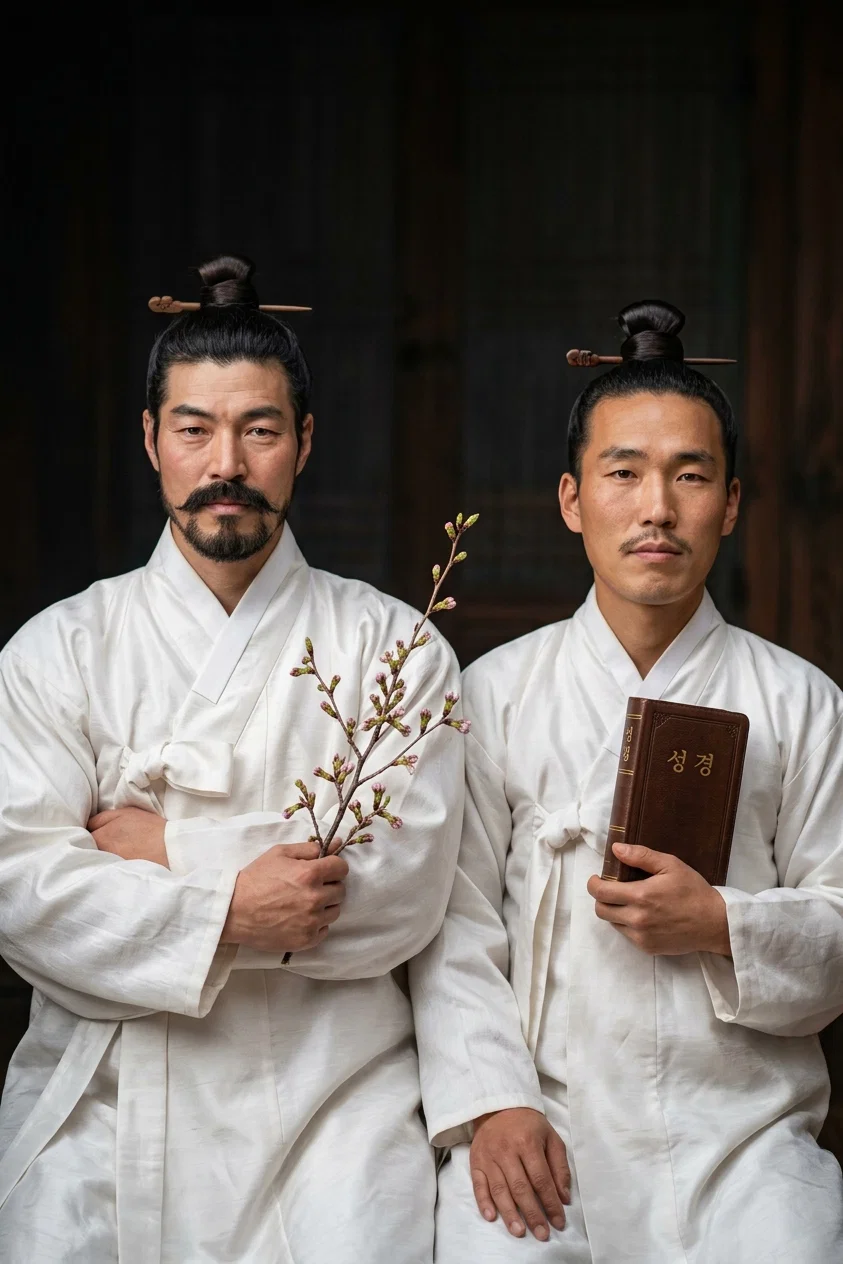
KOREAN BRETHREN
About the first of May, one of these emigrants, dressed in the quaint garments peculiar to his country, was strolling along the street on which our rented church building is located. His attention was arrested by the sign at the gate, which is written partly in Chinese and partly in Japanese characters, and, translated into English, reads, “Meeting hall of the Seventh-day Adventist Church.”
He appeared to be so much interested in this sign that one of our brethren signaled to him to enter. He did not understand a word of Japanese, and Brother Kuniya did not understand Korean, so they were quite at a loss to know how to communicate with each other. At last the happy thought suggested itself of using the Chinese characters. The Korean, being a well-educated man, understood these readily, and thus they carried on a silent, yet animated conversation.
It was found that he had been a member of the Episcopal Church for several years, but he said he had never heard such wonderful things in all those years15as he heard in the conversation that day. Again and again he returned for Bible study, accompanied by another of his countrymen, who was also a Christian. Both seemed to be hungering for the truth, and step by step as the various points of our faith were presented, and were found to be in harmony with the Bible, they readily accepted them.
On the evening before the day on which the ship was to sail for Honolulu, a Bible reading was held on the subject of baptism, which lasted until nearly midnight. The younger of the two men could not read Chinese, hence any remark which Brother Kuniya or I made for his benefit had to be translated orally into the Korean language, by the older man. With tears in their eyes, they expressed their gratitude to God for showing them such light, and they desired baptism before they should leave Kobe. As the boat was expected to leave early on the morrow, a small company carrying paper lanterns, assembled shortly after midnight at a pool below the Nunobski Falls, and these brethren were buried in baptism.
The older man, Ryn Un Hyun, went on to Hawaii, but hopes to return ere long to Korea. The younger, Son Fun Cho, has gone back to his home, and purposes to devote his time to spreading the truth which he learned here. On his journey home he became acquainted with a Korean missionary who was returning from Honolulu, and succeeded in interesting him in the closing message. This native missionary wrote us that he longed for an opportunity to study these things more fully, and he hoped the time would soon come when Seventh-day Adventist missionaries would enter Korea.
Do not these things show that the time has fully come for our messengers to enter this field with its ten million people? Who will answer their cry, “Come over and help us”?
Korean Woman Hears the Gospel
AN aged and infirm Korean woman, on hearing the gospel story read by the Bible colporteur, was so touched by its loving message that she bowed her head, and prayed, in her own simple, broken way, that God would deliver her from the burden of sin, and give her the heart to worship him.
The Needs of the Spanish West Indies
By Mrs. Ida M. Fischer
MRS. IDA M. FISCHER
“He shall not fail nor be discouraged, till he have set judgment in the earth: and the isles shall wait for his law.” Isa. 42: 4. This is a precious promise to those whose work is confined to this part of God’s wide harvest field. There is no territory, tribe, or individual so small but that our Heavenly Father sees their needs, and his tender heart is touched with compassion.
Sometimes, we almost lose sight of the fact that there are other great nations besides ourselves, whose needs are just as great, both spiritually and physically. Our hearts go out to the great needs of China, India, and many other fields where consecrated men and women have laid down their lives for the gospel’s sake; and God would have it so, for he has said, “Lift up your eyes, and look on the fields; for they are white already to harvest.” Yet out in the wide, wide oceans are little worlds, each foreign in many respects regarding its government and people.
For some reason, God has scattered a goodly number of these little worlds, or islands, through the Caribbean Sea, and Spanish, French, Danish, Dutch, English, and native East Indian—the leading languages of the world—are found here. As we mingle with these nations, learning their languages and customs, our interest becomes awakened, and we realize their needs as never before. Thus it is that the Spanish people appeal to us so strongly.
The Spanish West Indies—Cuba, Hayti, Porto Rico, with their smaller islands lying off the coasts—have over five million souls who know almost nothing of the third angel’s message; this number divided among the representatives of our people in this part of the field would give each one a parish of six hundred and twenty-five thousand people to labor among.
Think you, my readers, that with this vast throng to labor for we do not long for consecrated young men and women to help carry this message to a people steeped in ignorance and superstition concerning God’s Word? God has endowed them with capabilities and traits of character which many of us, who have had greater advantages, long for.
The Spanish people are no worse than any other people without the sanctifying influence of the gospel. From all parts of the world they are appealing to us, as God’s representatives, for a knowledge of the true God.
Cuba’s doors have been opened to other denominations. Missionaries are tolerated in Hayti. Our own work is moving on in Porto Rico. The smaller islands have not yet been touched. Vieques, or Crab Island, off to the southeast of Porto Rico, still under Spanish rule, with six thousand inhabitants, is waiting for some one to sound the warning. Culebra, or Snake Island, with its five hundred fishermen, must hear the glad tidings of the soon coming of our Lord and Saviour. John in his vision on the isle of Patmos saw representatives from every nation, before the throne.
God is calling for men and women of principle, who will take their stand for right if it costs them their lives. Those of the Spanish people who have let the gospel come into their lives have indeed been converted men and women. Naturally hospitable, their doors are opened to the stranger. I remember stopping in a Spanish town on the island of Porto Rico, while canvassing for our Spanish paper El Centinela de la Verdad (Sentinel of Truth), and some of the natives, in giving me its history, told me that before the island came under American rule, it was the custom when a stranger arrived in town, especially in the interior, where there were but few hotels, for the alcalde, or mayor, to go to some leading citizen and invite him to take care of the stranger as long as he remained in that town.
Often has my heart been touched as I have seen some poor emaciated beggar dividing his scanty store with some fellow creature, whom he thought was worse off than himself. Love conquers almost everything, and as this poor downtrodden people see the heart of the worker filled with love for them, they respond most readily. I have seen them patient in suffering, sympathetic, quick to forgive, and devout in their religious belief. For over four hundred years Rome has held sway in these Spanish isles. It is hard for this people to grasp the truth of righteousness by faith, for their whole lives have been given to working their way into the kingdom of heaven.
Once I was called to see a lady, the wife of a prominent lawyer in our city, who wanted me to tell her what Protestantism was. I tried to show her, after defining the word, the difference between the false and the true. As I presented the sanctuary question, Christ’s mediation and our acceptance of him by faith, her eyes filled with tears, and she exclaimed, “O, you don’t have to work your way to heaven like we do! Your religion is so much better than ours.”
“Can we, whose souls are lighted
With wisdom from on high,
Can we, to men benighted,
The lamp of life deny?
Salvation, O, salvation!
The joyful sound proclaim
Till earth’s remotest nation
Has heard Messiah’s name.”
Mission Notes
THE population of Japan, exclusive of Formosa, at the last census, was 42,270,620—more than 4,000,000 larger than the population of Great Britain and Ireland. Of the seven and one-half millions of children of school age, over 3,800,000 are in government schools of various grades.—Selected.
A KOREAN was so deeply impressed by the message he heard from a colporteur in the market-place, that he came the following day with his wife to hear further about the way of life. After listening attentively for a long time, both expressed a desire to pray, and thereupon prostrated themselves and prayed to the only true God, asking his forgiveness, and beseeching him to help them to believe in Christ and to live holy lives in this world.
PUT the people in China in rank, joining hands, and they will girdle the globe ten times at the equator, with living, beating human hearts. Make them an army, and let them move at the rate of one thousand a day, week after week, and month after month, and they will not pass you in one thousand years. Constitute them pilgrims, and let two thousand go past every day and every night, under the sunlight and under the solemn stars, and you must hear the ceaseless tramp, tramp, tramp of the weary, pressing, throbbing throng for five hundred long years.—World-Wide Missions.
Hayti
By Henry Williams
CAPE HAYTIEN.—I am glad to inform you that Brother Moulton, of Jamaica, is on his way to Porto Rico. He stayed with us for six days, and his company was refreshing, as it gave us the privilege of seeing one of like faith from abroad. He gave a few Bible readings, which were instructive and timely to all who attended. It was a hard experience when the time came for him to leave us. We felt that he should not go, but remain with us, to help in the work here.
HENRY WILLIAMS.