The Youth's Instructor, Vol. LII, No. 52

A Peace Carol!

The Youth's Instructor

December 27, 1904

Review and Herald Publishing Assn. · Washington, D. C. · December 27, 1904

A Peace Carol!

I AM walking home in the starlight,— The beautiful, glittering starlight,— The shimmering, crystalline starlight,— Like the starlight of long ago.
And the tremulous air is teeming With heralds celestial beaming, With light more than starlight gleaming, As in Judea long ago.
Suddenly into the silence white On rapturous wing the song took flight. That in a halo of glory bright The wondering shepherds heard:—
Fear not; for, behold, I bring you Good tidings of great joy, Which shall be to all people. For unto you is born this day In the city of David a Saviour, Which is Christ the Lord. Glory to God in the highest. And on earth peace, good-will to men.
It died away; and the chiming Of exultant bells is climbing, With mellow, melodious rhyming, Up the stairway of the dawn.
And above in starry vistas Glows the trail of seraph sisters; While lost in dark siestas Judea's dreams glide on.
ELVIRA A. WEBBER.

The Children's Ideal

As a child, Jesus manifested a peculiar loveliness of disposition. His willing hands were ever ready to serve others. He manifested a patience that nothing could disturb, and a truthfulness that would never sacrifice integrity. In principle, firm as a rock, his life revealed the grace of unselfish courtesy.
His mother was his first human teacher. From her lips and from the scrolls of the prophets, he learned of heavenly things. The very words which he himself had spoken to Moses for Israel, he was now taught at his mother's knee. As he advanced from childhood to youth, he did not seek the schools of the rabbis. He needed not the education to be obtained from such sources; for God was his instructor.
His early years were given to the study of God's Word. And spread out before him was the great library of God's created works. He who had made all things studied the lessons which his own hand had written in earth and sea and sky. Apart from the unholy ways of the world, he gathered stores of scientific knowledge from nature. He studied the life of plants and animals, and the life of man. From his earliest years he was possessed of one purpose; he lived to bless others. For this he found resources in nature; new ideas of ways and means flashed into his mind as he studied plant life and animal life.
Satan was unwearied in his efforts to overcome the Child of Nazareth. From his earliest years Jesus was guarded by heavenly angels, yet his life was one long struggle against the powers of darkness. That there should be upon the earth one life free from the defilement of evil, was an offense and a perplexity to the prince of darkness. He left no means untried to ensnare Jesus. No child of humanity will ever be called to live a holy life amid so fierce a conflict with temptation as was our Saviour.
Jesus lived in a peasant's home, and faithfully and cheerfully acted his part in bearing the burdens of the household. He had been the Commander of heaven, and angels had delighted to fulfil his word; now he was a willing servant, a loving, obedient son. He learned a trade, and with his own hands worked in the carpenter's shop with Joseph. In the simple garb of a common laborer he walked the streets of the little town, going to and returning from his humble work. He did not employ his divine power to lessen his burdens or to lighten his toil.
Jesus was the fountain of healing mercy for the world; and through all those secluded years at Nazareth, his life flowed out in currents of sympathy and tenderness. The aged, the sorrowing, and the sin-burdened, the children at play in their innocent joy, the little creatures of the groves, the patient beasts of burden,—all were happier for his presence. He whose word of power upheld the worlds, would stoop to relieve a wounded bird. There was nothing beneath his notice, nothing to which he disdained to minister.
The doctors turned upon him with questions, and they were amazed at his answers. With the humility of a child he repeated the words of Scripture, giving them a depth of meaning that the wise men had not conceived of. If followed, the lines of truth he pointed out would have worked a reformation in the religion of the day. A deep interest in spiritual things would have been awakened; and when Jesus began his ministry, many would have been prepared to receive him.
All this displeased his brothers. Being older than Jesus, they felt that he should be under their dictation. They charged him with thinking himself superior to them, and reproved him for setting himself above their teachers, and the priests and rulers of the people. Often they threatened and tried to intimidate him; but he passed on, making the Scriptures his guide.
There were some who sought his society, feeling at peace in his presence; but many avoided him, because they were rebuked by his stainless life. Young companions urged him to do as they did. He was bright and cheerful; they enjoyed his presence, and welcomed his ready suggestions; but they were impatient at his scruples, and pronounced him narrow and strait-laced.
His hours of happiness were found when alone with nature and with God. Whenever it was his privilege, he turned aside from the scene of his labor, to go into the fields, to meditate in the green valleys, to hold communion with God on the mountainside or amid the trees of the forest. The early morning often found him in some secluded place, meditating, searching the Scriptures, or in prayer. From these quiet hours he would return to his home to take up his duties again, and to give an example of patient toil.
Yet through childhood, youth, and manhood, Jesus walked alone in his purity and his faithfulness, he trod the wine-press alone, and of the people there was none with him. He carried the awful weight of responsibility for the salvation of men. He knew that unless there was a decided change in the principles and purposes of the human race, all would be lost. This was the burden of his soul, and none could appreciate the weight that rested upon him. Filled with intense purpose, he carried out the design of his life that he himself should be the light of men.
—Mrs. E. G. White.

Texas: A Boy Trying to Quit Cigarettes

Texas

WHILE waiting on the corner of Van Buren and State Streets in Chicago, for a car one evening, I noticed four ragged boys, from ten to fourteen years of age, rolling those little “white pipes” called cigarettes.
I stepped up, and asked pleasantly, “What are you doing, boys?” “Nothin’,” replied one of the boys in surprise. “What is that you have in your hand?” I continued, curiously. “Oh! a cigarette,” he said, and poked it down behind him out of sight.
Then I told them the nature and harm of cigarette smoking,—how it defiles their bodies, and how it keeps boys from ever growing up to be men in the true sense, and often stunts them physically so that they will not even grow up to be as big as a man.
“Well, I wondered why I never growed,” exclaimed the boy who had spoken. “I am fourteen years old, and see how small I am. The boys call me ‘Shorty’ and ‘Stumpy;’ but if it is the cigarette, here it goes,” and he threw it far into the street. “And here goes mine,” exclaimed another.
I left them with the promise to come to the News Boys’ Home, and talk to all the boys there about it. I learned that “Shorty’s” most popular name among the boys was “Texas;” in fact, that was the only other name he had among them.
At the News Boys’ Home the next Sunday night he came to me and said, “I’ve tried so hard, and it seems I can’t stand it. See how my hand trembles. I am afraid I’ll have to smoke.”
“Do you ever pray?” I asked. “No, I don’t know how any more,” he said, wonderingly. I told him how the Lord had helped me to overcome things which I could not overcome alone, and asked him if he would try it just one week, and every time he wanted to smoke, he should lay his cigarette down and kneel, if he could, and say, “Dear Lord, help me.” He promised. The next Sunday he came to me as soon as he could, with such a happy, shining face. I can never forget the victorious, happy expression of his face as he said, eagerly, “I tried it, and it worked. See, I am not nervous any more,” holding out his hand, “and I don’t want cigarettes any more.”
A large number of the boys followed his example, until it was hardly safe for one of the boys to smoke around the Home, unless he wanted a ducking in the rain barrel in the alley behind the house.
A few months later I left for New Orleans with other Life Boat workers, to attend the great Confederate Soldiers’ Reunion.
One day during the convention I heard some one calling, “O, Miss Case,” and in a moment the crowd parted, and there stood Texas, black and dirty, but smiling and happy.
“Why, Texas, how came you here? How did you get here?” I exclaimed, as soon as I could speak.
“Rode down on the freight,” was the laconic answer. “I tell you, Miss Case, after I gave up smokin’, and you talked to me, and I prayed, I got to thinking of my mother and sister over in San Antonio, Texas, and I made up my mind to go home and go to school and be something. I ran away three years ago, and they don’t know where I am.”
The next Monday, Texas left for home, and carried my card in his pocket. And a few weeks later a letter reached me from his mother,—a letter such as only a mother with such an experience could write. “Thank God, there are some who are working for the boys,” she said.
This little incident made a deep impression on my mind. It was not easy to speak to those boys on the street that evening; but was it worth while? Great possibilities lie in small opportunities. Many mothers have a wandering “Texas.” It may be God is guiding him around to you. Do not neglect to speak the word.
NINA MAE BAIERLE.

Christmas Chimes

RING it! Ring it! rise and sing it! For the dear Redeemer came From yon glory; tell the story— Glory! glory to his name!
Over all the frosted meadows Let the wild December gale Roar and rage in Nature’s fury; Love and peace will still prevail;
For across the rills and woodlands, O’er the hills, the echoes ring, Of the chimes that tell of angels And their message of the King.
Ring it, tell it, till the nations, Tribes of all the listening climes, Join to spread the joyful tidings And to ring the Christmas chimes.
B. F. M. Sours.

SAMUEL W. TRUMP

Love

“We love Him because he first loved us.” The more we contemplate this subject, the more difficult it seems to speak in words worthy of it. It is a real thing; for it does a real and lasting work upon men’s hearts. Good resolutions, fear of results of a wrong course, or hope of gain from a right course, can never keep us steadfast in obeying God’s laws. But there is one thing that will, and that is love. It is not only constraining, helping us upward to do the right, but restraining, holding us from falling into sin.
There is no greater transforming influence than love. It was manifest in the lives of all the holy men of the past; and even the most cruel natures are susceptible to it. It is a weapon they are unused to, and overcomes them. The poet says:—
“Down in the human heart, Crushed by the tempter, Feelings lie buried that grace can restore; Touched by a loving heart, Wakened by kindness, Chords that were broken will vibrate once more.”
We are living in a time when the love of many is waxing cold. How we need, then, to cherish it ourselves! This is certainly a sad and perplexing age. Calamities are laying many low. Hearts are sorrowing and longing for better things. Our motto as young people is, “The Love of Christ Constraineth Us.” Shall we not give the ministry of his love to the hungry souls who need it so greatly? Jesus only can satisfy the longing of the human heart. Let us make him our all in all, and become efficient to present him to others by our every act as the one altogether lovely. Let us prove that the best friend to have is Jesus. He will be our life’s center. Sacrifice for him will be a delight, and his service our greatest joy.
“Come, Holy Spirit, heavenly Dove, With all thy quickening powers; Come, shed abroad a Saviour’s love, And that shall quicken ours.”

SAMUEL W. TRUMP

The Boy Who Dawdled

FRANKLIN ROOD from out the many Is a fairly fitting name,— It will stand as well as any, For a boy who was the same.
Face like strawberries and cream, Hair like artists' fairest dream, Temper like the days of June, Rain or shine, always in tune;
At his play as quick as squirrel, How to do it seemed to know; But he learned to dawdle, dawdle, And work often went quite slow.
Did not dawdle at the table, But he ate with such a rush, He to tell was scarcely able, If ’twas meat, or if ’twas mush.
So he grew to be dyspeptic, Till the habit formed, alack! He could seldom see the sunshine, All the world seemed so blue-black.
Still he dawdled, dawdled, dawdled, If at home or if at school,— It was not a rare exception, But it seemed to be the rule.
Till the habit, first like cobweb, Oft indulged in, grew amain, Till it seemed to hold its victim Like the strongest iron chain.
Never steady pull and even, He would often make a dash, Till it seemed, the harness breaking, All his world would go to smash. So he figured as a dawdler, And a person often rash.
If an ugly habit met him, And he felt its withering touch, He was always “going to” break it, Still it held him in its clutch.
Earth revolves with moon and sun, Perfect order courses run,— Seed-time, harvest, do not wait; Only dawdlers that are late.
This the truth that stands alone, We must reap what we have sown. If the dawdler seed we sow, We shall reap the same, you know.
It is only fair in passing To acknowledge Franklin Rood Had full many a point in common With the noble and the good.
Summer’s sun and winter’s snow Swiftly come, and quickly go. Sunny smiles and briny tears Mark the swift revolving years.
Though he lived and moved among Those who wept and those who sang, Still the evil and the good Called him the late Mr. Rood.
Some fair day beyond the sunset, Will swing ope the pearly gate, With a welcome for the pilgrims Who with patience watch and wait.
Will he pass the open portal, Pure in heart, with joy elate? Or with habit still unbroken, Will he reach it, just too late? MARY MARTIN MORSE.

Carnegie's Offer to Build a Palace of Peace

MR. CARNEGIE, in May, 1903, offered to the Dutch government $1,200,000 with which to build a palace of peace at The Hague. The offer was accepted, and a site has been chosen.

New York City Budget for 1905

THE sum of $110,200,000 is the amount set apart by the Board of Estimate of New York City to provide for their expenditures during 1905. This is an increase of nearly four million dollars over the amount expended during 1904; still the heads of many departments demanded more than they were allowed.

Little Pete—Traveled Eight Thousand Miles
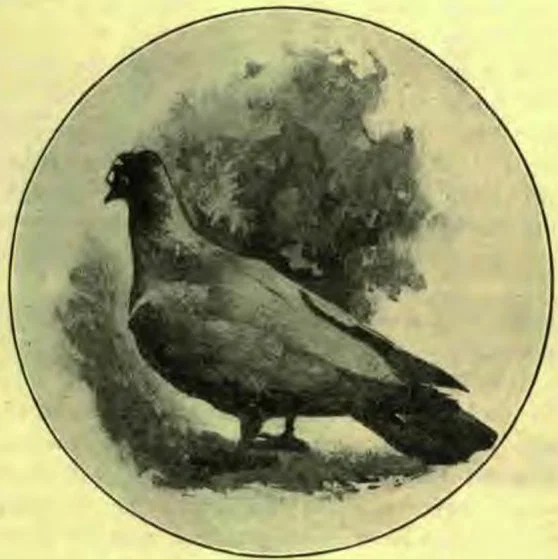
SOME time ago a consignment of homing, or carrier pigeons, left San Francisco for Auckland, New Zealand, to be used in carrying communications between Auckland and Great Barrier Island; and among the little feathered messengers was a bird named Pete, which belonged to me. Pete was always known as a wise fellow, his intelligence at times causing people to marvel. But Pete was a tramp; that is, he could not be depended upon if sent on a long trip, often loitering on the way to hunt food or to play, perhaps staying out hours when he should have been absent only minutes. So Pete was shipped away to be used as a loft-bird—one which stays at the home loft to attract returning messengers. Well he went this time because he couldn't help it; but his cunning played a fine trick on his new owners. This bird was taken two thousand miles by land to San Francisco; two thousand eighty-nine miles by water to Hawaii; thence, two thousand two hundred forty miles by water to the Samoan Islands; thence, sixteen hundred miles by water to Auckland—in all nearly eight thousand miles; and—now Pete is at home again!
THIS IS THE LITTLE TRAVELER
The home-coming of this bird is little short of marvelous, and this is how he accomplished it. Watching carefully for an opportunity to escape, after landing at Auckland, Pete took to his wings, and finding in the harbor the vessel which had carried him so far from home, he radiated from its masts in every direction, searching for a familiar scene or object, which, of course, he could not find so many thousand miles away from his American dove-cote. However, he stayed near the ship, perhaps thinking it would return to America; but when the vessel finally steamed out headed for Australia instead of the United States, Pete deserted his perch, and struck out straight for his home land. So it happened that the “Lucy Belle,” an old-fashioned sailing vessel laden with lumber from the Samoan Isles, when three days from Christmas Island, was boarded by an almost exhausted stranger; and the stranger was nobody in the world but Mr. Pete. As the old sailor is a very superstitious being, Pete was welcomed amid cries of wonder at encountering a homing pigeon in the middle of the Pacific Ocean, and was allowed to ride wherever he chose on shipboard. The bird was kindly treated and fed, and one day, during a storm which frightened him and drove the little tramp to shelter on deck, it was discovered that he carried a small tag on one leg, bearing a number and his name. He was placed in a box with slats for bars, and in this condition came into San Francisco Bay with the “Lucy Belle,” just as happy at sight of land as any member of the crew, who considered him a mascot.
The story of the “Lucy Belle’s” mascot soon spread among the shipfolk along the wharves, and in a few hours Pete was identified as having been shipped some weeks before for Auckland. Then it was that the people understood that the crafty fellow was homeward bound.
All this is wonderful enough but the fact that Pete reached home unaided over two thousand miles of land route is, perhaps, only less wonderful. But he did.
It was argued on the “Lucy Belle” that a bird possessing a brain wise enough to figure out an ocean voyage could reach his home on land; and after some debate, the sailors securely fastened a little story to Pete’s leg, reciting his adventures so far as known to them, and turned him loose. How the dear little wanderer found his way home he alone can tell.
It took Pete nine days to travel the two thousand miles, in covering which, of course, he must have stopped often; for, if he could have gone straight home, the distance could have been made in thirty or forty hours. We who had sent him off to Auckland had not the slightest idea that he was this side of the equator, or of the world, when, one morning, not long ago; Mr. Pete quietly hopped down from the home loft, and, without any fuss whatever, joined his mates at a breakfast of corn, wheat, and crumbs!
Now, what do you think of him?
He will never be sent away again; for there is not sufficient money at the disposal of any one man to secure him.
If you know of any girls or boys who are discontented at home, show them this story of Pete, who so loved his humble abode of rough board and hard straw that he outwitted cunning men, and defied the risks and hardships of an eight-thousand-mile journey over sea and land, in the effort to return to his home.—Ross B. Franklin.

The Flittermouse Family

“Ho, ha, hum!” yawned Mrs. Flittermouse, stretching her wings and opening her sharp little eyes, “how sleepy I do feel! Is it really time to wake up, Flapper?”
“Indeed it is,” replied her husband. “I should think a six months’ nap was long enough to satisfy any bat, and here we’ve been dozing almost seven. Don’t you feel the spring sun warming the earth above our cave? Isn’t your appetite ravenous? Mine is. I’ll warrant the gnats and midges are whirling over the brook in clouds.”
As the sun sank behind the hill, out of the cave trooped hundreds of small, dark forms, and presently the air was filled with shrill cries. All Batland was enjoying its first spring feast. Hither and thither they flitted, hawking after the insects that were out, enjoying the spring evening.
“Flapper,” said Mrs. Flittermouse to her husband, when they had eaten all the flies and midges they could catch, “let us look for a tenement. It is time we thought about setting up housekeeping for the summer.”
“Yes, my dear,” said he, and away they fluttered toward a patch of deep woods. The moon shed a soft light, which the bats liked much better than sunshine. “How does this suit you?” said Flapper, ushering his wife into the hollow in a great dead pine.
“I like it quite well,” she replied; “we will take the top story, and leave the lower part for later comers.” A few weeks afterward, the old tree was a lively place indeed. In the upper flat dwelt the Flittermice. The middle tenement was occupied by Madam Squirrel and her children, and the ground floor was a sort of wayside inn, free to any traveler who chose to pass the day or night there. Sometimes a fat coon crept into its cozy depths to sleep from sunrise till sunset. Now a shy rabbit hid in its darkest corner. Once a black snake spent three nights in it and frightened Madam Squirrel so much that she moved the next morning to the opposite side of the wood.
A proud couple indeed were Mr. and Mrs. Flittermouse when triplets arrived to bless their home.
“I think, Flapper,” remarked Mrs. Flittermouse, “that the boys are going to look like you.”
“And our little daughter,” said he, is the image of her mother.”
When the babies were still very small, indeed they were only a few days old, their mother decided to take them for their first airing, “for,” said she, “I must go out and get a meal, or I shall starve, and I surely couldn’t leave these precious babes at home. Who knows but the black snake might take a notion to dine on tender Flittermice, instead of frogs and wood mice. “Now, children,” said she, “fasten your little thumb-hooks firmly into my fur, and cling on with all your might.” Away she darted toward the brook, which wound through the meadow beyond her home wood. How good it was to be chasing the dragon flies, the fat-bodied night moths, and the mosquitoes, in company with all her friends and relatives! “Oh!” she cried, suddenly, as she saw one of her babies falling through the air. Swift as an arrow she darted downward, and just as the little one’s nose touched the water, she seized him by his tail. Scolding him roundly, she hooked him to her coat again, and started homeward. “What a fright you gave me, child!” said she, “don’t you know that you came as near as possible to losing your life?”
When the children were a few weeks older, they took their first lessons in flying, and their mother showed them how to use their tails like rudders to guide themselves through the air. It was indeed a pretty sight to see the triplets, after a night’s hunting, sitting in a row, combing their coats with their hind feet, and parting their fur neatly down the middle.
“Why, mother,” asked the little daughter, “must we always sleep with our heads hanging down?”
“In order to throw ourselves into the air and start flying at the first hint of danger.”
“And why, mother,” asked one of the boys, “must we sleep all the day, instead of enjoying life as so many of the other forest folk do?”
“We are night people,” said Mrs. Flittermouse. “If we flew out in the bright sunshine, we should be so blinded and dazzled that we could not see which way to go, and some of the fierce day folk would fall upon us and devour us. Now hang up and close your eyes and ears, my dears, and dream of the fine time we shall have to-night when the stars twinkle, and the moon lights up the meadow and the forest.—Margaret Wentworth Leighton, in Young Americans.

The Hard-Won Victory

“THE hard-won victory is always the sweetest.”

THE WEEKLY STUDY

Paul at Athens

SCRIPTURE FOR STUDY: Acts 17:14-34; 1 Cor. 1:18-29.
REFERENCE STUDY: “Sketches from the Life of Paul,” pages 91-97.
TEXTS FOR PERSONAL STUDY: 1 Cor. 2:1-4; Acts 1:8.
OUTLINE OF TOPICS:—
Paul leaves Berea.
Reaches Athens.
Moved by its idolatry.
Speaks to the Jews in the synagogue.
Encounters Epicureans and Stoics.
Mars’ Hill.
Paul’s discourse.
Result.

Notes

Paul was escorted from Berea to Athens by some of the brethren. This may have been to insure his safety because of the bitter persecution waged. His journey to Athens was by sea. Silas and Timothy remained behind to continue the work in Berea. There is something touching in Paul’s statement that he was left at “Athens alone.” 1 Thess. 3:1.
The Stoics and Epicureans encountered by Paul were the disciples of two opposite schools of philosophy which flourished in Greece. The Stoic school was formed by Zeno about three hundred years before Christ. The foundation of Stoicism seems to have been an identification of God and nature, or a kind of pantheism. The Epicureans were atheists, believing that the world came into existence by chance.
“The place to which they took him was the summit of the hill of Areopagus, where the most awful court of judicature had sat from time immemorial, to pass sentence on the greatest criminals, and to decide the most solemn questions connected with religion. The judges sat in the open air, upon seats hewn out in the rock, on a platform which was ascended by a flight of stone steps immediately from the Agora. On this spot a long series of awful causes connected with crime and religion had been determined, beginning with the legendary trial of Mars which gave to the place its name of ‘Mars’ Hill.’ . . . Even in the political decay of Athens this spot and this court were regarded by the people with superstitious reverence.”—Conybeare and Howson.
The American Revised Version of Acts 17:22 reads, “Ye men of Athens, in all things I perceive that ye are very religious;” Conybeare and Howson’s translation, “Ye men of Athens, all things which I behold bear witness to your carefulness in religion.” Note the prudence manifested in these words. He was seated in the midst of temples and graven images made with hands, but he does not begin with a direct attack on these national gods. He introduces his new religion with care, and draws his hearers from polytheism to the God who made the heavens and the earth. With all their wisdom and learning this God was to them “unknown.”
“The religion of the Athenians, of which they made great boast, was of no value; for it was destitute of the knowledge of the true God. It consisted in great part of art worship, and a round of dissipating amusements and festivities.”
“The city of Athens was the metropolis of heathendom. Paul did not here meet with an ignorant, credulous populace, as at Lystra; but he encountered a people famous for their intelligence and education. . . . The senses of the people were entranced by the beauty and glory of art. Sanctuaries and temples, involving untold expense, reared their lofty forms on every hand. Victories of arms, and deeds of celebrated men, were commemorated by sculptures, shrines, and tablets. All these things made this renowned city like a vast gallery of art. And as Paul looked upon the beauty and grandeur surrounding him, and saw the city crowded with idols, his spirit was stirred with jealousy for God, whom he saw dishonored on every side.”
“The Stoics and the Epicureans encountered him; but they, and all others who came in contact with him, soon saw that he had a store of knowledge even greater than their own.”
“Thus, in the most impressive manner, with hands outstretched toward the temple crowded with idols, Paul poured out the burden of his soul, and ably exposed the fallacies of the religion of the Athenians. The wisest of his hearers were astonished as they listened to his reasoning.”
“Many who listened to the words of Paul were convinced of the truths presented, but they would not humble themselves to acknowledge God, and accept the plan of salvation. No eloquence of words, no force of argument, can convert the sinner.”
“The labors of Paul in Athens were not wholly in vain. Dionysius, one of the most prominent citizens, and some others, became converts to Christianity, and joined themselves to him. The words of the apostle, and the description of his attitude and surroundings, as traced by the pen of inspiration, were to be handed down through all coming generations, bearing witness of his unshaken confidence, his courage in loneliness and adversity, and the victory he gained for Christianity, even in the very heart of paganism. Inspiration has given us this glance at the life of the Athenians, with all their knowledge, refinement, and art, yet sunken in vice, that it might be seen how God, through his servant, rebuked idolatry, and the sins of a proud, self-sufficient people.” G. B. T.

Word from Jamaica

MANY readers of the INSTRUCTOR will doubtless enjoy hearing from our workers on the island of Jamaica.
Some months ago I went to Jamaica, and after visiting other places, reached the city of Kingston, but had been there only a few days when I contracted “the fever.”
Upon inquiring, it was found that there was one of our ministers living only a mile from the hotel, and a messenger was sent by the proprietor to summon him.
After I had waited only a short time, though with considerable anxiety lest he should be out of town, the minister arrived, and, to my surprise, proved to be a fellow student at South Lancaster Academy, Mr. W. J. Tanner. Only those who have been similarly surprised can appreciate my pleasure. Although driven with work, Mr. Tanner called at the hotel nearly every day for six weeks, and occasionally Mrs. Tanner came with him. At one time he was accompanied by Elder Beckner, whose fatherly kindness was greatly appreciated. Later I made the pleasant acquaintance of Elder and Mrs. Strickland.
When I was well enough, Elder and Mrs. Tanner invited me to their home, and my last week on the island was spent with them. They occupy a neat cottage, made of cement, and cooled by a sea-breeze during the day and by a mountain breeze at night. Elder and Mrs. Beckner live in a retired part of the city, surrounded by a grove of cocoanut, bread fruit, and other tropical trees.
While at Brother Tanner’s, I was impressed with the variety of duties performed by a missionary. Besides his regular work of preaching and holding Bible studies, he is called upon to help those in peculiar circumstances, visit the sick, bury the dead, not always of our faith, and assist persons driven from their homes on account of the truth, together with many other similar things. Every one seems to have confidence in our laborers, and many go to them as to a friend for counsel and help.
It is now plain to me whence comes the blessing connected with missionary work. The expression “the fields are white,” has a new import. It means that in foreign lands are many whose minds are unprejudiced, and who are willing to obey God and his commandments.
When converted, these persons, whether brown, black, or white, prove to be intelligent, enthusiastic Christians, with whom one can converse as profitably as with an American.
When we parted from these laborers and their families, to return home, there were tears in the eyes of some as they thought of their home and friends; but their time of rejoicing will come when they reach the heavenly home, bringing with them many sheaves garnered from the lonely foreign fields. G. W. CHASE.

Report from Defiance

THE YOUNG PEOPLE'S Society at Defiance, Ohio, was organized some time ago. Interesting meetings are held every Sunday evening at the home of some of the members. We have studied such subjects as repentance, conversion, the Sabbath, and the coming of Christ.
But now we have the YOUTH'S INSTRUCTOR, and take the lessons from it. We have an average attendance of twenty-six.
Some of the members of the Society are distributing The Family Bible Teacher. Our prayer is that the work may go on until all the homes in Defiance have heard the third angel's message. MAMIE TELSCHOW, President.

O Tender One, Who Never Sent Away

“O TENDER One, O mighty One, who never sent away The sinner or the sufferer, thou art the same to-day! The same in love, the same in power, and thou art waiting still To heal the multitudes that come; yea, ‘Whosoever will’!”

A Story of Love

A LARGE cathedral was being built. Years of labor had been spent upon it, and yet much remained to be done. An old man, feeble and with faltering step, came one day and begged to be allowed to work upon the building. He was refused; for the men feared that he would mar the beauty of the architecture. Disappointed, but not discouraged, he begged again and again for the work, and consent was given at last for him to work in a dark vaulted recess of the church. Patiently, day by day the old man worked.
No one noticed until one day the tools fell from his hands. His work was finished, and he was at rest; his face was upturned to another—the work of his hands. It was a face of wondrous beauty and loveliness. At a certain hour of each day the light penetrates the niche, and the face becomes glorified. For years afterward people made pilgrimages to the place that they might look upon this beautiful face.
One said, “This is the greatest work of all; for it is the work of love.—Selected.
Continue reading: Two Young Apple Peddlers