Your ShelfYour Projects

Signs of the Times, Vol. 28, No. 44.

“THE REVELATION OF JESUS CHRIST.” II
Earlier text: THE SPIRIT OF HEALTH PRINCIPLES

LESSON 7.—NOVEMBER 15.—CHANGING THE LAW OF THE KINGDOM.

The little horn, the Papacy, antichrist, blasphemes the Most High, and wages war against the saints (Dan. 7:25), but the climax of his rebellious course is found in his purpose to change the law of God (same verse). This little horn was given special authority for a period of 1,260 years. Compare Dan. 7:25; Rev. 12:14, and Rev. 13:5. See also Eze. 4:5, 6, and Num. 14:34. The beginning of this period was marked by the overthrow of the third of the “three kings” (Dan. 7:24), the Ostrogoths, March, A.D. 538, and its close by the capture of Pope Pius Sixth by the French army under General Berthier, A.D. 1798.
The actual change made in the law of God by the little horn, the Papacy, may be seen by comparing the Ten Commandments as found in Exodus 20 with the ten commandments as found in the standard Catholic catechisms. For convenience of reference the ten commandments, as they appear in the “General Catholic Catechism,” are printed here:—
“1. I am the Lord thy God; thou shalt not have any strange gods before Me. 2. Thou shalt not take the name of the Lord thy God in vain. 3. Remember that thou keep holy the Sabbath day. 4. Honor thy father and thy mother. 5. Thou shalt not kill. 6. Thou shalt not commit adultery. 7. Thou shalt not steal. 8. Thou shalt not bear false witness against thy neighbor. 9. Thou shalt not covet thy neighbor’s wife. 10. Thou shalt not covet thy neighbor’s goods.”
This change in God’s law, without regard to its special character and significance, is equivalent to a declaration of independence of God, and is an act of high treason against the sovereignty of God. It is important, however, that we should study the significance of the specific change which has been made.
By the term “the Sabbath day,” in the third commandment, the Papacy means the first day of the week, commonly called Sunday. The Roman Catholic Church acknowledges that it has made this change, and claims the power to do so. The following extract is from the “Doctrinal Catholic Catechism,” page 173: “Q.—Have you any other way of proving that the church has power to institute festivals of precept? A.—Had she not such power she could not have substituted the observance of Sunday, the first day of the week, for Saturday, the seventh day, a change for which there is no Scriptural authority.” “The observance of Sunday is solely a law of the Catholic Church.” (Father Enright, Feb. 22, 1884.) “The Catholic Church, by virtue of her divine mission, changed the day from Saturday (the seventh day) to Sunday (the first day of the week).” (“Catholic Mirror,” Sept. 23, 1893.) All standard Catholic works indorse these claims.
Now the Sabbath of the Lord is a sign between the Lord and His people, based upon the fact of creation. Ex. 31:17. This creative work was wrought through Him who afterwards took the flesh. John 1:1–3, 14. Redemption is a creative work (Eph. 2:10), and our hope of redemption is based upon the fact that the Redeemer is the Creator (Col. 1:14–17, R. V.). Compare Isa. 43:1. This creative power works salvation for those only who believe (Rom. 1:16), in whose hearts the creative Presence dwells (Eph. 2:22; 3:17). It therefore follows that “the Sabbath of the Lord is the sign of what Jesus Christ is to those who believe in Him. The observance of it by faith—the true observance of it—brings into the life of the believer in Jesus, as nothing else can, the living presence and power of Jesus Christ.” But this is simply the experience of justification by faith. To the believer, therefore, the Sabbath of the Lord is the sign of justification by faith. When the Papacy perverted Christianity by separating Jesus Christ, Creator and Redeemer, from sinful flesh, and substituted justification by works (self-salvation) for justification by faith (salvation through the indwelling presence of Jesus Christ), it substituted the sign of its own power, the first-day sabbath, for the sign of the Lord’s power in salvation, the seventh-day Sabbath. The Papacy has put man in the place of God (2 Thess. 2:3, 4), humanity in the place of Divinity. It has put tradition in the place of the Word of God; it has substituted justification by works for justification by faith, and has thus changed the law of faith into the law of works. In harmony with all this it has changed the written law of God, and has substituted a spurious sabbath, the sign of its pretended power, in the place of the true Sabbath, the sign of the genuine, creative power of God unto salvation. What more could the little horn do to hinder the purpose of God to establish His kingdom in the hearts of men through their faith in His gift of His Son to the human family?

QUESTIONS.

  1. What specific act marks the rebellion of the Papacy against God?
  2. For how long a time was special authority conferred upon the Papacy? Give the Scripture proof.
  3. What designated the beginning of this period?
  4. What event and date designated the close of the period?
  5. What is the difference between the law of God as given in the Bible and as given in its changed form in Catholic catechism?
  6. What statements show that the Catholic Church admits that it has changed the law, and claims the authority to do this?
  7. What is the Sabbath, and upon what is it based?
  8. Through whom was the work of creation accomplished?
  9. What is the nature of the work of redemption?
  10. Upon what does our hope of salvation rest?
  11. Who are personally benefited by this creative work?
  12. What does this show the Sabbath of the Lord to be?
  13. How can the same conclusion be stated in another form?
  14. How was the work of the Papacy in changing the Sabbath the logical result of its false doctrine of justification?
  15. What has the little horn done to thwart the purpose of God to establish a kingdom in the earth which “shall stand forever”?

INTERNATIONAL SERIES

THE SUNDAY SCHOOL

LESSON 6.—NOVEMBER 9.—JOSHUA'S PARTING ADVICE.

Lesson Scripture, Joshua 24: 14–25. A.S.R.V.
(14) “Now therefore fear Jehovah, and serve Him in sincerity and in truth; and put away the gods which your fathers served beyond the river, and in Egypt; and serve ye Jehovah. (15) And if it seem evil unto you to serve Jehovah, choose you this day whom ye will serve; whether the gods which your fathers served that were beyond the river, or the gods of the Amorites, in whose land ye dwell; but as for me and my house, we will serve Jehovah. (16) And the people answered and said, Far be it from us that we should forsake Jehovah, to serve other gods; (17) for Jehovah our God, He it is that brought us and our fathers up out of the land of Egypt, from the house of bondage, and that did those great signs in our sight, and preserved us in all the way wherein we went, and among all the peoples through the midst of whom we passed; (18) and Jehovah drove out from before us all the peoples, even the Amorites that dwelt in the land; therefore we also will serve Jehovah; for He is our God. (19) And Joshua said unto the people, Ye can not serve Jehovah; for He is a holy God; He is a jealous God; He will not forgive your transgression nor your sins. (20) If ye forsake Jehovah, and serve foreign gods, then He will turn and do you evil, and consume you, after that He hath done you good. (21) And the people said unto Joshua, Nay; but we will serve Jehovah. (22) And Joshua said unto the people, Ye are witnesses against yourselves that ye have chosen you Jehovah, to serve Him. And they said, We are witnesses. (23) Now therefore put away, said he, the foreign gods which are among you, and incline your heart unto Jehovah, the God of Israel. (24) And the people said unto Joshua, Jehovah our God will we serve, and unto His voice will we hearken. (25) So Joshua made a covenant with the people that day, and set them a statute and an ordinance in Shechem.”
Golden Text.—“Choose you this day whom ye will serve.” Verse 15.
Special Helps.—“Patriarchs and Prophets,” Ch. 49, pp. 521–524.

SUGGESTIVE QUESTIONS.

(1) How did Joshua tell the people they should serve God? What practical work did this involve? Verse 14. Note 1. (2) What alternative did Joshua present? What did Joshua himself determine to do? Verse 15. Note 2. (3) What answer did the people make to Joshua's appeal? Verse 16. Note 3. (4) What had the Lord done for them in Egypt? What had He done on their journey in the wilderness? Verse 17. (5) What service had He rendered them in the promised land? Verse 18. (6) How did Joshua caution the people regarding their promise? Verse 19. Note 4. (7) What would be the result of their backsliding? Verse 20. Note 5. (8) How did the people emphasize their profession of allegiance to God? Verse 21. (9) How then did Joshua state their position? And how did they acknowledge it? Verse 22. (10) Then what admonition did Joshua give them? Verse 23. (11) How did the people again respond? Verse 24. Note 6. (12) Then what action did Joshua take? Verse 25.

NOTES.

1. “Now therefore” shows that Joshua's injunction to “fear the Lord” is predicated on what he has said before. The preceding part of the chapter is a review of God's dealings with the people and with their fathers back to the call of Abraham. The force of the appeal can not be appreciated without reading the context. “In sincerity,” not merely in formal, ceremonial service, but in “truth,” in obedience to God's holy law. “Thy law is truth.” Ps. 119:142. This would be the practical, actual putting away of all false gods.
2. “If it seem evil,” if all that God had done for them was not satisfactory, if it was not sufficient proof of His goodness and mercy, and His superiority over other gods, they had the privilege of choosing whom they would serve. God would not compel them to serve Him; He accepts only the willing mind. Joshua set the example of making a wise choice for himself and household, basing his choice on the prestige of God's marvelous work and his own experience as a servant of God.
3. On the strength of Joshua's appeal, the people renewed their covenant of allegiance to God. But like their fathers who made a like covenant at Sinai, it was not many years before they again apostatized. See Judges 2:7 and onward.
4. “Ye can not serve the Lord.” Joshua does not design to deter the people from all effort to serve God; but he would warn them that in their own strength or wisdom they could not keep such a covenant. That had been demonstrated before; and God would certainly take account of any presumption on their part.
5. The blessings of God are not without condition. The doctrine “once in grace always in grace” receives a severe rebuke in the words of Joshua. No matter how much God has done for us in the past, the continuance of His blessings is contingent on faithfulness. He will even consume the backslider, after having done him good. The goodness of God can not be trifled with. “He that shall endure unto the end, the same shall be saved.” Matt. 24:13.
6. This self-assurance on the part of Israel, this positive assumption of their own holiness, was the evidence of their weakness. They were making these strong promises, while some still retained false gods in their possession. So sure were they of inherent holiness, that they were willing to risk the terrible position of being witnesses against themselves, and Joshua took them at their word. Their failure to serve God in their own strength should be a constant warning to us in these days, but even professed Christians, an increasing number, too, assume the same position, loudly declaring their own holiness, and inability to fall. But, as in the case of the self-righteous Israelites, they just as persistently ignore the law of God, the only standard of righteousness.

Refreshing Sleep Comes after a bath with Glenn's Sulphur Soap

It heals while it cleanses. Its medicative qualities render the skin free from impurities. Prickly heat, burns, cuts, dandruff, submit quickly to its healing effects.
CAUTION:— Glenn's Sulphur Soap (the only “original”) is incomparable and wonderful in its remedial effects. Take no other.
At all drug stores, or mailed on receipt of 30 cents by THE G. N. CRITTENTON CO., 115 Fulton Street, New York

OCEANIC S. S. CO.

SAILING REGULARLY TO                                Fleet HAWAII                                                     SIERRA SAMOA                                                     SONOMA NEW ZEALAND                                     VENTURA AUSTRALIA                                             ALAMEDA and                                                         MARIPOSA TAHITI                                                     AUSTRALIA                                                              ZEALANDIA
Under mail contract with the United States, Tahiti, New Zealand, and Commonwealth of Australia.
Steamers sail THREE TIMES a month to Honolulu; every TWENTY-ONE days, via Honolulu to Samoa, Auckland and Sydney. Every THIRTY-SIX days to Tahiti.
TALOFA, illustrated in colors, tells something of Samoa, 20c in postage.
HAWAII, in colors, by STODDARD, 10c.
TAHITI, The Golden, by CHAS. KELLER, send 20c in postage.
“Round the World” folder, time-table, etc., free upon application.
J. D. SPRECKELS & BROS. CO.
643 Market St.                                                    San Francisco, Cal.

THERE IS HELP IN GOD

This encouraging statement is clearly established in this very interesting tract. A. G. L. No. 56. 50 cents per 100.
PACIFIC PRESS PUBLISHING CO.
New York City  Oakland, Cal.  Kansas City, Mo.

Ask for the Old Paths

An earnest plea and a powerful argument for a return to primitive Christian principles are presented in the book.

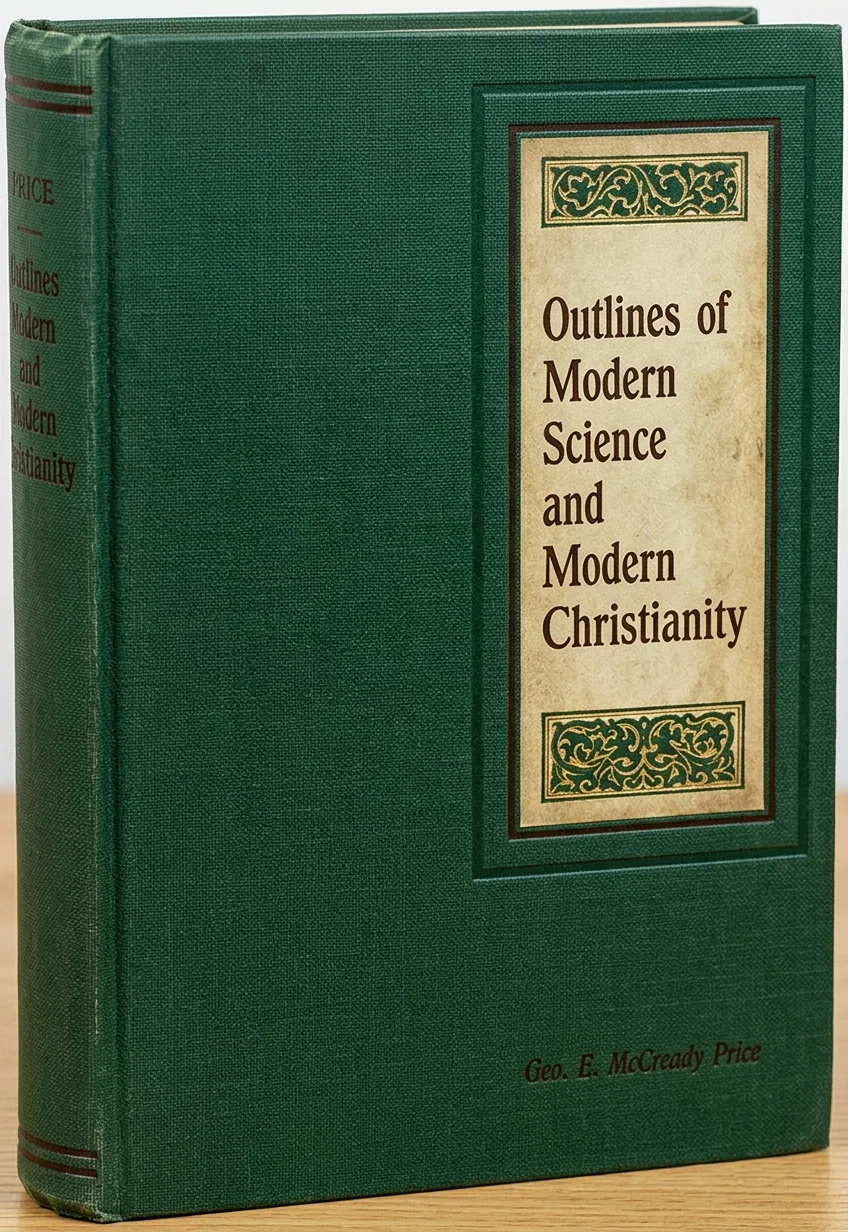
Outlines of Modern Science and Modern Christianity

The work is by GEO. E. McCREADY PRICE, and is intensely interesting throughout. Every student and intelligent reader will recognize in even a partial synopsis of the contents a feast of good things. For instance, we find under

CHAPTER ONE

The Terms Defined.—The origin of things—What science can not do—Cause and effect—The irresistible logic—The problem of the atom—Law a proof of a Creator—Theoristic evolution—Religion and civilization—Scientific dogmatism—Conflicts of the past—Modern science.

CHAPTER TWO

Divine Immanence.—What the Bible says—Two basic ideas of evolution—An intelligent Designer—Relationship of God to nature—Free will—Seeming contradictions—Unsolved problems of the ether—Limited knowledge of scientists—Questions of reproduction.

CHAPTER THREE

Scientific World Building.—Scientific aspects of evolution—What gave action to matter—A hot or cold beginning—Nebular theory defined—Motions of satellites—Some problems to solve.

CHAPTER FOUR

Molten Though Rigid.—More modern theories—Causes of earthquakes.

CHAPTER FIVE

Geological Guessing.—Scheme of evolutionary geology—Questions of the universal Flood—Uncertainty of geological conclusions—Reasoning in a circle.

CHAPTER SIX

Biblical Geology.—The earth in the beginning—Changes wrought by the Flood—“Mammoth” remains—Deposits of coal—Witnesses of the fossils.

CHAPTER SEVEN

Despairing Darwinism.—“Survival of the fittest”—Adaptation of ends to means—Preliminary “conviction”—Only hope of a future life—Primitive man.

CHAPTER EIGHT

Some Moral Aspects of the Evolution Theory.—Bible and science—The accuracy of the Bible—How did man begin—Character of the first great cause—Testimony of Christ.

CHAPTER NINE

Evolution and the World Problems.—Civilization not necessarily moral—Increase of knowledge—Present world conditions—The one remedy.
Many quotations could be given from this excellent work which prove that the author has approached these great subjects with candor, and has treated them with clearness and irresistible logic.
But the book must be seen to be appreciated, and read and re-read in order that the beauty of its arguments and conclusions may be fully understood.
Price 75 cents
Pacific Press Publishing Company — Oakland, California
18 West Fifth Street, Kansas City, Mo. 611 West Twentieth Street, New York, N. Y.

Thanksgiving Number

Partial Contents

BODY DEFENSES - - J. H. Kellogg, M. D.
TYPHOID FEVER - - A. N. Loper, M. D.
THE EATING HABIT - Lewis J. Belknap, M. D.
OUR DUTY TO COOPERATE WITH THE HEALTH GIVER - - W. S. Sadler
Price 50 Cents per Year Sample Copies 5 Cents
Address, Pacific Health Journal
Oakland, Cal.

Studying Men or God.

If your ambition is to use men in this world for this world, study men. Politicians do, and they nearly always fall to the low level of policy men. The shrewd diplomat, the wily, scheming capitalist, the political “boss,” studies men, notes their foibles, their weaknesses, their strong points, and works them accordingly. If the strong points are not favorable to his work, he plays one strong man against another; he uses weakness to undermine strength; by the overmastering foibles and desires of men he leads them to do his will, deceiving them into believing, when necessary, that they are leading and he is following. He is successful—for a time, only for a time, until he meets his master; some one else has been studying him. If he does not fall before a human, he falls before the policy-loving human’s master, Satan.—Do you wish eternal success? Study God instead of men. In studying Him and His Word you learn men as you can learn them nowhere else. You there learn their utter weakness. Having no desire to use that weakness to your own profit, you do not care to study its various phases. Your desire is to save the man from his weakness by getting him to see God, to know himself in the light of God, and then to hide in the strength of God. And the wisdom, the knowledge, the power which you will bring will not be that of man, but of God.—Will such make a success?—Ask of Moses, after his forty-years’ sojourn in the land of Midian, largely alone with God. He had met the Majesty of Heaven; he could face the Pharaoh of Egypt without quailing. Ask of Elijah, who springs a stalwart figure from the seclusion of the mountains of Gilead before the apostate and genteel royalty of Israel. He stood in the presence of Jehovah—what were kings of earth to him? Ask of John the Baptist, who comes unbidden of men from the deserts of Jordan even to the court of King Herod. He came not with the pretensions of the schools, he came not with the effeminate manners and the soft raiment of courts; but he swayed the multitudes with the power of a living message from God. He had not spent his time among men studying men, but he knew in the knowing of God that many of them were in character the “offspring of vipers.”—“Now we are not decrying polish or culture, if men will not depend upon it. It alone is the mere fluffiness which covers the body within. Sometimes it hides mere death and corruption. To hope for permanent success from it would be like expecting to sustain life and maintain power by feeding upon painted eggshells, despoiled of the nutriment within. Study God, know God, and in His light and for His glory study and win men.

Two Mission Appeals

There are two appeals in our Mission Department this week; read them both, and act as God may direct.

Modern Science and Modern Christianity

Read the advertisement of “Modern Science and Modern Christianity” on page 15. That book ought to be placed in the hands of every preacher in the United States. It is the resultant work of a candid student seeking the truth; other students will get help from its perusal.

Well Said

Well Said.—The New York Thrice-a-week World has the following item: “Kaiser Wilhelm, on the advice of his doctors, is breaking himself of the smoking habit. It is a fact worth noting that you never hear of doctors advising the great men of the world to form the smoking habit.” And no up-to-date physician will advise the practise to any one. It is a nerve-destroying, sight-bedimming, soul-benumbing habit; and there are so many noble souls in its bondage!

Relief for Smallpox-Stricken Barbados

A further letter from Brother W. A. Sweany, missionary in Barbados, brings the sad information that the epidemic of smallpox is “increasing by leaps and bounds;” that 40,000 have so far been vaccinated, but there still remain 160,000 who are not vaccinated, many of whom are doing all they can to prevent vaccination. But worse even than the disease is the actual want now upon them in that overcrowded, plague-stricken island. Before this appeal had been made public, persons in this office had contributed $6.00. Whoever acts let him do it quickly.

California’s Offering to Needy Fields.

There will leave this State soon for needy mission fields the following Christian workers: Charles T. and Mrs. Everson, for Rome, Italy; Walter G. and Frank S. Bond, for Spain (stopping for a time in England); Dan A. Parsons, for Ireland; C. H. and Mrs. Castle, and J. W. and Mrs. McCord, for England; A. S. Marchus, for South Africa via England; F. R. and Mrs. Shaeffer, and G. B. Douglass, for the Southern field; Dr. Law Keem, for China; F. D. Gautereau, for France; J. Scott Harmon for Ontario. Those who leave for Europe expect to sail from New York November 26. Our prayers and hearts’ best wishes go with all these our brothers, sisters, and families, and we wish them abundance of the blessing of God that maketh rich.

The Bible and Woman’s Place

It sounds strange to hear a woman maligning the Bible; to hear her saying that it is “immoral.” For where would the women of to-day have been, if they had existed at all, if it had not been for the light of Christianity, which irradiated the earth, and lifted women to the primal place God gave her—the counterpart of man, a friend, a heart-to-heart companion, a co-worker in all good, holy things; but a tyrant and slave in nothing. Surely, if any class ought to thank God for the Bible and Christianity, it is women.

Results of the Coal Strike.

In speaking of the results of the great coal strike in the East, the Independent says: “Before the Christmas holidays arrive the vital statistics of all our large cities will show a sad increase of the death rate, especially among children and aged people. Many business enterprises must be curtailed and incomes must diminish just at the moment when the increase in the cost of living makes heavier demands upon all private resources.” It also opines that several State governments and perhaps the national may change as the result. And these are called the superficial results. The far-reaching results will be in the social and commercial life of the people.

THE TEN KINGDOMS OF DANIEL 7.

The question has been asked as to the ten kingdoms of Daniel 7, and the time of their rise. We give them with references to Gibbon, as published several times in this paper. The compilation is by Alonzo T. Jones. The figures before the colon pertain to the chapters in Gibbon, after the colon to the paragraphs. Different editions of Gibbon will be found paged differently.—
Date Name Territory Ref. in Gibbon
351 Alemanni Suabia, Alsace, Lorraine 10: 26; 12: 20; 19: 20; 36: 5; 49: 22
351 Franks N. E. Gaul 19: 20; 36: 5
406-420 Burgundians Burgundy 30: 17; 31: 39
406, 409, 420 Vandals Spain, Africa 30: 17; 31: 36; 33: 35
406, 409 Suevi Spain 30: 17; 31: 36
408, 419, 467 Visigoths S. W. Gaul, Spain 31: 2; 14; 31: 39; 36: 22; 38: 2, 29
449 Saxons Britain 31: 41; 42; 38; 33
453, 489 Ostrogoths Pannonia, Italy 35: 16; 39: 7, 8
453, 567 Lombards Pannonia, Lombardy 42: 2; 45: 5-7
475-6 Heruli Italy 36: 28-33
The three that were plucked up were the Heruli (493); the Vandals (534), the Ostrogoths (538). There were just ten kingdoms from 476 to 493. For full details see closing chapters of the “Great Empires of Prophecy,” by A. T. Jones.

The Modern Theater.

The San Francisco Examiner in a recent issue has a cartoon and an editorial, entitled, “A Corrupt Stage Corrupts the People.” It declares that “a mass of immorality and general degradation” is “poured out before the public by the theater to-day. Crime, sensation, indecency are its features.” The closing sentence declares that “the public taste and the public conscience have been going down hill together—hence the present American stage.” We are told that “on the stage to-day, old age is made ridiculous, religion is made contemptible, virtue is thought humorous, and no part is thought worthy of a star actress unless it be that of a character utterly degraded.” And this is the testimony of a worldly paper, which panders to popularity,—testimony as to the character of an institution which reflects the worldly trend. The theater is of the world. It pleases the world. Only such things as described above “will pay.” And yet there are professed ministers of Jesus Christ who attend the theater, and it is becoming common practise among church members. Truly, the prophet spoke of this time when he said, “evil men and seducers shall wax worse and worse, deceiving and being deceived.” Jesus says, “And because iniquity shall be multiplied, the love of the many shall wax cold. But he that endureth to the end, the same shall be saved.”

Men of Sense.—

Not all the scholars by any means are upon the side of Darwin’s “Origin of the Species” or the “Descent of Man,” anxious as his disciples are to have us believe this. The late Dr. Pasteur, the eminent bacteriologist, thus stated his views: “Posterity will one day laugh at the foolishness of the modern materialistic philosophers. The more I study nature, the more I stand amazed at the works of the Creator. I pray while I am engaged in my work in the laboratory.” And the late Professor Virchow declared: “The attempt to find the transition from animal to man has ended in a total failure. The middle link has not been found, and will not be found. Man is not descended from the ape. It has been proved beyond a doubt that during the past five thousand years there has been no noticeable change in mankind.” Read abundance of testimony in “Modern Science and Modern Christianity,” noticed elsewhere.

His Way, not Ours.—

If you seek God earnestly to know His way for you to do His work, He may direct you to do as Luther did, draw up some theses, and nail them up in some public place, and prepare yourself to defend them; or He may tell you to translate the Scriptures, as did John Wycliffe; or build great institutions by prayer, as did George Müller; but in all probability He will direct you to do not one of these. He used Luther and Wycliffe and Zwingle and Knox and Müller as He could, as they were best fitted to be used. So will He use you as you are best fitted to be used. Some men are major chords in the world’s great oratorio, others are single notes, but each is essential to the music. God may give you a humble work, from which will come no earthly praise or glory or even appreciation. But if it is His, do it as unto the Lord, and not unto men, knowing that of the Lord ye shall receive the reward. Seek not some great plan for yourself; seek His place for you.

New Method for Extracting Calcium

A new method of extracting calcium from lime and its salts has been discovered. Metallic calcium is now $2,000 a pound. By the new discovery it is thought the price will be reduced to less than half a dollar a pound. It is believed that it will be largely used in the manufacture of iron in freeing that metal from sulphur and phosphorus. It will be freely used in chemical research in forming new compounds.

You have reached the end of this edition.

Signs of the Times · Oct 29, 1902