Your ShelfYour Projects

Review and Herald, Vol. 82, No. 29.

BETHLEHEM

Review and Herald

Jul 20, 1905

Review and Herald Publishing Association · Washington, D.C. · Jul 20, 1905

BETHLEHEM

“But thou, Bethlehem Ephratah, though thou be little among the thousands of Judah, yet out of thee shall He come forth unto Me that is to be ruler in Israel; whose goings forth have been of old, from everlasting.” Micah 5:2. As the birth-place of this wonderful Ruler of Israel, the town of Bethlehem attained an undying fame, which links it with the most beautiful themes of contemplation. It is situated on an eminence about six miles south of Jerusalem, “covering the ridge of a hill on the southern side of a deep and extensive valley, and reaching from east to west.” It was the birthplace of David, from which fact it derived the title “city of David.”
Over these hills shone the mysterious star which guided the wise men from the East, to the birthplace of the infant Jesus. Here also reclined the watching shepherds keeping their flocks by night, when suddenly “the angel of the Lord came upon them, and the glory of the Lord shone round about them.” “The whole plain was lighted up with the bright shining of the hosts of God,” and the hills echoed the sound of the most wonderful anthem to which men ever listened, rendered by voices which sing praises before the throne of God. “Earth was hushed, and heaven stooped to listen to the song,—
“Glory to God in the highest, And on earth peace, good-will toward men.”
“O that to-day the human family could recognize that song! The declaration then made, the note then struck, will swell to the close of time, and resound to the ends of the earth.”—“Desire of Ages,” pages 47, 48.
“The story of Bethlehem is an exhaustless theme. In it is hidden ‘the depth of the riches both of the wisdom and knowledge of God.’ We marvel at the Saviour’s sacrifice in exchanging the throne of heaven for the manger, and the companionship of adoring angels for the beasts of the stall. Human pride and self-sufficiency stand rebuked in his presence. Yet this was but the beginning of his wonderful condescension.”—Id., page 48.

How Many Have You Read?

“He lived to bless others”

In these words the author of “Desire of Ages” has summed up the whole life of the Master.
This book is not simply a life of Christ, it is a reverent, heart-to-heart study and elaboration of that life which was and is “the light of men.”
A perusal of this book can hardly fail to bring to every reader, not only an inspiration to a better life, but practical suggestions how to attain it.
“Desire of Ages” is handsomely bound in such a large variety of styles that you are sure to find one to suit you.
Prices - $1.50 to $7

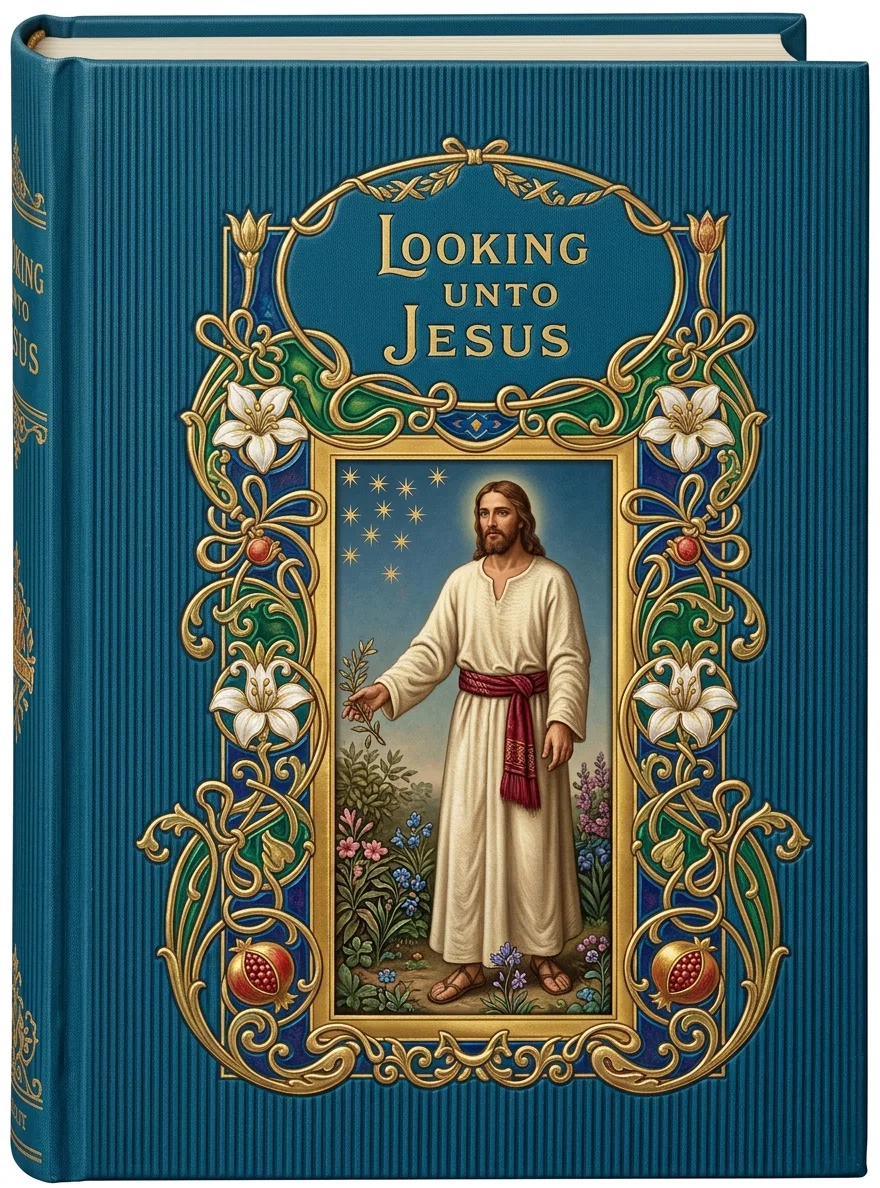
“A building not made with hands”

In taking up the subject of the sanctuary, the author points us to our great High Priest, outlines his work in our behalf, and shows that the earthly tabernacle was simply “a shadow of things in the heavens.” Further, that the same work is now being done for us by Christ our great high priest, in the heavenly sanctuary, as that which was done by Israel’s high priest when he went in before the mercy-seat to make atonement for the sins of the people.
“Looking unto Jesus” contains 300 pages, superbly illustrated, and durably bound in cloth.
Price - - $1.00

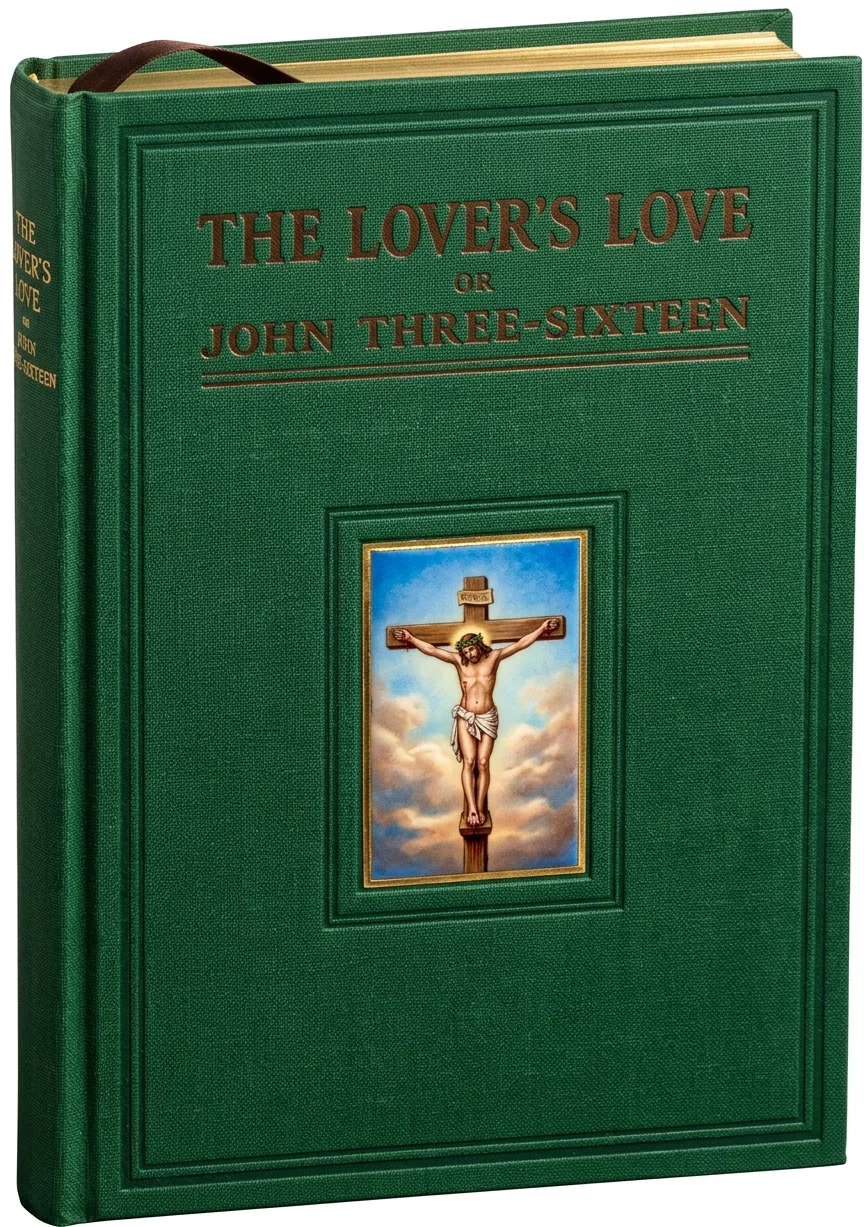
“Greater love hath no man”

“What others have not dared attempt, you have done, and done well,” is the testimony of a Baptist minister regarding “The Lover’s Love.”
You will be surprised, too, at the depth of meaning given that familiar text, John 3:16.
By the use of apt illustrations, the author impresses more forcibly the “pouring out of all heaven” in the “unspeakable gift.”
This book contains many practical suggestions for every-day life, and is equally interesting to old and young.
Substantially bound in cloth and appropriately stamped in brown ink.
Price - - $ .75

“A man greatly beloved”

The story of one of the most successful men in history, a man whom God honored.
Daniel’s life was a striking example of the results of an early Christian training. He had truly hid the word of God in his heart.
The “Story of Daniel the Prophet,” besides explaining in a most interesting way the great prophecies of the book of Daniel, tells the secret of Daniel’s success as a man, and how he became, what the angel called him, “A man greatly beloved.”
Handsomely bound in three-quarter cloth, and stamped in silver. Illustrated with full-page half-tones made especially for this book.
Price - - $1.00

Review and Herald Publishing Association

Battle Creek, Mich.                 Washington, D. C.

The Little Foxes

SINCE the days of Solomon it has been a universal proverb that it is the little foxes which spoil the vines. “Take us the foxes, the little foxes, that spoil the vines.” Equally universal has been the application of this proverb. A little indiscretion at a critical time may cause irreparable trouble. A little word unfitly spoken is like sour apples in very common baskets. A little nagging constantly repeated may drive one to distraction. A little sarcasm, a little twang of the voice, a little turning up of the nose, a little elevation of the chin, and a little change of the countenance may break friendship, and bring a shadow over a whole life. There is no need of an exhortation by the preacher. We all know the moral.

The Call to the Ministry

THE very circumstances under which this cause is now placed constitute an emphatic call to young men of Christian experience to devote themselves to the ministry of the Word of God. Here is the closing message to be proclaimed “unto every nation and tribe and tongue and people.” The time is short, and the fields are white for the harvest. The Macedonian cry is heard from many lands, and there are innumerable openings for the living preacher.
In view of this situation we have felt impressed to urge upon the attention of our young men the opportunity offered for rendering service acceptable to God and helpful to humanity as preachers of this message. It seems to us that there has been a tendency to underestimate the dignity and the importance of the work of the gospel minister in favor of mere professional skill, and there has been a decided drift into other lines of work to such an extent that there is a dearth of strong, well-educated, and thoroughly devoted young men who are prepared to answer the many calls to proclaim this truth to those who are nigh and to those who are far off.
We believe that the time has now come for a change. We call upon our young men to consider that God has use for them as ambassadors to the nations of the earth, and that here is a calling worthy of the best talent and the most earnest devotion. While some of the best minds of the world are being used by the enemy of truth to discredit the Bible and to turn the people away from the great salvation offered to them in the gift of Jesus, there is a glorious opportunity for valiant service in ministering the words of life, and in turning many “from darkness to light, and from the power of Satan unto God.” True defenders of the faith are needed. Faithful exponents of the truth are needed who have exercised themselves unto godliness, and who will contend earnestly for the faith which was once delivered unto the saints.
We do not call for a mere professional class of preachers. We do not wish to substitute a human for a divine call to the ministry. But we long to see a body of recruits for this sacred work,—a company of young men whose hearts God has touched,—whose commission may be expressed in the words of the Lord to Jeremiah: “I have appointed thee a prophet unto the nations. . . . To whomsoever I shall send thee thou shalt go, and whatsoever I shall command thee thou shalt speak. Be not afraid because of them; for I am with thee to deliver thee, saith Jehovah. . . . Behold, I have put my words in thy mouth: . . . thou therefore gird up thy loins, and arise, and speak unto them all that I command thee: be not dismayed at them, lest I dismay thee before them. For, behold, I have made thee this day a fortified city, and an iron pillar, and brazen walls, against the whole land, against the kings of Judah, against the princes thereof, against the priests thereof, and against the people of the land. And they shall fight against thee; but they shall not prevail against thee: for I am with thee, saith Jehovah, to deliver thee.”
Are not the hearts of some stirred as they read these words? Shall there not be a prayerful response on the part of many a young man who is considering how he may best glorify God in service? Will not the instructors of our youth take these things to heart, and plan more definitely to encourage young men of Christian experience to give themselves to the preaching of this message? We certainly hope it may be so. Only a short time in which we may be laborers together with God in preparing a people for the great day so near at hand. Let us fill the time with faithful service.

Reasons for Thankfulness

EVEN in what seem to be the darkest hours there are plenty of reasons for thankfulness. The statement is always true, “I have loved thee with an everlasting love.” There are no exceptions to the promise, “I will never leave thee, nor forsake thee.” In times of deepest trial our God still says unto us, “Fear thou not; for I am with thee: be not dismayed; for I am thy God: I will strengthen thee; yea, I will help thee; yea, I will uphold thee with the right hand of my righteousness.” The assurance of the risen Saviour as he was taken up into heaven is still spoken to every disciple, “Lo, I am with you always, even unto the end of the world.”
“O thou, my Saviour and my Lord, 'Tis good to trust thy name; Thy power, thy faithfulness and love, Will ever be the same.”
“Weak as I am, yet through thy grace I all things can perform, And, smiling, triumph in thy name Amid the raging storm.”

Editorial

Moment by Moment

THE moment just gone is as completely beyond our grasp as if it were separated from us by an eternity of time. The moment just in the future is just as much outside of our experience as is the one a million years ahead. The present moment is the only one with which we can deal. We live moment by moment. Our journey is taken step by step. We need only grace enough for the present moment. We can use only that which we can appropriate just now. Life is received only by living, and love is realized in the same way. From eternity to eternity God is, unlimited by time, but we are creatures of the now.
“Dying with Jesus by death reckoned mine, Living with Jesus the new life divine, Looking to Jesus till glory doth shine, Moment by moment, O Lord, I am thine.
“Moment by moment I’m lost in his love; Moment by moment I’ve life from above; Looking to Jesus till glory doth shine, Moment by moment, O Lord, I am thine.”

The Right to Reject the Theories of Experts

In a recent issue the Christian Advocate discusses the controversy between the higher critics and their opponents, especially as represented in the American Bible League. In the course of the discussion the Advocate lays down some principles which are worthy of being emphasized. It says:—
Notwithstanding St. Luke is explicit that Christ was born of a virgin, and Matthew is as clear by implication, some experts will say that the silence of the others and of St. Paul justifies the rejection of the virgin birth.
Yet literally millions of scholars in the ages past have seen what to them was the strongest proof that Christ was born of the Virgin Mary.
The non-expert (who sees that the virgin birth, the deity of Christ, the vital and unparalleled relation of the atonement to the forgiveness of sins, are undermined by the alleged results of the higher criticism) has the logical, philosophical, and moral right to say within himself and to others, that whether or not he thinks himself competent to overthrow the details of the process, or even to follow it, he will accept no theory which leads to such a conclusion. He has the same right to do this as has the non-expert to decline to believe that any argument can disprove the existence of God,—even though that argument at certain points runs through knowledge and speculations which his limited acquirements do not enable him to follow. And if it be said that this is repudiating the operations of the human intellect and making one's self a slave to an idea, it seems to us sufficient to say, in reply that, so long as experts agree that the manuscripts essentially coincide upon the broad lines of the Christian faith, and that the translation is substantially accurate, it does not require “experts” to teach men whether or not the Gospels declare Jesus Christ to be the Son of God, miraculously born of a virgin, deprived for a time of the full exercise of divine power, but infallibly knowing everything pertaining to the substance of his mission upon the earth. If a conscientious man, expert or non-expert, willing “to follow the truth wherever it leads the way,” can not see these things in the Bible, he ought not to profess to see them; but he who does see them is (by virtue of his belief in the Bible's containing a divine revelation) bound to declare that he finds them there, even if a procession of “experts” of ever-increasing length and arrogance affirm that they are not there, or give “expert” opinions in higher or lower criticism which undermine them.
We regard this teaching as sound and helpful, and we would apply it to some of the fundamental doctrines of this message.
One has a right to reject the many contradictory claims of the Sunday advocates, even though he can not follow them through all their winding arguments.
In the same way the believers in this message have “the logical, philosophical, and moral right” to refuse their assent to the conclusions of some who profess to be in the truth, but to have advanced upon higher ground, when they by fanciful interpretations and combinations of scripture really undermine confidence in the accepted features of the message. And it is not necessary in order to do this that one should be required to answer every detail of the argument, or advance a counter theory concerning subjects with which he is not familiar. Some things are settled, and may be depended upon. We are not following cunningly devised fables.

Christianity Without Christ

“ADVANCED religious thought” in this country has now reached the point where it has produced a church without theology, an innovation quite characteristic of the times. At the head of this church, or movement, is a former well-known evangelist, Rev. B. Fay Mills. The seat of this new movement is Los Angeles, Cal., and Mr. Mills has given it the name of the “Los Angeles Fellowship.” From a description of the movement given by Mr. W. A. Corey in the Arena, it appears that it has attained a rapid popularity, new halls having frequently to be found for its meetings to accommodate the increasing throng of attendants. The character of the movement seems to be very largely benevolent. On this point it is stated:—
The Fellowship is a many-sided institution,—as many sided as is the human society which it attempts to serve. One of its many activities is in connection with helping to care for the city's poor and unfortunate. It has its sewing society to provide clothing for the needy, and other relief committees. It has its “Graduate Jolly Boys' Club” for the benefit of graduates from the juvenile court and the city detention home. It has its evening classes, and it is planning educational work on a large scale. It is providing free legal advice to protect the unfortunate from the rapacity of conscienceless lawyers, and to discourage contentious litigation. The Fellowship is caring for its children and young people in a thorough and intelligent manner. Besides its Sunday-school, Children's Church, and Young Men's Club, it is meeting the amusement question not only with regular social gatherings, but by providing at a moderate expense dancing lessons by a competent instructor. There is also a Fellowship Dramatic Club that has already given several creditable public presentations. All these amusements are of a high order. The good is cultivated; the bad eliminated.
Anybody is free to belong to this new “fellowship” without undergoing any change in religious belief, or expressing any religious convictions at all. “All are welcomed on equal terms, orthodox and unorthodox. Jew and Gentile, agnostic, infidel, Christian, heathen—all are given the same hand-shake and smile of welcome.” There are, however, two requirements. One is an agreement to make a weekly cash payment of any amount from one cent upward. The other requirement is a pledge to encourage trustful and unselfish living. Of the latter Mr. Corey well says: “Let the reader think twice before smiling at this pledge; for to obligate one's self to live trustfully and unselfishly in this commercial, and competitive age is a far more serious matter than may appear at first sight. It involves the living up to the very highest Christian ideal.”
A member of this Fellowship, therefore, is required to live up to the highest Christian ideal, or rather to pledge himself or herself to so live, for there is no higher ideal than that of a truly unselfish life. But living up to the ideal of Christianity is nothing else than living the Christian life. A member of this new church is therefore required to promise that he will live the Christian life, without any change of heart or profession of faith,—a thing which is, of course, clearly impossible. The Christian life can be lived by faith only,—by being crucified with Christ, and having the risen Christ enthroned in the heart. Gal. 2:20.
A benevolent institution is good as far as it goes; but the purpose of the Christian church is far more comprehensive than this. Its purpose is to be not merely a benevolent institution, but to bring the answer to the Christian's prayer, “Thy kingdom come.” Its purpose is not merely to ameliorate earthly ills, but to end them. Its purpose is to fulfil the great plan of the Creator to gather out of earth's nations a people consecrated to the Lord, to be the subjects of his kingdom upon the earth. The church of Christ has been from earliest times down to the present, gathering out a great company composed of all races and all nations, to people that new earth which is the subject of so many promises in the divine Word. To accomplish this work it is and has always been necessary that every member of that church should have a definite rule of life. And so it is said of the company who at this time are fulfilling the purpose of God in the world, “Here are they that keep the commandments of God, and the faith of Jesus.”
L. A. S.

Spiritualistic Sentiments

A new school of interpreters of the Scriptures has arisen within recent years, and the number of its representatives is constantly increasing. Their theories are a cross between rank spiritualism and the new theology, with enough of the vocabulary of genuine Christianity to catch the ears of those who pay more attention to words than to sentiments. Their teachings have a flavor of the spiritual, but they are in reality spiritualistic in their tendency. They appear to exalt God and the Bible, but in the final analysis it will be found that they bring both down to the level of human reason. They are among the most dangerous teachers of this degenerate age.
A good representative of this school of interpreters is Ella Wheeler Wilcox, who is a regular contributor to the magazine New Thought, and whose poetical productions are copied in quite a number of our exchanges. This writer gives expression to many apparently beautiful thoughts and presents lofty ideals, but a thoughtful study of her writings will justify the statement that they ignore the fundamental truths of revelation, leave no need nor place for the atonement made by Christ, and exalt the divinity alleged to be within every man, rather than the one personal God. They are subtly expressed and attractively clothed variations of the purely pagan religion of self-salvation. They have no rightful place in a Christian paper.
A fresh example of the spiritualistic interpretation of the Scriptures now becoming so common is found in a magazine just established to promulgate the ideas of this modern school of thought. Here is a sample:—
“Did not our hearts burn within us, while he talked with us by the way?” . . . Who has not felt this burning after listening to a master expounding the truths of Being? And what does it mean? It is the divine in the listeners responding to, or being aroused and kindled by, the divine in the speaker who is conscious of his oneness with the One, and is arousing others to the same realization. . . .
When perfect concentration has been established, one passes from a state of thinking to a state of feeling—“feeling after God.” And it is as yet a condition of seeking.
But if we seek, we find; if we knock, it is opened unto us, and there bursts on the consciousness the glory of union with the Divine. . . .
It is the feeling of the at-one-ment with the All-in-all; the atonement in which one can say, “I and the Father are one,” for he has heard the voice saying, “Thou art my Son.” . . .
With this consciousness comes the full breath, the complete breath, which is without physical motion; the perfect union of the within and the without.
This is the Baptism of the Holy (whole) Spirit or Holy Ghost (correctly the Whole Gast, the word gast being the Anglo-Saxon for breath).
“And He breathed on them and said, Receive ye the Whole Breath.”
This is a spiritualizing of the physical or a physicalizing of the spiritual with which we are not wholly unfamiliar, and which professes to be a new light upon familiar passages of the Scripture,—a new philosophy which is destined to supersede the well-established application of these texts. It requires but little analysis to show that this teaching utterly ignores sin as sin, sets aside the true atonement made through the sacrifice of Christ, and by making the Whole Breath the equivalent of the Holy Ghost it demonstrates that every man is, or may be, a temple of the Holy Ghost entirely independent of faith in the gift of Christ.
All this sort of spiritualistic teaching tends in the same direction. It is a substitution of human philosophy for divine revelation, and will end in destroying all genuine faith in the Bible as the Word of the living God. We warn our readers against even that almost unconscious assent to such doctrines which may grow out of a passive state of mind toward them. We ought to make a constant and uncompromising protest against them wherever we meet them. They are death to true religion.

Always of Good Courage

THE Standard Revision renders 2 Cor. 5:6: “Being therefore always of good courage.” The apostle had just been giving a list of trying experiences,—“pressed on every side,” “perplexed,” “pursued,” and “smitten down;” surely his courage did not depend upon fair times and favoring circumstances.
He looked not on the things seen,—that would have disheartened the boldest,—but upon the things not seen. Though the mortal tabernacle of flesh should perish amid trouble and persecution, the apostle knew that he had a hope in God, eternal in the heavens, and that this mortal would be swallowed up of life. Furthermore, he knew that God had “wrought us for this very thing.” Therefore he was “always of good courage.”
A living hope is the secret of courage. When one knows the forgiveness of sin, and that it is all right between the heart and God, no hard experiences without can dismay. And there is everything in being “always of good courage, ” no matter what the outward conditions. Paul might be in prison, condemned to death, he could see unstable teachers rising up in the church to spoil his work, all that were in Asia had forsaken him,—but Paul simply knew in his heart that God’s word was sure, that the gospel work begun would go forward, that nothing could frustrate God’s purpose. Therefore we find him “always of good courage.”
We know that this advent movement is of God, and that nothing can turn it aside. Let us keep our own sins forgiven, and our eyes upon the eternal realities, and none of the experiences or sights of these perilous days can take away courage from our hearts.
The world is full of people who are defeated because discouraged. It is a sin for which to seek forgiveness. God forgives discouragement by putting courage in the place of it. Every soul of us may be “always of good courage,” for courage is the gift of God. W. A. S.

Conscience and the Law

The question whether all laws that get upon the statute-books ought to be obeyed by the people and enforced by the government officials, is considered and answered in the affirmative in an article contributed to the Independent by Governor Joseph W. Folk, of Missouri. Governor Folk's record in his State as a foe of political corruption, entitles him to the respect of all lovers of good government, and gives weight to his views regarding the enforcement of law.
Nevertheless it is not true, and no man's dictum can make it true, that a mandate ought to be obeyed simply because it has attained to the dignity of a municipal, State, or federal statute. A law may be of such a character that it is not entitled to obedience. If legislative assemblies were always free from corruption; if laws always found their way to the statute-books untainted in the making, and were always passed in the interests of the people, and never to serve private interests at the expense of the people, the question would be different. But the subserviency of legislatures and city councils to the dictates of the political boss or the ring working for its own selfish ends, has become notorious.
It is true that justice ought always to be enforced by the law; but this is a different thing from saying that any man-made statute ought always to be enforced. Every individual is bound at all times by the law of justice,—a law which is of force independently of legislatures, and was in existence before any human assemblies were convened. This is the higher law, and when a human statute runs contrary to it, the former sets aside the latter, and not the latter the former.
The obligation to “do justice and judgment,” which every man owes to his Creator, is one from which he can never be absolved by any human authority.
The contention is made that a person can not be permitted to judge for himself which laws he will obey, and which he will disregard, because such liberty would immediately result in anarchy. But anarchy never resulted from a conscientious effort on the part of any individual or class to observe that law of right which antedates all human law, and from which all just human laws derive their force. Anarchy never results from an acknowledgment of the higher sovereignty of Him whose kingdom ruleth over all. If there is a higher law than man's, then it is the worst anarchy to disregard that law to render obedience to a human enactment.
The laws of man and the law of God ought never to conflict; yet history is full of instances where they have conflicted, and the assertion made upon one such occasion—“We ought to obey God rather than men”—has always been vindicated in human experience.
The anarchist sets up his own will against that of the state. He acknowledges no will and authority higher than his own. Anarchy is a denial of sovereignty. The Christian sometimes disregards the law, but never to set up his own will and authority against that of the state; never to deny the right of sovereignty, but expressly to acknowledge the sovereignty of One who is supreme in power and authority.
To say that every man-made statute whatsoever ought to be obeyed so long as it remains unrepealed, is to deny that there is any higher sovereignty in the universe than man's.
Civil government rests upon law, and upon the enforcement of law. In an ideal government all the laws would be perfectly enforced. But an ideal government would be more than this; it would be a government in which all the laws were just.
There is a realm of civil government, and there is a realm of conscience. The inviolability of the latter is the very essence of individual liberty. There can be no substitute for conscience. Nothing could be worse for the individual, nothing worse for society, than the destruction of conscience. It is those who have suffered the loss of conscience that make the most trouble for the officers and the courts of law.
Civil government rests upon civil law, but there is a deeper foundation than this. As confidence is the basis of all trade, lying underneath all the means and agencies by which trade is carried on, so that nothing so quickly and surely brings business paralysis as a loss of public confidence; so underneath all civil laws upon the statute-books is the regard for right and justice which is inherent in some degree in every human heart. Here is the realm of conscience. Let this be lost from the assets of the nation, and not all the laws that exist or that might be passed could hold civil government together for a single day. There would be immediate and complete anarchy.
Governor Folk says: “The greatest danger to every government lies in the fact that laws that are made are not enforced as they are made.” But all history, including current history, testifies that governments become weak and fall, not from failure to enforce their laws, but because of corruption in the lawmaking and governing power. There is anarchy in Russia to-day; the spectacle of it holds the attention of the world. Is it because the laws of that country have not been enforced?—No; but rather because there has been an enforcement of unjust laws, contrary to human liberty and to natural, God-given rights. The French Revolution proceeded from similar causes.
Governor Folk applies his argument to the enforcement of the Sunday law, and thereby demonstrates its fallacious character. “A great deal has been said in Missouri in the last few weeks,” he says, “about what is commonly called the ‘lid.’ The ‘land of the lid’ means the land of law. When people talk about taking off the ‘lid’ on Sunday, they mean to let the law be violated with impunity. . . . If we take the ‘lid’ off of the Sunday law, can we not with equal propriety take the ‘lid’ off of the larceny statute and off of the murder statute?” Sabbath observance is plainly a matter of conscience, having its origin in the command of Him who is lord of the conscience, to “remember the Sabbath day to keep it holy.” It is no business of the state either to interpret or to enforce that command. To render Sabbath observance to the state is to make a god of the state, but the final account of every person must be rendered not to that god, but to the God who created heaven and earth and rested the seventh day, and because of this sanctified that day and made it holy.
Thus it has already happened in every age, and is still true to-day, that those who have most regard for the law of God have sometimes felt obliged to set aside the law of man; not as setting themselves up above the state, or from any lack of respect for the state and its laws, but as an acknowledgment of a higher Sovereignty to which they owe primary allegiance. And it has always been true, and is true still, that such citizens are the best citizens the state can have.
The menace of anarchy arises not so much from the disregard of law by the people, as from the disregard of justice by those entrusted with the enactment and interpretation of the laws. Let it once come to be believed by the people that there is a privileged class in this country in whose interest laws are enacted by the legislatures and interpreted by the courts, and respect for law in this country will be at an end. The present tendency of things is altogether too strongly in this direction. L. A. S.
Continue reading: The Abuse of Power