The Youth’s Instructor, Vol. L, No. 28

A Faithful Witness

The Youth’s Instructor

July 10, 1902

Review and Herald Publishing Company · Battle Creek, Mich. · July 10, 1902

A Faithful Witness

II
FROM the judgment-hall, Paul returned to his prison-house, knowing that he had gained for himself only a brief respite. He knew that his enemies would compass his death; but he was not afraid. His heart was full of courage, his eyes shone with heavenly brightness: by faith he beheld the glories of the unseen.
The apostle’s speech had gained him many friends, and he was visited by persons of rank, who accounted his blessing of greater value than the favor of the emperor of the world. But there was one friend for whose sympathy and companionship he longed in those last trying days. That friend was Timothy, to whom he had committed the care of the church at Ephesus, and who had therefore been left behind when Paul made his last journey to Rome. The affection between Paul and Timothy began with Timothy’s conversion; and the tie had strengthened as they had shared the hopes, the perils, and the toils of missionary life, till they seemed to be as one. The disparity in their age and the difference in their character made their love for each other more earnest. The ardent, zealous, indomitable spirit of Paul found repose and comfort in the mild, yielding, retiring disposition of Timothy. The faithful ministration and tender love of this tried companion had brightened many a dark hour in the apostle’s life. All that Melancthon was to Luther, all that a son could be to a loved and honored father, the youthful Timothy was to the tried and lonely Paul.
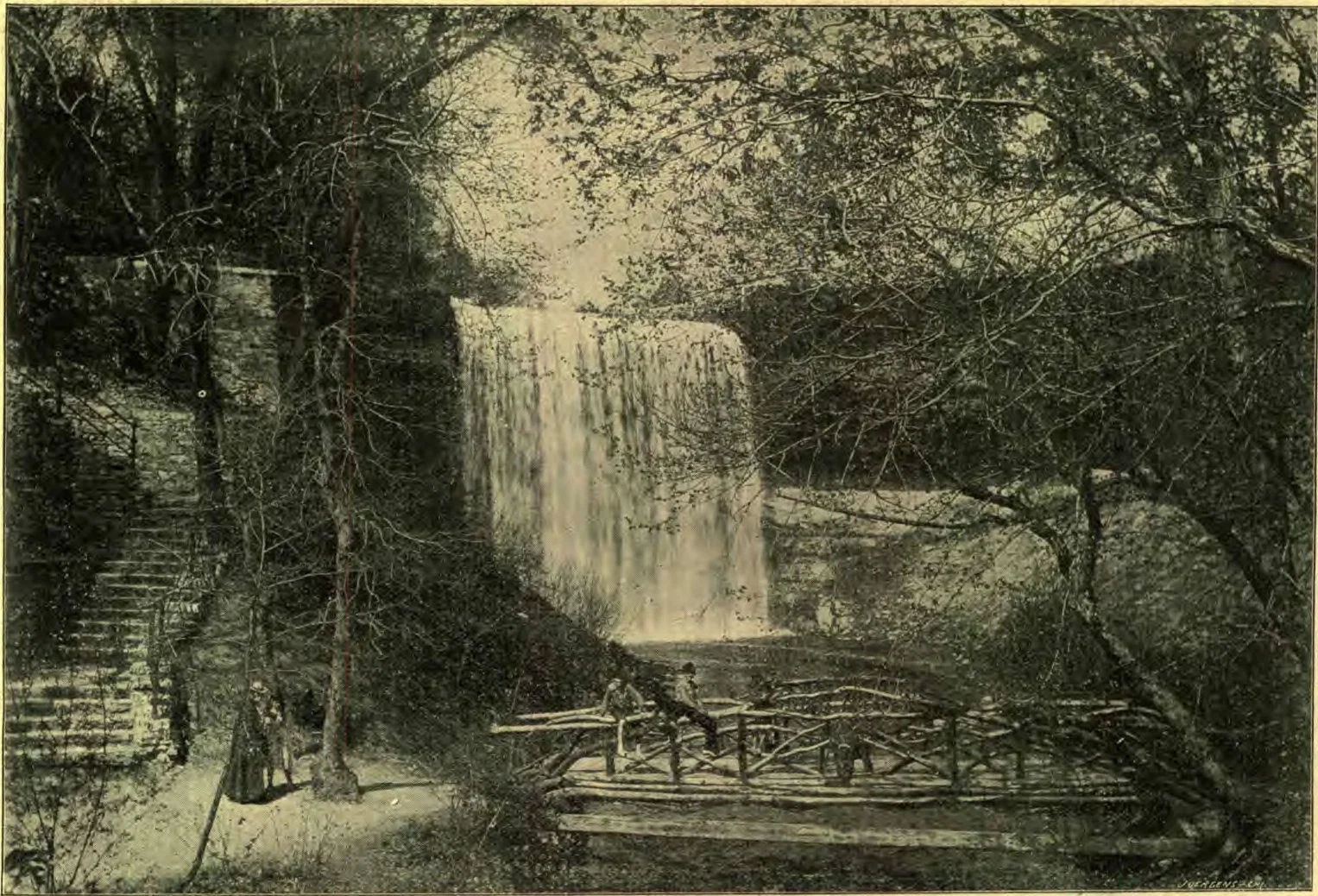
“WHERE THE FALLS OF MINNEHAHA . . . LAUGH AND LEAP INTO THE VALLEY”
And now, sitting alone in his gloomy cell, knowing that at a word or nod from Nero, his life may be sacrificed, Paul thinks of Timothy, and determines to send for him. Under the most favorable circumstances, several months must elapse before Timothy can reach Rome. Paul knows that his own life is uncertain, and that Timothy may arrive too late. He has important counsel for him; and while urging him to come without delay, he dictates the charge that he may not be spared to utter. His heart is filled with loving solicitude for his son in the gospel, and for the church under his care; and he seeks to impress Timothy with the importance of fidelity to his trust. “I charge thee therefore,” he says, “before God, and the Lord Jesus Christ, who shall judge the quick and the dead at his appearing and his kingdom; Preach the word; be instant in season, out of season; reprove, rebuke, exhort with all long-suffering and doctrine. . . . Watch thou in all things, endure afflictions, do the work of an evangelist, make full proof of thy ministry.”
Paul has almost finished his course, and he desires Timothy to take his place, guarding the churches from the fables and heresies with which Satan and his agents would endeavor to lead them from the truth. He admonishes him to shun temporal pursuits and entanglements, which would prevent him from giving himself wholly to God’s work. He is to endure with cheerfulness the opposition, reproach, and persecution to which his faithfulness would expose him. He is to make full proof of his ministry, employing every means of doing good to his fellow men.
Never had Paul been ashamed to confess Christ before men. Under all circumstances he had fearlessly placed himself on the side of right. Firmly believing the principles of truth, he never shrank from declaring them. His life was an illustration of the truths he taught; and in this lay his power. To him the voice of duty was the voice of God. His soul was filled with a deep sense of his responsibility, and he lived in close and constant communion with God. He clung to the cross of Christ as the only guaranty of success. The love of the Saviour was the power that upheld him in his conflicts with himself and with the power of Satan, in his struggles against spiritual wickedness in high places, in his life-long labors as he pressed forward against the unfriendliness of the world and the burden of his own infirmities.
What the church needs to-day is an army of workers who, like Paul, have a deep experience in the things of God, and who are filled with an earnest desire to do his service. Cultivated, refined, sanctified men are needed; men who will not shun trial and responsibility; men who are burden-bearers; men who are brave and true; men in whose hearts Christ is formed, and who, with lips touched with holy fire, will preach the word to those who are starving for the bread of life. For the lack of such workers, the cause of God languishes, and fatal errors, like deadly poison, taint the morals and blight the hopes of a large part of the race.
As the faithful, toil-worn standard-bearers are offering up their lives for the truth’s sake, who among the youth will come forward to take their place? Will our young men accept the holy trust at the hand of their fathers? Are they now preparing to fill the vacancies made by the death of the faithful? Will they heed God’s call to service? MRS. E. G. WHITE.

Yield Thy Poor Best: A Poem

YIELD thy poor best, and mind not how nor why, Lest one day, seeing all about thee spread A mighty crowd, and marvelously fed, Thy heart break out into a bitter cry, “I might have furnished, I, yea, even I, The two small fishes and the barley bread!” — Frederick Langbridge.

Opportunities and Obstacles

MARVELOUS opportunities are about us as abundantly as wild flowers on the Western prairie in the spring. We can not possibly utilize them all; but woe to him who passes through life so blindly that he must realize at its close that he has failed to recognize or improve any of them.
Life does not consist of haphazard and chance circumstances; but God has a definite plan for each one of us, which is just as complete as if we had been the only ones that lived on the earth. The attention of God has been specially directed to the careful arrangement of all its details; and all heaven is at our disposal, if necessary, to assist us not only in finding our work, but in performing it. Sometimes the dense fogs of human discouragement envelop us to such an extent that our natural eyes can not discern the glorious possibilities that God is holding out to the youth in this generation, who are to see the culmination of all things, and who may repeat in their earthly career the very life that Christ lived as he walked among men. But let us remember, even in the darkest moments of our experience, that the same power that controls and upholds the universe, is directing our lives.
One of the greatest errors a person can possibly fall into is the notion that any human being possesses the power to interfere with his carrying out the program God has for him here below. When we drift away from the right path, the Lord permits definite obstacles to be placed in our pathway. Whatever these may be, we shall sometime know that if at that particular moment we had gone one step farther in that direction, we should have gone to destruction. But some will say, Do not the devil and wicked men make trouble for the righteous?—They certainly attempt it, and from a human view-point they often apparently succeed. The devil and wicked men kindle the fire that they expect to consume the righteous; but God watches it, and allows it to burn only the dross.
In reality we are not fitted for heaven until God has enabled us to overcome the greatest obstacles that Satan can possibly place in our pathway. We need to get deeply stamped upon our souls the great truths that are especially intended for this generation; for they will put stability into our lives. They will anchor us firmly to Him who is “within the veil;” and when the storms burst upon us, we shall stand as unmoved as the eternal hills.
DAVID PAULSON, M. D.

His Mother's Bible

MORE than twenty years ago there lived in Canada, on the shores of beautiful Ontario, an industrious and benevolent family. One day as the busy housewife was attending to her bees in the yard, she heard some one saying: “Now you stay here as long as you live, and never go away. You will have all you want to eat and wear here, and a good home; so you stay here always.”
A childish voice was heard replying, “Yes, I'll stay here, I'll not go away;” then a horse and buggy clattered down the road.
On coming to the street the woman found that a motherless boy had been left on her hands. His father and stepmother had been in the habit of sending him out to beg for food, and now an acquaintance had taken this novel method of securing a better home for the lad. He seemed to have come to the right place, for he was not turned away. Several years after he had thus become a member of the family, the frail urchin became nearly blind, lost his hearing, and much of the time was confined to his couch. The doctors said that his case was hopeless,—that he had some disease of the brain, and could live only a few days.
But by the careful nursing of his foster-mother he continued to live, and gave some indications of improvement. This faithful woman cared for him so constantly and faithfully day and night, that by and by he seemed to regard her as his servant, and became very impudent, overbearing, and exacting. She remonstrated with him, and tried to influence him by moral persuasion, but to no avail. Finally she said, calling aloud in his dull ear: “Johnny, you must not do so! Don't you know it is wicked?”
“No; who said it was wicked?” asked the boy.
“The Bible says so,” was the reply. The boy's mother had left him a large Bible, and this had been brought to him after he found his new home. He thought everything of this Bible, and talked a great deal about the dear hands that used to turn its pages.
“Why didn't you tell me the Bible said so? If the Bible says it is wicked, I won't do so any more.” The direct instruction on this point was read to him, and he ceased to act as he had done. As other evil traits of character manifested themselves, instruction on these points was read to him from the same authority, and reformation followed, till he became as pleasant a child as one could desire to have.
When John was about fourteen, a gentleman who represented a philanthropic institution called, and told his adopted parents that if the boy would go with him, he would take him where those who had either partially or wholly lost sight and hearing could be taught to work, and so support themselves. Johnny was asked if he wanted to go.
“Yes,” said he, “if I can learn to do something to earn my own living, I will go, if you will let me come back when I want to.”
He was assured that he would always be as welcome as one of their own children, and so he went away to get an education. Soon afterward they heard of his safe arrival; a little later a letter came stating that he had the diphtheria; and about two months from the time of his departure, word was brought that he was dead. So ended a short, but strange and instructive, life experience.
It sets before us most vividly the power and influence of the word of God. How many depraved hearts may be reached by the Bible, especially when associated with a faithful mother's instruction and experience! F. D. STARR.

The Year

We dare not weep the waning year, We dare not hail the new; For vain alike are smile and tear, And blent the shadows are with cheer, As past the frostbite and the fear The gladness struggles through; But this one truth we surely hold,— God rules all years, the new, the old.
The Past, which brought us so much pain, Brought, too, the cure of ill; The Future dimly gleams, in vain Our steps we urge, our eyes we strain, As slowly in unhastening train The days their course fulfill; And each to each these tidings tell,— God rules the years, and all is well.
Brave and content, then, come what may, We face what time may send, Life can not be all holiday, And love and hope alike decay, And disappointments bar the way Sometimes until the end; But we can bear all, knowing this,— God rules the years, and we are his.
— Susan Coolidge.

A Song That Saved

In one of the hospitals of Edinburgh lay a wounded Scottish soldier. The surgeons had done all they could for him. He had been told he must die. He had a contempt for death, and prided himself on his fearlessness in facing it.
A rough and wicked life, with none but evil associates, had blunted his sensibilities, and made profanity and scorn his second nature. To hear him speak, one would have thought he had no piously nurtured childhood to remember, and that he had never looked upon religion but to despise it. But it was not so.
A noble and gentle-hearted man came to see the dying soldier. He addressed him with kind inquiries, talked to him tenderly of the life beyond death, and offered spiritual counsel. But the sick man paid neither attention nor respect. He bluntly told him that he did not want any religious conversation.
“You will let me pray with you, will you not?” said this man at length.
“No; I know how to die without the help of religion.” And he turned his face to the wall.
Further conversation could do no good, and the man did not attempt it. But he was not discouraged. After a moment’s silence, he began to sing the old hymn, so familiar and so dear to every congregation in Scotland:—
“O mother dear, Jerusalem, When shall I come to thee?”
He had a pleasant voice, and the words and melody were sweet and touching as he sang them. Pretty soon the soldier turned his face again, but its hardened expression was all gone.
“Who taught you that?” he said, when the hymn was done.
“My mother.”
“So did mine. I learned it of her when I was a child, and I used to sing it with her.” And there were tears in the man’s eyes.
The ice was thawed away. It was easy to talk with him now. The words of Jesus entered in where the hymn had opened the door. Weeping, and with a hungry heart, he listened to the Christian’s thoughts of death, and in his last moments turned to his mother’s God and the sinner’s Friend.—Selected.

The Upper Road

FAR lie the mountain crests against the sky! How shall I find my way so lone, so high, Without a chart, and with a heavy load? Pilgrim, one certain Guide is thine at will, Where the road forks, winding o'er plain and hill, Whichever way seems easier, choose thou still The upper road.
By brier and bramble hedged on either hand Often it climbs within a lonely land Where 'neath thy stumbling feet sharp stones are strowed. Yet choose it ever, for beyond it rise The steadfast peaks that pierce the eternal skies, They are thy goal. Here thy beginning lies, The upper road.
Comrades may smile, and beckon thee instead, To take the lower path, so smooth to tread, Where roses bloom, without a thorn to goad, A pleasant choice,—and yet it leads away From the high mountain tops that front the day. Turn, pilgrim, turn, and take the wiser way, The upper road.
On these rough upward paths have climbed the feet Of all earth's heroes, all her saints, to meet Reward and joy, at the sure end bestowed. Their steps have stumbled, too, their burdens weighed Heavy as thine; yet forward, undismayed, They pressed before thee. Choose,—nor be afraid,— The upper road.
— Selected.

Talks with Our Boys

WHEN a boy has made up his mind quietly to shape a future for himself, how shall he set about it?—The first and most essential thing is to do thoroughly whatever he has to do. Most men plow with a plow and a team of horses instead of their brains; that is, most people do something some way; but very few do anything the best way. No matter how trifling or simple the work you have to do, think how to do it in the best way. The work amounts to little, but the habit is worth millions. I would rather have a well-formed habit of doing faithfully the so-called “little things” of life, than to be able to repeat every word in the Encyclopedia Britannica.
Use every opportunity to learn new things and do new kinds of work. The man who never works unless he is paid for it is doomed to failure, and will likely die a pauper. See to it that no day passes without something learned, something accomplished. The mightiest palace in the world is made up of small stones, which were dressed and put in position one at a time. Don’t get discouraged if you don’t see an opportunity to do some great thing. Oaks grow so slowly that even a year’s change can scarcely be noticed: nevertheless they grow firmly.
I wish to say a word about reading. A boy should find time to read a little every day. What shall he read?—First, don’t read the daily papers. All that is of real value in the average daily paper can be read in five minutes. Read nothing that requires no thought. Anything that you can “skin over,” and still get from it all that it has of value, often without stopping to think, is not worth while. The mind develops only when on the stretch. Another test which I believe to be a good one is to read nothing that does not kindle higher aspirations, and suggest nobler thoughts. Many so-called harmless books leave the reader without one better, higher aspiration. They may not suggest evil thoughts; but if they do not suggest pure, noble ones, they are not worth while.
Read slowly,—not lazily, but slowly. A book that I would have read in a week five or ten years ago, now requires a month. It is not how much we read that does us good, but how much we remember, and that depends on how well we read. One can over-read just as easily as he can over-eat, and the results are far more disastrous. But, on the other hand, because one can eat enough to produce indigestion, is no proof that he will live and grow if he does not eat at all.
Form the habit of taking the mind from one piece of work, and quickly applying it to another. There are many scraps of time that one can use to advantage if he can do this,—five minutes before breakfast, ten minutes after dinner, five minutes in a dozen other places every day,—bits of time that are usually wasted, and that could be used for self-improvement if only this habit of concentration were formed. The men who move the world are those who can give their whole attention to one thing one moment and to another the next. They do not worry. When they have done a thing to the best of their ability, it passes out of the mind, and they take up something else.
Floyd Bralliar.

Gretchen’s Menagerie

SHE was a very little girl, and he was a very big man; nobody would ever have dreamed that she could be an inspiration to him. But she was, and this is how it came about:—
Joseph Crawford, the tall man, was a painter with very high ideals and ambitious. During his study in Europe he had been strongly influenced by the large canvases of two German painters—Kaulbach and Cornelius. Allegory, expressed in weird, struggling figures, seemed to him the greatest manifestation of art, and he determined to become its later apostle.
After long thinking which counted many sleepless nights, and wandering, solitary days, he fixed upon a subject for the picture which was to make him famous,—“The Battle of the Ages.” In answer to persistent persuasion during a long walk in the mystic moonlight, he revealed this subject to a practical friend, who ventured to suggest that the young man was undertaking a pretty heavy task, and that the battle of one age was too much for himself to think of.
But young Crawford was not to be dissuaded. Genius had ever been the butt of ridicule. He ordered a huge canvas, and set about making studies.
The work did not progress rapidly, because the artist—like too many who are rich in talent and correspondingly poor in gold—had to work at subjects that would not only buy his bread and butter, but pay his rent,—and studio rent is a very large item in America.
He painted portraits of everybody who could be induced to order them, designed covers for the magazines, and even drew comic sketches for the daily newspapers. But he did these under protest, while his heart was ringing with the mighty “Battle of the Ages.”
Friends came into his studio, looked at the picture, but said little. The drawing was masterly, the grouping of figures fine; but somehow the subject didn’t interest them. So the earnest young man worked on in lonely mood. But, then, had the great ones of the past been appreciated before their masterpieces were finished?
During all this time young Mr. Crawford had often noticed a very little girl who sometimes was permitted to play, very quietly, in the long halls of the old studio building. When particularly despondent, he had stopped to talk with her, or to look from his high side window down into the small court where she ran about more noisily, chattering to her dollies, scolding imaginary intruders, or singing bits of childish song.
Little Gretchen was the daughter of the janitor who looked after the rambling old building, which held only men; and because she was very winsome, the artists made a pet of her.
The mother dressed her in quaint little gowns that reached her ankles, so that she looked like a Kate Greenaway picture come to life and running merrily about.
One day, when Mr. Crawford met her, she was tugging a large basket.
“Let me carry it upstairs for you,” he said.
“Sh!” answered Gretchen, in a very big whisper. “Don’t ’oo wate up my kitties. Dey’s havin’ a wide.”
Then she sat down and uncovered the basket to show six little kitties, all cuddled into a soft, fuzzy heap.
“Going to raise all that family?” asked Mr. Crawford.
“Ebery one,” whispered Gretchen. “Such many mice here.”
“That’s true,” laughed the gentleman. “Well, you’ve taken a large contract, little girl.”
But Gretchen didn’t think so. Day after day she toiled on with her growing family, caring for their wants, teaching them to be dainty and well behaved.
“Quite a menagerie!” the artist said to the janitor one day. And the janitor took the hint, and fitted up six little wagons with wooden bars. Then he wound the wheels with strips of woolen, so that they made no noise, and fastened the wagons in a long line, one after the other. Gretchen was then permitted to go touring through the long halls with her cages of wild animals.
Mr. Crawford helped her to name them one day, when “The Battle of the Ages” had wearied his soul overmuch. The striped kitten was converted into a Bengal tiger; a tawny one became a bloodthirsty African lion; little “Spottie” was already more than half leopard; Snowball changed, in a trice, to a raging polar bear; “Nigger” looked much more like a Sacramento seal than a kitten; and little Paul Pry must have been stretching his neck in the desire to grow into a tall giraffe.
Mr. Crawford so forgot his despair over “The Battle of the Ages” while witnessing the child’s delight at each new naming, that he further proposed to paint the little wagons appropriately. There were stretches of sand for the African lion, ice for the polar bear, a jungle for the tiger, a cave for the leopard, a tall rock in a stormy sea for the seal, and nodding palms for the giraffe.
Little Gretchen was very happy. But all this time the heart of her big friend was very heavy. His picture had been refused at the Academy, and, after weeks of despair, he had come to the conclusion that it was not large enough to be imposing, and had ordered an addition of canvas made very carefully upon the right side. Upon this he painted another group of figures, all engaged in a most ferocious and sanguinary battle.
When this was completed, a merchant prince was decoyed into the studio, with the hope that he would buy the painting to adorn some public library. But the merchant prince was not strong in the imaginative qualities. He looked at the struggling figures upon the wall, but that was all he did that was worth mentioning, except to go away and leave the “Ages” to continue their battle alone.
Then poor Mr. Crawford, after rallying from the blow, made up his mind that the painting was unbalanced. He ordered additional canvas joined to the left side, and shut himself up to add more figures to the group that battled there.
This accomplished, a friend drew a committee from a coal city in Pennsylvania to view the picture as a possible adornment for their new city hall. But whether Mr. Crawford was too modest, and failed to blow his own trumpet loudly enough; whether he was too poor, and couldn’t dine the committee at Delmonico’s; or whether he was so exalted by his own ideal as to forget that men whose lives are a daily quest of the all-conquering dollar must be lifted gently into a higher atmosphere, no one knew. Perhaps all three. Certain it was that the committee failed in appreciation, and went away without buying the picture. Not many days later Mr. Crawford learned that they had commissioned another painter, at a glittering price, to paint a furnace, a forge, and strong-limbed men at work in the glaring heat of the smelting-pits.
Brave as he was, this blow proved too heavy for the ambitious young man. He returned to his studio, and threw himself down in the utter abandonment of overwhelming grief.
Visions of offering himself as a street-car conductor or of jumping off Brooklyn Bridge passed before him; for it was a bitter blow, and it struck in the same place where others had struck before. There is no knowing how far he might have gone in his misery, or what he might have determined to do, if there had not come a gentle, persistent, not-to-be-refused knocking at the door.
Mr. Crawford knew whose little hand was asking admission, and, turning in the chair, pressed the latch and opened the door, to see Gretchen, with the white polar bear upon one shoulder, the African lion on the other, the Bengal tiger in her arms, and the three other “wild animals” rubbing their furry coats against her long skirts.
“Mr. Trawford,” she said, very seriously, “I fink you’d better paint my ’nagerie. Dey haves battles, an’ dey’s dettin’ so old dat dey haves ages. I fink you better do it.”
She looked into his face like a sweet little genius come to comfort and guide. The big man took her—wild animals and all—into his arms, and a few tears fell upon the sunny curls along with his kisses.
In this way Gretchen and her kitties came to be studies for the painter’s brush; and the pictures were taken by a fine Fifth Avenue firm, and sold to his wealthy patrons. After a few years Mr. Crawford became famous for his pictures of child and animal life. The hearts of those who are so happy as to be able to buy pictures were touched by simple sentiment when expressed in good painting. But “The Battle of the Ages” was left to gather dust in unmolested oblivion.—Christian Advocate.

The Changed Petition

“SEND, Lord, for witness to thy world,” you pray, “Men, where these waste and desolate places be.” But one superfluous letter bars the way. Amend the prayer, and cry, “O Lord, send me!”
—Isaac Ogden Rankin, in Christian Endeavor World.

A Cloak for Selfishness

It is rather hard to be in debt when one starts out for one's self, but that has been the experience of some of the young people among our readers. The boy who wants to finish his course at the business college, and the girl who is ambitious for a musical education, often have to borrow money to fit themselves to do the things nature meant them to do.
Till that debt is paid, these young people naturally do not feel that they have much to give away. They take no responsibility for the expenses of the church, nor for the different benevolences in behalf of which appeals are made. “I'm not out of debt yet,” is the reproachful answer given those who venture to ask for contributions; and there is seldom an appeal against that argument.
But the young people who are so scrupulous about giving because of an unpaid debt, are not always as careful when it comes to gratifying those personal likings which also cost money. A young man of our acquaintance, who never sees the contribution box when it goes by, has an unpaid debt for an excuse. But he never takes a railway journey, even a short one, without patronizing the parlor car; and he would not attend a concert if he could not occupy one of the best seats in the house. His clothes show the handiwork of an expensive tailor, and he pays a boy to shine his shoes.
No money to give away! No money to help anywhere, no matter how great the need! But plenty of money for gratifying costly whims and extravagant tastes! What else can it mean except that the excuse of debt, so plausible on its surface, in reality is only a cloak for selfishness? — R. O. Everest, in Young People's Weekly.

Two Victories

SOME persons inherit refinement, and others attain it. There is, for instance, the fine young man, whose natural instincts are so noble that it is harder for him to offend against good taste than not to do so. He could not be rude to any woman. He would not read other persons’ letters though his room were papered with them. Nor would he listen to a private conversation between others, even if his work were at a central telephone exchange desk. In a word, it is almost impossible for him to do a mean, underhand act.
On the other hand, there is the young man who inherits no such gentle blood. He is heir to no traditions of nobility and chivalry. His life is a long fight against what is mean and unrefined. But, knowing the contemptibleness of such practices as backbiting, taking an unfair advantage of a foe, failing to stand up for a friend, reading letters not intended for him, etc., he rises above them by sheer courage, and wins to nobility of life by his own will power.
Is not his the finer figure of the two? For the greatness of a conquest is determined by the strength of the adversary overcome. The victory of Goliath over David would not have been worth recording; but the victory of David over Goliath makes a song for the centuries.—Selected.

Battles between Truth and Falsehood

STUDY PREPARED FOR THE YOUNG PEOPLE'S MEETINGS

Lesson XIII—A New Adam

(July 13-19)
HOW TO STUDY THESE LESSONS.—(1) Read the lesson story; (2) try to recall or find scriptures in proof of each statement; (3) study the texts; (4) see how many missing links you can supply; (5) give the lesson to some one else. You will keep only what you give away.
Success crowned the efforts of our champion. As boy, youth, and man, he perfectly kept the law of our God. Taking our place so fully that of himself he could do nothing, he yielded moment by moment to him who can do all things.
On this earth, where the first Adam failed, the new Adam gained a complete victory. The rebel tyrant was utterly defeated, and put to flight.
This victory our champion gained for us. It is given to any one who will accept it. Henceforth our great enemy is a conquered foe. We may shout the victory over him at all times. We can be more than conquerors all the time in the name of him who loved us. Let us never forget the price of our redemption. It was costly indeed. God mortgaged the whole universe to buy back this little world. God's dear Son is always to be one of us.

Outline

Jesus kept the law of God. John 15:10.
He always pleased his Father. John 8:29.
God's law was in his heart. Ps. 40:8.
Yet he had no power in himself. John 5:30. (He could do nothing. You can never be weaker.)
Jesus came to save all that was lost. Luke 19:10.
He did it. John 17:4; 19:30.
He conquered Satan. Heb. 2:9-15.
The victory is ours. 1 John 5:4; Rom. 8:37.
The redemption price was high. Ps. 49:7, 8; 1 Peter 1:18, 19.
Study till you know whether it is a true statement, that the universe was mortgaged to save this earth.

Pawtucket Church Members Report Growth and Literature Distribution

From Pawtucket, Rhode Island

SINCE our meetings were first organized, last September, nine members have been added, making in all fifteen members. Two of these have accepted the Sabbath truth. One was a Roman Catholic. We have distributed papers and tracts at the depot and other places, besides private houses. The following report from our librarian shows the number of tracts and papers given out:—
Signs of the Times ................................ 844 Sentinel ........................................... 80 Our Little Friend ................................... 20 General Conference Bulletin .......................... 6 Review and Herald .................................... 61 Instructor .......................................... 23 Total number of papers ............................. 1,134 Pages of tracts distributed ........................ 3,200
Our treasurer reports that $2.82 has been received in collections. Of this amount $1.50 has been paid out for Life Boats, and fifteen cents for Membership Cards; therefore we now have in the treasury $1.17.
On Sabbath, May 24, we had a special meeting. The subject was The Talent of Speech. All the children recited from memory the texts given in the INSTRUCTOR on speech. From the youngest to the oldest each was blessed by what we heard. “Angry Words, O Let Them Never” was sung as a duet. We also had some very interesting talks given to us by Mrs. C. H. Edwards and our church elder. We have found that most of us are much younger than those who form the Young People’s Societies elsewhere, and the lessons in the INSTRUCTOR are quite hard, but we are getting along nicely with them. Even the children are much interested. We can truly say that the Lord has blessed our work, and we have much to thank him for.
Ethel M. Wadsworth, Secretary.

In Iowa and Oklahoma

The Young People's work is moving forward. Della Wallace writes as follows concerning the work in Iowa: “We are glad to report that this work is progressing in our State. Most of the societies are engaged in practical missionary work, and we have received some very interesting reports from them.”
Mrs. Emma Haffner, State Sabbath-school Secretary of Oklahoma, writes: “Our Young People’s Societies are doing well. One of the leaders wrote me, saying: ‘Some of our young people are doing splendidly in taking part in our meetings, in preparing the lessons, and also in giving them. Before we had these meetings, our young people would not go to the Sabbath-school nor attend the church services, and now they attend all the meetings, and take part in the Sabbath school. This they had not done before.’”

The Pleading Children

I HEAR the voices of children Calling from over the seas; The wail of their pleading accents Comes borne upon every breeze.
And what are the children saying, Away in these heathen lands, As they plaintively lift their voices, And eagerly stretch their hands?
“O, Buddha is cold and distant, He does not regard our tears; We pray, but he never answers; We call, but he never hears!”
“O, Brahma in all the Shastra No comforting word has given, No help in our earthly journey, No promise or hope for heaven!
“O, vain is the Moslem prophet, And bitter his creed of ‘fate;’ It lightens no ill to tell us That Allah is only great!
“We have heard of a God whose mercy Is tenderer far than these; We are told of a kinder Saviour By sahibs from over the seas.
“They tell us that when you offer Your worship, he always hears; Our Brahma is deaf to pleadings: Our Buddha is blind to tears.
“We grope in the midst of darkness, With none who can guide aright. O, share with us, Christian children, A spark of your living light!” — Selected.

Something for Children to Think About

CHILDREN, how much time did Jesus spend for us here in this world, with a body just like ours, that became weary, like ours, and often suffered hunger and thirst, just as ours do when we have to keep working after meal-time?—More than thirty years! That was a long time, but he did it because he loves us so much. He wants every one in the world to know of his love, and that he gave his life that all might be saved, and live in heaven with him. I have been wondering how many would like to help Jesus make people understand that he loves them? Of course this takes time. How many are willing to spend some of your playtime in this way? I think you are all willing, but you can not always think of something to do that will help others to see that Jesus loves them. Of course you all know the lesson is never taught by speaking unkind words or indulging in wicked actions, and that the way to begin is by being kind to those around us, and giving them papers and tracts that tell about God and his truth. If we do these things, we shall be glad to do something for those in foreign lands.
Though you can not go to China, or India, or Matabeleland, do you know that you can help the people who live there just where you are? I know some little girls who made bouquets, and sold them for five cents apiece, in that way earning eighty cents in about two hours for foreign mission work. Some have sold chickens; others have planted potatoes, or carried in wood, run errands, pulled weeds in the neighbors’ garden, etc., etc.
Many churches expect to hold a Harvest Ingathering service in the fall. If your church has such a service, you save all the money you can earn for Jesus, and ask father or mother to write on an envelope which field you want it to go to, then drop it into the collection-box that day.
There is something else, too, that you can be doing during all the long summer months to make that day a delight. With knife or scissors cut a quantity of grass in bloom—the commonest kind is very pretty when tied in neat little bunches and dried. Hang it upon a nail in the barn, woodshed, or house until time to use it in decorating; for one of the things to be done for Harvest Ingathering day is to decorate the church with leaves, grasses, and flowers, to help us remember the love of God, who gives us all these things.
JEAN PHILLIPS.
Continue reading: Ah Mui, Who Was Sold